


November 13, 2010
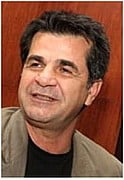
Your Honor, I would like to present my defense in two parts.
Part 1: What they say
In the past few days I have been watching my favorite films again, though I did not have access to some of them, which are among the greatest films of the history of cinema. My house was raided on the night of March 1st, 2010 while my colleague Mr. Rasoulof and I were in the process of shooting what we intended to be a socially conscious art house film. The people, who identified themselves as agents of the Ministry of Intelligence, arrested us along with other crew members without presenting any warrants. They confiscated my collection of films as well and never returned them to me. Subsequently, the only reference made to those films was by the prosecutor in charge of my case, who asked me: “What are these obscene films you’re collecting?”
I have learned how to make films inspired by those outstanding films that the prosecutor deemed obscene. Believe me I have just as much difficulty understanding how they could be called obscene as I do comprehending how the activity for which I was arrested could be seen as a crime? My case is a perfect example of being punished before committing a crime. You are putting me on trial for making a film that at the time of our arrest was only thirty per cent shot. You must have heard that the famous creed “There is no god, except Allah”, turns into blasphemy if you only say the first part and omit the second part. In the same vain, how can you establish that a crime has been committed by looking at 30% of rushes for a film that have not been edited yet?
I do not comprehend the charge of obscenity directed at the classics of the film history, nor do I understand the crime I am accused of. If these charges are true, you are putting not only us on trial but the socially conscious, humanistic, and artistic Iranian cinema as well, a cinema which tries to stay beyond good and evil, a cinema that does not judge nor surrender to power or money but tries to honestly reflect a realistic image of the society.
One of the charges against me is attempting to encourage demonstrations and incite protests with this film. All through my career I have emphasized that I am a socially committed filmmaker not a political one. My main concerns are social issues; therefore my films are social dramas not political statements. I never wanted to act as a judge or a prosecutor. I am not a film maker who judges but one that invites other to see. I don’t get to decide for others or to write any kind of manual for any body; please allow me to repeat my pretension to place my cinema beyond good and evil. This kind of belief has caused my colleagues and my self a lot of trouble; many of my films have been banned, along with the films of other filmmakers like me. But it is unprecedented in Iranian cinema to arrest and imprison a filmmaker for making a film, and harass his family while he is in prison. This is a new development in the history of Iranian cinema that will be remembered for a long time.
I have been accused of participating in demonstrations. No Iranian filmmaker was allowed to use his camera to capture the events but you can not forbid an artist to observe! As an artist it is my responsibility to observes in order to get inspired and create. I was an observer, and it was my right to observe.
I have been accused of making a film without permission. Is it really necessary to point out here that no law has been passed by the parliament regarding the need for a permit to make a film? There are only some internal memos which are going through changes each time the deputy minister is changed.
I have been accused of not giving a script to the actors.
In our film making genre where we work mostly with non professional actors this is a very routine way of film making practiced by myself and many of my colleagues; the cast mostly consists of non-actors. Therefore, the director does not find it necessary to give them a script. This accusation sounds more like a joke that has no place in the judiciary system.
I have been accused of having signed a declaration. I have singed one; an open letter signed by 37 prominent film makers, in order to express their concern about the turn of the actual events in the country. I was one of them. Unfortunately, instead of listening to the concerns we were accused of treachery. However, these filmmakers are the very same people who have expressed their concerns in the past about injustices around the world. How can you expect them to remain indifferent to the fate of their own country
I have been accused of organizing demonstrations at the opening of Montreal Film Festival. At least some truth and fairness should back up any accusations. I was the chair of the jury in Montreal and arrived only a few hours before the opening. How could I have organized a demonstration in a place where I hardly knew anyone? Let’s not forget that in those days the Iranian Diaspora would gather at any relevant event around the world to voice their demands;
I have been accused of giving interviews to Persian speaking media abroad. I know for fact that there are no laws forbidding us from giving interviews?
Second part: What I say
History testifies that an artist’s mind is the analytical mind of his society. By learning about the culture and history of his country, by observing the events that occur in his surroundings, he sees, analyzes and presents issues of the day through his art form to the society.
How can anyone be accused of any crime because of his mind and what passes through the mind?
The assassination of ideas and sterilizing artists of a society has only one result: killing the roots of art and creativity. Arresting my colleagues and I while shooting an unfinished film is nothing but an attack by those in power on all the artists of this land. It drives this crystal clear however sad message home: “You will repent if you don’t think like us”
I would like to remind the court of yet an other ironic fact about my imprisonment: the space given to Jafar Panahi’s festival awards in Tehran’s Museum of Cinema is much larger than his cell in prison?
All said, despite all the injustice done to me, I, Jafar Panahi, declare once again that I am an Iranian, I am staying in my country and I like to work in my own country. I love my country, I have paid a price for this love too, and I am willing to pay again if necessary. I have yet an other declaration to add to the first one. As shown in my films , I declare that I believe in the right of “the other” to be different, I believe in mutual understanding and respect, as well as in tolerance; the tolerance that forbid me from judgment and hatred. I don’t hate anybody, not even my interrogators.
I recognize my responsibilities towards the future generations that will inherit this country from us.
History is patient. Insignificant stories happen without even acknowledging their insignificance. I, myself I am worried about the future generations.
Our country is quite vulnerable; it is only through the instauration of the state of law for all, regardless of any ethnic, religious or politic consideration that we can avoid the very real danger of a chaotic and fatal future. I truly believe that tolerance represents the only realistic and honorable solution to this imminent danger.
Respectfully,
Jafar Panahi
An Iranian filmmaker
==============
Votre honneur, Monsieur le juge, permettez moi de présenter mon plaidoyer en deux parties distinctes :
Première partie : Ce qu’on dit
Ces derniers jours, j’ai revu plusieurs de mes films favoris de l’histoire du cinéma, malgré le fait qu’une grande partie de ma collection avait été confisque durant le raid qui a pris place la nuit du 19 février 2009 chez moi. En fait, Monsieur Rassoulof et moi-même, étions entrain de tourner un film du genre social et artistique quand les forces qui proclamaient faire partie du ministère de la sécurité, sans présenter aucun mandat officiel, nous ont arrêté, ainsi que tous nos collaborateurs et du même coup, confisque tous mes films qu’ils ne m’ont jamais restitué par la suite. Par la suite, la seule allusion jamais faite a ces films était celle du juge d’instruction du dossier : « pourquoi cette collection de films obscènes ? »
J’aimerais préciser que j’ai appris mon métier du cinéaste en m’inspirant de ces mêmes films que le juge appelait « obscènes ». Et croyez-moi je n’arrive pas a comprendre comment un tel adjectif peut-il être attribué a des films pareils, comme je n’arrive pas a comprendre comment on peut appeler « délit criminel » l’activité pour laquelle on veut me juger aujourd’hui. On me juge, en fait, pour un film dont moins d’un tiers était tourné au moment de mon arrestation. Vous connaissez certainement l’expression qui dit : ne dire que la moitie de la phrase : « il n y’a point de Dieu que dieu le grand »est synonyme de blasphème. Alors, comment peut-on juger d’un film avant qu’il ne soit même fini ?
Je n’arrive pas a comprendre ni l’obscénité des films de l’Histoire du cinéma ni mon chef d’accusation .Nous juger serait juger l’ensemble du cinéma engage, social et humanitaire iranien ; le cinéma qui a la prétention de se placer au-delà du bien et du mal, le cinéma qui ne juge pas et qui ne se met pas au service du pouvoir et de l’argent mais qui fait de son mieux afin de rendre une image réaliste de la société.
On m’accuse d’avoir voulu promouvoir l’esprit d’émeute et de révolte. Cependant, tout au long de ma carrière de cinéaste, j ai toujours réclamé être un cinéaste social et non politique avec des préoccupations sociales et non politiques. Je n’ai jamais voulu me placer en position de juge et de procureur ; je ne suis pas cinéaste pour juger mais pour faire voire ; je ne tiens pas a décider pour les autres ou leur prescrire quoi qu’il soit. Permettez moi de répéter ma prétention de placer mon cinéma au-delà du Bien et du Mal. Ce genre d’engagement nous a souvent coûté à mes collaborateurs et a moi-même. Nous avons été frappé par la censure mais c’est une première que de condamner et d’emprisonner un cinéaste pour l’empêcher de faire son film et il s’agit d’une première aussi que de rafler la maison du dit cinéaste et de menacer sa famille pendant son « séjour »en prison.
On m’accuse d’avoir participer aux démonstrations. La présence des cameras était interdite durant ces démonstrations mais on ne peut pas interdire aux cinéastes d’y participer. Ma responsabilité en tant que cinéaste est d’observer afin de pouvoir un jour en rendre compte.
On nous accuse d’avoir commencer le tournage sans avoir demandé l’autorisation du gouvernement. Dois-je vraiment préciser qu’il n’existe aucune loi promulguée par le parlement concernant ces autorisations. En fait, il n’existe que des circulaires interministérielles, qui changent au fur et a mesure que les vice-ministres changent.
On nous accuse d’avoir commencé le tournage sans avoir donné le scénario aux acteurs du film. Dans notre genre du cinéma, ou on travaille plutôt avec des acteurs non professionnels c’est une mode de faire très courante pratiquée par presque tous mes collègues. Un chef d’accusation pareil me semble relevé plutôt du domaine de l’humour déplacé que du domaine juridique.
On m’accuse d’avoir signé de pétitions. J’ ai en fait, signé une pétition dans laquelle 37 de nos plus important cinéastes déclaraient leur inquiétude quant à la situation du pays. Malheureusement, au lieu d’écouter ces artistes on les accuse de traîtrise ; et pourtant les signataires de cette pétition sont justement ceux qui ont toujours réagi en premier aux injustices dans le monde entier. Comment voulez vous qu’ils restent indifférents a ce qui se passe dans leur propre pays ?
On m’accuse d’avoir organisé les démonstrations autour du festival du Montréal ; cette accusation n’est basée sur aucune logique puisque en tant que directeur du jury je n’étais a Montréal que depuis deux heures quand les démonstrations ont commencé. Ne connaissant personne dans cette ville comment aurais-je pu organiser un tel événement. On ne tient pas à s’en souvenir peut-être mais durant cette période partout dans le monde ou il se passait quelque chose nos compatriotes se rassemblaient afin d’exprimer leurs demandes.
On m’accuse d’avoir participer aux interviews avec les medias de langue persane basés a l’étranger. Je sais qu’il n’existe aucune loi interdisant un tel acte.
Deuxième partie :
Ce que je dis
L’artiste représente l’esprit observateur et analyste de la société a laquelle il appartient. Il observe, analyse et essaie de présenter le résultat en forme d’œuvre d’art. Comment peut-on accuser et incriminer qui que se soit en raison de son esprit et de sa façon de voir les choses. Rendre les artistes improductifs et stériles est synonyme e détruire toutes formes de pensées et de créativités. Le raid effectué chez moi et l’emprisonnement de mes collaborateurs et de moi-même représente le raid du pouvoir effectué contre tous les artistes du pays. Le message convié par cette série d’action me parait bien clair et bien triste : qui ne pense pas comme nous s’en repentira…
En fin de compte, j aimerais aussi rappeler à la cour une autre ironie du sort me concernant : en fait, l’espace consacrée a mes prix internationaux au musée du cinéma a Téhéran est plus grande que l’espace de ma cellule pénitentiaire.
Quoi qu’il en soit, moi Jafar Panahi déclare solennellement que malgré les mauvais traitements que j ai dernièrement reçu dans mon propre pays, je suis iranien et que je veux vivre et travailler en Iran. J’aime mon pays et j’ai déjà payé le prix de cet amour. Toutefois, j ai une autre déclaration a ajouter a la première : mes films étant mes preuves irréfutables, je déclare croire profondément au respect des droits de « l’autrui » a la différence, au respect mutuel et a la tolérance. La tolérance qui m’empêche de juger et de haïr. Je ne hais personne, même pas mes interrogateurs puisque je reconnais ma responsabilité envers les générations à venir.
L’Histoire avec un grand H est bien patiente ; les petites histoires passent devant elle sans se rendre compte de leur insignifiance. Pour ma part, je m’inquiète pour ces générations à venir. Notre pays est bien vulnérable et c’est seulement l’instauration de l’état de droit pour tous sans aucune considération ethnique, religieuse ou politique qui peux nous préserver du danger bien réel d’un futur proche chaotique et fatal. A mon avis, la Tolérance est la seule solution réaliste et honorable à ce danger imminent.
Mes respects, Monsieur le Juge,
Jafar Panahi , Cinéaste Iranien