


In Turkey, Iranians who have escaped their regime dream of the day their homeland changes
by Michael Petrou on Tuesday, November 2, 2010 4:40pm
“Everybody in the square was angry, but there was also some sort of energy coming from the group. It seemed like an uprising. We felt free to do what we wanted, like a revolution. Everyone was united over the same thing, which was opposition to Ahmadinejad and the election results. Then we saw the Basij coming.”
Makan Akhavan is recalling the night after last year’s disputed June 12 election in Iran, when large crowds gathered in Tehran’s Kaj Square to protest results they believed had been rigged to give victory to hardline incumbent Mahmoud Ahmadinejad.
For Ahmadinejad’s opponents, the previous morning—voting day—had begun with such promise. “There was this bursting of freedom,” says Akhavan, 23. “We knew we were winning.”
Supporters of Ahmadinejad’s main rival, Mir Hossein Mousavi, had seen their numbers swell in the weeks leading up to the election and believed they had momentum on their side. Many did not necessarily agree with Mousavi’s moderately reformist agenda, but they backed him anyway out of a desire to protest Ahmadinejad or even the Islamic regime itself.
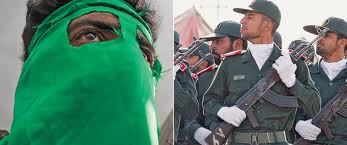
But that night, too soon to be considered credible, it was announced that Ahmadinejad had secured an improbable landslide. At first, says Akhavan, people were paralyzed by shock. But the demonstrations, when they materialized, were furious. There were too few Basijis (paramilitaries aligned with the regime’s Islamic Revolutionary Guards Corps) to corral the protesters in Kaj Square, so they started clubbing them. Then the Revolutionary Guards themselves swarmed in. “They came from all sides. It seemed like it had been planned,” says Akhavan.
Akhavan was arrested and photographed, but he escaped in the ensuing melee when protesters attacked the car he had been shoved into. He bolted through streets now filled with smoke and screams. Security forces later raided his parents’ home and searched his room. They found political pamphlets for the Constitutionalist Party of Iran, a monarchist opposition group with a following among Iranian exiles.
The police already knew who Akhavan was because of at least one previous arrest for protesting against the government. He was afraid to return home and instead left Tehran to stay with a friend in another city. Ten days later, Akhavan’s parents received an order from the Islamic Revolutionary Court demanding that Akhavan turn himself in. He filled a small backpack with donated clothes and fled the country.
Akhavan tells this story in his below-ground, one-room apartment in the Turkish city of Agri. He wears a sky-blue tank top and a green bracelet. His black hair is cut short and there is a tattoo of a vine running up and down his muscular left arm. The apartment is musty, the bed unmade. He holds up a clear plastic tub full of antidepressants. “All of us refugees have nerve problems and need these just to function,” he says.
Repression in Iran is pushing hundreds of Iranians into Turkey. There are 100 in Agri alone, another 250 in Van, down from more than 1,000 in that city last year, according to Iranians living there now. Most who left Van have sought refuge abroad. Of those who remain, some, like Akhavan, came after last year’s post-election demonstrations, when Iranian security forces tried to crush public dissent with mass arrests, show trials, prison rapes and executions. On the night he was briefly detained, Akhavan was with two friends, Ashka Karkhane and Amir Najafi, who did not get away. He has not heard solid information about their fate since.
Others are practitioners of the Baha’i faith, whose persecution has intensified of late. Shakib Adibzadeh, 26, tells Maclean’s his family home was pelted with garbage, and his relatives were harassed on the street. His brother could not get accepted to university. His employer would not pay him, knowing the state would do nothing about it. When members of his family tried to set up their own business, they could never get a permit. Baha’i graves were dug up and destroyed. Adibzadeh and his family fled to Van. Canada has recently accepted him as a refugee.
Ahmad Mousavi, another Iranian in Van, is gay. He was in love with a Baha’i man, whose phone calls the security services were monitoring. “That’s how I was found out,” he says.
Tormented by his homosexuality, Mousavi had converted to Christianity in an effort to become heterosexual. It didn’t work, but his dalliance with the church gave intelligence ministry officials one more thing to hold against him, in addition to his homosexuality and friendship with a Baha’i. They forced Mousavi to sign a declaration promising to get married and shun non-Muslims. “I could have done everything they asked except get married,” he says. “I couldn’t marry a girl.”