

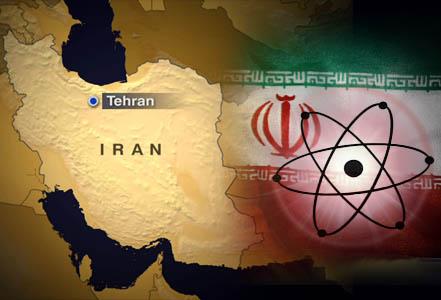
 The Washington Post – It was a remark designed to send chills through Washington and its allies: an influential member of the Saudi royal family suggesting the kingdom could someday consider making its own atomic weapons if stuck between nuclear arsenals in Iran and Israel.
The comment at a Gulf security forum in Riyadh by Prince Turki al-Faisal — who has served as intelligence chief and ambassador to the United States — simply echoed Western fears about a runway arms race in the Middle East if Iran ever moves toward a nuclear warhead.
Iran shows no signs of easing its defiance, though.
Iranian state media said the country’s powerful Revolutionary Guard has put itself on higher readiness. It’s an apparent bit of bluster after Iranian forces claimed to have shot down an advanced U.S. surveillance drone near its eastern border with Afghanistan. It’s unclear whether the wreckage of the RQ-170 craft — if it’s in Iranian hands — could yield important information about its stealth systems or reconnaissance equipment.
Last month, Iran also claimed it arrested 12 “agents” with links to the CIA and Israel’s Mossad spy agency. Officials have given no further details to back up the report. But it could signal stepped-up probes into suspected clandestine cells after a devastating Nov. 12 blast at a military site that killed at least 21 people, including Gen. Hasan Tehrani Moghaddam, who was in charge of the country’s missile program.
Iran has called the explosion an accident, but that hasn’t squelched widespread speculation of possible sabotage to set back Iran’s missile program. Iran has already pointed its finger at alleged Israel and U.S. involvement in the slayings last year of at least two scientists involved in nuclear research.
For Gulf states, there is a growing sense that Iran’s bravado masks some obvious worries about being an overall loser in the Arab Spring. Saudi Arabia and Qatar have led calls for Arab League pressure on Syrian President Bashar Assad — one of Tehran’s most important allies in the region — in response to his brutal crackdown on dissent.
“The situation in the region is not in Iran’s favor,” said Mustafa Alani, an analyst at the Gulf Research Center. “So, for Iran, it may be time to remind the Gulf countries that Tehran is still capable of destabilizing the region.”
Iran aimed one sharp warning at European-led proposals for trying to choke off Iran’s oil exports. A statement this week from Iran’s Foreign Ministry suggested crude oil prices could more than double to a record $250 a barrel if the flow was cut from OPEC’s third-largest producer — which supplies fast-growing China with about 10 percent of its current energy needs.
The Iranian threat did little to rattle markets. But the Gulf’s oil security was clearly on the minds of officials at a major petroleum gathering this week in Qatar.
Qatar’s emir, Sheik Hamad bin Khalifa Al Thani, opened the conference Monday by trying to calm any jitters over growing friction with Iran.
“I want to point to the numerous assurances by oil and gas exporting countries of their commitment to maintain the flow of these two resources to the consumers, and to exert every effort to fulfill this especially during crises,” he said.
Olivier Jakob, an oil analyst at Petromatrix in Switzerland, said even a substantial disruption of Iranian supplies — such as through an EU-wide ban — isn’t likely to cause a massive spike in global oil prices.
“The talk of $250 a barrel, that’s part of the usual noise created by Iran. It’s not the first time,” he said. “For that to happen, you need to have a worldwide ban,” which is still far from becoming a reality, he added.
He noted that existing non-EU Iranian customers such as Turkey are unlikely to ban Iranian oil. Other Iranian supplies could shift to the Far East, particularly if Tehran decided to cut its prices significantly to entice non-Western customers.
“Those other countries can still take it. Then it’s really a question of how much of a discount Iran is willing to take. … At $110 a barrel Iran can give a pretty hefty discount,” he said.
In Dubai, which has close trade ties with Iran, ruler Sheik Mohammed bin Rashid Al Maktoum broke ranks somewhat with his Gulf allies by suggesting the world listen closer to Iran’s claims about not seeking nuclear arms.
“I don’t believe that Iran will be under the nuclear weapon … I don’t think so myself,” he said in an interview with CNN broadcast Monday. What can Iran do with a nuclear weapon? For example, will they hit Israel? How many Palestinians will die? And you think … if Iran hit Israel, their cities will be safe? They will be gone (the) next day.”