Home Blog Page 351

IRGC Commander Underlines Full Security at Borders

TEHRAN (FNA)- Lieutenant Commander of the Islamic Revolution Guards Corps (IRGC) Ground Force Brigadier General Abdollah Araqi once again reiterated that the country’s borders are fully secure.

“God willingly, durable security is restored to Iran’s borders,” Brigadier General Araqi said.
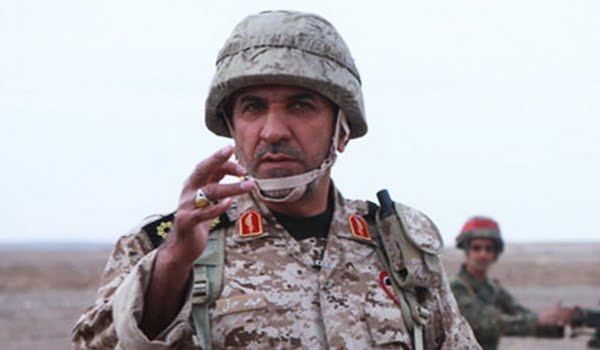
araqi
Lieutenant Commander of the Islamic Revolution Guards Corps (IRGC) Ground Force Brigadier General Abdollah Araqi

He reiterated that Iranian borders have been reinforced in terms of manpower and military equipment.

Iranian Deputy Interior Minister Ali Abdollahi announced that the country’s security forces have intensified measures along the country’s Western border with Iraq in a bid prepare for any unexpected incident.

“Given the circumstances in certain neighboring countries and efforts by enemies of the Islamic Revolution to organize terrorist groups, it is all the more necessary to pay attention to borders,” Abdollahi told reporters on Saturday.

Earlier this week, Iranian Interior Ministry Spokesman Hossein Ali Amiri announced that the country’s security and intelligence forces have full control over the Western borders with Iraq and are ready to foil any unexpected threat.

“There is no notable problem along our common border with Iraq,” Amiri said.

“However, the necessary measures have been adopted by the Interior Ministry and border police,” he added.

The official further added that Iran’s Supreme National Security Council will discuss this issue in a forthcoming session.

Last week, Iranian President Hassan Rouhani warned of Iran’s tough confrontation with the ISIL (the Islamic State of Iraq and the Levant) or any other terrorist group which might come close to the Iranian borders, and said, “If a terrorist group approaches our borders, we will definitely confront it, because our duty is defending our territorial integrity and national interests.”


Iran Sentences Cyberactivists To Jail Terms

Radio Free Europe (RFERL) – A group of Iranian cyberactivists have been sentenced to prison terms ranging from one to 11 years on charges of acting against national security.

dastband 1

Prosecutor Yadollah Movahhed, in the southeastern Kerman Province, said in a June 19 press conference that those sentenced had ties with foreign media.

Movahhed also said the 11 activists were preparing to provide technical support to antigovernment websites.

The Iranian official said the activists had been arrested by the Islamic Revolutionary Guards Corps and put on trial by a revolutionary court.

He did not provide their names.

The activists can appeal their sentences.

Iran often brings security charges against intellectuals and those fighting against censorship and state repression.


Pentagon: Iran Has ‘Small Numbers’ of Operatives in Iraq

Israelnationalnews: The Pentagon says Iran has sent a small number of operatives to help Iraq, but has no “major units” there.

Iran has sent “small numbers” of operatives into Iraq to bolster the Shiite-led government in Baghdad, but there is no sign of a large deployment of army units, the Pentagon said Friday, according to AFP.

pasdar
Members of Iran’s Revolutionary Guard (IRGC)

The comments by Pentagon spokesman John Kirby marked Washington’s first public confirmation that Iranian operatives had crossed into Iraq, where the Baghdad government is struggling to counter the swift advance of Sunni extremists.

“There are some Iranian revolutionary operatives in Iraq but I’ve seen no indication of ground forces or major units,” Kirby told a news conference, apparently referring to Tehran’s Quds force, the covert arm of the Revolutionary Guard Corps.

“Their interference in Iraq is nothing new,” Kirby said, referring to Washington accusing Tehran of sending forces to Iraq when U.S. troops were in the country, between 2003 and 2011.

Reports last week indicated that Iran had deployed Revolutionary Guards units to Iraq in order to fight Islamists from the Islamic State of Iraq and the Levant (ISIS), who have taken over several cities in Iraq.

The Pentagon offered no further details on the nature of the Iranians’ presence or their operations.

“I’ll let the Iranians speak for their activities,” Kirby said, adding, “We have indications that there are at least some operatives inside Iraq.”

The rapid offensive by ISIS, which has overrun swathes of northern and central Iraq, has alarmed Tehran – which has close ties to the Iraqi government – as well as Washington.

Western diplomats say Qassem Suleimani, commander of the Quds Force, has traveled to Baghdad to advise Maliki in the crisis.

Iran has previously sent military advisers to Syria to aid President Bashar Al-Assad’s regime against rebel forces.

Secretary of State John Kerry said this week that the United States and Iran have a common interest in preventing ISIS militias from taking over Iraq completely, adding that he “wouldn’t rule out” possible cooperation with Tehran on this issue.

Asked about the possibility of working with Iran, President Barack Obama said Thursday that “Iran can play a constructive role if it is helping to send the same message to the Iraqi government that we are sending, which is that Iraq only holds together if it is inclusive.”

He added, If Iran is coming in solely as an armed force on behalf of the Shia, and if it is framed in that fashion, then that probably worsens the situation.”

Basij Commander: Crisis in Iraq Result of US-Led Espionage Operations

TEHRAN (FNA)- Commander of Iran’s Basij (volunteer) Force Brigadier General Mohammad Reza Naqdi underlined that the recent crisis in Iraq was the result of terrorist groups’ collaboration with Baathi ringleaders and the United States’ espionage operations.

“The Americans revealed their plots after the failure (of their desired groups) in the (Iraq’s parliamentary) election and they came onto the scene to make up for their failure in the election,” Naqdi said in Tehran on Saturday.

naghdi
Commander of Iran’s Basij (volunteer) Force Brigadier General Mohammad Reza Naqdi

He said North of Iraq was surrendered to the terrorist groups after a number of Iraqi army commanders were fooled by the US and sent their units to join the Islamic State of Iraq and the Levant (ISIL).

Naqdi said luring the Iraqi commanders, some of whom have been forces of the former Baath party, was impossible without the activity and coordination of the spying agencies.

“The Americans’ recent actions in Iraq have not been a guerilla campaign, rather they have been conducting espionage operations.”

He said that the goal of the crisis created by the ISIL, former Bathists and the US spy agency in Iraq is sowing discord between the Iraqi Shiite and Sunni Muslims.

Naqdi had earlier said that the recent attacks by the terrorist ISIL in Iraq are a new US plot to create discord among the Iraqi people.

“The scene they have created in Iraq is the result of the United States’ behind-the-scene attempts to sow discord and they are certainly the main mastermind of these events,” Naqdi said in the Northern city of Ramsar on Wednesday.

He said that the US and its allies attach so much importance to Iraq’s oil resources that they would do anything within their capacity to protect it.

Also earlier this month, Secretary of Iran’s Supreme National Security Council (SNSC) Ali Shamkhani in a meeting with Prime Minister of Iraq’s Kurdistan Regional Government (KRG) Nechirvan Barzani took the western and regional states responsible for the current crisis in Iraq.

“The current crisis in Iraq is the result of the meddling and collaboration of the western and regional enemies of the Iraqi nation, who are seeking to prevent the Iraqi people’s will and determination from coming into action,” Shamkhani said during the meeting in Tehran.

He called on Iraqi Kurds, Shiites and Sunnis to become united and defend their country to restore peace, tranquility and security to their country and ward off the danger of terrorism and its spread to the region.


Iran keeping watchful eyes on borders: Police chief

0

Press TV: Iran’s police chief says the Islamic Republic is keeping a watchful eye on the country’s frontiers, fully monitoring border regions.

Brigadier General Esmail Ahmadi Moqaddam said Saturday that Iran’s border security is at a “favorable” level.

The Islamic Republic of Iran fully monitors border regions and stands ready to defend them, the official noted.

ahmadi1
Brigadier General Esmail Ahmadi Moqaddam

He said the necessary number of forces have been deployed along the borders, adding that forces from Iran’s Islamic Revolution Guards Corps (IRGC) are also stationed in regions more at risk.

Iran has, over the past few months, reinforced security along borders and sped up the process of sealing its borders, Ahmadi Moqaddam said, adding that the country’s borders are now “under full control.”

He also rejected speculations that tension in neighbors of Iran, including Iraq, could spill over into the country, giving the assurance that the Islamic Republic will counter potential threats.

Iraqi forces are continuing their battle against Takfiri terrorists from the so-called Islamic State of Iraq and the Levant (ISIL). Tens of thousands of volunteers have joined the Iraqi troops in the fight against militants who have threatened to take their raid towards the capital, Baghdad.

Iraqi Prime Minister Nouri al-Maliki has vowed that the country’s security forces would fully confront the terrorists.

Iraq Official Says Iran’s Military Mastermind Is In Charge

Qassem Suleimani, the head of the Qods Force, the foreign arm of Iran’s Revolutionary Guards Corps, is leading the Iraqi reaction to a radical Islamist group’s takeover of much of the country, according to a senior Iraqi official quoted by The Guardian.

“Who do you think is running the war? Those three senior generals who ran away?” the unnamed official asked The Guardian’s Martin Chulov. “Qassem Suleimani is in charge. And reporting directly to him are the militias, led by Asa’ib ahl al-Haq.”

soleimani
Qassem Suleimani, the head of Iran’s Quds Force

Asaib ahl al-Haq (AAH) organization is one of several Iraqi groups that serve as instruments of Iranian policy through the region, as University of Maryland researcher Philip Smyth explained in a policy brief for the Washington Institute for Near East Policy earlier this week.

Specifically, it is a Shiite militia and Iranian proxy in Iraq that deployed fighters to the Syrian theater to support the regime of Bashar Assad. But Smyth writes that AAH fighters have now been recalled to Iraq to combat the Islamic State of Iraq and the Levant (ISIS), the al-Qaeda castoff that took over vast stretches of the country’s oil-producing north last week.

“Many of the Shiite Islamist forces fighting in Iraq operate as part of Iranian proxy groups that have been attached to [Iraqi Security Forces] and Iraqi army units,” Smyth wrote. “Some even operate as a direct part of these official Iraqi military forces.”

So it would make sense if Suleimani were calling the shots inside of Iraq itself. He’s responsible for arming and organizing sectarian militias that are semi-integrated into the official security apparatus in parts of the country. And he was in Baghdad meeting with Shiite parliamentarians not long before things escalated.

It’s a place he knows well. In his profile of Suleimani for The New Yorker last year, Dexter Filkins recounted how the Qods Force chief used his connections in Iraq to play the Americans, Sunni terrorists, and Shiite proxy militias off of one other during the U.S.’s military presence in the country. He even visited Baghdad’s Green Zone:

Throughout the war, [Suleimani] summoned Iraqi leaders to Tehran to broker deals, usually intended to maximize Shiite power. At least once, he even traveled into the heart of American power in Baghdad. “Suleimani came into the Green Zone to meet the Iraqis,” the Iraqi politician told me. “I think the Americans wanted to arrest him, but they figured they couldn’t.”

The pro-Iranian Iraqi government that ensured the U.S. military would leave the country in 2011 is essentially Suleimani’s creation as well.

Suleimani is deeply invested in keeping together the network of influence and control that he spent much of the past decade building in Iraq. Still a major open question: whether he’ll have the U.S. on his side in his efforts.


Iran : Precision capability of IRGC artillery determines battlefield combat strategy

0

Islamic Revolution Guards Corps Ground Force Brigadier General Mohammad Pakpour underlined IRGC’s progress in building state-of-the-art weapons and equipment.

According to millennialpubs in relevant remarks in April, Commander of the Iranian Ground Force Brigadier General Ahmad Reza Pourdastan announced that the country’s engineers are building a new type of advanced artillery system which will be unveiled in the near future.

pakpour
Islamic Revolution Guards Corps Ground Force Brigadier General Mohammad Pakpour

Addressing a ceremony to unveil 5 new achievements of the Ground Force in Tehran, Pourdastan said that the Iranian experts have started building an artillery system with special features.

He said that the system will be unveiled soon in future.

Elsewhere, Pourdastan laid emphasis on increasing the weapons and equipment capability and efficiency as among the main objectives of the Ground Force, and said, “We seek to decrease the forces’ density in every square kilometer to reduce the casualties and increase the costs for the enemy.”

He also described boosting the speed, preciseness and fire power of weapons and equipment’s flexibility and mobility as among other objectives of the Ground Force.

Tehran launched an arms development program during the 1980-88 Iraqi imposed war on Iran to compensate for a US weapons embargo. Since 1992, Iran has produced its own tanks, armored personnel carriers, missiles and fighter planes.

Yet, Iranian officials have always stressed that the country’s military and arms programs serve defensive purposes and should not be perceived as a threat to any other country.

Iran Supreme Leader’s Twitter Account Warns Of ‘War In Muslim World’

DUBAI (Reuters) – A Twitter account Iran experts believe is run by the office of Supreme Leader Ayatollah Ali Khamenei, in comments apparently inspired by Iraq’s turmoil, accused Sunni militants on Thursday of wanting to bring about a war in the Muslim world.

Shi’ite Iran has been alarmed by rapid territorial gains made in Iraq by the militants of the ‘Islamic State of Iraq and the Levant’ (ISIL), which seeks a caliphate ruled on medieval Sunni Muslim precepts in Iraq and Syria.

kh-jaf
Iran’s Supreme Leader Ayatollah Ali Khamenei (L) and Revolutionary Guards commander Mohammad Ali Jafari

ISIL’s advances pose a threat to the survival of Shi’ite-majority Iraq as a united country.

Iraqi Prime Minister Nuri al-Maliki’s Shi’ite-led government, an ally of Tehran, has called for military help from the United States, Iran’s longtime foe.

A message posted in English on the Twitter account @khamenei_ir said the Sunni militants wanted to foment distrust between Sunni and Shi’ite Muslims, a goal they shared with “arrogant” powers – normally an Iranian codeword for the United States and its Western and Israeli allies.

The message referred to “takfiri” militants – Sunnis who proclaim followers of other sects of Islam to be infidels and therefore legitimate targets of holy war.

“Muslims should be aware of Takfiris and arrogant’s common goal to create a war in Muslim world – both Shias and Sunnis should be vigilant,” it said.


Phone Spies on a Spy, Captures the Face of IRGC’s ‘Torturer

A mobile app has caught the identity of a member of Iran’s dreaded Revolutionary Guards after the smartphone of an Ahwazi Arab political prisoner was seized when he was arrested and tortured in Ahwaz City, an Arab majority city near the border with Iraq.

According to Herana, using an anti-theft app, the phone took the photo of the man the activist claims had tortured him and other inmates during a clamp-down on dissidents. The app is activated when anyone attempts to break into it and sends an email to the owner with the picture and the GPS location of the smart phone.

torture

The Revolutionary Guards – which has been deployed to Syria and Iraq to support Tehran’s troubled puppet states – is notoriously brutal. However, the botched attempt to break into the phone and extract information reveals the technological weaknesses of the regime.

The alleged interrogator is accused of involvement in severe beatings of prisoners held in custody and “insults to dignity and honour” that victims refuse to discuss.

The Ahwazi man, who cannot be named, told me: “I was very surprised to see the photo of the face of my torturer. I want the world to see his face. We have faced injustices and we want the unmask our secret police. We want them to feel humiliation in front of the world and answer for their crimes against humanity.”

Ahwazi Arabs face ethnic discrimination and persecution in Iran. Activists are routinely arrested and many members of Arab cultural organisations have been executed in recent months on charges of “enmity with God” and “spreading corruption on the earth”.

A recent report by the Office of the United Nations High Commissioner for Human Rights (OHCHR) stated: “An escalation in executions, including of political prisoners and individuals belonging to ethnic minority groups such as Baloch, Ahwazi Arabs and Kurds, was notable in the second half of 2013.”

Commander: Iran to Give Crushing Response to Aggressors

0

TEHRAN (FNA)- Iranian Ground Force Commander Brigadier General Ahmad Reza Pourdastan said his forces are in the best conditions and would give a crushing and irreversible response to any enemy who would dare to make an aggression against the country.

“The potential and capabilities of the Army and the Armed Forces leave no place for any threat by foreign countries against the country,” General Pourdastan said.

poordastan
Iranian Ground Force Commander Brigadier General Ahmad Reza Pourdastan

He reiterated that if such a thing happens, the Iranian Armed Forces will make the aggressor to become sorry.

General Pourdastan noted that the Iranian Army has what it take to counter any possible threat in the sea, the air and the ground.

In similar remarks earlier this month, Lieutenant Commander of the Iranian Navy Rear Admiral Gholamreza Khadem Biqam warned of the Navy’s crushing and rigid response to the enemies who would dare to make an aggression against the country.

“If any threat is made against Iran’s interests we will kill it in the bud and give crushing response to the enemy,” Rear Admiral Khadem Biqam said during a visit to Iran’s Kharg Naval Base in Persian Gulf on Friday.

Rear Admiral Khadem Biqam reiterated that protecting Iran’s interests is one of the main duties of the Navy.

Defense analysts and military observers say that Iran’s wargames and its advancements in arms production and technologies have proved as a deterrent factor.