Home Blog Page 386

Preventing Tajzade’s medical treatment in Farabi Hospital

0

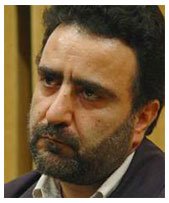
Islamic revolutionary guards agents prevented the continuation of medical treatments on Mostafa Tajzade’s teeth and eye in Farabi hospital and claimed that since now all the process will be continued in a hospital which is under revolutionary guards management.

According to a report, after a few months of internal eye bleeding the medical treatments on Mostafa Tajzade started in Farabi hospital but islamic revolutionary guards transferred him from Farabi hospital to Baqiatollah hospital and prevented the continuation of medical treatment process. This happens while the judge issued permission for Tajzade to be under medical treatment in Farabi hospital.

According to Tajzade’s wife, she has been informed 2 days ago that the medical treatment for teeth and eyes of this prisoner could not be continued in Farabi hospital anymore and he will be under medical treatment in another hospital under revolutionary guards management.

The head of election committee during reform time has detained and quarantined illegally since 30 months ago. He started fasting as a way to protest and the consequences affected his body in different ways.

Some of the consequences of his protest are eyes problems and blood pressure which increased because of delay in treatment. Tajzade’s family is concern about his medical treatment in the revolutionary guards hospital.

Recently, the wife of this political prisoner through a letter to Hossain Taeb claimed that he is responsible for what happened to her husband and asked him to introduce the guilty person if he himself is faultless.

Source: HRANA

Yasan Mousavi arrested and transferred to prison

0

On Sunday, February 3rd, agents from the Ministry of Intelligence detained Yasan Mousavi at his home in Tehran and transferred him to Evin prison.

Yasan Mousavi, born in 1984, was an activist at Mir Hossein Mousavi’s 2009 presidential campaign. His brother Hooman Mousavi was arrested during that time and since then, Yasan Mousavi has been summoned and interrogated many times.

According to news obtained by CHRR, Yasan Mousavi was arrested without notice on February 3rd, and two days later on February 5th, judiciary agents contacted his family and informed them that he will be kept in temporary detention for one month.

Yasan Mousavi was alone at his residence when he was detained. According to witnesses, Intelligence agents entered his home by breaking the locks, conducted a massive search of his home during the arrest and seized personal items such as his computer and satellite dish.

Yasan Mousavi’s brother Hooman Mousavi is a former political prisoner who was arrested during the time of unrest following the contested presidential election results of 2009, and spent 2 years behind bars in Evin prison. Their parents were also political prisoners and were executed by the Islamic Republic in the late 1980’s during the period of mass executions in Iran’s prisons.

Source: CHRR

As Second Round of Journalists Arrested, Intelligence Ministry Threatens Even More

Another wave of summonses and arrests of journalists has taken place in Iran, the Iranian Intelligence Ministry announced on February 5. In a statement published by Fars News Agency, affiliated with Iran’s Revolutionary Guards Corps, the Intelligence Ministry stated that the journalists were arrested for their contact with the BBC and that the arrests, which began January 26, will continue.

Referring to the 2011 arrests of groups of documentary filmmakers and voiceover actors was based on allegations of “affiliation with the BBC,” the Intelligence Ministry claimed all these groups to be “a central think tank, related and attached to foreign intelligence services and the establishment of an operations center for the design, coordination, and implementation of a ‘constant soft war’ against the sacred Islamic Republic regime.” The statement also names foreign-based members of the BBC, “escapees of the 2009 sedition and former colleagues of ‘chain’ newspapers.”

In an earlier statement issued January 30, the Intelligence Ministry announced that more journalists could be arrested while others could be released. “This process will continue until the last individual affiliated with this network is investigated,” the statement said, adding that the media frenzy of “so-called human rights organizations related to that camp” will have no effect on the Ministry’s activities in this regard.

However, the names of the newly arrested journalists have not been released either in the recent statement from the Intelligence Ministry, nor in any news published by Iran’s official news agencies. The statement does indicate that there will be more arrests of Iranian journalists for alleged relations with BBC’s Persian Service.

Following the Intelligence Ministry’s first statement on January 30, the BBC denied all the charges, calling them unfounded. The network has repeatedly stated that they have no employees in Tehran.

“They have said that these journalists dispatched some information to the BBC network,” said Member of the Iranian Parliament Ali Motahari in an interview with Shargh newspaper, one of the five publications raided in the first round of arrests. “My question is, what news can these journalists really get to the BBC which the BBC cannot access itself? Fortunately, the websites affiliated with the country’s revolutionary organizations reflect all the news,” he added.

However, when asked on January 28 about the reasons for the journalist arrests, Iran’s Minister of Culture and Islamic Guidance Seyed Mohammad Hosseini said they had been arrested on security charges and not press-related charges, thereby evading responsibility for the arrests.

The journalist arrests began on the evening of January 26 with the arrests of Milad Fadai Asl and Soleiman Mohammadi. The following day, Sunday, January 27, quickly dubbed “Black Sunday” by Iranian journalists, security forces stormed the offices of five publications: Shargh, Etemad, Bahar, and Arman newspapers and Aseman Weekly, and arrested nine additional journalists at work. The arrests continued in the following days until five more journalists had been arrested. As of last week, the list of detained journalists had 16 names on it, all independent journalists who write in political, social, literature, and arts areas in non-governmental publications. So far no official has spoken transparently about the charges leveled against the journalists. The Intelligence Ministry is the only authority alleging these journalists were affiliated with the BBC.

Last week, more than 200 Iranian journalists inside and outside the country issued a statement asking the Iranian judicial authorities to release their colleagues and to respect the law.

The following journalists are known to have been arrested: Javad Daliri, Sasan Aghaee, Nasrin Takhayori, Milad Fadai, Soleiman Mohammadi, Pouria Alemi, Pejman Mousavi, Akbar Montajebi, Emily Amraee, Keyvan Mehregan, Saba Azarpeik, Hossein Yaghchi, Rayhaneh Tabatabaee, and Ali Dehghan. Motahareh Shafiee was also arrested, but was released on bail due to her illness. The Intelligence Ministry has not yet published names of the other journalists who have been arrested.

Source: Iran Human Rights

Ahmadinejad: Iran is a nuclear state

0

Iranian president Mahmoud Ahmadinejad said in Cairo Wednesday: Iran is now a nuclear state and we invite Egypt to partake of our nuclear knowledge and experience. This is reported by the Egyptian daily Al Ahram Wednesday on the second day of the Iranian president’s landmark visit to Egypt, the first in three decades of frozen relations. He is attending the Organization of Islamic Cooperation summit which begins today.

Source: Debka

Block on Facebook will not be lifted in the near future

0

Secretary of the Supreme Council of Cyberspace, Mahdi Akhavan Behabadi, detailed the policies and plans of the Council regarding filtering and other blocks, adding that one of the Council’s most important programs is the removal of existing problems in website filtering. In order to resolve this, new program known as Smart Filtering will soon be applied. Behabadi later discussed the accounts of 20 million Iranians on Facebook, claiming that the statistics are not true at all, and that the number of Iranians in Iran who are members of this network is much lower. Behabadi also emphasized that blockage of access to Facebook would in no way be lifted anytime soon, but the matter could be reviewed at a later date.

Source: Iran Daily Brief

Uncertain situation of seven Baha’i detainees in Rajaie Shahr prison

0

After two months of transferring and detention of seven Baha’i citizen from Golestan province, still the detainees are in temporal detention and their situation is uncertain.

According to a report, after a lot of following up and haunt to Tehran and revolutionary court for provisional release by bail, their families have not succeeded.

The court officials passing the case to revolutionary court and the court is passing back to them. Also their lawyerscould not able to visit their clients.

After the interrogation sessions of these seven Baha’is in Evin prison, they have been transferred to Rajaie Shahr prison while no trial formed for them and they have not been sentenced yet.

The families of these detainees have to travel frequently to Tehran and Karaj from their hometowns for visiting the prisoners and following up their situation.

Mr. Kourosh Zyari, one the seven detainees has serious injury on his leg and even until a week before detention, was not able to walk. Despite of his family’s following ups still he has not got any treatment or medical furlough from the prison officials or the other relevant officials.

Farahmand Sanaie, Farhad Fahandezh, Kamal Kashani, Payam Markazim Siamak Sadri and Foad Fahandezh are the other detainees who are currently in hall 12th of ward 4th in Rajaie Shahr prison.

Source: HRANA

Condition of opposition cleric Mohammad imprisoned in Evin deteriorates

0

Sadegh Hornavar- Shojaei was returned to prison from sick leave to soon. Over the past several days, he has been hospitalized in the prison clinic following progression of his disease, but the authorities are refusing to transport him to the hospital.

Source: Iran Daily Brief


Mehdi Khodaei, Student Prisoner, Was Rejected for Medical Leave

0

Recently, prison authorities has rejected imprisoned student and human rights activist, Mehdi Khdoaei’s request for medical leave.

According to a report, It is around three years that Mehdi Khodaei and his family are trying to get medical leave, but recently, prison authorities has rejected the request.

Mehdi Khodaei is the former Secretary of Azad University Islamic Association in Shahr-e Rey, and a human rights activist. He was an electrical engineering student at the time of his arrest. Khodaei was arrested on 2 March 2010, five days after receiving a sentence of four years in prison on the charge of “acting against national security through organizing gatherings.” Previously, he had spent 38 days in detention in the summer of 2008.

After his arrest on 2 March 2010, he was transferred to IRGC’s Ward 2-A inside Evin Prison, where he spent ten months in solitary or two-person cells. Khodaei’s family had no information about him for months after his arrest. During his detention inside Ward 2-A, he was subjected to repeated interrogations and severe physical and psychological pressure to make forced confessions against himself.

Khodaei was tried on 21 August 2010 in Branch 28 of Tehran Revolutionary Court, with Judge Moghisseh presiding. On 12 October 2010, Khodaei was sentenced to an additional three years in prison on charges of “acting against national security through organizing gatherings,” and “propagating against the regime.”

Separately, in December 2010, his earlier four-year prison sentence was upheld by a Tehran appeals court. Therefore, with his three-year prison term also upheld, Khodaei is currently serving his seven year prison term. In late December 2010, Khodaei was transferred to Evin Prison’s General Ward 350. Despite his long prison term, he has not been allowed furlough since his detention. Khodaei remains defiant and active in prison and has participated in several protest hunger strikes and has signed several group letters in prison.

Source: HRANA

Wave of journalist arrests continues

0

In continuation of the wave of arrests of journalists, former director of the Strategic Research Center library and editor of the website, Jamaran, Fatemeh Sagharchi was arrested. There are also reports of the arrest of Reyhaneh Tabatabei, a journalist affiliated with the reformist press. Reyhaneh Tabatabei was previously arrested following the election events and sentenced to one year in prison on charges of anti-regime propaganda.

Source: Iran Daily Brief

Iran has ‘all the ingredients necessary’ to make a nuclear weapon

Iran has ‘all the ingredients necessary’ to make a nuclear weapon.

The country has enriched more than seven tons of uranium to a low grade of five per cent, pure enough for a nuclear reactor, which with further enrichment could create five atom bombs, the Institute for National Security Studies, a think-tank with close government ties, said.

“They have all the ingredients necessary to make a nuclear bomb,” said Major General (ret) Amos Yadlin, the institute’s director, who recently retired as head of military intelligence for the Israeli Defence Force.

“The main challenge for 2013 will be for Israel to decide when is the time to do something.”

However, he added that Iran was not currently prepared to risk taking the process further. “It would take four or six months for Iran to enrich enough military-grade uranium, and in their eyes this is too long,” he said. “They don’t think they can get away with it.

“They are waiting for some international crisis, a distraction big enough to draw the eyes of the world away from their nuclear activity.”

The institute’s analysis suggests that Iran has set a “hold” on its nuclear programme at a spot on the edge of Israel’s so-called “red line”, the point at which it will take military action.

Israel set its “zone of immunity”, beyond which it would be impossible to prevent Iranian nuclear development, at a threshold of 3,000 centrifuges, the instruments that carry out the enrichment. At least 2,700 are in place.

Its red line is reaching “breakout capacity” – where it has enough enriched uranium and weaponiseing capacity to rush to build a bomb before anyone could stop it.

Iran has enriched to 20 per cent, and could easily enrich to the 90 per cent purity needed for weapons capability. But it recently diverted some of that stock to a research reactor.

The institute’s assessment suggests that Iran reacted positively to new offers of talks – both with its customary negotiating partners, the five permanent members of the security council plus Germany, and one-on-one with the United States – because of a belief that it was in a position of strength.

It also believes that President Barack Obama will be more amenable to making concessions that would tie Israel’s hands after his re-election.

“I am optimistic,” Ali Akbar Salehi, the Iranian foreign minister, said on a visit to Berlin yesterday. “I feel this new administration is really this time seeking to at least divert from its previous traditional approach vis-à-vis my country.”

Mr Obama has previously indicated that his “red line” is the actual production of a bomb, rather than the so-called “breakout capacity” to make one.

The institute, for its annual report, also studied the implications of an Israeli attack. Gen Yadlin said it would be “doable” for Israel to tackle the Iranian threat alone, but that he had advised the government it should act only backed by the understanding of the international community – at the very least the United States – that all other options have been exhausted.

He said the response would not be as catastrophic as many feared. “We are of the more moderate school of thought,” he said. “We do not predict World War III with Iran destroying everything. There will be a reaction – they won’t be surprised like Saddam Hussein – but it will be calculated and efficient, because they know there will be a reaction to their reaction.”

On Sunday, Mr Salehi indicated the next round of “P5+1” talks with Iran would be in Kazakhstan on February 25.

Source: Telegraph