
Home Blog Page 398

Iran shipping signals manipulate vessel movements to Syria

0

Iranian oil tankers are sending incorrect satellite signals that confuse global tracking systems and appear to conceal voyages made by other ships to Syria, which, like Iran, is subject to international sanctions.

The two countries are close allies and have helped each other deal with shortages by swapping badly needed fuels such as gasoline for diesel.
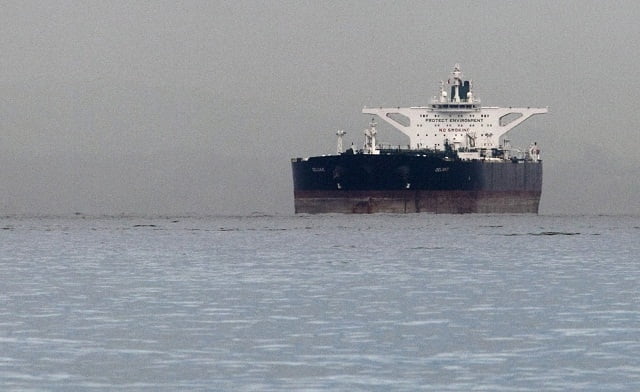
Sanctions imposed on Iran to hamper its nuclear program have blocked sales of its oil to the West and made it increasingly difficult for Iran’s fleet to obtain insurance and financing for deals with Asian buyers in China, India and South Korea.

Western sanctions have also isolated Syria, preventing it from exporting oil, while blocking fuel and weapons imports.

Iranian state tanker company NITC has already changed many tanker names as part of its response to sanctions, though shipping experts say such a tactic would not confuse anyone in the business about a vessel’s whereabouts.

Now tanker tracking data monitored by Reuters and shipping specialists have highlighted a more subtle twist.

Large vessels must transmit their identity and location to other ships and coastal authorities using an automatic satellite communication system, but in the last month Iranian vessels sailing in Asian seas have sent signals that took over the identity of other vessels, so the same ship appeared to be in two places at once.

“It is of course possible to manipulate or falsify information in these messages,” said Richard Hurley, a senior analyst at IHS Fairplay, a maritime intelligence publisher.

At least three Iranian oil tankers are transmitting such false signals, effectively taking over the identity of Syrian-owned vessels travelling between Syria, Libya and Turkey.

All the vessels in question were registered in Tanzania.

“In the past months we witness a recurring pattern of vessels sailing the Tanzanian flag that transmit the same MMSI number [a satellite signal that provides information on a ship’s identity and position], said Windward, a firm that provides maritime analytics technology.

“This way, if one of the two vessels is engaged in legitimate maritime activities, it might be used as a ‘cloaking’ for the other vessel and its activities.”

Iranian oil tanker Millionaire sent messages that doubled over a voyage made by a Syrian-owned ship, the Lady Rasha.

In a separate instance, the satellite tracks of Iranian oil tanker Pioneer were mixed up with a Tanzania-flagged cargo ship called the Talavera, recently renamed Chief Ahmed, and travelling from the Mediterranean into the Red Sea.

Despite all the paired vessels appearing to be registered under Tanzanian flags, officials in mainland Tanzania and Zanzibar denied holding any information on the vessels.

They have directed queries to a shipping agency in Dubai, Philtex Corporation, which they say registered some Iranian ships under the Tanzanian flag without their knowledge.

Philtex confirmed it had registered the Syrian-owned Lady Rasha, but could not provide details on the Iranian tankers in question.

Mystery Crates

Satellite signals on position, course and speed are typically sent from onboard navigation systems with no human input. Others, like arrival time, are input by crew.

Peter Blackhurst, head of maritime security at Inmarsat, which provides satellite communication services, said a ship could get its Global Positioning System (GPS) to give false data, including pretending to be another vessel.

“That equipment is programmable one way or another,” he said, adding
that he had come across data manipulation by ships involved in illegal fishing or waste dumping.

Syrian-owned Lady Rasha’s satellite track first mixed up with the Iranian-owned oil tanker Millionaire on Oct. 20, when the tanker began transmitting the same signal as the cargo ship.

Lady Rasha was then docked in Benghazi, Libya. The Millionaire tanker was sailing in the Indian Ocean.

To do this, the Millionaire changed its MMSI, a message that contains both location and identity data, from 572450210 to match the Lady Rasha’s number: 677030700.

Although the Lady Rasha sent signals during its journey across the eastern Mediterranean, its identity was overwritten by the Iranian ship, which was also sending position signals of its own from the Indian Ocean.

As a result, the Millionaire appears to be undertaking two parallel journeys thousands of miles apart, while the Lady Rasha’s track is not plotted.

On one track the Millionaire can been seen sailing the Lady Rasha’s course in the Mediterranean, and on the other it is powering though the Indian Ocean from east Asia back to Iran.

However, another piece of identification data, the IMO, can’t be changed, and that, too, is sent with every message on position, which enabled vessel-tracking experts to detect that signals came from two different ships.

A day after the Millionaire’s MMSI changed, the Lady Rasha left Libya and arrived in Syria on Oct. 26, the Tartous port authority said, where it unloaded cattle and crates, the contents of which the Syrian port authority said were not known.

The Lady Rasha is owned by ISM Group, according to the Syrian port authority at Tartous, a firm that came under the spotlight after Lebanon seized one of its ships with three containers filled with weapons earlier this year, including explosives with labels indicating their origin as Libya.

The port authority at Tartous confirmed the Lady Rasha had called there and the Millionaire had not, but a senior NITC official denied the Iranian tanker had sent out signals that belonged to another ship.

“It is not possible practically to do this,” the NITC official said, declining further comment.

The Lady Rasha’s owners could not be reached for comment, while the agency that registered the vessel with Tanzania said it was unaware of the duplicate signals.
“We have no idea and we cannot justify why they are emitting the same satellite signals,” said Jocelyn Acosta, director of operations at registering agency Philtex Corporation.

Acosta said Philtex cooperated with requests made by United States government agencies and others to identify a ship’s owner and had deregistered a number of vessels accordingly.

Tanzania under scrutiny

In a similar example of Tanzania-registered ships confusing satellite systems, the track left by the cargo ship Talavera became mixed up with NITC oil tanker Pioneer.

The Talavera changed its name to Chief Ahmed in November around the time a Hamas military commander called Ahmed al-Jaabari was assassinated by Israel.

In this case tracking systems showed Pioneer undertaking two parallel journeys in late October thousands of miles apart.

On one track, the tanker appeared to sail from the Suez Canal to the Red Sea – stopping off in Jordan and Yemen on its way to Iran – while at the same time travelling through the South China Sea to the Chinese port of Ningbo.

“Using another MMSI other than your own can only be done among the same flag members and has to be done by one of the workers in the flag offices,” said a Western diplomatic source, who monitors efforts to track Iranian tankers.

All ships registered in mainland Tanzania or Zanzibar fly the Tanzanian flag, and officials in both offices said they were unaware of any Iranian vessels on their register.

Source: Alarabiya

Condemned blogger Vahid Askari refuses to appear in court

0

According to reports, Vahid, who is accused of setting up improper pornographic blogs and sentenced to death, has refused to attend court. He is boycotting the court and does not recognize its authority. He also claims that he is being forced to appear in shackles and a prison uniform. Vahid was arrested four years ago by Iranian intelligence together with other blogger activists.

Source: Iran Daily Brief

Evin Prison authorities refuse hospital treatment for political prisoner

0

Mahmoud Dolat Abadi was arrested after the recent elections (June 2009) and admitted on television under duress that he had smuggled weapons from the United Arab Emirates. Dolat Abadi suffers from a heart and lung condition, arthritis and a slipped disc. After considerable efforts by his family to obtain permission to transfer him to a hospital outside the prison, it was his refusal to wear a prison uniform on his way to hospital that eventually prevented the transfer.

Source: Iran Daily Brief

“Nothing illegal takes place in Evin Prison”; “politics” behind Sotoudeh’s hunger strike

0

Mohammad Hasan Asfari, a member of the Majlis NSFPC, said that nothing illegal takes place in Evin Prison despite allegations of widespread prisoner abuse. “We did not see anything against the law in Evin Prison, and today our prisons have good equipment and standard facilities.” He added that imprisoned lawyer and human rights activist Nasrin Sotoudeh herself refuses to meet her children. He further said that he has obtained this information from “related organizations.”

Source: Iran Daily Brief

Political prisoner begins hunger strike after recent home arrest

0

The condition of Seyyed Ahmad Reza Ahmadpour has deteriorated as a result of his hunger strike, and attempts by his friends to have him transferred to the prison clinic have failed. Asked about his condition, the prison authorities said he can remain in his present situation until he dies to prevent him writing a letter to the United Nations. Ahmadpour, arrested after the June 2009 presidential elections, was sentenced to a year in prison for anti-regime publications and writing a poem (about Neda Agha Soltan who was murdered by an Iranian security forces sniper’s bullet), after which he was arrested again on charges of sending a letter to the United Nations about illegal charges against him and about the injustice of the courts, and sentenced to three years in prison and ten years exile from his home city.

Source: Iran Daily Brief

Jailed journalist couple denied visit

0

Iranian prison authorities have not allowed Jila Bani-Yaghoub and her husband Bahman Ahmadi Amouyi visit each other in four months.

Kaleme opposition website reports that despite repeated attempts by the family, the judiciary has refused to allow the two jailed journalists to meet.

Ahmadi Amouyi is currently in Karaj’s Rejaishahr Prison while Bani-Yaghoub is in Evin Prison. Ahmadi Amouyi has not been given a furlough in 32 months.

Bahman Ahmadi Amouyi is a prominent Iranian journalist with a history of collaboration with top reformist newspapers in the country. He was arrested after the 2009 elections in the government crackdown on election protesters. He was arrested with his wife Jila Bani-Yaghoub in June of 2009 and was sentenced to five years in jail.

Jila Bani-Yaghoub is serving a one-year jail term and has been banned from journalism for 30 years. She was released on bail and began her prison term in September of 2012.

Bani-Yaghoub, also a prominent Iranian journalist, has won numerous international journalism awards.

Following the election protests of 2009, numerous journalists were accused of propaganda against the regime and given long jail terms by the Islamic Republic judiciary.

Source: Radiozamaneh

UN official calls on Iran to release human rights activist on hunger strike

0

The High Commissioner for Human Rights is extremely concerned about Nasrin Sotoudeh, an internationally recognised lawyer and human rights activist, whose health is reportedly deteriorating. Ms. Sotoudeh has been on hunger strike since 17 October as a protest against her prison conditions as well as a travel ban imposed on members of her family. She spent almost three weeks in solitary confinement and was deprived of family visits for several weeks after she began her hunger strike.

Ms. Sotoudeh, the winner of this year’s prestigious Sakharov Prize for Freedom of Thought, was arrested on 4 September 2010, and is currently serving a six-year sentence in Tehran’s Evin Prison. She has also been banned from her profession for 10 years on charges that are believed to be linked to her work as a human rights defender. Since her arrest, her husband and 12-year-old daughter have been subjected to restrictions including the travel ban.

The Iranian authorities claim that Ms. Sotoudeh is in a good health. However her husband, who was recently allowed to visit her, says her health has reached a critical stage. The High Commissioner urges the Government of Iran to urgently address Ms. Sotoudeh’s situation by lifting the travel ban and other sanctions on her family, which cannot be justified under international law.

The UN human rights mechanisms view the imprisonment of Ms. Sotoudeh as arbitrary, and in violation of various provisions of the Universal Declaration of Human Rights and the International Covenant on Civil and Political Rights (ICCPR), to which the Islamic Republic of Iran is a State party.

The High Commissioner is concerned that family members of human rights activists and lawyers are often targeted by the Iranian authorities. On 20 November 2012, a Revolutionary Court in Tehran sentenced Ms. Massumeh Dehghan, the wife of jailed lawyer and human rights defender Mr. Abdolfattah Soltani, to one year in prison, suspended for five years, coupled with a five-year travel ban. She was charged with propaganda against the system for travelling abroad and receiving the Nuremberg human rights prize given to her husband.

The prosecution and imposition of sanctions and other limitations on human rights activists and their family members reflect a disturbing trend apparently aimed at curbing the freedoms of expression, opinion and association.

The High Commissioner has urged the Government of Iran to promptly release Ms. Sotoudeh along with all those activists who have been arrested and detained for peacefully promoting the observance of human rights in the country. The rights to freedom of expression and opinion, and peaceful assembly are fundamental human rights which must be protected and respected.

On another note, the execution rate has accelerated to an alarming pace in recent weeks. There are credible reports, in many cases corroborated by the government itself that the number of executions carried out between 7-20 November is at least 32, with some sources indicating the figure as high as 81. We are concerned about the increase and the High Commissioner in her opening statement to the 21 session of the Human Rights Council raised her concerns about an increase in drug-related executions and executions in public in Iran.

Source: Fidh

DM: Iran to unveil new military achievements soon

0

Progressing well on manufacturing the S-300 air defense system, Defense Minister Brigadier General Ahmad Vahidi said that Iran’s armed forces and defense industries will present Iran’s missile and naval achievements in the near future. Vahidi underlined that Iran is progressing well in the process of manufacturing an air defense system similar to the Russian S-300. “We previously announced that manufacturing the system was on the agenda, and although this important objective cannot be fulfilled quickly, the manufacturing stages are making good progress.”

Source: Iran Daily Brief

Four men linked with IRGC Sentenced In Baku For Terrorism and High Treason

0

Four men have been sentenced for terrorism and high treason in Baku.

The four Azerbaijani citizens were found guilty of plotting attacks on the eve of the Eurovision Song Contest in Baku in May and of having links with members of Iran’s elite Revolutionary Guards Corps.

They were sentenced to prison terms of between 12 and 14 years. The four went on trial in mid-November. Official media previously reported that some 40 members of an alleged armed terrorist group were arrested in raids in Azerbaijan earlier this year.

Several suspects have gone on trial in Azerbaijan in recent months for allegedly cooperating with Iran’s secret service.

Source: RFERL

US ultimatum averted Iranian-Pakistani warships’ drill in Port Sudan

0

Iranian and Pakistani warships had planned their first ever rendezvous to take place in Port Sudan Friday, Nov. 30. It was rumored in Khartoum that the Pakistani Shashmir had docked Thursday carrying nuclear arms or nuclear-related equipment ready to meet two Iranian warships for joint naval drills on the Red Sea.
The United States put a stop to this plan at the last moment by threatening to call off the direct talks with Tehran that were scheduled to open Saturday, Dec. 1.

The naval exercise would have seen Iran collaborating for the first time in military activity with a nuclear power that would take place, moreover, close to the shores of Saudi Arabia, Egypt and Israel. Parading the two Muslim powers in military partnership – one a nuclear power and Iran on the threshold of attaining nuclear arms – was an attempt by Tehran to leverage its position as a regional power when facing Washington at the negotiating table.

Responding to persistent reports of nuclear arms aboard the Pakistani vessel, the Port Sudan Director Sheiba Mohamed Babikir issued the following statement on Dec. 1: “There is no risk to the lives of citizens who want to visit the ships as all weapons will be secured.”

According to DEBKAfile’s military and intelligence sources, Riyadh and Jerusalem warned the Obama administration separately last week that unless the Iranian-Pakistani maneuver was called off, action would be taken to prevent it, prompting Washington’s stiff message to Tehran that their nuclear talks were on the line unless it was cancelled.
Our sources disclose that Tehran climbed down and postponed the visit by its two warships to Port Sudan to a later date, Dec. 7. By then, the Pakistani vessel would have departed.

Since the US was not certain until the last minute how Tehran would act to the warning, it was decided to reschedule the first US-Iranian session from Saturday to another date this week.
Both have thrown a dense blanket of secrecy over the talks, their venue and the identities and ranks of their negotiating teams.  The only hint that something of the kind was up was offered by Secretary of State Hillary Clinton Friday, Nov. 30, when she sad: “We are working on the G5-1 and making our willingness known that we are ready to have a bilateral discussion if they are ever ready to engage.”

A day earlier, Robert Wood, US delegate to the International Atomic Energy Agency, set March 1 as the deadline for Iran to deliver positive results, failing which, Washington would turn to the UN Security Council.

DEBKA-Net-Weekly 567 out last Friday, Nov. 30, ran an exclusive review exploring the issues and prospects of the direct talks between the Obama administration and the Islamic regime headed by Ayatollah Ali Khamenei.

Extreme Saudi objections to these talks were set out in an article run by the royal mouthpiece, the London-based Ashark al-Awsat Monday, Dec. 3. Referring to Clinton’s remark, the paper’s editorial said:

“The problem with the current US administration is that the carpet merchants, i.e. the Iranians, understand full well that Washington is not trying to change what has already changed; rather it is seeking to coexist with the new status quo… Thus … Iran and the US will negotiate at our expense, i.e. at the expense of all those in the Middle East and of course the Gulf…This is the strategic Iranian goal; either to use a nuclear weapon to impose its influence or to use negotiations as a means to extend that influence, while America’s behavior in this regard is lax.”

Source: Debka