Home Blog Page 444

Jailed journalist has written a letter to Tehran’s Prosecutor General

0

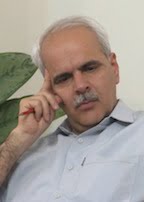
Isa Saharkhiz (who held a senior position in the Culture and Islamic Guidance Ministry under former President Khatami) accused security and judicial officials of cruel treatment, while taking him to a hospital. “The government, especially the Supreme Leader (Khamenei) will be held responsible for the consequences of the measures taken by politicians and security and judicial officials, all aimed to prevent me from receiving medical treatment and necessary care. Under these circumstances, I reserve the right for my family to file complaints to domestic and international courts.”

Source: Iran Daily Brief

Concern over condition of hunger-striking human rights activist

0

Human rights activist and President of the Kurdistan Human Rights Organization, Mohammad Sadeq Kaboudvand, who launched a hunger strike 30 days ago, is suffering from extreme weakness and his condition is provoking concern. Kaboudvand launched the hunger strike following the refusal of the authorities to allow him furlough to visit his critically ill son. His family expressed serious concern for Kaboudvand’s life, particularly due to his kidney disease.

Source: Iran Daily Brief

“I Am Certain Security Forces Murdered My Daughter,” Says Former MP

0

Mohammad Bagher Bagheri Nejadian Fard, a former member of the Iranian Parliament, told the International Campaign for Human Rights in Iran that in July 2011 security forces murdered his daughter. He stated that after numerous requests for investigation, Ministry of Intelligence officials have only threatened him to remain silent.

Fatemeh Bagheri Nejadian Fard, 28, a senior Engineering student, was a supporter of Mir Hossein Mousavi’s presidential campaign in 2009. “On the evening of Thursday, 28 July 2011, my daughter left the house. She was supposed to go shopping. But she didn’t return.  She always returned home by 10 p.m. at the latest, or would call home, but that night we didn’t hear from her…We went to the police station in our neighborhood and reported her missing,” Bagheri told the Campaign.
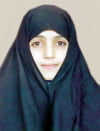
“A few hours later, someone from Shahr-e Rey Police called us and gave us our daughter’s description. Her body had been found that same day on 29 July 2011, in the foothills of the mountains in the Shahr-e Rey area, and then transferred to the Kahrizak Medical Examiner’s Office. I have tens of clear reasons that my daughter was murdered. This is why from the first moment I asked for an autopsy of my daughter’s body and for her cause of death,” he added. Fatemeh’s family was threatened not to hold funeral ceremonies or pursue her case, and to keep silent.

Mohammad Bagheri Nejadian, a twice-elected former MP and supporter of Mir Hossein Mousavi and Mehdi Karroubi, told the Campaign that he has written numerous letters about his daughter’s suspicious death, appealing to authorities including Supreme Leader Ayatollah Khamenei. The murder case remains open at Shahr-e Rey General Courts.

He explained the details of her suspicious death to the Campaign:

Fatemeh participated in the post-election protests, but she wasn’t so active to warrant her death. First they told us that she had died of natural causes. Then they told us that she had taken an agricultural pesticide pill, but I believe she was murdered by security forces, but I don’t know why or how. Maybe it was for my reformist views, or because my daughter participated in the post-election events. I have been threatened to keep silent about my daughter’s case. Isn’t this a sign?

The Medical Examiner first said that she had died of natural causes. But this answer did not convince us. I wrote a lot of letters to the authorities. Our home is in Northern Tehran and Fatemeh was found by a mountain in Southern Tehran. The Bibi Shahrbanu Mountain is very far and it is in an isolated location; it is impossible for someone to get there from Northern Tehran without a car. Fatemeh was not a mountain climber, and wasn’t even wearing sports shoes that day. One or two months after the incident, after I kept writing letters and going to the court, they announced that after new investigations they discovered that my daughter had taken an agricultural pesticide which led to her death. But we believe this is an absolute lie. Even if there was pesticide involved, it was fed to her.

Both her legs from the knees down, her arms, and her face had turned purple with bruises. Does this mean that before swallowing the pesticide, Fatemeh had beaten herself? Fatemeh weighed 40 kilograms and her height was 155 centimeters. Maybe they put her under so much pressure, her heart stopped, or she couldn’t take it and died or they killed her!  I don’t know, really. All I know is that my daughter was so happy and cheerful that we just cannot believe her having committed suicide.

Security forces showed up starting on the day of Fatemeh’s funeral. Later, they showed up to her memorial services [that occurred] one week and 40 days after her death, where they told me that if I continue with what I had been saying, the lives of my other children would also be endangered. They didn’t allow the speaker to talk at the memorial service, either. Then the Security Police contacted our home and asked me why I didn’t keep silent and why I say that the regime has murdered my daughter. Then they went to the Imam of the local mosque who had preached at my daughter’s memorial service and intimidated him, calling him anti-Supreme Leader for speaking at the funeral. Even my friends were threatened at the funeral, so that only a few people dare call our house or socialize with us. Aren’t all these signs that they murdered my daughter and are now threatening us into silence?

The former MP described that his efforts to pursue his daughter’s murder:

In a country where lawyers cannot get anything accomplished, how could I hire a lawyer? Having a lawyer in this system is useless, therefore I have pursued this case personally. In a letter to the Judiciary, 22 Members of Parliament asked for an investigation into my daughter’s case. I have written letters to the Supreme Leader of the Islamic Republic of Iran, the Speaker of the Iranian Parliament, Head of the Judiciary, the Tehran Prosecutor, and the Intelligence Minister, but I never received a response. If I wasn’t sure I would not have pursued this matter so seriously.

Over the recent years, I have been participating in the weekly meetings of the Center for the Defense of Political Prisoners, where I freely express my opinions. After the Kahrizak crimes, I said during a weekly meeting of the Center that “if regime authorities commit suicide because of these crimes, they should not be blamed.” Later, an individual from the Intelligence Ministry verbally abused me, my daughter, and my wife, calling us names I cannot repeat, profanities I had never heard before. A month before this, security forces went to visit my political friends in Fars Province and asked them questions about me. When I put all of these together, I conclude that the state intelligence apparatus is responsible for my daughter’s murder.

I told the authorities that if they can’t pursue this case they should say so, so that international human rights organizations can do it for them. I ask Ahmed Shaheed, the Special Rapporteur on human rights in Iran, to investigate my daughter’s murder case. I lost my mother and two brothers during struggles before the Islamic Revolution, so I cannot keep silent about the loss of my daughter now. I need to know the clear reasons for my daughter’s death. They have only threatened me so far, talking in ambiguities.  They have never spoken transparently with us. But I am standing until the end of the truth and I shall not keep silent. They should capture and kill me, too.

“Iran’s intelligence forces, or the group known as the vigilantes, have made all historical criminals proud. I have no fear. I have written all this in my letters to the authorities,” said Mohammad Bagher Bagheri, adding that he will continue to pursue the matter until the truth is discovered.

Source: Iran Human Rights

Kept in Solitary as Punishment, Says Imprisoned Activist’s Wife

Political activist Saeed Madani, 74, remains in Evin Prison’s Ward 209 after having completed his interrogations. Mansoureh Ettefagh, Madani’s wife, told the International Campaign for Human Rights in Iran that he has likely undergone torture during his detention. She also said that his interrogators are keeping Madani in solitary confinement “to punish him.”

On 7 January 2012, authorities arrested researcher, sociologist and member of the Nationalist-Religious Front Saeed Madani outside of his home in Tehran.  Since his arrest Saeed Madani has not been allowed to see his lawyer.

Mansoureh Ettefagh told the Campaign that Madani’s interrogators continue to illegally detain him in Ward 209:

Unfortunately, though his interrogations have been completed and the Prosecutor and the Investigative Judge from Branch 2 of Evin Prison Court have ordered his transfer to the General Ward, he has remained inside Ward 209 on request from his interrogators and ‘case specialists’ who are monthly asking for an extension of his ‘temporary detention.’ His interrogators wish to punish him because Saeed has not accepted the scenario they have built for accusing him. They have not accepted his interrogation sheets and would not allow him to be transferred to the General Ward. In fact they don’t want to accept the truth about him, they only want him to accept what they are saying against him.

“When I asked Saeed whether he had been beaten, he did not deny it,” said Ettefagh, The first few months were very hard for him, until he managed to improve his conditions after he went on a hunger strike. His interrogation sessions have lasted as long as 15 hours,” she added.

When asked about Madani’s charges, Ettefagh told the Campaign:

Because his lawyer has not yet been informed of his charges, I cannot answer that question exactly. But during this period he has been accused of planning to start a website against the Islamic Republic of Iran, and of trying to hold gatherings on this website. Or he has been accused of getting paid by foreigners. But none of these charges are true. His interrogators were unable to find anything other than his known activities, so they have created this scenario against him and now they insist that he accepts it.

Madani was one of several members of the Nationalist-Religious group arrested in March 2000. At the time, Madani was sentenced to four years in prison on charges of “membership in illegal groups,” “collusion with intent to commit a crime,” and “propagating against the regime.” Judge Haddad of Branch 26 of Tehran’s Revolutionary Court, issued prison sentence sof 4 to 11 years, bans on public speech and assembly, and bans on political activity for 5 to 10 years for the entire group. Madani was released on $200,000 bail after serving a year in prison, five months of which were spent in solitary confinement.

“Unfortunately, he is not in good physical shape. Prisoners inside Ward 209 are only allowed three half-hour fresh air breaks per week in a very small area, where prisoners are unable to exercise.  Their cell, where prisoners live together, is only 8 square meters.  Because there is not enough space to move around, he suffers from pain in his knees, arms, and legs,” said Mansoureh Ettefagh. Ward 209 of Evin Prison is illegally under the authority of the Intelligence Ministry, and not the Prisons Organization. The Campaign has reported various instances of torture allegations from within this ward.

“I hope there will be conditions whereby the Judiciary would have sufficient power and influence to enforce the law, so that interrogators and case specialists are not so powerful to do things against the Judiciary’s orders. Right now, interrogators have a lot more power than the Prosecutor and other judicial authorities,” said Mansoureh Ettefagh.

Source: Iran Human Rights

UN Special Rapporteurs condemn ongoing executions in Iran

Three United Nations Special Rapporteurs* on Iran, summary executions and torture condemned the recent execution of four members of the Ahwazi Arab minority in Ahwaz’s Karoun Prison in the Islamic Republic of Iran. Following a reportedly unfair trial, they were sentenced to death and executed on or around 19 June 2012.

“Given the lack of transparency in court proceedings, major concerns remain about due process and fairness of trials in cases involving the death penalty in Iran,” said the independent human rights experts, recalling the execution of Abdul Rahman Heidarian, Abbas Heidarian, Taha Heidarian and Ali Sharif. The four men, three of whom are brothers, were reportedly arrested in April 2011 during a protest in Khuzestan and convicted of Moharebeh (enmity against God) and Fasad-fil Arz (corruption on earth).

“Under international law, the death penalty is the most extreme form of punishment, which, if it is used at all, should be imposed only for the most serious crimes,” they said. “Defendants in death penalty cases should also receive fair trial guarantees stipulated in the International Covenant on Civil and Political Rights, ratified by Iran in 1975.”

“Any death sentence undertaken in contravention of those international obligations is tantamount to an arbitrary execution,” the three UN Special Rapporteurs stressed.

The rights experts noted with concern the high numbers of executions carried out in public, despite a circular issued in January 2008 by the Iranian Chief Justice that banned public executions. At least 25 executions have been carried out in public this year.

“Executions in public add to the already cruel, inhuman and degrading nature of the death penalty and can only have a dehumanizing effect on the victim and a brutalizing effect on those who witness the execution,” the independent experts underscored.

The Special Rapporteurs regretted that the authorities continue to apply the death penalty with alarming frequency, despite numerous calls to the Government of the Islamic Republic of Iran to establish a moratorium on executions. At least 140 executions are known to have been carried out since the beginning of 2012, with some sources indicating the figure to be as high as 220. The majority of these are for drug-related offences, which the experts do not believe constitute the “most serious crimes” as required by international law.

The UN independent experts urged the Iranian authorities “to halt immediately the imposition of the death penalty for crimes which do not constitute the most serious crimes, as well as ensure stringent respect for fair trial guarantees.”

Source: Fidh

Islamic Republic Internationalized Crackdown on Dissent

Reporters Without Borders firmly condemns the practice of detaining the relatives of foreign-based netizens as hostages and harassing the families of journalists who work for foreign media. It also deplores the fact that around 10 bloggers and netizens have been arrested since 21 May in Tehran, Mashhad, Hamadan and other cities for “insulting Islam.”

Cyber-police in Hamadan said the editor of a social network page “insulting Islam and the Shiite imams” was tracked down and arrested on 25 June. Reporters Without Borders is not yet able to confirm the exact number and identity of all those who have been arrested on similar charges in the past few days.

Kalameh, a website that supports Iran’s reformists, reports: “The wave of arrests of netizens in Iran began at the end of May. Most of the victims are students. Intelligence officers are pressuring their families to say nothing and to not get in touch with the media.”

According to the information obtained by Reporters Without Borders, the Organized Crime Surveillance Centre, an agency created by the Revolutionary Guards, has played an active role in identifying and arresting the netizens. Those arrested are currently being held in Tehran’s Evin prison, where they have been placed in isolation cells in Section 240 (controlled by the Revolutionary Guards) or in Section 209 (controlled by the intelligence ministry).

Yashar Khameneh, an Iranian student based in Europe, wrote in his blog on 26 June: “My father, Abbas Khameneh, has been a hostage of the intelligence ministry for the past five weeks. No charge has been brought against him, and he has not been allowed to speak to a lawyer or receive visits. He was arrested because he is my father.

“A few days after his arrest, they threatened to execute him if I did not send them a video in which I said I was sorry for what I had written. I did this, but they still have not released my father and now they are demanding all the information about my email and Facebook accounts, closure of the ‘International Campaign for Imam Naghi’ [a satirical Facebook page about the tenth of the 12 Shiite Imams] and my return to Iran.”

This is not the first time that the regime has threatened the families of journalists based abroad or has used intimidation as a way of imposing its law on the media. Steven W. Korn, the head of Prague-based Radio Free Europe / Radio Liberty, and Arman Mostofi, the head of Radio Farda (Radio Free Europe’s Persian section), reported on 12 June that threats to the families of foreign-based journalists working for Radio Farda have intensified in the past year.

Peter Horrocks, the head of global news at the BBC, reported last October that relatives of Iranians who work in London for BBC Persian Television had been harassed by the Iranian authorities following the broadcast of a documentary about the Supreme Leader, Ayatollah Ali Khamenei. He said they were summoned for questioning, passports were confiscated and some were banned from leaving the country.

A woman journalist employed by BBC Persian Television even had to agree to be interrogated via an Internet connection after her sister was arrested by the intelligence ministry.

“Steeped in corruption and tyranny, Iran’s theocracy is closing the door on freedom of opinion and expression by manipulating religion and by repeatedly using the charge of ‘insulting Islam’ in order to suppress any debate,” Reporters Without Borders said.

The organization is deeply shocked by the low and underhand methods that the regime uses to put pressure on its critics in the media and online, both in Iran and abroad. Those who are forced to flee abroad to escape the Islamic Republic’s indiscriminate repression are not safe even when they find refuge in countries that respect freedom of expression.

“The international community must react,” Reporters Without Borders added. “We urge United Nations High Commissioner for Human Rights Navi Pillay to condemn these arbitrary abductions and this harassment of the relatives of dissidents as crimes by the Iranian state.”

Source: Reporters Without Borders

Imprisoned journalist transferred from Evin Prison moved to Rajaï Shahr Prison

0

Imprisoned journalist Bahman Ahmadi Amou’I who was suddenly transferred from Evin Prison to the Political Prisoner wing at Rajaï Shahr Prison was suddenly placed in solitary confinement at Rajaï Shahr Prison. According to reports, the conditions of solitary confinement at the prison are even worse than at Evin. The reason for Amou’i’s transfer is unknown. Amou’i was sentenced to 5.4 years in prison following publication of an article critical of the economic performance of Ahmadinejad’s government in the post-election period.

Source: Iran Daily Brief

Concern for life of political prisoner who disappeared from cell

0

Human rights activists in Iran expressed concern for the life of Hushang Rezaei, a political prisoner who was sentenced to death and who disappeared from his cell and was transferred to unknown location. Rezaei was charged with terrorist activities for collaboration with the Kurdish Kumala party. Rezaei is believed to have been transferred to solitary confinement ahead of his execution.

Source: Iran Daily Brief

Two political prisoners from Rajaï Shahr Prison taken to hospital

Mehdi Mahmoudian and Zanyar Moradi were taken to hospital on Monday to receive medical treatment. Zanyar was returned to prison at the end of the medical examinations. Mahmoudian, a member of the Participation Front, who suffers from heart disease, was hospitalized.

Source: Iran Daily Brief

Guard Commanders Welcome War

With the breakdown of the latest round of talks between the West and the Islamic republic over Iran’s nuclear program and as Western officials express hopelessness in continuing the talks, senior Islamic Revolutionary Guard Corps (IRGC) authorities once again embarked on threatening remarks against the West and boasting their military prowess.

General Hossein Salami, the deputy commander of the IRGC announced in a televised interview, “We can hit all our mobile targets with 100 percent accuracy with our ballistic missiles that can travel elliptically and at several times the speed of sound when they re-enter the atmosphere. These missiles can seldom be tracked and destroyed.”

“In our operational plans we have defined a deterrent region in which all the operational interests of the enemy have been identified so that we can manage the conflict at any level if a war breaks out,” he asserted. “Through the other parts of this defense capability we can attack both the enemy’s strategy and also its vital interests anywhere of our choice at the same level at which we are attacked and act in a manner that will give us exponential control of the conflict.”

Salami also boosted to have unlimited weapons and arms. “Our defense potential is so great that sometimes our brothers in the IRGC aerospace force have limitations in space in storing them,” he boasted.

The commander of the IRGC aerospace command echoed these claims. “The Islamic republic has absolutely no interests in a war with other countries. At the same time, we shall respond firmly to any possible attacks by the enemy and shall give regretful response to them.” General Amir-Ali Hajizadeh said, “Threats, sanctions and pressure and the scenarios of Western countries. But these pressures and threats will produce the opposite results and shall result in a higher level of preparedness and ability for our country.”

The deputy of operations of the General Command of Iran’s armed forces General Mostafa Izadi also spoke in length with Fars news agency that is affiliated to the Guards. “Just as the supreme leader has said, Nuclear energy is not the issue that the West has with us. They are after confronting the whole Islamic regime,” he said. Regarding the possibility of a military strike by Israel, Izadi said, “The Islamic republic has a high potential and if the Zionist regime decides to act against us, it will be initiating its own end and without any doubt they cannot inflict any damage to this revolution and this regime.”

“If they decide to act rationally, these threats are merely psychological warfare but if they want to act irrationally then they will most certainly face defeat,” he asserted.

He added, “If the enemy threatens us, we shall utilize all our potential to respond to it. For example, if the enemy creates obstacles for our oil, we can utilize other potentials that we have and in return create our threats. We shall threaten in return for being threatened and in the domain of actions we shall engage them firmly.”

While he did not indicate what other potential he was referring to, other commanders had earlier said that if Iran’s oil was boycotted, then they would shut the Straits of Hormuz through which the oil exports of the Persian Gulf states, including that of Iran, flow, as a way to prevent all other regional oil exporters from exporting their oil as well.

These threatening remarks come amid Tehran’s insistence on continuing its nuclear program which the West has called pursues a nuclear weapons program.

In the US, a group of senators signed a letter to President Obama calling the talks with the Islamic republic dangerous and as a way to buy time. They stressed that talks in Moscow would be the last chance for Iran and wrote that Tehran was after the production of nuclear weapons.

Threats from Iranian authorities against Western countries and Israel, and counter-threats from the latter have raised tension in the region, particularly among Arab states so that some speculations are that a war would break out in the region. In this context, Nikolai Makarov, the chief of staff of Russia’s armed forces told reporters in February that “Iran has been targeted and I think that the West will decide about attacking Iran’s nuclear program in summer.”

Source: Roozonline