Home Blog Page 462

Cartoonist sentenced to flogging for depicting MP

An Iranian cartoonist has been sentenced to flogging after depicting a member of parliament in a local publication.

According to the country’s official news agency Irna, cartoonist Mahmoud Shokraiyeh has been sentenced to 25 lashes after drawing a cartoon that showed Arak MP Ahmad Lotfi Ashtiani wearing a football jersey.

The Press Court of the Province, presided over by Judge Edalatkhah, issued the sentence.

The cartoon appeared in Nameye Amir, the Central Province’s best-selling publication. The magazine is currently in its tenth year of publication.

The harsh ruling handed down to Shokraiyeh is not an isolated case in Iran. In the past, other cartoonists such as Mana Neyestani have also been imprisoned for their work.

 Source: irangreenvoice

Transfer of a Kurdish political prisoner in a dire health condition to an unknown location

The Iran Human Rights Documentation Center (IHRDC) has received reports from former prisoners at Rajaee Shahr prison in Karaj, Iran that a Kurdish political prisoner, Ramezan Ahmad Kamal, was abruptly transferred by Iranian authorities from Rajaee Shahr prison to an unknown location at 8 AM in the morning on Saturday, May 5. The authorities took Kamal’s personal items and did not specify where they were taking him.

Prior to his transfer, Kamal was kept in the medical clinic of Rajaee Shahr prison since April 10, 2012 on account of his poor health. According to sources close to Kamal, he urgently needed surgery at a hospital outside of the prison due to previous injuries from gunshot wounds and beatings during his incarceration that were worsened by a botched operation on his hand in the prison’s on-site medical clinic. However, despite the need for hospitalization, Kamal was not brought outside of the prison for treatment and instead was kept in the Rajaee Shahr prison medical clinic. He was reportedly simply given painkillers as treatment in the clinic.

Kamal, a Kurdish Syrian born in 1982 in the city of Kobani, Syria, was ambushed and seriously injured by IRGC forces, with eight gunshots to his arms and legs, in June 2008 nearby the city of Maku in West Azerbaijan province in Iran. A Kurdish Turk, Farhan Chalesh, was wounded alongside Kamal in the conflict.

According to information obtained by IHRDC from a source close to the two men, IRGC forces arrested the men, then dragged them on the ground for tens of meters and beat them. They were brought to a hospital in Orumiyeh and although they needed surgery and extensive hospitalization for their wounds, they were transferred to the detention center of IRGC in Orumiyeh after only five days on the orders of the security forces in the city.

At the IRGC detention center in Orumiyeh, the men were detained in separate solitary cells. IRGC intelligence agents interrogated them and subjected them to extreme mental pressure. Kamal spent 14 days in solitary confinement; during this time his wounds were left untreated which resulted in infection and maggot infestation of his injuries.

After 14 days in solitary confinement, Kamal and Chalesh were transferred to a prison in Maku. For four months they were not officially charged. They were then sent to the revolutionary court in Khoy to be tried before Judge Nouroozi. Kamal and Chalesh did not have legal representation at their trial and could not properly defend themselves in the proceedings on account of their lack of proficiency in the Farsi language. During their trial, which lasted only several minutes, they were sentenced to death for muharibih—or “warring with God”—for alleged membership in the PKK (Party Kargaran-i Kurdistan, or Kurdistan’s Workers Party).

Kamal and Chalesh appealed the sentence—their sentences were referred to Iran’s Supreme Court and eventually reduced to ten years of imprisonment and exile to Ghazvin central prison and Zanjan central prison respectively. The sentences also forbid the prisoners from having any contact or visits from their family for the duration of their sentence.

After ten months total detention at Maku prison, Kamal was transferred to Ghazvin central prison and Chalesh was transferred to Zanjan central prison to serve out the duration of their sentences. Kamal was sent to the ward for dangerous prisoners and those convicted on drug related offenses in Ghazvin prison. Kamal was subjected to extreme psychological pressure in the ward and, as a result, began a hunger strike in protest on December 7, 2009. After roughly 40 days of his hunger strike, Kamal was sent to Imam Khomeini Hospital in Tehran on January 16, 2010.

After a week following his admission into hospital, Kamal was sent to Evin prison. There, he was reportedly brutally beaten with batons absent any clear reason, which resulted in injury to his ankle and his arm, which he could not subsequently move. Kamal was sent to ward 8 of Evin prison and after three months then sent to ward 350. Despite Kamal’s numerous requests to the clinic of the prison to be treated for his injuries, incurred both pre and post-Evin, the authorities did not take adequate action to give him proper medical care. Reportedly, the head of the medical clinic at the time informed Kamal that based on the order of Prosecutor-General of Tehran, Abbas Jafari Dolatabadi, they were not allowed to treat Kamal because he had attacked Iran and was an “anti-revolutionary” force.

Following a year of incarceration at Evin prison, Kamal was then transferred to Rajaee Shahr prison in Karaj on April 14, 2011. Similar to his experience at Evin prison, Kamal and a number of other political prisoners were beaten minutes after their arrival at Rajaee Shahr prison and harassed by special dogs used by the guards in the prison. After receiving threats of execution, Kamal was instructed by the authorities at the prison to not cause any trouble at Rajaee Shahr or else he would die for any number of reasons, just like many other prisoners who die in Rajaee Shahr each year.

After 50 days of detention in a quarantine ward at Rajaee Shahr, which is normally reserved for some of the most dangerous prisoners that pose a risk to the prison population, Kamal was sent to ward 1 of the prison which houses dangerous offenders, HIV positive convicts and those convicted on drug-related offenses.

In his time at Rajaee Shahr, Kamal was reportedly pepper sprayed and beaten by prison authorities for complaining about the lack of basic facilities and medical care in the prison. Eventually, authorities partially acquiesced to Kamal’s demands for medical care and operated on his injured arm, without up-to-standard surgical instruments and medical supplies, in the medical clinic on-site at the prison. Two days following the surgery, while Kamal was still in recovery from the operation, he was returned to ward 1. The operation was reportedly unsuccessful, and the condition of his arm worsened by the procedure—it rendered Kamal unable to move his entire hand from the wrist down. For this, he was being given painkillers in Rajaee Shahr prison’s medical clinic up until the time of his transfer last Saturday.

 Source: IHRDC

Iran upgrades Palestinian Jihad Islami’s Gaza arsenal with coastal missiles, improved Qassams

0

Iran is working at speed to give the Jihad Islami, its radical Palestinian arm in the Gaza Strip, a strong military edge over the ruling Hamas which it no longer trusts, DEBKAfile’s exclusive military sources report.  Tehran is motivated by two objectives:

1.  Because of its growing distance from the Assad regime in Syria, Hamas can no longer be relied on to support the Islamic Republic’s cause and strike Israel or US Middle East targets if the latter go to war on  Iran’s nuclear program.
One of Tehran’s top strategic priorities now is therefore to set Jihad Islami up as the spearhead of a potential attack on Israel instead of Hamas from the Gaza Strip and its Mediterranean coast.
2.  Partly also as a rejoinder to the Qatari and Saudi arms shipments channeled to the Syrian rebels through Turkey, Iran is matching the level and quality of those arms deliveries by its own consignments through Sinai or by sea to the Gaza Strip and the Palestinian extremist group.
Those consignments have two parts:
The first entails the establishment of a line of radar-guided, shore-to-sea missiles along the Gaza coast – to prevent Israel’s missile ships getting near enough to the enclave from the Mediterranean to shell shore targets – and as a barrier against Israeli armored or special forces landings.

Iranian missile experts are on the spot setting up the missile deployments and organizing the logistics for their transfer from storage to preset launching sites. Scores of Jihad Islami fighters are undergoing special course in their use at Revolutionary Guards centers while Iranian instructors in Gaza are showing them how to use their radar systems.

For the second, Iranian and Hizballah missile engineers are working on magnifying the explosive punch, range and targeting precision of the estimated 15,000 Qassam missiles in the Jihad Islami’s armory.

To this end, they re building for the terrorists a military industry with production lines which for the first time will give them the capacity for the high-speed serial production of dozens of Qassam’s instead of producing them one at a time in small foundries.
Once those production lines are working, Jihad Islami can double the intensity of its missile attacks on Israeli locations from 100 to 200 per day. Their range has also been improved so as to bring Tel Aviv and its southern environs within reach of upgraded Qassams launched from the Gaza Strip.

According to DEBKAfile’s military sources, Iran and Jihad Islami welcome Israel’s sudden decision to hold an early election on September 4 because they believe its leaders will be too busy campaigning to interfere with the Iranian-Palestinian military buildup going forward apace in the Gaza Strip. By the time the next Israeli government is in place, most likely headed by the incumbent Binyamin Netanyahu, their new deployment and armaments will already be in place.

 Source: debka

Afghan Reporter With Iran’s Fars News Agency Arrested On Spying Charges

0
KABUL — An Afghan reporter with Iran’s semiofficial Fars news agency has been arrested in Afghanistan on spying charges.
An unnamed Afghan security official told the BBC that the reporter has been arrested for “disclosing government secrets to Iran” without providing more details.
Fars — said to be affiliated with Iran’s Revolutionary Guards Force — has confirmed that its Kabul bureau chief and reporter Abdolvahed Hakimi was arrested on May 5 by Afghan security agents and taken to an unknown location.
The agency quotes Hakimi’s wife as saying that her husband had made a brief telephone call on the night of May 5 to inform his family of his arrest by the Afghan National Security Office.
Fars said the arrest could be down to a “misunderstanding” on the part of Afghan security bodies.
Source: rferl

Free Nargess Mohammadi

0

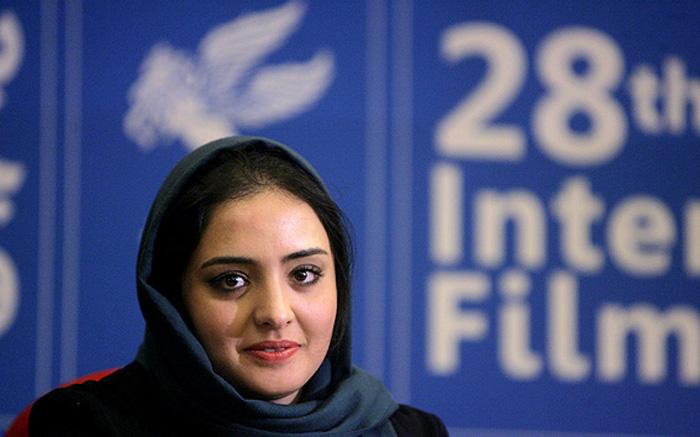
Iranian human rights activist Nargess Mohammadi has been summoned to serve out a six-year prison term.

Mohammadi was the deputy head of the Human Rights Defenders Centre, an NGO providing pro-bono legal services in human rights cases. The centre is currently outlawed by the Islamic Republic.

Mohammadi has been charged with “assembly and collusion against national security, membership in the Human Rights Defenders Centre and propaganda activities against the Islamic Republic regime.” In the preliminary court, she was sentenced to 11 years in jail, but her sentenced was reduced to six years in the appellate court.

Mohammadi, a member of the National Peace Council, has also been banned from traveling abroad. Mohammadi’s husband, Taghi Rahmani, who had also been targeted with arrests and persecution by the Islamic Republic in recent years, has fled the country, but Mohammadi has reportedly decided to stay in Iran together with her twins.

SOURCE : Radio Zamaneh

Activist gets six years in jail
Tue, 03/06/2012

The appellate court has confirmed the six-year jail sentence handed to Nargess Mohammadi, the deputy head of Iran’s Human Rights Defenders Centre.

The Human Rights Defenders Centre website reports that Mohammadi was sentenced to five years in prison for “assembly and collusion against national security.” She reportedly had been sentenced to another five years in jail for membership in the Human Rights Defenders Centre, an NGO of lawyers working pro bono on human rights cases, as well as an additional year in prison for “propaganda activities against the Islamic Republic.

The total sentence of 11 years in jail was reduced to six years by the appellate court, according to Mohammadi’s lawyer.

Mohammadi was fired from her position at an engineering company and summoned to the judiciary soon after, only to be released on bail.

Moihammadi was severely ill during her arrest and was hospitalized after her release. Her home was also raided in February of 2011, and her attempts to file charges against the perpetrators have been fruitless.

Members of the Human Rights Defenders Centre have been the target of continuous persecution by Islamic Republic authorities. On Sunday, Abdolfattah Soltani, another human rights lawyer linked to the centre, was sentenced to 18 years in jail and a 20-year ban from legal practice.

Shirin Ebadi, the Iranian Nobel Peace laureate and one of the founding members of the Human Rights Defenders Centre, has announced that the detained centre members are being pressured to make false statements about the centre and about Ebadi herself, in order to implicate her and their organization in seditious activities.

Source: GoPetition

Iran: Free Students Jailed for Speaking Out

Joint Campaign Highlights Repression on Campus

Iranian authorities should immediately free dozens of university students currently behind bars solely for peacefully expressing political opinions, and end harassment of student activists on university campuses throughout the country, Human Rights Watch said today. Human Rights Watch issued the call as part of a joint campaign initiated by Iranian and international student and rights groups to highlight the government’s systematic crackdown against university students for their political activism.

The campaign has called for the unconditional and immediate release of the 32 students in prison on various national security-related charges. Authorities rounded up many of these students after the disputed June 2009 presidential election, and revolutionary courts convicted and sentenced them on charges such as “propaganda against the system,” “participating in illegal gatherings,” and “insulting the president.” Therefore all were convicted specifically for exercising their rights under international law to freedom of speech, of association, and of peaceful assembly. Security, intelligence, and university officials have disciplined, suspended, or expelled hundreds of other students who criticized the government during the past few years.

“Instead of serving as sanctuaries for higher learning and free debate, Iran’s university campuses are being targeted by the government to silence dissent, stifle academic freedom, and impose uniformity of thought,” said Sarah Leah Whitson, Middle East director at Human Rights Watch.

Two of Iran’s largest student groups, Tahkim-e Vahdat (Office to Foster Unity) and its alumni association Advar-e Tahkim-e Vahdat, spearheaded the Speak Up for Imprisoned Students campaign on April 21, 2012.

Activists began the campaign on the heels of a report prepared by Tahkim in January that documented the arrests of students. According to the report, since March 2009, 436 students have been arrested, 254 convicted, and 364 suspended or expelled. Tahkim also alleged that judiciary officials had summoned at least 144 students for investigations and that officials have closed down 13 student publications.

Ahmed Shaheed, the United Nations special rapporteur on human rights in Iran, highlighted the dire situation of student activists in his most recent report in March 2012. The report, which followed an interim report on September 23, 2011, documented a “striking pattern of violations” by Iranian authorities and outlined the government’s continuing refusal to cooperate with UN bodies.

As recently as April, Kamran Daneshjoo, the minister of science, research, and technology, announced that, “Individuals who participated in the 2009 insurrection … have no right to enter universities.” The Science Ministry, the primary government body responsible for regulating universities in Iran, has introduced a number of controversial measures during Mahmoud Ahmadinejad’s presidency in an effort to “Islamicize” Iran’s universities.

“There is absolutely no reason why any of these students should spend one more day behind bars, let alone forfeit their right to continue their studies in Iran’s universities,” Whitson said. “Authorities should immediately drop charges and release all students imprisoned for criticizing the government, and reverse their futile policy of barring students from higher education on account of their peaceful political activism.”

Background
Iran’s universities have increasingly become targets of government efforts to consolidate power and stifle dissent. Since 2005, Ahmadinejad’s administration has pursued a multi-phased campaign to neutralize dissent at universities and “Islamicize” higher education. This campaign, spearheaded by the Ministries of Science and Intelligence, includes imprisoning student activists; barring politically active students from higher education; using university disciplinary committees to monitor, suspend, or expel students; increasing the presence of pro-government student groups affiliated with the basij (a hard-line Islamist paramilitary group); cutting or limiting social science curricula; and restricting the activities of student groups.

During the wide-ranging crackdown that followed the disputed June 2009 presidential election, security forces arrested more than 200 students, including several high-ranking members of Tahkim. Many of these arrests took place in November and early December 2009, months after security forces attacked Tehran University and killed several students, and weeks before National Student Day events were to take place. On Student Day 2009, demonstrations erupted on university campuses throughout Iran as many students expressed outrage over the election results. Authorities responded with dozens of arrests.

Tavakoli, an Amir Kabir University student and member of the school’s Islamic Student Association who gave a speech criticizing the government, was among those arrested. A revolutionary court sentenced him to eight-and-a-half years in prison on various national security charges, including “conspiring against the national security,” “propaganda against the regime,” and “insulting the Supreme Leader” and president. He is in Tehran’s Evin prison.

Officials often held the students incommunicado for weeks before prosecutors filed charges against them and lawyers gained access to their clients. Many alleged that security and intelligence agents had tortured and forced them to confess to crimes they had not committed. The judiciary prosecuted the students in closed trials in Iran’s revolutionary courts.

Authorities also targetedstudent leaders during the crackdown, including four members of Tahkim in November 2010. In a statement issued on November 8, 2010, Tahkim accused the authorities of targeting these four members because they had just been elected to the organization’s central committee.

On October 31, 2010, Raja News, a Persian-language website thought to be close to the Intelligence Ministry, reiterated Tahkim’s illegal status and ran an article accusing several of its members of having ties with the Free Life Party of Kurdistan (PJAK) and the Mojahedin-e Khalq (MEK), both of which the Iranian government considers terrorist organizations. Tahkim and several Persian-language websites affiliated with other student groups have rejected these allegations and said the arrests were part of the government’s latest campaign to discredit the student movement and stifle dissent.

The Ministry of Science, Technology, and Research declared Tahkim-e Vahdat illegal in 2009.

Bahareh Hedayat and Milad Asadi are two other central Tahkim committee members who were arrested in 2009. They are also in Evin prison. Hedayat is the first secretary of the Women’s Commission of Tahkim, and the first – and so far only – woman elected to the national student organization’s central committee. Authorities arrested her on December 30, 2009, and charged her with various national security crimes, including “propaganda against the system,” “participating in illegal gatherings,” and “insulting the president.” In May 2010 a revolutionary court sentenced her to nine-and-a-half years in prison. In August of the same year, another court sentenced her to an additional six months for “propaganda against the regime.” Security forces arrested Asadi on November 30, 2009, and Branch 28 of the Revolutionary Court sentenced him to seven years in prison for similar security crimes. He has since been released.

The administration has also targeted several other student organizations and their members, including Advar-e Tahkim-e Vahdat and the Committee to Defend the Right to Education (CDRE). Security forces arrested several central committee members of Advar, including Ali MalihiAli Jamali, and Hasan Asadi-Zeidabadi, who are currently being held in Evin prison. Asadi- Zeidabadi and Malihi are serving sentences of five and four years respectively on various national security charges such as “participation in illegal gatherings,” “propaganda against the regime,” and “insulting the president.”

Zia Nabavi, a co-founder of CDRE, is serving a 10-year sentence in the southwestern province of Khuzestan. Intelligence Ministry agents arrested Nabavi on June 15, 2009, and prosecutors charged him with various national security-related crimes, including “links to and cooperation with the MEK.” Mahdieh Golroo, a student activist and another member of CDRE, has been in prison since November 3, 2009. In April, a revolutionary court convicted her of national security crimes and sentenced her to 28 months in prison. Another co-founder of CDRE, Majid Dorri, is serving a six-year prison sentence for his student activities.

Nabavi, Golroo, and Dorri formed CDRE in 2008 after authorities barred them from continuing their university studies. It is one of several student groups that publicized and resisted the government’s policy of preventing students from continuing their higher education on political or religious grounds. Another such group is the Population to Combat Educational Discrimination, which largely addressed the government’s official policy of preventing Baha’is from being admitted to or expelling them from universities “once it becomes known that they are Baha’is.”

Campaign Participants
Shirin Ebadi (Center for Human Rights Defenders); Amnesty International; Boroumand Foundation; Green Activists in London; Green Students for A Democratic Iran-Southern California; Human Rights Activists; International Campaign for Human Rights in Iran; Iranian Democratic Student Association at George Washington University; Iranian Green Quest of Graduates and Students; Solidarity with Iran’s Democratic Movement (Canada); Students for Iranian Green Movement Association (Canada); Student Green Movement of Vancouver in Solidarity With the People of Iran; Supporting Student Movement in Iran (Sigma), University of Victoria (Canada); The International Federation of Human Rights (FIDH); and United 4 Iran.

Names of Imprisoned Students
Hasan Asadi-Zeidabadi; Javad Alikhani; Mohammad Ahadi; Babak Dashab; Majid Dorri; Moeen Ghamin; Mahdieh Golroo; Bahareh Hedayat; Saeed Jalalifar; Ali Jamali; Milad Karimi; Mehrdad Karami; Mehdi Khodaii; Omid Kokabi; Habibollah Latifi (sentenced to death for moharebeh, or “enmity against God,” for his alleged links with “anti-revolutionary groups.”); Shabnam Madadzadeh; Ali Malihi; Aliakbar Mohammadzadeh; Atefeh Nabavi; Zia Nabavi; Hamed Omidi; Hossein Ronaghi Malaki; Kaveh Rezaei Shiraz, Hamed Rouhi Nejad; Roozbeh Saadati; Arash Sadeghi; Afshin Shahbazi; Fereshteh Shirazi; Ieghan Shahidi; Abolfazl Tabarzadi; Majid Tavakoli; Shahin Zeinali.

 Source: Human Rights Watch

U.N. rights experts decry “mounting repression” in Iran

Iran is cracking down on activists and their lawyers, meting out harsh sentences in an effort to quash pro-democracy activities, United Nations human rights experts said on Friday.

In a joint statement, the independent experts called for the immediate release of human rights defenders including Narges Mohammadi, whom they said was rearrested on April 21 to serve a six-year prison sentence handed down by an appeals court.

“The conviction and extremely harsh sentencing of human rights defenders is an indication of mounting repression against the legitimate activities of human rights defenders and represents a serious setback for the protection of human rights in Iran,” said Ahmed Shaheed, U.N. special rapporteur on Iran.

Thousands of opposition supporters have been detained since the disputed 2009 presidential election won by President Mahmoud Ahmadinejad, including scores of senior reformist figures.

Mohammadi, former vice-president of the Defenders of Human Rights Centre, founded by rights lawyer and Nobel peace laureate Shirin Ebadi, was convicted of “assembly and collusion against national security, membership in the Defenders of Human Rights Centre and propaganda against the regime,” the statement said.

She is said to be in “extremely fragile” health, it said. A U.N. official told Reuters that Mohammadi is believed to be held in Tehran’s Evin Prison.

“Human rights defenders play a fundamental role in ensuring a democratic society which respects human rights. They must be allowed to carry out their work without facing intimidation, harassment, arrest and prosecution,” said Margaret Sekaggya, special rapporteur on human rights defenders.

Lawyers representing activists in the Islamic republic are also facing difficulties as they are being identified with their clients’ causes, according to Gabriela Knaul, special rapporteur on the independence of judges and lawyers.

“The government has an obligation to ensure that lawyers can perform all of their professional functions without intimidation, hindrance, harassment or improper interference and that they do not suffer prosecution for any action taken while carrying out their duties,” she said.

Abdolfattah Soltani and Nasrin Sotoudeh, both lawyers who have represented many high-profile political and human rights activists, are among those to have been jailed for carrying out their legitimate work, according to the statement.

Soltani, co-founder of the Defenders of Human Rights Centre, was arrested in September on charges of collusion, anti-regime propaganda and acquiring property through illegitimate means, leading to an 18-year prison sentence and 20-year ban on practicing law, it said.

Sotoudeh, a human rights lawyer, was arrested in September 2010 and sentenced to six years by an Iranian appeal court, along with a 10-year ban on her practicing law, it said.

Shaheed, a former foreign minister of the Maldives, and the other investigators report to the U.N. Human Rights Council.

Despite repeated requests, he has never been allowed into Iran, but the Geneva forum renewed his mandate in March for a second year after he reported a high rate of executions as well as abuse of minorities, and persecution of homosexuals and labor unions.

Mohammad Javad Larijani, head of Iran’s High Council for Human Rights, told the U.N. forum in March that his government had “repeatedly manifested its unwavering commitment toward the advancement of human rights” and that “self-monitoring” was a key principle. The aim was to build a prosperous society based on justice, equality, legitimate freedoms and development.

The report submitted by Shaheed “amounted to nothing more than the repetition of a barrage of unsubstantiated and biased contentions traditionally levied” against Iran, Larijani said.

 Source: Reuters

Rights situation in Iran troubles U.N.

0

rights experts reporting to the United Nations expressed concern over the “extremely harsh” sentences given to human rights defenders in Iran.

Human rights experts, led by Ahmed Shaheed, special envoy on human rights in Iran, expressed concern about the 6-year prison sentence give to rights advocate Nargess Mohammadi.

Mohammadi, who helped found a human rights center with Nobel Peace Prize laureate Shirin Ebadi. Mohammadi, was charged with collusion against national security.

Two human rights lawyers were sentenced to lengthy prison terms for allegedly issuing propaganda against the state.

“The conviction and extremely harsh sentencing of human rights defenders is an indication of mounting repression against the legitimate activities of human rights defenders and represents a serious setback for the protection of human rights in Iran,” Shaheed said in a statement.

The condemnation came as Iranians head to a second round of voting for 65 members competing for seats in the 290-member Parliament.

Source: UPI

Iran criticized for harsh sentences against rights defenders

0

A group of UN human rights experts on Friday criticized the government of Iran [press release] for the detentions and harsh sentences of human rights defenders. The Special Rapporteurs on human rights defenders, the situation of human rights in Iran, and the independence of judges and lawyers urged the Iranian government to ensure that human rights defenders are allowed to carry out their legitimate activities and receive adequate protections. The highlighted the cases of several human rights activists who have been detained and sentenced to prison, including lawyers Abdolfattah Soltani and Nasrin Sotoudeh[JURIST reports]. Special Rapporteur on the independence of judges and lawyers, Gabriela Knaul said:

I am really worried that human rights lawyers are being identified with their clients or their clients’ causes as a result of discharging their functions. The Government has an obligation to ensure that lawyers can perform all of their professional functions without intimidation, hindrance, harassment or improper interference and that they do not suffer prosecution for any action taken while carrying out their duties.

The experts called for the immediate release of the human rights defenders.

Iran has faced ongoing criticism for its human rights record from the UN and other groups. In March UN Special Rapporteur on the situation of human rights in Iran Ahmed Shaheed told the UN Human Rights Council that he is concerned about the human rights violations [JURIST report] occurring in the country. Corroborating Shaheed’s concerns, Amnesty International released a report in February that Iran executed twice as many people [JURIST report] in 2011 as it did in the previous year. The report, entitled “‘We Are Ordered to Crush You’: Expanding Repression of Dissent in Iran,” chronicles widespread international human rights violations that Iran’s government has allegedly perpetrated over the past year. The AI report claims that the most common targets of Iran’s crackdown on human rights are lawyers, rights activists, filmmakers, journalists and political leaders.

Source: Jurist

UK condemns protestor killings, detainee torture in Iran during 2011

Britain has condemned the killing of at least 30 people in Iran during security force crackdowns on protests throughout 2011, according to a report published by the Foreign & Commonwealth Office (FCO) this week.

The report stated that throughout the past year, “there has been no improvement in the human rights situation in Iran.”

In 2011, protests occurred in Azerbaijan province in north-western Iran against the Iranian parliament’s rejection of a bill to maintain a natural salt-lake in the area, Lake Orumiyeh.

Meanwhile, the worst violent protests were seen in Khuzestan, where local Arabs planned to march in solidarity with other protests across the region.

“Iran witnessed other protests and subsequent violence by security forces throughout the year,” the report stated.

“Reports indicated that several hundred protestors were arrested and live ammunition was used, with more than 30 people killed,” it added.

The report also noted that a number of political opposition leaders remain detained without charge since February, while non-government sponsored protests were brutally crushed.

“Human rights defenders and lawyers continued to be detained or forced to flee the country,” the FCO said.

But the report cited a positive move by Iran when over 100 political prisoners were released in August. They were thought to have been arrested following the protests over the disputed elections in 2009.

“While a positive move, we remain concerned about the fate of the thousands of others arrested for their part in protests since 2009 and call for their release,” the FCO stated.

Also in the report, the FCO expressed its concerns over Iran’s use of the death penalty in 2011, “including the scale of its use, methods of implementation and its application to juveniles.” The report stated that at least 650 people were executed in Iran in the course of the year, according to reliable NGO local media reports.

Meanwhile, NGOs reported numerous cases of torture and other ill-treatment against detained persons in 2011, the FCO said, with reports received by a United Nations Human Rights organization that had “frequently communicated the use of physical and psychological mistreatment and torture” of detainees.

Source: alarabiya