Home Blog Page 537

US pullback to leave 30,000 Iranian Al Qods fighters sitting in Iraq


Ten days have gone by since President Barack Obama accused Iran of instigating a foiled plot to assassinate the Saudi ambassador to Washington last April. Yet neither the US nor Saudi Arabia has done anything about it – even at the UN.
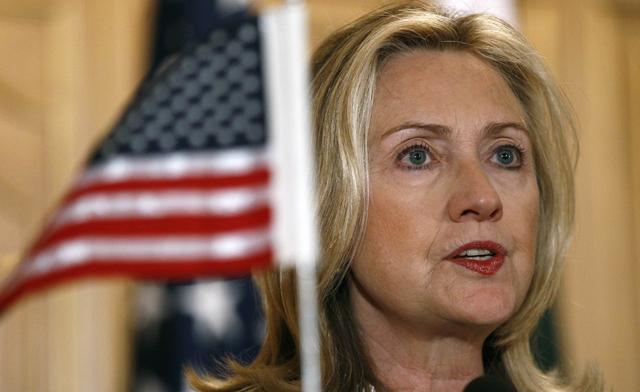
Friday, Oct. 21, Obama reaffirmed that all US soldiers will be brought home from Iraq by the end of the year. Two days later, Secretary of State Hillary Clinton pledged in Tajikistan: “To countries in the region, especially Iraq’s neighbors, we want to emphasize that American will stand with our allies and friends, including Iraq, in defense of our common security and interests.”

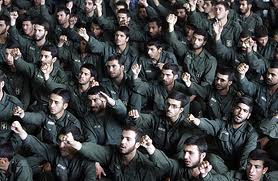
She spoke as the Obama administration was preparing to pull out of Iraq, leaving in Baghdad a government and national army incapable of defending the country against widening cycles of terror, headed by a prime minister under Tehran’s thumb and more than 30,000 armed members of the Iranian Revolutionary Guards’ terrorist arm, al Qods Brigades, deployed there.
Prime Minister Nouri al Maliki is so completely in thrall to Iran that he was afraid to accede to Washington’s insistent demand for immunity to be extended to at least 5,000 US soldiers remaining in Iraq, although left on his own he would have been inclined to do so.
The eight-year US military presence in Iraq ends therefore leaving Iran sitting pretty on its two key strategic goals:

1. The exit of American soldiers, whose presence in Iraq since the 2003 invasion was deemed in Tehran a continuous threat to its borders. US military involvement in Afghanistan is seen in the same light.

2.  A weak Shiite-led government in place in Baghdad, heavily dependent on Tehran’s will. Torn by strife among Shiites, Sunnis and Kurds, Iraq is in no state to obstruct Iran’s hegemonic plans for the Persian Gulf and Syria.

The Iranian regime’s right hand for achieving those goals was – and is – Al Qods commander Lt. Gen. Qassem Soleimani, the man also accused by Washington of masterminding the assassination plot.

Washington is well aware of Soleimani’s capacity for interfering with American interests. Indeed he crows about it.

Last July, US sources leaked a message he posted in 2008 to Gen. David Petraeus, then head of US Central Command and now CIA Director: “General Petraeus, you should know that I, Qassem Suleimani, control the policy for Iran with respect to Iraq, Lebanon, Gaza and Afghanistan. And indeed, the ambassador in Baghdad is a Quds Force member. The individual who’s going to replace him is a Quds Force member.”

He was flaunting his control of Baghdad at American expense.
Since then, he has expanded this control, DEBKAfile’s military sources report, by injecting 30,000 al Qods fighting personnel into Iraq, all trained in guerrilla tactics to the standards of Western and Middle East elite units.

At least half are deployed in Baghdad in the guise of bodyguard units Iraqi government members and political figures have hired from local firms. Most of the Shiite figures in government and parliament are now using al Qods details for protection. This makes the easily vulnerably to manipulation from Tehran.

Today, Al Qods has the run of Baghdad’s Green Zone, the top-security enclave built a cost of billions of American dollars to keep the US embassy and high commands in Iraq and its seat of government safe from terrorist bombs.
After the US military drawdown in just over two months, the 16,000 US embassy staffers remain in the Green Zone, including 5,000 security officers from civilian contractors.

They will stand eyeball to eyeball with a like number of al Qods operatives defending the pro-Iranian Iraqi government. It is on this jarring note that America is about to end its war in Iraq.


Source

Use of VPNs criminalized in Iran


The use of VPNs (Virtual Private Networks) and proxies is a “crime,” Iran’s Minister of Communications and Technology has announced. On Monday ISNA quoted the minister saying: “Now VPNs have been cut off in the country because their use is a legal violation.”

A VPN is a cyber network through which internet users can get access to internet providers outside Iran by using ISPs within the country. Iranian internet users have been using VPNs and proxies to circumvent internet censorship by the Islamic Republic, which tightly blocks numerous foreign as well as Iranian opposition websites.

Communications Minister Reza Taghipour maintained that it was “unfortunate” that the internet has become the “battle arena for the soft war.” He maintained that “fortunately, however, our country has a great technical ability to stand against it.”

Iranian authorities claim that their enemies are trying to destabilize the Islamic Republic system through cultural and social influences, which they refer to as the soft war. Therefore, the internet has been targeted by Iranian authorities as the main tool used by Iran’s enemies in the so-called soft war.

A committee headed by Iran’s Prosecutor General determines which sites must be blocked from being accessed by Iranian web users.


Source

82-Year Old Iraqi Attorney Hassan Tafah in Critical Condition

0


HRANA News Agency – Hassan Abdul-Hassan Tafah’s physical health has deteriorated further, and he is in critical condition. Hassan Tafah is an 82-year old lawyer and human rights activist of Iraqi descent convicted of spying and locked up in Ward 4, Hall 12 in Rajai-Shahr Prison.

According to a report by Human Rights Activists News Agency (HRANA), in 2008, Hassan Tafah was sentenced to 15 years in prison by the Revolutionary Court on charges of spying. He suffers from a number of medical problems including anemia, low blood pressure, kidney and prostate diseases. Furthermore, he has recently been diagnosed with blood cancer.

Iranian judiciary officials have taken no major steps towards providing medical care for Hassan Tafah and have made every effort to block his access to health care.

Hassan Tafah is originally from the southern Iraqi city of Basra, an attorney and a former member of Communist Party of Iraq before seeking refuge in Iran. He was arrested in 2007 during negotiations and talks with Iranian intelligence and security officials and charged with spying. The Revolutionary Court then found him guilty, sentenced him to 15 years in prison and fined him approximately $180,000.


Source

Three Years of Imprisonment for Women’s Rights Activist Maryam Ghorbanifar

0


The 3 year imprisonment sentence of Maryam Ghorbanifar has been served to her lawyer.

According to the Human Rights House of Iran, she has been senteneced for acting agianst national security, gathering and conspiracy agianst the regime.

She was arrested in February and was held in solitary confinement until she was released on bail after undergoing interrogations.


Source

My Son Is Refusing Medication, Says Hossein Ronaghi Maleki’s Father

0


Imprisoned blogger Hossein Ronaghi Maleki has stopped taking his medication in order to protest the prison authorities’ refusal to allow him to be hospitalized for his kidney and gallbladder problems. In an interview with the International Campaign for Human Rights in Iran, his father, Ahmad Ronaghi Maleki, expressed grave concern for his son’s deteriorating health and mistreatment by Evin Prison infirmary personnel who refuse to accommodate his son there.

“My son has started a medication strike, because he has not been transferred to a hospital. The Tehran Prosecutor had agreed with his medical leave request and had ordered for his immediate treatment, but his interrogators and Judge Pirabbasi did not allow it. He suffers from gallbladder and kidney problems. He has even stopped going to prison infirmary for the past month. A month ago, they mistreated him and told him that he was going [to the infirmary] for fun. My son has stopped going to the infirmary no matter how severe his pain becomes,” said Ronaghi’s father.

Ronaghi has needed serious medical treatment for his kidneys and gallbladder for the past several months. So far, he has written two letters to the Tehran Prosecutor to bring attention to his physical conditions. “Though I have kept silent in the face of the unfair ruling of the court, this time my conscience and my wisdom rule not to keep silent in the face of my endangered health,” he wrote in his first letter to the Tehran Prosecutor on 11 July. After Ronaghi Maleki’s second letter was published on 14 August, forces severely beat him at Evin Prison.

“The forces told Hossein before that he would be released only when he dies. The forces also told me once,’We will not allow your son to come out of prison,’ and now they are delivering on their promises. I have detailed information that a brother of Mr. Sattari’s, the office manager for Judge Pirabbasi, is one of my son’s interrogators,” said Ahmad Ronaghi Maleki.

Explaining that the Medical Examiner and several specialist physicians have confirmed that his son must be hospitalized immediately, Ahmad Ronaghi Maleki said: “His interrogators and the Judge even disregard the law; the same law with which they arrest and detain people that states prisoners are to be respected. A prisoner is entitled to furlough and medical treatment, but unfortunately, this law is only carried out in a one-way fashion.”

“I met him through a booth this last Monday. He is in dire physical shape. Because the booth phone is monitored, he doesn’t say anything. If he says anything, he will be abused. He only talks about his illness, that he is not feeling well. He has painful urination, his kidneys hurt and he has gallbladder stones and needs immediate surgery,” added Ahmad Ronaghi Maleki.

Blogger Hossein Ronaghi Maleki, 26, was arrested on 13 December 2009, and was sentenced to 15 years in prison for “membership in the Iran Proxy internet group,” “propagating against the regime,” “insulting the Supreme Leader,” and “insulting the President.” In an earlier interview with the International Campaign for Human Rights in Iran, his father, Ahmad Ronaghi Maleki said, “Hear my voice, please. I ask the Supreme Leader, the human rights activists in Iran and in the world, Iranian judicial authorities, and the Tehran Prosecutor to please grant Hossein leave … If there is no attention, Hossein will die.”


Source

Iranian-Canadian banker under investigation

0


Toronto Sun – Canadian authorities have opened an investigation into suspected citizenship fraud involving the former head of Iran’s biggest bank, state-owned Bank Melli.

A QMI Agency source has confirmed the investigation involves Mahmoud Reza Khavari, who has been a Canadian citizen since 2005.

Khavari resigned from his position at Bank Melli late last month amid a $2.6 billion financial fraud in Iran that has shaken the regime of Mahmoud Ahmadinejad.

It’s believed Khavari then left Iran and sought refuge in Toronto, where a luxurious $2.9-million home in the city’s Bridle Path neighbourhood is registered to him.

Khavari’s reported presence in Canada has caused fury among Canadians who’ve escaped Iran’s Islamic theocracy.

“We want to know whether Mr. Khavari has committed any crime in Canada,” said human rights advocate Shabnam Assadollahi. “We want to know where (his) money has come (from) and how he bought this $3-million house. Did he pay cash, and also did he fabricate (his) story about being in Canada during the time he was supposed to be (here) for his citizenship?”

Assadollahi also questions whether Khavari’s work with the Ahmadinejad regime squares with the oath of loyalty to Canada and the Queen that all new citizens must swear.

In a drive to block funding for Iran’s nuclear weapons program and the notorious Islamic Revolutionary Guard Corps, Canada banned financial dealings with Bank Melli and hundreds of other Iranian entities in 2010.

The United States slapped sanctions on Bank Melli in 2007, accusing it of helping fund the Revolutionary Guard.

Washington says, with 125,000 members and extensive financial concerns, the Revolutionary Guard helps pay for Iran’s nuclear program and provide “material support” for the Taliban in Afghanistan, Hamas in the Palestinian Territories, and Hezbollah in Lebanon.

There’s no word on when the investigation involving Khavari will conclude.


Source

Clinton says U.S. will stand by Iraq but warns Iran against interfering in Iraqi affairs

0


The United States will continue to support Iraq as it moves toward democracy, U.S. Secretary of State Hillary Rodham Clinton said Saturday as she wrapped up a weeklong overseas trip.

Without mentioning Iran by name, Clinton warned Iraq’s neighbors against meddling and said the U.S. and Iraq would remain close allies.

“As we open this new chapter in a relationship with sovereign Iraq, to the Iraqis we say: America is with you as you take your next steps in your journey to secure your democracy,” she said.

“And to countries in the region, especially Iraq’s neighbors, we want to emphasize that America will stand with our allies and friends, including Iraq, in defense of our common security and interests.”

She said the United States would have a “robust, continuing presence throughout the region, which is proof of our ongoing commitment to Iraq and to the future of that region.”

U.S. President Barack Obama on Friday declared the more than eight-year Iraq war will be over by the end of the year and said that virtually all U.S. troops will be brought home. Some 200 troops will remain to provide security at the U.S. Embassy and other offices.

Critics of the president warn that by withdrawing its troops, the U.S. is giving Iran an opening to increase its influence in Iraq.

Clinton is due back in Washington on Sunday following stops in North Africa, the Middle East and Asia.


Source

UN Report Highlights Iran’s Secret Executions


By Nikola Krastev, RFE/RL

UNITED NATIONS — The UN report has accused Tehran of conducting more than 300 secret executions at a prison in the country’s second-largest city without the knowledge, or presence, of the detainees’ families or lawyers. The report, the first by the UN’s special rapporteur on human rights in Iran, Ahmed Shaheed, alleges that the executions took place at Vakilabad prison in the city of Mashhad in 2010.

The 21-page document details judiciary abuses, unauthorized detentions of political dissidents for prolonged periods, persecution of ethnic and religious minorities, extensive use of the death penalty even for crimes that would not warrant such hard punishment, and targeting of journalists who report critically on the Iranian government.
According to the report, more than 200 executions have taken place in Iran so far in 2011, including 83 in January alone. Shaheed highlighted “reports of multifarious and systemic deficits in the administration of justice.”

He said, they included “certain practices that amount to torture, cruel or degrading treatment of detainees, the imposition of the death penalty in the absence of proper judicial safeguards, the denial of reasonable access to legal counsel and adequate medical treatment.”

He said he was also concerned with “the employment of capital punishment in juvenile cases.”

Second-Hand Information

Ahmed Shaheed’s report was officially released on October 17 but the diplomat — who was not allowed access to Iran during his investigation — called it an “interim” report. A final version will be presented next March, one year after Shaheed’s appointment by the UN Human Rights Council.

Shaheed had less than three months to prepare his report and said his findings are based on the accounts of hundreds of witnesses inside Iran, official documents, Internet research, and other verifiable data. Despite having to rely on second-hand information, he insists his findings are accurate.

“I had a very short time frame to prepare that report and my main focus was to respond to Iran’s — the authorities’ claim that they will not cooperate with me and that there was a need to cooperate with me,” Shaheed told reporters on October 20.

He said the situation was worsening for journalists in Iran.

“There have been very severe sentences for bloggers, for example, and reports of Internet censorship that limits communications using the Internet. So it is a very serious area of concern,” Shaheed said.


Iran Denials

Iranian officials have dismissed Shaheed’s findings as “lies” and “fabrications.”

Iran’s Deputy UN Ambassador Eshagh al-Habib said the report’s conclusions were the result of manipulations by the United States and its European allies.

“By not reflecting faithfully the actual situation of human rights in the Islamic Republic of Iran, [but] rather assembling a catalogue of poorly researched, exaggerated, and outdated allegations, the presentation of this report we believe is a very conspicuous manipulation of the United Nations human rights system and its content is absolutely unjustified, unwarranted, and unacceptable for my country,” al-Habib said.


Source

Iranian Revolutionary Guard Operating in Baghdad – Iraqi source

0


Asharq Alawsat – Baghdad, Asharq Al-Awsat- A former Iraqi security official has revealed to Asharq Al-Awsat that: “A large number of members of the Iranian Revolutionary Guard that belongs to the Qods Force are present in the fortified Green Zone, which houses Arab and Western embassies and offices and homes of government officials and some parliament members.” The source added that: “Members of the Qods Force, which is led by General Qassem Suleimani, are present in all parts of Iraq.”

The source which spoke to Asharq Al-Awsat on the condition of anonymity in a telephone interview from Bagdad said: “The Revolutionary Guard members sneaked into the Green Zone posing as bodyguards of government officials and politicians who are influential in some pro-Iran Shiite parties.”

The official, who previously held a prominent position in an important Iraqi security agency, added: “When we held a position in the security service, we warned of the dangers entailed in the Iranian Revolutionary Guard members’ infiltration of the Iraqi security agencies, particularly in the interior ministry, which has been infiltrated by members of militias belonging to some Shiite parties, and in government officials’ bodyguard teams. However, senior officials expressed reservation about this issue.”

He continued: “At the time, we asked the presidency of the council of ministers, other government officials, and the House of Representatives’ speakership and members to provide us with the names and biographies of their bodyguards and protection teams, but only a few officials provided us with general information on their bodyguards, and most of them did not do so.”

The former official revealed to Asharq Al-Awsat that: “Iraqis have been recruited into the Qods Force in Iran and sent to serve as bodyguards of officials both in and outside the Green Zone. Meanwhile, protection teams of Shiite officials were trained by the Iranian Revolutionary Guard officers in Iraq. Some of these officers resided in the council of ministers’ guesthouse in the center of the Green Zone.”

The former Iraqi security official pointed out: “The Qods Force knows the addresses of all homes and offices of Iraqi officials both in and outside the Green Zone, with the exception of Kurdish officials in Baghdad. I mean President Jalal Talabani, Deputy Prime Minister Roz Nuri Shawis, Leader of the Kurdistan Bloc in the Iraqi Parliament Fuad Masum, Foreign Minister Hoshyar Zebari, and the rest of the Kurdish officials and MPs in the Iraqi capital, as these officials appoint their protection teams from among Kurds who are close and known to them.”

He said: “It is not something strange for us to learn that the Qods Force members are spread in all parts of Iraq. The southern governorates, such as Basra, Al-Nasiriyah, and Al-Amarah, are under the control of the Revolutionary Guard, and Iranian elements can carry out any plot against the security situation. Moreover, the Qods Force enjoys extensive influence in Baghdad and the Central Euphrates governorates. They sneaked into the Iraqi Kurdistan Region cities through commercial companies that operate directly in favour of the Qods Force.”

The former security official expressed his belief that “the Qods Force was behind the crime of the Al-Nakhib incident, which claimed the lives of nearly 30 Iraqis who were on their way to visit the grave of Al-Sayyidah Zaynab last month.” He noted: “They [the Qods Force members] seek to control the road between Iraq and Syria, the responsibility for which lies with military and security forces personnel all of whom are Sunni Arabs, namely from the residents of the Al-Anbar Governorate.”

The former official cautioned: “The Qods Force seeks to establish a foothold on the Iraqi-Saudi border. They attempted to do so several times but Iraqi Arab tribes in Al-Najaf and Al-Diwaniyah prevented them from establishing a presence there.”

He said: “I will not be surprised if the Qods Force members in the Green Zone assassinate any Iraqi official or an Arab or Western diplomat if they want to.”

He warned: “The most serious danger of the presence of the Iranian Revolutionary Guard personnel in sensitive areas in Baghdad and other provinces in Iraq is that they can carry out a security coup, especially if the US forces withdraw from Iraq, and this is what Iran is pushing for.”

The former Iraqi official said: “The Qods Force can carry out security operations in the United States, such as the disclosed attempt to assassinate the Saudi ambassador in Washington, and in Africa and Asia. Iraq is not far from Iran, and it is very easy for the Qods Force to carry out any security operation there.”

He noted: “Iran was involved in the formation of the Iraqi Government. It interferes in all security and economic policies in Iraq and needs no influence so long as there are people who act on its behalf.”

The former Iraqi security official said: “No one in Iraq can intervene or talk about the Iranian influence, and if someone intervenes in this issue, he will be excluded.”


Source

Iran’s assassination plot compels a tough response

0


The US knows Tehran is a terror sponsor that ignores sanctions. So only military action can stop its nuclear weapons programme.

Iran’s assassination plot against Saudi Arabia’s ambassador in Washington has produced widely varying reactions. Curiously, some US “experts” on Iran questioned the veracity of the Obama administration’s statement of the case, arguing it was uncharacteristic for Tehran to use intermediaries like Mexican drug cartels rather than old standbys like Hezbollah.

Apparently, under this sceptical view, the official terrorist rule book prohibits creativity and innovation. And at least some intelligence community denizens were miffed that DEA and FBI gumshoes uncovered the conspiracy, not “real” intelligence professionals. In reality, the sceptics are simply revealing their own blindness to Tehran’s maliciousness.

In fact, for the Tehran regime, the idea of killing a senior Saudi official, humiliating America by doing so on our own soil, and throwing us off balance by using an extensive foreign criminal network we have been unable to neutralise, is par for the course. The only surprise is who in Washington was surprised by Iran’s increasing brazenness.

Administration officials, for example, reacted with incredulity to potential violations of international norms protecting diplomats. Iran’s nuclear weapons program, its deadly attacks on US troops in Iraq and Afghanistan and its role as the world’s central banker of terrorism had not persuaded President Obama to take strong and decisive action against Tehran, but threatening diplomats raised his pulse rate.

Nonetheless, precisely because it was this president who believed the evidence so overwhelming that criminal prosecutions ensued, we must consider these allegations to be truly serious. Career justice department prosecutors, for whom professional integrity and ethics – not to mention their conviction records – are at stake, believe they can prove guilt beyond a reasonable doubt. This is not a Mad Magazine “Spy v Spy”story.

Having previously given Iran the benefit of every doubt, Obama is now making the public case, a most unlikely scenario unless the evidence was overwhelming (not only what is already public but that which remains undisclosed). If this prosecution were to collapse, it would be politically devastating for Obama.

Ironically, therefore, his policy response betrays the same blindness of those sceptical of the plot itself. The troubling but unavoidable reality is that Iran’s regime is increasingly brazen because it sees the United States, under current management, as weak, fickle and inattentive. Unfortunately, the mullahs may be on the verge of being proven correct, yet again, by the president’s flaccid response to this diplomatic version of Chicagoland’s St Valentine’s Day massacre.

President Obama’s threat to “apply the toughest sanctions”, to Iran will simply convince Tehran of his lack of real seriousness. First, additional sanctions by just Washington and Brussels will cause only incremental increases in Tehran’s costs of doing business, and will be evaded just as existing sanctions already are, with assistance from Russia, China, Venezuela and others. Second, the likelihood of obtaining truly significant new sanctions from the UN security council is doubtful. Expect pious pronouncements from Moscow and Beijing, centers of refined due process and independent judiciaries, about the rights of defendants and presumptions of innocence. Time enough for sanctions, they are rehearsing to say, once the judicial process has concluded, and one or more defendants are actually found guilty. Good luck waiting for that.

In fact, by focusing so intensively on just the assassination plot, Obama is ignoring the overwhelming broader implications. Iran’s scheme is far more important for what it reveals about the nature and character of Tehran’s rulers than the particulars of one gambit, however abhorrent. A terrorist-sponsoring regime capable of putting the occasional ambassador in mortal peril is sufficiently rabid that its likely acquisition of nuclear weapons in the very near future will magnify its threat to truly existential proportions, at least for small countries nearby. And it is the nuclear weapons that should truly concentrate our attention, since they will put us all in mortal peril.

We must abandon the mirages, to which Obama still clings, that Iran might negotiate an acceptable “solution” to its nuclear weapons program, or merely that economic sanctions will somehow force Iran to negotiate. No wonder the Iranian regime mocks us for weakness and willful blindness. Even a threatened attack on our soil, which could have killed hundreds of Americans, has not been enough to spur Obama into decisive action.

The unpleasant reality is that the only alternative to a nuclear Iran is to break Tehran’s program through the targeted use of military force, either by Israel, the United States or both. This is, to be sure, a risky, unpleasant and unattractive option. It is, nonetheless, far preferable to the only existing – and rapidly approaching – alternative, which is Iran with nuclear weapons. Although unwilling to say so publicly, Saudi Arabia and other Arab states have long privately hoped for leveling Iran’s nuclear program. With the Iranian assassination plot now public, they might even smile publicly.


Source