Home Blog Page 575

500 Days In Prison Without Furlough for Human Rights Activist

0


In an interview with the International Campaign for Human Rights in Iran, father of Mehdi Khodaee said that 500 days after his son’s arrest, he has not been allowed a single day of furlough. “After my son’s arrest in March 2010, I repeatedly appeared at the Tehran Prosecutor’s Office to find information about his status, but I was not given any straight answers about his condition, until Mehdi himself called us in April 2010 from the [IRGC] 2-A Ward of Evin and we found out that he was well,” he said.

Mehdi Khodaee, a human rights activist and former Secretary of Shahr-e Rey Azad University’s Islamic Association, was sentenced in 2010 to three years in prison on charges of “propagating against the regime” and “acting against national security” through membership in the Human Rights Activists Group. The lower court’s decision was upheld at appeals level. In a separate case in 2009, he had been sentenced to four years in prison for his student activism. As both sentences were upheld by the Tehran Province Appeals Court, Khodaee is currently serving his seven year prison term.

“During the first four months of his imprisonment, he was only allowed to make a phone call once a week. After several visits to the Tehran Prosecutor’s Office, we were finally able to have our first visit with him in June 2010, and found him to be in good spirits,” said Khodaee’s father.

“Seventeen months after my son’s arrest, he remains deprived of furlough. We followed up about this many times, but it was futile. Our last visit with my son was on 8 August. Mehdi said during that meeting that he and all the other political prisoners were so happy to hear about the leaves granted to Bahareh Hedayat and Ahmad Zeidabadi … considering the recent furlough leaves for several prisoners, we hope that our Mehdi can also be allowed leave after more than a year and a half,” added Khodaee’s father.

“Seven years is a long time. We worry for Mehdi’s future a lot. A seven-year sentence for human rights activism is a heavy sentence and my son is entitled to furlough. During this time, we have only been able to visit with him inside the prison. And despite repeated follow-ups, all we can do is be patient and wait.”


Source

Further Details on the Arrest of Parvin Mokhtare; Still No News from Kouhyar Goudarzi

0


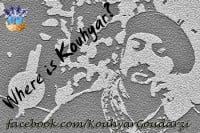
The Committee of Human Rights Reporters (CHRR) After ten days of no information on Kouhyar Goudarzi and his mother Parvin Mokhtare, there is news from Parivn Mokhtare, who is jailed in the Kerman central prison. She was able to have a visit with her mother and sister yesterday (August 10th).

According to reports, during the short visit, Parvin Mokhtare told her family that, on August 1st, while she was taking a shower she heard the voices of strangers in her home. She had confronted four plainclothes agents who had unexpectedly climbed the house’s wall and entered inside. Even though the conditions were inappropriate, the plainclothes agents asked her to go along with them.

Parvin Mokhtare was arrested without the presentation of a valid arrest warrant from any organization. She was transferred to the women’s ward of the Kerman central prison. In the family visit, Parvin Mokhtare said that she is being held under poor hygienic conditions and with non-political prisoners.

Kouhyar Goudarzi’s mother added that the Kerman security agents had told her Kouhyar is jailed in Evin prison, but this has not yet been confirmed. Attempts by Kouhyar Goudarzi’s family and attorney to find detailed information about his condition have so far proven fruitless.

Parvin Mokhtare, who has no history of political or civil activism, said she has been accused of, “Insulting the Supreme leader”, “Propaganda against the regime”, and “Acting against national security”.

Kouhyar Goudarzi is a banned university student, a journalist, a human rights activist, and member of the Committee of Human Rights Reporters (CHRR).

Earlier, before news about Parvin Mokhtare’s location of detention was published, one of Kouhyar Goudarzi’s relatives, who had tried to obtain information about Kouhyar and his mother, told CHRR, “In recent days we have been searching for them in the Revolutionary Court at Arg Square. [Authorities at the Revolutionary Court] told us they had not ordered Kouhyar’s detention. We visited a few other judicial archive centers, but the [authorities there] did not provide us with any answers [either]. We were not allowed to visit the Attorney General and, finally, we were led to the Shahid Moghaddas court in Evin prison. Unfortunately, the questions we posed to the Evin Attorney General also went unanswered. They asked us if we were certain whether Kouhyar was there, but they did not allow us to enter inside. One of the court agents recommended that we refer to a local police station and declare [Kouhyar and his mother] lost and file an abduction complaint.”


Source

Clerical Regime Looks To Impose Control Over Iran’s Sunni Seminaries

0


RFE/RL – The Shi’ite clerical regime of Iran appears to be intensifying its repression of the country’s Sunnis under the guise of “reorganizing” their seminaries.

This is being done through the full implementation of a memorandum issued in 2008 by Iran’s Supreme Cultural Revolution Council, a Qom-based conservative-dominated body whose 41 members are appointed by Supreme Leader Ayatollah Ali Khamenei.

President Mahmud Ahmadinejad chairs the body, although any decisions made by the council can be overruled by Khamenei.

In 2008, the council issued a memorandum titled “Bylaws of the Council for Planning Curricula of Sunni Seminaries” (CPCSS), which has 10 articles and four addendums. According to one of the articles, all Sunni seminaries must be managed by the council under the guidance of Ayatollah Khamenei’s representatives.

On June 21, Hojatoleslam Abbas Farzi, the secretary of the CPCSS, told Fars news agency that 98 percent of Sunni seminaries in the country had been reorganized, restructured, and registered. “The aim of the CPCSS is to give services to Sunni clerics…[by] evaluating their qualification, issuing appropriate certificates…and increasing their allowance from September this year,” he said.

Based on an edict of Ayatollah Khamenei, he added, “all [Sunni] seminaries, as well as maintaining their own traditions, should be equipped with up-to-date knowledge of the world.”

Prior to the formation of the CPCSS, the clerical establishment, at Khamenei’s behest, established two Grand Islamic Centers in the provinces of Kurdistan and Golestan with the aim of paving the way for “the cooperation of Sunni clerics with representatives of the supreme leader.”

Official Respect, Real Discrimination

Most Kurds, Baluchis, and Turkmen in Iran are Sunnis. They make up about 10 percent of the population and most of them live in the provinces of West Azerbaijan, Kurdistan, Kermanshah, Golestan, and Sistan va Baluchistan.

The constitution of the Islamic republic accords Sunni Muslims higher status than other religious minorities in the country. Officially, according to Article 12 of the constitution, “full respect” should be given to other schools of Islam and they should be free to practice their religious rites and rituals.

But this is far from the reality. Iran’s Sunni Muslims experience discrimination and marginalization in their own country, where Shi’ite Islam is the official state religion and Shi’a hold political power. So far, Sunnis have not been allowed to build mosques in major cities such as Tehran and there has been a single Sunni among government ministers and deputy ministers since 1979.

In an August 5 ceremony in Zahedan, the center of Sistan and Baluchistan Province, mid-ranking Shi’ite cleric Hojatoleslam Ahmad Barati was appointed to head the office tasked with reviewing the curricula of Sunni seminaries in the province. Conducting the ceremony, Ayatollah Abbas Ali Soleymani, the supreme leader’s representative in the province, said that the reorganization of some Sunni seminaries would bring them in line with other religious schools in the country.

“Teachers of some Sunni seminaries with their proclivity toward Wahhabism and their deviant teaching are brainwashing their students,” Soleymani continued. “If we can broaden the horizon of these deceived young students, we would definitely stop them from indulging in acts of barbarism and committing crimes,” he added, referring to acts of terrorism and suicide bombings, including those of the Sunni militant group Jundallah, that bedeviled the province in the last few years.

Sunnis Reject Government Control

The decision of the clerical regime to implement the reorganization of Sunni schools in the province has infuriated many local scholars. “Our national pact is the constitution. The constitution grants us religious freedom and therefore we cannot leave the [running] of our mosques and seminaries to the government,” said Zahedan Friday Prayer leader Molavi Abdul Hamid. “We cannot trust [the government] on this issue.”

Hamid rejected the interference of the clerical regime in Sunni affairs and indentified religious beliefs as a “red line” for Sunnis and Shi’a. “If the government wants to supervise, then we accept it. We obey the government and the exalted leader [Khamenei], but we cannot leave our religious matters to you,” he said. “These matters should never be left in the hands of a government, be it the Islamic government or any government after it. Do not try to frighten us with jail or summons. God knows that we are not even scared of death.”

Some experts believe that the decision to organize and manage Sunni seminaries is one of the regime’s levers of political control over the volatile province of Sistan va Baluchistan, which is a victim of three major fault lines in the political system of Iran: national-ethnic, Sunni-Shi’ite, and center-periphery.


Abdolsattar Doshoki, a Baluchi political analyst in London, says that Iran “in words, shows an apparent tolerance toward Sunnis in Iran, but its deeds are different, by [ignoring] attacks on lecturers of Sunni seminaries and preventing them from attending conferences abroad.”

Speaking to RFE/RL’s Radio Farda, Doshoki adds: “The process of intimidating and exerting pressure on Sunni scholars for the control of their seminaries has been going on for a number of years. However, the process has gained momentum in the last few months. This action is meant to put pressure on the scholars and prevent them from going abroad and attending international conferences. These kinds of actions for weakening, putting pressure on, and discriminating against [scholars] will unfortunately pave the way for the growth of extremist groups in Baluchistan.”

Calling For Unity?

Ayatollah Khamenei has on many occasions emphasized the need for unity among Shi’a and Sunnis and called on them to do away with controversies that bar them from forging a robust unity.

In May 2009, addressing the people of Saqqez in Kurdistan Province, the supreme leader underlined the necessity of vigilance against plots to sow Shi’ite-Sunni discord and warned Muslims of all sects against insulting the sanctities of Shi’a or Sunnis, describing it as a “a red line that must not be crossed unknowingly or through prejudice.”

On October 3, 2010, Khamenei issued a fatwa banning any insult to the symbols of Sunni Muslims, a move that was well received by many Sunni scholars, including the chancellor of Al-Azhar University of Islamic Sciences in Cairo.

In spite of Khamenei’s talk of inter-Muslim unity and the “brotherhood” of Shi’a and Sunnis, those Sunni clerics who do not toe the line of the Shi’ite regime are harassed or denounced as Wahhabis, or adherents of the ultraorthodox school of Islam practiced in Saudi Arabia.

In a recent stage-managed demonstration in Zahedan, demonstrators chanted: “Death to Wahhabis, Death to Molavi [Abdul Hamid] Wahhabi.”

Alluding to the difference between the deeds and the words of Khamenei, Molavi Abdul Hamid recently said: “There is talk of unity among [Shi’a and Sunnis], but unfortunately it is not observed. We expected the exalted leader [Khamenei] to act like a father so there would be no difference between Shi’a and Sunnis. We expected him to respond to our letters, complaints, and our outcries.”


Source

Former prisoners prepared to testify on rights violations


A number of former Iranian political prisoners have written to Ahmad Shaheed, the United Nations’ special human rights rapporteur for Iran, to say they are prepared to testify about what they’ve seen and experienced in Iranian prisons.

The signatories claim there is “widespread violation of human rights in Iran” and call on Ahmad Shaheed to closely investigate the “mistreatment” of political prisoners all across the country.

Over the past two years, after protests erupted around allegations of vote fraud in the re-election of Mahmoud Ahmadinejad, thousands of Iranians have been arrested and hundreds have been sentenced to prison terms.

The letter indicates that political prisoners are subjected to inhumane treatment, especially since the 2009 election protests.

Ahmad Shaheed was appointed as the UN special rapporteur for Iran in June, and his mandate officially began on August 1. Islamic Republic authorities have condemned the United Nations’ decision and have announced that they will not allow Shaheed to enter Iran for his investigation.

The letter, which is signed mostly by former Iranian prisoners now residing abroad, points out that most political prisoners are “peaceful political activists” who have been falsely accused of “terrorism, espionage and endangering national security.”

The signatories describe torture in prisons and the violation of all prisoner rights, adding: “We confirm that, in many cases, the sentence is dictated to the judge by the investigator.”

Referring to themselves as “victims of injustice in Iran”, the signatories go on to urge Ahmad Shaheed to take immediate action against “human rights violations in Iran.”

Ali Afshari, Morteza Eslahchi, Maziar Bahari, Abbas Hakimzadeh, Fariba Davoodi Mohajer and Mohsen Sazegara are among the many signatories.


Source

Iran agrees to fund Syrian military base

0


Iran has agreed to fund a new multi-million-dollar military base on the Syrian coast to make it easier to ship weapons and other military hardware between the two countries, according to Western intelligence reports.

Under the terms of the deal, which was concluded after a high-level Syrian delegation visited Tehran, Iran is to assist with the development of a new military compound at Latakia airport which will be completed by the end of next year. The aim of the agreement is to open a supply route that will enable Iran to transfer military hardware directly to Syria.

Western security officials say the deal was agreed following a visit to Tehran in June by Muhammad Nasif Kheirbek,
Syria’s deputy vice-president for security affairs and an ally of President Bashar al-Assad.

Iran and Syria have enjoyed a close strategic alliance for decades, founded on their mutual antipathy towards the West. In return for Iranian military support, Syria has supported Tehran’s attempts to develop the Islamic fundamentalist Hizbollah militia into a major political force in neighbouring Lebanon.

In recent months, Iran has been deeply alarmed at the nationwide protests in Syria against the Assad regime. Western diplomats claim that Iran has been sending riot control equipment, as well as intelligence monitoring techniques and oil, to Damascus to help Mr Assad regain control over his country.

But Iranian efforts to provide clandestine support have suffered several setbacks after Turkish officials intercepted a number of arms shipments destined for Syria.


Source

Two Kurdish Political Prisoners Amongst Dangerous Criminals

0


HRANA News Agency – On August 11, 2011, Ramzan Saeedi and Hadi Amini were transferred to a ward housing some of the most dangerous criminals in Rajai-Shahr Prison. Ramzan Saeedi and Hadi Amini are two Kurdish political prisoners who have recently arrived at Rajai-Shahr Prison from Evin’s Ward 350.

According to a report by Kalame News, a few weeks ago, Ramzan Saeedi and Hadi Amini requested to be transferred to the ward housing political prisoners in Rajai-Shahr Prison.However, prison officials decided to house them in Ward 6 where some of the most dangerous criminals including murderers are kept. In Rajai-Shahr Prison, Ward 6 has some of the worst sanitary conditions; the majority of prisoners have no place to sleep and spent their nights slumbering in corridors.

Ramzan Saeedi and Hadi Amini have been sentenced to five years in prison, and during the last three years of their incarceration, they have been denied furlough. While ordinary prisoners only spend one day in the quarantine ward of Rajai-Shahr Prison in order to determine whether they are addicted to narcotics or not, Ramzan Saeedi and Hadi Amini spent 50 days in the same ward which lacks basic health and sanitary conditions. After this time, they were transferred to Ward 6 of Rajai-Shahr Prison instead of the political prisoners’ cell block.


Source

Iran Vies for Full Control of Iraq

0


The fact that some Kurdish and Iraqi parties are so reliant on Iran raises serious questions about whether America liberated Iraq or simply created another Iran. No other country has more influence and power over Iraq than Iran. America is supposed to have occupied Iraq, but Iranian soldiers are roaming freely in Iraq without anyone discussing a timetable for their withdrawal.

I believe that before the American occupation of Iraq ends, there should be serious discussion over how to end the Iranian occupation. Iraq and parts of the Kurdistan region are under Iranian control, if not occupation.

Iran controls at least 70 percent of Iraqi political and human aspects including Kurdistan. Groups and parties close to Iran are open and frank about their relationship.

Apart from interfering in every major and minor Iraqi issue, Iran is now trying to reign in by force the only part of Kurdistan that is not obediently bowing to it. Interfering in domestic affairs, bombing the borders and backing fighters of the extremist group Ansar al-Islam to attack the Kurdistan region are undeniable evidence of Iran’s attempt to gain full control of Iraq.

During the recent shelling, some in the Kurdish media blamed the Kurdistan Region’s Parliament, saying Iran was bombing us because of their negligence. But this isn’t right, and the situation is quite clear.

They say Kurdistan has an office representing the region’s interests in Tehran, but I would argue that it serves as the Iranian link to Kurdistan. The words of Nazim Omar, Kurdistan’s representative to Tehran, aren’t any different than those of the Iranian consul-general in Erbil and its ambassador in Baghdad.

Iran is trying to help the Patriotic of Kurdistan (PUK) rise to power again while pushing for the Kurdistan Democratic Party (KDP) to stop supporting the United States. A Kurdish Islamic leader clearly stated that one of the reasons Iran is shelling Kurdistan is that Kurds support America.

When we see Iranian planes and trucks that carry weapons to other parts of the world being intercepted, one can’t help but ask how much Iran is using Kurdistan as a transit point for the same purpose. At many checkpoints, Iranian ammunition and narcotics have been confiscated.

Opening two consulates in Kurdistan doesn’t mean that Iran loves the Kurds. Didn’t we hear Nazim Omar say that he can’t even write a letter from his Tehran office on the Kurdistan Regional Government’s official letterhead? These consulates are diplomatic covers for their clandestine affairs.

The direct flights from Kermanshah and Sanandaj to Sulaimani airport carrying few passengers should also be questioned. Iran tried to send weapons to Syria via Turkey. So in this country, we need to be even more vigilant of our open borders.


Source

To The UN Special Rapporteur: Number Of Iranians Killed Is A Tragedy, Not A Mere Statistic


CNN -The United Nations Human Rights Council has recently designated  former Maldives foreign minister Ahmed Shaheed as the Special Rapporteur  to investigate the human rights situation in the Islamic Republic of  Iran. Renowned Iranian journalist Masih Alinejad  (photo) has written him an open  letter.

Original Farsi-langauge appeal: http://tehranreview.net/articles/9871

To Dr. Ahmed Shaheed

United Nations Special Rapporteur for Human Rights in Iran

Allow me to begin with my best wishes for a great success in your new mission.

Twenty six months have passed since the 2009 Presidential elections in Iran  and the waves of mass protests that followed. Peaceful protests were met  with the large-scale shutdown of free communication, censorship of  independent press, dismantling of opposition parties and a bloody  crackdown on protesting citizens, leading to the arrest and  incarceration of tens of thousands of political activists, party  leaders, members of s– particularly those of journalists,  students, teachers–and workers across the country.

The government claimed that only three people were killed as a result of  torture in prison, but based on credible local media outlets who had  interviewed at least forty seven families with dead family members, the real number  is in excess of official figures. Many Iranian reporters believe that  the number of people killed in the aftermath of the elections was  significantly higher– this notwithstanding that the raping and murdering of  prisoners and government critics began long before the 2009 elections.

Iran is a part of the global community, and hence it is obligated to respect  and to uphold certain ethical and internationally recognized values.  Based on Section 7 of  the International Criminal Laws, organized military  action against unarmed citizens of a country constitutes crimes against  humanity.

Many families of the slain protesters in Iran are given renewed hope  that, with your appointment as a special Rapporteur of the United Nations  for human rights issues in Iran, their voices will be heard and the global  silence and dismissive outlook will be broken. I recognize that this  issue is not unique to Iran. The blood baths running through Syria do  not seem to have raised as much global outrage as they should have. The global silence about these cries for justice, more than ever,  cultivates the notion that the “death of one man is a tragedy, but the  death of millions, a statistic.”

Throughout the course of the two years since the 2009 elections,  despite mounting pressures and intimidations, the families of the  victims have broken their silence and repeatedly reported their painful  cases.

Formal requests by a number of families to meet with the UN  special Rapporteur have been published in the Persian-language media. At  least three families have expressed to me personally their desire to  attend a meeting with a UN representative in order to report and request  an investigation into the murder of their loved ones. I will refer to  these in the final paragraphs of my letter.

The real reporters of violence and carnage that has taken place in  these countries, including Iran, are in fact these families who keep  ignoring the enormous pressures and threats and continue to report and  disseminate the information and details of the deaths of these Iranian  citizens.

In the early days of the protests, many families reported  these deaths to the investigative committee set up for such cases. The  committee in turn published more than seventy names of the slain protesters,  the fact or fallacy of which required investigation and a response from  intelligence and judiciary officials. Instead, on 7 September 2009,  security forces raided the office of the committee and confiscated every  document and piece of property and arrested all the members of the committee. The  authorities issued a statement denying the death of several people named  on the list.

State-backed media reported that the number of protesters killed  totaled thirty six. On the 2nd anniversary of the disputed elections, Sepaah  (Revolutionary Guards) commander Saeed Ghaemi announced that over thirty  people had been killed during the protests, all of whom members of the  Basij [paramilitary militia].

The trend of intimidations has, with some degree of success, forced  many such families into a gradual retreat from legally pursuing their  cases–an all too familiar silence of the victims.

The phenomenon of  Internet and virtual networks has enabled families to voice their  grievance and prevent the prolonged silence. As they find the courage to break their silence after two years, more  families come forward and add to the “killing list”.

I personally  interviewed a father of young student who was shot in front of a mosque  on 20th June 2009, who said: “I had lost my child, I had lost every hope  in my life. The mental and emotional pain was unbearable and  unspeakable. I thought, what good would talking about his death do? It  will not return my child to me.”

The question of “Will an interview or legal pursuit bring my child  back to me?” was asked by many of the families who were so dismayed and  disappointed with the non-responsive authorities that they had simply  given up all hope.

The mother of Ramin Aghazadeh Ghahremani, who had  died under brutal beatings and torture at Kahrizak Prison,  told SORKHSABZ (a  website dedicated to information about the election victims): “What  weighs heavily on my conscience is that I personally delivered my son to  the authorities after he was summoned. This has driven me to the brink  of madness in the last two years. I delivered my son to them; they  delivered his corpse to me. Where was I supposed to go after that? And  to what end? None of us in my family were into politics. Besides, I had  other young children to worry about.”

This mother had once before spoken in this regard, with Shargh  newspaper– but once again, her fear for her other children had prevented her  from consenting to the publishing of the interview. Many families of the  victims had reported that their other children had been threatened and  forced into silence.

Fear was clear and present in the voice of family members of Hossein  Akhtar Zand, the young man who was thrown from the top a medical clinic in  Isfahan, on 15 June. Thus, the family briefly told JARAS: “All our  pursuits proved to be futile. In order to stay alive – in a small town –  there are not too many options except to maintain our silence!”

Most of these families also look at the efforts of the others with  similar experiences, who had been vocal in the media and had actively  pursued the cases of their children through daily trips to the  courthouses, to no avail. Their remarks such as “They have ordered us to  stay silent”– without disclosing “who” has ordered them– are in themselves incredible.

For example, Hamid Hossein Baik Araghi, another young man killed  during the rallies on 20 June, was introduced as a Basiji by two of the  most prominent state-backed newspapers,  Kayhan and Fars. His family  immediately told JARAS that such information was completely false. Other  slain protesters tainted as Basij members are:  Davoud Sadri; Saneh  Zhaaleh; Kaveh Sabz-Alipour and Maysam Ebadi, all of whose families had  denied any affiliation with the Basiji or the government. Many of the  families had never been politically active or affiliated with any groups  or parties. They had only participated in the protests against the  election results. Others had been mere pedestrians or in the traffic and  shuffled into the crowd.

The family of Lotfali Yousefian, the 50-year-old man who died of  respiratory complications due to inhalation of tear gas on the second  anniversary of the protests, was told by doctors in Ebn-Sina hospital: “We will declare ‘heart attack’ as the cause of death, because if  the real cause is reported, then the authorities may not release his  body to you.” Yet other families had been forced to sign non-disclosure  forms in order to be able to obtain the dead bodies of their loved ones, and were thus forced into silence.

It is not too late for many other families to still come forward and  unravel the painful truth. The question is, what will be the heavier  burden: the torment of their silence, or the consequence of telling the  truth?

The Islamic Republic’s blatant refusal to investigate and take  responsibility for these cases comes at a time when there is an obvious  and undeniable footprint left all over these cases by regime elements  (both official or indirect). It also comes despite the death certificates issued by  the coroner which indicate that the deaths were due to gun shots. They go  further by arresting a prominent lawyer, Nasrin Sotoudeh, who is jailed  and banned from practicing law, for the crime of defending prisoners and  acting on behalf of the families of the dead.

Sir, as the UN’s Special Rapporteur to Iran, you are now responsible  and have been commissioned to investigate such injustices– and you hold the  key to the window of hope for many families of the victims of 2009  presidential elections.

Among the families of the slain are those such  as Sohrab A’raabi, Ali Hasanpour, Mostafa Karim Baigi and others, who  despite the threats against them, have quite vocally and actively  demanded from international organizations that they  send representatives to  meet with them in Iran.

I will now return to the three families who have requested a meeting  by giving you a short background on each, as well as a list of those who  have spoken out.

*Sohrab A’raab, 19, was shot during the protests on 15 June. For twenty six  days, his mother Parvin Fahimi had no idea as to Sohrab’s whereabouts.  For twenty six days, she thought her son was alive and in prison, like thousands of  others, until one day they delivered his dead body to her. In a  personal interview with me, Parvin Fahimi has emphasized, as she has  done many times in the past, her pleas with every individual or  organization or entity to review and investigate her son’s case.

*Ali Hasanpour, 48, father of two, was killed on 15 June 2009. His wife  Ladan Mostafaie has asked numerous times in interviews: “Are bullets the  way to respond to protests? My husband was killed for asking for his  vote! And no one in this judicial system of ours can tell me who killed  him.”

For one hundred and five  days, she thought her husband was alive and in prison. She  was even told by the authorities that it was possible her husband might  have fled the country. But she too was given the dead body of her  husband. Also, in a recent interview with me, she said that Iran is a  member of the UN Human Rights Council. She has asked me to convey her  desire and request from the Special Rapporteur to hear her case and help  find those responsible.

*Mostafa Karim Baigi, 27, like thousand of others, had participated in  the rallies of 28 December, 2009 (Ashura Day). He was shot in the head, then  thrown from an overpass bridge. His family was not permitted to hold a  funeral or a proper burial, so they were forced to bury him in the  middle of the night in the presence of security forces. His mother  Shahnaz Akmali has repeatedly demanded the attention of all human rights  organizations and the United Nations to her son’s case.

These are the names of 47 of post-election slain protesters whose families  have given interviews to various media:

1- Amir Javadifar 2- Mohammad Kamrani 3- Mohsen Rouholamini 4- Ramin  Pour Andarzjani 5– Ramin Aghazadeh Ghahremani 6–Ali Hasanpur 7- Sohrab  Arabi 8–Ahmad Naimabadi 9- Moharram Chegini 10- Ramin Ramezani 11-  Davood Sadri 12- Sorour Boroumand 13– Fatemeh Rajabpour 14– Hesam  Hanifeh 15– Kianoosh Asaa 16– Mohammad Raisi najafi 17– Mostafa Ghanian  18– Ali Fathalian 19– Lotfali Yousefian 20– Bahman Jenabi 21— Naser Amir  Nejad 22– Hossein Akhtar Zand 23– Maysam Ebadi 24– Ahmad Nejati Kargar  25– Ashkan Sohrabi 26– Neda Agha Soltan 27– Masoud Khosravi Doust 28–  Kaveh(Sajad) Sabz Alipour 29– Masoud Hashemzadeh 30– Abbas Disnad 31–  Mohammad Barvayefh 32– Behzad Mohajer 33– Mohammad Javad Parandakh 34–  Mostafa Kiarostami 45– Fatmeh Semsarpour 36– Hamid Hossein Araghi 37–  Mohammad Hossein Fayz 38– Hossein Gholam Kabiri 39– Seyed Ali Mousavi  40– Mostafa Karim Baigi 41– Shabnam Sohrabi 42– Shahram Farajzadeh 43–  Mehdi Farhadi 44– Saaneh Zhaleh 45– Mohammad Mokhtari 46– Behnood  Ramezani 47- Alireza Eftekhari


Source

“The Imprisonment of Kouhyar Goudarzi a Slap in the Face,” says National Press Club President

0


Following the announcement of the arrests of Kouhyar Goudarzi and his mother, Parvin Mokhtare, a source close to the case and one of Goudarzi’s friends provided the International Campaign for Human Rights in Iran with information about the case. “Kouhyar’s friends have information about him up until Sunday, 31 July. In fact the last news about him is from Sunday morning [31 July]. He had a meeting with one of his friends that afternoon, but he didn’t show up…He has disappeared. The next morning, on Monday, 1 August, his mother was arrested in her home in Kerman. She is currently at the Central Prison of Kerman,” said the source.

On Wednesday, 10 August, Mark Hamrick, President of the National Press Club, issued a statement expressing the Club’s outrage and concern about the arrests of Goudarzi and his mother. The National Press Club had previously named Kouhyar Goudarzi the winner of the 2010 John Aubuchon Press Freedom Award. (link) Mark Hamrick said in the statement that “the imprisonment of Kouhyar Goudarzi and his mother is a slap in the face to the world community.” He also called on the Iranian government “to release Goudarzi, his mother and all other journalists and others who have been incarcerated and mistreated merely for exercising their basic human right to self-expression.”

“Kouhyar has not had any contact with his family, and his conditions are not known at all. We are concerned that they may have done something to him…Kouhyar’s mother, Ms. Parvin Mokhtare, did not have any political or human rights activities, so her arrest is very questionable. She called from the Women’s Ward of the Central Prison in Kerman, and all she could say was that she was detained next to drug traffickers and murderers. It is unclear to all why she was arrested. Her arrest was likely with the objective to prevent dissemination of information about Kouhyar’s condition and to put pressure on Kouhyar,” the source added.

“Kouhyar was arrested in in 2009 on his way to Qom to attend Ayatollah Montazeri’s funeral, and was sentenced to a year in prison. He spent his sentence inside Evin and Rajaee Shahr Prisons and was released. But this time, no judicial organization has taken responsibility for his possible detention. His friends and family have been told to file a report with their local police station for ‘disappearance and abduction.’ There are no judicial orders for the arrest of Kouhyar,” said the source.

“Considering the arrest of Kouhyar’s mother, who is his next of kin, friends and relatives have not been able to get any answers. His friends are concerned that something may have happened to him, or that he may be under pressure to make fake confessions.”


Source

Iran throws ailing political prisoner in solitary despite critical condition


According to reports, political prisoner Reza Jushan was transferred to a solitary cell while in critical condition in Gohardasht Prison in Karaj.

On Saturday August 6, at about 10 am, Reza Jushan was taken to the Intelligence Department of Gohardasht Prison where he was harassed by Faraji Nejad, the head of this department. He was then thrown in a solitary cell. Reza Jushan suffered a heart attack on August 3 but agents of the Ministry of Intelligence prevented him from being transferred to a medical facility. The lack of medical attention and conditions in a solitary cell can be very dangerous for his health.

The Jushan family who had heard the news about their son’s heart attack called the prison this morning asking about his condition and requesting to visit him but they were treated violently and insulted by Faraji Nejad.

Currently in addition to Reza Jushan, five other prisoners including Behrouz Javid Tehrani, Mohammad-Ali Mansouri, Saleh Kohandel, Farzad Madadzadeh and Arjang Davoudi are kept in solitary cells in Evin Prison’s cellblock 209 and the Sepah Cellblock in Gohardasht Prison in Karaj. There have been no reports on their condition since their transfer. (Human Rights and Democracy Activists in Iran – Aug. 9, 2011)


Source