May 19, 2011
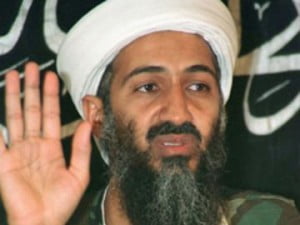
WASHINGTON — The death of Osama bin Laden has put a new focus on what role Iran might play in al-Qaida’s future, as intelligence officials around the world analyzed reports that Saif al-Adel had taken over as al-Qaida’s interim leader. Al-Adel was last known to be under house arrest outside Tehran.
The terrorist resume of al-Adel, one of al-Qaida’s founders, includes helping orchestrate the 1998 bombings of U.S. embassies in Africa. But he had sharp disagreements with bin Laden’s leadership and opposed the Sept. 11, 2001, terrorist attacks. He accurately predicted that inciting the wrath of the U.S. would hurt al-Qaida’s worldwide efforts.
Al-Adel is among the many senior al-Qaida figures who fled into Iran after the U.S. invasion of Afghanistan. They were arrested there in 2003 and were placed under what has been loosely called “house arrest” in a compound outside Tehran. Over the years, some have been able to come and go, and the U.S. has worried that Iran would someday free them to restore al-Qaida’s ranks.
This week, Noman Benotman, a former jihadist with links to al-Qaida in Afghanistan, Pakistan and Sudan who is now a security analyst in London, said al-Adel will serve as al-Qaida’s interim leader until bin Laden’s permanent successor is named.
“They need someone to take care of the organization on a daily basis till they come up with a new leader,” Benotman said Wednesday. “That’s the role of Saif.”
It’s unclear exactly where al-Adel is. Some terrorism analysts and intelligence officials have said he left Iran last year and rejoined al-Qaida in the lawless region along Pakistan’s border with Afghanistan. Al-Adel is among the FBI’s most wanted terrorists and the U.S. is offering a $5 million reward for his capture.
Though Western and Arab intelligence officials said they’d seen no hard evidence that al-Adel had taken over, his emergence as even a possible successor to bin Laden has renewed questions about the al-Qaida figures who have been held in Iran.
Iran and al-Qaida have a relationship of convenience, not an alliance. The Shiite regime in Tehran is generally hostile to the Sunni terrorist organization, but they have a shared enemy in the United States.
If al-Adel or any of the other senior figures were released, Iran would be in violation of a United Nations resolution and the U.S. has made it clear that’s unacceptable. But if al-Adel has returned to al-Qaida’s active leadership, it means two of the organization’s most senior commanders have Iranian ties.
The other is Atiyah Abdul-Rahman, whom the U.S. considers the No. 3 figure in al-Qaida. He was the organization’s emissary based in Iran and, over the years, he’s been allowed to travel in and out of the country. Richard Barrett, a United Nations official who monitors al-Qaida, said Wednesday that Rahman has been operating out of Pakistan’s tribal regions for some time.
The roster of al-Qaida figures held in Iran is particularly valuable in a post-bin Laden era. One is Abu Hafs the Mauritanian, a bin Laden adviser who helped form the modern al-Qaida by merging bin Laden’s operation with Ayman al-Zawahiri’s Islamic Jihad. Al-Qaida’s longtime chief financial officer, Abu Saeed al-Masri, has been held there. So have bin Laden’s spokesman, Suleiman Abu Ghaith, and Mustafa Hamid, an al-Qaida trainer whose terrorism pedigree spans decades.
Using spy satellites, the U.S. has monitored vehicles in and out of the compound where the men have been held. Some information has been gleaned through intercepted Iranian phone conversations and e-mails, but generally, the information is limited.
The U.S. has never been sure about why Iran occasionally allows al-Qaida figures to travel and why they return. They are suspected to be taking smuggling routes heading toward Saudi Arabia or northwest Pakistan.
Occasionally, al-Adel’s cell phone would pop up on the grid somewhere outside Iran, and the U.S. would scramble to figure out why. It happened enough that the U.S. intelligence officials concluded that Iran was merely toying with them, according to two former counterterrorism officials, who spoke on condition of anonymity to discuss intelligence matters.
Whether he is al-Qaida’s interim leader or merely has rejoined its ranks, al-Adel brings to the table a calculating leadership and a murderous past.
“Al-Adel is a killer. He will use violence for the sake of violence,” said Rohan Gunaratna, head of the International Center for Political Violence and Terrorism Research in Singapore. “He is the most ruthless leader in al-Qaida. When he was head of security intelligence, he rounded up so many of the spies and executed them.”
The 9/11 Commission reported that al-Adel was among the handful of senior leaders who urged bin Laden not to carry out the attacks on the World Trade Center and Pentagon, not because of the massive death toll but because he feared the U.S. response would weaken the Taliban, which was sheltering al-Qaida.
In 2006, scholars at West Point released a 2002 letter from al-Adel, including one extremely critical of bin Laden’s leadership.
“We must completely halt all external actions until we sit down and consider the disaster we caused,” al-Adel wrote. “During six months, we only lost what we built in years.”
Associated Press writers Meera Silva and Paisley Dodds in London and Kimberly Dozier in Washington contributed to this report.
Source