Home Blog Page 633

Al-Jazeera says missing journalist held in Iran

May 11, 2011

AFP
DOHA — Al-Jazeera journalist Dorothy Parvez, missing since she arrived in Syria late in April is being held in Tehran, the Doha-based television channel said on Wednesday.

“We have now received information that she is being held in Tehran. We are calling for information from the Iranian authorities, access to Dorothy and for her immediate release,” said an Al-Jazeera spokesman in the statement.

“We have had no contact with Dorothy since she left Doha on April 29 and we are deeply concerned for her welfare,” said the news channel.


Parvez’s family also urged Dorothy’s release. “We appeal once again for Dorothy to be released immediately and returned to us,” her family said.

Parvez, who holds American, Canadian and Iranian passports, joined Al-Jazeera’s English service in 2010.

Syrian pro-government daily Al-Watan on Tuesday quoted what it said was “a well-informed” source as saying that “the journalist Dorothy Parvez, aged 39, left Syria on May 1 without stating her destination.”

“The journalist left Syria after authorities forbade her entry on account of her using a tourist visa when her material showed she had come to Syria to cover” the uprising.

“Upon refusal of entry, the journalist asked authorities to let her leave Syria, which she did on May 1,” according to the source quoted by Al-Watan.

Coverage of demonstrations has been tightly controlled in Syria since the outbreak of protests in mid-March.

Syria has accused Al-Jazeera and other satellite channels of exaggerating protests across the Arab world and of broadcasting images without verifying their authenticity.

Because few foreign journalists can get into Syria, international media rely heavily on video footage filmed and released by the protesters themselves on Internet sites such as YouTube.

The International Press Institute on Friday called on the Syrian authorities to clarify the whereabouts of Parvez, whom the IPI said had not had time to get a Syrian visa, and was probably travelling on her Iranian passport.
 

Source

Hossein Ronaghi Needs Immediate Medical Attention due to Bleeding

WEDNESDAY, 11 MAY 2011

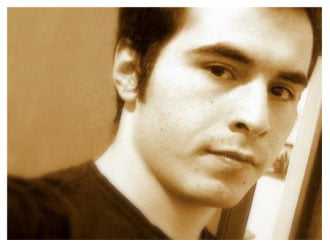
HRANA News Agency – Hossein Ronaghi Maleki, a human rights activist and a blogger, who was returned to prison shortly after his kidney operation, is experiencing excessive bleeding at the surgical site, and his condition is worrisome.


According to a report by Human Rights Activists News Agency (HRANA), on Saturday, May 7, 2011, Hossein Ronaghi Maleki had a kidney operation that lasted six hours.  Immediately after the operation, he was transferred from Shahid Hasheminejad Hospital to Evin prison where he remains right now without proper medical care and equipment.


The decision to return him to prison was made despite the attending physician’s advice who announced that his patient had to remain under doctor’s care for some time after the surgery.  This human rights activist is now in Evin prison without proper medication and care while suffering from bleeding at the surgical site.


While in prison, Hossein Ronaghi was diagnosed with kidney disease and due to lack of medical care and negligence of prison officials, one of his kidneys has lost 70 percent of its functionality, and the other one only functions 20 percent below normal.


Since Hossein Ronaghi was transferred to hospital for surgery, security agents tied up his hands and legs with chains and treated his father and physician badly.  In response, Hossein Ronaghi went on hunger strike for two days.


According to one of his doctors, it is likely that Hossein Ronaghi is also suffering from gallstones due to lack of medical care for his kidney disease and continuous use of pain medication.


Source

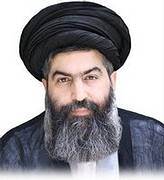
Increased Pressure by Security Organizations on Followers and Family of Ayatollah Boroujerdi

10th May 2011

A source close to Ayatollah Boroujerdi told the International Campaign for Human Rights in Iran that since March,  security forces affiliated with the Islamic Revolutionary Guard Corps (IRGC) have intensified pressure on followers of Ayatollah Boroujerdi in different regions of the country. According to the source, during Iranian New Year holidays in late March, forces stormed the home of Samaneh Khodadi, broke the entrance door to her building and apartment, and performed a body search on her.

The source also told the Campaign that in order to insult Ayatollah Boroujerdi in prison, his beard has been shaved and his visits have been limited to five minutes.

Ayatollah Boroujerdi’s sister, Sa’adat Boroujerdi, was also attacked by plainclothes forces, who broke her leg. His brother, Seyed Mohsen Boroujerdi, has been under house arrest and visits by his close kin are prevented. The paternal home of the Boroujerdi family has been sealed since March as well.

A Boroujerdi follower, Asghar Eskandari, was recently transferred to the Intelligence Office in Isfahan where he was brutally beaten and threatened. Another follower in the city of Ghoochan, Akram Aghaei, has been repeatedly threatened and summoned by the city’s IRGC forces.


Source


Hossein Ronaghi-Maleki Returned to Prison before the Completion of His Treatment

May 10, 2011

Blogger and human rights activist Hossein Ronaghi-Maleki was transferred to hospital for treatment after several weeks of delay in his treatment. As a result of the long delay in his treatment, he had to undergo a difficult 6 hour long surgery. His family told the Human Rights House of Iran that he was transferred to prison even though he was in need of further treatment according to his physicians.

He had been suffering from kidney infection in prison and was deprived of medical attention for a long time. He was in need of at least a one month medical furlough.


Ronaghi has been sentenced to 15 years in prison.


Source

Jailed Iranian reformist moved to solitary

05/10/2011

Iranian political prisoner Hamzeh Karami has been moved to solitary confinement in Evin Prison, the Kaleme website reports.

According to the opposition website, Karami’s family was informed on Monday that they would not be allowed their weekly visit because he has been moved to solitary confinement by ministry of intelligence officials. Kaleme calls that transfer a “violation of the law.”

Karami was arrested in connection with the post-election protests of 2009, which sprang from allegations of vote rigging in favour of Mahmoud Ahmadinejad. Karami was sentenced to 11 years in prison.

Karami was the governor of Varamin for six years and the political secretary of the president’s office under Hashemi Rafsanjani.

Last August, Karami wrote about his “torture and abuse” in Evin Prison in a letter to Iran’s Prosecutor Gholamhossein Mohseni Ejei.

Karami described his torture in great detail and said his interrogators have threatened to kill him and his family.

A number of opposition media sources have reported that Akbar Hashemi Rafsanfjani, the chairman of the Expediency Council, personally delivered the letter to the Supreme Leader Ayatollah Khamenei.

Following the controversial 2009 election, thousands of people were arrested and dozens of reformists were sentenced to long prison terms. Many of these prisoners have published letters describing how they were subjected to torture and abuse aimed at forcing false confessions.


Source


Prisoner of Conscience Hashem Khastar Describes Illegal Treatment of Prisoners

10th May 2011

In an open letter to the Head of the Judiciary and Minister of Intelligence, Seyed Hashem Khastar, retired teacher and prisoner of conscience who has been in prison for close to two years inside Mashad’s Vakilabad Prison without a single day of furlough, described details of his prosecution and imprisonment, including prisoner abuse, unfair trials, and illegal actions by judicial and police authorities. Khastar’s letter demonstrates the unjust treatment of prisoners of conscience by the Ministry of Intelligence and judicial system. Describing his interrogations, Khastar states that security forces asked him questions about his private life, and have been keeping him among thieves and drug addicts. He mentions his six-minute trial that resulted in a sentence of six years in prison. The International Campaign for Human Rights in Iran published the full text of the letter in its Persian blogs. Here are translated excerpts of the letter in English:

“I was arrested on 15 June 2009, while sitting on a park bench like other people, hearing the Ferdowsi University students chanting slogans on the other side of the street. A cleric who had removed his frock touched my shoulder from behind and said: ‘Are you Mr. Khastar?’ I said yes and he said: ‘Come with me.’… At the Ministry of Intelligence detention center, I was interrogated while blindfolded and facing a wall. The interrogator asked me about my private family life. I was in solitary confinement for six days.”

“I was transferred to the Revolutionary Court again on 27 July 2009 in prison uniform and with hand and foot cuffs. I didn’t have a lawyer and when I defended my legal rights, I was sentenced to six years in prison. One of my cell-mates who is a Sunni cleric was sentenced to ten years in prison, whereas seven others received between one and six years in prison. When his family asked the judge why he was sentenced to ten years, the judge said ‘because he talked too much.’ ‘Talking too much’ means defending yourself before a judge is a crime,” said Khastar, describing his trial in the lower court.

Khastar mentions in his letter that after he was released on bail on 27 August 2009, he tried to find a lawyer to defend him during the allotted 20 days after the verdict is announced in order to file for an appeal. He says the lawyers he picked were afraid to take his case and one lawyer withdrew when he was threatened by the judge. Another lawyer was threatened by the Ministry of Intelligence. Khastar eventually found a lawyer, but was unable to read the defense bill his lawyer submitted, or the ruling issued in his case, which sentenced him to two years in prison. He was arrested again and transferred to prison without being notified of the appeals court ruling in advance.

Describing his prison treatment, Khastar wrote, “After transferring me to prison, they first took me to the Quarantine Ward and then to Hall 102 of Ward 5, where murderers, drug traffickers, and thieves are kept. We slept in the hallways there….they transferred me to Ward 4′s second floor where most of the inmates are drug addicts and thieves…the former Warden had a strange grudge against political prisoners. Whenever I was transferred outside for whatever reason, like going to the hospital or the Medical Examiner, he would make me strip and get naked for his search, and would order that I be searched again.”

Detailing his ailments and cruel treatment by prison authorities, Khastar added, “In 2010, the retinas in both my eyes were torn and I realized that I had developed high blood pressure and I started taking pills to control it.  Because the prison food has no fiber (there is no fruit or vegetable) I had to have surgery in my digestive tract. Not once were the prisoners given fruit in six months. They transferred me to Imam Reza Hospital in hand and foot cuffs and a hospital uniform. They took me to my tests with the same hand and foot cuffs. The day they took me to the operating room, they couldn’t find the key to my ankle cuffs, so they postponed the surgery for one day. After my operation, when I regained consciousness, I heard the officers saying that my feet had to be chained to the bed…the doctor said after examining me at 8 a.m. that I had to stay in the hospital one more day, but at 11, the guards said that I had been released. They transferred me to the prison in an ambulance….they transferred me in such a rush that they didn’t take any instructions from the doctor, nor did they bring any of my medical documents from the hospital…they sent me to the prison infirmary and the doctor on duty said that because it was a holiday, the pharmacy was closed and they couldn’t get my prescription filled, so they couldn’t give me any medicine. Three months later, I have not been fully healthy.”


Source


This Prison Is More Like a Stable

TUESDAY, 10 MAY 2011

Roozonline.com – The families of several female political prisoners raised alarm about their transfer to the Qarchak prison in the city of Varamin, announcing that the prison lacks the most basic and humane conditions.


Fariba Kamalabadi’s mother, Shahra Kamalabadi, and Shabnam Madadzadeh’s father, Abdolali Madadzadeh, told Rooz that Varamin’s Qarchak prison lacks the most basic facilities for a prison, putting the lives of the female political prisoners transferred there in grave danger.


Nine female political prisoners were transferred last week to Varamin’s Qarchak prison, and their families are deeply concerned about their mental and physical well being. In a letter from prison, the women announced that they would go on hunger strike if the present conditions continue.


One of the prisoners transferred to Qarchak is Fariba Kamalabadi, a member of the 7-person Yaran group (leaders of the bahai community in Iran), who has been sentenced to 20 years in prison. In an interview with Rooz, her mother, Shahla Kamalabadi says: “There are only 4 bathrooms for more than 300 people. You can imagine how long someone has to wait in line to use the bathroom, and how dreadful that is. They have to wash their clothes and dishes in the bathroom too, and we are very concerned. The conditions in prison are in no way humane. Even animals aren’t treated the way they treat these human beings.”


She adds: “They’ve thrown everyone in a big room, which was a barn before it was used for raising chickens. Now they are keeping the female prisoners there. Fariba said that there are only a few bunk beds, and everyone else sleeps on the floor. There is no security either, because all kinds of prisoners are held there.”


Shabnam Madadzadeh’s father, Abdolali Madadzadeh also tells Rooz that his daughter has told him on the phone that she is held at a place that is more like a stable, with no security.


Shabnam Madadzadeh is the former political director of Tehran Teachers College’s Islamic Student Association. She was arrested in 1387 [2008-2009] and sentenced to five years in prison on charges of moharebeh [armed resistance against state] and acting against national security. She told her father about the Qarchak prison, “Illness means death here, and fighting and torture are everyday events. There is no sanitation and no basic facilities, and we even wash our dishes in the bathroom.”


Mr. Madadzadeh says that her daughter’s life is in danger, adding, “If anything happens to my daughter or other prisons, the responsibility falls with the officials who transferred them to this prison and are holding them under the worst conditions.”


Source

2-year jail-term for husband of student activist Mahdieh Golroo approved

05/10/2011

GVF — An Iranian appeals court has approved a two-year jail term for the husband of leading student activist Mahdieh Golroo, reports suggest.

According to the Saham news, a website close to opposition leader Mahdi Karroubi, an earlier two-year prison sentence handed down to Vahid Lalipour has been reduced to a year in prison plus a one-year prison sentence suspended for four years.

The appeals court said the reduced verdict was due to the fact that Lalipour was “young” and that his wife Mahdieh Golroo was already being held in prison.

On 30 October 2010, branch 28 of Tehran’s Revolutionary Court presided by Judge Moghiseh had previously sentenced Lalipour to two years in prison on charges of “propagating against the system” and “assembly and collusion”. It should be noted that Lalipour’s lawyer was absent during his court proceedings.

According to human rights sources, Mahdieh Golroo and her husband, Vahid Lalipour, were arrested on 2 December 2009. Lalipour did not have any prior political or civil activities and was apparently only arrested to put Golroo under pressure to confess to her charges. He was released on bail three months later, but Golroo was sentenced to two years and four months in prison on charges of “interviewing with foreign media,” “acting against national security,” and “relations and cooperation with the Mojahedin Khalgh Organization (MEK).” Immediately after her trial, in a call to her family, Golroo called the charge of relations with the MEK “ridiculous.”


Source

Police Masterminding a Criminal Plan Against the People

May 9, 2011

(FARS News):  Ahmad Ruzbehani, the Head of the Morals Police General, announced the execution of a new morality plan to 70,000 officers. He said that the identification marks on patrol cars have been erased, and these patrol cars will continue to operate under the auspices of the Morals Police. Ruzbeheni also claimed, “…we will deal with satellite dishes which are installed on rooftops and balconies in plain view. Should these dishes be installed again, the accused will be taken to court. Police will also intensify the crackdown on bad clothing. “ Ruzbehani also stipulated that “…individuals who intentionally act like dummies will eventually have to deal with the police’s powerful and legal actions.”

The cars of drivers with bad hijab discipline will also be confiscated, stating: “Some drivers unjustifiably remove their hijabs, and the police will legally deal with the offenders at the time of arrest. Offenders will be introduced to the judiciary system.” Violations of civil law include not observing proper hijab and watching satellite TV.

In responding to those who believe that it is up to the individual to decide to wear what clothing or makeup, Ruzbehani said, “Lawbreakers know that their actions are wrong and this issue has nothing to do with civil rights; not wearing proper hijab is a violation. Because satellite TV has also caused major problems in our country, using it is considered a violation of civil law.”

Consequently any private vehicle can be an undercover police car. Ruzbehani said, “The Morals Police will operate in both a clandestine and open manner. Lawbreakers should know that any private vehicle can be an undercover police car. Highway police, according to the law, can deal with improper hijab.”


Saeed Naeemi Arrested

May 9, 2011

(HRANA News): On Monday morning security agents raided the home of Saeed Naeemi, member of the Islamic Iran Student Political Council. They arrested him and took him to an unidentified location. According to Edvar News, security agents severely beat and abused Naeemi at the time of arrest.  It has been reported that Ahmad Zaydabadi, Abdullah Momeni, and Ali Jamali, all members of the Islamic Iran Student Political Council, are also currently in prison.