
Home Blog Page 637

After bin Laden: who will lead al Qaeda?

0

May 4, 2011


Osama bin Laden’s death at the hands of US Navy Seals and CIA operatives during the May 1 raid in Abbottabad, Pakistan, is a major blow to al Qaeda and its global network. Bin Laden was the founder of al Qaeda, and has served as an inspiration to jihadists worldwide. His connections to various terror leaders, both inside and outside of al Qaeda’s sphere, were vast. And he was a rainmaker for al Qaeda: his ties in Saudi Arabia and in the Persian Gulf allowed him to tap the Golden Chain, the wealthy financial supporters of al Qaeda who to this day remain untouched.

Al Qaeda will have a difficult time replacing bin Laden due to his stature within the terror organization. Bin Laden served as a unifying force; he remained above the petty politics and infighting that naturally occur in any organization.

Al Qaeda will need to choose a successor. This will prove to be difficult, as its top leaders have gone to ground, fearful that they are the next targets of a US raid. According to the Asia Times, al Qaeda’s Shura Majlis, or executive council, will direct the terror group until a successor is chosen.

The next leader may provide insight on the strategic direction al Qaeda will take to achieve its end goal of establishing a global Islamic caliphate. A major question with the group’s leaders has been: Which strategy should al Qaeda pursue to achieve the end state of a global caliphate? Under bin Laden, al Qaeda chose to attack both the “near enemy” – Muslim governments – and the “far enemy” – the US and Western governments that backed the Muslim governments. By attacking the far enemy, al Qaeda hoped to drive the US from the Middle East. Al Qaeda also established regional affiliates, such as al Qaeda in the Arabian Peninsula and al Qaeda in the Islamic Maghreb, to carry out attacks against both the near and far enemies, and has actively recruited Muslims in Western countries to form cells to support and execute operations. Will the next leader continue Osama’s strategy, or direct more efforts against either the near or the far enemies?

Five top al Qaeda leaders are the front-runners to lead the terror group. None of these leaders possess all of the qualities that made been Laden so successful. Ayman al Zawahiri, bin Laden’s deputy, is the obvious front-runner. Abu Yahya al Libi, a chief ideologue who has become a star in al Qaeda, may also be in consideration. Saif al Adel, the strategic mastermind who until now has operated in the shadows from Iran, is also thought to be in contention for the top job. Sa’ad bin Laden, one of Osama’s many sons, is thought to have been groomed by his father to lead the terror group. And Ilyas Kashmiri is also considered a darkhorse to take over al Qaeda’s network.


Ayman al Zawahiri 

Zawahiri co-founded al Qaeda with bin Laden in the 1990s, and has since served as bin Laden’s deputy. The merger of Zawahiri’s Egyptian Islamic Jihad with al Qaeda gave the terror group a cadre of experienced leaders and operatives; many of al Qaeda’s top leaders are Egyptians loyal to Zawahiri. He has served as the public face of al Qaeda over the past decade, appearing in numerous propaganda tapes and even hosting an online question and answer session. Zawahiri has been a major advocate of continued attacks against the West.

But Zawahiri has also been a polarizing figure in the jihadist movement. His criticism of Hamas for dealing with the West and Israel, for instance, has created fissures within the global jihadist movement. Zawahiri also does not possess the charisma of bin Laden; Zawahiri is more combative, while bin Laden was diplomatic and calm.


Saif al Adel

Saif al Adel is a member of the Egyptian Islamic Jihad who has emerged over the past decade as al Qaeda’s top military planner and strategist. He has been likened to al Qaeda’s version of a defense minister or military chief of staff. After the US invasion of Afghanistan in the fall of 2001, al Adel was among the hundreds of al Qaeda leaders and operatives who fled with their families to the safety of Iran.

While in Iran, he was placed in the protective custody of the Qods Force, the notorious special operations branch of the Islamic Revolutionary Guards Corps. But protective custody did not interfere with his ability to plot attacks. Al Adel, along with Sa’ad bin Laden, planned and executed terror attacks. Al Adel also kept in touch with al Qaeda’s top leaders and wrote up long-term strategic plans.

Al Adel leads a cadre of other senior al Qaeda leaders who sheltered in Iran, including Suliaman Abu Ghaith, bin Laden’s former spokesman; and Abu Hafs al Mauritania (Mahfouz Ould al Walid), a top al Qaeda theologian, Islamic scholar, and operational planner. Earlier this year, the three wrote a critique of al Qaeda that said the terror group was alienating outside jihadist movements such as the Muslim Brotherhood and should seek to be more inclusive. But, as al Adel has operated below the radar, it is unclear if he possesses the charisma required to be the face of al Qaeda.
Abu Yahya al Libi

Abu Yahya al Libi, a top leader in the Libyan Islamic Fighting Group, served a military commander in Afghanistan until his capture by the US military during 2003. He rose to prominence in al Qaeda after he escaped from Bagram Prison in Afghanistan in the summer of 2005, along with senior al Qaeda operatives Abu Nasir al Qahtani, Abu Abdallah al Shami, and Omar Farouq. Al Libi is the only member of the notorious “Bagram Four” active in al Qaeda. Two of his fellow escapees have been killed and another has been captured since the 2005 escape. Al Libi’s escape and subsequent mocking of the US in propaganda tapes has made him a star in al Qaeda.

Al Libi has become one of al Qaeda’s most prolific propagandists. He has appeared in more al Qaeda propaganda tapes since 2006 than any other member of the terror group, including bin Laden and Zawahiri. He has weighed in on some of the most controversial and important issues on al Qaeda’s agenda. He was the first al Qaeda leader to urge the Pakistani people and the Army to turn against then-President Pervez Musharraf’s regime after the military stormed the radical Red Mosque in the heart of Islamabad.

Al Libi, like Zawahiri, is also considered to be a combative leader. He has chastised Islamists who have denounced al Qaeda’s methods and ideology. He urged clerics to come fight against Americans and NATO and to wage real jihad instead of criticizing al Qaeda.


Sa’ad bin Laden

Sa’ad and his younger brother Hamza, are thought to have been groomed by Osama to take control of al Qaeda in the event of his death or capture. Sa’ad is considered a senior leader and an operational commander in al Qaeda. Along with Saif al Adel, Sa’ad was involved in the 2003 bombings in Riyadh, Saudi Arabia. He is known to shelter in Iran and to move back and forth across the Iranian border with Pakistan.

Sa’ad has served as a link to Iran. In September 2008, he facilitated communications between Ayman al Zawahiri and Qods Force after the deadly attack on the US embassy in Yemen. Sa’ad made “key decisions for al Qaeda and was part of a small group of al Qaeda members that was involved in managing the terrorist organization from Iran,” according to the US Treasury report that designated him as a terrorist on Jan. 16, 2009. “As of September 2008, it was possible that Sa’ad bin Laden was no longer in Iranian custody,” the Treasury reported.
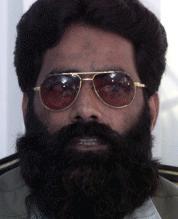
Ilyas Kashmiri

Ilyas Kashmiri is the notorious Pakistani terror commander with a long pedigree in the field of jihad. He cut his teeth fighting the Soviets in Afghanistan, and then waged terror attacks in the Indian state of Jammu and Kashmir as a commander in the Harkat-ul Jihad Islami, where he formed Brigade 313 . He has since risen into the top tier of al Qaeda’s leadership cadre, as an experienced and dangerous military commander who directs attacks in South Asia while also aiding terror attacks against the West.

Kashmiri is considered by US intelligence to be one of al Qaeda’s most effective commanders. He serves as the operational chief of the Harkat-ul Jihad Islami, an al Qaeda-linked terror group that operates in Pakistan, India, Afghanistan, and Bangladesh. The Harkat-ul Jihad Islami was designated as a terrorist entity by the US in 2010, and Kashmiri was added to the list of global terrorists for his role in leading HUJI as well as for his links to al Qaeda. Kashmiri has taken control of the Lashkar al Zil, al Qaeda’s paramilitary Shadow Army, and has planned an directed a series of complex suicide and conventional attacks on US, Afghan, and Pakistani installations in South Asia.

Kahsmiri is not as well known or plugged into al Qaeda’s global network as the other prospective successors, but he has a major presence in South and Central Asia, where al Qaeda has invested considerable resources.

Source

Student Activist and His Family Harassed and Threatened for a Full Year Before Arrest

4th May 2011

A friend and other sources close to Ashkan Zahabian, a banned student and human rights activist who was arrested after appearing at the Intelligence Office of Sari on 3 May 2011, explained to the International Campaign for Human Rights in Iran the extent to which Zahabian’s family was harassed and targeted by security forces within the past year. The sources described how mistreatment of the family, threats to confiscate Zahabian’s bail for his temporary release, and finally death threats against Zahabian, created serious health issues for his parents. Zahabian’s mother was transferred to a hospital and his father’s heart condition worsened.

Pressure placed on the families of human rights activists by security forces is not uncommon and is used in order to arrest individuals. However, the extent of the pressure put on Zahabian and the repeated threats to his family leave no doubt that security forces used systematic psychological pressure on his family to arrest him.

According to sources, Zahabian’s parents were even put under house arrest for several hours at times. “Since 7 December 2010, intelligence forces continually visited Ashkan’s home. In March, they went to their home with an arrest warrant and said that they have a mobile warrant and they can arrest him wherever they spot him. He had a six-month prison sentence. Ashkan did not stay at his home during this time. During one of the visits to his home, 12 security personnel, including the Head of the Babol Intelligence Office, showed up inside house,” a source said.

“The forces confiscated his personal belongings, computer, and books. They detained his parents inside the house for several hours and told them that they were not allowed to leave the house until Ashkan returned. They then threatened that they would obtain ‘shoot-to-kill’ orders for him and would take him to a location where nobody could reach him, etc. Due to these comings and goings, Ashkan’s mother’s health deteriorated to the point of being transferred to the hospital. His father’s heart condition worsened, too,” a source added.

On 3 April 2011, intelligence forces went to Zahabian’s home and threatened to confiscate the home, the deed to which had been posted for his release from prison. The intelligence forces said that they would auction the house.

In the case of his 16 June 2009 arrest, Zahabian was sentenced to six months in prison on charges of “disrupting order,” “inciting people to demonstrate,” and “organizing the protest inside Mazandaran University.” He was arrested for the second time on 5 November 2009 on charges of “acting against national security through forming the Islamic Associations organization in Northern Iran.” According to a source, if Zahabian was summoned to commence his prison term, he shouldn’t have been transferred to the Intelligence Office but to prison.

Ashkan Zahabian was a student campaigner at the campaign headquarters of Mehdi Karroubi in the city of Babol. During post-election arrests, Zahabian was severely beaten by security forces and in one instance was unconscious for three days. He was imprisoned for a total of 8 weeks.

Background:

In 2008, Ashkan Zahabian was suspended for one academic term because of his student activism. Only four days after the disputed election of 2009, he was arrested by the Ministry of Intelligence. Plainclothes forces known as Ansar-e Hezbollah severely beat him during the arrest. During Student’s Day protests on 4 November 2009, he was arrested for the second time. A Revolutionary Court in Babol sentenced him to six months in prison in his absence. In February 2009, while still suspended, he was banned from continuing his education based on an Intelligence Ministry decision, and was expelled from university just one term shy of graduating.


Source


IRGC says Iranian regime will be America’s next target after Bin Laden

0

May 4, 2011

A source affiliated with the Iranian regime’s Islamic Revolutionary Guard Corps (IRGC) has said that following the death of Osama Bin Laden, the next target of the United States will be the clerical regime in Iran.

The IRGC-affiliated Fars news agency published an analysis yesterday after the death of Bin Laden, saying, “Beyond the media hype and street celebrations, there is another question preoccupying informed and independent watchers, which is: what will happen next?”


“Who will be America’s next choice? There are many alternatives to choose aside from al-Qaeda and extremist Islamophobia. Among them China is a good example. … But China is a large economic partner of the US.”

It added, “The Iranian establishment may be a more appropriate choice; a country that has been the biggest enemy of the US over the past thirty years, and by achieving nuclear capability it is on the path to becoming a regional superpower.”

The article added, “Focusing on the Iran issue has many advantages for the US. … It can be the religious enemy for other Islamic countries. And the US has the ability to use the capabilities of these countries to confront the Iranian establishment.”


Source

TAKE ACTION: Report on detention of political prisoner Mostafa Tajzadeh

05/04/2011

On April 19, 2011, the *Kaleme website said that, according to the latest reports from Evin prison, Mostafa Tajzadeh’s physical condition is “worrisome”. According to the International Campaign for Human Rights in Iran, Mostafa Tajzadeh had a disc surgery before his imprisonment. He currently suffers from arthritis in his neck and requires surgery.

Mostafah Tajzadeh is a senior member of the Islamic Revolution Mujahedin Organization and the Central Council of the Islamic Iran Participation Front (both are reformist organizations). He was arrested on June 13, 2009, one day after the disputed 2009 Iranian Presidential election. He was released from prison on March 12, 2010.

According to various sources, Mostafa Tajzadeh returned to prison in August 2010 to complete his six-year jail sentence after writing a grievance letter with six other top-ranking reformist figures (who had been arrested and detained inside the IRGC-run ward 2A of Evin prison) to Commander Moshfeq and other commanders of the Islamic Revolutionary Guard Corps (IRGC).

Due to the interference by the IRGC’s Intelligence unit, he was transferred to a cell under the supervision of the Ministry of Intelligence. Normally, political prisoners are held in the general ward.

For some time, Mostafa Tajzadeh shared a cell in ward 2A with Mohammad Nourizad, the jailed Iranian filmmaker and writer. Radio Farda reported today that Mohammad Nourizad has been on hunger strike for the past 40 days. Mohammad Nourizad’s wife, Fatemeh Maleki told the Kaleme website that her husband went on hunger strike because “the Prosecutor and Judiciary have ignored complaints he filed in late autumn. In those complaints Nourizad said his interrogators assaulted him and that they and a judge verbally insulted his family.”

According to various reports, for several months, Mostafa Tajzadeh had also shared a cell with an inmate who suffered from psychological problems. Sources close to Kaleme have said Mostafa Tajzadeh was likely held with a mentally ill prisoner to increase the pressures on him while under the torture of solitary confinement.

He is currently in a severely poor physical state. Kaleme reports that, in the past two years, he has endured a minimum total of 11 months in solitary confinement. Mostafa Tajzadeh’s family members said in the Kaleme interview that the political activist has been abused by the IRGC agents in Evin prison.

On March 1st, Saham News reported that Mostafa Tajzadeh’s wife, Fakhrolsadat Mohtashamipour, a member of the Iran Islamic Participation Front, was arrested while protests took place in Tehran that day. Mohtashamipour allegedly contacted her daughter with her mobile phone during the arrest. Mohtashamipour’s daughter said, “I could hear my mother disputing with the anti-riot police forces.”

During the Persian New Year holidays in late March 2011, Fakhrolsadat Mohtashamipour launched a hunger strike and was transferred to the hospital a few days later. Several political prisoners in Rajai Shahr ‘Gohardasht’ prison launched a group hunger strike on April 10th in solidarity with Fakhrolsadat Mohtashamipour.

Fakhrolsadat Mohtashamipour agreed to a three-day prison furlough on April 14th after her request to briefly see her husband was met. According to reports by Tahavole Sabz, the three-day prison furlough was possible after Fakhrolsadat Mohtashamipour had completed her interrogation process. She was scheduled to return to prison on April 17th.

TAKE ACTION! EMAIL THE ABOVE REPORT TO WORLD POWERS AND THE MEDIA

UN Officials and Heads of Government
[email protected][email protected][email protected][email protected][email protected],[email protected][email protected][email protected],[email protected][email protected][email protected],[email protected][email protected][email protected][email protected],[email protected][email protected][email protected][email protected],[email protected][email protected][email protected][email protected],[email protected]

Foreign Ministries and the US State Department

[email protected][email protected][email protected],[email protected][email protected][email protected][email protected],[email protected][email protected][email protected][email protected],[email protected][email protected][email protected],[email protected][email protected][email protected][email protected],[email protected][email protected][email protected][email protected],[email protected][email protected][email protected][email protected][email protected],[email protected][email protected][email protected][email protected]

Media

[email protected][email protected][email protected][email protected],[email protected][email protected][email protected][email protected],[email protected][email protected][email protected][email protected][email protected],[email protected][email protected][email protected][email protected],[email protected][email protected][email protected][email protected][email protected][email protected][email protected],[email protected][email protected][email protected][email protected],[email protected][email protected][email protected][email protected][email protected],[email protected][email protected][email protected][email protected],[email protected][email protected][email protected],[email protected][email protected][email protected],[email protected][email protected][email protected][email protected],[email protected][email protected][email protected][email protected],[email protected]


Source

Lawyer Nasrin Sotoudeh Told She Must Give Interview in Order to Leave Prison

3rd May 2011

Reza Khandan, husband of imprisoned Iranian lawyer and human rights activist Nasrin Sotoudeh, told the International Campaign for Human Rights in Iran that Sotoudeh is in very poor conditions in prison and is planning to go on another hunger strike. He told the Campaign that security forces clearly told his wife that so long as she does not confess, she is not allowed to leave the prison. Sotoudeh has repeatedly refused to give such confessions. Security officers have prevented Sotoudeh’s transfer to Evin Prison’s General Ward for the past eight months.

“Ms. Sotoudeh told me during our…visit that due to her poor prison conditions, she is intending to start a hunger strike. I talked to her and convinced her not to do it. She said that if the situation persists until June, she would embark on a hunger strike again, and I really hope that this wont happen,” said Khandan about Sotoudeh’s resumption of her hunger strike.

“From the very first days of her arrest, she somehow communicated that she is under pressure for confessions, but I think it was near January and February when her interrogators told her very transparently and clearly that she would not be able to leave the prison until she has been ‘interviewed.’ My wife also told them very clearly that she would not do it,” said Khandan about pressure on his wife to interview and confess to the charges against her.

“But I don’t know why they said that, because my wife would not give in under any amount of hardship. Even if they keep her in there for 100 years, she would not do it. Not only would she refuse to do it, she would not even consider the topic of an interview. She could have done a lot simpler things prior to her arrest to ensure that she would not be arrested,” Khandan continued.

“They talked about this around the [Iranian] New Year again. When they realized they could not achieve results, they told my wife to forget it, that it wasn’t serious, and that it was just to show her cooperation. Her response was still the same as she had given them before. But prisoners can’t normally leave these things behind. Even an hour before her release, they may still ask her to do it,” said Khandan about the new wave of pressure on his wife for a televised interview.

“Really, if they keep her for two thousand years and put her under physical and psychological pressure, she would still not do it. I don’t want to say that what my wife does is right; I just want to say that she does not have the mentality to do this. Maybe in the future, when there is again pressure on her to interview, but I am sure that her answer will be no. Confessions are meaningful only when an individual has committed a criminal act and then confesses. But they want her to admit to doing things she has not done and to talk about them. This is not called a confession,” said Khandan.

Asked whether Nasrin Sotoudeh has been under physical abuse, Khandan said, “She has never told me anything about this. I believe the worst torture for her is not being able to see her children. When my wife was first arrested, one of her friends came to see us. She said that when she was single, she was arrested and sentenced to eight years in prison, but she didn’t care back then at all. But when a few years ago, after she had two children, she was arrested for 20 days, she thought she was willing to give up the world for holding her children in her arms for a second. My wife has been waiting for such a moment for eight months. You can imagine what kind of psychological pressure this is. She has been unable to hold her children once without the presence of forces.”

“During their seven or eight minute visits, the children have not once been able to see their mother without the presence of officers. I don’t know what this is called. I won’t call it torture or pressure; I will let others name it. Maybe a mother is willing to be beaten but to visit with her children in a relaxed environment, free of officers, where their pockets are not searched and their chocolate and hair barrettes are not confiscated. There is nothing more horrible than this for a mother,” concluded Khandan.


Source


500 prisoners transferred to Rajayi Shahr Prison beaten violently upon arrival

May 3, 2011

During the allocation of West Tehran prisoners to the Prison Organization in the province of Tehran and Alborz, more than 500 prisoners with heavy sentences in the Qezel Hesar Prison were transferred to the Rajayi Shahr Prion in Karaj.

According to reports, at 11 am on Tuesday morning more than 500 Qezel Hesar prisoners who had participated in the March prison protests were transferred to Rajayi Shahr Prison.

The head of Rajayi Shahr Prison ordered that the guards and soldiers in the prison form a human tunnel to beat each of the prisoners upon their entrance to prison. The prisoners were violently beaten even as most of them were elderly or were still suffering from their injuries in the bloody suppression in Qezel Hesar Prison in March.


These prisoners are mostly all on death row and had protested in March against the planned execution of 10 prisoners in prison. Because of the suppression of Special Guards Forces, more than 150 prisoners were killed and injured in the incident. (Human Rights Activists in Iran – Apr. 24, 2011)


Source

Body of prisoner killed by guards returned to family after 20 days

May 3, 2011

The  body of Shahram Golchin who was killed during the Qezel Hesar Prison  incident when dozens of prisoners were killed and injured (by security  forces) was returned to his family after 20 days.

Golchin was arrested by Bassij Forces in the Ayatollah Kashani region  and was killed in the Qezel Hesar Prison incident. His body was  returned to his family after two weeks and with threats against his  family. One of his friends said, ‘He was arrested by the Bassij Patrol  in the Ayatollah Kashani region in a checkpoint on charges of being a  passionate youth”.

“There were no reports about him after the riot in prison and on  Saturday March 18 his family was told that he was in the infirmary  because they insisted on seeing him. This is while according to  documents, he was already dead on that date”, his friend added.

“After the News Years break his family pursued the issue, and it was  revealed that Shahram’s body was in the Karaj Cemetery Morgue.  (Officials) announced that he died as a result of a lung infection”.

This eye witness said that there were torture signs on Golchin’s body.

“There were bruises on his legs and back caused from a hard, pipe like object. His head was also broken”.

Because of threats by security and intelligence forces, his family  was forced to tell friends and relatives that their son died in a car  accident.

Notably, widespread protests broke out in Qezel Hesar Prison in March  in protest to the execution of 10 prisoners, which left 80 prisoners  dead and 150 injured. Prison guards and anti-riot police opened direct  fire on prisoners. (Human Rights Activists in Iran – Apr. 29, 2011)


Source

Political prisoners face appalling conditions in Sanandaj Prison

May 3, 2011

According to reports from the Central Sanandaj Prison, security forces in this prison raided cellblock 3 under the excuse of conducting a search and beat prisoners with batons. They then forced the barefoot prisoners out of their cells and violently conducted a search of their personal belongings.

Notably the condition of political prisoners and prisoners of conscience is deteriorating on a daily basis. Prison officials use their informers in prison to put pressure on these prisoners. Narcotics are widely distributed while criminals are hired to harass political prisoners every day while they are in the prison yard. Political prisoners have also been threatened by prison officials that if they protest the status quo, they will be sent to prisons in the farthest corners of Iran.

Political prisoners are constantly attacked by prison thugs who are detained on charges such as murder and drug dealing. This is while according to the laws of the Islamic Republic, prisoners with special cases have to be kept in separate cells but in the Sanandaj Central Prison, political prisoners are detained with dangerous criminals.


On the other hand, prisoners with dangerous and contagious diseases and viruses like hepatitis are also kept with political prisoners. (Pars Daily News website – Apr. 28, 2011)


Source

Student activist Ashkan Zahabian imprisoned

05/03/2011

GVF — Ashkan Zahabian, an Iranian student barred from studying, has been arrested.

According to a report by opposition website Jaras, Zahabian was arrested at his father’s home on Monday night and taken to a detention centre under the supervision of the Intelligence Bureau of the city of Sari in northern Iran. The security forces that entered the home also confiscated a number of Zahabian’s personal belongings including his notes, computer, books and CDs.

Zahabian, a member of an important student organisation The Office for Fostering Unity (Daftare Tahkime Vahdat), was a campaigner for the opposition candidate Mahdi Karroubi during the 2009 presidential election.

“An informed source” told Jaras that last week, that security forces went to the student activist’s home at night, telling his family their son was to refer to the Intelligence Bureau and that agents had been given permission to shoot Zahabian if he continue refuse to present himself to the Bureau. The threats had a severe impact on Zahabian’s mother who was later hospitalised following a loss of blood pressure, according to her doctor. In recent days, experts from the judiciary had also threatened to put the house of Zahabian’s father up for auction.

On 16 June 2009, just days after massive vote riggings in Iran’s presidential election, Zahabian was arrested during protests at Mazandaran University and was beaten so ruthlessly by state-sponsored vigilantes that he remained unconscious for days. The activist, who had already been banned from pursuing his education due to his political activism, spent three months in solitary confinement in Sari’s Intelligence Bureau prison as well as Babol’s Mata Kola detention centre.

Zahabian was arrested on 2 November 2009 for a second time after being summoned by the Persecutor’s Office in Babolsar for “acting against national security by establishing Islamic Association in north of the country.”

He has been sentenced in absentia to six months in prison by Judge Rezyan of Babol’s revolutionary court.

shkhn_dhhbyn.jpg

Source

Teachers’ Union of Kurdistan Threatened; Twelve Teachers Summoned

TUESDAY, 03 MAY 2011

HRANA News Agency – Agents working for Iran’s Ministry of Intelligence are placing undue pressure on teachers summoned by the agency to repudiate the statement released by Teachers’ Union of Kurdistan for May 9th.  In this statement, the union has named the day Farzad Kamangar was executed a day to reject violence and defend the right to live.


According to a report by Human Rights Activists News Agency (HRANA), in recent days, Bahaldyn Maleki, Ramin Zandnia, Ali Qarishi, Mokhtar Asadi, Peyman Navidian, Heydar Zaman, Reza Khatami, Kamal Fakorian, Mostafa Sarbazan, Mohammad Sadiq Sadeqi, Hiva Ahmadi and Ezatollah Nosrati were summoned to the Intelligence Agency in Kurdistan Province.  The aforementioned individuals were questioned and threatened by the interrogators who had traveled from Tehran to Sanandaj [Kurdistan Province, Iran], and demands were made to rescind the union’s statement.


However, union members have so far insisted on their call to observe May 9th, the anniversary of Farzad Kamangar and four other individuals’ execution.  According to this report, intelligence forces have focused on pressuring Peyman Navidian and Mokhtar Asadi the most because they are union activists with prior convictions. Peyman Navidian was exiled for nearly three years to Zanjan Province and was not allowed to work for several months.  Similarly, Mokhtar Asadi was in exile for 2 years and banned from work for 6 month.


In their statement, Teachers’ Union of Kurdistan has asked teachers all over Iran to light a candle on May 9th and reject organized violence.  By defending the right to live and teaching lessons of peace and human benevolence to their students, educators throughout Iran have been asked to commemorate Farzad Kamangar and his legacy as a fallen teacher.


Source