Home Blog Page 669

Khamenei was target of protests: senior regime official

February 17, 2011

NCRI – A senior official of the Iranian regime grudgingly acknowledged on Tuesday that the target of Monday’s anti-regime protests was the regime’s Supreme Leader, Ali Khamenei.

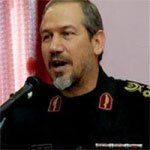
According to the state-run Mehr news agency on Tuesday, Khamenei’s senior military advisor, Rahim Safavi, said, “The attack by enemies against [Khamenei] in all aspects of soft and hard power was not out of question.”

Safavi, a former commander-in-chief of the Islamic Revolutionary Guard Corps (IRGC), also warned regime agents that anyone with a “simple access to a computer” can have their minds changed and be “weakened,” referring to growing opposition to the regime.

Source

Another young protester dies in hospital because of gunshot wounds

Feb 16, 2011

Mohammad Mokhtari was one of the protesters who was wounded in the February 14 protests in Tehran and reportedly passed away in the hospital on Tuesday evening because of the severity of his wounds. According to reports, Mohammad Mokhtari, son of Ismail was 22 years old and was wounded in the shoulder after being directly targeted by security forces.
He was shot by a pistol by security forces on motorcycles and the people on the scene did not think his wound was fatal. (Human Rights Activists in Iran – Feb. 15, 2011)

Source

Iran announces names of 1,500 detained protesters taken to Evin Prison

0

Feb 16, 2011

A few hours after a gathering by the families of those detained during yesterday’s gatherings, a list consisting of 1,500 names (of detainees) was read out by court officials and it was announced that all detainees were taken to Evin Prison. Notably, detainees in Tehran were taken to the Revolutionary Court in Moalem Street and criminal records were filed for each of them. Special Forces attacked and beat the families of these detainees who were gathered outside the Revolutionary Court this morning.
The announcement of the names of 1,500 prisoners comes after the Commander of State Security Forces in Tehran announced that 150 people were arrested in the protests. (Committee of Human Rights Reporters – Feb. 15, 2011)

Source

At least 16 students of Sharif university have been arrested

0

February 16, 2011

There has been no news on February 14, detained student’s whereabouts.

Amin Mahdavi, Shaghayegh Heirani, Farzaneh Karami, Puria Naderi, Saman Rehat, Mohammad Naraghi, Mohammad Salahshur, Aref Bolandnazar and Siavash Jabarian are among Sharif university students whom were arrested during February 14 events. Shima Vozarai, is another student of this university whom was arrested upon raid of Security forces to her work place and was taken to an unknown location.

Also, over the past day all gates of Sharif university have been closed by Security and protection officers and students are forced to travel through the main gate. During these events at least 6 other students by the names of Nader Rezaei, Ali Akbar Mohammad-zadeh, Javad Sohankar, Ali Morshedlu, Amirhushang Navaei, and Mohammad Afkhami were arrested.

Nader Rezaei is a member of Guild Council and 5 others were members if Islamic Council of Sharif university.

Source

Ghaneh Jaleh, brother of Saneh Jaleh, detained

February 16, 2011

In an interview with Voice of America, Ghaeh Jaleh, had contradicted the government run media and had stated that his brother is not a member of the Basij. He was arrested after the interview and has been put under pressure in order to deny his statements. He had stated that his family is currently under pressure.

Saneh Jaleh was a Kurdish resident of Paveh who was shot during the February 14th protests. Government run media had tried to present a false image of his identity. Ghaneh Jaleh had revealed the truth during the interview.

Classmates of Sane’ Jaleh arrested in Iran

February 16, 2011

This morning –Wednesday, February 16, 2011- agents of the Iranian regime arrested a large number of students and classmates of Sane’ Jaleh, martyr of the February 14th uprising, who intended to take part in his burial ceremony.  At around 9:00 am, a large group of student and faculty gathered to take part in the burial ceremony of Sane’ Jaleh, 26, student of Tehran’s Art University who was martyred by the direct shooting of the regime’s agents on February 14th.

Afterwards, members of the Bassij and the regime’s intelligence elements in the university (Protection, branch of MOIS on university campus) attacked the students and arrested a number of them. They also literally locked up the other students in the Hall of the University of Arts, preventing them from exiting the facility.

Share on Facebook

Seyed Ali Khamenei’s Turn To Go

0

February 16, 2011

Yesterday and today the people of Tehran and other Iranian cities called the leader of the Islamic republic  a dictator and declared that after Hosni Mubarak and Ben Ali, it was now seyed Ali Khamenei’s turn to be booted out.

The protestors to the rigged 2009 presidential elections chanted various slogans in unison that asked ayatollah Khamenei to follow Egypt’s Hosni Mubarak’s example and resign. At night, many took to building rooftops and repeated “death to the dictator” chants, a protest gesture that developed and became massively popular during the 1979 revolution when people called out Allaho Akbar.

The demonstrations were a response to calls by opposition figures Mir-Hossein Mousavi and Mehdi Karoubi, both prevented from joining the masses because they have been put under house arrest. Requests for the rally, originally planned to demonstrate solidarity with the people of Egypt and other protestors in the Middle East, were denied by Iranian authorities who had threatened to crush the demonstrators with full force. Ironically, officials of the Islamic regime who had welcomed the Egyptian demonstrators and had declared them to be the continuation of the 1979 Iranian uprising, denied a permit to Iranians to hold a solidarity rally in support of Egyptians. But people still poured into the streets to air their grievances at the officials of their own government and regime.

Rooz reporters and witnesses reported violent beatings of demonstrators in the streets of the capital, sounds of gunfire, and the use of tear gas against the demonstrators. According to these reports, two protestors were wounded because of gunfire while one was killed because of it. A YouTube video clip showed a young man wounded in the leg as he lay on the ground. Other video clips showed demonstrators in the streets late into the night, lighting fires.

Mousavi and Karoubi Prevented From Joining

Mousavi and Karoubi, both presidential hopefuls in 2009 who had held the highest offices in the Islamic republic in the past, had decided to go ahead with their call for the demonstrations despite the official rejection of their requests but were prevented from joining the protestors. Officials had imposed a complete communications denial on the leaders of the Green Movement days before the demonstrations. Mousavi’s website Kalameh reported that the cul-de-sac on which Mousavi lived had been blocked off by a police vehicle preventing anyone from getting to the house. Mousavi’s personal security guards had been told not to leave their posts and Mousavi’s car keys had been confiscated by security officials enforcing the barricade.

Mousavi and his wife Zahra Rahnavard had planned to join the demonstrators on foot, but the van blocking their street even prevented that.

In another part of Tehran, Mehdi Karoubi’s house too had been cordoned off since Thursday, while his telephone lines had been blocked completely as well. He too was prevented by security agents from leaving his house during the demonstrations, as was his wife.

Other reports indicated that the houses of others such as Mohammad Khatami and Abdollah Nouri too were cordoned, preventing them from leaving their homes.

But despite this, thousands of demonstrators hit the streets to chant “Death to the Dictator.”

Tehran Against the Dictator

While there were few reporters and journalists in Tehran covering the demonstrations, there were plenty of security and military forces across the capital and other major cities, said to be even larger than in the previous popular demonstrations following the 2009 rigged elections. As the day progressed, so did the size of the crowds in the streets.

According to Rooz reporters, military unites strived to prevent the formation of large crowds. According to eye witness reports, the military employed every means to prevent people from reaching Azadi square to join others. The square is the symbolic center of protestors in Iran, similar to Tahrir square in Cairo.

In addition to gear gas guns, the military units carried two other types of weapons, a pellet firing gun and a paint firing gun. Those against whom the pellet gun was used were immediately surrounded by the military personnel who would start beating up the victim with batons. The paint ball shots inflict pain in addition to throwing paint on the victim.

There were also plain clothes agents and militiamen who mostly rode on motorbikes and were in groups. Security forces were stained in squares and next to the Revolutionary Guard forces. Most of the violent attacks were conducted by the camo units of the Guards and the regular Guards.

According to reports, the demonstrator who had poured into the streets were large in size so much that they were surprised with their numbers. What was significant in the demonstrations and the chants was that Mahmoud Ahmadinejad was not the target this time and all the attention was on the supreme leader, against whom they chanted slogans.

One eye witness reported seeing “motorbiked militiamen patrolling the streets, as marchers and demonstrators called out Allaho Akbar from the sidewalks. The riders did not try to engage with the marchers as they were clearly outnumbered. Then the marchers moved from the side walk to the street and began shouting anti Khamenei slogans and chanting ‘Death to the Dictator.’ The bikers then tried to push the demonstrators back onto the sidewalk using batons to beat them. On Kargar Avenue in northern Tehran, the military used tear gas against demonstrators as smoke filled the air.”

Similar reports from other parts of Tehran speak of wide demonstrations across the capital, as different military and militia units strived to break up the demonstrators using tear gas, batons and bullets. Units of the Revolutionary Guards violently attacked people, beating them up in an attempt to disperse them. But the crowds would reform soon after every clash and continue on their way to Azadi square, in the western part of Tehran. Some of the Guard units wore gear to hide their faces, with the eyes being the only part of their face that was visible.

One eye witness reported that he saw military men chase a man who succeeded in climbing a bridge. When the person refused to come down after being yelled at by a guard, the guard pulled out a gun and fired at the crows, creating welding-type sparks as he missed his target and hit the metal bars of the bridge. He wanted to continue firing but was stopped by other guards because of the huge size of the demonstrators who could have responded massively.

In other parts of the city, reports indicated that demonstrated set trash cans on fire as security and military men tried to prevent other people from getting to the spots and the site turning into a rallying point for the demonstrators. The security units on motor bikes engaged in such violent tactics that they harassed even regular by standers close to those demonstrating.

Source

Three girls violently beaten before arrest for participating in peaceful protests

Feb 16, 2011

During attacks by plainclothes agents and riot police against demonstrators in today’s street protests in various areas in Tehran, a large number of people were injured and arrested. The last of these cases occurred in the western region in Tehran in the Karoun and Khosh streets when three young women along with two men were arrested by plainclothes agents. One of the young girls was violently beaten before arrest.
According to reports, like all other detainees today, these three girls were taken to an unknown location. (Student Committee in Defense of Political Prisoners – Feb. 14, 2011)

Source

Iran protester’s death ‘hijacked by regime’

February 16, 2011

for Saane Zhaleh, created by his classmates at Tehran University of Arts. Photograph: from Saeed Kamali DehghanThe Iranian regime has been accused of hijacking the death of a young pro-democracy protester killed during rallies in Tehran on Monday.

A family member of Saane Zhaleh, a 26-year-old theatre student at Tehran University of Arts, told the Guardian that the Iranian authorities had launched a campaign to depict the pro-opposition protester as a member of the government-sponsored basiji militia who had been killed by what they described as terrorists.

“They [security forces] have killed him and now they want to hijack his dead body and exploit his funeral for their own purposes. His family is totally devastated and inundated in sorrow,” said the family member, who asked not to be identified.

Opposition websites reported that two protesters were killed in clashes between security forces and thousands of defiant protesters who marched in a banned rally organised by the leaders of the green movement on Monday.

Iranian state news agencies later identified them as Zhaleh, a member of Iran‘s Kurd and Sunni minority, and 22-year-old Mohammad Mokhtari, but blamed the opposition for their death.

Iran’s semi-official FARS news agency published a basiji identity card that it said belonged to Zhaleh, but the opposition immediately questioned its authenticity. In response, activists sympathetic to the green movement published a photo of Zhaleh on social networking websites that showed him in a meeting with grand Ayatollah Montazeri, a leading opposition figure who died in 2009.

Authorities staged a funeral at the Tehran University of Arts but did not permit Zhaleh’s family to attend. Witnesses told opposition websites that the hundreds of basiji members who were bussed in to the university to participate in the funeral outnumbered the students and clashed with them.

According to the family member, Zhaleh’s parents and siblings – who live in the western city of Paveh in Kermanshah province – were asked not to attend the funeral in Tehran and were threatened that Zhaleh’s body would not be handed to them if they spoke to foreign media.

“Zhaleh’s family are under pressure not to deny the way the officials have portrayed him. His father was forced to give a short interview to the state television. The authorities are depicting him completely upside down, they have silenced the family by threatening not to hand over his body,” the family member said.

At the same time, Sajad Rezaee, a member of the Islamic Society student group at Tehran University of Arts, told Kaleme.org, the official website of Mir Hossein Mousavi, that the dead protester was not a member of the basij but was a pro-Mousavi activist during the 2009 election campaign.

Shahabaddin Sheikhi, a Kurdish journalist based in Germany, said: “The authorities’ handling of Zhaleh’s death reminds me of that of Neda Agha Soltan, the girl whose story took the world’s attention. In Neda’s case, they also tried to portray her as pro-regime demonstrator and they lied several times to impose their own version of the story but that finally did not prevail. Same thing is happening with Zhaleh because they are afraid of the world’s reaction and also the reaction of the people inside the country. They can not get rid of this disgrace and taint easily.”

Monday’s protest, inspired by the uprisings in Egypt and Tunisia, marked the Iranian opposition’s first attempt in more than a year to hold anti-government demonstrations.

On Tuesday, the majority of the Iranian parliament called on the Iranian judiciary to put opposition leaders Mousavi and Mehdi Karroubi on trial and sentence them to death. Both leaders of the green movement have been placed under house arrest for the past couple of days.

Source

Obama expects more protests in Iran

0

February 16, 2011

Washington/Tehran, Feb 16 (IANS) US President Barack Obama hopes to see more anti-government protests in Iran, Iran’s Press TV reported from the American capital.

‘My hope and expectation is that we are going to continue to see the people of Iran have the courage to be able to express their yearning for greater freedoms and a more representative government,’ he said during a White House press conference Tuesday.

The remarks came one day after the supporters of two of the defeated candidates in the 2009 presidential election, Mir-Hossein Mousavi and Mehdi Karroubi, gathered in parts of the Iranian capital, Press TV said.

Monday’s demonstration was called by Mousavi and Karroubi in support of the Egyptian and Tunisian uprisings. Both opposition leaders are under house arrest and were unable to participate in the protests, for which Ali Larijani, speaker of the parliament, blames the US.

Larijani said the US is behind the anti-government protests, adding that Washington is angry over Iran’s support for the liberation movements sweeping the Middle East.

‘The main purpose was to clone (the protests) so they could claim that the crises plaguing the US-backed dictatorships in the region have spread and that Iran – which has been the forerunner of democracy in the region – is also having internal problems,’ Larijani said.

Iranian lawmakers have called for the prosecution of Mousavi and Karroubi and have denounced their call for illegal rallies in which two people were killed and several others injured.

Source