Home Blog Page 680

WikiLeaks: the Tortuous Politics of the Middle East and Iran

0

Last Sunday, WikiLeaks began releasing its latest trove of US classified diplomatic communiqués, that generated a political earthquake for the Americans and their ‘friends’ and ‘foes’. This article will be confined to the case of the Middle East especially with respect to Iran’s nuclear issue (which the documents shed abundant light on), and the way it was covered in the mainstream media in the West and the Middle East. I will argue that what WikiLeaks is doing compensates to an unprecedented degree (in terms of injecting political transparency into the system) for the lameness of the mass media, but the mass media coverage of the release is bringing much of the opacity right back into that transparency, muddling the picture yet again by cherry-picking and focusing only on those documents that fit their narrative about Iran and the Middle East. By mass-media, I am not only referring to conservative partisan media (such as Fox News or Figaro) that have an explicit agenda of manipulation, but also (and more importantly) to the so-called ‘independent’ media such as New York Times, Spiegel, Le Monde, BBC, CNN, and many other Western and Middle-Eastern (especially Al Jazeera) news outlets that are operating cravenly in line with the agendas of their governments and manipulating their audiences under the guise of ‘independence’, especially with it comes to foreign relations.

The mass media here in the West cherry-picked and produced a huge pile of hooey regarding those cables about the Arab regimes’ perceived threats of the Iranian nuclear ambitions and their urging of the US to attack Iran preemptively. Some sound-bites that they brought to limelight are as follows: one cable tells us that the Saudi King ‘implored’ [mind the word] Washington to ‘cut off the head of the snake’, that is, to attack Iran before it’s too late. Another document tells us that the Bahraini King told Gen. Patraeus, then the top US commander in the region, that the US should stop Iran’s nuclear program ‘by whatever means necessary’, i.e. militarily. Crown Prince of Abu Dhabi told the U.S. that he believed that Ahmadinejad was ‘going to take us to war’ and that ‘Ahmadinejad is Hitler’. In 2005, he had told Americans that they needed to take action ‘this year or next.’ And so forth and so on. The so-called ‘independent’ media dedicated their headlines solely to these highlights, and largely ignored or mentioned only en passant those documents that go against this narrative, consciously trying to manipulate their audiences into believing there is little or nothing against their simple good/evil narrative! Israeli officials and obviously their media (1) embraced these highlights, hoping to convince the world that they are not alone in fearing the ‘the new Hitler’.

Now, let’s approach the issue from two different perspectives: first, a realist political scientist’s standpoint. Well, the realist and neo-realist approaches in political sciences (crudely defined) tell us that the interstate relations (i.e. world politics) constitute a ‘state of anarchy’ (a ‘jungle’) with no really effective moral principles or legal systems regulating the behavior of the actors (states). From this outlook, it is completely normal for states and their media to lie and manipulate people and go to wars (just or unjust) with nothing but acquisition of ‘power’ and ‘self-interest’ regulating their policies. For starters, I should add that this is the standpoint of the majority of those in politics all around the world: ‘left’, right, ‘democratic’ and dictatorial alike. From this viewpoint, it is much more reasonable to engage with Iran than to attack it, as I showed in a previous article in TehranReview (2), and as many realist political scientists and politicians have already argued (3). Even from this amoral realistic perspective and even in cables that WikiLeaks released you can see this realist approach given voice to by many of those in power. Many a political analyst (e.g. Robert Dreyfus and Gareth Porter (4) ) has also made arguments for the necessity of engaging with Iran.

Let’s check some marginalized new items: a 2007 document of the then-British ambassador in Tehran, Geoffrey Adams, recommended ‘being steady and firm, tough but not aggressive, and at the same time, seeking to engage’ with Iran. Even the officials in the foreign ministry of Saudi Arabia (who rarely dare to oppose their King’s opinions) called for ‘more severe sanctions’ as a more reasonable and realistic way of dealing with Iran. Another cable shows Oman’s ‘preference for a non-military solution’. Some documents relating to UAE say that although they regard Iran as a threat to their national security, ‘they are reluctant to take actions that could provoke their neighbor’ (Iran), and ‘compromise their extensive trading relationship’ with Iran. As you can see, even in UAE and Saudi Arabia, there are top official voices opposed to war or consequences of war for realistic reasons. Another document concerns the Egyptian Mubarak advising American officials to talk to Iran as long as ‘you don’t believe a word they say’. Yet, he does not advocate war. Another cable tells that the Qatari prime minister said ‘we lie to them [Iranians] and they lie to us,’ which basically means they are both realists and maybe you should be realists too. The logical challenge in this scenario for us and Americans is to decide whether or not they are lying in this statement too – the famous logical ‘liar paradox’.

One aspect of the story the mass media rarely mention is the fact that among all Middle Eastern governments only four of them (Saudis, Bahrain, Jordan, UAE) somehow urged Washington to attack Iran and not the rest of the Arab or non-Arab countries in the region (with the obvious exception of Israel). Even in these four countries there are top officials opposing war. These facts show, as Dreyfus argues, that Arab dictators are worried about Iran but ‘uncertain at best about what action to take, precisely because they fear instability and war’, which could lead to the collapse of their shaky and unpopular regimes. Other countries either oppose war, advocating diplomacy, or align themselves with Iran (again except Israel). Another document said: ‘Saudi donors remain the chief financiers of Sunni militant groups like al Qaeda’. This outstandingly important news item that should have shaken the foundation of the Western/Saudi relations was covered only in one line in the middle of an article in NYTimes (5), and that was that. No further elaboration, no impact. Another point worth mentioning is the fact that despite the purchase of hundreds and hundreds of billions of sophisticated weaponry from the US and other suppliers, the Arab governments feel so intimidated by Iran that they have to beg and ‘implore’ the US (only privately) to stop Iran. They do not even dare to make their position public, even while aligning themselves with the US and Israel. It is ‘sad, shocking, even pitiful’, according to Rami George Khouri (6), to see such miserable behavior from Arab governments.

The second perspective that I would like to take is the ‘naïve’ standpoint of a citizen of the world who, following Abraham Lincoln, ‘naively’ believes that ‘democracy is the government of the people, for the people, and by the people’. So, let us take a look at Arab governments and their peoples. The three muddled cases of Palestine, Lebanon, and Iraq aside, all other Arab countries are ruled by petty dictators: either dictatorial kings or life-time presidents (read potentates) untrammeled by any functioning parliaments or judiciaries and the possibility of people democratically deciding to remove them from power. The Western mass media portray these governments as representing the peoples of the region and use expressions such as ‘Arab contempt’, ‘Arab concerns’, or ‘Arab fears’; but in point of fact, they are talking about Arab dictators’ fears, in countries with more political and religious extremism and corruption than imaginable in Iran. In some of them, women are not allowed to vote, or get any political or managerial positions or even drive a car. There is no freedom of press in these countries just like Iran and even worse; take a look at how they have covered the recent WikiLeaks spate of documents, and you see nothing. Even Al Jazeera, the so-called ‘independent’ Middle Eastern media organization, has completely buried its head in the sand because of the pressure from Arab regimes and has not said a word about WikiLeaks revelations. In case that’s not enough proof, let me acquaint you with an academic research as to what Arab concerns really are, supposing (still ‘naively’) that democracy is about people not dictators.

A 2010 Arab Public Opinion Poll (7) , conducted by the University of Maryland, covering Egypt, Jordan, Lebanon, Morocco, Saudi Arabia, and UAE (mind the fact that all of these governments are ‘friends’ of the US and Israel), shows that that 88% of people in these countries (almost 9 out of every 10 Arabs) consider Israel to be threat number 1 to the region, 77% of people consider the US to be threat number 2, while in general only 10% mention Iran as a threat. One key finding of the poll is that ‘a majority of the Arab public now see a nuclear-armed Iran as being better for the Middle East’. The reason for this fact is not that Arabs are apocalyptic people, or they think nuclear weapons are naturally good, but that from the daily sufferings they incur, even average people have turned into political realists, bad political realists: they have come to think that when the two biggest threats to their region (that effectively introduce death and suffering to their lives on a daily basis) have nuclear weapons, it would not be a bad thing if Iran could stop or reduce this daily dose of misery should it come to acquire nuclear weapons. Now, this is realism, but it is really bad realism. They don’t know that Iran, a regime merciless even to its own people, will add its own daily dose of death and agony in the neighborhood if it gets to become a regional superpower with nuclear capabilities, which, like it or not, it is in the process of becoming. Be that as it may, the fact is Iran is not perceived as a threat by the people of the region.

To do justice to the issues raised by WikiLeaks is beyond the scope of this article, but the preceding has hopefully shown that the situation is not as black and white as the good/evil scenarios in the Western and Middle-Eastern media have it. If there were any scenario at all, it would be an all-evil scenario. But the presence of people like Assange, the founder of WikiLeaks, should give us pause and hope for the future of world politics. The documents depict the profound level of duplicity and deception that is rampant in undemocratic practices of both Western and (Middle) Eastern countries. It is no wonder that China has filtered the website and Iran has rejected all the documents as fabrications and Arab regimes have censored all the news about it. Nor is it a wonder that some congressmen and Fox News in the US are trying to declare WikiLeaks a ‘terrorist organization’, (8) in the same way they declared Nelson Mandela and his party (ANC) ‘a terrorist organization’ decades ago. But at the end of the day, it was Mandela and his people who prevailed.

(1) See Jerusalem Post on this issue: http://www.jpost.com/Opinion/Editorials/Article.aspx?id=197319
(2) How/Should/Will Israel Attack Iran? http://tehranreview.net/articles/5326
(3) Including Brzezinski, and many Obama officials such as Kaplan
(4) For Porter’s views visit: http://www.therealnews.com/t2/index.php?option=com_content&task=view&id=31&Itemid=74&jumival=5935
(5) See http://www.nytimes.com/2010/11/29/world/29cables.html
(6) R. G. Khouri: The internationally syndicated American-Palestinian columnist. See The Sad Loss of National Dignity http://www.agenceglobal.com/article.asp?id=2457
(7) For the full report, visit: http://www.brookings.edu/~/media/Files/rc/reports/2010/08_arab_opinion_poll_telhami/08_arab_opinion_poll_telhami.pdf
(8) See http://theweek.com/article/index/209848/is-wikileaks-a-terrorist-group

Source

Iran’s Role in Collapse of Lebanese Government May Serve as Warning for Iraqis

0

January 13, 2011

By Jennifer Griffin

Even as observers blame Iranian influence for the collapse of Lebanon’s coalition government Wednesday, the mullahs in Tehran seem to be extending their reach into the fledgling government in Iraq.

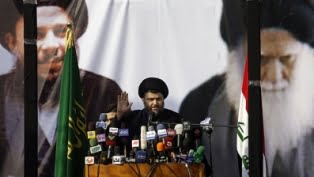
When Moqtada Al Sadr landed in the southern Iraqi city of Najaf last week after three years of self-imposed exile, he was greeted with adulation and cheers by his followers. His anti-American rhetoric remained apparent at his first public rally this weekend.

The Shiite Muslim cleric who had led a violent insurgency against U.S. forces and the one-time public enemy number one for the U.S. military was given a hero’s welcome after playing a key role in helping Iraq’s Prime Minister Nouri al Maliki form a government last month.

Fox News has now learned that some members of the U.S. military worked for more than a year to get Sadr back from Iran.

“Although his rhetoric is disruptive, it is better he is in Iraq than Iran,” a senior military commander told FOX News. “From Iran he is controlled and used by Iran.”

But even with him home, Sadr ties to Iran’s regime are still cause for concern for many.

Sadr’s political party won 40 out of 325 seats in recent parliamentary elections, and his political allies have been given eight seats in Maliki’s cabinet.

The Sadrite militia, the Mahdi Army, called a ceasefire with the Iraqi Army in 2008, and there are signs that it has splintered and Sadr’s followers have moved on.

“I think he recognized that after three years in Iran, he was out of the game. The movement was proceeding without him,” said former U.S. Ambassador to Iraq Ryan Crocker in an interview. “They’ve made some decisions that obviously he would have been involved in. The most important one being to behave like a political party rather than a gang of thugs. I would expect some tension within the movement because of his return, you may even see some splits, and that, of course, from the U.S. perspective would be no bad thing.”

The cleric, still in his 30s, fled to Iran just months after the “surge” began in 2007 to avoid arrest or assassination. It was also seen as a bid to bolster his religious bona fides by going to the city of Qom to study with some of the same clerics who reportedly serve as spiritual advisers to Iranian President Mahmoud Ahmadinejad.

Iran’s embrace of Sadr and its former use of the Mahdi Army as proxy fighters against U.S. troops and the Iraqi government of Nouri al Maliki is similar to its use of Hezbollah in Lebanon. Hezbollah, like the Mahdi Army, eventually entered politics. But Hezbollah was allowed to keep a well-financed armed wing as part of a power-sharing agreement..

Hezbollah used its political clout to bring down the government of Prime Minister Rafiq Hariri today as he met with President Obama at the White House. The move is likely tied to the expected release of a U.N. report linking Hezbollah leaders, and in turn its Iranian and Syrian benefactors, to the assassination of Prime Minister Rafiq Hariri, father of the current prime minister.

Middle East experts worry that through Sadr, Iran has could have the same power over al Maliki’s new government in Iraq. Maliki travelled to Qom in October and was photographed embracing Sadr before convincing Sadr’s party to help him form a government. Some argue Sadr has played the role of kingmaker in the current government and could topple the fragile coalition if his demands aren’t met.

One looming point of conflict is the scheduled withdrawal of all U.S. forces from Iraq by the end of this year. Sadr is unlikely to tolerateany extension, even a temporary one, if the security situation won’t allow a full withdrawal.

“My prediction is that there will be some U.S. force level remaining in Iraq under some auspices,” Crocker told FOX News. “That is my prediction.”

That may not be good enough for Sadr, who along with his Iranian benefactors, wants all U.S. troops to leave on time. Iran’s rising role and influence in Iraq was seen this week as the Iranian foreign minister visited Maliki in Baghdad.

But there is some disagreement about just how much influence Iran will have over the fledgling Maliki government.

“I think there is sometimes a tendency to overstate just how great that influence is. The harder the Iranians push in Iraq, the more the Iraqis tend to push back,” Crocker said. “They have got a long bloody history. They fought an eight year war….So while the Iranians can cause trouble, Iraqis are tough customers and they can push right back as they have done.”

The return of Sadr to Iraq and the assertion of power by Hezbollah in Lebanon, others argue, should provide a cautionary tale for U.S. diplomats and the Obama administration which came into office talking of engaging Iran but has made no concrete progress in doing so. Iran, meanwhile, continues to move stealthily with proxies such as Hezbollah and Sadr to exert its influence throughout the region.

Source

The Green Movement Now Includes Families of Officials

0
January 13, 2011

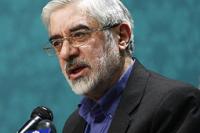
As supporters and associates of the ruling circles of the Iranian regime continued their accusations and slander of the leaders of the Green Movement through writings in the government media – which intensified when Mohammad Khatami formally announced, “the minimum demands of the reformers” – one of the leaders of the movement Mir-Hossein Mousavi responded to these attacks and announced, “they have surpassed even [Joseph] Goebbels in their lies and fabrications, and now include deceit and dishonesty in their dogmatic interpretations of religion.”

Speaking to Kalameh website two days ago, Mousavi explained the reason for his delayed response to the accusations that have been leveled against reform leaders by pro-government individuals to be the response that Mehdi Karoubi, another reform leader, had provided in public a few days ago. He further said, “The second reason for the delay in response is because this kind of propaganda belongs to the past. These are methods used by totalitarian regimes such as the Soviet Union during Stalin or Romania under Ceausescu. Those who engage in them in our country lack an understanding of this nation and have no awareness of the world.  They live in the pre-information age.”

Earlier, Karoubi had published an open letter to the Iranian nation in response to the verbal attacks by government supporters who had spoken of the “imminence” of the trial of reform leaders, in which he had written, “I declare that I am not moved by these threats and in fact welcome a trial and have evidence for my positions.” The letter also said that he had been troubled for 21 years because of the issues facing the country.

In response to a question about the impact of the accusations against him, Mousavi said that the accusations in fact produced the opposite effect of what the accusers wanted. “These 10 days provided a good opportunity to our nation to read the nature of these people. These lies demonstrated what kind of Islam they believe in.”

In the interview, Mousavi referenced his statement #17 (issued on January 1, 2010) and again called on the regime to free the political prisoners it was holding and declare its commitment to uphold all the principles of the constitution, while also guaranteeing the freedom of press, and of elections which he said would “extend the horizons.” He predicted that unless this was done, more suppression would follow as would greater demands. In that statement, Mousavi had counseled the regime on what to do to come out of its current impasse adding, “I categorically state that imprisoning or executing Karoubi, Mousavi and others among us would not solve the problems.” “How do you plan to change the opinion people hold of the regime? How do you plan to rebuild the legitimacy that has been lost? How do you plan to change world public opinion that has witnessed the violence of this government against its own people?” he had asked.

In his interview, Mousavi said that the recent lies, and cruel executions and sentences were used to suppress but in fact this culture has not been expanded from prison to the political sphere. He added that the current culture required those in power to condemn protestors and critics. This is a reference to the recent verbal attacks launched by some Majlis deputies, as the next parliamentary elections in Iran approach.

In another part of the interview Mousavi said that in their verbal attacks and disrespect, government supporters had  not left the senior clergy behind and included them too, without realizing that the demands of the Green Movement are echoed by family members of these very officials, and they are on the rise. The reason he said this was happening was because the demands were in fact national and not confined to a specific group.

Mousavi ended his interview by saying, “Being green does not mean we want everybody to look like us, but that we want everybody to live at peace with others who may be different in their views or opinions” and he called on his supporters to be a model of peaceful life with each other.

Source

Intelligence Minister Reveals Iran Deciphered Encrypted E-mail Correspondence of Regime Opponents

0

January 12, 2011

Iran’s Intelligence Minister Hojjat-ol-Eslam Heydar Moslehi announced last weekend that, during the riots that had broken out after the presidential election in June 2009, the Intelligence Ministry had intercepted encrypted e-mail correspondence sent by the rioters and was able to decipher it.

Speaking at a conference on the achievements of Iranian expatriates held at Tehran’s Shahid Beheshti University on Saturday, the minister said that the American administration had created computer networks to fight the Iranian regime, but that the networks failed thanks to the efforts of Iranian intelligence services.

Moslehi claimed that e-mail was the most important means of contact between rioters inside Iran and their supporters abroad, adding that the intelligence services had managed to monitor their activity by intercepting their correspondence and defeat the enemies of the state. He also noted that in an interview given by a senior Iranian official last year, the official revealed that intelligence elements monitored the regime opponents’ e-mail correspondence. Within 24 hours of the interview, the regime opponents began encrypting their correspondence; however, within 48 hours Iranian intelligence experts were able to break the code and decipher the e-mails.

Moslehi went on to say that Iranian expatriates were not part of the opposition. The minister claimed that while the number of anti-regime exiles was limited, foreign intelligence services provided them with equipment and means to help them make their voice heard.

He noted that the Iranian exiles must be encouraged to cooperate with the government of Iran on security-related matters to stop foreign intelligence services from using them for their schemes against the Islamic republic. Many Iranian expatriates reside in Iran’s enemy states, which operate powerful intelligence services, Moslehi said, and the government of Iran must take the necessary steps to keep these Iranians from falling into the trap set for them by such countries. The government needs to gain the trust of the Iranian expatriates by promoting the national identity, values, and beliefs shared by all Iranians (various news agencies, December 25).

After the riots that broke out in the aftermath of the presidential election, Revolutionary Guards and internal security elements claimed that the demonstrators had used e-mails, text messages, and social networks to communicate and send each other reports pertaining to the riots.

In January 2010, internal security forces chief Esma’il Ahmadi-Moqaddam said that the text messages and e-mail correspondence used by the opposition activists to organize violations of public order and illegal demonstrations were monitored by the internal security forces. Speaking at a press conference held during an Iranian police convention, Ahmadi-Moqaddam said that the authorities intended to take stricter measures against those who use text messages and e-mails to organize “illegal gatherings” than against their participants. Ahmadi-Moqaddam warned those responsible for organizing public order disruptions not to be certain that they have the ability to prevent government monitoring of text messages and e-mail correspondence sent by them through proxy servers. Opposition activists must assume that all their correspondence is being fully monitored by the authorities, the internal security forces chief said (ILNA, January 15). Ahmadi-Moqaddam’s statement drew criticism from government critics, who claimed that the statement allegedly contradicted clause 25 of the Iranian constitution, which bans wiretapping and exposing the contents of civilians’ letters, correspondence, and telephone conversations.

Source

Mirza Aboutalebi Returned to Prison

12 , January , 2011

Abbad Mirza Aboutalebi, the vice president of the Office for Consolidating Unity, has been transferred to Ward 350 of Evin to serve his sentence.

He had been arrested after the disputed elections and was released on bail in June after 56 days of solitary confinement.

Aboutalebi was also an activist for Mousavi’s Campaign during the 2009 presidential elections.

Tehran Prosecutor had recently stated that Aboutalebi will have to begin serving his sentence.

Source

Mousavi responds to attacks: ‘Only what benefits the people will prevail’

0

01/11/2011 – 21:16

GVF — For the first time since the relentless state-sanctioned attacks against the Green Movement in recent weeks, Mir Hossein Mousavi has responded to the increasing pressure on the opposition, arguing once more that the Green Movement’s reach is in fact strengthening across different layers of Iranian society.

In his most latest interview with the Kaleme website, Mousavi explained that in spite of the recent wave of attacks and lies against the opposition leaders, he had chosen not show any initial reaction after the publication of a strongly worded statement by fellow 2009 presidential Mahdi Karroubi.

“The second reason for my silence was that such propaganda belongs to an old era, they [the authorities] still use tactics employed by totalitarian regimes such as the Soviet Union under Stalin or Ceauşescu’s Romania. Those who organise such propaganda are not familiar with their own society, nor do they understand the changing international sphere,” said Mousavi, while adding that the authorities were still living in a bubble trapped in a pre-information age.

He further explained that the Iranian authorities’ propaganda campaign “reverse effect” due its unjust and “unreasonable content.” Referring to relentless attacks and fabrications against the Green Movement during the ten-day mourning period in the holy month of Muharram, Mousavi continued, “these ten days represented a good opportunity for our nation to become familiar with the nature of these men. All these lies and slanders showed what their [version of] ‘Islam’ really looks like.”

“The effects of this unparalleled level of propaganda, coupled with ridiculous obscenities and threats, have demonstrated the righteousness and life of the Green Movement more than harming [it]”, the former prime minister added.

Mousavi said that the Iranian establishment and its elements had surpassed Nazi Minister of Propaganda, Paul Joseph Goebbels in “distortion and deceit.” “They have made slander and falsehood a part of their retrogressive religion combined with superstition.”

The opposition leader noted that the authorities’ campaign of resorting to deceit and falsehoods was a reflection of how Iran’s rulers really saw the Iranian nation. “The belief among a sizeable portion of the establishment, is that millions of people in this country are ‘dirt and dust, [1] goats and calves’,” [2] Mousavi maintained. “They still don’t believe in the people’s understanding, and in private, they are even terrified of the very notion of citizen rights and the innate dignity of all peoples.”

When asked if he still held the views he had expressed in his 17th post-election statement released shortly after the Ashura protests in December 2009, Mousavi said that his five-step proposal for resolving the political deadlock in the country “still stands.” “Free the prisoners, and declare that you are committed to all the articles in the constitution, free the media and hold free elections without vetting … otherwise, the repression will increase the demands [of the people],” said Mousavi, maintaining that the smear campaign against the opposition Green Movement would simply cause the people to lose any hope of realising real change in the country within the “framework of the constitution.”

Mousavi also denied claims made by the new Secretary General of the Islamic Coalition Party (Motalefeh) who recently said that following a meeting after the 2009 presidential election, Mousavi had agreed to a partial recount of the votes but was dissuaded from moving forward after conducting meetings with reformist websites Islamic Iran Participation Front (IIPF) and Mujahidin of the Islamic Revolution Organisation whose key members are now behind prison bars.

“Unfortunately the new Secretary General of the Motalefeh [party] lacks the required maturity and I’d like to deny such claims,” he said, adding that he had only agreed to the formation of a committee that would act as an arbitrator during the election dispute. “If those who took part in that meeting return to their own memories, [they will see that] I even mentioned certain names for such a fact-finding delegation.”

The veteran reformist also spoke about the ongoing pressure on Green Movement activists and the future of the movement in light of the recent suppressions: “The sheer magnitude of the distortions, lies and threats is on the rise. The [recent] bulk executions as well as the strange and unjust sentences are to instil fear. More importantly, the culture of forcing confessions and repentance has found its way from within prison walls and into the political sphere outside [prison walls]. According to this culture, if you want to keep your job or to be chosen [for a position] or to have a share of the great and small deals, or to live in peace and free from the actions of the immoral, you must have the ‘understanding’ and ‘foresight’ to condemn the critics [of the state] and Green Movement protesters. They have not even spared the religious seminaries, and clerics, and we are witnessing pressures and insults aimed at the clergy. [Yet authorities are] ignorant of the fact that within the families of officials, there is an increasing level of awareness with regards to the demands of the Green Movement, because these demands are compatible with the people’s rights and our national covenant [the constitution].”

“The Green Movement is marching forward and God willing, with the participation of all, this process will continue until the achievement of the goals put forth by the Green Movement. We believe [in the Quranic verse], ‘Then, as for the foam, it passeth away as scum upon the banks, while, as for that which is of use to mankind, it remaineth in the earth.’” [3]

Mousavi went on to add: “In my opinion, the main strategy must be raising awareness and the best way forward is [the slogan] ‘Each citizen, a medium.’ [4] Seemingly simple acts, like proliferating newspapers, letters, statements and CDs with images and footages from post-election events, etc have spread with a great level of profundity today and have reached the most remote areas of the country.”

Mousavi also stressed the importance of capitalising on the technologies of the “information age” in disseminating information and raising awareness among Iranians in the most “effective” and “creative” way.

“In addition to trying to raise awareness and fighting the spread of falsehoods and the distortion of truth, we must not forget the memories of the friendly debates and discussions during the election [race in June 2009]. We mustn’t forget how we experienced and practiced listening to each other during the election debates, before the so-called ‘security forces’ stepped in to turn the civil debates into unrest and silence the sound of discourse. We mustn’t forget the green chain that linked all the differences and styles from south to north of the city [Tehran] and country and taught us how to coexist. These valuable memories can be precious lessons and models for today too. We must do our utmost wherever we can, to practice tolerance towards one another by keeping the atmosphere of dialogue and national discourse alive while listening to each others’ views and opinions to overcome the [social] cracks reinforced by state media. Being green does not mean that we want to make everyone else green and to have one colour, something the authoritarianists and monopolists would like to see. Being green means living side by side and understanding the differences in opinions, views and approaches. While the authoritarianists and their media try to place an emphasis on the cracks within families and society, we must try to accept these differences and to come up with a plan to live side by side and peacefully. Raising awareness while maintaining peace is the most important weapon against violence and the seeds of division and ignorance.”

Footnotes:

[1] Ahmadinejad’s reference to protesters against election fraud in the 2009 presidential election as “dirt and dust” during his “victory” speech.
[2] During state-sanctioned protests on 30 December 2009, senior’s cleric, Alamolhoda referred to Iranian protesters as a group of “goats and calves”
[3] Quran, Chapter 13, Verse 17.
[4] A key slogan chanted by Mousavi supporters during the 2009 presidential campaign.

Source

Right hand of Arash Sadeghi student political prisoner paralized

January 10, 2011

On Wednesday Jan. 5, Arash Sadeghi student political prisoner was so beaten by the henchmen of Evin Prison that his right hand became paralyzed.

‘Arash’s Freedom’ in Facebook repots of his dreadful condition; bleeding of stomach, infection of lungs and damage to his scapula that was formerly broken in his former detention. Eyewitnesses reported that he is not even able to stand now.

Before being imprisoned Arash has said that he will continue his struggle in prison and ‘will make it bitter for them there’.

Arash is a master degree student in Philosophy at Alameh Tabatabaie University and is condemned to 5 years imprisonment along with corporal punishment.

He was under temporary detention for more than a year!!! He spent his detention time at wards 2-A belonging to IRGC and 209 belonging to Intelligence Ministry. He was once freed on bail but the security agents raided their home again and in this raid his mother got a heart stroke and died.

Source

Nasrin Sotoudeh Sentenced to 11 Years in Prison, Banned From Practicing Law & Leaving Country for 20 Years

January 9, 2011

Persian Report by the Committee of Human Rights Reporters
Translation by Banooye Sabz, editing by Persian2English.com

January 9, 2011

The Committee of Human Rights Reporters (CHRR) – Branch 26 of the Revolutionary Court with Judge PirAbassi has sentenced Nasrin Sotoudeh to 11 years in prison and banned her from practicing law and leaving the country for 20 years.

Reza Khandan, Sotoudeh’s husband told CHRR, “This sentence was delivered to my wife’s lawyer Nasim Ghanavi and now we have 20 days to request an appeal.”

According to Khandan, the sentence was issued even though Nasrin Sotoudeh was expecting a lighter sentence and she was in good spirits during the last visitation. Khandan added, “My wife received one year imprisonment for “propaganda against the regime”, a total of ten years for the two charges “acting against national” and “violating the Islamic dress code (Hijab) in a filmed speech”.

Other reports indicate that Nasim Ghanavi and Reza Khandan were summoned to the Revolutionary Court. Khandan said, “I was asked to appear in branch 1 of the Revolutionary Court. In the written summon, the word “defendant” was used when referring to me. Of course, I was also summoned about ten to twelve days before my wife’s arrest. At that time I was warned about the interviews I had given.”

Nasrin Sotoudeh was arrested on September 22, 2010 and has been in solitary confinement since. Her trial took place on November 15th in branch 26 of the Revolutionary Court with Judge PirAbassi. She was initially charged with “acting against national security” and “propaganda against the regime.” The charge of “violating the Islamic dress code in a filmed speech” was later added on. Sotoudeh has spent a large portion of her incarceration on hunger strike.

Nasrin Sotoudeh is a lawyer and the winner of the Human Rights Award from the International Human Rights Organization. She is also a member of the Defenders of Human Rights, the One Million Signatures Campaign to Change Discriminatory Laws Against Women, and the Society for Protecting the Rights of the Child. In her capacity as a legal councillor, Sotoudeh has represented many human rights activists, women’s rights activists, child victims, victims of child abuse, and children risking execution. In 2008, Sotoudeh was awarded the Human Rights prize by the International Committee on Human Rights. She has been threatened on numerous occasions because of her human rights activism and was warned to forgo providing legal council to Shirn Ebadi.

Source

Nasrin Sotoudeh Sentenced to 11 Years in Prison, Banned From Practicing Law & Leaving Country for 20 Years

January 9, 2011

Persian Report by the Committee of Human Rights Reporters
Translation by Banooye Sabz, editing by Persian2English.com

January 9, 2011

The Committee of Human Rights Reporters (CHRR) – Branch 26 of the Revolutionary Court with Judge PirAbassi has sentenced Nasrin Sotoudeh to 11 years in prison and banned her from practicing law and leaving the country for 20 years.

Reza Khandan, Sotoudeh’s husband told CHRR, “This sentence was delivered to my wife’s lawyer Nasim Ghanavi and now we have 20 days to request an appeal.”

According to Khandan, the sentence was issued even though Nasrin Sotoudeh was expecting a lighter sentence and she was in good spirits during the last visitation. Khandan added, “My wife received one year imprisonment for “propaganda against the regime”, a total of ten years for the two charges “acting against national” and “violating the Islamic dress code (Hijab) in a filmed speech”.

Other reports indicate that Nasim Ghanavi and Reza Khandan were summoned to the Revolutionary Court. Khandan said, “I was asked to appear in branch 1 of the Revolutionary Court. In the written summon, the word “defendant” was used when referring to me. Of course, I was also summoned about ten to twelve days before my wife’s arrest. At that time I was warned about the interviews I had given.”

Nasrin Sotoudeh was arrested on September 22, 2010 and has been in solitary confinement since. Her trial took place on November 15th in branch 26 of the Revolutionary Court with Judge PirAbassi. She was initially charged with “acting against national security” and “propaganda against the regime.” The charge of “violating the Islamic dress code in a filmed speech” was later added on. Sotoudeh has spent a large portion of her incarceration on hunger strike.

Nasrin Sotoudeh is a lawyer and the winner of the Human Rights Award from the International Human Rights Organization. She is also a member of the Defenders of Human Rights, the One Million Signatures Campaign to Change Discriminatory Laws Against Women, and the Society for Protecting the Rights of the Child. In her capacity as a legal councillor, Sotoudeh has represented many human rights activists, women’s rights activists, child victims, victims of child abuse, and children risking execution. In 2008, Sotoudeh was awarded the Human Rights prize by the International Committee on Human Rights. She has been threatened on numerous occasions because of her human rights activism and was warned to forgo providing legal council to Shirn Ebadi.

Source

The judge told my husband Jafar Kazemi: “We should have executed you back in the 1980’s”

January 9, 2011

Committee of Human Rights Reporters (CHRR) – The case of Jafar Kazemi, a prisoner on death row, has been sent to the branch in the Revolutionary Court responsible for the execution of sentences. The upholding and confirmation of the sentence by the Supreme Court has raised concerns about the sudden [planned] execution of this prisoner of conscience. Jafar Kazemi was sentenced to death on the charges of “Moharebeh [Enmity with God] through collaboration and ties with the People’s Mujahedin of Iran Organization [PMOI]” and “propaganda against the regime”.

In an interview with CHRR, Roudabeh Akbari, Mr. Kazemi’s wife talked about how the efforts of her and the lawyer have not born results. “Throughout this time, on numerous occassions, I visited different judicial bodies including the Revolutionary Court, the Tehran Prosecutor’s General office, The Supreme Court, the branch responsible for the execution of sentences, and the court located in Evin prison. Last Monday, I went to the Attorney General’s office, but my request to meet the Prosecutor General was rejected once again. I was informed that the Prosecutor has not been accepting any visitors since a while ago. Finally, I went to the security court located in Evin prison but I was not allowed to meet with any officials; however, I was informed by a soldier that the case of my husband is in the Execution of Sentences branch, but they have not made a final decision [on the time and date of the execution].

Roudabeh Akbari had written and sent a letter to the UN Secretary General [Ban Ki-moon]requesting from him to help save her husband’s life. In the letter, she described the physical torture her husband endured, “The interrogator told my husband that ‘we need a few sacrificial lambs to save the regime, and your name was drawn [as one of the people to be sacrificed].’ They demanded from my husband, again, to give an interview on the Ashura clashes [that occurred on December 27, 2009 in Iran], but he resisted, because my husband was arrested three months before the day in question. The interrogators threatened my husband that his wife and son would be tortured before his eyes if he resisted an interview. Despite threats to dismember his wife before his eyes, my husband refused to give any interviews. Faced with his resistance, they told him that his death sentence would certainly be carried out.” “15 months of continuous worries, I continue to try to save my husband’s life”

Roudabeh Akbari said, “I have not lost hope. I will go to the Prosecutor’s office again tomorrow. Maybe they will allow me to visit him in person. I have gone to his [Abbas Jafari Dolatabadi] office six times already, and each time I was told in a repulsive way that the Prosecutor will not meet me.”

Roudabeh Akbari said that her husband is in high spirits. “Our weekly visits take place on Mondays through a glass window. My husband told me that nothing special happens in the prison. When they took Ali Akbar Siyadat for execution [on December 28th], they did not inform [anyone] where they were taking him. They do not inform prisoners [of the date of execution]. On the eve of execution, they quietly transfer prisoners to solitary confinement and then carry out the sentence the next day.”

Jafar Kazemi’s wife described the arrest of her husband: “On September 18,2009, [Jafar Kazemi] was arrested in Haft Hoz Square. After being arrested, the agents took him to his mother’s home and searched the entire place. Even though his mother told [the regime agents] that ‘my son does not live here and has his own home and life and only comes here when his wife is away,’ they did not believe her and proceeded to search the entire house. They did not, however, find any evidence [against Jafar Kazemi]. Afterward, they came to our home and searched the entire place. They took away the children’s CDs and our family videos. They found no evidence because neither he nor I had any [political] activities. After [Jafar Kazemi was detained], we had no news of him for three weeks until he called us and informed us that he was in ward 209 of Evin prison. We did not have the right to visit him for two months, and during the first visit, I found out that he had been under duress and torture.”

Show Trial: The Death Sentence Had Been Already Determined

Jafar Kazemi was one of the defendants forced to participate in the show trials held for 2009 post-election detainees. Even though he was arrested months before the Ashura day clashes, he was tried on the charge of participating in the unrests on December 27, 2009. He was subjected to pressures to give [false] televised confessions, but he refused. Consequently, he was sentenced to death along with six other defendants.

Roudabeh Akbari said, “Throughout this time, he was in solitary confinement and subjected to interrogations, and he did not even have the right to meet his lawyer until the day of the trial. I had hired a lawyer for him, and it wasn’t until the day of the trial that he was finally able to sign the letter that allows the lawyer to officially represent him. Even in the court, when the lawyer atempted to talk to him briefly, Judge Moghiseh interrupted them in a rude and rough manner. On the same day, my husband was arrested and four other individuals were also detained so during the trial it could seem like these people were colluding together. The individuals were tried in the same case. However, Jafar Kazemi did not know any of his [so-called] co-defendants, and yet, Judge Moghiseh tried him as the principal defendant in the case. In any case, this was a complete show trial, and the trial for all four cases was concluded within half an hour. The families were not allowed in the courtroom, and I was sitting in the outside hallway. Finally, after much insistence, I was able to see Jafar Kazemi for three minutes in the presence of agents. It was clear that he had endured harsh conditions. However, he said that he had done nothing and that he trusts in God. Jafar Kazemi and Mohammad Ali Haj Aghaie were together. That same day, as a result of the judge’s conduct, the lawyer considered [the death sentence] as a possible outcome of the trial. The judge did not allow my husband to talk at all and told him, ‘We should have executed you back in 1980’s [when Jafar Kazemi served nine years in prison between 1981 and 1990]; it was a mistake and I will not let you slip through my hands this time.’ The preliminary court was held in February 2010, and the death sentence was handed down a week later on February 7, 2010.”

The Death Sentence Was Upheld in the Appeals Court Without Looking at the Argument of Defense

In mid-May 2010, branch 36 of the Tehran Provincial Appeals Court upheld Jafar Kazemi’s death sentence. Roudabeh Akbari calls the legal proceedings of the Appeals Court despairing. “Ms. Ghanavi [Jafar Kazemi’s lawyer] submitted several pages of defense to branch 36 of the Appeals Court presided by Judge Zargar. Although he had several days to look into the defense argument, the judge had not studied a single page of it, and on the day of the trial, he simply wrote a phrase that the lower court ruling has been upheld in the Appeals Court. I went to the court several times, but the court’s secretary treated me in a very repulsive way. However, I am just the wife of a prisoner of conscience, and I have no political activities whatsoever. They told me I am a “Monafegh” [hypocrite] (a derogatory term used to describe PMOI members), and kicked me out of the court while screaming at me. I was not allowed to meet Mr. Zargar.”

The Supreme Court Rejected the Request for Retrial and Recourse

In the last phase of the legal proceedings, the Supreme Court upheld the rulings by the lower court and the Appeals Court, and sent the case of Jafar Kazemi to the Execution of Sentences Circuit Court. Roudabeh Akbari has expressed concerns that the death sentence of her husband can be carried out at any moment. “When the case was sent to branch 31 of the Supreme Court, I was very hopeful that the ruling [of the lower court] would be overturned. In order to proceed with this step, the rulings of Judge Moghiseh and Judge Zargar were required. Nasim Ghanavi tried very hard and was very hopeful because she was able to obtain a copy of the ruling after much struggle, and the Supreme Court received the documents. That is why she was hopeful that the Supreme Court , citing the contents of the case which lacked any evidence, would overturn the death sentence. However, on July 28, 2010, the request for retrial and recourse was rejected and the death sentence was upheld.”

**47 year old Jafar Kazemi has two children. He was arrested on September 18, 2009 after participating in a protest [prior to the December 27, 2009 Ashura protests). He was held in solitary confinement in ward 209 of Evin prison for 74 days. He was subjected to harsh and severe interrogations. He was then transferred to ward 350 of Evin prison. Mr. Kazemi spent the years 1981 to 1990 in jail after which, according to his wife and his lawyer, he had no political activities related to his former charges. Jafar Kazemi’s lawyer stated that her client was forced to make self-incriminating confessions during his interrogations, due to severe pressure and duress; however, there is no evidence in his case that supports or proves the Moharebeh charge [Enmity with God].

Source