Zaghari-Ratcliffe: UK ‘starting to look weak’ over failure to protect citizens, says Hunt
The former foreign secretary Jeremy Hunt has said the UK has been made to look weak by failing to do more to protect British Iranian dual nationals held as hostages in Iran.
He is the first former member of the Conservative government to say the UK should find a way to pay the £400m debt the UK owes to Iran, accusing the government of dithering over the issue and not thinking imaginatively about a way of paying the debt that does not fall foul of sanctions.
The debt is formally treated as a separate issue, but is widely seen as a barrier to the release of the British-Iranian dual nationals Anoosheh Ashoori and Nazanin Zaghari-Ratcliffe. A third British dual national has just been given an eight-year sentence but not yet jailed.
The former foreign secretary Jeremy Hunt has said the UK has been made to look weak by failing to do more to protect British Iranian dual nationals held as hostages in Iran. He is the first former member of the Conservative government to say the UK should find a way to pay the £400m debt the UK owes to Iran, accusing the government of dithering over the issue and not thinking imaginatively about a way of paying the debt that does not fall foul of sanctions. The debt is formally treated as a separate issue, but is widely seen as a barrier to the release of the British-Iranian dual nationals Anoosheh Ashoori and Nazanin Zaghari-Ratcliffe. A third British dual national has just been given an eight-year sentence but not yet jailed. The debt is formally treated as a separate issue, but is widely seen as a barrier to the release of the British-Iranian dual nationals Anoosheh Ashoori and Nazanin Zaghari-Ratcliffe. A third British dual national has just been given an eight-year sentence but not yet jailed. protect citizens protect citizens protect citizens
US-Iran tensions rise in Iraq, as Qassem Soleimani assassination anniversary nears
Iraqis fear a flare-up in sectarian tensions after Iran vowed revenge for killing military leader Qassem Soleimani in January. But some fear that factions within the Iraqi security forces could also threaten stability.
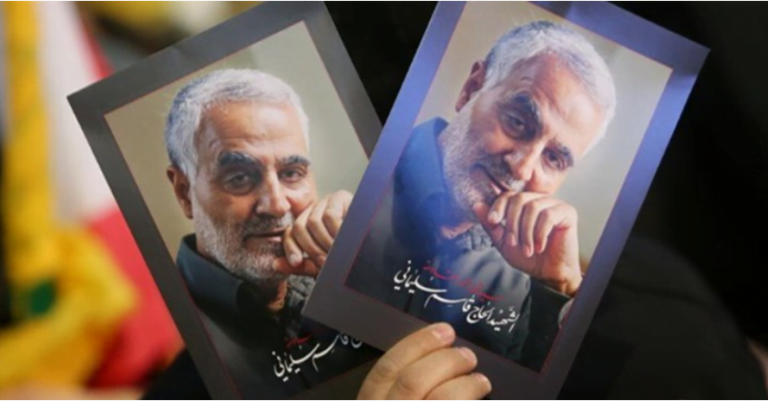
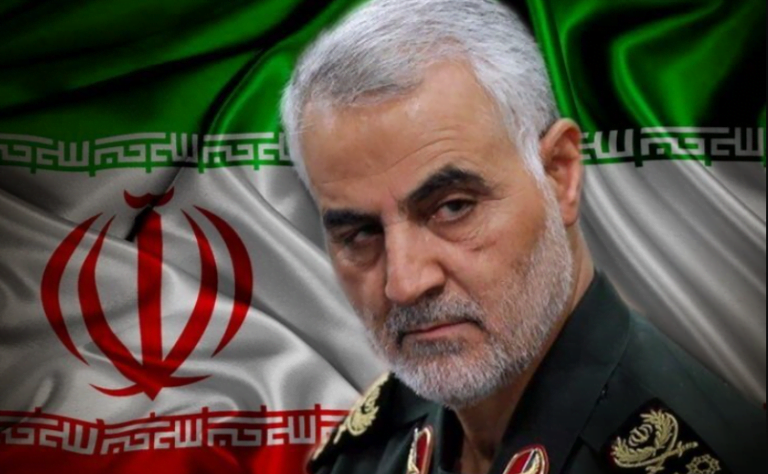
January 3 marks the first anniversary of the death of senior Iranian military leader Qassem Soleimani. The major general was killed in a US-directed drone attack while visiting Baghdad.
In a statement earlier this month, Iran’s religious leader, Ayatollah Ali Khamenei, repeated his country’s desire for revenge. For Iraqis, this may well pose a danger.
“We fear that Iraq will become the arena for the settling of scores and that this will only hurt innocent Iraqis,” said Nazem Shukr, a civil servant from Iraq’s Anbar province. “We’re worried that Iran will retaliate, America will react and then we’ll go back to square one, like in 2006 when there were sectarian tensions and many were killed,” he told DW.
Iraqis fear a flare-up in sectarian tensions after Iran vowed revenge for killing military leader Qassem Soleimani in January. But some fear that factions within the Iraqi security forces could also threaten stability. January 3 marks the first anniversary of the death of senior Iranian military leader Qassem Soleimani. The major general was killed in a US-directed drone attack while visiting Baghdad. In a statement earlier this month, Iran’s religious leader, Ayatollah Ali Khamenei, repeated his country’s desire for revenge. For Iraqis, this may well pose a danger. “We fear that Iraq will become the arena for the settling of scores and that this will only hurt innocent Iraqis,” said Nazem Shukr, a civil servant from Iraq’s Anbar province. “We’re worried that Iran will retaliate, America will react and then we’ll go back to square one, like in 2006 when there were sectarian tensions and many were killed,” he told DW. assassination anniversary assassination anniversary assassination anniversary
Iran’s Killing Machine: Political Assassinations by the Islamic Regime
It was recently revealed that the Iranian regime was planning to assassinate the US ambassador to South Africa. Tehran denied any such plans, but a brief look at the Islamic regime’s history shows that Iran not only has the will, but also the means to conduct assassinations on foreign soil.
Assassinations and terrorism have been the regime’s modus operandi both at home and abroad ever since the establishment of the Islamic Republic of Iran in 1979. Four institutions in Iran are instrumental to the decision-making, organizing, and execution of subversive operations, especially those conducted on foreign soil: the Office of the Supreme Leader, the Supreme Council of National Security, the Islamic Revolutionary Guard Corps, and the Ministry of Intelligence.
It is above all with the assistance of its diplomatic corps that Iran puts its subversive plans into action. Terrorist attacks and assassinations have been conducted around the world by Iranian operatives or proxies in close conjunction with Iranian diplomats and Iranian embassies. Many of the targets have been Israeli and Saudi diplomats.
It was recently revealed that the Iranian regime was planning to assassinate the US ambassador to South Africa. Tehran denied any such plans, but a brief look at the Islamic regime’s history shows that Iran not only has the will, but also the means to conduct assassinations on foreign soil. Assassinations and terrorism have been the regime’s modus operandi both at home and abroad ever since the establishment of the Islamic Republic of Iran in 1979. Four institutions in Iran are instrumental to the decision-making, organizing, and execution of subversive operations, especially those conducted on foreign soil: the Office of the Supreme Leader, the Supreme Council of National Security, the Islamic Revolutionary Guard Corps, and the Ministry of Intelligence. It is above all with the assistance of its diplomatic corps that Iran puts its subversive plans into action. Political Assassinations Political Assassinations Political Assassinations
Top Hezbollah Official: General Qassem Soleimani Martyr of Islam, Resistance
Hezbollah Deputy Secretary-General Sheikh Naim Qassem said that Iran’s anti-terror and IRGC Quds Force Commander Lieutenant General Qassem Soleimani was the martyr of the Islamic world and resistance.
“General Soleimani is the martyr of the Muslim World and the centerpiece of resistance,” Sheikh Qassem wrote in an article published in the Arabic-language Al-Ahd newspaper.
He pointed out that General Soleimani was an experienced commander who carefully planned the battle and acted successfully in operation against the enemies and terrorists.
Lieutenant General Soleimani was assassinated in a US drone strike on Baghdad International Airport in Iraq on January 3, 2020.
The airstrike also martyred deputy commander of Iraq’s Popular Mobilization Forces Abu Mahdi al-Muhandis. The two were martyred in an American airstrike that targeted their vehicle on the road to the airport.
Five Iranian and five Iraqi military men were martyred by the missiles fired by the US drone at Baghdad International Airport. On January 8 and after the funeral ceremony of General Soleimani, the IRGC Aerospace Force started heavy ballistic missile attacks on US Ein Al-Assad airbase in Southwestern Iraq near the border with Syria and a US operated airbase in Erbil in retaliation for the US assassination of General Soleimani. Ein Al-Assad is an airbase with a 4km runway at 188m altitude from sea levels, which is the main and the largest US airbase in Iraq. Early reports said the radar systems and missile defense shields in Ein Al-Assad failed to operate and intercept the Iranian missiles. Unofficial reports said the US army’s central radar systems at Ein Al-Assad had been jammed by electronic warfare. The second IRGC reprisal attack targeted a US military base near Erbil airport in the Iraqi Kurdistan Region in the second leg of the “Martyr Soleimani” reprisal operation.
Iran warned Israel on Monday not to cross its “red lines” in the Gulf in the final days of Donald Trump’s presidency and following a reported Israeli submarine deployment.
Foreign ministry spokesman Saeed Khatibzadeh stressed the Islamic republic would defend itself against any American military “adventure” in the runup to the January 20 handover of power in Washington.
The statement came a week after the US Navy announced a nuclear submarine was being deployed to the Gulf, in a new show of force directed at Iran.
Media in Israel have since reported that an Israeli submarine has crossed the Suez Canal also headed for the Gulf, a report that has not been officially confirmed or denied.
“Everyone knows what the Persian Gulf signifies for Iran,” Khatibzadeh told an online news conference.
“Everyone knows the policies (of Tehran) regarding security and national security… Everyone knows very well how high the risk is raised if the red lines of Iran are crossed.”
Iran warned Israel on Monday not to cross its “red lines” in the Gulf in the final days of Donald Trump’s presidency and following a reported Israeli submarine deployment. Foreign ministry spokesman Saeed Khatibzadeh stressed the Islamic republic would defend itself against any American military “adventure” in the runup to the January 20 handover of power in Washington. The statement came a week after the US Navy announced a nuclear submarine was being deployed to the Gulf, in a new show of force directed at Iran. Media in Israel have since reported that an Israeli submarine has crossed the Suez Canal also headed for the Gulf, a report that has not been officially confirmed or denied. “Everyone knows what the Persian Gulf signifies for Iran,” Khatibzadeh told an online news conference. “Everyone knows the policies (of Tehran) regarding security and national security… Everyone knows very well how high the risk is raised if the red lines of Iran are crossed.”
Does Iran have a plan for a successor to Khamenei?
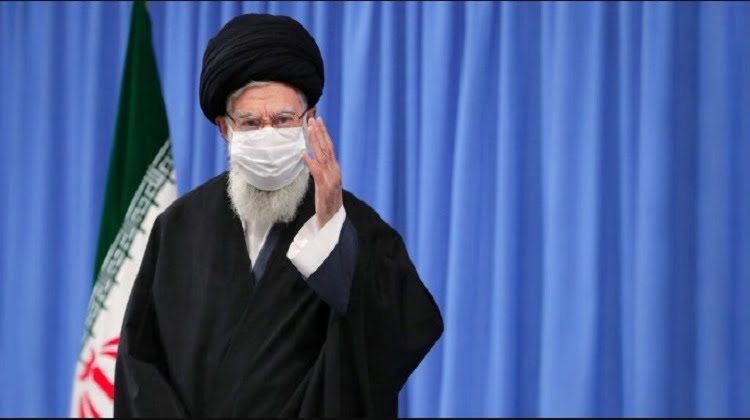
Iran’s Supreme Leader Ayatollah Ali Khamenei is 81 years old. For years now, a report every few months raises concern about his health.
He has been described as “ailing” in many media reports, though there is no proof that the man who has been ruling Iran since 1989 is really in bad health.
On Dec. 15, he made an appearance in front of cameras while receiving the family of late Islamic Revolutionary Guard Corps (IRGC) Quds Force commander Qasem Soleimani and a committee organizing commemorations for the first anniversary of the general’s assassination Jan. 3 in Baghdad by US drones.
A video showing Khamenei walking in what appears to be good health and several photos showing his face released by his office was probably aimed at refuting a rumor claiming he was ill and had passed his powers to his son, Mujtaba.
The rumor made headlines during the first week of December based on one source on Twitter without fact-checking the source who broke the news about Khamenei’s deteriorating health on four previous occasions between 2013 and 2020.
Khamenei made another appearance on Dec. 20 when he delivered a televised speech on the occasion of National Nurses Day and the birth of the Prophet Muhammad’s granddaughter, Zeinab.
The reports of Khamenei’s health and his son possibly being next in line call to mind similar reports from a different era.
In the last few years of Khamenei’s predecessor and mentor, Ayatollah Ruhollah Khomeini, there were similar suggestions claiming that with Khomeini’s health deteriorating the strongest candidate for his succession was going to be his son Ahmed Khomeini.
His son was a mid-level cleric known to be his father’s confidant. At the time, articles cited the powers that the son enjoyed and the strong influence that made him one of the candidates for succession.
Iran cultural mission in Pakistan to hold programs on the anniversary of Soleimani’s martyrdom
Iran cultural mission in Pakistan is slated to hold special programs to mark the first anniversary of the martyrdom of Major General Qassem Soleimani, chief of the IRGC Quds Force, and Abu Mahdi al-Muhandis, the deputy commander of Iraq’s Popular Mobilization Units (PMU), says Iran’s cultural attache in Pakistan.
Many political and religious groups in Pakistan will also take part in these ceremonies, Ehsan Khazaee said, Fars reported on Friday. Iran cultural mission
Major General Soleimani and al-Muhandis were assassinated on January 3 in U.S. drone strikes that were directly ordered by U.S. President Donald Trump.
In the early hours of January 8, the IRGC attacked Ain al-Assad airbase in western Iraq, where U.S. forces were stationed, as part of its promised “tough revenge” for the U.S. terror attack. In June, Tehran said 36 individuals were identified in connection with the assassination.“36 individuals who cooperated, collaborated, and participated in the assassination of Hajj Qassem, including political and military authorities of the U.S. and other countries, have been identified,” Tehran Prosecutor General Ali Alqasi-Mehr said. Alqasi-Mehr named Trump as the key individual at the top of the list, saying his pursuit will continue even after his tenure as U.S. president.‘General of Skies’Khazaee said a literary and artistic program dubbed, “General of Skies” has already started by Iran’s consulate about the martyrs of the Islamic Resistance. He added that exquisite prizes will be awarded to the best works in various fields.“Participants and enthusiasts from different cities of Pakistan can submit their literary works in the field of storytelling, poetry, memoirs, articles, photo, painting, and calligraphy by 13th January at the email address [email protected],” the Iranian diplomat explained. He went on to say that on the occasion of the first martyrdom anniversary of General Soleimani.
Harsh revenge awaits Soleimani assassinators: general
The deputy chief of the IRGC Quds Force has said an act of harsh revenge awaits those behind the assassination of Lieutenant General Qassem Soleimani, who was killed in a U.S. drone strike in Iraq on January 3 of this year.
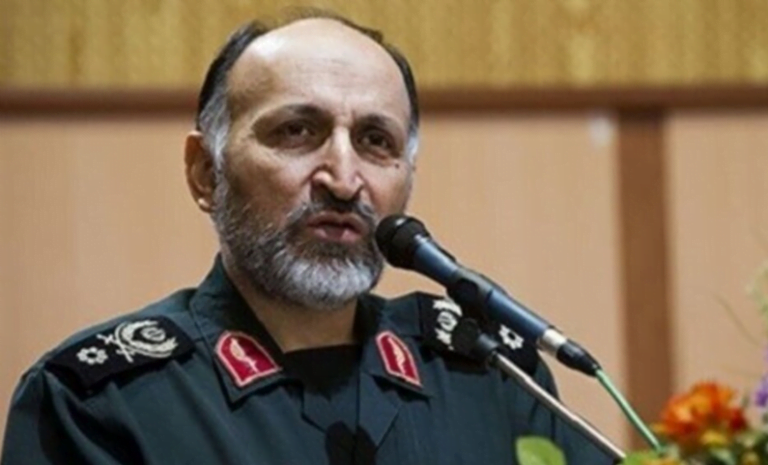
Talking to reporters on Friday, Brigadier General Mohammad Hejazi said major funerals for martyrs Soleimani and Abu Mahdi al-Muhandis and the retaliatory missile attack on the U.S. military base of Ain al-Assad were the two slaps that the U.S. has received in the face from Iran.
“Those are only slapped, while the harsh revenge will be taken,” Hejazi said, according to Tasnim.
He also warned those who ordered and perpetrated the assassination attack, saying the Islamic Republic decides how and when to take revenge based on the situation. On January 3, U.S. President Donald Trump ordered drone strikes that martyred Major General Soleimani, chief of the IRGC Quds Force, and Abu Mahdi al-Muhandis, the deputy commander of Iraq’s Popular Mobilization Units (PMU).In the early hours of January 8, the IRGC attacked Ain al-Assad airbase in western Iraq, where U.S. forces were stationed, as part of its promised “tough revenge” for the U.S. terror attack. Iran has vowed to target whoever had a role in the cowardly assassination of General Soleimani. “This is a serious message,” IRGC Chief Major General Hossein Salami said back in September. In remarks on December 16, Leader of the Islamic Revolution Ayatollah Ali Khamenei said revenge for the assassination is certain and will be exacted at the right time. Ayatollah Khamenei referred to the great funerals that were held for the two commanders, saying the “unforgettable” ceremonies “surprised the arrogant [powers’],
President-elect Biden: Last thing Middle East needs is Iran with nuclear weapon
US President-elect Joe Biden said he is against Iran gaining a nuclear weapon, adding it is the “last thing” the Middle East region needs, in an interview with the New York Times on Wednesday.
Biden also said that his administration would seek to extend the duration of “restrictions on Iran’s production of fissile material that could be used to make a (nuclear) bomb” in any new negotiations on a nuclear deal.
He added that Tehran would have to agree to new demands if a return to a deal was possible and that it must address its “malign” regional activities through proxies in Lebanon, Iraq, Syria and Yemen.
Incumbent President Donald Trump unilaterally pulled out from the Joint Comprehensive Plan of Action (JCPOA) deal struck in 2018 and reimposed strong sanctions on Iran as part of a “maximum pressure” campaign against the Islamic republic.
Biden, who defeated Trump at the ballot box last month, said during campaigning that he did not support the lifting of sanctions but intended to offer Iran a “credible path back to diplomacy.”
Biden also said that his administration would seek to extend the duration of “restrictions on Iran’s production of fissile material that could be used to make a (nuclear) bomb” in any new negotiations on a nuclear deal. He added that Tehran would have to agree to new demands if a return to a deal was possible and that it must address its “malign” regional activities through proxies in Lebanon, Iraq, Syria and Yemen. Incumbent President Donald Trump unilaterally pulled out from the Joint Comprehensive Plan of Action (JCPOA) deal struck in 2018 and reimposed strong sanctions on Iran as part of a “maximum pressure” campaign against the Islamic republic. Biden, who defeated Trump at the ballot box last month, said during campaigning that he did not support the lifting of sanctions but intended to offer Iran a “credible path back to diplomacy.” President-elect Biden President-elect Biden
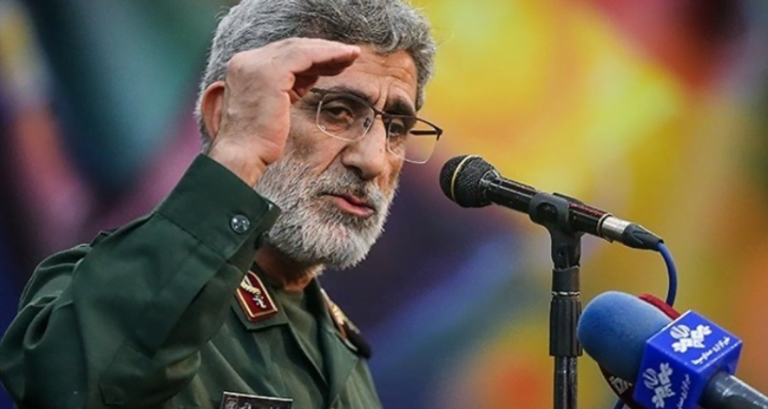
Commander of the Islamic Revolution Guards Corps (IRGC) Quds Force Brigadier General Esmayeel Qa’ani visited Baghdad to meet high-ranking Iraqi officials.
The Arabic-language al-Alam news channel reported on Wednesday that General Qa’ani has traveled to Iraq to discuss ways to further develop mutual cooperation between Tehran and Baghdad in meetings with the Iraqi officials.
Qa’ani had also paid a visit to Iraq a few weeks ago. Early in December, Iranian Ambassador to Baghdad Iraj Masjedi was quoted by al-Alam as saying that General Qa’ani had met with Iraqi Prime Minister Mustafa al-Kadhimi, President Barham Salih, and a number of other Iraqi officials during his recent visit to Iraq. He said that Iran’s measures in Iraq are adopted within the framework of efforts to strengthen the Iraqi government and persuade the country’s political streams to grow more integrated, adding that Tehran does not interfere in the internal affairs of the parties and factions in Iraq and they enjoy positive ties with Tehran. Masjedi referred to the US threats against the resistance groups in Iraq, and said, “If they act against the resistance groups, they will definitely receive a response.”General Qaani had also in April visited Baghdad to reaffirm Iran’s continued supportive stance towards Iraq in its fight against terrorism after the martyrdom of former IRGC Quds Force Commander Lieutenant General Qassem Soleimani. Lieutenant General Soleimani was assassinated in a US drone strike on Baghdad International Airport in Iraq on January 3, 2020. The airstrike also martyred deputy commander of Iraq’s Popular Mobilization Forces Abu Mahdi al-Muhandis. The two were martyred in an American airstrike that targeted their vehicle on the road to the airport. Five Iranian and five Iraqi military men were martyred by the missiles fired by the US.