
Lawyer claims Iran behind Sadr disappearance


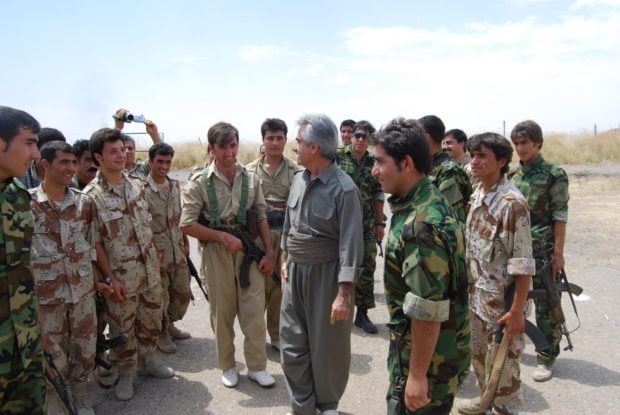
More than 30 pro-government IRGs were killed and dozens more were wounded when the Kurdish fighters attacked a major security centre in Piranshahr.
Speaking to ARA News, the member of the Kurdistan Democratic Party in Iran (KDP-I), Sipan Majidi, said that the Peshmerga’s operation comes after the Iranian authorities arrested dozens of Kurdish activists in western Iran.
“The Peshmerga forces bombed a major security centre in Piranshahr on Saturday midnight, where a large number of Iranian Revolutionary Guards were stationed. The IRGs have been preparing to storm Kurdish towns and villages near Piranshahr,” the Kurdish official said.
“The Kurdish forces started the attack by bombarding the IRGs headquarters with dozens of mortar shells, killing more than 30 pro-regime revolutionary guards and wounding dozens more,” Majidi told ARA News.
The KDP-I is considered a political leadership for the Kurdish Peshmergas in Iran.
“We promise our people to continue the fight against the radical Iranian regime until regaining the legitimate rights of the Kurds and other minorities,” he said.
Iranian government forces have lately increased their military activities in the western part of the country, especially in Oshnawieh, Sardasht and Piranshahr.
“Tehran frequently puts pressure on political parties in the Kurdistan Region of northern Iraq, asking them to put pressure on the Iranian Kurdish parties, amongst them our party, to bring an end to their political activities inside Iran,” Mouloud Swara, member of Central Committee and Representative of Kurdistan Democratic Party (KDP-I) in UK, told ARA News.
“We cannot bow for any pressure and our struggle will continue until our people enjoy the freedom and rights proclaimed in the International Human Rights declaration. With some 2,000 Peshmerga forces based in remote bordering areas, the KDP-I is historically considered to be the most formidable military organization opposing the Islamic Republic in Tehran,” Swara said.
Clashes between Iranian Kurdish groups and Iran’s IRGC erupted on June 15 and have continued ever since.
Ceng Sagnic, a researcher with the Tel Aviv-based Moshe Dayan Center for Middle Eastern and African Studies, told ARA News that Iranian Kurds are trying to gain a new foothold.
“It [increase in clashes] is mostly because Iranian Kurdish parties are seeking for a renewed foothold in regional politics while Iran’s influence is growing rapidly,” Sagnic said.
Reporting by: Sozbin Cheleng
Source: ARA News
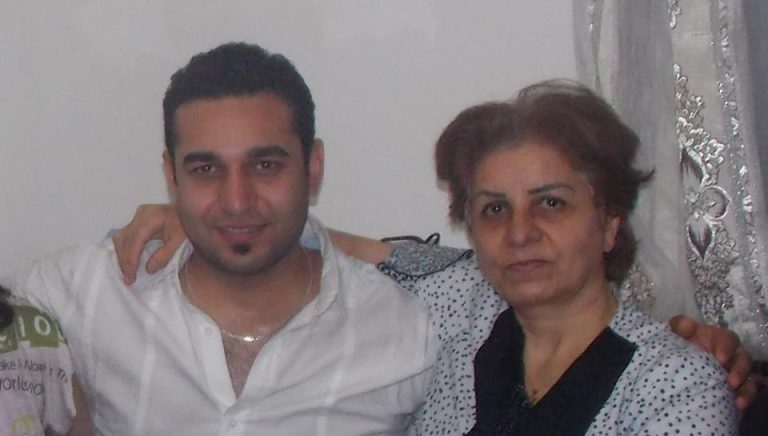
“His apology is an insult,” Zoghi told the International Campaign for Human Rights in Iran. “The first night we were transferred from Kahrizak to Evin Prison, Mortazavi threatened us [and told us] to say we had not been tortured. I don’t understand his apology and more importantly, he was not the only person responsible for what happened. Without a doubt there were higher ranking officials who supported Mortazavi, but were never identified or put on trial for the deaths at Kahrizak.”
After the peaceful protests that followed the disputed 2009 presidential election in Iran, dozens of protesters were rounded up by security forces and taken to the Kahrizak Detention Center. According to eyewitnesses, many were tortured. Three men died as a result of their torture. Mortazavi was deeply implicated in the transfer of the protestors to Kahrizak, and then falsified the cause of their death in order to cover up evidence of torture and murder at the facility.
Zoghi, who was 23-years old when he was taken to the prison, currently lives in Izmir, Turkey.
“Those who witnessed what happened at Kahrizak were never asked to appear in court to tell their story. Also, except for Mr. [Mohsen] Rouholamini [whose son, Mohsen, died there], no one has been able to pursue his case. All the other plaintiffs were pressured into silence with threats and intimidation and many of them left Iran,” said Zoghi.
Mortazavi, the main suspect in the Kahrizak suit brought against him by the Rouholamini family, submitted a letter about the deaths of the detainees to the Appeals Court on September 11, 2016.
“As I was the Tehran prosecutor at the time, I express shame for this terrible incident, even though it happened without any deliberate intention, as God and my conscience are my witness,” wrote Mortazavi.
“The bloody incidents that happened after the great plot hatched during the June 2009 presidential election were described as a crime by the supreme leader of the revolution [Ayatollah Ali Khamenei], and I, the prosecutor at the time, deeply apologize and seek forgiveness from the innocent martyrs [Amir] Javadifar, [Mohsen] Rouholamini and [Mohammad] Kamrani, and hope God Almighty would bless them with the highest rank.”
The Green Movement grew out of the widespread protests against Iran’s widely disputed presidential election in 2009. The administration of then-President Mahmoud Ahmadinejad, supported by Supreme Leader Ali Khamenei, swiftly responded with a harsh crackdown against protestors and anyone deemed supportive of the cause. The government still views the Green Movement, referred to by hardliners as “the sedition,” as a foreign-instigated plot aimed at regime change, and has kept its leaders under house arrest since 2011.
According to former Tehran University Law Professor Ghasem Sholeh Sadi, Mortazavi’s apology could be interpreted as an admission of guilt, but it could prove difficult to hold him responsible in court.
“The court could take this apology as an indirect admission of committing a crime,” Sadi told the Campaign. “But you can’t count on that because it depends on how you look at a lot of other laws relevant to this case, especially given that Mr. Mortazavi’s apology is vague. In his apology he wrote that it was not intentional and that he was not aware of what had happened.”
Speaking to the Campaign in reaction to Mortazavi’s trial, Zoghi said: “I and many of the former detainees have wanted to take our cases to international tribunals, but we don’t know how to proceed. We couldn’t pursue it in Iran because of all the threats and intimidation, but we are victims and our voices haven’t been heard.”
Recalling the night detainees were transferred from Kahrizak Prison to Evin Prison, Zoghi told the Campaign: “That night Mortazavi visited us and warned us not to say anything about being tortured. Then a human rights group visited us and we also had two visits by a group of MPs. We told them everything and gave our criticism. Meanwhile we were being interrogated every day and they wanted us to confess to what they were telling us. They wanted us to say that we were conducting propaganda against the state or colluding against national security.”
Zoghi continued: “We received treatment in the clinic for our injuries from the very first days when we arrived at Evin Prison. They bandaged our wounds and gave us shots and pills against infections. About two weeks went by before they allowed us to contact our families. I was freed on bail about 17 or 18 days after I was detained. The others were released a day or two before or after. By that time, the torture marks on our bodies were not so visible.”
According to Zoghi, about 150 people were rounded up at a protest rally in Tehran on July 10, 2009, and taken to Kahrizak, which at the time was not officially listed among the country’s detention centers. Five days later, three detainees—Mohsen Rouholamini, Mohammad Kamrani and Amir Javadifar—died as a result of torture.
Ramin Pourandarjani, a 25-year-old doctor who was serving as a conscript at Kahrizak Prison, and who had attended the injured prisoners, also died on November 10, 2009 amid mysterious circumstances. Dr. Pourandarjani had been named as a suspect in the Kahrizak torture case, and had been repeatedly questioned. On December 1, 2009, Tehran Prosecutor Abbas Jafari Dolatabadi claimed Pour-Andarjani had died from “drug poisoning.”
Tortured and Threatened
In an interview with the Campaign, Zoghi recalled the events following his arrest: “We were arrested by a few plainclothes agents near Revolution Square [in Tehran] on July 9 [2009]. We were first transported in a van to a security police station where they really beat us up during questioning. They also photographed us. Then, around 10 or 11 at night, we were transferred to another police station and were again questioned until morning. Then a judicial official named [Ali Akbar] Heydarifar gave us a piece of paper with five charges listed against us, including ‘propaganda against the state’ and ‘assembly and collusion against national security.’ He forced us to sign it and told us we were being sent to Kahrizak. He said we were going to be there until the end of the summer and by that time, if we were still alive, they would investigate our cases.”
“Every day they would force us to walk on the hot asphalt,” said Zoghi. “Every day, twice a day, they would take us to the yard in front of the infirmary and beat us with pipes. During the five days we were there, we were fed half a potato and half a loaf of bread, twice a day. There were about 150 of us, plus another 30 dangerous criminals, kept in a 60 square-meter area. We couldn’t stretch our legs to sleep so some of us had to stand up and take turns sleeping. One time they tied three of the detainees to the ceiling and viciously beat them. Before they were brought to Kahrizak, many of the detainees were already in bad shape from being severely beaten during police questioning.”
Zoghi added that when they were released, about three weeks later, 124 of the Kahrizak detainees lodged complaints at the Military Court on Shariati Street.
“The day I went there I saw a lot of the detainees. A few days later we received a letter that we could get free medical treatment. I went to Imam Khomeini Hospital where I was able to get pills to treat infections,” Zoghi told the Campaign.
“At the time I was serving my compulsory military service and hadn’t showed up at my barracks for a month. So a few days after I was released from prison, I was taken into custody by military police and three months were added to my service as punishment. After that I was busy with my military service and couldn’t follow up with my complaint. But there was a Colonel Nezamdoust who visited me several times and threatened me, telling me not to pursue my complaint. Finally I gave up. It was very painful. I had been threatened so many times that I couldn’t go through with it.
“In fact, none of us were actually able to pursue our cases. In the end, only the Rouholamini family was able to drag Mortazavi to court. But what upsets me was that none of our names were mentioned during the trial. It’s true that we survived, but we were all tortured. Amir Javadifar died beside me as he was begging for water. I can never forget those moments.”
“Despite all the threats and intimidation, I and the others tried to voice the truth about Kahrizak. But even as I’m speaking here [in Turkey], I’m afraid something might happen to me if I leave the house.”
Mortazavi’s Trial
More than three years after the deaths of Rouholamini, Kamrani and Javadifar in 2009, their families finally succeeded in bringing Mortazavi to trial in February 2013 at Branch 76 of the Criminal Court presided by Judge Siamak Modir-Khorasani. The former Tehran prosecutor was charged with being an “accomplice to murder and illegal detention” and “assisting in writing a false report” along with two other officials, Hassan Zare-Dehnavi and Aliakbar Heydarifar.
Mortazavi denied all the charges. But Heydarifar accused Mortazavi of ultimate responsibility for ordering the detainees to be transferred to Kahrizak. According to Mohammad Saleh Nikbakht, the lawyer who represented the family of Javadifar, seven prominent medical examiners testified that all three victims “died from blows to soft tissues on their bodies during a 72-hour period.”
In November 2014, Mortazavi was acquitted of being an “accomplice to murder,” but was permanently banned from holding state positions. He was also fined two million rials (about $60 USD) for filing a false report.
Massoud Alizadeh, another detainee who was tortured at Kahrizak, told the Campaign in August 2015: “I never thought that with all the evidence against him, Saeed Mortazavi would be acquitted. Mortazavi was the one who sent us to the detention center and then wrote a false report that the detainees had died of meningitis…. This is a great tragedy. One should feel sorry for a judicial system that lets a murderous criminal go free.”
The Rouholamini family has not stopped fighting for justice. They filed an appeal against Mortazavi for the murder of their son and the case, which was taken up by Branch 22 of the Appeals Court in May 2015, remains in progress.
Ajab Gol Nour Zehi, who is imprisoned in Iranshahr Prison in Sistan & Baluchistan province, wrote: “They ruthlessly subjected me to beating with cables on the head and face and back such that after nearly one and half years the signs of the flogging with cables can be seen on my body.”
They would hang him, beat him and stab him.
The stab wounds were inflicted on the soles of his feet to make walking near impossible, on the left side of the abdomen and near the bladder to cause damage to his internal organs.
Their beatings fractured the tibia bones in his legs and created a hole so large that a finger could be placed inside.
He wrote: “One of the tortures they used was to staple my ears. They stapled my both ears which caused bleeding from both ears and blood would run down my shoulders towards my chest. I could not do anything except moaning and screaming.”
They even attempted to force a murder confession out of him.
When that didn’t work, they stripped him naked and began mocking him.
He wrote: “They burned sensitive parts of my body in 21 areas with lighters such that a lot of pus still comes out of the wounds.”
He lost consciousness during the torture sessions but they revived him in order to torture him more.
When he still did not confess to crimes that he hadn’t committed, he was transferred to the intelligence office in Zahedan where the torture began again.
He wrote: “They would hang me every day under the scorching sun from 9 a.m. to 2 p.m. and these tortures continued for one week.”
He named some of his torturers:
• Pasdar (Revolutionary Guard)
• Akbari, head of the intelligence office in Iranshahr
• Basiji (member of mobilization force)
• Omid Siah Khani
• Basiji Kalak
He called for international human rights organisations to hold a trial into human rights in Iran and asked for a meeting with the United Nations Special Rapporteur for Human Rights in Iran to discuss his treatment within the Iranian prison system.

The arrest comes on the heels of an international tour by President Hassan Rouhani that will end at the United Nations General Assembly in New York, where he will have a press conference on September 22.
Mohammad Saleh Nikbakht told the International Campaign for Human Rights in Iran that his client was taken into custody by agents from a security organization, but the agents did not identify their employer.
“The agents confiscated laptops and mobile phones belonging to Mohaghegh and his wife and demanded the passwords to their social media accounts,” an informed source told the Campaign.
The semi-official Mehr News Agency reported on September 19 that a newspaper editor identified as “S-M” had been detained by “one of the security agencies” for working with “anti-revolutionary” media outlets. Later that day, Shargh confirmed Mohaghegh’s arrest via its Twitter account.
Mehr published the report with an image used by Iran’s Revolutionary Guards to publicize its crackdown on journalists they claim are working for “enemy states.”
Mohaghegh is well known for his reports on environmental issues and informative social media postings; a few hours after his arrest, his Twitter and Facebook accounts became inaccessible. He was briefly arrested on two previous occasions, in 2012 and 2013, but was never prosecuted.
Another journalist, Yashar Soltani, remained detained in Evin Prison on September 17 after he was unable to post the bail, set at two billion rials ($65,000 USD), for his release prior to his trial. Soltani, the editor-in-chief of Memari News, an independent website that was suspended on September 9, 2016, is being investigated for publishing an official report on illegal land sales by the Tehran Municipality.

According to the report, Brigadier General Hossein Salami asserted during an interview with state-run TV on Sunday night, “We are so powerful that we can target all the vital interests of the enemies in the region from either inside or outside Iran with any desired intensity and power.”
In addition, he claimed, “The hidden parts of our military power are always more than the overt parts of our power.”
This, Fars reported, echoed comments made in June by the deputy chief of staff of Iran’s armed forces, the gist of which was that the United States and its allies, among them Israel, would be surprised by Iran’s secret military achievements — something they may discover if there is a war.
“The enemies of the Islamic Republic, headed by the Americans, the Zionists and the British, are (only) aware of a part of the Islamic Republic of Iran’s power in different defensive and missile fields and fortunately, since we are self-reliant in this area, our enemies aren’t aware of certain parts and will not be aware any time soon unless something happens,” Brigadier General Massoud Jazzayeri was quoted as saying. “In such a case, we might need to display a part of our capabilities in the battlefield and I believe that if such a thing happens, they will be much surprised to suddenly see how much progress the Islamic Republic has made in defensive fields.”
These statements are examples of increasingly threatening rhetoric emanating from Tehran since its signing of the Joint Comprehensive Plan of Action with world powers last year.
As was reported by The Algemeiner last week, a top regime official engaged in saber-rattling over the US military presence in the Persian Gulf, which he called “unwelcome and illegal.”
The escalation in tensions also comes as the US Congress is investigating allegations that the Obama administration transferred billions of dollars in cash to Tehran, some of which was purportedly paid as ransom for the release of American prisoners.
As The Algemeiner reported earlier this month, Mark Dubowitz, the executive director of the Foundation for Defense of Democracies, told the House Financial Services Committee’s Subcommittee on Oversight and Investigations that “Iran may have received as much as $33.6 billion in cash or in gold and other precious metals” between 2014 and 2016.
In response, Texas Senator and former Republican presidential candidate Ted Cruz tweeted, “Americans deserve an explanation of why the Obama Admin is using their money not to fight terrorism, but to fund it.”
