
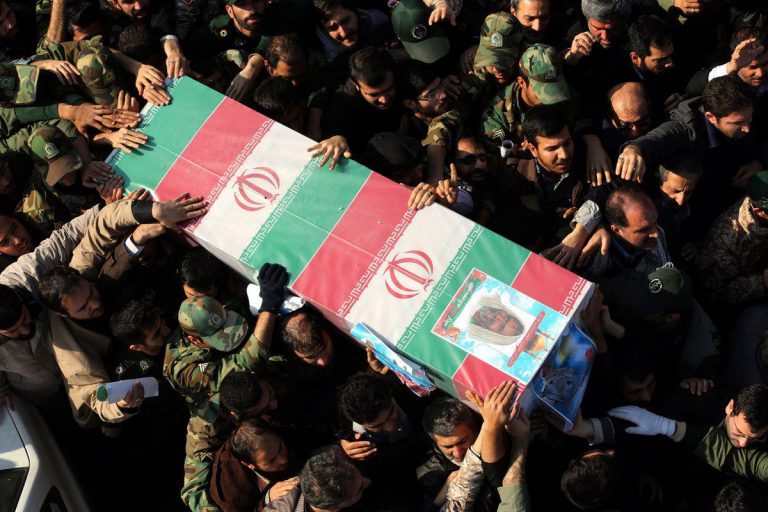
12 Iran-affiliated militiamen killed in Syria

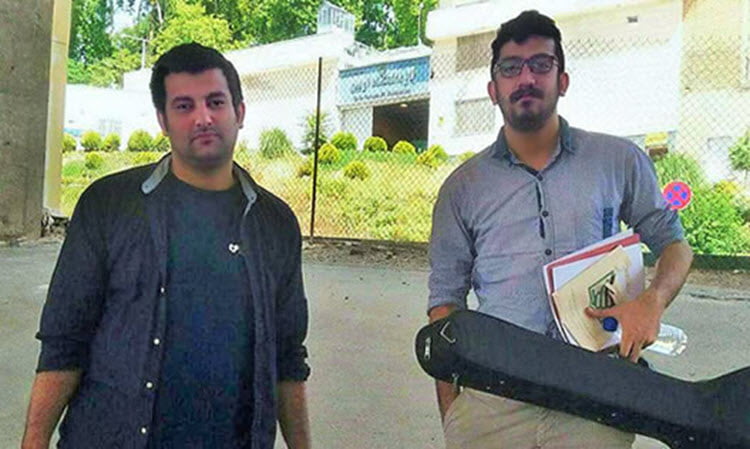
An informed source told the International Campaign for Human Rights in Iran that judicial officials have rejected Mehdi Rajabian’s requests for treatment for symptoms of multiple sclerosis detected by doctors after he endured intense interrogation sessions. Both brothers are also suffering from blood infections.
“On September 8, following a discussion with prison officials about the need for medical furlough(temporary leave) to receive treatment, guards entered Ward 7 and separated Mehdi from his brother and moved him to Ward 8. The brothers protested and immediately began a hunger strike,” said the source.
Political prisoners in Iran routinely receive discriminatory treatment, including denial of necessary medical treatment.
The Rajabian brothers, along with Yousef Emadi, were managing partners in Barg Music, a popular online music distribution service launched in 2009, when they were arrested on October 5, 2013 by the Revolutionary Guards’ Intelligence Organization and accused of “spreading corruption” for distributing music without a permit and working with female singers (who are prohibited from singing solo) and “anti-revolutionary” musicians abroad. The three maintain that they sought but never received permits for their work, which was never political in nature.
In May 2015, during a trial that lasted less than an hour, Judge Mohammad Moghisseh of Branch 28 of the Revolutionary Court sentenced the three men to six years in prison and imposed a fine of 200 million rials (approximately $6,600 USD) each for “insulting the sacred” and “propaganda against the state.” The Appeals Court reduced their prison sentences to three years with an additional suspended three-year prison sentence.
The three were summoned to Evin Prison to begin their sentence on May 26, 2016, but the date was postponed until June 4 because Mehdi Rajabian was undergoing medical treatment.
The year of 2015 saw an alarming number of artists harassed and punished in Iran, with heavy prison sentences issued for creating and publishing work deemed offensive by the authorities.
Since 2013, when President Hassan Rouhani was voted into office while promising a more open society, numerous state-sanctioned musicians, including the popular musical artists Alireza Ghorbani and Sirvan Khosravi, have also seen their concerts canceled at the last moment.

“The dozens or so attacks perpetrated from the Syrian side of the Golan Heights against us, it was Iranian Revolutionary Guard Corps forces trying to open a terror front against us,” Ya’alon said at a policy forum hosted by the Washington Institute for Near East Policy. Hezbollah is now armed with more than 100,000 rockets, he added. Palestinian terrorist organizations based in the Gaza Strip, including Hamas and Palestinian Islamic Jihad, have also benefited from their relationship with Iran by “getting knowhow how to produce rockets, more accurate rockets, or even unmanned air vehicles,” he continued.
Israel has demonstrated its determination to prevent Iran from rooting its own forces or proxies in the Golan. In January 2015, an airstrike attributed to Israel killed Iranian and Hezbollah commanders who were attempting to establish terrorist infrastructure on the Syrian side of the Golan. Four months later, the Israeli Air Force struck a weapons shipment convoy on the Syria-Lebanon border. And last December, Samir Kuntar, a Hezbollah-affiliated terrorist who was imprisoned for decades for murdering an Israeli father and his four-year-old daughter in 1979, was killed after reportedly working to build up Hezbollah’s infrastructure and attack capacity on the Golan.
“We have a red line, a boundary that we will not allow to be broken,” Israeli Prime Minister Benjamin Netanyahu emphasized when visiting Moscow in June. “Iran will not be allowed, using Hezbollah, to use Syrian territory to attack us and open up another terrorist front against us in the Golan.”
Hezbollah relies on territory controlled by Syrian dictator Bashar al-Assad to be used as a land bridge to transport weapons and troops between Lebanon and Iran. Because of the importance of this route, Iran and its terrorist proxy have become highly invested in Assad’s survival. Around 1,500 Hezbollah fighters have been killed in the Syrian civil war. Israeli analyst Daniel Nisman told The Financial Times in January that if the Assad regime were to take decisive control of the Syrian Golan from rebel groups, “that could be Iran’s way to put in a second front and a second Gaza or a second southern Lebanon.”
When coupled with intelligence that Russians are responsible for hacking U.S. political party databases, the spate of recent incidents in the Black Sea and the Strait of Hormuz suggests that America’s enemies are in fact taking direct actions to influence the November elections. This analysis will show that these actions against America’s forward-deployed aircraft and ships are not occurring because America is weak, but rather, it is because America’s enemies are attempting to set the conditions to weaken America post-November elections.
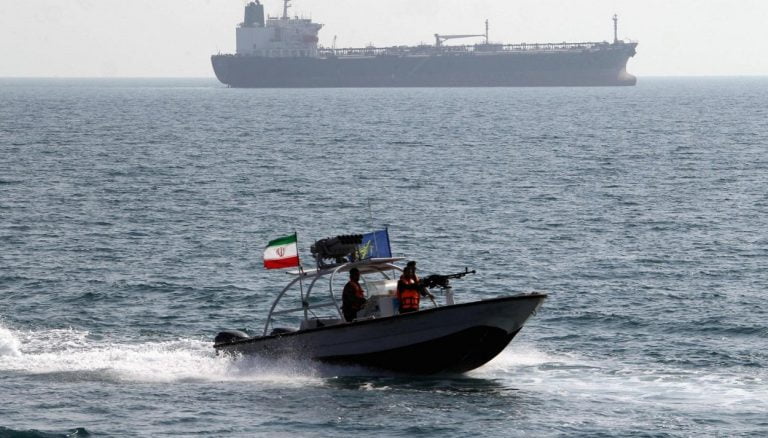
As a point of fact, intercepts near Russian territory should be expected when U.S. reconnaissance aircraft are operating near Russian airspace. They are in a word—commonplace. The U.S. Air Force is sure to return the favor when Soviet reconnaissance planes occasionally fly tracks near Alaska, or the Gulf Coast. Likewise, aggressive behavior by the Iranian Revolutionary Guard Corps Navy in the Strait of Hormuz is nothing new. However, those events have suddenly become more newsworthy because of the unprofessional conduct of the Russian pilots, and the aggressiveness of the IRGCN small boat captains. While the single dangerous intercept of the P-8 Poseidon in the Black Sea may be chalked up to poor airmanship, the multiple incidents by the IRGCN were clearly meant to be a form of strategic communications. What was the message it was were sending?

A Russian Sukhoi Su-24 attack aircraft makes a low altitude pass by the USS Donald Cook (DDG-75) April 12, 2016. US Navy Photo
First to the Russian Black Sea intercept. The intercept itself was not unexpected, or as noted, unprecedented. What was alarming about it was the unprofessional manner in which it was conducted. It reasons that this was either a case of poor airmanship, or a deliberate display of aggression or perhaps both. Lending evidence to the possibility of poor airmanship, Norman Friedman wrote in the September issue of Proceedings that following a recent purge of officers for resisting more provocative tactics, “Russian officers are probably uncomfortably aware of how dangerous that is—to their own aircraft. It is particularly dangerous given the age of many of the aircraft and, almost certainly, their limited state of repair. It is one thing to display dramatic photographs of an Sukhoi Su-24 buzzing a U.S. ship, but quite another explaining the loss of such an airplane as it plunges into the sea”
On the other side of this coin is the possibility that the 10-foot closing distance on the P-8A Poseidon operating in the Black Sea was an intentional act of aggression. Turning again to the pages of Proceedings, there Capt. Thomas Fedyszyn in May 2016 wrote an important article titled “Putin’s Potemkin-Plus Navy.” Fedyszyn makes a convincing argument that Putin is in fact using the Russian navy to showcase Russian might around the world. Thus, the Sukhoi Su-27 Flanker pilot who risked a mid-air collision over the Black Sea onsept. 7 may very well have been another example of what Fedyszyn calls the “Potemkin-plus” factor.

Russian Su-27 Flanker
Whether it was poor airmanship or intentional aggression, the conclusion by critics in the United States that the intercept only happened because “America is weak” overlooks the obvious fact that the P-8A Poseidon was operating in the Black Sea. That small sea in Russia’s back yard is an area that was for many years considered so sensitive, or dangerous to U.S. reconnaissance aircraft that it was completely avoided by U.S. ships and aircraft. It was only Russia’s aggressive actions in this region that spurned a return of American warships and aircraft. Thus, rather than backing away as tensions in this region have mounted over Russian actions in the Ukraine and the Crimea, the United States has actually stepped up its presence in this region. Likewise, the Persian Gulf incidents between the U.S. Navy and the IRGCN are occurring in the sensitive waters of the Strait of Hormuz where the U.S. Navy will continue to exercise the right of innocent passage.
While there is room to criticize U.S. foreign policy, it is simply not true that U.S. military presence around the world is weak. America would not be showing the flag and operating in sensitive areas like the Black Sea, and the Strait of Hormuz if it was in fact relinquishing air and sea space to its enemies. It is a point of fact that U.S. aircrews and sailors have been conducting military operations in the skies and at sea in international air/sea space in vicinity of Russia and Iran precisely because of the tensions between the United States and those nations.
Over the span of the past 50 years, thousands of aircraft intercepts occurred between U.S. and Soviet aircraft during the Cold War, and they still routinely occur in airspace near China. One overlooked lesson that can be drawn from observing the recent spate of incidents is that the U.S. airmen and sailors operated professionally and legally, even when provoked. The contrast between the conduct of the Boeing P-8A Poseidon aircrew and U.S. sailors compared with that of the Russian pilot and the crews of the IRGCN small boats should be noted with pride, not criticized as too passive of a response. As the old saying states, “Discretion is better part of valor.”
Forward-deployed U.S. forces are frequently confronting challenging, and often dangerous situations in sensitive areas around the globe. American airmen and sailors deserve more credit for their professionalism and tactical acumen while operating on the tip of the spear. Their demonstrated competence, and discipline in dealing with these dangerous incidents are a clear indication of American strength.
Now to the question of why are these incidents occurring? The response of Russia and Iran may in fact be intended to influence U.S. politics. As noted by a number analysts, the one thing that IRGC and Vladimir Putin have in common is that they want Donald Trump to win the presidential election. Russia clearly sees an opportunity to have a U.S. president who will help them fulfill their decades-old objective of weakening, or destroying the NATO alliance; and the militarists in Iran have stated that they would welcome the demise of the Joint Comprehensive Plan of Action (the Iran nuclear deal).
As an instrument of the far right in Iran, the IRGC believes that a President Trump would be far more likely to derail the nuclear deal, which they view compliance with as a humiliation for Iran. Hossein Shariatmadari, a leading voice among Iran’s hard-right militarists was quoted as saying, “The wisest plan of crazy [Donald] Trump is tearing up the nuclear deal.” Shariatmadari deemed the nuclear deal a “golden document” for the Obama administration and one that has caused nothing but “damages, humiliation and deception.” One must also speculate that Iran’s staunchest militants would like to resume the halted enrichment activities and move beyond being a nuclear threshold state to full membership in the nuclear club.

An undated photo of Russian President Vladimir Putin Russian Presidential Press and Information Office Photo
When carefully considered, a better conclusion to be drawn from the recent spate of incidents in the Black Sea and Strait of Hormuz is that they are not occurring because the U.S. is weak; rather, it is more likely that they are an effort by enemies of the U.S. to try to create the conditions that they believe will make America weak. After all, there are unprecedented indications of foreign meddling in this election; it would be foolish to brush these indications off as irrelevant. It is possible that these incidents are another attempt by the same foreign governments to steer the U.S. election in a desired direction. The key questions for the critically minded observer is what direction are America’s enemies attempting to tilt the election, and why are they attempting to tilt it in that direction?
Those in the United States who have forgotten that in the not-so-distant past, matters of national security stopped at the water’s edge, should think carefully about who is benefitting from the noise before joining the chorus that opines “America is weak.” The probability that foreign powers are attempting to exploit the divisive American political landscape this autumn is a matter that needs to be seriously considered by those concerned about our national security.

Rear Admiral Ali Fadavi, the commander of the Islamic Revolution Guards Corps (IRGC) Navy, said that the U.S. should withdraw its fleet from the Persian Gulf, which contains important international shipping lanes, in order to reduce the number of confrontations there. “The Americans’ presence in the Persian Gulf region is the reason for insecurity and they should terminate it; their presence is the root cause of their unprofessional behavior and they should end this issue honorably to prevent any problem,” Fadavi said.
The number of incidents between Iranian and American naval forces approximately doubled since the nuclear deal was implemented in January. A U.S. defense official toldFox News earlier this month that there have been 31 interactions deemed “unsafe and unprofessional” between the U.S. Navy and Iran, which is the same amount for all of 2015. “Each time, Iran was the aggressor,” Navy officials told Fox.
Last month, the American destroyer USS Nitze filmed four Iranian boats approaching it at fast speeds in international waters, with two of the vessels coming within 300 yards, despite the Nitze issuing several radio, whistle, and flare warnings. This “created a dangerous, harassing situation” that was only de-escalated by the Nitze taking defensive maneuvers, an American defense official said.
Fadavi’s call for the U.S. to leave the Gulf was echoed by General Ramezan Sharif, head of the IRGC’s public relations office. “The enemies of the Iranian nation must know that the Persian Gulf is our home, and we will spare no efforts to cooperate with other neighboring countries to strengthen security in this region,” he said on Wednesday, according to Fars.
Sharif later clarified what he meant by “enemies,” saying that Iran would conduct exercises to ensure that its navy is prepared to face “the threats posed by the provocative presence of trans-regional powers, particularly the US warships and their unprofessional moves.”
Fadavi and Sharif’s comments come in the wake of a number of confrontations between U.S. and Iranian vessels. Earlier this month, seven armed IRGC boats swarmed a U.S. Navy patrol ship in the Persian Gulf, forcing it to change course after the Iranians came within 100 yards and stopped their vehicles in the American ship’s path. Last month, two U.S. patrol coastal ships, the USS Tempest and the USS Squall, were operating in international waters in the northern Gulf when IRGC boats approached them at high speed and passed within 600 yards of the Tempest three times. The Iranians ignored several radio warnings to behave according to internationally recognized maritime rules.
These incidents took place just a few months after ten American sailors and their two boats were seized by IRGC naval forces in January, in violation of international law.
In a move that reflects Iran’s growing belligerence toward the U.S. presence in the Persian Gulf, a new ship that was launched by the IRGC Navy earlier this week was draped in a banner that read, “America should go to the Bay of Pigs, the Persian Gulf is our house.” Fadavi said at the time, “This ship increases the deterrent power of Iran and will have an effect on the calculations of the enemy, particularly America.”

Thirteen years later, a similar situation is unfolding. Today marks 100 days since Canadian academic Dr. Homa Hoodfar was illegally detained and imprisoned in Iran. She is being held in solitary confinement in the same prison as Kazemi, and last week Canadians were told that Dr. Hoodfar had been taken to hospital in Iran. The press release distributed by her family described Dr. Hoodfar as being “barely able to walk or talk.”
Hoodfar, like Kazemi, had chosen Montreal as her home for the past 30 years. The 67 year-old renowned feminist anthropologist and Concordia University professor writes about Islam and women in the Middle East and had returned to her native Iran to visit family after the death of her husband. Two days prior to her scheduled flight back to Canada, Dr. Hoodfar’s home was raided and her passport and computer confiscated. As a graduate student in gender studies at the University of Toronto, Dr. Hoodfar’s writings were required reading. I never imagined that one day I would be writing about her imprisonment.
Dr. Hoodfar has been indicted and charged with being part of a feminist conspiracy to bring down the government of the Islamic Republic of Iran. So what is our “feminist prime minister” doing about this? The answer is: not much. Global Affairs Canada had actually told Dr. Hoodfar’s family to keep quiet about the incident and not to speak to media for fear of the Iranian authorities ire. But it was Dr. Hoodfar’s hospitalization last week and the non-action of the Trudeau government that forced them to speak out. The indictment, although absurd, is the hallmark of a paranoid totalitarian theocracy, and in the kangaroo courts of the Islamic Republic of Iran, such crimes can be punishable by death—requiring no due process of rights or witnesses or a jury of any kind. It is as arbitrary and precarious as the regime itself.
The last time I visited Iran was in 1999. While there, I had gone to the post office to fax a small letter and a copy of my Canadian passport to my parents. While at the post office, one of the clerks took my letter and began reading it. When I became irate and asked him what he thought he was doing, he laughed at me and replied, “I can read anything and everything that I want to. Anything and everything that goes in and out of this building,” he said. He was right. I never returned to Iran again.
This week marks the four-year anniversary of the closure of the Iranian embassy in Ottawa. Some, including Canada’s Foreign Affairs Minister Stephane Dion, are now arguing that if Canada had representatives on the ground in Tehran then perhaps something could be done for Dr. Hoodfar’s release. However, Canada had full diplomatic relations when Kazemi was tortured and murdered. We had full diplomatic relations when then ambassador to Iran, Phillip Mackinnon, was not even allowed to enter Kazemi’s hospital room. We had full diplomatic relations when Mackinnon was barred from entering the courtroom where Kazemi’s alleged murderer was tried and acquitted. When Canada objected to Mackinnon being prevented from sitting in on the trial, Iran’s Foreign Ministry Spokesman at the time, Hamid Reza Asefi, called Canada “immature” and said Kazemi’s death was an internal matter and none of Canada’s business because “Zahra Kazemi was an Iranian citizen.”
In no way did Mackinnon’s presence in Tehran have any effect on the illegal detainment, imprisonment, torture and murder of Kazemi. The Islamic Republic of Iran essentially flipped its thumb to Canadian citizenship and Canadian diplomacy (the thumb in Iran is equivalent to the middle finger in Canada).
Dr. Hoodfar was not born in Canada. She chose Canada. What is Canada prepared to do in order to bring her home? What is Canada prepared to do to show that citizenship to this country actually means something?
Perhaps Ottawa should issue a travel advisory to all of its Iranian dual national citizens warning them that they cannot guarantee their safety while they are in Iran and that their Canadian passport is meaningless and irrelevant. Better yet, maybe Ottawa should answer why it would even want to re-engage with a system where the rights of its Canadian citizens are systematically denied. Will Canada’s decision to lift sanctions against Iran and its consideration of rapprochement with the Islamic Republic come at the cost of Canadian citizens’ lives?
The judge presiding over Dr. Homa Hoodfar’s case, Abolqasem Salavati, is known in circles as the “hanging judge” and is the same judge who recently sentenced British citizen Nazanin Zaghari-Ratcliffe to five years in prison for unknown charges. Salavati was also responsible for the imprisonment and indictment of Washington Post journalist Jason Rezaian.
Dr. Hoodfar is not the only Canadian languishing in an Iranian prison. For the past eight years, Saeed Malekpour, a Canadian resident since 2004, has been imprisoned in Iran on trumped up charges of operating a pornographic website that was “operated by western influences and made to corrupt Iranian youth,” the indictment read.Malekpour had made an urgent trip to Iran to visit his dying father in 2008 when he was imprisoned. His sister, Maryam Malekpour lives in Edmonton and told me recently that despite all the letters she has written to Foreign Affairs Minister Dion, their response continues to be that they cannot help her brother because he is not a Canadian citizen.
But Homa Hoodfar is a citizen of Canada, and any consideration of re-establishing diplomatic relations with the Islamic Republic of Iran must include both her and Malekpour’s immediate release from prison and safe return to Canada.
Our self-proclaimed feminist prime minister and his gender equal cabinet need to start taking to task governments that do not keep in step with our supposed feminist ideals and that includes Ottawa’s current tango with Tehran. Dr. Hoodfar has written extensively on how the rights of women are sacrificed as they bargain with fundamentalismand she knows very well that feminism is not just theory but is most effective when practiced. It is high time Prime Minister Trudeau and the Government of Canada begin to practice what he so well preaches.
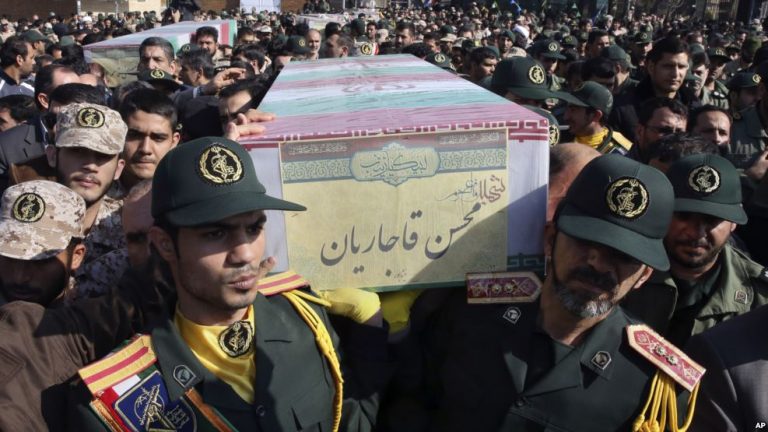
“Iran and its proxies in Syria, including Lebanese Hezbollah, are equally insistent that Assad must remain in power, while the main Syrian opposition group insists in negotiations that President Bashar al-Assad must step down within six months of a transitional process,” said Phillip Smyth, a Syria analyst at the University of Maryland.
Tehran says it will not compromise on Assad’s status, especially because it has lost hundreds of fighters — including some top commanders — in battles backing Assad.
Key role for Iran
With 8,000 elite troops in Syria, and thousands more fighters from its proxy Hezbollah, Iran has played a key military role in Syria’s civil war in support of the Assad regime.
“A cease-fire and a suspension of the war is the desire of everyone,” Ali Akbar Velayati, a senior Iranian adviser, said in state-run media. “However, if the cost of it is that the enemies of the government and people of Syria misuse it, not only will this cease-fire not be successful, but it will be harmful.”
Iran has been battling rebel groups in Syria, including Ahrar al-Sham and Jaish Sham, who have called the truce “unjust and non-democratic” and want Assad ousted. The rebels vow to continue their fight.
“This cease-fire is more of a friendly agreement between Russia and the USA as they share common interests. … Some of the most aggressive groups have rejected it and are not even involved,” said Pirouz Mojtahed-Zadeh, a Britain-based Iranian geopolitical analyst and historian.
‘Tehran plans no exit’
And it means that Iranian and Hezbollah fighters are likely to engage rebels militarily during the cease-fire, especially in the Damascus area and Aleppo, where Iranian forces have been fighting rebels, analysts say.
“Tehran plans no exit from Syria. … They are entering a new phase of operation, using this cease-fire as a strategic measure to harmonize their future attacks and make them more precise in terms of palpable military conquests,” said Amir Houshang Aryanpour, a retired Iranian naval officer in Washington.
There were several breaches of the cease-fire Tuesday, reportedly in areas of Aleppo, Homs and Hama, where Hezbollah and other pro-Iranian militias have been heavily involved in battles.
“Iranians and their proxy fighters will remain in Syria as long as the Assad government remains in power,” said Richard Weitz, a military expert at the Hudson Institute, a domestic and foreign policy research group in Washington.
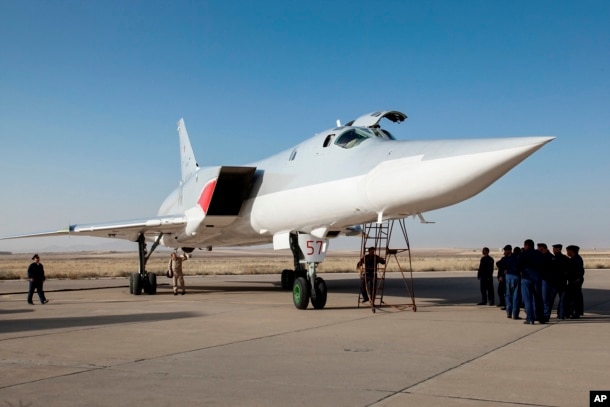
Tehran and Moscow have been aiding the Assad regime in a dual military strategy: Iran has provided ground troops and Russia has provided air power. Last month, Tehran allowed Russian bombers to conduct raids on Syria from Iranian bases.
Tehran-Moscow strategy?
A temporary cease-fire may be part of the strategy between Tehran and Moscow to help Assad win the war, some experts say. Iranian envoys rushed to Moscow for talks with the Kremlin as soon as the cease-fire was announced last weekend.
“I have very little faith in the truce and think the Russians and Iranians will only allow a temporary respite before resuming efforts to retake all of Aleppo and other parts of so-called useful Syria,” said Barbara Slavin, acting director of the Future of Iran Initiative at the Atlantic Council, an international affairs think tank in Washington.
Neither Assad nor his allies, including Iran and Hezbollah, recognize Sunni groups as legitimate actors in the political scene in Syria.
“A cease-fire with the groups that do not have any clear identity, and constantly use new names for themselves to evade being put on the terrorist list and are not loyal to any commitment, is meaningless,” said Rear Admiral Ali Shamkhani, secretary of Supreme National Security Council of Iran, according to Iranian media.
Source
FP’s Dan De Luce, Paul McLeary and John Hudson took the pulse of various U.S. diplomats and military officials Monday, and found them distrustful, at best. A few choice cuts:
“The Russians need to put their money where their mouth is. They’ve been reluctant to do that so far,” said one senior military officer on Monday.
“If you’re dealing with the Russians on this, you often need a long shower afterward,” an anonymous diplomat said.
FP also reported some details of the U.S.-Russia agreement, including that when it comes time to pick targets, “we’re going to have Russians and Americans sitting down in a room together” with representatives from about 11 other nations to select mutually-agreed targets, on senior military official said. However, intelligence-gathering methods, sources, and why a particular target might be important “will not be exchanged,” the official stressed. “Just the lists of targets.”
Iran threatens U.S. spy planes. In another worrying incident in the Persian Gulf over the weekend, Iran threatened to shoot down two U.S. Navy Poseidon EP-3 surveillance planes flying over international waters if they didn’t move further from the Iranian coast, U.S. defense officials tell FOXNews. “We wanted to test the Iranian reaction,” one US official told Fox when asked why the U.S. jets were flying close to Iran. “It’s one thing to tell someone to get off your lawn, but we weren’t on their lawn…anytime you threaten to shoot someone down, it’s not considered professional.”
Iran’s Revolutionary Guard also launched a new ship on Tuesday it claims is capable of carrying a helicopter and up to 100 men. “This ship increases the deterrent power of Iran and will have an effect on the calculations of the enemy, particularly America,” Revolutionary Guard navy boss Rear Admiral Ali Fadavi said at the launch. The unveiling comes at a time of increased tension between the U.S. and Iran in the Gulf, with more than 30 incidents between U.S. and Iranian vessels in the waterway this year, doubling the number during the same time period last year.
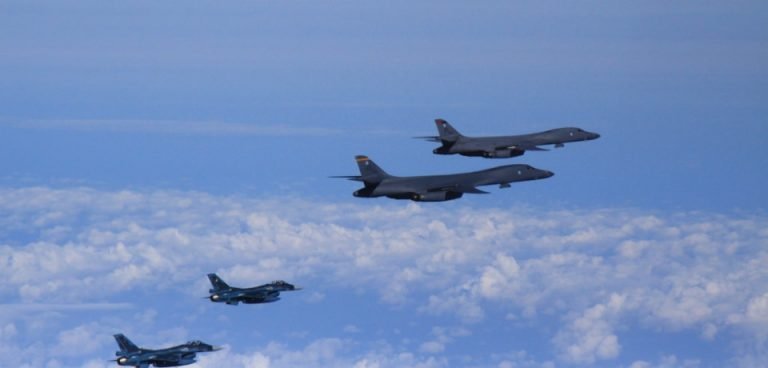
Flyover. There’s testing and messaging happening all over the place these days. Here’s the latest: American warplanes roared over South Korea on Tuesday, just days after the North conducted its fifth nuclear test. Two U.S. B-1 bombers flew with Japanese warplanes over international waters, and after the Japanese planes peeled off near the Korean coast, South Korean F-15 fighters U.S. F-16 fighters took their place to conduct a low-level pass near Osan, South Korea in order to “demonstrate the solidarity between South Korea, the United States, and Japan to defend against North Korea’s provocative and destabilizing actions,” said Adm. Harry Harris, Commander, U.S. Pacific Command. American and South Korean officials also said Tuesday they would work to secure a new round of strong sanctions on the North for their continued nuclear and ballistic missile testing.
Splitting up the cyber/intel family. Leaders at the Pentagon and in the intelligence community are expected to recommend to President Obama that he split the leadership of the National Security Agency and U.S. Cyber Command in order to create two distinct offices for electronic espionage and cyberwar, the Washington Post reports. The proposed move is being pushed by Defense Secretary Ash Carter and Director of National Intelligence James Clapper, who are “pressing for the split, with Carter seeking to build Cyber Command into a full-fledged fighting force that has its own network accesses to conduct attacks. Clapper, officials said, supports the idea in part to reduce tension over which force gets to use the networks — the spooks or the warfighters.”
Good morning and as always, if you have any thoughts, announcements, tips, or national security-related events to share, please pass them along to SitRep HQ. Best way is to send them to: [email protected] or on Twitter: @paulmcleary or @arawnsley
Tag team
The navies of China and Russia are drilling together in the South China Sea for eight days of the Joint Sea 2016 exercise, USNI News reports. In addition to normal exercise mission fare such as search and rescue and anti-submarine warfare, China’s People’s Liberation Army Navy says the drills will also practice “island seizing.” Sounds…..promising. The exercise will involve five ships from Russia and a larger mix of vessels from China.
North Korea
Buckle up, because North Korea’s recent nuclear test might not be the end of Pyongyang’s theatrical provocations, the New York Times reports. In a statement released to the press, South Korean President Park Geun-hye said that North Korea may engage in “terrorist attacks and local provocations” following last week’s nuclear test in a course of confrontation which may lead to war. South Korea’s defense ministry also said that the North can now carry out another nuclear weapons test at any moment at the Punggye-ri test site.
Philippines
Philippine President Rodrigo Duterte says American special operations forces should leave the country and end their 14 year presence working with the country’s military against Islamist militants in the southern Philippines, FP’s Benjamin Soloway reports. So far, the Pentagon says it hasn’t received any formal notification from the Philippines of a request to remove the roughly 100 commandos advising local forces and it’s unclear whether the famously erratic Duterte was serious or speaking rhetorically. Nonetheless, the comments raise questions about the U.S.-Philippine military relationship at a time when the two countries had been moving closer together as a result of shared anxiety over China’s territorial ambitions in the region.
Syria
This again. For the fourth time in over a week, a Syrian artillery round has landed in Israel’s Golan Heights, prompting an airstrike from Israeli forces. Reuters reports that Syrian forces fired a mortar round, and the Israeli Air Force followed up by striking Syrian forces in Quneitra. Syria’s military also fired two surface to air missiles during the air assault, claiming to have downed an Israeli jet and drone. Israel’s military denied the claim, saying all its aircraft were safe and accounted for.
Yemen
The Saudi-led coalition trying to oust the Houthi movement from power in Yemen is stiffing government troops on their pay, which is leading an increasing number of them to walk off the job, according to the New York Times. The coalition promised to pay troops around $270 a month but has been slow to deliver on the paychecks. Government troops in areas run by the United Arab Emirates, however, reportedly fare better in receiving timely compensation. By contrast, Houthi leaders have been regularly paying their forces a similar amount without interruption.
The cost of war
The U.S. has spent somewhere around $5 trillion on its wars since 2001, a new academic study says. The tally includes not only Pentagon spending, but the State Department and Homeland Security outlays as well. Study author Neta Crawford of Brown University’s Watson Institute for International and Public Affairs, called the total “so large as to be almost incomprehensible.”
Prison guards separated the two brothers after they had an argument with the prison warden.
According to one of the prisoner’s affiliates: “Last night Mehdi was transferred to cell 8 against his will and Hossein was kept in cell 7 of Evin prison. Following this act, the two brothers went on hunger strike and requested to be kept in the same cell.”
The two brothers Mehdi and Hossein Rajabian, musician and filmmaker, were each sentenced to six years of disciplinary imprisonment followed by a fine for insulting and advertising against Islamic value by regime’s judg.
Later, in a revised court session, their sentence was reduced to 3 years of disciplinary imprisonment, 3 years of suspended sentence and a payment of 20 million in Iranian Tomans ($6,647) in fine.
According to a reliable source, during the investigation period, the two were put under pressure to participate in a TV confession and also threatened to life imprisonment sentence if they did not comply with the request.
On Friday June 24, United Nations special reporters requested the release of all imprisoned musicians and filmmakers in Iran.
United Nations Human Rights reported: “Karima Bennoune, United Nations special rapporteur on cultural rights, and David Kaye, special reporter on freedom of speech, requested the release of Mehdi Rajabian and Yousef Emadi (musicians) and Hossein Rajabian (filmmaker) who were sentenced and fined heavily on June 20.”
United Nations rapporteurs concluded: “Arresting and sentencing these people is completely unacceptable and against the law of United Nations Human Rights. The arrested must be released immediately and all charges must be dropped.”