Home Blog Page 409

Iran develops Ababil-T – a 2,000-km range stealth attack drone

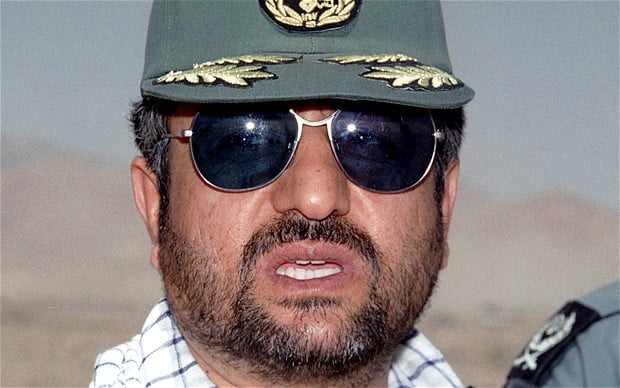
Defense Minister Gen. Ahmad Vahidi warned Sunday, Oct. 28, in Tehran: “The drone was definitely not the latest Iranian technology.”DEBKAfile: He was talking about the drone which Iran and Hizballah sent over Israeli airspace on Oct. 6 and stressing that it was not the last word in their UAV armory – or even the last to invade Israel’s skies.
According to our military sources, in mid-September, Tehran secretly shipped to Lebanon a batch of dismantled Ababil-T UAVs although the Iranians could not be sure that Israel would not discover their location and its air force bomb them before they were launched. The Syrian war is also making it hard to maintain permanent Iranian launching teams in Lebanon.

However, Iran is making great strides in producing drones with more capabilities and longer ranges. During the 2006 Lebanon War, Hizballah launched an earlier model of the Ababil to bomb Tel Aviv. It was shot down by the Israeli Air Force.  Since then, the Iranians have produced the more advanced Ababil-T for short and medium range attack and Ababils-B and –S.

Our military sources identify Ababil-T as Iran’s most advanced drone in operational service. It has electronic warfare, military intelligence-gathering and online transmission capabilities suited to conditions of front-line battle. It is designed to disable enemy electronic systems in combat, especially those of the United States and Israel.
Ababil means “swallow,” after the story in the Koran of an enemy sending a herd of elephants to attack the Qaaba in Mecca and the swallows released by Allah for defeating them.

Its prototype had a maximum flying range of 150 kilometers, an altitude 4.2 kilometers and it could stay aloft for 10 hours at a stretch. Iranian engineers have rapidly improved its velocity and range. But until recently, they were not known to have figured out how to produce a drone able to cover the distance to Israel in direct flight without a staging-post in Lebanon. They dared not let their prize Ababil-T cut through Iraq or Turkey because it risked interception by the American or NATO forces stationed in those countries.

This obstacle appears to have been overcome by the last upgraded Ababil, according to Gen. Vahidi.
Indeed, a week before he spoke, on Oct. 17, Manouchehr Manteqi, head of Iran’s aerospace industry, announced that Tehran now had drones capable of flying a distance of 2,000 kilometers – and therefore reaching Israel.

Iran plans to store a supply of those advanced models to Lebanon for the use of Hizballah – and not only against Israel but  to extend its range against a whole array of Tehran’s enemies – before flying them back to home base in Iran.
Iranian sources claim that the latest drone was tested in combat conditions In November 2011. A UAV was sent secretly over US Fifth Fleet vessels in the Persian Gulf, collected data and gained valuable experience for its further development.
They have now advanced to the planning stages of a spy drone with stealth qualities and a large UAV bomber, cannibalizing technology pirated from the American RQ-170 Sentinel drone they downed on Dec. 4, 2011, buying it from Russia and China and stealing it from the West.

Most of their UAV development program budget is being spent on upgrading their drones’ navigation, transmission and cyber warfare systems.
The great progress Iran has made in the past five years in all these fields has been helped along by Iranian students returning home from studies at MIT and other universities in the United States, Britain and Germany.  They are offered attractive salaries to work hard on the goals set before them.

Source: Debka

More arrests of Christian converts

0

Following the arrest of seven Christian converts in Shiraz last week, two more Christian converts belonging to the same group were arrested after being summoned to the Intelligence Ministry for questioning. The two are Ms. Efsar Behmani and Mr. Masoud Razaei. According to reports, Esfar Behmani is an adult woman who suffers from heart and kidney disease. The two arrived at the Intelligence Headquarters in Shiraz and were arrested on the spot. Reports state that the two, as well as seven others, are being held at the site. No information has been made available about their condition.

Source: Iran Daily Brief

Iran has data transmitted by Hezbollah drone about ‘sensitive Israeli bases

Iran is in possession of data transmitted by an unmanned Hezbollah drone that overflew “restricted” sites and bases in Israel this month, a defense official said.

The drone “transmitted live data, photographing sensitive Israeli bases,” chair of the Iranian parliament’s defense commission, Esmaeel Kosari, told Iran’s Arabic-language al-Alam television.

“The photos of restricted areas are in Iran’s possession,” he said in an interview broadcast on Sunday night.

Israel’s air force on Oct. 6 shot down the unarmed drone over the Negev desert after it entered the country’s airspace from the Mediterranean Sea.

At the time the Israeli military dispelled the notion the drone might have been launched from the Gaza Strip, and was looking into the possibility Hezbollah militants may have dispatched it.

Hezbollah leader Hassan Nasrallah boasted on Oct. 11 that his Shiite group sent the drone over Israel, saying the device was “Iranian built and assembled in Lebanon.”

“It overflew sensitive and important installations for dozens of kilometers until the enemy spotted it near (the nuclear site) Dimona,” Nasrallah said without identifying the installations.

Iran confirmed Nasrallah’s claim, and scoffed at Israel’s air defenses.

Defense Minister Ahmad Vahidi said the drone flight “shattered everything that was said about the Iron Dome system” – Israel’s air defense shield.

Speaking to al-Alam on Sunday, Kosari also echoed a claim by Vahidi earlier in the day that Iran had more advanced drone than the one Hezbollah used.

“Iran currently possesses unmanned aircraft which have more advanced technology than the drone that Hezbollah forces recently flew over the Zionist regime’s airspace,” Vahidi told reporters on Sunday.

Iran regularly boasts about advances in military and scientific fields, but in most cases fails to provide proof they were ever carried out. Western military experts regularly cast doubt on its claims.

Vahidi meanwhile rejected a notion that draconian economic sanctions against Tehran’s disputed nuclear program had affected the military and its advances.

“Unfair Western sanctions have no effect on boosting the defense and deterrent prowess of the armed forces of the Islamic Republic of Iran,” he said.

Source: Alarabiya

60-year-old cancer patient arrested to serve two-year prison sentence at Evin Prison

0

Zohreh Mansouri was first arrested one year ago by security forces and held for 90 days in solitary confinement. She was later released on bail and subsequently sentenced by the court to five years in prison on charges of harming national security. However, due to her age and serious medical condition, her punishment was commuted to two years in prison and five years probation. During her first arrest, Mansouri was ill with breast cancer and her medical condition deteriorated in prison. She underwent surgery during her imprisonment, but was transferred immediately afterwards to solitary confinement. Mahbuba Mansouri, sister of political prisoner Mohammad Ali Mansouri, has always been subjected to heavy pressure due to the activities of her brother, who was sentenced to 17 years in prison in exile on charges of conspiring with opposition groups.

Source: Iran Daily Brief

Facebook users arrested in Sirjan

0

Iranian judicial authorities in Sirjan have announced the arrest of four individuals charged with “propaganda activities against the regime and insulting officials in the Facebook cyber space.”

ISNA reports that Sirjan Prosecutor Mehdi Bakhshi announced that “propaganda activities against the regime and insulting officials” as well as “posting pictures that do not observe hijab (Islamic attire)” will be subject to prosecution.
Facebook is one of the many sites that authorities block in Iran. While the Islamic Republic has announced its opposition to the site, some government supporters have been praised for propagating state views on the site.
Iran’s Supreme Leader Ayatollah Khamenei has said that posting on Facebook is acceptable so long as it does not “promote corruption, the publication of falsehoods, or strengthen enemies of Islam and Muslims.”
In addition to the arrest of four individuals linked to Facebook, the Sirjan Prosecutor announced that there have been previous arrests on similar charges, and he warned the public that they should refrain from questionable activities on the web or “face heavy sentences.

Source: Inside of Iran

Iran rejects EU demand to meet dissidents

0

An adviser to Iran’s parliamentary speaker says Tehran has refused a request by a group of European lawmakers to visit two jailed dissidents to present them with awards.

Hossein Sheikholeslam says the Islamic Republic rejected preconditions by the team for visiting Evin prison near Tehran and meet the two.

His comments were reported by the semi-official Mehr news agency Saturday. Mehr says the group is still expected to arrive Sunday. The EU could not be immediately reached for comment.

The European Parliament awarded the 2012 Sakharov Prize for Freedom of Thought to Nasrin Sotoudeh and Jafar Panahi, both serving jail terms in Tehran. Soutedeh is a human rights lawyer and Panahi is a filmmaker. Both were charged with roles in supporting the opposition in post-election unrest in 2009.

Source: Iran Green Voice

Iran… from fake election to fake dollars!

0

By HUDA AL-HUSSEINI

Despite the official American and Iranian denial of the information that appeared in the article published by The New York Times on Oct. 21, which stated that Iran has agreed in principle to hold one-on-one talks with the U.S. after the presidential elections; however this news is true. While officials who are close to President Barack Obama have intentionally leaked the news to influence the presidential elections, Iran agreed to the bilateral meeting, in order to gain some time to develop its nuclear program, and instigate a trouble between the U.S and their European allies.

The article was published in The New York Times after a report written by a former CIA agent, knowledgeable in Iranian affairs, in which he stated that both, the U.S. and Iran, reached an agreement after talks held in Doha, Qatar. Gary Samore, White House Coordinator for Arms Control and Weapons of Mass Destruction, Proliferation and Terrorism, had also held talks in Ankara with an Iranian envoy, who uses his work at the Iranian Embassy as a cover for his actions.

All these movements may just be part of Iranian tricks domestically and abroad, to blackout the main story that was the center of attention for the past weeks, namely the collapse of the Iranian currency (riyal), which led to turmoil at the beginning of the month, and especially on Oct. 16, when the companies objected to the soaring prices of raw material and complained about the difficulties they face to cover the expenses.

In an attempt to anticipate wider potential social turbulence, the Iranian regime had intentionally created some schemes, in an act that has become very common in its overlooking of the welfare of its people. Moreover, there are also signs of management chaos and lack of leadership harmony, with conflicting messages addressed by several parties of the regime and that are being increasingly heard.

On Oct.13, a member of the Shura Council acknowledged the great impact of the foreign currency crisis on the economy, and the threat emanating from the demonstrations of the bazaar merchants, expressing his fear from wider public protest. His apprehension perfectly contrasts with the messages of the Supreme Leader Ayatollah Ali Khamenei, who is trying to be reassuring, as if nothing has changed. Another sign of the gravity of this situation is the religious institution that has started to insist on finding a solution to the economic crisis.

The solution adopted by Khamenei’s regime reveals a clear desire to work on maintaining his position, regardless of the huge price paid by the Iranian people in return. The regime tried to blame the flow of billions of counterfeit dollars to the Iranian foreign exchange market by traders in the black market.

On Oct. 6, the semi-official Iranian news agency ISNA, stated that “some” are trying to win at the expense of the public through counterfeit currency that is being traded in the exchange market!

This has created anxiety and panic among the people who have exchanged their money in recent weeks, in an attempt to preserve some of the value of the riyal, which is rapidly deteriorating.

Multiple sources indicated that “the authorization to carry out this activity” was issued by the highest ranked official in the country, i.e. Khamenei’s office. Many Iranian sites published the statement of Arsalan Fathipour, the head of the Parliament’s Economic Committee, in which he talks deliberately about “billions of counterfeit dollars” in the country’s currency exchange market.

Fathipour was warning the Iranians against the counterfeit currency which swamped the market, while the government was behind it. The Iranian source says that it is impossible for the Iranian market to be flooded with nearly eight billion dollars, without any real intervention from the regime, “because a small group of counterfeiters cannot logistically organize such a fraud.”

The reason behind swamping the market with counterfeit dollars, was to control the riyal that lost 41% of its value against the dollar. The Iranian citizen who had $11,000 last year, is left this year with $3,400 and he does not really know how much he possesses in fact, because the regime prohibits the publication of the true exchange rate. With this collapse, the judiciary spokesman gave orders to impose death penalty on whoever damages the Iranian economy, and that was a direct threat to currency exchange offices.

Meanwhile, Khamenei says that Iran will not surrender to the “colonization” in facing the new European sanctions, but despite his speech tone, the Supreme Leader is eager to avoid a new “Persian Spring,” similar to the revolutions that took place in the Middle East countries in the past two years. Iran has not witnessed such a shock against its regime since it suppressed the demonstrators after the elections’ “fraud”.

The first fraud was followed by demonstrations, but we do not know yet what will happen after the second fraud that is related this time to the dollars. Khamenei faced his people for the sake of Mahmoud Ahmadinejad, but the Iranian president disagreed with the Iranian leader and is now spending his remaining days battling alone, while his aides lie in prisons, awaiting the end of his presidency next summer.

The signs of increasing desperation can be clearly noticed through the decision to mislead the market with counterfeit dollars. The Iranian people are not only paying the price of economic mismanagement or international sanctions imposed as a result of the regime’s policies, but they are also paying a higher price for the counterfeit dollars.

As for the recent European sanctions imposed on Oct. 15, they represent a new transformation in the international efforts that aim to push Iran to change its foreign policy strategy. However, it is misleading to assume that the new European sanctions will drive Iran to take new positions regarding the issues that cause its conflicts with the international community, especially its nuclear policy. Its last regional record is nothing but a clear evidence of why the peoples of the region are deeply concerned.

The most obvious case is Syria, where the “Revolutionary Guards” are militarily involved with the regime of Bashar al-Assad in many aspects of the civil life. The Iranians intend to provide electricity to Damascus following an agreement signed by both countries three months ago and under which Tehran will provide Damascus with 250 megawatt of electricity, to compensate for the attacks on the power networks, and as now Turkey, Jordan and Egypt have stopped their supplies.

Recently, it was revealed that the “Revolutionary Guards” are playing an important role, even in the details related to the personal security of the Syrian President.

Furthermore, there is Hezbollah in Lebanon, which is known for its ideological allegiance to ‘Wilayat al-Faqih’ and receives direct orders from Tehran. The fear is now to see the counterfeit dollars spread into Lebanon, which could further destabilize the Lebanese economy. Despite its denials, the role of Hezbollah has expanded on the Syrian scene to support the Syrian regime against the opposition.

Syria and Hezbollah are the vital “arteries” of Iran which always strives to make them float, even at the expense of the Iranian people. Iran is aware that Syria’s withdrawal from Lebanon, led Damascus to face problems within its borders, while in the past it was battling inside the Lebanese territory with the lives of the Lebanese. Iran knows that its role in Syria now is similar to Syria’s previous role in Lebanon. Problems should remain there and not extend because if they lead to the collapse of the regime, the conflict would expand to reach Iran. Besides, the fall of the Syrian regime will cut off the basic lifeline for Hezbollah, even if some disagree with this view.

Iran’s efforts to overcome the sanctions are certainly relentless, and the more the regime becomes desperate, the more the efforts become creative. There is no doubt that Iran will try to use all possible tricks before it accepts to be subject to concessions.

It is noteworthy that, in previous cases, when the Iranian regime faced major economic and political challenges, it avoided major shifts in its foreign policy and preferred to risk its economic policy to prevent the indignation of the Iranians, instead of dealing with political issues that are needed to put Iran on the road of development and stability. Iran preferred to be a threat to the countries in the region rather than a partner.

This happened prior to the harsh sanctions and prior to the draught in its financial reserve. But, can Iran count on the patience of its people in light of the current situation and for how long?

Source: Alarabiya

Senior Iranian figures push for compromise over nuclear issue

Senior figures inside Iran’s regime have “succumbed” to the pressure imposed by sanctions and favour compromise over the nuclear issue, according to the public comments of their colleagues.

The latest whispers from within the regime suggest that the West’s “twin-track” strategy of tightening sanctions and offering talks could yet succeed in breaking the impasse over Iran’s nuclear ambitions.

One senior member of the hierarchy and two outside supporters have acknowledged that some within the power structure want to ease tensions. All three personally favour resisting the pressure, but their comments – as reported in the Iranian media – lift the veil on an internal debate over whether to settle the nuclear issue.

General Mohammed Ali Jafari, the commander of the Revolutionary Guard Corps and a pillar of the regime, has been most explicit. He is reported as saying: “Some have succumbed to pressures in the all-out economic war imposed on the Islamic Republic by its enemies and are suggesting a different course of action.”

Hossein Shariatmadari, the editor of Kayhan, works for a newspaper that generally reflects the views of Ayatollah Ali Khamenei, the Supreme Leader. Mr Shariatmadari is reported as telling a student audience: “Those who suggest compromise and retreat in the nuclear issue are not aware that the US will impose more sanctions after that, for its objective is to change the Islamic Republic’s behaviour.”

Alaeddin Boroujerdi, the chairman of the Foreign Affairs Committee of Iran’s parliament, is reported as saying: “The nuclear field is very important to us, but some individuals ask ‘how important is this issue for us to have to tolerate all this pressure and these sanctions’?”

Jailed blogger writes in solidarity with Sotoudeh

0

Jailed Iranian blogger Hossein Ronaghi Maleki has issued a letter of solidarity for Nasrin Sotoudeh, the jailed Iranian lawyer who is on a hunger strike in protest of her mistreatment in prison.

The Kaleme opposition website reports that Ronaghi Malki addressed his letter from Evin Prison to Sotoudeh, writing: “Despite all these pains, there is another reality; the reality that while it is unjust to be imprisoned for defending the rights of others and protecting human dignity, freedom, national interests and the progress of our land, it is also an honour, so we are honoured to have cellmates like you.”

Ronaghi Maleki goes on to write: “One day in this very prison you told me that you have faith that what we are doing is not futile, that our path is right and will come to the right end. You said all our pains will bear fruit; you said in this world of expanding communication, no secret will remain uncovered, that victory is ours. You told me of Ang Saan Suu Kyi and other freedom fighters and all those who suffered for long but resisted but did not lose faith in the onslaught of disappointments.”

“What is certain,” the jailed activist concludes, “is that deception, lies and oppression have become a blunted tool, and the people’s awareness has destroyed the weapons of threat and deception. Finally the foundations of cruelty will fall, oppression will end and freedom will dawn.”

Ronaghi Maleki, who was arrested following the 2009 election protests, was released in July of 2012 on heavy bail after 32 months in jail including several hunger strikes. He was arrested again, however, while volunteering in an independent relief camp in Eastern Azerbaijan and offering aid to victims of the deadly earthquake that killed hundreds of people in August. He is sentenced to 15 years in jail.

Nasrin Sotoudeh has also been in jail since September of 2010 and is currently on a hunger strike in protest of the violation of her rights as a prisoner.

Source: Radiozamaneh

Four young political activists arrested in Karaj and Shiar

0

The four are Babek Saran, Mehdi Samdi, Homan Armand and Wahid Barki. Wahid Barki was released on bail after one week, but the three others are still being held in temporary detention in Wing 209 of Evin Prison. Babek Saran  is the son of Amir Hussein Hashmal Saran, who died three years ago in Rajaï Shahr Prison.

Source: Iran Daily Brief