Home Blog Page 408

Mass arrests at Tehran writers’ event

0

Scores of Iranian political activists were arrested in Tehran on Tuesday night, October 30, at a gathering of writers at Seray Ahl-e Ghalam.

The Kaleme opposition website reports that “close to 50 people” were arrested last night, including dissident physician and blogger Mehdi Khazali and former MP Ghassem Sholeh Saadi.

Mehdi Khazali’s blog had indicated that the gathering last night was to examine “the occupation of the U.S. embassy in terms of international laws and its political, military and economic outcome.”

The activist had reportedly also written that in case of arrest, he would immediately go on a hunger strike.

In his last blog posting, Khazali invites all political prisoners to go on a mass hunger strike in order to “end the oppression and uproot the injustice.”

Kaleme reports that security forces wearing masks swarmed the gathering, and it is not yet clear if they had official arrest warrants from the judiciary.

Source: Radiozamaneh

Iran: Political Prisoners Denied Visits, Care

0

Sakharov Prize-winner Sotoudeh’s Detention Highlights Denial of Basic Rights.

Iran’s judiciary and prison authorities should end mistreatment of the prominent rights lawyer Nasrin Sotoudeh, Nobel peace laureate Shirin Ebadi and six human rights organizations said today. Ebadi and the rights groups also called on Iran’s authorities to allow all prisoners access to necessary medical care and family visits to which they are entitled under international human rights law.

Human Rights Watch, Amnesty International, the International Campaign for Human Rights in Iran, Reporters Without Borders (RSF), the International Federation for Human Rights (FIDH), and the Iranian League for the Defence of Human Rights (LDDHI), joined by Ebadi, renewed their call on authorities to quash the peaceful activists’ convictions and release them unconditionally.

“Journalists, human rights lawyers and rights defenders held solely on account of their peaceful activities – none of these people should be in prison in the first place,” said Ebadi. “Bullying a prisoner’s child or denying the person family visits and medical care only makes Iran look even worse in the eyes of the world.”

Since the arrest in 2010 of Sotoudeh, a 47-year-old human rights lawyer and mother of two children, authorities have frequently held her in solitary confinement and prevented her from regularly meeting or speaking with her family. Iranian prison authorities have, in the past few months, routinely denied other political prisoners regular visits by their loved ones and access to adequate medical treatment.

Sotoudeh is being treated in the infirmary of Evin prison after she initiated a hunger strike on October 17, 2012, her husband, Reza Khandan, told the rights groups. He said the hunger strike was in response to harassment of her family by the authorities and restrictions on her visitation rights. The six human rights organizations and Ebadi said: “We are seriously concerned about Nasrin Sotoudeh and point out the Iranian authorities’ responsibilities.”

On October 26, 2012, the European Parliament announced that it had awarded this year’s Sakharov Prize for Freedom of Thought to Sotoudeh and the Iranian filmmaker Jafar Panahi.

Khandan said that Sotoudeh initiated her hunger strike after hearing that judiciary officials had summoned her 12-year-old daughter to inform her that she would not be allowed to travel abroad. Khandan said that Sotoudeh felt “she had no choice” but to go on hunger strike to express her objection to the authorities’ harassment of her family and denial of her visitation rights. For the past three months, Evin prison authorities have prevented Sotoudeh’s children from visiting their mother face to face and severely restricted Sotoudeh’s ability to make telephone calls from prison. They have prohibited her from seeing her mother and brother for almost a year.

In January 2011 a Revolutionary Court sentenced Sotoudeh to 11 years in prison and barred her from practicing law or leaving the country for 20 years after her conviction on charges of “acting against the national security” and “propaganda against the system.” An appeals court reduced her sentence to six years and a 10-year ban on travel and practicing law. Criminal and Revolutionary Courts do not have the authority under Iranian law to ban lawyers from practicing, however, as this comes under the Disciplinary Court for Lawyers.

Evin prison officials have denied imprisoned journalists Jila Baniyaghoob and Mahsa Amrabadi regular personal visits with their husbands, who are in different prisons. Rights groups have received reports from informed sources that Baniyaghoob, who is serving a one-year sentence in Ward 350 of Evin prison, has not been permitted a visit from her husband, Bahman Ahmadi-Amoui (Ahmadi Amou’i), also a journalist, since her prison term began in September 2012. Amoui is serving a five-year sentence in Rajai Shahr prison, 47 kilometers west of Tehran, on charges that include “propaganda against the system” and “insulting the president.”

Amrabadi is serving a one-year sentence and her husband, Masoud Bastani, also a journalist, is serving a six-year sentence, both on security-related charges including “propaganda against the state” for articles they wrote regarding the disputed 2009 presidential election. The Iranian authorities are holding Amrabadi in Evin, while her husband is in Rajai Shahr prison.

Officials have denied needed medical care to two female political detainees, Bahareh Hedayat and Mahboubeh Karami. Sources told the rights groups that officials have denied Karami access to adequate psychological care for her severe and debilitating depression. A Revolutionary Court sentenced Karami to three years on national security-related charges. Hedayat was allowed to leave prison to seek medical treatment for kidney and digestive tract problems but was forced to return before she had fully recovered. She is serving a 10-year prison term on national security charges.

Iranian judicial and security officials have regularly made it harder for political prisoners to exercise their right to legal counsel. Many prominent rights lawyers are serving prison sentences themselves on charges directly related to their defense of their clients, which has a chilling effect on lawyers providing services.

Javid Houtan Kiyan (Houtan Kian) is serving an 11-year sentence, charged with “acting against national security.” Iranian authorities arrested Houtan Kian in October 2010 after he publicized the case of his client, Sakineh Mohammadi Ashtiani. In 2006 she was sentenced to death by stoning, though the resulting international attention led to suspension of her sentence.

Since his arrest in September 2010, Houtan Kian has had minimal visitation rights but has not received adequate medical care despite suffering from a serious digestive illness.

On March 4, 2012, the prominent rights lawyer Abdolfattah Soltani learned that a Revolutionary Court had sentenced him to 18 years in prison, barred him from practicing law for 20 years, and ordered him to serve his sentence in Barazjan, about 1200 kilometers south of Tehran.

Prosecutors charged Soltani with “propaganda against the system,” “assembly and collusion against the state,” and “establishing an illegal group” – namely, the Center for Human Rights Defenders (CHRD), which Soltani co-founded with Ebadi. An appeals court later reduced Soltani’s sentence to 13 years but upheld the 20-year ban on practicing law.

In April 2012, an appeals court upheld a nine-year sentence for another lawyer, Mohammad Ali Dadkhah, on charges related to interviews with foreign media and membership in CHRD. The court also sentenced Dadkhah to fines and flogging and banned him practicing law and teaching for 10 years. Mohammad Seifzadeh, another rights lawyer and member of CHRD, is serving a two-year sentence on similar charges, with other cases pending against him.

International and Iranian law require prison authorities to provide all those held with adequate medical care. Iran’s State Prison Organization regulations state that, if necessary, detainees must be transferred to a hospital outside the prison facility. The United Nations Standard Minimum Rules for the Treatment of Prisoners require that authorities transfer all those held needing specialist treatment to specialized institutions, including civilian hospitals.

Both Iranian law and international law require prison authorities to provide basic necessities to all prisoners, to allow them regular visits – including personal visits by family members, and to treat them with dignity and respect. The International Covenant on Civil and Political Rights, to which Iran is a state party, prohibits inhuman or degrading treatment or punishment.

Source: HRW

Christians arrested and imprisoned on charges of missionary activity

0

Continuing the wave of arrests among Iranian Christian converts, the Human Rights Reporting Committee is reporting the arrest of four more Christians in Tehran. The four, Shahab Samimi and his wife Fariba Karim Hani, Prasad Rahimadel and Yasser Mirza Zanjani. Security forces broke into the homes of the Samimi and Karim this past Friday, arresting the couple and their guest, Prasad Rahimadel. They conducted a search of the home and confiscated a computer, books, disks, brochures and satellite receiver. No information is available on their whereabouts. Previously, four Christian converts were arrested and sentenced by the Revolutionary Court in Ahvaz to one year in prison each. The four are Farhad Sabokrooh, a priest, his wife Shahnaz Jazan and two church employees, Nasser Zaman Dezfoli and Alijani, also referred to as David. The four were accused of missionary activity and anti-regime propaganda through spreading of Christianity.

Source: Iran Daily Brief

Arrest of Erfan Ehsani , Iranian Bahai citizen

0

Mr Erfan Ehsani, an Iranian Bahai from Sangsar, Semnan province, was arrested yesterday and sent to the Semnan Central Prison to serve his term.

Erfan was arrested by the intelligence officers while he was still waiting to hear from the court of appeal. His first arrest was in February 2012 .He was then released on a 50 million-Toman bail. He had been earlier summoned by Semnan’s Intelligence Office (Etelaat) .

Later, Semnan`s Revolutionary Court sentenced him to one year imprisonment for his roles in anti-regime activities.

It is noteworthy that his wife Mrs Taraneh Torabi is already in Semnan’s women`s prison with her child serving her 20-month jail sentence solely for her religious affiliations.

Source: CHRR

Iran manufactures “sophisticated, modern” simulators

0

Head of the Iranian Army’s Air Force Training Division, Manouchehr Yazdani, discussed the importance of flight simulators in combat pilot training, saying that Iranian experts had recently begun designing and creating simulators, achieving significant successes in the field over the past three years. According to Yazdani,Iran currently manufactures sophisticated and modern simulators of Sukhoi Su-24 (Fencer) planes. Until recently,Iran’s flight crews would undergo training in Russia and Ukraine, but everyone now has reached a consensus, which was also confirmed by experts in these countries, namely that the simulators built by the Iranian air force itself were far more effective. Yazdani continued by saying that three years ago, Iran also operated simulators for F-14 combat planes (American from the Shah’s era).

Source: Iran Daily Brief

Iran’s 1980s massacre of political prisoners exposed

The Iran Tribunal — a sort of people’s truth commission that doesn’t have any legal standing — has released an interim judgment following its investigation into the massacre of political prisoners by the new Islamic Republic of Iran during the 1980s.

Conceived by victims of the Iranian regime and their relatives, the tribunal was established in 2007 and heard from its final witnesses this month in The Hague. Iran was invited to take part but did not respond.

The interim report concludes:

There are six forms of gross human rights abuses to which the evidence presented to the Truth Commission and this Tribunal point incontrovertibly: murder; torture, unjust imprisonment; sexual violence; persecution and enforced disappearance.

Quoting the prosecutor’s closing submissions, the interim report continues:

Firstly, the Islamic Republic of Iran committed murder. Nima Sarvestani’s documentary showed graves of executed prisoners stretching out as far as the eye can see; the gravedigger of Shiraz reported the delivery of sixty bodies on a single occasion, of victims at most twenty years old. Men were arrested at ten in the morning and dead by eleven; entire families were eliminated and whole wards purged; rows of prisoners were shot by firing squad, still breathing until they were finished off by coups de grâce; and we heard from this morning’s witness of how child prisoners were required to administer these coups de grâce; truckloads of bodies were tipped into mass graves. The Tribunal heard extensive evidence of the murder of minors. In no case was an execution ordered in accordance with due process. In 1988, pursuant to a fatwa issued by Ayatollah Khomeini, over 5,000 political prisoners were killed (most were hanging) over the space of a few months.

Secondly, there has been not one witness who was not tortured in prison, both physically and mentally. Prisoners were hanged from the ceiling by their arms, flogged on the soles of their feet, beaten, deprived of sleep, kept in solitary confinement, subjected to mock executions and forced to watch other prisoners being tortured – or were tortured in the presence of their children. Shokufeh Sakhi told the Tribunal how she was subjected to sensory deprivation in a dark box (the “coffin”) for hours on end, month after month. The general effect was to turn prisoners into zombies” by destroying their senses of self and dignity. Another witness told the Tribunal of the “psychological rape” that turned him into a “puppet”, who would shoot his fellow prisoners as member of a firing squad of tavabeen (repenters).

There is something that at first glance seems Quixotic about this whole process. Eventually the tribunal will issue a full judgment, which will likely come to a similar conclusion as does this one. And then … nothing. There will be no punishment — nor, for that matter, will there be any reconciliation, as no one as asked for forgiveness.

And yet investigations like these, and those undertaken by the Iran Human Rights Documentation Center, serve a practical purpose, beyond committing cruel truths to the historical record, so that they will be more difficult to later deny. They remind Iran’s current leaders — its torturers and its executioners — that they too are being watched. One day their regime of lies will collapse, and they will be held to account. Knowing this may just stay a bully’s hand, or perhaps rob him of sleep.

Source: Inside of Iran

Iran asks Iraq not to search Syria-bound planes

0

Tehran on Tuesday asked Iraq not to stop and search its Syria-bound aircraft despite U.S. pressure to do so, after Baghdad inspected Iranian planes twice this month.

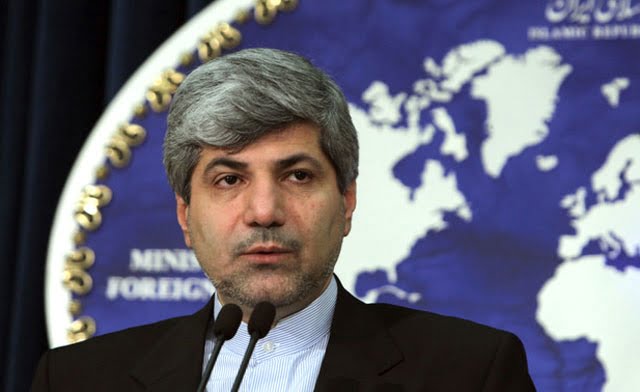
“The Iraqi government should resist such pressures and do not allow such acts to take place in the future,” said Iranian foreign ministry spokesman Ramin Mehmanparast.

The Iraqi authorities stopped and searched a Syria-bound cargo plane from Iran for weapons on October 28, after carrying out a similar inspection on October 2.

Both planes were allowed to continue their journey to Syria when their cargo was cleared.

The United States has been pressing Baghdad to ensure all Iranian aircraft flying through its airspace are ordered to land and checked for weapons, but Iraq has said it will only stop planes when it has doubts about the cargo.

“In the two cases which our planes were inspected by Iraq it showed that such claims are lies,” Mehmanparast said.

Mehmanparast added that “Western accusations against Iran are to show that the instability in Syria is not due to their support and supply of weapons to terrorist groups.”

Tehran, a staunch backer of Syrian President Bashar al-Assad, has been accused of arming his regime, but maintains it is only offering humanitarian aid.

Iraq has pointedly avoided calling for the departure of Assad, whose forces are locked in a 19-month conflict with rebels who are trying to overthrow his regime.

Source: Alarabiya

Iran dispatches warships to Sudan after Israeli airstrike on missile base

0

Iran risked Israeli military retaliation Monday with the dispatch of a naval task force to Sudan just days after a widely reported airstrike by the Jewish state against a missile base run by Tehran in Khartoum.

Sudanese state media said that a docking ceremony was staged in Port Sudan to receive
the convoy led by an Iranian naval frigate and corvette warship.

Commanders of the Iranian flotilla reportedly met Sudanese navy chiefs as a gesture of “peace and friendship”.

But Israel sees the increasingly close military links between Iran and Sudan as a credible threat. It fears Iran is building missiles to supply Hizbollah and the Syrian regime.

Israeli media has said that a long-range bombing run by eight F15 bombers hit a missile base staffed by Iranian engineers at the Yarmouk military plant.

Sudan has complained to the United Nations that Israel bombed the factory.

Iran claims to have harvested images of “sensitive” Israeli military sites and other potential missile targets form a drone shot down after it was launched from Lebanon by Hizbollah

Ismael Kowsari, a Iranian MP, told the semi-official Mehr news agency that images from the drone were broadcast back to Hizbollah operators before the Israeli military shot it out of the sky earlier this month.

“These drones transmit the pictures online,” Mr Kowsari said. “The pictures of forbidden sites taken and transmitted by this drone are now in our possession.”

Mehr has close links to the Iranian Revolutionary Guard Corps (IRGC), which is in overall charge of Iran’s relationship with Hizbollah, the Shiite group whose militant terror arm is equipped with missiles, rockets and other arms by Tehran.

An Israeli investigation into the mystery craft, which was reported to have crossed deep into its territory, has not yet reached any conclusions. However military officials have briefed that they did not believe it was equipped with a camera. “I don’t think there was a camera,” a senior officers in the northern command said.

The Hizbollah leadership has boasted that it assembled the drone in southern Lebanon from components produced by its Iranian paymasters. It has warned that it is prepared to send more drones into its southern neighbour despite a warning from Ban Ki-moon, the UN Secretary General, that it is risking Lebanese security by doing so.

Ahmed Vahid, the Iranian defence minister, has taken credit for the Hizbollah drone in recent days. Mr Vahid said while the Ayub drone was not the “latest Iranian technology,” its sophistication had “amazed” Israeli defence strategists.

Mr Kowsari, who is a former commander of the IRGC, also claimed that the images would allow Iran to respond to any act of aggression by Iran or its Western allies against the Islamic Republic. “That’s why we say we will respond to Israel inside (its) territory, should it take any action against us,” he said.

Iran claimed last month it had started manufacturing a long-range missile-carrying drone with a range of 1,250 miles.

The Shahed-129, or Witness-129, covers much of the Middle East including Israel and nearly doubles the range of previous drones produced by Iranian technicians, who have often relied on reverse engineering military hardware with the country under Western embargo.

Last year Tehran said it recovered the carcass of a US RQ-170 Sentinel stealth drone that had landed in its territory after going off course in Afghanistan. The regime claimed it was using the data recovered from unmanned aircraft to build its own version of one of the most sophisticated survelliance drones made by the US.

Source: The Telegraph

Human rights activists concerned over condition of five Kurdish political prisoners

0

The five were transferred three weeks ago to an unknown location, and no information has been made available as to their condition or whereabouts. The five are Jehajir Badouzadeh (sentenced to life in prison), Ahmad Tamoueh (sentenced to 15 years in prison), Ali Ahmad Suliman (sentenced to 5 years in prison), Mustafa Ali Ahmad (10 years in prison) and Yusuf Kaka-Mami (sentenced to 7 years in prison) on charges of collaboration with PJAK.

Source: Iran Daily Brief

Intelligence Ministry Using Those Convicted Of Espionage To Harass Prisoners

0

In an ongoing effort by the Intelligence Ministry to create problems and harassment of the political prisoners, they have stationed one their interrogators named Abbasi in Ward 350 of Evin prison.

They have also transferred a number of people convicted of spying for the CIA and Mossad to section 350 in an effort to use them against the political prisoners.

According to a Kalameh reporter, Intelligence Ministry’s representative has promised these people that, in return for spying on the political prisoners and giving information about them and creating trouble in the ward, they will reward them with telephone access, face-to-face visitation with their families, furlough, reduction in their prison terms and pardons.

Due to their own situations, these prisoners are willing to do whatever is necessary to help their own cases, and have created problems for the political prisoners.

It should be noted that the Bureau of Prisons and the Judiciary are responsible for, and hold jurisdiction over the prisoners serving their sentences and the Intelligence Ministry and the IRGC legally do not have the authority to interfere in their affairs. However, in reality, in recent years the interrogators have reigned over the Judiciary and the Judges.

According to the families of some of the political prisoners, in a recent visit to ward 350 by the Bureau of Prison inspector, the political prisoners voiced their outrage over the interference by the Intelligence Ministry and complained about the stationing of an agent from Ward 209 (under jurisdiction of the Intelligence Ministry) in ward 350.

According to reports, the inspectors from the Bureau of Prisons had no knowledge of these events, which shows that they are not able to do anything regarding this matter.

Source: Voice of Freedom