Home Blog Page 412

Iranian-American Pleads Guilty In Plot To Kill Saudi Ambassador

0

An Iranian-American citizen has pleaded guilty to plotting with the Iranian military to kill the Saudi ambassador to the United States.

Manssor Arbabsiar, 58, entered the guilty plea in federal court in New York. Arbabsiar, a U.S. citizen who holds an Iranian passport, could face up to 25 years in prison. Sentencing was set for January 23.

Arbabsiar was arrested in September 2011 at New York’s John F. Kennedy International Airport.

He has been charged along with co-defendant Gholam Shakuri, a senior member of the Iranian Revolutionary Guard’s elite Quds Force, of plotting to kill the Saudi ambassador by hiring assassins from a Mexican drug cartel for $1.5 million.

Shakuri is at large. Iran has strongly denied any involvement in the alleged plot.

Source: rferl

Ahmad Ghabel transferred to ICU in Mashhad

0

Following rumors of the death of Reformist activist and religion researcher Ahmad Gabel, his family stated in an interview with reformist Jerassy website that Gabel was hospitalized in an ICU unit in Ghaem Hospital in Mashhad. Although doctors have pronounced him brain dead, he is still on a ventilator and being kept alive by machines.

Source: Iran Daily Brief

Judiciary chief: No political execution in Iran

Amoli Larijani said in a meeting with senior judiciary officials that no one in Iran is executed for their political beliefs. He added that those who have been executed (so far) have either been drug traffickers or rapists or offenders to other people’s lives and properties.” Amoli Larijani expressed his commitment to Sharia law and said, “Some of the laws and regulations related to execution are not unique to the Islamic Republic of Iran, and all Muslims believe in them.” He urged all Muslim countries to break their silence on the Western states’ protest against Islamic laws staged under the pretext of defending human rights.

Source: Iran Daily Brief

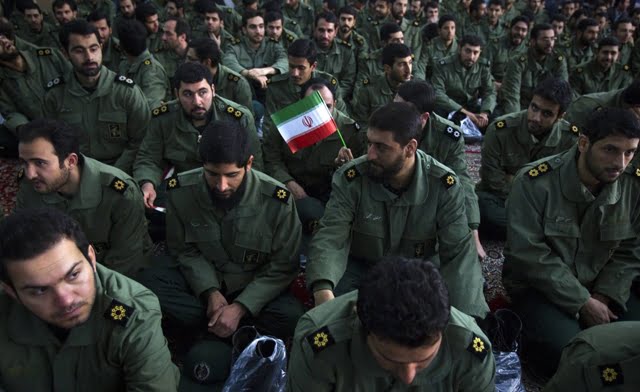
Iran Guards reject accusation of oil spill plan

Iran’s elite Revolutionary Guards on Thursday rejected reported allegations from Western intelligence sources that it plans to damage an oil tanker in the Gulf to create an environmental disaster.

Deputy Commander General Hossein Salami said the force “does not need such scenarios
to accomplish its mission and carries out its work based on realities,” as quoted by Fars news agency.

“These [reports] are fantasies and are not real,” he said in reaction to a story published on Sunday in German magazine Spiegel.

In its report, Spiegel said the top-secret plan codenamed “Dirty Water” was aimed at blocking the oil-rich Gulf to shipping and forcing Western countries to become involved in a huge clean-up operation.

The weekly said the Guards believed this in turn would prompt Western nations to suspend sanctions imposed over Iran’s nuclear program which have started to hit the economy hard.

It said the plan developed by the head of the Guards, General Mohammad Ali Jafari, and Admiral Ali Fadavi, head of the force’s navy division, would also “punish” Arab states for their support of the West and Israel.

A clean-up operation could only take place with Iranian technical help, requiring a temporary lifting of sanctions, the plan says, according to Spiegel.

Jafari and Fadavi had passed the plan to Iran’s supreme leader, Ayatollah Ali Khamenei, who would have the final say on whether to implement it, said the report.

Source: Alarabiya

Iran further expanding enrichment capacity: diplomats

Iran is believed to be further increasing its uranium enrichment capacity at its Fordow plant buried deep underground, Western diplomats say, in another sign of Tehran defying international demands to curb its disputed nuclear program.

But they said the Islamic Republic did not yet appear to have started up the newly-installed centrifuges to boost production of material which Iran says is for reactor fuel but which can also have military uses if processed more.

“Iran continues to build up enrichment capacity,” one Western official said.
A diplomat accredited to the U.N. International Atomic Energy Agency (IAEA) said: “We think that they have continued installing centrifuges at Fordow. We think that their pace has continued the same as it was, which was pretty rapid.”

If confirmed in the next IAEA report on Iran’s atomic activities, expected in mid-November, it would suggest Iran is steadily moving towards completing installment of centrifuges at the Fordow subterranean centrifuge site.

The work may be “near complete,” the Vienna-based diplomat said, in remarks echoed by another envoy.

There was no immediate comment from Iran or the IAEA, the U.N. nuclear agency based in the Austrian capital.

Fordow – which Tehran only disclosed the existence of in 2009 after learning that Western spy services had detected it – is of particular concern for the United States and its allies as Iran uses it for its higher-grade enrichment.

Iran says it needs uranium refined to a fissile concentration of 20 percent, compared with the level of up to 5 percent it produces at its main enrichment facility at Natanz, to make fuel for a medical research reactor in Tehran.

Stalled diplomacy

But it also takes Iran a significant technical step closer to the 90 percent concentration needed for bombs, explaining the West’s growing concern about the Islamic state’s stockpile of the material.

A U.S.-based think-tank, the Institute for Science and International Security (ISIS), this month said Iran would currently need at least two to four months to produce enough weapons-grade uranium for one nuclear bomb, and additional time to make the device itself.

Last week, Iranian officials said Tehran would negotiate on halting higher-grade enrichment if given fuel for the research reactor, in a possible attempt to show flexibility in stalled nuclear talks with world powers.

The IAEA said in its last report on Iran in late August that the country had doubled the number of centrifuges to 2,140 at Fordow since the previous report in May. More than 600 remained to be installed, the report showed.

Since then, diplomats said they thought Iran had put in place more centrifuges at the site near the holy Shiite Muslim city of Qom, about 130 km (80 miles) from Tehran and located deep under soil and rock for protection against any attack.

“They continue sort of unabated,” one envoy said.

But they said Iran was still operating the same number of machines as it has been since early this year, nearly 700 centrifuges.

It was not clear when the new equipment would be launched or whether Iran was holding back for technical or political reasons. It is also not known whether the centrifuges which are not yet operating will be used for 5 or 20 percent enrichment, or both, the diplomats say.

Any move by Iran to increase the number of working centrifuges – and the production rate – would be swiftly condemned by its foes in the West and Israel and may further complicate diplomacy aimed at resolving the dispute.

Iran says its nuclear program is a peaceful project to generate electricity but its refusal to limit the work and lack of transparency with U.N. inspectors have been met with increasingly tough Western sanctions targeting its oil exports.

European Union governments imposed sanctions on Tuesday against major Iranian state companies in the oil and gas industry, and strengthened restrictions on the central bank, cranking up financial pressure on Tehran.

Source: Alarabiya

Iran now major producer of military equipment for both national and export needs

0

Brigadier General Mohammad Hejazi, Deputy Commander of Chiefs of Staff of Iran’s Armed Forces, said that “Today we have achieved self-sufficiency in producing military equipment and defense systems.” Hejazi added that Iranian experts have turned Iran into a major producer of military equipment that can both meet national needs and be exported to other countries.

Source: Iran Daily Brief

Managers of four home-based churches in Fars Province arrested

0

Security forces in Shiraz and Kavar in Fars Province arrested the heads of four home-based Christian churches. According to official Iranian media reports, the home-based churches operating in Iran constitute a hidden place to conduct religious propaganda by Christians and missionaries. Iran’s Minister of Intelligence has in the past accused the home-based churches of being a threat to Iranian youth.

Source: Iran Daily Brief

Couple who are political prisoners prevented from meeting

0

In the months that have passed since female political prisoners in Evin sent their letter to judiciary officials asking to receive permission to meet with their imprisoned partners in Rajae Shahr Prison, they have not yet received a response to their request, and their spouses are continuing to be imprisoned in different prisons without the opportunity to meet each other. Among the prisoners who sent the request is Mahsa Mehrabadi, the imprisoned journalist in Evin Prison.

Source: Iran Daily Brief

Security prisoner launches hunger strike to protest lack of medical treatment

0

Mohammad Amin Agoshi, a 53-year-old security prisoner imprisoned in Zahedan Prison, launched a hunger strike to protest the lack of medical treatment and his illegal exile. Agoshi, who was charged with security violations, was initially sentenced to death, but this sentence was later commuted to ten years in prison. It should be noted that following the hunger strike, Agoshi was transferred to solitary confinement.

Source: Iran Daily Brief

Daughter of political prisoner arrested

0

Negar Haeri, daughter of political prisoner Mashallah Haeri, was arrested by security forces last week. Negar was arrested in the past along with her mother following her request to monitor the worrying condition of her father, who is imprisoned in Rajae Shahar Prison to serve his 15-year sentence following charges of supporting the Iranian opposition group Mujahedin Khalq during the post-election period.

Source: Iran Daily Brief