Home Blog Page 452

International call to stop assaults on academic freedom

0

Seventeen human rights organisations and education groups have called on Iran to uphold the right to education and to immediately address the alarming state of academic freedom in the country.

In particular, there have been violations of rights to freedom of expression, association and assembly on campuses, and institutionalised procedures that allow authorities arbitrarily to expel and suspend students, and fire graduate instructors, on the basis of their political views or activities.

In a statement published on 31 May, the rights groups say: “Over 600 students, as well as some university lecturers, have been arrested since 2009, many of whom have subsequently been imprisoned and hundreds deprived of education as a result of their political activities.”

The organisations strongly urge the Iranian authorities to fulfil Iran’s international obligations to ensure respect for the right to education and academic freedom by:

  • Releasing immediately and unconditionally all Iranian students and higher education personnel who have been jailed for peacefully exercising their rights to freedom of expression, association and assembly, including educators at the Baha’i Institute of Higher Education, and those who have expressed political opinions.
  • Ending the identification and targeting of students due to their beliefs, or their religious, political or civic activities, and revising regulations for admissions and ‘disciplinary committees’ to ensure they uphold and respect the principles of free expression, assembly and association.
  • Removing all intelligence units and Basij paramilitary units from university campuses.
  • Allowing peaceful, independent Iranian student organisations to operate freely and without interference from government authorities and organs.
  • Abolishing discriminatory policies against women, including the quota system that restricts women’s participation in higher education; gender segregation, which may lead to women experiencing discrimination in higher education; and restrictions on campuses and fields of study in which women can enrol – and ending enforcement of clothing standards that violate the rights to privacy, freedom of expression and freedom of religion or belief.
  • Abolishing all policies and practices that discriminate against or otherwise violate the rights of religious and ethnic minorities in Iran, particularly the Baha’i community, including with regard to their access to higher education and academic freedom.
  • Ending the practice of hiring, promoting or firing higher education teachers based on their personal and political opinions, and establishing independent university committees to review and reinstate professors who have been dismissed on ideological and politically motivated grounds.
  • Ensuring that the governance, curricula and procedures for enrolment in universities are independent of government control and free from ideological vetting, including by the Supreme Council of the Cultural Revolution, and that they adhere to international standards of academic freedom outlined by UNESCO and the International Covenant on Economic, Social and Cultural Rights (ICESCR).

Iranian Professor Muhammad Sahimi, a chemical engineer at the University of Southern California, welcomed the statement.

“The world community, and in particular academia, must become the voice of those who have been suppressed in Iran. The plight of Iranian students, professors and scientists must be brought to public view.

“The discriminations against them based on ideology must be revealed. And their expelling from universities, forced retirement and imprisonment must be protested vigorously, at the highest level,” Sahimi told University World News.

Puyan Mahmudian, a researcher at United for Iran, a non-partisan global network for promoting fundamental human and civil rights in Iran, told University World News that the statement would raise both domestic and international awareness of the situation regarding academic rights in Iran.

“As a former Iranian student activist, I would say a big portion of academics in Iran are not aware of their rights being ensured by international laws and treaties to which Iran is a party.”

Mahmudian emphasised that Iran had obligations under international law and must be held accountable, and said the statement would up pressure on the Iranian government to respect academic rights and the right to education.

He argued that international governmental and non-governmental organisations should be more active in supporting academic freedom in Iran. Universities in democratic countries should set preconditions for cooperation with Iranian universities, to pressure their administrations – which are selected and appointed by the government – to abide by international standards.

“International solidarity will give inspiration to Iranian academic rights activists,” Mahmudian concluded.

John Daly, a science and technology consultant and former director of the office of research at USAID, told University World News: “Academic institutions outside Iran should make a special effort to offer places to Iranian students who seek education abroad and to employ Iranian academics who chose to emigrate to obtain academic freedom.”

Gissou Nia, executive director of the US-based Iran Human Rights Documentation Center, said that to ensure the statement’s objectives are implemented and not “discarded as mere rhetoric”, UN rights bodies such as the UN Economic and Social Council (ECOSOC), which have taken a passive role in pushing for progress in Iran, should take up this cause.

“While UN member states are often at loggerheads over claims that calls for reform are hegemonistic ambitions shrouded in a human rights agenda, academic freedom is an issue that should unquestionably rise above any claim of partisan politics – and UN bodies, such as ECOSOC, should insist that the Iranian authorities uphold the right to education in all its forms.

“Additionally, at the global level the academic profession should stand in solidarity with the students, professors and institutions in Iran that are affected by discriminatory and repressive policies,” Nia told University World News – as do worldwide movements that support doctors and journalists under attack.

“Reputable academic institutions worldwide should support their counterparts in Iran and publicly demand that the Iranian government respect the rights of its students and professors to academic freedom,” he argued.

Nia said his centre had been harnessing new media to provide human rights education to the masses, in the form of short, instructive video clips and manuals that explain what human rights standards are and what actions potentially violate those standards.

The documentation centre believes that such projects helped to educate at the grassroots level and “patch the gaps in a curriculum, particularly outside urban centres, that may not focus on these issues in any depth, if at all.

Source: freedom messenger

Businessman ‘exported WMD chemicals to Iran’

0

A businessman exported chemicals to Iran which could have been used to create weapons of mass destruction, the Old Bailey heard today.

Jarrad Beddow, 43 the former sales manager of Remet UK, is alleged to have played a ‘leading role’ in the shipment of cobalt aluminate to the Islamic Republic via Slovakia.

It is claimed he ignored warnings that there was “an unacceptable risk of diversion to WMD programmes.”

Jurors heard the company, based in Rochester, Kent, had been approached by an Iranian engineering firm Mavadkarin in 2008.

Mavadkarin, based in Tehran, claimed that the cobalt aluminate would be used for casting gas turbine blades.

Remet applied for a licence to export the chemicals in the summer of 2008 but was told it had been rejected in September.

Prosecuting David Hewitt told the court: “The reason for the refusal was unacceptable risk of diversion to WMD programmes of concern.”

Beddow appealed for a review of the decision and enclosed an undertaking by Mavadkarin that the goods were being used in the gas turbine blades manufacturing process.

His appeal was turned down and it was again stated that this was because of an unacceptable risk of diversion to WMD programmes.

It is claimed that Beddow emailed his contacts in Iran to say that he still might be able to supply the chemicals.

Mr Hewitt said: “The defendant said that his understanding was that if Remet was to supply Iran, via Slovakia, there would be no need for a licence.

“In short he was saying, if this goes out to Slovakia, and Slovakia had no export controls or restrictions going to Iran, that was ok.

“The Crown say that is fanciful and it defies common sense.”

The goods were shipped from a warehouse in Lancashire to the eastern European country before being sent to the Middle East, jurors were told.

Mr Hewitt said the authorities were alerted after Remet’s managing director discovered the export had gone through.

The prosecutor added: “All this case concerns is the exportation of a quantity of chemicals which the UK authorities believe there was a risk could be diverted to a weapons of mass destruction programme.

“This case is about somebody who the Crown says was well aware it was unlawful to ship these chemicals and he deliberately set out to do that.

“The Crown says that this defendant took a leading role in this.”

Beddow, of St Osyth, Essex, denies being knowingly concerned in the prohibited export or shipment of cobalt aluminate with intent to evade the prohibition or restriction on December 16, 2009.

The trial continues.

Source: The Telegraph

Zanjan student activist detained

A student activist from the city of Zanjan has been arrested.

Amir Hossein Alavi, a member of the student alumni opposition group known as Advar Tahkim Vahdat, was arrested on 27 May after being summoned to Zanjan’s Intelligence Bureau.

Alavi is also a supporter of the outlawed group the Freedom Movement of Iran.

It’s still not clear on what grounds he was detained.

Source: IranGreenVoice

Prisoners warn about possible death of blogger

A letter from 117 Iranian political prisoners being held in Section 350 of Evin Prison warns authorities about the critical health of jailed blogger Hossein Ronaghi Maleki, who has lost one kidney and is on a hunger strike to fight for sick leave from prison.

The Kaleme website reports that the prisoners’ letter refers to another political prisoner, Hoda Saber, who died in prison during his hunger strike, and they urge the authorities stop a similar situation from befalling another prisoner.

The letter points out that, according to Article 291 of the penal code, if a sentence leads to the prisoners illness or halts his recovery from an ailment, a coroner and trusted physician outside the prison can be charged with treating the prisoner.

The signatories add that the coroner has already issued a letter attesting to Ronaghi Maleki’s inability to endure his sentence, and his physician has clarified that he must be hospitalized outside of the prison in order to get adequate treatment.

Ronaghi Maleki was arrested in December of 2009 for a blog he wrote under the name of Babak Khorramdin.

During the crackdown on protests against the 2009 presidential election results, numerous journalists and bloggers as well as social and political activists were arrested.

Ronaghi Maleki has reportedly sustained severe kidney injury in prison and has already received a kidney transplant. The lack of adequate follow-ups has apparently caused further kidney complications, and he is now on hunger strike, demanding to be released in order to receive the necessary medical treatments.

Source: Radiozamaneh

US envoy to Iran: If you have nothing to hide, open up alleged nuclear site to UN probe

0

A U.S. envoy is challenging Iran to disprove suspicions it worked secretly on nuclear arms by throwing open a military site to a probe by U.N. inspectors.

He also is urging Tehran to shut down a fortified bunker used to enrich uranium to a level that can allow the radioactive substance to quickly be turned into the core of nuclear arms.

Robert Wood spoke Tuesday to the 35-nation board of the International Atomic Energy Agency.

Tehran says all of its atomic activities are geared toward making nuclear fuel or medical research. But international concerns have grown because of Iran’s uranium enrichment activities. The IAEA also says it has mounting evidence that the Islamic Republic has secretly worked on a nuclear arms program — something Tehran denies.

Source: The Washington Post

Hunger strike lands jailed activist in infirmary

0

Jailed Iranian human rights activist Mohmmad Seddigh Kaboodvand is in critical condition following more than a week on a hunger strike.

Kaleme reports that Mohammad Seddigh Kaboodvand, who has been refusing food since Saturday May 26, has been transferred to the Evin Prison infirmary.

Kaboodvand, who is also suffering from existing prostate complications, had already been issued a letter by the coroner’s office indicating that he is not physically capable of enduring his prison sentence. However, prison authorities have not heeded this verdict.

Kaboodvand began his hunger strike because prison authorities refused him leave to visit his sick son, and he has announced that he will continue starving himself until he is granted permission to spend time with his child.

He had broken an earlier strike after the state promised that he would be given a furlough once he began eating, but the promise was not fulfilled.

Kaboodvand is a human rights activist in Iran’s Kurdistan province and he has been sentenced to 10 years in jail for establishing the Human Rights Organization of Kurdistan and one more year for “propaganda against the regime.”

Source: Radio zamaneh

Mystery Iranian deaths amid shadow war

0

At least 10 high-ranking officers in Iran’s Revolutionary Guard Corps are reported to have died recently, apparently in violent circumstances.

But only two of the deaths have been made public, raising suspicions the officers may have been assassinated by Iran’s enemies.

The unusually large number of deaths among senior IRGC commanders followed a disclosure by Israel’s military chief of staff, Lt. Gen. Benny Gantz, in April that covert Special Forces operations against “enemy countries” were becoming more intense.

There doesn’t appear to be any solid evidence the Israelis were involved in the deaths of the Revolutionary Guard chiefs.

But Gantz told the Yediot Ahronot daily, “You almost won’t find a point in time where something isn’t happening somewhere in the world. I’m escalating all those special operations.”

He didn’t say which countries were being targeted. But in recent years Israel has been mounting clandestine operations against Iran and its contentious nuclear program, which Israeli leaders see as an existential threat.

Intelligence Online, a Paris Web site that specializes in global intelligence and security issues, identified the two officers whose deaths were acknowledged by the Tehran regime as Gen. Gholam Reza Qassemi, former commander of the 92nd Armored Division, and Gen. Mohammad Ali Mousavi, leader of a commando regiment in the southwestern city of Ahwaz, a key oil center.

Intelligence Online said there was speculation some of the deaths could have resulted from turf wars within the increasingly powerful IRGC over control of sections of the vast economic empire the IRGC has built up in recent years.

The IRGC is reported to operate widespread illegal economic networks, including smuggling, that have made it one of the most crucial economic forces in the country.

This, on top of its growing political power, has raised suggestions both inside and outside Iran that the IRGC, formed by the late Ayatollah Ruhollah Khomeini to protect the 1979 Islamic Revolution, may seek to take control at some point.

Intelligence Online said the Gen. Ahmed Mansouri, one of the representatives of Supreme Leader Ayatollah Ali Khamenei within the IRGC leadership, also died recently, supposedly from a heart attack.

It also said two senior colonels, Najaf Ali Khirallahi and Nassif Pour, were killed in car accidents.

Intelligence Online said other senior IRGC officials, identified as Wafa Ghafarian, 52; Abbas Mehri, 53; Ahmed Siafzadeh, 55; Mansour Tourqan, 50; and Ahmed Soudaker, 51, also passed away recently, with no official explanation.

“Khamenei has not publicly expressed his condolences, which are usually widely reported in the Iranian press,” the Web site observed.

Israel and the United States were allegedly involved in cyberattacks using the powerful W32.Flame malware against Iranian targets, including the big Kharg Island oil terminal in the northern Persian Gulf, in April.

Israeli leaders have dropped strong hints that the Jewish state was responsible for the new data-stealing computer virus, much more dangerous than the Stuxnet worm used to attacks Iran’s uranium enrichment program in 2009-10.

The New York Times reported that U.S. President Barack Obama ordered the sophisticated cyberattacks on Iran’s computer systems, in conjunction with Israel, soon after he took office in a bid to cripple the Islamic Republic’s infrastructure.

Recent events have been played out amid crucial meetings between Iran and U.S.-led powers seeking to convince Tehran to halt uranium enrichment and curtail its nuclear program.

Meetings in Istanbul in April and in Baghdad in May failed to produce an agreement. Another meeting is scheduled but the prospect of a deal seems remote.

In the meantime, the Obama administration has disclosed Iranian plots to kill U.S. diplomats and their families in Azerbaijan, Iran’s Muslim northern neighbor and increasingly an ally of Israel.

Also, U.S. and Israeli officials have said other plots have been uncovered involving Iran and its Lebanese surrogate, Hezbollah, in India, Thailand, Turkey, Pakistan and the former Soviet republic of Georgia.

On May 30, Yoram Cohen, head of Israel’s domestic security service, known as Shin Bet, claimed Iranian-funded militants have stepped up attempts to attack Jewish targets around the world in recent months.

He stressed that only a fraction of these operations have been publicized.

On May 11, a senior Israeli officer said security around top military commanders and military delegations traveling overseas has been “significantly stepped up” because of Iranian and Hezbollah plots.

Source: UPI

What Are Iranian Special Forces Doing In Syria?

The only surprising thing about Iran sending special forces to back up embattled president Bashar al-Assad in Syria is that Revolutionary Guard General Ismail Qa’ani has finally said publicly that it is doing so. Iran has been training Syrian soldiers since long before the uprising began, and with Teheran’s vested interest in the fate of the allied Assad regime, that relationship could only be made stronger by the 14-month-long rebellion.

Nonetheless, Qa’ani, the second-in-command of Iran’s infamous Quds Force, has given the first real indication of what the Islamic Republic is actually up to in Syria.

The Quds, named for the Farsi word for Jerusalem, are Iran’s special forces unit — in American equivalents, a mix between black-ops and the CIA. As the Revolutionary Guard’s external force, the Quds support and facilitate Islamic movements in other nations on Teheran’s behalf, movements that allegedly include terrorist organizations.

“Quds are adept at coordinating sabotage missions outside Iran,” said Dilshod Achilov, a professor of Middle East politics at East Tennessee State University. And in Syria’s case, he said, “it’s not just a few soldiers we’re talking about, but highly trained units who know the area and the terrain and are in close cooperation with the Syrian regime.”

According to Qa’ani, the Quds have actually had a positive effect on the situation in Syria. He told the semi-official Iranian Students’ News Agency that “if the Islamic republic was not present in Syria, the massacre of people would have happened on a much larger scale.”

In reality, the opposite may be true. Qa’ani may think that Iran is keeping what Assad calls “armed terrorists” at bay, but the Quds are undoubtedly helping the Syrian regime attack the opposition and its own people.

“As long as the Iranian regime is keeping Assad in power, the Syrian people are at risk,” said Mark Jacobson, the Senior Transatlantic Fellow at the German Marshal Fund.

The extent of Iran’s involvement in Syria is unclear. So far, Qa’ani’s interview is the closest thing to an official confirmation of the Quds’ presence there. Western observers believe that the Iranians are not only training Syrian soldiers, but also actively engaging in battle with opposition fighters.

“The Iranian interference in Syrian affairs includes training militia on the responses of the demonstrators, as well as providing the techniques and devices to do so, including bugging devices, surveillance, and the transfer of large shipments of weapons including assault rifles and machine guns, explosives and explosive devices and rocket artillery and tanks,” a spokesperson for the Syrian Nation Council, the umbrella group of the opposition, said.

Iran also “participated in security operations to hunt down opponents of the (Syrian) regime,” the spokesperson added.

Battle of Zabadani

On Tuesday, U.S. State Department spokesperson Victoria Nuland said that the Shabiha militia, accused of carrying out the Houla massacre, has been modeled after Iran’s paramilitary Basij force, suggesting that the Iranian military could have trained the Syrian civilian soldiers.

Two days later, Pentagon spokesman Navy Capt. John Kirby told reporters that he has “reason to believe that Iran continues to assist the Assad regime in committing these acts of atrocities against the Syrian people,” and on the same day, Secretary of State Hillary Clinton said during an appearance in Copenhagen that Quds “are coaching the Syrian military … helping them set up these sectarian militias.”

By some accounts, the Quds have been in Syria since January, when Assad’s forces clashed with rebels in the battle of Zabadani. At the time, the Free Syrian Army, the primary armed resistance, was in control of the city and apparently well equipped to defend it from the government regulars. Knowing that Zabadani is strategically important for both Syria and Iran because of its proximity to Lebanon, less than 10 miles from the border, Assad’s generals called in the Quds, as well as another Iranian ally, the Lebanon-based Shiite movement Hezbollah, for help.

“The Syrian intelligence weren’t qualified; they didn’t have decent snipers or equipment,” Mahmoud Haj Hamad, the Inspector General with Syrian Ministry of Defense, who has defected to the West, told theTimes in January. “They needed qualified snipers from Hezbollah and Iran,” which they got, and then used to reclaim the city in just a few days.

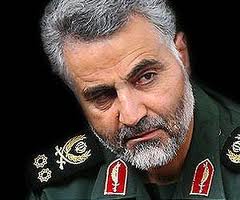
After the battle, Quds leader General Qassem Suleimani joined the Syrian military command apparatus, according to the former head of the U.S. Air Force Office of Special Investigations, Steven K. O’Hern, who runs the Intelligence Wars blog. Suleimani is reportedly a regular visitor to Assad’s war room in Damascus.

The Enemy Of My Enemy

The friendship between Syria and Iran stems from shared enemies. The two countries first signed a military pact over their mutual dislike of Saddam Hussein in Iraq. Now, with Saddam out of the way, Teheran sees Syria as a regional counterweight to Israel, Iran’s sworn enemy.

There is also a religious aspect, with Iran’s Shiite leaders and Syria’s Alawites on one side and Sunni Muslims on the other. Involved in that dynamic now is Lebanon’s Hezbollah, the Shiite political group that still has a paramilitary wing. Iran and Syria are Hezbollah’s biggest military, financial and political supporters, and Syria offers a bridge between Iran and Lebanon. If Assad falls, Iran doesn’t just lose its closest ally: It may also lose a direct geographical link to Hezbollah.

Still, Iran’s future involvement in the Syrian conflict is unpredictable, mostly because the outcome of the Syrian conflict itself is still uncertain. As long as the fight between the government and the rebels continues as it has for the past year, Iran may be content operating behind the scenes. But the one thing it won’t do is go away: “The roots go very deep, and Iran is very invested,” said Achilov. “We cannot expect Iran to let Syria go without a fight.”

Source: Inside of Iran

Clinton Dismisses Iranian Threats Against Israel

0

U.S. Secretary of State Hillary Clinton has dismissed Iran’s latest threats against Israel as “nothing new,” insisting she would judge Tehran by its actions at upcoming nuclear talks.

Clinton, speaking at a news conference in Stockholm, said she was looking forward to what Iran would bring to the table in Moscow for the June 18-19 talks with major world powers. Clinton insisted that she would like to see a diplomatic resolution “for everyone’s sake.”

Her comments came after Iran’s Supreme Leader Ayatollah Ali Khamenei cast a shadow over prospects of a resolution with a fiery speech that threatened to respond “like thunder” to any act of aggression by Israel, which is said to be considering military strikes against Tehran’s nuclear facilities.

“[Israel] know that under these conditions they are more vulnerable than before,” Khamenei said. “If they take any miscalculated action, they will receive a thunderous blow.”

Khamenei made the statements in a speech marking the 1989 death of his predecessor and the founder of Iran’s Islamic republic, Ayatollah Ruhollah Khomeini. He also accused the West of lying about Iran’s nuclear program.

“International politicians and media speak of a nuclear Iran, that a nuclear Iran is dangerous. I say they are lying. They are being deceitful,” he said. “The thing they are really scared of and they should be scared of is not a nuclear Iran but an Islamic Iran.”

The United States and other Western countries suspect Iran of working to acquire a nuclear weapons capability. Tehran insists its program is for peaceful purposes and within its rights.

In Baghdad last month, the six world powers — the UN Security Council’s five permanent members, plus Germany– demanded that Iran stop uranium enrichment in return for incentives such as spare parts for civilian planes.

Iran’s enrichment of uranium at 20 percent — the highest which Iran has publicly acknowledged — has worried Western leaders. Tehran has said it may consider suspending 20-percent enrichment only if the West commits to lift recently toughened economic sanctions, including restrictions on the import of Iranian oil.

Source: RFERL

Iran’s Khamenei: Israel risks ‘lightning’ reply

0

Iran’s Supreme Leader warned Sunday that any Israeli attack would be answered with a “lightning” response by the Islamic Republic and suggested Iran’s nuclear program cannot be curtailed by Western sanctions.

The remarks by Ayatollah Ali Khamenei echoed previous hard-line positions by Iran, but take on added resonance amid talks with the U.S. and five other world powers. Western leaders hope for a diplomatic accord that would ease concerns about Iran’s nuclear ambitions, while Israeli officials say they leave all options open to try to derail Iran’s uranium enrichment.

The West fears Iran could one day produce weapons-grade material. Khamenei called the claims of a secret weapons program “lies” and repeated Iran’s statements that it only seeks reactors for energy and medical research.

Khamenei put Israel on notice that any military action would bring swift consequences.

“Should they take any wrong step, any inappropriate move, it will fall on their heads like lightning,” he warned in a speech marking the 23rd anniversary of the death of his predecessor, Ayatollah Ruhollah Khomeini, the leader of the 1979 Islamic Revolution.

Many military analysts say air strikes alone are unlikely to seriously set back Iran’s uranium enrichment and could touch off a wider conflict in the Gulf, which is the route for about one fifth of the world’s oil.

Instead, the U.S. and Europe have imposed tighter sanctions targeting Iran’s oil exports and its ability to conduct international banking.

“The obstacles enemies are creating in our path won’t have any effect. Sanctions are ineffective. Sanctions can’t stop the Iranian nation from moving forward,” Khamenei said at Khomeini’s mausoleum south of Tehran.

“The only effect these unilateral and multilateral sanctions have on the Iranian nation is that they deepen hatred and animosity toward the West in the heart of our people,” he said.

Iran has called for the West to roll back the sanctions as a goodwill gesture to move ahead the nuclear talks, which are scheduled to resume later this month in Moscow.

In Baghdad last month, the six world powers — the U.N. Security Council permanent members plus Germany — demanded that Iran stop its most sensitive uranium enrichment in return for incentives such as civilian plane spare parts. Iran’s 20 percent-level enrichment — the highest publicly acknowledged — worries Western leaders because it is far closer to weapons grade than the 3.5 percent enriched material needed for energy-producing reactors.

Iran uses the 20 percent for its medical research reactor for applications such as cancer treatment.

Iran has called for an overhaul of the latest proposals, saying it may consider suspending 20 percent enrichment only if the West commits to lift recently toughened sanctions.

Israeli Prime Minister Benjamin Netanyahu called on world powers last week to push Tehran to stop all nuclear enrichment, remove from its territory all material that has been enriched until now and demolish the underground Fordo enrichment facility near the city of Qom, about 130 kilometers (80 miles) south of Tehran.

Israel views a nuclear Iran as an existential threat because of its frequent calls for Israel’s destruction and support of anti-Israel groups such as Lebanon’s Hezbollah.

Khamenei said Israel is now vulnerable than any other time with pro-U.S. regimes fallen in the Arab Spring, and claimed the U.S. and its allies are concentrating on the Iranian nuclear issue to “cover their own problems.”

Source: AP