Home Blog Page 457

Five Iranian Kurds sentenced to 46 years in prison, one tortured to death

A revolutionary court in Iran has sentenced five Kurdish citizens to a total of 46 years in prison, according to reports.

On Wednesday, the Kurdistan Press Agency reports that Branch One of the Revolutionary Court of Khoy has sentenced five Iranian Kurds to 46 years in jail for their alleged ties to Kurdish opposition groups. The names of the five individuals, all residents of Maku city in West Azerbaijan, are: Mostafa Armin, Mousa Hatefi, Saeed Derayat, Ali Marhamati and Vali Balkhanloo.

The five men were arrested a year ago. According to local reports, Vali Balkhanloo was tortured to death just days after his arrest. The news of his death has not yet been made public.

Vali Balkhanloo and Mostafa Armin have been sentenced to 15 ½ years in prison in addition to exile after being found guilty of Moharebeh (enmity against God). Saeed Derayat and Ali Marhamati were sentenced to four years in jail, while Mousa Hatefi received a seven-year prison term.

Iran’s ethnic minority communities, including Arabs, Azerbaijanis, Baluch, Kurds and Turkmen, suffer “ongoing systematic discrimination in law and practice” according to Amnesty International. “Those who campaigned for greater political participation or recognition of minorities’ economic, social and cultural rights faced systematic threats, arrest and imprisonment,” Amnesty‘s 2011 report added.

Sunni Kurds face additional discrimination for they are both a linguistic and a religious minority.

Authorities continue to prohibit the use of minority languages in schools and government offices, despite the fact that the constitution permits the use of regional and tribal languages in the press and mass media, as well as in schools.

Source: Irangreenvoice

IRGC criticism finds support in another MP

0

An Iranian MP has spoken out in support of his colleague’s allegations that Iran’s Revolutionary Guards Corps (IRGC) interfered in the recent parliamentary elections.

The original allegations, made by conservative MP Ali Motahari, drew severe criticism from a number of MPs; however, MP Mostafa Kavakebian has now backed Motahari’s assertions.

The Fars News Agency reports that Semnan representative Mostafa Kavakebain, another conservative MP, told Parliament on Tuesday that he has certain evidence regarding the IRGC’s interference in the elections. He called for a probe into the evidence.

According to Islamic Republic law, the IRGC should not get involved in politics or the election process. The statements by Motahari, a Tehran MP, drew fire from the IRGC, which immediately rejected the accusation and warned that it may choose to prosecute its accuser.

Kavakebian said in Parliament today: “I am happy that IRGC officials have denied any involvement, but I propose that a committee be established in order to probe the issue. They should especially probe my riding so that I can offer them the evidence I have in my possession.”

Two MPs have challenged the accusations against the IRGC and slammed Motahari for using Parliament as a platform to attack the IRGC.

But Motahari has refused to back down. He insists that the IRGC backed its preferred candidates in the March parliamentary elections. Motahari has been quoted as saying: “A representative can express an opinion about any issue concerning the country, and no institution should be exempted from criticism and turned into a sanctity.”

 Source: Radiozamaneh

New wave of repression launched against ethnic communities

Karim Lahidji, vice-president of the International Federation for Human Rights (FIDH) and president of the Iranian League for the Defence of Human Rights (LDDHI), said today: The authorities in Iran have launched a new wave of repression against several Iranian ethnic communities, including the Baluchis, Arabs and Azeris. They are acting in complete defiance of the recommendations made by the UN Committee on the Elimination of Racial Discrimination in its August 2010 concluding observations, where the Committee strongly criticised the denial of rights of the ‘Arab, Azeri, Baluchi, Kurdish communities and some communities of non-citizens’ in Iran and called on the authorities to take measures to protect them effectively.

On 14 May 2012, the security forces fired on the people who were protesting the arrest of 15 people including two local Baluchi Sunni prayer leaders and their close relatives in the city of Rasak, in the south-eastern Sistan-Baluchistan province. At least one person was killed and several others were injured. Subsequently, on 20 May 2012, the prosecutor of the provincial capital Zahedan linked the arrests to the February 2012 assassination of a pro-government mosque prayer leader who had also been commander of the local unit of the Basij militia. He claimed that six people had been detained for alleged participation in the assassination. The detainees are at risk of torture and other ill treatment, unfair trials and may be sentenced to death.

On 21 May 2012, trial of several members of the Iranian Arab ethnic community started in Ahvaz, the provincial capital of Khuzestan in south-western Iran. At least six of them are facing the vague charges of moharebeh (fighting against God) and ‘corruption on earth’, both of which can carry the death sentence. Some of the defendants have spent more than a year in detention, mostly without access to lawyers. According to some sources, the first two defendants told the court that they had been forced to make false confessions under severe torture.

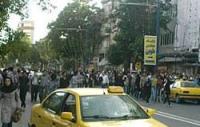
On the same day, the security forces attacked and detained scores of peaceful protestors in the western cities of Tabriz (provincial capital of East-Azerbaijan) and Urumiyeh (provincial capital of West Azerbaijan). The protests marked the anniversary of 2006 demonstrations against the government’s discriminatory policies against the Azeri ethnic community and the government’s policies in relation to Lake Urumiyeh, which is at risk of drying according to environmental activists. In Urumiyeh, police reportedly used batons and tear gas against the protestors and fired paint bullets at them to identify them later.

Background information

Iranian ethnic communities are systemically denied their political, civil, economic, cultural (including language) and social rights.

Azeri cultural and rights activists have been facing severe persecution for many years. Sa’eed Matinpour, an Azeri journalist and minority rights activist, has been serving an 8-year imprisonment sentence since 2007 and is reported to be in great need of medical care.

The Iranian Kurd, Baluch and Arab communities face greater political repression, with political and civil activists frequently facing the death penalty on vague charges after unfair trials, where confessions extracted under torture are admitted in court.
Mohammad Sadiq Kaboudvand, founder and president of the Human Rights Organisation of Kurdistan, has been serving a sentence of 10 years and six months since July 2007. Having suffered a heart attack in 2008 and three strokes in 2008 and 2010, he has been consistently denied medical care and his life is at risk. Several Kurdish journalists and students are serving long-term prison sentences and a number of Kurdish political prisoners are on death row. Farzad Kamangar, a Kurdish teacher, was executed in May 2010 after months of torture and an unfair trial.

In April 2005, the Arabs of Khuzestan took to the streets in protest against reports about government’s plans to change the demographic structure of the province; scores of people were reportedly killed. Since then, the authorities have arbitrarily detained tens of cultural and rights activists every year on the eve of the anniversary of those protests. There have been frequent reports of execution of Arab political prisoners in Khuzestan on vague charges after unfair trials.
The Baluch minority has faced widespread discrimination for many years. In recent years, a large number of Baluch political prisoners as well as a number of Baluch Sunni clerics have been executed in the area, and scores of people have reportedly been killed in extrajudicial executions.

Source: FIDH

Press rights group slams government censorship in Iran

Reporters Without Borders claims that journalists are being summoned for interrogation at Iran’s Ministry of Culture. It accuses the ministry of becoming “a censorship agency that has been turned into an all-out mechanism of control and repression since Mahmoud Ahmadinejad became president.”

According to Reporters Without Borders, Iranian Culture Minister Mohammad Hosseini and his aides are issuing summons to journalists, especially targeting those who work for the foreign media. The report indicates that the interrogations are “often violent.”

Reporters Without Borders writes: “These interrogations are intolerable and we urge international cultural bodies to terminate all cooperation with this ministry on the grounds that it authorizes these interrogations and permits the mistreatment of intellectuals on its own premises.”

The press rights groups refers to Iran as “one of the world’s most repressive countries.” As the latest evidence of the Islamic Republic’s continued persecution of media activists, the group points to the recent arrests of writer and leading economist Faroborz Rais Dana, journalist Rahman Bozari and Reza Taleshian Jolodarzadeh, the editor of Sobh-e Azadi.

 Source: Radiozamaneh

Iran detains protestors supporting saving of Lake Urmia

Mass protests against the authorities’ indifference to the fate of drying out Lake Urmia were held in the Iranian cities of Tabriz and Urmia on May 21.

According to the Association for the Defence of Azerbaijani Political Prisoners in Iran (ADAPP), the police used bikes, rubber batons, then plastic bullets and tear gas to disperse the protesters.

According to the group, during clashes with security forces in Tabriz and Urmia more than 100 people were detained.

Similar events took place in the same cities last year. Then too, dozens of Azerbaijani activists were arrested and punished.

The area of Lake Urmia is about 6000 square kilometres. During bird migration the lake becomes their temporary haven. Due to prolonged drought what happens in the Urmia shallows, affects the flora and fauna of the surrounding region. Environmental specialists noted that measures taken by the Iranian government are not enough to rescue the lake.

Currently, each litre of water in Lake Urmia contains 330 grams of salt. Previously, the figure stood at 160-170 grams per litre. Increase in the salt concentration is due to the fact that one-third of the lake dried up and actually turned into salt marshes.

 Source: Freedomessenger

Iranian rapper in hiding, but defiant after call for his death

0

The Iranian-born rapper marked for death for insulting a ninth-century imam and criticizing Tehran’s regime as corrupt is determined to press his message to young fans, according to the German author who hid Shahin Najafi in his home.

Najafi, whose song “Ay Naghi” brought two fatwas, or calls for his death, within days of its release on Facebook, will not be intimidated, though he knows he cannot perform live, according to Gunter Wallraff, a non-fiction writer who hid Najafi until German police found him and placed him in a safehouse.

“On the contrary, he feels responsible to himself and to his many young followers, especially in Iran, not to give in,” Wallraff said in an exclusive interview with FoxNews.com. “The death threats show that this regime needs the image of an enemy because it can no longer offer any values and is therefore looking for helpless victims.”


“He feels responsible to himself and to his many young followers, especially in Iran, not to give in.”

– Gunter Wallraff, German author who hid rapper marked for death.


Najafi, 32, who is a German citizen and has lived in Cologne, is a star in his homeland, where he has 200,000 fans on his Facebook page. He fled to Germany in 2005 after being sentenced to a hundred lashes and three years in jail. But his new song brought the ultimate sentence because it is considered an insult to a ninth-century Shiite imam, Ali al Hadi al-Naqi, also known as Imam Naghi. Shiites venerate al-Naqi, a direct descendant of the Prophet Muhammad. An Iranian website, Shia Online, has offered $100,000 to anyone who kills Najafi.

View video of “Ay Naghi” here.

The death threat has roiled Germany’s 100,000-strong Iranian community and forced Najafi to cancel all his scheduled appearances. Najafi’s fans argue that Iran’s mullahs have deprived Najafi of freedom of speech, a right enshrined in the German Constitution, and many have criticized German officials for failing to denounce Iran over the issue.

“We asked the foreign minister to make a statement of support for Shahin Najafi and for democratic Iranians who live here and to condemn the fatwa,” said Ulrike Becker, founder of Stop the Bomb, a European coalition that opposes Iran’s development of nuclear weapons. She referred to the fatwa as “a declaration of war against our values – our democracy.”

Najafi’s song calls on the revered Shia figure to come back and help the Iranians with problems like “hollow slogans” and “Chinese-made prayer rugs.”

The song, which is laced with profanity, includes the lyric: “I swear to you on bland and hollow slogans; Naghi, I swear on this shifting flocks of people; They say “Long Live” in the morning and “Death to” at night; On the heroes of fictional stories.”

Najafi was surprised by the harsh reaction.

“The song was not written to provoke anyone,” he told the Berlin newspaper Die Tageszeitung. “I have nothing against Islam. I am not fighting a religion, but I am fighting this regime. No one has harmed Islam more than this regime.”

Najafi claims the regime wants to silence him because he deals with subjects that are taboo in puritanical Iran, such as sexuality, gays and drug addiction. He knows his career outlook is bleak.

“I can’t continue my work because a singer must appear in public,” he told the paper. “I can’t do that anymore. I was advised to leave Cologne, but where should I go and how?”

Wahied Wahdat-Hagh, a senior fellow at the European Foundation for Democracy and one of Germany’s leading authorities on Iran, said fatwas can inhibit free speech far outside Iran’s borders.

“This strategy is menacing the world,” said Wahdat-Hagh. “Fatwas are declaring war on the principles of free speech in the free world.”

But Najafi’s young fans cannot be silenced, Saba Farzan, a German-Iranian journalist living in Berlin, told FoxNews.com.

“They may be able to arrest many of us for supporting Najafi,” she said in a telephone interview. “But they can’t arrest millions of us. They see his work as showing how devastating the situation in Iran is.”

Wallraff said he knew his life was also in danger while he hid Najafi, but he refused to give in to intimidation.

“I ignore the threat,” Wallraff told FoxNews.com. “Fear is always the worst counselor.”

Source: FoxNews

Iran propping up Syria’s dwindling cash reserves

0

By Barbara Starr

Syria’s president is quickly spending through his cash reserves as sanctions choke off many sources of funding, but the regime is getting help from Iran in bolstering finances, CNN has learned.

In Jordan, the government is accepting the reality that Bashar al-Assad may remain in power in Syria for months to come, aided by Iran.

According to intelligence assessment shared with CNN, al-Assad likely had about $30 billion in cash reserves to spend when unrest and bloodshed began in March 2011. He’s about down to $6 billion to $9 billion.

And with the war against his own people costing him about $1 billion a month, he should have been out of business by the end of the year, according to officials in the region.

But sources are also telling CNN that al-Assad is getting a cash infusion from Iran, funneled in through banks in Lebanon, and Iran’s support combined with Russia’s political and economic support could keep al-Assad going for months to come.

The assistance is just part of how Iran is helping Syria.

As CNN reported earlier this year, Iran has provided further aid as part of what the officials described as “all-in” support for al-Assad, including small arms and assistance in helping the Syrian government use computer monitoring to rout out opposition using social media and other Internet tools.

While troops from 19 countries, including the United States, have converged in Jordan for the Eager Lion military exercise, U.S. and Jordanian elite forces are doing additional training to prepare for potential fallout should Syria’s government collapse.

U.S. Army Green Berets are training Jordanian special forces in a number of so called “worst-case scenarios” including Syria’s chemical and biological weapons falling out of the control of government forces, U.S. sources tell CNN.

The U.S., Jordan and other allies are worried that opposition forces or groups like al Qaeda could seize some partial control of 20 key chemical and biological sites inside Syria.

U.S. intelligence officials have long said they believe Syria’s chemical and biological weapons remain under the control of al-Assad’s forces and there is little need to worry.

Securing the sites would demand that outside ground forces land in Syria within 18 hours of any collapse to try to regain control, according to an assessment shared with CNN.

The Jordanians believe that with al-Assad remaining in power, Jordan must plan and train its forces for any potential option. But the introduction of American special operations forces such as the Green Berets is seen as an indicator that the United States is prepared to help defend Jordan if it came to that.

 Source: CNN

Iranian political prisoner dies in jail

An Iranian political prisoner at Rejai Shahr Prison in Karaj has died in jail, and a preliminary examination points to a cerebral hemorrhage as the cause of death.

The Human Rights Activists News Agency (HRANA) reports that Mansour Radpour died Monday at 8 AM, and his face, neck and feet appeared darkened.

According to HRANA, Radpour suffered from a myriad of health conditions such as high blood pressure as well as heart and kidney problems, but prison authorities refused him adequate treatment.

HRANA also reports that Radpour had suffered from nausea on several occasions, but the prison infirmary had refrained from hospitalizing him.

Radpour made several requests for visitation rights with his son, which often authorities declined.

Radpour, a 41-year-old resident of Karaj, was arrested five years ago and charged with having sympathy for the People’s Mojahedin Organization of Iran, a dissident political group.

HRANA claims that Radpour was badly tortured in prison and was refused medical care.

He was sentenced to three years in jail for “activities against national security through collaboration with the PMOI”. After that time was served, he was handed another five-year prison sentence.

 Source: Radiozamaneh

Two Azerbaijani Writers Missing in Iran

Reporters Without Borders calls on the Iranian authorities to quickly explain what has happened to two young Azerbaijani poets and journalists, Farid Huseyn and Shahriyar Hajizade, who went missing on arriving in Tabriz, in northwestern Iran, on 2 May on their way home from a brief visit to the Iranian capital.

According to the editor of the Azerbaijani newspaper 525, Rashad Majid, they were “kidnapped by eight men in civilian dress when their bus arrived in the city”.

“We are worried,” Reporters Without Borders said. “The Iranian government must shed light on the situation of Huseyn and Hajizade. We demand to know who has been holding them for the past 20 days and why.

“Other journalists are already being held hostage in the diplomatic stand-off between Iran and Azerbaijan and doing the same with Huseyn and Hajizade is out of the question. The two countries must stop making the media pay for their mutual hostility. Such behaviour is unacceptable and incompatible with their international obligations.”

Azerbaijani foreign ministry spokesman Elman Abdullayev said at a news conference on 16 May that the two poets were being held by the Iranian security forces. The Iranian authorities had so far failed to provide any information on their whereabouts but had promised to do so within a week, he said. Hajizade’s father said he had received no news of his son since 2 May.

Huseyn, 24, covers cultural, social and literary subjects for 525 and another Azerbaijani daily newspaper, Kaspiy. Hajizade, 22, writes much commented articles on the social networks about youth issues and the highly sensitive issue of Iran’s Azeri minority.

They went to Tehran at the invitation of Iranian writer Bahran Surgun for the presentation of an Iranian edition of Huseyn’s writings. They entered Iran on 29 April, attended the presentation in Tehran on 1 May, and were arrested on their way back the next day.

There is increasing tension between Iran and its neighbour over territorial disputes and geostrategic interests linked to the routing of major oil and gas pipelines. Tehran accuses Baku of manipulating northern Iran’s sizeable Azeri minority, while Baku has been cracking down on pro-Iranian religious sectors in Azerbaijan, accusing them of colluding Tehran.

Iran continues to hold the Azeri journalist Said Matinpour while Azerbaijan continues to hold Ramin Bayramov, the editor of the Islamazeri.az website, and Anar Bayramli, a correspondent for various Iranian media. Ramil Dadashov, a driver for Iran’s Sahar TV who was arrested at the same time as Bayramli, was released on 16 May.

 Source: Reporters Without Borders

Ahwazi Arabs facing unfair trial, risk torture

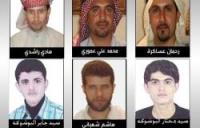
Six members of Iran’s Ahwazi Arab minority are due to go on trial in Iran on 20 May. The men were detained without charge for almost a year and all were arrested in connection with their activities on behalf of Iran’s Ahwazi Arab minority. It is feared they will not receive a fair trial and may be at risk of torture or other ill-treatment.


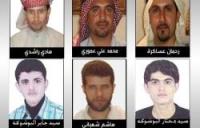
The six men, all from Khalafabad in Khuzestan province, south-west Iran, were arrested at their homes in February and March 2011 in advance of the sixth anniversary of widespread protests by Ahwazi Arabs in April 2005. Blogger Mohammad Ali Amouri, chemistry teacher Rahman Asakereh and teacher Hashem Sha’bani Amouri were arrested on 16 February. Teacher Hadi Rashidi (or Rashedi) was arrested on 28 February, and Sayed Jaber Alboshoka and his younger brother Sayed Mokhtar Alboshoka were arrested in March.

The men are now held in Karoun prison in the city of Ahwaz, Khuzestan province. At least four of them were denied access to a lawyer for at least eight months after arrest. In or around February 2012, they were all charged in separate five-minute court sessions with the vaguely-worded offences of “enmity against God and corruption on earth” (moharebeh va ifsad fil-arz), “gathering and colluding against state security” and “spreading propaganda against the system”. The charge of “enmity against God and corruption on earth” carries a possible death sentence. They are due to be tried before Branch 2 of the Dezful Revolutionary Court on 20 May 2012.

Mohammad Ali Amouri, who fled to Iraq in December 2007and was forcibly returned in January 2011, was reportedly tortured and otherwise ill-treated during his first seven months in detention. Hadi Rashidi was hospitalized after his arrest, apparently as a result of torture or other ill-treatment, and is said to be in poor health. According to their family, Sayed Jaber Alboshoka lost 10 kg and Sayed Mokhtar Alboshoka experienced depression and memory loss as a result of torture or other ill-treatment.

Please write immediately in Persian, Arabic, English or your own language:

Calling on the authorities to ensure that the men (naming them) are tried according to international fair trial standards and without recourse to the death penalty;

Urging them to make sure that the men are protected from torture and other ill-treatment, and that they are allowed regular access to lawyers of their choosing;

Calling on them to ensure that Hadi Rashidi and the other five men are given immediate access to adequate medical treatment.

Source: Freedom Messenger