Home Blog Page 489

Political Prisoner Hospitalized After Heart Condition

0


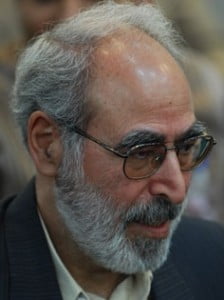
Prisoner of conscience Abdolfazl Ghadyani was transferred to the hospital after suffering a heart attack. Ghadyani’s wife, Marzieh Rahimi, told the International Campaign for Human Rights in Iran that it took prison authorities six days to transfer him to a different hospital as per her request.

On 8 February 2012, Ghadyani, 66, was hospitalized after he suffered from a heart condition. As soon as she learned of her husband’s condition,  she tried to facilitate his transfer to the hospital. “Mr. Ghadyani’s cellmates called us on the morning of 8 February to inform us that he had suffered a heart condition and was transferred to the hospital.  I called the offices of the Chief Warden and his Deputy, but none of them gave us a response and they said I should call the prison infirmary, but there was no response.  We had to call all Tehran hospitals to finally find out that he had been transferred to Modarres Hospital,” Rahimi told the Campaign. “But Mr. Ghadyani had been treated at another hospital for his heart condition before … so I went to the Prosecutor’s Office and asked them to transfer him to that hospital … but unfortunately, it took them six days to transfer him.”

On 9 January 2010, authorities arrested Abolfazl Ghadyani, and he was sentenced to one year in prison for “insulting the President” and three years for “insulting the Supreme Leader.” Ghadyani is now facing a new charge after he wrote an open letter to the Supreme Leader, criticizing him. He refused to attend his earlier two trials because they were held without a jury and in closed sessions.

Rahimi told the Campaign that her hospital visits with her husband have been difficult. “At Modarres Hospital, particularly, there were too many [security] forces present and we once had an argument with them, too. In this hospital, three agents watch him. Our visits last a few minutes and are held in a stressful atmosphere. None of us can speak freely. I went to the Prosecutor’s
Office and requested permission to have our visits in a more peaceful atmosphere. I was only able to visit my husband for five minutes today.”


Source: iranhumanrights

‘I was scared to death’ – German reporter recounts abuse as a prisoner in Iran


When German reporter Marcus Hellwig was thrown into an Iranian prison on spying allegations, it struck him as odd that the chair in the interrogation cell had no backrest.The reason soon became clear: “There was no backrest so that they could conveniently hit and kick people’s backs,” Hellwig told The Associated Press in his first interview with international media.

 The 46-year-old reporter for Germany’s mass-circulation Bild am Sonntag was arrested with his photographer after entering Iran on a tourist visa in October 2010 and interviewing the son of Sakineh Mohammadi Ashtiani, an Iranian woman sentenced to death by stoning for adultery in a case that generated international outrage.
Hellwig and photographer Jens Koch were split up and Hellwig said he was initially thrown into a plain 65 sq. foot (6 sq. meter) cell kept brightly lit 24 hours a day, but without a window or toilet. There was no furniture, only a carpet to lie on.Hellwig said he was held in a facility run by the Pasdaran, Iran’s feared Revolutionary Guard elite forces, and heard “terrifying cries” of inmates being abused every day.

“I was scared to death. Knowing that I was in a Pasdaran prison, with no lawyer or diplomatic assistance, outside of the official judicial system, they could have done anything to me,” he said. “This total insecurity was the worst — physical pain heals after a couple of hours.”

Hellwig’s book “Inshallah. Captive in Iran” — using the Arabic for “God willing” — is being released in German on Friday. There are no plans yet for an English edition.

He said his jailers kept constant pressure on him, initially taking him several times a day to the tiny interrogation cell, asking him the same questions, alleging at times that he was a spy or a terrorist — which could carry a death sentence under Iranian law. He consistently told them that he was only a journalist, but they beat him and urged him to cooperate or endure more suffering, he said.

“They ask you nice questions and then … all over sudden, boom, you get hit a first time, then comes the next hit — it’s all about breaking you,” he said.

“They don’t give you options, they give you the feeling they can do whatever they want.”

Every day, except the Muslim holy day of Friday, Hellwig heard the cries of other inmates being tortured even more severely.

“It started in the morning with toned-down cries, then loud, terrifying cries,” he said. “Never before in my entire life had I heard men capable of such cries.”

In his book, Hellwig describes being tortured with electric shocks. In one instance, a prison guard forced him to sit on a steel table before he came back with a cart loaded with batteries and cables.

“The man comes very close to me with the cart, takes a cable and pulls it up to my lips. Then I pass out,” Hellwig writes.

“A powerful shock goes through my body,” he describes another torture scene. “There is a thunderbolt, it races through my jaw, spreads frantically over my scalp, than back into the ears. Thundering Pain.”

In the interview, Hellwig said he still found the torture too difficult to talk about. “In the book I went as far and as close as I can without inflicting too much pain on myself,” he said.Judicial officials in Tehran could not be reached for comment on Hellwig’s account. Human rights group Amnesty International says “torture and other abuses of prisoners are daily routine and go unpunished” in Iran.

Hellwig and photographer Koch — who has not spoken to media since their release — were eventually found guilty of committing unspecified acts against Iran’s national security. But a court then threw out the journalists’ 20-month prison sentence, commuting it to a $50,000 fine.The two journalists were finally freed last year in February after German Foreign Minister Guido Westerwelle traveled to Tehran for a rare meeting with Iranian President Mahmoud Ahmadinejad, and brought the pair home on his government plane.

Iranian resistance groups cast Westerwelle’s Tehran visit as a propaganda victory for the Iranian regime.

But Hellwig defended the German government, saying it made no compromises on human rights.

“Germany’s foreign policy on Iran hasn’t changed by an iota,” Hellwig said. “Westerwelle discussed human rights violations with the Iranians during his talks.”

After he got home to Berlin, Hellwig said it was difficult for him to return to his normal life after months in a cell in the western Iranian city of Tabriz.

“I had great difficulties coping with the speed of things and all the impressions here again,” he said. “For some time, I couldn’t even fall asleep without light.”

For the time being, Hellwig said he has no intention of returning to Iran.

“Certainly not as long as the Mullahs rule the country,” he said, referring to Iran’s ruling Shia clerics. “Today I know what freedom really means.”

Meanwhile, Ashtiani remains behind bars.

She was convicted of adultery in 2006 following the murder of her husband. In July 2010, Iran suspended plans to carry out her death sentence by stoning following the international outcry. Authorities said in December she may be hanged instead of stoned.


Workers barred from running in elections

0


Alireza Mahjoub, the head of Iran’s House of Workers, says the new election law prevents workers from becoming representatives and getting into Parliament.

The Iranian Labour News Agency says the head of the House of Workers, who is also a representative in the current Parliament, spoke today at Allameh Tabatabai University, criticizing the newly approved election law. “Today, with the additional eligibility criterion that parliamentary nominees must have a graduate degree, only one percent of the population can actually run in elections, and this is completely unfair,” Mahjoub said.

Mahjoub said the elections have become too restrictive, and the Guardian Council should challenge the criteria.

He added that the House of Workers usually endorses candidates from its own ranks, but with the new eligibility criteria, it was not able to find even a handful of candidates in the nationwide workers’ community.

Last February, the Islamic Republic Parliament passed a law requiring parliamentary candidates to have a graduate or equivalent degree and five years of experience in a management or research and education capacity.

In the early years of the Islamic Republic, election candidates did not have to meet any academic criteria. However, the education bar has been steadily lifted in the years that followed.

Mahjoub added, however, that the House of Workers will endorse its own special candidates regardless.

All opposition groups, including reformists, have boycotted the coming parliamentary elections in March as a protest against the country’s oppressive political atmosphere and the widespread imprisonment of political activists, as well as the house arrest of opposition leaders MirHosein Mousavi and Mehdi Karroubi.

Source: radiozamaneh

Forty Days After Ruling, Soltani’s Verdict Still Not Served

0


Following a court trial on 8 January, an Iranian court has issued a ruling in the case of prominent Iranian human rights lawyer Abdolfattah Soltani, but the ruling document still has not been served because the court typist responsible for typing the ruling has gone on pilgrimage to Mecca. Soltani remains in the Intelligence Ministry’s Ward 209, and the judge has not issued bail orders.

“Thirty-eight days have passed since Mr. Soltani’s court date, but the court’s verdict has not yet been served. His lawyers believe this to be illegal and that the ruling should have been served within three to four days after the court session,” Soltani’s wife Massoumeh Dehghan told the International Campaign for Human Rights in Iran on Wednesday, 15 February.

“Keeping him in prison is illegal. He should have been released on bail until his definitive ruling was issued. I believe a will beyond the law has kept him in prison, so that he cannot conduct his life and his work, and his life is disrupted. His lawyers took steps to receive bail orders or to transfer him from [the Intelligence Ministry’s] Ward 209 to the General Ward, as this is a clear violation of the laws of the Islamic Republic. When investigations on a prisoner’s case are completed, his trial has also ended and he must be transferred to the General Ward, but I don’t know why this isn’t happening. The judge himself said, ‘I don’t want to issue bail orders; I don’t want to transfer him to the General Ward.’ I don’t know what the reason for this is, but as they refuse to transfer him to the General Ward, we have asked that they at least look into his health conditions, or to make books, pen, and paper available to him. But there is no word on any of these requests, either,” Dehghan told the Campaign.

Abdolfattah Soltani is a lawyer and co-founder of the Defenders of Human Rights Center, one of Iran’s leading human rights organizations created by Nobel Peace Prize Laureate Shirin Ebadi. He was arrested on 10 September 2011.

Soltani is charged with “propagating against the regime.” The reasons for this charge as stated in his indictment during his 8 January trial were: “being awarded the [2009] Nuremberg International Human Rights Award,” “interviewing with media about his clients’ cases,” and “co-founding the Center for Human Rights Defenders.” He did not attend his trial session, calling the court unqualified to review his case.

“Mr. Soltani did not attend his trial, because he believed that a closed session trial and lack of a jury had rendered the court disqualified. The judge said, ‘I will reflect all this and issue my ruling; you can defend yourself at the Appeals Court.’ But 38 days have gone by since then and the ruling has not yet been served. When Mr. Soltani’s lawyers pursued the matter a while back, the judge told them, ‘I issued the verdict, but it has not yet been typed and is currently inside the typist’s office.’ It was interesting when yesterday the lawyers again went to follow up, and they were told that the typist has gone to Mecca,” she told the Campaign.

Dehghan related her husband’s medical state and emphasized that her husband is being deprived of even basic prisoner rights.

“His psychological state is good, but he has lost weight and suffers from digestive track and intestinal illness. Stress is very harmful to him and his state of limbo with respect to his case compounds his stress,” Soltani’s wife said.

“I don’t know what medicine he is taking there now, but every time I took medicine for him, prison guards did not accept it and told me to write down the name of the medicines, so that they would provide him with those drugs. But Mr. Soltani said that they never gave him the drug names and the infirmary never gave him the medicine. I am concerned for his health. The Intelligence Ministry forces who arrested my husband are responsible for his life,” she added.

“I have written five letters to the [Tehran] prosecutor so far, asking him to observe Mr. Soltani’s rights. Since his arrest till now, we have not had any in-person visits with him. We visit with him through a booth once every two weeks; but [according to the law] the visitation should be once a week. Even his lawyers have never had in-person visits with him. The only thing he is allowed is to call home twice a week, and to talk for five to six minutes each time. I am only allowed to ask about his health,” said Dehghan.

In 2003, Abdolfattah Soltani co-founded the Center for Human Rights Defenders along with Shirin Ebadi, Mohammad Seifzadeh, Mohammad Ali Dadkhah, and Mohammad Sharif. He was the defense lawyer of many Iranian political and civil activists, including Akbar Ganji, Haleh Esfandiari, Zahra Kazemi’s family, Zahra Baniyaghoub’s family, several Nationalist-Religious activists, and members of the Tehran Bus Company Workers’ Union. He was arrested once before in 2009, and was released after more than two months in prison.


Source: iranhumanrights

UK’s Hague fears Iran nuke ambitions could trigger new Cold War

0


Iran’s nuclear ambitions could trigger “a new Cold War” more perilous than that between the West and the Soviet Union, British Foreign Secretary William Hague said in an interview published on Saturday.

Hague said Iran obtaining a nuclear bomb would spark an atomic arms race between rival Middle Eastern nations that could be more dangerous than the original Cold War because the old “safety mechanisms” are missing.

“If (the Iranians) obtain nuclear weapons capability, then I think other nations across the Middle East will want to develop nuclear weapons,” he told Britain’s Daily Telegraph newspaper.

“The most serious round of nuclear proliferation since nuclear weapons were invented would have begun with all the destabilizing effects in the Middle East,” he continued.

“And the threat of a new Cold War in the Middle East without necessarily all the safety mechanisms… would be a disaster in world affairs.”

Iran faces four sets of U.N. sanctions and a raft of unilateral U.S. and EU sanctions designed to halt a program the West fears conceals a drive for nuclear weapons.

Tehran denies this charge, saying its nuclear project is for purely peaceful purposes.

Western powers have been pressing Tehran to hold substantive talks on its nuclear program and want it to halt its uranium enrichment, but Iran says it has an absolute right to press ahead with its plans.

In response to feverish speculation in recent weeks that Israel is preparing to mount a pre-emptive strike on Iran’s nuclear program, Hague said Iran being “attacked militarily” would have “enormous downsides”.

“We are very clear to all concerned that we are not advocating military action,” he told the Telegraph.

“We support a twin-track strategy of sanctions and pressure and negotiations on the other hand.”

“We are not favoring the idea of anybody attacking Iran at the moment,” he added.”

Earlier Friday, U.S. Secretary of State Hillary Clinton and the European Union’s foreign policy chief Catherine Ashton voiced cautious optimism about the prospect for Iran to return to stalled nuclear talks with six world powers.

In a February 14 letter to Ashton, Iran’s chief nuclear negotiator Saeed Jalili said Tehran is ready to resume talks at the “earliest” opportunity as long as the six powers respect its right to peaceful atomic energy.

Source: alarabiya

Israel Says Iran, Hezballah Plotting Attacks Against Israelis Abroad

0


Israel’s counterterrorism bureau says Iran and its ally, the Lebanese Shi’ite movement Hizballah are plotting attacks against Israelis and Jews worldwide.

The warning follows a series of recent attacks and attempted attacks against Israeli diplomats in India, Georgia and Thailand.

In a statement, the bureau warned Israelis abroad to be vigilant and to pay attention to local security guidelines.

A blast caused by an explosive device attached to an Israeli embassy car in New Dehli, injured a diplomat’s wife on February 13.

Two attempted bombing attacks targeted Israeli diplomats this week in Georgia and Thailand.

Israel blames Iran and Hizballah for the incidents.

Iran and Hizballah have denied any involvement.


Source: rferl

U.S. imposes sanctions on Iran’s intelligence ministry for terror ties

0


The United States has accused Iran of supporting terrorism, abusing the human rights of Iranian citizens and fueling the Syrian government’s crackdown on dissent, a U.S. official announced on Thursday.

The accusations have led to U.S. sanctions set to be imposed against Iran’s Ministry of Intelligence and Security (MOIS).

“Today we have designated the MOIS for abusing the basic rights of Iranian citizens and exporting its vicious practices to support the Syrian regime’s abhorrent crackdown on its own population,” David Cohen, the U.S. Treasury’s under secretary for terrorism and financial intelligence, said in a statement.

“In addition, we are designating the (Ministry) for its support to terrorist groups, including al-Qaeda, al-Qaeda in Iraq, Hezbollah and Hamas, again exposing the extent of Iran’s sponsorship of terrorism as a matter of Iranian state policy,” Cohen added.

To date the U.S. response had been limited to accusations that weapons and advice was flowing between the Middle Eastern allies.

But Thursday’s concrete action is likely to further inflame tensions between Washington and Tehran.

In recent months a long-running dispute over Iran’s nuclear program and its alleged support for Hezbollah has been augmented with tit-for-tat threats of economic sanctions and a series of attacks around the globe which some say Iran perpetrated.

They include a plot to assassinate Saudi Arabia’s ambassador in Washington and a series of bombings in India, Georgia and Thailand.

The move is the latest in a series of steps the United States has taken to increase pressure on Iran over its nuclear program, which Tehran says is for peaceful purposes.

It bars MOIS officials from travelling to the United States, blocks any property MOIS owns in the United States and prevents U.S. citizens or companies from dealings with MOIS.

Predicting the Iranian response

U.S. intelligence agencies predict that Iran will respond if attacked but is unlikely to start a conflict, and they believe that Israel has not taken a decision to strike Iranian nuclear sites, a top U.S. intelligence official said on Thursday.

With those comments, Lieutenant General Ronald Burgess, director of the Defense Intelligence Agency, answered two key questions surrounding escalating tensions with Iran after the United States increased sanctions over its nuclear program.

Burgess also said that despite the ratcheting up of sanctions on Iran, the country’s leaders are unlikely to abandon their suspected nuclear weapons program.

Iran responded to the new sanctions that target its central bank and oil exports by threatening to close a key oil shipping lane. There have also been concerns that Israel might strike Iranian nuclear facilities and escalate tensions further.

The West suspects Iran’s nuclear program is aimed at developing weapons, while Tehran says it is peaceful.

“Iran can close the Strait of Hormuz at least temporarily, and may launch missiles against United States forces and our allies in the region if it is attacked,” Burgess told a Senate Armed Services Committee hearing.

“Iran could also attempt to employ terrorist surrogates worldwide. However, the agency assesses Iran is unlikely to initiate or intentionally provoke a conflict,” he said.

Asked bluntly whether intelligence agencies believed Israel had made a decision to attack Iran, Burgess replied: “To the best of our knowledge Israel has not decided to attack Iran.”

On the sanctions, Burgess said Iran was nowhere near giving up its nuclear aspirations.

“Iran today has the technical, scientific and industrial capability to eventually produce nuclear weapons. While international pressure against Iran has increased, including through sanctions, we assess that Tehran is not close to agreeing to abandoning its nuclear program,” Burgess said.

Source: alarabiya

Death sentence proceeds for software designer

0


The death sentence for Saeed Malekpour has been forwarded to the enforcement branch of the Iranian judiciary.

The Human Rights House of Iran (RAHANA) reports that Malekpour, a software designer charged with creating indecent and pornographic websites, is now in imminent danger of being hanged. His lawyers have reported that his sentence has been delivered for execution.

In June, 2011, Malekpour’s death sentence was annulled after his lawyer disputed the charges against him and criticized the unjust sentencing. The Supreme Court acknowledged the discrepancies in the case and called for further investigation.

According to RAHANA, “In an illegal proceeding, Branch 28 of the Revolutionary Court, with no warning and without adhering to the Supreme Court’s recommendations, reinstated the death sentence.”

Malekpour, 35, is a resident of Canada and was arrested in Iran three years ago when he had travelled there on a visit.

After his arrest, state television aired his alleged confessions to the crimes; however, Malekpour has since recanted, saying the confessions were extracted during torture and physical abuse.

Source: radiozamaneh

Regime Exposes its Fear of People Again

0


In response to calls by political groups to gather in streets of Iranian cities and towns on February 14 and hold silent marches, and amid the intense presence of security forces to confront opposition demonstrations, Iranian expatriates also participated in gatherings in solidarity with the Green Movement and issued statements calling for the release of Mehdi Karoubi, Mir-Hossein Mousavi and Zahra Rahnavard.

Tehran Occupied by Government Agents

The major streets of Tehran were heavily populated with the police and security agents because of the calls by green movement activists to hold protest demonstrations. Security forces began to position themselves on Azadi and Engelab avenues – the main thoroughfares in the capital that are traditionally used by protestors and government marchers – around noon but were soon joined by plain-clothes agents, until about 9pm after which they began to thin out.

Other spots in the capital that witnessed heavy police presence were Azadi Circle – usually the end point of all major demonstrations in Iran – Enghelab Square, Vali Asr Intersection, Kalej Intersection and Ferdowsi Circle. There were about 400 to 500 government forces in each of these spots while Azadi Circle clearly had the largest security presence greater than these estimates.

In some spots such as Ferdowsi Circle Metro station, Vai Asr Intersection Metro station, Tohid Metro Station and Azadi Street Metro station agents had positioned cameras enabling them to video record people as they walked in and out of the station. At about 5PM, cars began to honk, and as their numbers grew government agents moved to the streets to video passing by cars.

Police presence was not confined to the main streets of Tehran as smaller streets that led to the main arteries were also populated with police and security forces. Most of these forces remained in parked buses and mini-buses which were parked on side streets, enabling them to rapidly congregate in specific areas where protestors may have gathered. At the Enghelab Street Bus Terminal too there were several parked buses loaded with security forces. The courtyards of most government agencies on the main Ferdowsi Circle to Azadi Circle stretch were also filled with security agents.

In addition to the police and other security forces, plain-clothes agents were also present at the same scenes and were easily identifiable because of their proximity and behavior even though they did not wear any uniform.

Two groups of 50 motorcycles each and driven by security agents also plied the main Ferdowsi to Azadi stretch in a routine and highly visible manner. These red bikes were driven by identically dressed and helmeted riders. In addition to these riders, there were also plain-clothes riders who roamed the main Ferdowsi-Azadi street in groups of 10 to 15. There was also a third group of security motorbike rider groups who continuously dodged between cars and the traffic in a highly visible and noisy fashion and swayed in and out of bus-designated street lanes.

But perhaps the most visible security agents were those plain-clothes agents who mingled on the sidewalks. Their behavior and even appearance clearly identified them and people who recognized these agents openly passed that information to others walking around them. There were also instances when agents were in hot pursuit of somebody in the streets as the public witnessed a cat and mouse run which also identified the plain-clothes agents. Many agents wore masks to hide their identity, revealing their affiliations and status.

Until 4PM, the flow of people on the main streets appeared normal. After that however, crowds grew larger. For example, the crowds of people on the stretch between Kalej Intersection and Engelab Circle were estimated to be about three to four times larger than normal. One could even recognize some people who had been seen minutes earlier in other parts of the city. The stretch between Engelab Circle and Daneshjoo Park became so crowded and security-controlled after 4PM that it was almost impossible to remain there as agents ordered people to move on and not remain stationary in one spot. People did not remain on the sidewalks and many ventured into the bus lanes from where they could watch events easier and also maneuver if necessary.

Vehicle traffic became denser gradually so that by about 5PM it was moving very slowly and buses would drop off their passengers wherever they could, between bus stops.

Sometime after 5PM news came that clashes had taken place in some spots of the city such as Fatemi Circle and Vanak Circle, and security agents used tear gas to disperse protestors. And as the size of crowds grew, it was almost impossible to walk through some stretches such as street between Enghelab Circle and Vali Asr Circle. At this point, security agents were reported to have formed two lanes on either side of the sidewalk, terrorizing people who walked on the pedestrian sidewalk along the street. In some spots this led to clashes and fights between the agents and the public.

Throughout the march, people remained silent and no chants or slogans were heard. Even their normal communication was limited as they tried to avoid the attention of the security forces around them.

Agents detained many people as darkness approached and took the detainees to spots designated for temporary detention until the end of the protest. One highly visible temporary detention spot was the Jamalzadeh Street Intersection where about 500 detainees could be seen at one time. When anyone was detained by security agents, they would be walked to parked police vans and then transferred to the pre-designated temporary detention spots.

The only time the public demonstrated any loud verbal protest was when someone was taken to a parked police vans and the public would respond with a loud “boo.” In one instance when some people were brought to the Azadi Street Parking, people booed the agents and nearby cars began honking their cars.

As the evening progressed, vehicular traffic became so dense that even security driven motorcycles could not move around on the streets. This led them to park their bikes at some lesser crowded spots and remain stationary but ready to be summoned to a particular trouble spot.

The protestors had come to the streets on calls by green movement activists and political groups such as the Mojahedin Enghelab Eslami (The Mojahedin of the Islamic Revolution) and the Shoraye Hamahangi Rahe Sabz (The Coordinating Council for the Green Path). Amnesty International had earlier called on the Iranian authorities to allow people to hold demonstration on this day. Government officials however did not issue a permit for this demonstration, which was not to the surprise of anyone. Also, text messaging services were temporarily unavailable for a few hours during the evening.

Government officials had made varying remarks about the day earlier. Attorney general Gholam-Hossein Ejei for example said a day earlier that public gatherings were related to their seasonal shopping rush. Last year, as similar demonstrators poured into the streets of cities, government and regime officials declared them to be related to the annual shopping rush that is normal during the Persian new year which falls on March 21.

Form Revolutionary Guards commander and current secretary of the State Expediency Council also remarked that people were smarter than to respond to calls by a bunch of “hypocrites” to demonstrate against the regime on the streets. Hypocrites is a term Iranian officials normally use for the Mojahedin Khalq Organization whose leaders remain outside the country.

Bulletin News website affiliated to security forces editorialized on the peaceful marches by saying that its purposes were to “re-establish the leadership position of Mousavi and Karoubi, expand the domestic protest front, boycott upcoming elections, neutralize the February 11 official celebrations marking the anniversary of the 1979 revolution, and prompting a security situation for the country.”

Principlist media mostly kept silent on the demonstrations and the calls of protest activists and leaders. The only exception till the writing of this report was the Bashgahe Khabarnegaran Javan website (Club of Young Journalists) which commented on a BBC report about the demonstrations in the country but denounced it in harsh language.


Source: insideofiran

An election campaign built on terrorism? Welcome to Iran

0


Iranian nuclear threats and bomb plots might win popularity in Tehran, but they will backfire.

In two weeks’ time, millions of Iranians will cast their votes to elect a new parliament. So we should hardly be surprised that the final stages of the election contest have been marked by a sudden surge in anti-Western hostility from Tehran.

Over the past few months, Iran has tried to murder a Saudi diplomat in Washington, threatened to close the all-important Strait of Hormuz shipping lane through the Gulf, and warned the EU that it is going to impose its own oil embargo. And now it has unleashed a series of terrorist attacks against Israel’s diplomatic missions around the world.

As is their custom, the Iranians have denied any involvement in this week’s spate of attacks, which has seen Israeli diplomats targeted in Georgia, India and, most recently, Thailand. The Iranians are, of course, past masters at covering their tracks. Despite the enormous amount of intelligence-based evidence that pointed to Iran’s complicity for the 1988 Lockerbie bombing, there was never sufficient material to build a convincing prosecution case.

I suspect Tehran will have a far more difficult job persuading the Thai authorities that it had nothing to do with the attempted assassination of two Israeli diplomats in Bangkok this week. Even if you ignore the fact that the detained bombers, one of whom managed to blow off his own legs in the failed attack, were clearly Iranian, the Thais have also uncovered a mountain of evidence – including 4.5 tons of home-made explosives – to suggest that Iran was planning a far larger terrorist campaign in a tourist destination popular with young Israelis.

Similarly, Iran’s elaborate attempts to cover its tracks during last year’s failed plot to murder Saudi Arabia’s ambassador to Washington, as he dined at a Georgetown restaurant, have badly backfired. The Iranians hired a Mexican drug cartel to do their dirty work, only for their efforts to be exposed by an American double agent. Iran’s Islamic revolutionaries are getting careless in their old age.