Home Blog Page 488

‘Upcoming elections lack minimum conditions’ say former MPs


A group of former Iranian lawmakers have called on the Secretary-General of the Inter-Parliamentary Union to take action in light of the Islamic Republic’s violation of the Union’s principles.

Established in 1889, the IPU is a transnational organisation with its headquarters in Geneva. It seeks to promote democracy by strengthening the institution of parliament.

In a letter to the IPU’s Secretary-General Anders B. Johnsson, the former members of the Iranian parliament (or Majlis) said that the “arbitrary” imprisonment of several former MPs as well as holding “completely flawed and engineered elections” constituted the Iranian regime’s “two major violations” of the Union’s charter.

The letter’s publication comes two weeks before Iran is scheduled to hold parliamentary elections on 2 March. Many expect the vote to be overshadowed by a planned boycott by opposition groups, including the country’s most prominent pro-reform parties, the Mujahedin of the Islamic Revolution Organisation and the Islamic Iran Participation Front, many of whose members are either in prison or awaiting jail time.

Last Tuesday marked the first year anniversary of the house arrest of former parliament speaker Mahdi Karroubi. The outspoken cleric was placed under house arrest in mid-February 2011 after he and fellow Green Movement leader Mir Hossein Mousavi called for protests in solidarity with the Arab Spring. “He has been imprisoned inside a rental property and does not have access to basic rights such as access to fresh air, available to regular prisoners,” the parliamentarians’ letter stated.

They say that Iranian authorities have violated another article of the Union’s principles by refusing to hold fair and free elections. “By holding completely flawed and engineered elections, the Islamic Republic of Iran has created an atmosphere that does not provide any guarantees for holding untainted free and fair elections. This has deprived a majority of Iranian people, including many in the political class, from participating in the elections.”

The former parliamentarians urged Johnsson take “necessary actions” in order to “point out and pursue this issue and to prevent further violations of the rights of Iranian citizens.” They described the upcoming elections as lacking “the minimum conditions for competition and will be held within the regime’s inner circle. Those who win these elections can be construed as government puppets inside the Parliament, rather than symbols of national will.”

“Unfortunately … despite joining the Union, the Islamic Republic of Iran not only has not taken any steps to coordinate Iran’s laws and practices with the principles and standards of the Inter-Parliamentary Union, in some cases it is not even willing to follow the Iranian Constitution and statutory law,” the former MPs added.

Iranian naval ships dock in Syria

0


Two Iranian naval ships have docked at the Syrian port of Tartous, Iran’s state-run Press TV reported on Monday, in a development likely to raise concern in the West.

Israel’s foreign ministry said it would be watching the ships closely after the report was published.

“The two ships, one which is a supply vessel and the other a destroyer have docked in Tartus, a port city north west of Damascus, and as per a bilateral agreement they will be involved in training the Syrian navy,” the report said.

Iran’s navy chief, Admiral Habibollah Sayari, said on Saturday that Iranian ships “have passed through the Suez Canal for the second time since the (1979) Islamic Revolution.”

Their passage was to to show Iran’s military “might,” he said, without giving details of their mission.

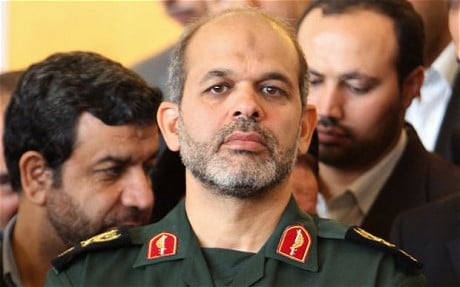
On Monday, Iranian Defence Minister Ahmad Vahidi said the transit of the two ships through the Suez Canal into the Mediterranean “is a symbol of our nation’s marine capability.”

“The presence of Iranian warships in the high seas is Iran’s natural right,” Vahidi was quoted as saying by the official IRNA news agency.

The deployment comes amid heightened tensions between Iran and Israel, fuelled by a longstanding dispute over Tehran’s nuclear programme. Speculation has been rising that Israel might launch air strikes against Iranian atomic facilities.

The Israeli foreign ministry has said it “will closely follow the movement of the two ships to confirm that they do not approach the Israeli coast.”

The first time Iran sent warships into the Mediterranean, in February 2011, it provoked strong reactions from Israel and the United States, with the Jewish state putting its navy on alert.

During the 2011 deployment, two Iranian vessels, a destroyer and a supply ship, sailed past the coast of Israel and docked at the port of Latakia in allied Syria before returning to Iranian waters via the Red Sea.

As Syria teeters on the brink of civil war, there are fears the Islamic Republic is poised to increase its sphere of influence in the region. Tehran is one of Syrian president Bashar al-Assad’s few friends left in the Middle East, but it is a powerful one.

“Syria is at a critical point,” said Nabil Abdel Fattah, a political analyst with the Al-Ahram Centre for Political and Strategic Studies in the Egyptian capital.

The situation there “risks creating waves of instability in the region, like in Lebanon, Israel, Iraq, Turkey or Jordan,” its neighbouring states, he told AFP.

In Syria on Monday, activists voiced fears of an all-out assault on Homs, with the embattled regime building up troops around the flashpoint city and activating a security alert in Damascus after surprise protests.

The reported buildup comes as the top US military officer, General Martin Dempsey, warned any intervention in Syria would be “very difficult” and that it was “premature” to arm the unrest-swept country’s opposition movement.

Activists and Syrian state media reported that at least 14 people were killed on Sunday, adding to the more than 6,000 people who have died in the Syrian government’s 11-month crackdown on dissent.

“Infantry troops arrived yesterday (Sunday) in Homs,” Rami Abdel Rahman, head of the Britain-based Syrian Observatory for Human Rights, told AFP on the phone Monday.

A Homs-based activist voiced fears of an imminent attack on Baba Amr, the main rebel stronghold in the central city, speaking of “unprecedented military reinforcements coming from Damascus.”

“News has been leaked to us from army officers about a bloody attack that will burn everything in Baba Amr,” Hadi Abdullah of the General Commission of the Syrian Revolution said on Sunday.

“We were expecting the attack two nights ago, but it could have been just delayed because of the snowstorm,” he said.

Abdullah said regime forces pounded the defiant city for the 15th straight day on Sunday, with Baba Amr being shelled at the rate of four to five rockets a minute.


Source: telegraph

10 prisoners arrested during 25 Bahman protests on hunger strike in Evin prison

0


Gholam Hossein Ghasemi, Hamid Abedini, Ali Azad, Toofan Hatefi, Massoud Kermi, Hamed Aslani, Mohsen Moradi, Mohammad Ali Abdali, Gholam Hossein Azari Najfabadi and Ali Shekarji are 10 prisoners who were detained during anti-government protests on 25 Bahman (February 14), and are still being held behind bars in Evin prison.

Human Rights House of Iran reports that these 10 citizens are being held in Ward 7 of Evin prison, which houses violent offenders. They have embarked on a hunger strike in protest of being kept in this ward among criminals.

Among these prisoners, Ali Shekarji started his hunger strike 3 days ago and was transferred to solitary confinement after objecting to the behavior of the violent felons. As a result, the 9 other detainees also embarked on a hunger strike in a show of support.

Massoud Kermi is a Norwegian-Iranian citizen who had returned to Iran after 20 years of living abroad. He returned to the country to protest the illegal detention and house arrest of the leaders of the Green movement; Mir-Hossein Mousavi, Zahra Rahnavard, and Mehdi Karroubi.

Supporters of the Green Movement whose leaders are under house arres, had called people to the streets to commemorate 25 Bahman (February 14) and protest the illegal detainment of their leaders. But as crowds attempted to gather in cities across the country, they were met by a heavy presence of security forces blocking their movement and making scores of arrests.

Source: insideofiran

Security agents kidnap prisoner on hunger strike from hospital bed

0


Imprisoned Iranian blogger and publisher Mahdi Khazali has suffered a heart attack, more than forty days after he first began his hunger strike, according to reports.

Kaleme, a website associated with opposition leader Mir Hossein Mousavi, reported on Saturday that Khazali had initially been transferred to the infirmary of the notorious Evin Prison after cardiac complications. He was then taken to the critical-care unit at Tehran’s Taleghani hospital. Hours later, security forces entered the hospital and took Khazali to an unknown location. This was done without any coordination with the medical staff, who could do nothing but stand idly by and bear witness to the agents’ actions.

Khazali was violently arrested by security forces on 9 January, during which his arm was broken. While in detention, prison authorities reportedly refused to take him to the Medical Examiner’s Office, despite the family’s request.

Almost immediately after his arrest, Khazali began a strike to protest the illegal nature of his arrest and detention.

On the 33rd day of his father’s strike, Mahdi Khazali’s son Mohammad Saleh Khazali told theInternational Campaign for Human Rights that after he was suffering stomach bleeding, prison authorities “transferred him from Evin Prison’s Ward 209 to the General Ward (350), and he was taken to the infirmary.”

“After two weeks of refusing to let him have visitors, we were finally able to visit with him with a letter from the prosecutor. He had lost a lot of weight. He was in very poor condition, and unfortunately, since that day we don’t know about his condition,” he told the campaign at the time. He also recently toldKaleme that “we know he won’t back down from the hunger strike, and there’s nothing we can do to [stop him] and we can only pray for him on this path.”

“Instead of asking me to end my strike, ask them [the authorities] to end these illegal imprisonments,” he wrote in a letter to the wives of Iran-Iraq war heroes Mohammad Ebrahim Hemmad and Hamid Bakeri.

In February, Branch 26 of Tehran Revolutionary Court, presided over by Judge Pirabbasi, sentenced Mehdi Khazali to fourteen years in jail in the southern Iranian city of Borazjan, ten years in exile in the same city, and ninety lashes, allegedly for his interview with the BBC’s Persian service and writing a letter to Supreme Leader Ali Khamenei.

The resilient blogger, publisher and physician has thus far not heeded to calls from a number of prominent figures, as well as his wife, to cease his hunger strike, stating he is prepared for “martyrdom” and will continue until “justice prevails.”

“It is unkind, witnessing your wife and children mourning your gradual, yet will full death,” Khazali wrote in a letter to his wife. “My dears; today, our tears, like those of Hussein, son of Ali, must be the source of simmering [concern], change, effort and struggle … We must turn into a flood that outroot injustice and oppression, so let us shed tears over and over again. These tears will eradicate the oppressor,”

On the 36th day of his strike, Khazali sent another letter to Ahmad Montazeri, son of the late Grand Ayatollah Montazeri, describing the injustices and horrors faced by many of the inmates he encountered in Evin Prison. “Amongst us, there are prisoners from the 80s who have survived the massacre of [political prisoners in] 1988. When they speak of the situation in those days, the hair on one’s body stands erects,” Khazali noted, highlighting the gruesome conditions in Iran’s prisons in that period.

“Now I see what would have become of us, had your father not existed. Here, all prisoners pray for your father.”

Dissident cleric Grand Ayatollah Hussein Ali Montazeri, was the designated successor to the leader of Iran’s revolution until spring 1989 when he was removed from his position for denouncing the sudden, mass execution of political dissidents the previous year. “These mass executions … violate the fundamental principles of Islam, the Holy Prophet, and our Imam Ali,” he wrote in a letter to Imam Khomeini. Considered by many as the Green Movement’s spiritual leader, the cleric was a constant thorn in the sight of Iran’s ruling elite until his death in December 2009.

Khazali described many of the treatments by Iranian prison wardens and interrogators as contrary to the Islamic law. “Religious and moral codes are never observed,” he writes, maintaining that torturers showed no respect for the prisoners’ Islamic beliefs.

The Khazalis are a familiar name in Iran. Mahdi, best known for the anti-government views he regularly expressed on his weblog, has been imprisoned a number of times in the past two and a half years. His most recent arrest came in July 2011 when he was held in Evin for 27 days.

His father, Ayatollah Abolghasem Khazali, is an influential cleric and member of the Assembly of Experts, the body with the authority to dismiss or appoint the leader. In strike contrast to his son’s critical views, Ayatollah Khazali is seen as a staunch supporter of Iran’s ruling elite, especially the Supreme Leader Ali Khamenei. He has openly distanced himself from his son’s positions on a number of occasions.

Kaleme, a website associated with opposition leader Mir Hossein Mousavi, reported on Saturday that Khazali was initially transferred to the infirmary of the notorious Evin Prison after cardiac complications. He was then taken to the critical-care unit at Tehran’s Taleghani hospital. Hours later, security forces entered the hospital and took Khazali to an unknown location. This was done without any coordination with the medical staff who could do nothing but to stand idly by and bear witness to the agents’ actions.

Khazali was violently arrested by security forces on 9 January, during which his arm was broken. While in detention, prison authorities reportedly refused to take him to the Medical Examiner’s Office, despite the family’s request.

Almost immediately after the start of his arrest, Khazali began a strike to protest the illegal nature of his arrest and detention.

On the 33rd day of his father’s strike, Mahdi Khazali’s son Mohammad Saleh Khazali told the International Campaign for Human Rights that after he suffering stomach bleeding, prison authorities “transferred him from Evin Prison’s Ward 209 to the General Ward (350), and he was taken to the infirmary,”

“After two weeks of refusing to let him have visitors, we were finally able to visit with him with a letter from the prosecutor. He had lost a lot of weight. He was in very poor condition, and unfortunately, since that day we don’t know about his condition,” he told the campaign at the time. He also recently toldKaleme, that “we know he won’t back down from the hunger strike, and there’s nothing we can do to [stop him] and we can only pray for him on this path.”

“Instead of asking me to end my strike, ask them [the authorities] to end these illegal imprisonments,” he wrote in a letter to the wives of Iran-Iraq war heroes Mohammad Ebrahim Hemmad and Hamid Bakeri.

In February, Branch 26 of Tehran Revolutionary Court, presided over by Judge Pirabbasi, sentenced Mehdi Khazali to fourteen years in jail in the southern Iran, ten years in exile in the same city and ninety lashes, allegedly for his interview with the BBC’s Persian service and writing a letter to the Supreme Leader Ali Khamenei.

The resilient blogger, publisher and physician has thus far not taken heed to calls by a number of prominent figures, as well as his wife, to cease his hunger strike, stating he is prepared for “martyrdom” and will continue until “justice prevails.”

“It is unkind, witnessing your wife and children mourning your gradual, yet willful death,” Khazali wrote in a letter to his wife. “My dears; today, our tears, like those of Hussein, son of Ali, must be the source of simmering [concern], change, effort and struggle … We must turn them into a flood that uproot injustice and oppression. So let us shed tears over and over again. These tears will eradicate the oppressor.”

On the 36th day of his strike, Khazali sent another letter to Ahmad Montazeri, son of the late Grand Ayatollah Montazeri, describing the injustices and horrors faced by many of the inmates he encountered in Evin Prison. “Amongst us, there are prisoners from the 80s who survived the massacre of [political prisoners in] 1988. When they speak of the situation in those days, the hair on one’s body stands erects,” Khazali noted, highlighting the gruesome conditions in Iran’s prisons in that period.

“Now I see what would have become of us had your father not existed. Here, all prisoners pray for your father.”

Dissident cleric Grand Ayatollah Hussein Ali Montazeri, was the designated successor to the leader of Iran’s revolution until spring 1989, when he was removed from his position for denouncing the sudden, mass execution of political dissidents the previous year. “These mass executions … violate the fundamental principles of Islam, the Holy Prophet, and our Imam Ali,” he wrote in a letter to Imam Khomeini. Considered by many as the Green Movement’s spiritual leader, the cleric was a constant thorn in the side of Iran’s ruling elite until his passing in December 2009.

Khazali described many of the treatments by Iranian prison wardens and interrogators as contrary to the Islamic law. “Religious and moral codes are never observed,” he writes, maintaining that torturers showed no respect for the prisoners’ Islamic beliefs.

The Khazalis are a familiar name in Iran. Mahdi, best known for the anti-government views he regularly expressed on his weblog, has been imprisoned a number of times in the past two and a half years. His most recent arrest came in July 2011 when he was held in Evin for 27 days.

His father, Ayatollah Abolghasem Khazali, is an influential cleric and member of the Assembly of Experts, the body with the authority to dismiss or appoint the Leader. In striking contrast to his son’s critical views, Ayatollah Khazali is seen as a staunch supporter of Iran’s ruling elite, especially Supreme Leader Ali Khamenei. He has openly distanced himself from his son’s positions on a number of occasions.

Israel to deploy battery of rocket interceptors; Iran stages land military exercises

0


The Israeli military will on Monday deploy a battery of rocket interceptors from its “Iron Dome” system in the Tel Aviv region, a military spokesman said on Sunday, as Iran began land military exercise to upgrade its capabilities to defend the country against possible external threats.

“Iron Dome is being incorporated into the heart of the Israeli military. As part of this process, the system is deployed in different sites and will be in the Gush Dan region (of Tel Aviv) in the coming days,” he said in a statement that clarified the deployment would begin on Monday.

This deployment “is part of the annual training plan for this system,” he added, according to AFP.

The decision to deploy an Iron Dome battery at Tel Aviv comes amid heightened regional tensions and speculation about a possible Israeli attack targeting Iran’s controversial nuclear program.

Two Iranian warships also entered the Mediterranean at the weekend, and were within striking distance of Israel.

Israel has denied that a decision has been taken to launch a pre-emptive strike on Iranian nuclear facilities.

The first battery of the unique multi-million-dollar Iron Dome system was deployed last March 27 outside the southern desert city of Beersheva, after it was hit by Grad rockets fired by Palestinian militants in the Gaza Strip.

On April 4, the system was also deployed around the southern port city of Ashkelon.

Meanwhile Israel reportedly is coming under increased pressure from Washington and Europe to hold off from attacking Iran over its disputed nuclear drive and allow time for a regime of tight international sanctions to kick in.

Pressure is being exerted from all directions, officials acknowledge, with Washington’s concern over a pre-emptive Israeli strike reflected in the steady stream of senior officials arriving in Jerusalem for top-level talks.

The latest visitor was U.S. National Security Adviser Tom Donilon, who on Sunday held a two-hour meeting with Prime Minister Benjamin Netanyahu, and held similar in-depth talks with Defense Minister Ehud Barak, whose “hawkish line” on Iran is worrying Washington, Haaretz newspaper reported on Monday.

Later this week, U.S. intelligence chief James Clapper is also due to arrive, press reports said.

Barak, Netanyahu’s de facto deputy, has been “summoned” to Washington next week, media reports said, ahead of a visit by the premier himself on March 5.

Iran raid seen as huge task for Israel

The first of its kind in the world and still at the experimental stage, it is not yet able to provide complete protection, but it has successfully brought down several rockets fired from Gaza.

Designed to intercept rockets and artillery shells fired from a range of between four and 70 kilometers (three and 45 miles), Iron Dome is part of an ambitious multi-layered defense program to protect Israeli towns and cities.

Two other systems make up the program ─ the Arrow long-range ballistic missile defense system and the so-called David’s Sling, or Magic Wand, system, intended to counter medium-range missiles.

A report carried out by the New York Times on Sunday mentioned that should Israel decide to launch a strike on Iran, its pilots would have to fly more than 1,000 miles across unfriendly airspace, refuel in the air en route, fight off Iran’s air defenses, attack multiple underground sites simultaneously — and use at least 100 planes.

An Israeli attack on Iran would be a huge and highly complex operation, the New York Times reported citing American defense officials and military analysts close to the Pentagon, who described it as far different from Israel’s “surgical” strikes on a nuclear reactor in Syria in 2007 and Iraq’s Osirak reactor in 1981.

“All the pundits who talk about ‘Oh, yeah, bomb Iran,’ it ain’t going to be that easy,” said Lt. Gen. David A. Deptula, who retired last year as the Air Force’s top intelligence official and who planned the American air campaigns in 2001 in Afghanistan and in the 1991 Gulf War.

“I don’t think you’ll find anyone who’ll say, ‘Here’s how it’s going to be done — handful of planes, over an evening, in and out,’ ” Andrew R. Hoehn, a former Pentagon official who is now director of the Rand Corporation’s Project Air Force, was quoted as saying. Rand Corporation’s Project Air Force does extensive research for the United States Air Force.

Michael V. Hayden, who was the director of the Central Intelligence Agency from 2006 to 2009, said last month that airstrikes capable of seriously setting back Iran’s nuclear program were “beyond the capacity” of Israel, in part because of the distance that attack aircraft would have to travel and the scale of the task.

Iranian military exercise

Iran’s Revolutionary Guard, meanwhile, said it has begun a two-day land military exercise to upgrade its capabilities to defend the country against possible external threats, according to The Associated Press.

Commander of the Guard’s ground forces Mohammad Pakpour said on comments posted on the force’s website sepahnews.com that the maneuvers dubbed Valfajr, or Dawn, began Sunday outside the city of Yazd in central Iran.

The Guard is Iran’s most powerful military unit.

The exercises are the latest in a series of maneuvers held amid escalating tensions between Iran and the West over Iran’s nuclear program.

The U.S. and Israel have not ruled out military strikes against Iran’s program, which they say aims at developing weapons technology. Iran says the program is for peaceful purposes.

IAEA team heads to Iran

Iran, meanwhile, will host a high-level team from the U.N. nuclear watchdog on Monday as part of efforts to defuse dire international tensions over its atomic activities through dialogue.

But other words being spoken in Israel, the United States and Britain ─ and Iran’s defiant moves to boost its nuclear activities ─ underlined the prospect of possible Israeli military action against the Islamic republic.

Iran also signaled on Sunday that it is ready to hit back hard at sanctions threatening its economy, by announcing it has halted its limited oil sales to France and Britain.

Foreign Minister Ali Akbar Salehi said his country was keen to quickly resume mooted talks with world powers, once a place and date were agreed.

The last talks collapsed in Istanbul in January 2011, but Tehran has responded positively to an EU offer to look at reviving them.

“We are looking for a mechanism for a solution for the nuclear issue in a way that it is win-win for both sides,” Salehi said.

But he added that Iran remained prepared for a “worst-case scenario.”

British Foreign Secretary William Hague warned on the BBC on Sunday: “I don’t think the wise thing at this moment is for Israel to launch a military attack on Iran.”

Israeli calculations will take into account a Wednesday announcement by President Mahmoud Ahmadinejad that Iranian scientists are boosting uranium enrichment by adding 3,000 more centrifuges to a facility at Natanz.

Iran also appeared to be about to install thousands of new centrifuges in another, heavily fortified enrichment facility near Qom, a diplomat accredited to the U.N. nuclear watchdog told the BBC.

Iran says the enrichment is part of a purely peaceful civilian nuclear program.

Not optimistic

Mark Fitzpatrick of the London-based International Institute for Strategic Studies told AFP he was not optimistic.

He said this was “because I think any honest answers to the IAEA’s questions would confirm that Iran had been involved in weapons-related development work and Iran wouldn’t want to admit that for fear of being penalized.”

A top U.S. security official met Israeli Prime Minister Benjamin Netanyahu on Sunday amid rising concerns over Iran and ahead of a trip by the Israeli premier to Washington.

Public radio said he and U.S. National Security Advisor Tom Donilon had a two-hour meeting that focused on “regional threats,” despite Netanyahu’s office refusing to confirm any meeting or to comment, according to AFP.

The White House had said Donilon would discuss a range of issues with senior Israeli officials, including Syria, and an Israeli official had said he would meet Netanyahu on Sunday afternoon.

In recent weeks, there has been feverish speculation that Israel was getting closer to mounting a pre-emptive strike on Iran’s nuclear program, though Israel has denied reaching such a decision.

Tensions between Iran and Israel also have been simmering with Iranian warships entering the Mediterranean in a show of “might,” a move Israel said it would closely monitor.

Netanyahu said at Sunday’s weekly cabinet meeting that on the agenda was a review by defense officials of the state of Israel’s civil defense readiness.

“This is part of continuous action we have been taking in recent years in order to prepare Israel for the new age,” he said. “An age of threats to the Israeli home front.” He did not elaborate.

On Sunday night, Netanyahu spoke to a conference of the presidents of Jewish American organizations, and said Israel faced “four threats.”

“The first is nuclear, the second is missiles with many thousands aimed at Israel and its cities, the third is cyber-attacks, the fourth is border infiltration not only by terrorists, but by mainly foreigners who threaten the Jewish nature of our small state.”

Destabilizing

Israeli media on Sunday quoted a CNN interview with the chairman of the U.S. Joint Chiefs of Staff, General Martin Dempsey, warning that an Israeli military strike on Iran would be “destabilizing.”

“It’s not prudent at this point to decide to attack Iran,” the Jerusalem Post quoted him as saying in a transcript of the interview.

“The U.S. government is confident that the Israelis understand our concerns,” it quoted Dempsey as saying.

“A strike at this time would be destabilizing and wouldn’t achieve (Israel’s) long-term objectives.”

Israel’s former national security adviser Uzi Dayan called Dempsey’s choice of words significant.

“I would emphasize Martin Dempsey’s use of the phrase ‘at this point’,” he told public radio, pointing to Iran’s latest offer to resume stalled nuclear talks with the five permanent U.N. Security Council members — the United States, Russia, China, France and Britain — plus Germany.

Israel is widely believed to be the sole nuclear-armed power in the Middle East, albeit undeclared.

Donilon’s visit comes ahead of a trip in early March by Netanyahu to Washington for talks with U.S. President Barack Obama which are likely to focus on Iran and stalled peace talks between Israeli and Palestinian negotiators.

Top-selling Israeli daily Yediot Aharonot said on Sunday that U.S. Director of National Intelligence James Clapper would visit Israel later in the week for talks with defense and intelligence officials.

Both Clapper and Donilon “plan to deliver a calming message, that even if talks are resumed with Iran, this will not be at the expense of the sanctions, which will continue to mount unless Iran puts an immediate halt to its nuclear program and allows serious supervision,” the paper said.

It added that Defense Minister Ehud Barak would make a preparatory trip to Washington ahead of Netanyahu.


Source: alarabiya

Dr. Khazali’s letter to his wife: “My tears and your tears will rip out the roots of oppression.”

0


Dr. Khazali wrote from prison to his wife on the 40th day of his hunger strike.

Following is the letter provided to Kalame, that Dr. Khazali wrote from prison to his wife on the 40th day of his hunger strike.

In the name of God the Merciful:

Greetings my beloved wife, my utmost love to you.
I know you have faith in the love between us, you know how I long to hear your angelic voice that whispers in the ears of my soul, energizing me with love and affection.

But I saw that your voice is exhausted. I felt your weariness and your sorrow. You were moaning as you were mourning for me.

It is distressing to see one’s wife and children mourn a slow death that is voluntary and self-imposed.

Now as I write you these lines I am immersed in my solitude, I have shed so many tears for you that there is not a dry spot left on my pillow, and there is no handkerchief big enough to wipe away these tears.

It feels good as I call my bunkmate below me and ask if I can borrow some paper to express my feelings. He gives me all the paper he has and says, “Write down all your longing heart’s desires.” But my tears keep pouring as they leave their footprints on this paper.

It is difficult, very difficult, when your wife and children mourn your slow and self-imposed death, when you are witness to the suffering you have imposed on them as they mourn for you. Restraint is difficult. It is impossible to not cry and weep for their sorrow and agony.

But you must be careful to not allow these tears and this love to turn into chains and shackles. No, these are the kind of tears that are shed for the Imam Hosseins and Zaynab Kobras of the world.

These tears cleanse the stomach that is digesting its resolve and determination. These tears will not make us lose our footing or deter us from us our path. These boiling tears are pure love of a wife and children who endure great suffering in the path towards justice.

May they all be sacrificed to Zeinab, peace be upon her, for are they more valuable than the prophet’s family?

My dear beloved, my tears and your tears that we shed today, like the weeping for Imam Hossein, son of Ali, should be the cause of more striving, effort and determination. They must become the two wings with which we fly to reach our rightful beloved. We must become the floods that shall uproot tyranny.
So come, let us shed our tears together. These are the tears that will rip out the roots of oppression.

Mehdi Khazali
Evin prison, Ward 350


Source: rahana

Iran threatens to extend oil embargo

0


Iran has warned it may extend an oil embargo imposed on Britain and France to other European countries, and launched a military exercise to strengthen key nuclear sites against air strikes as a team of UN inspectors arrived in the country.

Herman Nackaerts, the leader of the five-member UN team, said he wanted concrete results from the two-day visit, the second within a month. But, amid scepticism that inspectors would be permitted access to nuclear facilities, Nackaerts added that progress “may take a while”.

The team is hoping to question Iranian nuclear scientists and visit the Parchin military base, where high-explosive tests are thought to have been conducted. But Ali Akbar Salehi, Iran’s foreign minister, told a student news agency that the officials would not be inspecting any sites.

In a sign of mounting tensions in the region, Iran began a four-day military exercise in the south of the country to “practise co-ordination between the Revolutionary Guards and regular army and air defence units in establishing a defence umbrella over our vital centres, particularly nuclear facilities”, according to a military statement quoted by an Iranian news agency.

Missiles, anti-aircraft artillery, radars and warplanes were being deployed, it said.

At the same time, Iran’s deputy oil minister warned that the decision to halt supplies to Britain and France, announced at the weekend, could be applied to other European countries. “Undoubtedly, if the hostile actions of certain European countries continue, oil exports to these countries will be stopped,” Ahmad Qalebani told state TV.

The threat to extend the embargo defied China’s disapproval of Iran’s measure. “We have consistently upheld dialogue and negotiation as the way to resolve disputes between countries, and do not approve of exerting pressure or using confrontation to resolve issues,” the Chinese foreign ministry spokesman Hong Lei said in response to the ban on oil sales to British and French firms.

The Iranian move was prompted by anger at a European Union decision to stop buying oil from the Islamic Republic from 1 July as part of a programme of toughened sanctions. The European commission said on Monday that Belgium, the Czech Republic and the Netherlands had already stopped buying Iranian oil, while Greece, Spain and Italy were cutting back on purchases.

However, Qalebani insisted that demand for Iranian crude oil had increased.

In Jerusalem, Israel’s deputy prime minister, Dan Meridor, said Iran’s actions in recent weeks indicated that sanctions were beginning to have an effect. “The hysteria we see in Iran is a good indication, a symptom of what this regime is going through … All this shows the pressure which this regime is under, but they have not yet decided to shut down their nuclear effort, so the struggle is on,” he told the foreign press. “I think there is a chance of success [for sanctions] if they are done with determination, persistence and leadership.”

Meridor, who is known to be more cautious than Israel’s prime minister and defence minister on the issue of a military strike, repeatedly emphasised that sanctions should be given the chance to work. But, despite the international “community of interests”, he said it was possible that Israel would have to stand alone to halt the suspected Iranian nuclear programme.

However, a report in the New York Times suggested that the Israeli military would face a “huge and highly complex operation” to hit Iranian nuclear targets. The report quoted US defence officials and military analysts, who questioned whether Israel had the military capability for such an operation; some voiced concern that the US could be sucked into finishing the job.

Israel would need to deploy at least 100 planes, flying a round trip of more than 2,000 miles, requiring mid-air refuelling and likely to come under anti-aircraft fire.

“Another major hurdle is Israel’s inventory of bombs capable of penetrating the Natanz facility, believed to be buried under 30ft of reinforced concrete, and the Fordo site, which is built into a mountain,” said the report. It was not clear if Israel’s arsenal of US-made “bunker buster” bombs could penetrate deep enough.

The US has urged Israel to hold back from military action, fearing a strike could embroil the region in a spiralling war. Barack Obama’s national security adviser, Tom Donilon, met Israel’s defence minister, Ehud Barak, in Jerusalem on Monday to reinforce the message of restraint.

President Obama is to meet Binyamin Netanyahu at the White House on 5 March, when the Israeli prime minister visits Washington for the annual conference of the pro-Israel lobby group, Aipac. Iran will top the agenda of the two leaders’ talks.

Source: guardian

Iranian internet users cut off from email

0


Iranian internet users are once again unable to access their email today.

The Khabar-on-line website reports that users are again cut off from their email, and no one is willing to take responsibility for it.

Meanwhile, internet access is also being disrupted due to the blocking of VPN ports and HTTP protocols.

Access to the internet and email service providers such as Gmail, Yahoo and Hotmail has been impossible in recent days, and Iranian authorities have been emphasizing their concern over the lack of security on the web.

Reza Taghipour, Minister of Communications and Technology, said on Saturday: “Due to the lack of safety and security measures, the country sustains more harm from this technology [the internet] than benefits.”

He insisted that the World Wide Web must not be trusted and poses numerous threats. He also alleged that Google provides the CIA with all the information it gathers.

Many Iranian officials have expressed fear that all of the information that users enter into the internet can be used against the regime.

Source: radiozamaneh

The Revolutionary Guard: From Protecting Clergies to Vehicle of Repression

By: Majid Mohammadi (Sociologist)

Iran Briefing : The Revolutionary Guard is undoubtedly a significant political force in the political structure of the Islamic Republic, though its real function for the Islamic Republic establishment might be a matter of dispute.

The current economic, media, and military-security power of the Revolutionary Guard  and its commanders  is well beyond the needs of the clerical establishment and the clergies for whose protection the Revolutionary Guard was initially created.

As far as financial resources and  revenue are concerned, only the Supreme Leader and its affiliated organizations are wealthier than the Revolutionary Guard and its commanders. Even the government’s revenue is to some extent taken away by the Revolutionary Guard and the organizations associated with the Supreme Leader. Moreover, the Revolutionary Guard is the only revolutionary institution created following the  1979 Islamic revolution which has been able to accumulate so much power.

What has been the relationship between the Revolutionary Guard and the clergies, between the Revolutionary Guard and the regime, and the Revolutionary Guard and the country during past 33 years? What did the Revolutionary Guard look like in 1980? How does it look in 2012? Is it a giant business, a political organization, an ideological institution, an organized army, a semi-organized army, a military-industrial complex, or all of them together? What is the  relationship between the Revolutionary Guard and the supreme leader, between the Revolutionary Guard and the government, parliament and other regimes’  institutions? Is the Revolutionary Guard a homogenous body?

Guardians of Clergies

The initial function of the Revolutionary Guard in Iran was to protect the clergies. The Revolutionary Guard was primarily set up not to protect the country’s security or even the revolution, but to protect the security of clergies and the ruling class. The revolutionary committees, which were formed shortly after the 1979 Islamic revolution,  were tasked to protect the security of infrastructures and urban areas.  The early members of the Revolutionary Guard were appointed as bodyguards of the clergies and the regime’s officials. Those who later realized what they were doing  and the real role of the Revolutionary Guard left it quickly. The next function of the Revolutionary Guard between 1980 to 1983 was repression of opposition to the clerical establishment. Such function led to the promotion of the Revolutionary Guard from merely protecting the clergies to the guardians of clerical regime. As a matter of fact, it was through this role that members of the Revolutionary Guard later founded the intelligence ministry.

The Iran-Iraq war later expanded the Revolutionary Guard’s role as protector of the clerical establishment. The country must have been cleansed from the Baathists, so that it could remain in the hands of clergies. In the ideology of Islamists, there was no place for patriotism. Prior to the Iran-Iraq war, each group of the Revolutionary Guard’s members  was loyal to particular group of clergies. However, the Iran-Iraq war provided the Supreme Leader with a golden opportunity to keep the Revolutionary Guard exclusively loyal to himself. Members of the Revolutionary Guard were no longer guardians of the clergies, revolution or the country, but of the Supreme Leader. For the Revolutionary Guard, the Islamic revolution was defined, and still is being defined, as a clerical movement which ushered in leadership of Guardianship of the Jurists.

The Revolutionary Guard’s Real Identity

The Revolutionary Guard’s legal task is to protect the Islamic Republic at whatever cost and by whatever means possible. Following the Iran-Iraq war, the Revolutionary Guard became another Imperial  Guard, the personal guard force of the Shah of Iran and an elite combat branch of the Imperial Iranian Army, with a task to protect the Supreme Leader. That is why the absolute power of the Islamists is called “divine light,” repression of the dissenters is called “divine’s victory,” and opposition to the decisions taken by the regime’s officials is called “sedition.”

“In various occasions like what happened during the bitter period of the so-called reform era which was to extinguish the divine light, members of the Basij militia have made numerous sacrifices to protect this revolution and the Islamic system. Following the revival of the Islamic values and resistance of the Supreme Leader and the people, enemies did all they could in order to hinder the Islamic Republic’s progress through the so-called soft or velvet revolution. But with sacrifices made by the people especially by members of the Basij militia, the 2009 sedition, which was a difficult test, was defeated by the people, and it was followed by divine’s victory,” Mohammad Ali Jafari, Commander-in-Chief of the Revolutionary Guard, Fars news agency, October 8, 2011.

Due to lack of social popularity, Khamenei knew from the early days of his leadership that he needed a strong military force with the ability to repress any sort of dissident in order to protect the regime of Guardian of the Jurists. That is why he resisted any attempt to merge the Revolutionary Guard with the regular army, which has a task to protect the national security.

“Hashemi Rafsanjani had a plan to merge the Revolutionary Guard with the regular army prior to the leadership of the current Supreme Leader, Khamenei. Numerous meetings were held by Mr. Abdollah Nouri to to work out ways for merger of the Revolutionary Guard with the regular army. However,  the Supreme Leader from the early days of his leadership raised opposition to the plan, and the plan ceased to be implemented. The Supreme Leader believed that the Revolutionary Guard and the regular army have to remain two separate institutions with different duties,” Rahim Safavi, Former Commander-in-Chief of the Revolutionary Guard, in an Interview with Fars news agency, February 7, 2012.

The Revolutionary Guard, like the Supreme Leader, is an extrajudicial and irresponsible power whose duty is to protect the theocratic regime, and it can take any shape to handle its duties. The Revolutionary Guard’s footprint is visible everywhere from shipping companies to drug trafficking mafias, from sending jamming signals for disrupting satellite channels  to movie making firms, from publishing newspapers to publishing houses, and from banks to antiques dealing. No commander of the Revolutionary Guard and no defense minister, who is traditionally chosen among commanders of the Revolutionary Guard,  has so far been questioned by members of the parliament. In fact, the parliament is not at all in a position to question the Revolutionary Guard. There are rare cases of criticism against the Revolutionary Guard in newspapers. And whenever there is criticism against the Revolutionary Guard in newspapers (like the critical article over  Mosala of Tehran which was covered by Asr-e-Azadegan newspaper) it would be faced with an iron fist.

The Revolutionary Guard’s Interference in Politics

All three branches of the Islamic Republic regime , the executive, the legislative and the judiciary, must be subservient to the Revolutionary Guard and its members, and they have to be able to serve the interests of the Revolutionary Guard. If any of the mentioned branches including the government fail to serve the Revolutionary Guard’s interests, or if they fail to obey the Supreme Leader, it would be subject to the Revolutionary Guard’s severe punishment. (Like what happened after Ahmadinejad sacked his intelligence minister and refused to reinstate him following the Supreme Leader’s order, or when the Revolutionary Guard brought its military aircrafts in Imam Khomeini Airport during Khatami’s presidency in order to force him to give the contract to the Revolutionary Guard for building the airport.) The discrepancy between the Revolutionary Guard and the governments of  Khatami and Ahmadinejad was automatically solved when the airport fell under the control of the Revolutionary Guard during Khatami’s presidency , and when the Oil Ministry fell under the control of the Revolutionary Guard during Ahmadinejad’ presidency.

By appointing its members in key positions in the government ,the  Parliament and the Judiciary, the Revolutionary Guard has practically taken hold over all the decision making centers in the regime’s three branches. And if those appointed by the Revolutionary Guard appear to be taking wrong steps they would be immediately replaced with others.

The government’s high ranking officials are unlikely to be faced with problems as long as they are at the service of the Revolutionary Guard.

The Revolutionary Guard is Homogenous

Although middle and lower ranking members of the Revolutionary Guard (not commanders) might have different political propensities, they are all loyal to the Islamic Republic and are committed to preserve it. There is hardly any case of opposition to the Supreme Leader and to the Islamic Republic  by  members of the Revolutionary Guard. The regime’s concessions to the Revolutionary Guard, which was  a heterogeneous institution till the late 80s, turned the Revolutionary Guard  to an homogenous body.

Khamenei preferred  to contaminate the members of the Revolutionary Guard in order to buy their loyalty and to make it an homogenous institution.  A majority of the high ranking commanders of the Revolutionary Guard, who basically opted in to the Revolutionary Guard for ideological reasons, are economically corrupted, and that is exactly what has made them vulnerable to the power of a dictator. That clearly speaks of the fact why no commander of the Revolutionary Guard resigned amid the heavy crackdown on protesters following the 2009 disputed presidential election. Ali Khamenie had to rely on a strong military force to offset the loss of political legitimacy he sustained especially during the 2000s. It was in that framework that the Revolutionary Guard could, in one hand, take numerous concessions from the regime, and in other hand, relegate its duty as protector of Guardianship  of the Jurists to protector of Ali Khamenie. By offering their loyalty to Ali Khamenie, the commanders of the Revolutionary Guard were able to take hold over the country and its affairs. Such a deal can be tempting for any group. Advantages of the deal have so far kept the Revolutionary Guard’s commanders alongside each other.  However, the cracks are going to start to emerge only when the deal loses its appeal. Therefore, a critical letter written by one member of the Revolutionary Guard cannot be interpreted as a sign of fissure in the Revolutionary Guard which has become a vehicle of repression for the regime. Only the disruption in distribution of lucrative privileges can cause serious rift among the Revolutionary Guard’s members. Sanctions imposed on Iran’s oil and banking system are highly likely to cause that rift.

The Revolutionary Guard is Omnipresent

As the military arm of Guardianship of the Jurists,  the Revolutionary Guard  is ready to step in whenever the Supreme Leader requires it to do so. “Taking into account the threats facing the Islamic Republic, and the size of the Revolutionary Guard with the Basij Militia as its affiliated organ, the Revolutionary Guard is not only the Supreme Leader’s capable and strong military arm, but also his non-military arm. The Supreme Leader has placed no limitation against the Revolutionary Guard to conduct its duty to defend the Islamic Republic,” Mohammad Ali Jafari, Commander-Chief of the Revolutionary Guard, Fars news agency, October 9, 2011.

No limitation means providing the Revolutionary Guard with a license to work as a gigantic firm, as a political organization, as an ideological body, as an organized army, as a semi-organized army, as industrial-military complex, or all of them together. Universities, foreign business, oil sector, media and the country’s communication and information infrastructures are the most important areas where  the Revolutionary Guard  exercises  its social and political control. That is why the state-run TV, oil ministry, the country’s foreign business, and the country’s telecommunication networks are being totally run by the Revolutionary Guard.

The Revolutionary Guard’s Grip on Universities

The Revolutionary Guard not only has created its operational bases in all universities (the Student Basij), but also it is directing the universities’ educational and research programs to its own end.

“Universities should allocate 50% of their capacity to promote defensive capability. All universities must move in line with this strategy,” Kamran Daneshjoo, Minister of Science, Research and Technology, Khabar Online, October 18, 2011.

Compulsory military subjects in the universities’ curriculums has led the Revolutionary Guard’s members to move into universities. A majority of faculty members are chosen among the Revolutionary Guard’s members,  and being a member of the Student Basij guarantees job opportunities after graduation. Due to its grip on  major part of the country’s economy, the Revolutionary Guard is among  the biggest institutions employing specialized work force.

Costly Expenses of Concessions

Of course the aforementioned concessions are not without cost for the Revolutionary Guard. The Revolutionary Guard has to pay back for two things. First, they have to be ready to kill as many of the opposition when  the Islamic Republic is trapped in critical situation. “The blood of those who dare to rise up against  the Islamic Revolution and Islam must be shed.  Members of the MKO, Mujahedin Khalgh Organization, and the seditionists who sparked the 2009 riot are among those whose blood must be shed,” Saeedi, the Supreme Leader’s representative in the Revolutionary Guard, Tabnak, November 17, 2011.

Members of the Revolutionary Guard and the Basij Militia must shed the people’s  blood, so that the Islamic Republic Remains strong and intact. Those who take concessions must remain devoted to the clergies and regime’s officials. The Islamic Republic has created a mechanism that those who enjoy the concessions will not be able to hide themselves at the time of crisis.

Second, the opposition’s goal has been made clear. Today it is clear that in order to weaken or destroy the system the Revolutionary Guard has to be targeted. Even the clergies are not the prime target, because without the support of the Revolutionary Guard the clergies are not able to maintain the Islamic system even for an hour. The Revolutionary Guard has become powerful because of concessions it has taken from the regime, but that has made it susceptible too. Nearly, all the economic and political sanctions imposed by the western countries  have targeted the Revolutionary Guard. In case of military attack, the Revolutionary Guard’s bases would be the prime targets.  Collapse of the Revolutionary Guard would be tantamount to the collapse and demise of the Islamic Republic and Islamic regime in Iran.


Source : Radio Farda

English translation of this report is exclusive to Iran Briefing

 

More Supporters Than Before?

0


Bahram Rafiei

Even though prior to this year’s February 11 anniversary rally for the victory of the Islamic revolution in 1979 some military commanders had announced that Basij para-military forces and Revolutionary Guardsmen had been mobilized to participate in the celebrations marking the event, the leader of the Islamic republic proclaimed that he was told that “This year’s events were more populous, more enthusiastic and happier than previous years.”

Talking a few days after the event to a group of people whom Iranian news agencies called “the people of East Azerbaijan,” ayatollah Khamenei is reported to have called this year’s anniversary rally a “lesson” for the nation and officials. “Everybody said this year’s massive march of the Iranian nation on February 11 was larger than previous years and more impassioned in Tehran, Tabriz, Isfahan, Mashhad and other large cities. But why? Because this year the Iranian nation felt that their country, system, and Islam needed their participation,” he said. He asserted that reports to him indicated that “tens of millions” of people had participated in the marches, and added, “Those who should have received the message got it. Those who were cultivating ideas for the Iranian nation in their alcohol-infected minds now understand what is going on in Iran.”

A few weeks prior to the February 11 march, ayatollah Khamenei had foretold that “with God’s grace and guidance, everybody would see how the Iranian nation come to the scene.” Prior to the ten-day celebrations culminating in the February 11 march, a number of Revolutionary Guard commanders had confessed that they had made plans to mobilize their forces to participate in the celebrations.

On January 30, for example, Guards commander general Ahmad Zolghadr said, “We have organized 1.5 million paramilitary Basij forces to participate in the anniversary events: 2,000 resistance units, 22 districts and 400 precincts in Tehran are ready to implement projects for the celebrations.” He continued, “We view February 11 as a referendum on the regime and shall participate in it with full force so that the enemies of the revolution will be discouraged.”

Turning to the forthcoming March elections, ayatollah Khamenei said, “People’s participation in the elections can take the country forward and protect it from the evil of its enemies and make the enemy retreat,” and once again concluded, “An enthusiastic election is a hard punch in the mouth of the enemy.”

The head of the Experts Assembly on Leadership ayatollah Mohammad-Reza Kani also recently predicted that “a massive” number of people participated in the government-sponsored February 11 anniversary demonstrations and would also participate “extensively” in the forthcoming Majlis elections.

Reformers and protestors to the massively disputed 2009 presidential elections have expressly announced that they would not participate in the March 2 Majlis elections. Immediately after the 2009 presidential voting, reformers had chosen to participate in government-sponsored events which they used to express their protests but they changed their strategy in 2010 and embarked on the policy of refraining from joining any government public events. Protestors to the 2009 elections, including the leaders of the Green Movement Mir-Hossein Mousavi and Mehdi Karoubi, have charged Ahmadinejad’s administration and the agencies under the control of the supreme leader of the country to have committed “fraud and manipulation in people’s votes,” something they have maintained till now.

Source: roozonline