Home Blog Page 497

3 Mazandaran University students held behind bars among dangerous criminals

0


Despite pleas and efforts on the part of their lawyers and family members for a transfer to the public ward of the prison, the 3 university students remain in the ward that houses dangerous criminals.

Ali Abassi. Maziar Yazdania, and Rahman Yaghoubi are 3 student activists who were arrested during the student protests at Mazandaran University in June 2009 following the disputed presidential elections. They had spent a period of time behind bars in Sari Intelligence Office holding cells and at Babol’s’s Mati Kola Prison.

Human Rights House of Iran reports that in 2009 the Babolsar judiciary sentenced each of these students to 14 lashes and a suspended 6-month prison term. However about 2 months ago after a gathering of students at Mazandaran University, Branch 101 of the Babolsar Revolutionary Court reversed the suspended sentences for unknown reasons, requiring the 3 students to serve their time behind bars.

The first day they were locked up again, these 3 prisoners submitted a written request for a transfer to the public ward to officials at Babol’s Mati Kola prison but to date they have not received any response or acknowledgement of their request.

Maziar Yazdania went on hunger strike for 8 days during the beginning of his time behind bars to protest being held in solitary confinement. Since his transfer to the ward holding dangerous offenders, with the consent of the prison guards he has been subjected to numerous savage attacks by convicted murderers and violent criminals.

The court dossier that was set up for Yazdania stemming from the charge of “insulting the leadership” was closed after his family tried to obtain information.

In the past weeks and months, the pressure on political and student activists at Mazandaran province has intensified considerably. Yaser Yousefzadeh, Mobin Jaafari, and Isa Bararkhani are 3 activists who were arrested in Babolsar and to date there is no news of their condition or whereabouts.

Iranian Regime Sentences Christian Woman to Two Years of Prison

0

Christian convert Leila Mohammadi, who was arrested by security forces in her workplace, was sentenced to two years of prison by the Revolutionary Court…

Ms. Mohammadi was tried on January 18 by the Revolutionary Court where she was charged with ‘cooperating with elements linked to foreign groups, anti-Islamic propaganda, establishing groups and deceiving people under the guise of a home church, insulting sanctities and acting against national security’. The court cleared her of the charge of ‘cooperating with elements linked to foreign groups’ because she was unaware [of their supposed links to foreign groups]. Based on this, this Christian convert was sentenced to two years of prison and the sentence was announced to her. (Human Rights Activists in Iran – Jan. 30, 2012)

The Revolutionary Guards demand “confessions” in order to substantiate their cyber “scenarios”


During the past 2 weeks, the Cyber Intelligence Unit of the Revolutionary Guards Corps has badgered and threatened several political prisoners, demanding that they agree to confessions for broadcast on Iran’s state run television.

Human Rights House of Iran is very concerned about the reinstatement of Saeed Malekpour’s death sentence, and the revival of the IRGC efforts to extract false confessions from political prisoners under duress.

During the past week, 3 imprisoned web developers Saeed Malekpour, Vahid Asghari, and Hossein Ronaghi Maleki were removed from their cells and interrogated by agents from the Cyber Intelligence Unit of the Revolutionary Guards. These agents who are affiliated with the unit battling organized crime, put great pressure on the prisoners and demanded that they make false televised confessions.

The country’s judiciary, intelligence units, and Revolutionary Guards have a need for “televised confessions” to substantiate their allegations of supposed security crimes.

Human Rights House of Iran points out that these unjust sentences are so obviously illegal that the interrogating and intelligence agents now ask the prisoners to make false confessions for broadcast in return for guarantees such as being granted furlough, having sentences reduced and being transferred to a public ward. This also indicates the degree in which the judiciary and the judges who issue these types of verdicts are under the influence of the intelligence agencies.

The family of blogger Hossein Ronaghi Maleki said to Human Rights House of Iran, “On Tuesday of last week, the interrogators transferred Hossein to solitary confinement and put immense pressure on him, demanding that he agree to making a televised confession.” The agents alluded to the possibility of furlough if Hossein were to cooperate, a right which he has not been granted since he was imprisoned.

Hossein Ronaghi Maleki was arrested on December 3, 2009 and sentenced to 15 years behind bars. Last Saturday interrogating agents told Hossein the reason for this heavy sentence was that he had never been willing to cooperate with them.

On Saturday, imprisoned death row blogger Vahid Asghari was also transferred to solitary confinement and under severe duress was coerced into making another false confession. This imprisoned blogger has been suffering from acute psychological distress due to the relentless torture he was subjected to when he was detained.

On May 8, 2008 Asghari was detained at Imam Khomeini Airport as he was attempting to travel back to India for his thesis presentation and graduation. He was transferred to prison and has been behind bars since then.

Last week Judge Salavati presiding over Branch 15 of the Revolutionary Court issued the death sentence for blogger and student Vahid Asghari who had before his detainment been perusing his undergraduate degree in India.

After the sentencing was handed down, agents from the Cyber Intelligence unit of the Revolutionary Court intimidated Vahid into taking part in the recent televised confession in exchange for a promise of a reduced sentencing and a transfer to the public ward of Evin prison.

Saeed Malekpour has now spent almost 11 months total between solitary cells (6mos) and small cramped cells holding a few prisoners in Ward 2A of Evin prison which is under the control of the Revolutionary Guards and not in the jurisdiction of prison authorities.

Saeed Malekpour, 35 years old, is an Engineering graduate from Sharif University and a web developer who has been held behind bars since his arrest in October 2008.

In November 2010, judge Moghiseh presiding over Branch 28 of the revolutionary court sentenced Saeed to death stemming from the charge of “corruption on earth.” This sentencing was initially struck down but was recently reinstated by the Supreme Court.

In June 2011, after Saeed’s lawyer Mahmoud Alizadeh presented the facts disputing the charges along with his criticism of the unjust sentencing of his client, the Supreme Court acknowledged that there were discrepancies in the case and asked for a further inquiry and review of the indictment. However recently in an illegal proceeding, Branch 28 of the Revolutionary Court with no warning and without adhering to the Supreme Court’s recommendations reinstated the death sentence.

Source: Rahana

Is the Supreme Leader Fretting About Syria?

0


EA Worldview – On Tuesday, the Supreme Leader’s office put out a series of Twitter messages about Ayatollah Khamenei’s views on the situation in Syria:

Comprehensive observation of developments in Syria, proves that there is an American plan in action….Unfortunately, some foreign countries and countries in MidEast are participating in American plan for Syria….The main purpose of USA’s plan in Syria is to harm the resistance movement, & Syria’s support of Palestine & Lebanon….If Syria promises America that it will not support resistance in Palestine & Lebanon, all issues will settle down.

To me, this read as more than the standard support for Damascus. With the opposition gaining ground, in political and military terms, and with a growing prospect of international intervention, it seemed the Supreme Leader was getting worried.

But was this, in its English translation, an accurate portrayal of his views? A Twitter stream on Monday from Khamenei’s staff had put out the Supreme Leader’s message that each Islamic revolution had to follow political, social, and religous paths in the context of each nation — a different tone than his February 2011 statement, just after the fall of the Mubarak regime in Egypt, “Our Revolution has managed to be inspirational and has set a model.” However, when I saw the full English text of Khamenei’s message to a youth conference, I could not find a statement putting out this shift.

So this morning I look at Press TV’s summary of the Supreme Leader’s line on Syria, put out in a meeting with the head of the Islamic Jihad Movement in Palestine, Ramadan Abdullah Mohammad Shallah:

“The Americans and certain Western countries want to take revenge on Syria for their recent defeats in the region, including Egypt and Tunisia,” Ayatollah Khamenei said.
The Leader stated that Syria’s only crime is backing the Lebanese and Palestinian resistance, adding that if Syria promises the US that it will withdraw support for the Palestinian and Lebanese resistance, all problems will be resolved.

Taking a glance at the developments unfolding in Syria, it is clear that the United States has hatched a plot against Syria and “unfortunately, certain foreign and regional countries take part in the plot,” the Leader observed.

Ayatollah Khamenei added, “The main purpose of the United States’ plot in Syria is to deal a blow to the resistance front in the region because Syria is supporting the resistance of Palestine and the Islamic resistance of Lebanon.

Regional developments over the past year are the blessings of Almighty God and this is just the beginning and more victories are ahead, the Leader noted.

“The Islamic Republic of Iran’s stance toward Syria is to support any kind of reform that would benefit the country’s people and oppose the interference of the United States and its allies in Syria’s internal affairs,” Ayatollah Khamenei said.

That seems to match up with the summary sent out by his office yesterday.

So what are we getting from the Supreme Leader: defiance, concern, or both?

EU denounces clampdown on Iranian journalists


The European Union has added its voice to the international chorus denouncing the Islamic Republic’s crackdown on Iranian journalists.

Catherine Ashton, the head of EU foreign policy, announced in a statement that she is concerned about “the growing harassment and persecution of journalists and internet bloggers in Iran” and she called for their immediate release.

Some of the journalists detained in recent weeks are: Sahameddin Bourghani, Parastoo Dokouhaki, Hassan Fathi, Farshad Ghorbanpour, Ehsan Houshmand, Fatemeh Kheradmand, Saeed Madani, Shahram Manouchehri, Marzieh Rasouli, Arash Sadeghi and Mohammad Soleimaninia. The charges against these media professionals have not yet been formally announced.

The persecution of journalists in Iran was also denounced by the United States and Human Rights Watch.

According to Human Rights Watch, at least 10 journalists and netizens were arrested in Iran in the past month. The rights groups said that it has been informed that scores of media professionals all across Iran have been summoned by the judiciary recently.

Human Rights Watch reports that more than 30 journalists and 24 netizens are currently behind bars in Iran.

Source: Radiozamaneh

Iran increasingly willing to launch US attack, top intelligence official warns

0


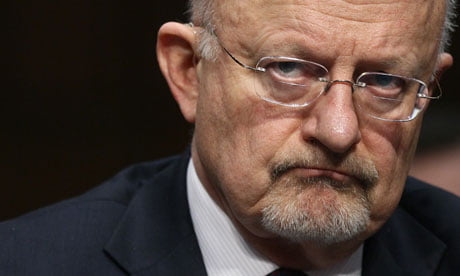
James Clapper, US director of national intelligence, also says Tehran is keeping option open to develop nuclear weapons

America’s top intelligence official has claimed that Iran‘s leadership was now more willing than before to carry out an attack inside the US, and that intelligence agencies were worried about plots against US and allied interests around the world.

In a report to Congress, the director of national intelligence, James Clapper, said a plot to blow up the Saudi ambassador in a Washington restaurant – which the US blamed on Iran’s Revolutionary Guard – “shows that some Iranian officials, probably including supreme leader Ali Khamenei, have changed their calculus and are now more willing to conduct an attack in the United States in response to real or perceived US actions that threaten the regime”.

Clapper added: “Iran’s willingness to sponsor future attacks in the United States or against our interests abroad probably will be shaped by Tehran’s evaluation of the costs it bears for the plot against the ambassador as well as Iranian leaders’ perceptions of US threats against the regime.”

US officials have expressed concern that the Revolutionary Guards’ Quds Force, responsible for external operations, could have sleeper cells in the US or over the border in Mexico and the rest of Latin America.

Clapper’s statement was the latest salvo in a war of words between the west and Iran over Tehran’s nuclear programme and planned oil embargos by both the US and European Union.

Clapper said Iran was “keeping open the option to develop nuclear weapons”.

“We do not know, however, if Iran will eventually decide to build nuclear weapons,” Clapper said, pointing out in answer to questions from senators that there were “certain things [the Iranians] have not done” that would be necessary to build a warhead.

The intelligence chief said despite the threatened oil embargos, due to take effect in five months’ time, “Iran’s economic difficulties probably will not jeopardise the regime”.

Source : Guardian

Political activist Hossein Naeimipour arrested

0


GVF — Political activist Hossein Naeimipour has been arrested.

At around 4:30pm, five agents from the prosecutor’s office entered the workplace of former reformist lawmaker Mohammad Naeimipour.

Once inside the building, the agents began filming the individuals present there.

During the 2009 presidential race, Hossein Naeimipour was an active member of the Mousavi campaign.

Like his father, Hossein Naeimipour is a member of the Islamic Iran Participation Front (Mosharekat) and was initially arrested during the unrest that followed Iran’s June 2009 presidential election.

He had been awaiting the Revolutionary Court’s verdict after standing trial.

In recent weeks, Iranian authorities have intensified the crackdown on civil society by detaining more activists and journalists.

US senators agree new sanctions on Iran’s Revolutionary Guard Corps

0


A top Senate Democrat and Republican on Monday offered a bill to impose sweeping new penalties on Iran and thwart its alleged nuclear ambitions.

Senate Banking Committee Chairman Tim Johnson, a Democrat, and Alabama Sen. Richard Shelby, the panel’s top Republican, said they had agreed on the measure that would target Iran’s Revolutionary Guard Corps.

The measures would require companies that trade on the US stock exchange to disclose any Iran-related business to the Securities and Exchange Commission, and expand penalties for energy and uranium mining joint ventures with Tehran.

The bill also would deny visas and freeze assets on individuals and companies that supply Iran with technology that could be used to crack down on its citizens, such as tear gas, rubber bullets and surveillance equipment.

Johnson and Shelby said their committee would consider the legislation on Thursday.

“A nuclear-armed Iran would represent a grave threat to regional peace and international security,” Johnson said in a joint statement with Shelby. “Iran’s continuing defiance of its international legal obligations and refusal to come clean on its nuclear program underscore the need to further isolate Iran and its leaders.”

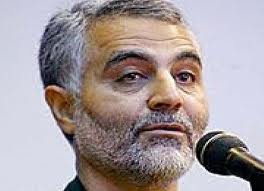
Profile: Ghasem Soleimani, Khamenei’s likely choice as Iran’s next president

0


World Tribune – In May 1979 Ayatollah Khomeini pre-empted any attempts that the former Shah’s followers might make to overthrow the Revolutionary government by founding the Iranian Revolutionary Guard Corps (IRGC).

Swiftly the Guards spread their command centers around the country. One of the members of the command center in Kerman was Ghasem Soleimani, who has now become one of the leading figures in the covert conflict between the USA and Israel on the one side and Iran on the other. This pre-eminence is linked to the fact the Quds force will probably become significant should an asymmetric warfare develop.

Ghasem Soleimani rose to prominence after the Guards were dispatched from Kerman to Mahabad to quash an uprising by Kurdish dissidents in the Kurdish region of western Iran just a few months after the Revolution in 1979. While Soleimani’s role in the suppression is unclear, the armed forces actions there were brutal and he was subsequently put in charge of the Guard base in Kerman.

During the eight-year war between Iraq and Iran which began on Sept. 22, 1980 when Iraqi forces invaded Iran with the hope of toppling its regime, Soleimani was instrumental in training and dispatching several Guard battalions from Kerman to the war front.

As with many young Iranians in the IRGC, Soleimani found the mission of their lives. Soleimani played a major role in most of the important operations mounted by Iran, whether successful and unsuccessful.

The war with Iraq finally ended in August 1988.The IRGC commanders all became commissioned officers of Iran’s military. Most of the top commanders such as Ghasem Soleimani were given the rank of brigadier general.

In 1989 Soviet forces withdrew in defeat from Afghanistan leaving Iran, Pakistan and Saudi Arabia to compete for influence there.

At the beginning, the Quds force, which originally was affiliated with the Office of Liberation Movements after the 1979 Revolution, were deployed in support of the Hazra Shia group “Hezbe Wahdat”, Party of Unity and the Shah Masoud. They soon became a branch of the Guards, taking over an important role in arming and training resistance to the prolonged Israeli occupation of Lebanon in 1982. Indeed, they were instrumental in training and equipping the Lebanese Hizbullah once they were officially founded.

Qud activity abroad is thought to have expanded in the 1990s. It is assumed they were involved in bombing the Khobar Towers in Saudi Arabia on June 25, 1996. It is sure that they took part in some capacity in the war in the Balkans in the early 1990s, even supplying Muslim combatants with arms to defend themselves against Serbian forces with American tacit approval. It has been reported that Soleimani commanded these Quds Force operations in Bosnia.

Once the U.S. and the British had invaded Iraq in March 2003, Iran was faced with the threat of American military bases being established permanently in Iraq. This prompted the Iranian regime to exert greater influence over various Iraqi Shia groups that were its allies in Iraq. This influence involved widespread penetration of Iraqi society by thousands of IRGC and Quds force personnel, who set up networks and fed them with huge sums of money.

However, in 2008, Ghasem Soleimani was forced to help broker a ceasefire in Qom between the Mahdi Army of the Iraqi Shia cleric Moqtada-al-Sadr and government military forces backed by the USA when the situation seemed to be slipping into chaos.

This is not to say that the Quds Force and Soleimani have withdrawn from activities outside Iran. They have been accused of assisting President Assad’s brutal crackdown on the popular rising in Syria since June. The United States has among other terrorist activities, accused the Quds Force of attempting to assassinate Saudi Arabia’s ambassador to Washington in October.

Clearly this throws the spotlight on the role that Soleimani plays in Iranian operations abroad, especially since rumors are rife that he may be chosen by Khamenei as candidate for the presidential election set for June 2013.

The other key rival for the post is thought to be Tehran Mayor Ghalibaf, the former commander of the Guard air force who also ran in 2005. However, Ghasem Soleimani is the most powerful commander of Quds force loyal to Ayatollah Khamenei, giving him a solid standing in Teheran.


Source

4-year jail term upheld for Iraq war veteran and Mousavi supporter Hossein Zarrini

0


GVF — A Tehran appeals court has upheld a four-year jail sentence for Mousavi supporter Hossein Zarrini, sources told the Green Voice of Freedom.

Zarrini, a veteran of the Iran-Iraq war, is currently being held in ward 350 of Tehran’s notorious Evin Prison. He was initially arrested on 2 June 2010 and later sentenced by Judge Salavati of the Revolutionary Court to four years in prison on charges of acting against the regime, insulting the leader and the president, assembly and collusion.

The appeals court recently approved the Revolutionary Court’s verdict.

Zarrin supported opposition candidate Mir Hossein Mousavi during the 2009 presidential election.

While in prison, Zarrini went on hunger strike to protest against seventeen months of being in a state of legal limbo. Despite suffering from health problems, Tehran’s Chief Prosecutor has continued to deny him medical furlough until now.