Home Blog Page 498

Iran: New Arrests of Labor Activists

0


(New York) – Iranian authorities should immediately release dozens of labor and independent trade union activists imprisoned for speaking out peacefully in defense of workers, Human Rights Watch said today. Convictions solely for the peaceful exercise of freedom of association and assembly should be quashed, and charges should be dropped against others facing prosecution for these reasons, Human Rights Watch said.

The latest round of arrests took place in Iran’s Tehran, East Azerbaijan and Kurdistan provinces. The authorities summoned four activists in mid-January 2012 to begin serving long sentences imposed in 2011. On January 28, authorities arrested Alireza Akhavan, a teacher and labor rights activist, in his home in Tehran. It is not known where he is currently being held. On January 18, security forces arrested Mohammad Jarrahi in his home in Tabriz. Three days earlier, intelligence agents arrested Shahrokh Zamani, another Tabriz labor rights leader, and summoned two others also in Tabriz. Authorities also arrested Shays Amani, a prominent rights activist and member of an independent trade union in the city of Sanandaj on January 16. Earlier in the month authorities detained Mehdi Shandeez and transferred to Ward 350 of Evin prison in Tehran. All those arrested are labor activists or members of independent trade unions not authorized by the government.

“Independent trade unions have played a critical role in protecting workers’ rights under Mahmoud Ahmadinejad’s presidency,” said Joe Stork, deputy Middle East director at Human Rights Watch. “This latest round of arrests continues a long and ugly tradition of targeting independent trade unions to enforce full state control over these groups.”

Authorities initially arrested Zamani on June 7, 2011, in connection with his activities as a member of an independent painters’ syndicate and a board member of the Committee to Pursue the Establishment of Labor Unions. Branch 1 of the Revolutionary Court in Tabriz sentenced him to 11 years in prison for “participating in the organization of an unlawful group opposing the state … with the aim of disrupting national security by way of workers’ strikes and armed rebellion,” “assembly and collusion to further illegal activities,” and “propaganda against the regime.”

In the same case, the court sentenced Jarrahi, who was arrested on June 20, to five years in prison for organizing an “unlawful” group called the Democratic Workers Movement, and Nima Pouryaghoub to five years on the same charge plus an additional year for “propaganda against the regime.” Sassan Vahebivash was sentenced to six months for related activities. Pouryaghoub and Vahebivash are engineering students at Tabriz’s Azad University.

Authorities freed the four defendants after they posted bail, but, in November 2011, Branch 6 of the East Azerbaijan appeals’ court confirmed the original sentences handed down by the trial court. Authorities did not summon the defendants to serve their prison terms until this year.

According to Iranian media reports, Amani, a prominent labor rights activist in Sanandaj (Kurdistan province) and a board member of the Iran Free Workers’ Union (IFWU), was arrested after he went to the prosecutor’s office in Sanandaj to inquire about the status of two other activists who had been detained earlier in January.

Human Rights Watch is concerned about the well-being of several other prominent labor and trade union activists currently serving prison sentences, including Reza Shahabi, Ali Nejati, Ebrahim Madadi, and Behnam Ebrahimzadeh. Madadi is vice-president and Shahabi is treasurer of the Syndicate of Workers of Tehran and Suburbs Bus Company (SWTSBC). Madadi is serving a three-and-a-half-year sentence on charges of endangering national security. Shahabi was arrested on June 12, 2010. A revolutionary court in Tehran tried him of endangering national security and “propaganda against the state” on May 25, 2011, but there has been no ruling in his case yet.

According to a source familiar with his case, Shahabi spent 18 months in Tehran’s Evin prison without charge, including several months in solitary confinement, and suffers from serious neck and back pain. Shahabi is in Imam Khomeini hospital in Tehran after ending a 30-day hunger strike on December 22 to protest his detention and the authorities’ refusal to provide proper medical care.

Two other activists, Ali Nejati and Behnam Ebrahimzadeh, who are serving one and five-year prison terms, respectively, on national security charges related to their independent trade union activities, also suffer from serious medical conditions. According to information received by Human Rights Watch, both Nejati and Ebrahimzadeh asked for long-term furloughs from prison so they could seek proper medical care, but judicial officials have denied their requests.

Nejati is a former president and current board member of the Haft Tappeh Sugar Cane Workers’ Syndicate (HTSCW), and is in Ahvaz’s Dezful prison in southwest Iran. Ebrahimzadeh is in Evin prison.

The IFWU and the bus workers’ and sugar cane workers’ unions, are among the largest and most active independent trade unions in Iran. Iran’s labor law does not recognize the right to create labor unions independent of government-sanctioned groups. Since 2005, authorities have repeatedly harassed, summoned, arrested, convicted, and sentenced workers who are affiliated with these independent trade unions and harassed their families.
Most of these arrests have taken place during International Workers’ Day celebrations or strikes the unions have called, often for back wages that have not been paid for months. Mansour Osanlou, the current president of the bus workers’ group, was sentenced to five years in prison on charges of “acting against the national security” and “propaganda against the state” following several arrests between 2005 and 2007. Authorities allowed Osanlou to leave Evin prison in June after he had served about four years of his sentence, but could still summon him to serve the rest. Human Rights Watch called on the judiciary to quash Osanlou’s sentence.

Independent unions have protested amendments to the current labor law introduced by President Ahmadinejad. The amendments, currently being reviewed by Iran’s parliament, make it easier for employers to fire workers and reduce workers’ benefits such as annual vacation days.

Article 22 of the International Covenant on Civil and Political Rights (ICCPR), and Article 8 of the International Covenant on Economic, Social, and Cultural Rights (ICESCR) protect the right to form and join labor unions. Iran is a signatory to both of these treaties. Iran is also a member of International Labour Organization (ILO), but has so far refused to sign covenants 87 (Freedom of Association and the Protection of the Right to Organize Convention) and 98 (Right to Organize and Collective Bargaining Convention) of the ILO treaty.

“Labor activists have been at the forefront of the struggle for freedom of association and assembly in Iran, and they have paid a heavy price,” Stork said. “Iranian law should recognize the right to organize independent unions and release activists who have committed no crime other than representing the interests of their constituents.”

Senior cleric calls for release of opposition leaders

0


Ayatollah Ali Mohammad Dastgheib, a senior Iranian cleric and a chief critic of the Islamic Republic’s recent domestic policies, has called on the establishment to end the house arrest of Mehdi Karroubi and MirHosein Mousavi, the two opposition leaders who have been detained since last February.

Ayatollah Dastgheib’s website, Hadis-e Sarv, published his statement calling for the release of the opposition leaders and other political prisoners.

Ayatollah Dastgheib has repeatedly criticized the government crackdown on the opposition over the past two years. His criticisms have led to attacks on his office and the Qoba Mosque, where he regularly leads prayers.

The two opposition leaders were put under house arrest last February, along with their respective wives, after they rallied people to demonstrate in support of the Arab uprisings in the region. The demonstrations were met with force by the authorities, resulting in several deaths and widespread arrests.

Dastgheib recently wrote a critical letter to the Guardian Council, saying that “the Islamic Republic’s problems are all due to the violations committed by their council” and maintained that “according to the constitution, releasing Karroubi and Mousavi and other prisoners” is the only acceptable path for the regime.

Blogger Returned to Prison Two Days After Surgery


Prison authorities returned imprisoned blogger Hossein Ronaghi Maleki to Evin Prison only two days after his kidney operation, despite his physician’s orders for medical furlough. Ronaghi’s mother told the International Campaign for Human Rights in Iran that this is the fourth time he has been transferred to a hospital during his prison term.

“His doctors wrote that he should go on medical leave. His father is now in Tehran to pursue his furlough,” Ronaghi’s mother, Zoleikha Mousavi, said.

Hossein Ronaghi Maleki, 26, was arrested on 13 December 2009. In October 2010, Branch 26 of the Revolutionary Court sentenced him to 15 years in prison, which was later upheld by an appeals court. Ronaghi has been suffering from kidney and liver problems for months. He had submitted several requests and written letters to the Tehran Prosecutor for a review of his conditions and his transfer to a hospital, the texts of which have been published in news websites.

“Finally last week his transfer was set. His father and I had gone to Tehran together, and we were there for two days,” Mousavi said. “They told us, ‘Come and wait at the hospital, we will bring him,’ but they didn’t bring him. Exactly on Thursday, 19 December, when we had returned to Tabriz from the 10-hour trip, they called us from the prison and said that Hossein was transferred. We returned back to Tehran again. On Saturday he was operated on and on Monday he was returned to prison.”

The doctor’s orders state that Hossein Ronaghi Maleki should be transferred back to the hospital in 15 days in order to be re-examined.

“The Tehran Prosecutor has written a letter to Judge Pirabbasi asking for bail orders so he can go on medical furlough. But we have been told that the IRGC [Islamic Revolutionary Guard Corps] would not allow Hossein to be granted leave. We will now have to see whether Judge Pirabbasi will grant him leave or not,” Mousavi told the Campaign.

“Why don’t they respect a sick person? We said, ‘Let us take Hossein home and when he is better, he will return to prison.’ But they won’t allow it; they think I’m lying. They say the IRGC won’t allow it,” the imprisoned blogger’s mother told the Campaign. “I swear to God, Hossein was so pale. He had become so thin. He was nervous. He has suffered so much inside the prison. I am a mother. This upsets me,” Mousavi continued.

After visiting Ronaghi recently, Mousavi said, “Hossein doesn’t say much, but he said this time, ‘Mom, I haven’t stepped outside for fresh air or exercise since September, because it’s really cold there.’ He had kidney pain, too. Another prisoner told us how cold it is in Evin.”

“What has Hossein done for them to treat him like this? Of course they don’t just treat my son like this, they treat all sick prisoners in the same way. The Medical Examiner has confirmed Hossein’s illness. They went to prison and examined him and said that he must go on furlough, but they won’t allow it. We said we would accept whatever bail amount is said. Why do they treat people like this? Is it right for all these sick people to remain in prison in this cold weather?” she added.

Regarding her visits with her son in the hospital, Mousavi said, “He didn’t have handcuffs and footcuffs this time. But an officer and two soldiers were watching him all the time.”

Journalist Barred from Family Visits; May Be in Solitary Confinement


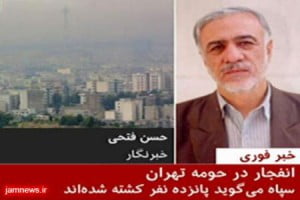
The family of imprisoned journalist Hassan Fathi has reason to believe he has been returned to solitary confinement, a source told the International Campaign for Human Rights in Iran.

“We think he has been transferred to a solitary cell again, because last week when the family went to visit with him, they were told that he is barred from having visitors,” a source close to the family said. “He must be in solitary, as prisoners in the General Ward are allowed visitors. But we don’t know anything about his conditions for sure,” the source added.

Security forces arrested Fathi on 13 November 2011, one day after he had appeared as a guest on BBC Persian Television to discuss an explosion in a military base belonging to the Islamic Revolutionary Guard Corps (IRGC). Fars News Agency, affiliated with the IRGC, reported on Fathi’s arrest shortly thereafter: referring to him as a BBC employee, they cited his charges as “propagating falsehoods” and “creating public anxiety.” He was in solitary confinement inside Evin Prison for more than 45 days.

Officials have repeatedly told Fathi’s family, including his wife and his brother, that he would be released soon. A few days after Fathi’s transfer to the general ward, officials told his brother that Fathi would be released within a few days. Later, Fathi’s wife wrote the authorities a letter asking for a visit with her husband, his brother told the Campaign. During the visit, prison authorities told her that her husband would be released on bail by the following week. “We had prepared ourselves for any bail amount, but we never heard about it again,” said Fathi’s brother.

“The family doesn’t know why he wasn’t released,” the source told the Campaign. “[Fathi’s] wife spoke with the judge in charge of his case. We don’t know what this was all about, but the entire family believes that he has not committed any crime. His background is quite clear. He served in the Iran-Iraq war front. Before the revolution, he spent time in Savak Prison. He is the brother of two war martyrs. He is a reporter for the government [press]. I hope he is released soon.”

Fathi has worked in government-affiliated publications such as Omid-e Javaanand Etela’at Haftegi.

“The [family’s] last visit with him was about two or three weeks ago, when he had just been transferred to the general ward. His wife, son, and daughter went to see him in person. He was in good shape on that day. Mr. Fathi served a few months in prison before the revolution, and he is not easily affected,” the source told the Campaign.


Source

Mashhad Student Activist and Journalist Sentenced to One Year In Prison

0


Student activist and journalist Mohsen Sanatipour has been sentenced to one year in prison, a local human rights activist told the International Campaign for Human Rights in Iran. The verdict was served to Sanatipour’s lawyer last week and the Enforcement Judge summoned him to begin serving his sentence.

Sanatipour is a chemistry student at Mashhad’s Ferdowsi University and Secretary of the university’s Allameh Group. He has also worked with several student publications.


Source

‘Apologise, impeach Ahmadinejad, step down,’ dissidents tell Khamenei


GVF — In a strongly worded private letter to Supreme Leader Ali Khamenei, Iran’s most senior political figure Ahmad Sadr Haj-Seyed Javadi called for an end to the house arrest of opposition leaders Mir Hosseib Mousavi and Mahdi Karroubi, as well as the impeachment of Mahmoud Ahmadinejad for misconduct as president.

Despite writing the critical letter close to seven months ago, it was only published on Iranian opposition websites on Friday.

In his twentieth open letter to Khamenei, dissident author and filmmaker Mohammad Nourizad urged the leader to step down “for his own good” and to avoid the fate of other regional dictators Bashar Assad and Muammar Gaddafi. “But we have little time left.” Khamenei should also apologise to the people as a means of restoring stability to the country and saving it from the current “destructive crisis.”

Nourizad’s candid scrutiny of the dire social, political and cultural problems in the country has drawn widespread attention. His pubic critiques of the ruling elite have also earned him imprisonment, beatings at the hands of security agents, as well as solitary confinement. Yet he continued to write to the leader even after his release.

Nourizad has also invited sixteen other prominent Iranian figures to bombard Khamenei with critical letters. His calls were followed by the former head of the Revolutionary Guards’ navy who, in a note in the Ettelaat newspaper, compared the leader to the Shah of Iran.

Meanwhile, in an interview published on Friday, former reformist president Mohammad Khatami said that “governance belongs to the people and no state or power can maintain legitimacy without relying on the people’s vote. People can hold their leaders accountable and replace the holders of power without resorting to force.”

“[The notion of] giving sanctity to individuals or thoughts [of individuals] who are not divine or absolute and are bounded by time and space,  to the extent that even protesting against them is considered to be an offence or crime, … inflicts a heavy price [on the country].”

Ahmad Sadr Haj-Seyed Javadi’s newly released letter began with a quote striking a similar set of ideas. From Imam Ali’s famous epistle to Malik Al-Ashtar, the appointed governor of Egypt, it reads as follows: “Keep close to you the upright, and the God fearing, and make clear to them that they are never to flatter you and never to give you credit for any good that you may not have done: for, the tolerance of flattery and unhealthy praise stimulates pride in man makes him arrogant.”

The 94-year-old’s letter, signed 18 May 2011, calls on Khamenei to order the release of “all political prisoners, in particular ending the house arrest” of opposition figures Mr Mir Hossein Mousavi and Mahdi Karroubi, and “national reconciliation” in order to pave the way for “order and peace” to be restored the country. Haj-Seyed Javadi also called for Mahmoud Ahmadinejad to be tried in a court of law and to be impeached for political misdemeanour.

Haj-Seyed Javadi, who is also a founding member of the outlawed Freedom Movement of Iran, holds PhDs in political sciences and law. Prior to the 1979 Islamic Revolution, he defended many opposition figures including Khamenei and the late Grand Ayatollah Montazeri in the Shah’s courts. He was also a member of the Revolutionary Council and was later elected as a lawmaker in Iran’s first post-revolution parliament (Majlis).

The ailing dissident, who has served jail terms both before and after the revolution, described the Revolutionary Courts as “illegal,” adding that it is the Supreme Court which should handle their cases. The letter also explains that following threats issued by the Intelligence Ministry against his daughter and grandchild, Haj-Seyed Javadi decided to temporarily remain silent in the face of the regime’s ongoing oppressions.

The veteran activist described the “unbearable” pressures upon the people “especially political activists and their families and said that he expected Khamenei to “make use of your position and the capabilities you still attain to resolve the hardships and concerns [of the people] by taking urgent and effective action.”

He goes on to add: “Your Excellency has repeatedly backed the head of government, Mr Ahmadinejad, while in my view, he is at the core of the crisis in Iranian society and the international stage and has made claims that have produced no achievements for the nation, the Islamic Republic of Iran, and even the leadership and the position of Velayate Faghih [Guardianship of the Jurisprudence]. The substandard language that presides over the executive branch is no secret in need of abundant explanations. Whether it be on the domestic front or on the international stage, the head of government, has done nothing more than to devastate the material and intellectual achievements of the Islamic Revolution and digress from the ideals and norms within the constitution, and on the international stage, it has acted as a focal point of crises.”

“Have you ever wondered what results nearly six years of Ahmadinejad’s management has produced besides casting doubt on the accomplishments of the years before his rise to power, widespread and continuing violation of human rights, defying the values of the revolution and the constitution of the Islamic Republic, eliminating allies and somewhat able government officials, destroying the infrastructure of the nation’s economy, reducing the country’s industry to ruins and commerce based upon boundless imports?” Haj-Seyed Javadi asked.

“Does his Excellency not see it as his responsibility to take effective steps to reduce the irreversible harm that’s being done?”

In his letter, Haj-Seyed Javadi also discussed the captivity of Green Movement leaders Mousavi and Karroubi, who were placed under an illegal house arrest in mid-February 2011 after they called for demonstrations in solidarity with the Arab Spring.

“How can the blatant removal of the revolution’s companions and their fictitious and insulting labelling as ‘the leaders of sedition’ be justified as strengthening the [political] establishment and the ideals of the Islamic Revolution

“Sedition” is a term commonly used by Iran’s hard-line elite to refer to the opposition Green Movement.

“Does His Excellency … not see it as his duty to seize the remaining opportunity to make a change and reform [in the country]?” he asked.

He argued that despite Ahmadinejad’s deceitful claims of commitment and devotion to the principle of Velayat Faghih, he and his followers had not only mismanaged the economy, but had also tarnished the leader’s position. “This group’s performance clearly demonstrates that their goal is nothing but to breach the constitution, and to even remove the position [of Velayat Faghih] and to establish an ideological junta based on a superstitious and bogus interpretation of Islam.”

“Have you never wondered what the outcome of the conduct of these subservient executives and advisers in the years of your leadership has been? Have you ever thought about the motive of flatterers in using labels such as ‘Imam Khamenei’ [when referring to you]? Is this not a big lie that weakens the foundations of rule? Or is it not [just] a tool at the hands of autocrats who rely on it to attain personal interests?”

The letter also criticised the Iranian judiciary’s lack of independence from the military and intelligence bodies and held Khamenei responsible for its misconduct. “Therefore you are expected to take a substantial step and to order the dismantling of the Revolutionary Court, and to facilitate the questioning and impeachment of the government,” he continued.

Haj-Seyed Javadi also criticised the hasty implementation of the Ahmadinejad administration’s controversial subsidy cut plan launched in November 2010. He maintained that the plan had been carried out without the monitoring of supervisory bodies and had actually weakened the most vulnerable sectors of Iranian society, something that would have “painful” consequences for the Islamic republic.

“The crucial question here is ‘for what purpose do Ahmadinejad, his followers and supporters seek all these financial resources?’ Based on a report by the Supreme Court of Audit, the government’s deviation from budget regulations amounts to 85 percent. In a situation where the government sees no need to conform to any of the budget regulations, can a 46 percent rise in [the Iranian new year] mean anything but the governments unrivalled control over vast national resources? Can this be categorised as anything other than ‘corruption on earth’?”

The absence of any control over the government’s conduct meant that Iran’s record-high oil revenues in the past few years “have found their way directly into the pockets” of Ahmadinejad and his allies, he insisted.

Ahmadinejead has “no fear” of presenting the public with “false and untruthful statistics” and being held accountable for it, Seyed-Javadi continued, something he said had caused outrage even among the more conservative members of parliament. “The zero rate of economic growth at a time when oil is being sold at a $100 per barrel, the halt to the activities of financial and industrial sectors, the rise in unemployment in the past two years, the lack of transparency in with regards to the [details of] the Special Reserve Fund and tens of other reasons and signs constitute strong evidence that illustrate the managerial and moral incompetence of the … government and its president in running [the country’s] affairs.”

“Really, where do Mr Ahmadinejad and his followers get their orders from?” he asked.

The politician writes that Ahmadinejad’s government has given rise to anti-Islamic sentiments amongst the youth in the country. In addition, “on the international … the firm response of the people and political leaders of Egypt and Tunisia was an insistence on the notion that they do not wish, under any condition, to establish a state government similar to the Islamic Republic of Iran.”

As protesters flooded the streets of Cairo in early 2011, Khamenei quickly seized the opportunity to exploit the Egyptian uprising by saying that the wave of Arab revolts had been an “earthquake” triggered by the Islamic Revolution in 1979. Egypt’s Muslim Brotherhood quickly rejected the comments, stating that it regarded “the revolution as the Egyptian People’s Revolution not an Islamic Revolution.”

“I’d like to remind you that a while ago, a high-ranking Hamas official stated clearly that their desired model for statehood was Turkey and not Iran,” Seyed-Javadi noted.

He suggested that the Ahmadinejad clan were aiming to escape from their share of responsibility in cracking down on protesters following the rigged presidential election of June 2009 and to present Khamenei as the sole blameworthy official for all that has taken place in the past thirty years including the consequences of Ahmadinejad’s presidency.

He warned that current trend in the country had endangered Iran’s territorial integrity and unity, while discrediting the slogans of the Islamic Revolution.

“I seriously believe that since the Mongol invasion [of Iran], no such threat has been directed against Iran and Islam,” he added, noting that the dangerous trend would only serve the interests of the Zionist enterprise and radical Jewish organisations.

In an earlier letter to Khamenei, the daughter-in-law of late Grand Ayatollah Montazeri blasted Khamenei over Mousavi’s house arrested. Zahra Rabbani Amlashi explained Mousavi’s daughters were “deeply and gravely” concerned about their mother’s state of health in captivity.

Following there last short visit to their parents, Mousavi’s daughters reportedly noticed their Zahra Rahnavard’s health seemed to have deteriorated and her weight had dropped “severely and unusually for no reason.” “For whatever reason, there are disputes between you and him [Mousavi]. Is it right for you to treat him and his family in such fashion?” Amlashi asked Khamenei.

Since the start of their arbitrary detention, the 2009 presidential candidates have not yet been granted a fair trial. Rights groups say their continued captivity and maltreatment is inconsistent not only with human rights provisions but also with Iran’s own constitution.

During a brief encounter with his daughter during the holy month of Ramadan, Mousavi reportedly told his daughters, “If you want to know about my situation in captivity, read Gabriel García Márquez’s News of a Kidnapping.” “Under status quo, one can’t be hopeful about the upcoming [parliamentary] elections and taking part in them,” Mousavi told his daughters, promising that “the future is bright.”

Iranian authorities further isolated the opposition couple from the outside world after the comments found their way onto opposition websites and queues were formed in some bookshops after the book became a rare commodity in a matter of days.

Another labour activist arrested in Tehran

0


Iranian authorities have arrested another labour and human rights activist in Tehran.

Security forces arrested Ali Akhavan yesterday at his home, and his whereabouts have not been announced yet, the Human Rights Reporters Committee reports.

Akhavan was arrested once before in June of 2010 and released on bail after 25 days. He was later sentenced to three years in jail, which was reduced to one and a half years in the appellate court.

Recent weeks have brought signs of a country-wide crackdown on labour activists.

Mohammad jarahi, Shahrokh Zamani, Sheys Amani, Sharif Saedpanah and Mozafar Salehnia are among the other labour activists arrested in recent months.

Despite sanctions, Iran has billions stashed away in European banks: EU advisor

0


Al Arabiya – Earlier this week, an EU economic advisor said the Islamic republic still has several billions in euros stashed away in European banks despite of a dispute between Western powers over Iran’s nuclear program.

Mehrdad Emadi was responding to comments published in Iran’s semi-official Fars news agency quoting central bank officials stating that Iran had withdrawn all of its money from European banks after the EU adopted a new round of sanctions targeting the country’s oil industry.

“Despite that I cannot name the exact sum right now, I can say that Iran still has more than a couple of billion euros in European banks,” Emadi told Trend website.

According to Emadi, Iran has funds deposited in accounts in Germany, Italy, Malta, Spain, Greece and Switzerland. Officials in Switzerland, according to Emadi, said they would go along with any sanctions the EU adopts toward the regime in Tehran, despite not being a member of the .

Along with the oil embargo, the EU also froze the assets of the Iranian central Bank held in in euros. The Iranian banking sector was slapped with strict restrictions dictating that any transaction about 40,000 euros ($51,000) would have to be authorized by EU governments before being processed.

Iran says it has since 2008 been withdrawing all of its assets from European banks and either converting them to gold or transferring them to Asian banks.

China, India, Japan, and South Korea, combined purchase about 62 percent of Iran’s oil exports.

But according to whistleblowing website WikiLeaks, Iran has attempted several times to invest billions of dollars in the Maltese banking system.

A cable from early 2009 revealed that a senior Maltese finance ministry official informed the American embassy of an Iranian approach to Malta’s ambassador in France to express interest in “investing several billions of euros” in Malta.

In late November 2011, in line with the United States and Canada, Britain ordered all financial institutions to stop doing business with their Iranian counterparts, including the Iranian central bank.

Until financial sanctions against Iran came into force, London was seen as a convenient transfer point for Iranian money seeking to enter the U.S., proving to be a profitable business for several major British banks.

However, in the last three years, they have had to pay hefty fines to American authorities as the U.S. government focused on cutting off Tehran’s monetary flows.

Other banks in Europe have taken similar steps to comply.

A Deutsche Bank spokesman said the bank decided in 2007 to wind down its Iranian ties. “The bank does have some ongoing contracts with European and Asian firms that do business in Iran that it is required to uphold,” said the spokesman, Ronald Weichert, to Reuters.

Switzerland’s Banque de Commerce et de Placements closed its Iranian accounts in July 2010, days after the U.S. passed an act targeting foreign banks dealing with a slew of banned Iranian entities.

The latest round of Western sanctions was in response a report by the U.N. nuclear watchdog report in November that made detailed claims about Iran’s development of a nuclear weapon design.

Iran maintains its nuclear program is peaceful and says it needs nuclear technology to generate power.

Iran Says It Produces Laser-Guided Artillery Rounds

0


Defense Minister Ahmad Vahidi has announced that Iran has developed what are described as laser-guided artillery rounds capable of hitting moving targets at a distance of up to 20 kilometers.

Iranian state-run television has shown images of what it said was the new precision-guided artillery being fired.

Iran, which is subject to a United Nations embargo on foreign arms imports because of suspicions over its nuclear program, frequently announces breakthroughs on domestically produced, high-technology military devices, though few other details are usually given.


Source

Iran opposition calls for fresh demonstrations


GVF — Iran’s opposition Green Movement has called for fresh protests on 14 February, just three days after Iran marks the 33rd anniversary of the Islamic Revolution.

In its most recent statement, the Coordination Council of the Green Path of Hope, the highest decision-making body within the Green Movement, has called on Iranians to take to the streets exactly a year after the last major opposition demonstrations in the country.

“Iranians are faced with one of the most difficult periods in their history,” the statement reads. “The incompetence of statesmen has squandered and will continue to squander national resources and assets.”

“Despite the fact that Iran’s oil revenues in recent years have surpassed $600 billion (more than the revenues of all post-revolution governments put together), the conduct of those who rose to power with promises of justice and bringing oil income to the people’s tables, stamping out poverty, corruption and discrimination, has led to nothing but the decline of economic growth and investment to its lowest levels and the rise of inflation and unemployment to its highest in the past twenty years, while the scope of poverty, corruption and discrimination has widened at a disastrous rate.”

Mir Hossein Mousavi and Mahdi Karroubi spearheaded the Green Movement until mid-February 2011 where they were placed under house arrest after they had called for protests in solidarity with the Arab Spring on 14 February. The demonstrations were marred by the security forces’ violent crackdowns which left at least two dead.

Since the start of their arbitrary detention, the 2009 presidential candidates have not yet been granted a fair trial. Rights groups say their continued captivity and maltreatment is inconsistent not only with human rights provisions but also with Iran’s own constitution.

On Monday, conservative lawmaker Mohammad Reza Bahonar acknowledged the role of the Supreme Leader Ali Khamenei in taking the decision to place the opposition leaders and their wives under house arrest. In an interview with Fars, a news agency affiliated with the Revolutionary Guards, he admitted that following the outbreak of street protests, he and other senior officials tried to negotiate with Mousavi and convince him to cease his opposition towards the regime and “returning to the revolutionary front,” a request declined by Mousavi.

The deputy parliament speaker argued that last year’s 14 February protests constituted the “dirtiest and worst act of treachery.” He also confirmed media reports suggesting he had written a confidential letter to the Supreme Leader Ali Khamanei warning him about the consequences of a likely Mousavi victory in the 2009 presidential race.

The calls for a new round of street protests come as Iran’s economy is being hammered on several fronts. Experts say the Ahmadinejad administration’s mismanagement of the economy and crippling international sanctions over the country’s nuclear programme will hit hardest the most vulnerable segments of the Iranian populace in the months ahead. On Tuesday, the Reuters news agency cited trade officials as saying that the recent European Union sanctions have paralysed food import deals to Iran leaving about 400,000 tonnes of grain held up on at least ten ships outside Iranian ports for as long as three weeks.

When the UN Security Council approved a fourth round of sanctions against Iran over its nuclear programme in June 2010, Mousavi issued a statement defending the Iranian people’s right to know the impact of sanctions on their livelihoods. “The Green Movement must use all its international capacity to show foreign powers it will not allow them to exploit the weaknesses and illegitimacy of the current [Ahmadinejad] government in order to undermine the country’s independence, territorial integrity and supreme interests,” the former prime minister stressed.

The Green Movement council said that “instead of returning to the people and making up for [past] errors, [authorities] still insistent on pursuing the policy of suppression” as “hundreds” of activists were being held behind bars “illegally,” more than two and a half years after the 2009 election.

“It is the human, legal and legitimate right of Iranians to show their protest against the state of their lives and their country,” the statement said. “Protesting is the right of all Iranians.”

According to the opposition council, the protests will commence in the afternoon from Iran’s Ferdowsi Square towards Tohid Square. “We ask of the police forces to respect the rights of their compatriots and to show the world that they will not act like the forces of oppression in [other] tyrannical regimes,” it concluded.

The Kaleme opposition website recently reported that 39 prominent political prisoners held at Evin prison had released a statement calling “upon all freedom fighting citizens across the globe to create public awareness regarding the upcoming sham and rigged parliamentary elections in March, and to continue to do everything in their power to ensure that the detained leaders of the Green Movement are released in the month of February.”

Nobel Peace Prize winner and women’s rights activist Shirin Ebadi echoed the political prisoners plea, saying, “I support the call [of political prisoners] and invite all freedom-loving people across the globe to do all they can for the release of prisoners of conscience in Iran, particularly Ms. Zahra Rahnavard, Mr. Mir Hossein Mousavi, and Mr. Mahdi Karroubi.”

Ali Mazrooei, a former reformist parliamentarian and top economic advisor to Mohammad Khatami during his presidency, told the Green Voice of Freedom that the increased arrest of opposition activists and journalists demonstrated the authorities’ growing fears ahead of the “rubber-stamp” parliamentary elections in March.

The poor management of the economy, during a period of elevated oil income, has left many Iranians from across the board discontented and more convinced to pursue change in the country, Mazrooei added.

“It’s important to see the upcoming protests as part of a wider campaign which aims to establish democracy, freedom and justice in Iran. Whatever happens on 14 February will set the tone for future Green Movement actions and activities.”