Home Blog Page 503

Iran angry over EU unity on oil embargo

0


The Christian Science Monitor – Iran’s currency nosedived today as the EU approved an oil embargo to take effect in July. The rial has lost half its value since October.

Istanbul, Turkey

Iran reacted angrily today to a new European ban on oil imports and other sanctions that are the latest measures aimed at forcing Iran to curb its nuclear program.

While Iranian generals and politicians alike have put a brave face on the impact of the long-expected sanctions – with some renewing vows today that Iran would cut off strategic oil shipping channels through the Strait of Hormuz – Iran’s currency continued its nosedive against the dollar on expectations of deepening crisis.

“The most telling sign is panic at the gold and foreign exchange markets,” says an Iranian analyst in Tehran who closely follows the economy and asked not to be named.

The rial reached an all-time low today at 21,000 rials to the dollar; it has lost half its value in just under three months. Many Iranians are hoarding gold.

A US aircraft carrier group, joined by British and French warships, entered the Persian Gulf through the Strait of Hormuz on Sunday, defying a recent Iranian warning to keep out of the narrow waterway through which one-third of the global seaborne oil supply is shipped.


Iran shocked by EU unity

Iranian officials have been shocked by the display of European unity, considering that Iran accounts for 20 percent of oil imports to Europe. The oil measure will only fully take effect on July 1, to give key buyers – especially Greece and Italy, which are facing debt crises – time to find alternative sources.

The unprecedented EU measures are the latest to be imposed upon Iran, in addition to four rounds of sanctions from the United Nations Security Council and a raft of American measures.

Iran says it will not slow or suspend any part of its nuclear program when under pressure. Few expect sanctions alone to prompt Iran to capitulate on its nuclear program, which Tehran says is for producing nuclear energy, not bombs.

“There is a genuine fear here that once the West senses weakness, it won’t stop at the nuclear dossier,” says the Iranian analyst. “The threat of regime change is also increasing…. I think the Iranians think: ‘Well, if I was in their [Western] shoes, why stop here?'”


Iranian official: Stop oil exports immediately

American and Israeli intelligence, along with inspectors of the UN’s International Atomic Energy Agency, conclude that Iran has conducted weapons-related work in the past, but say they have no evidence that Iran has decided to make a nuclear device.

Iran and world powers are considering resuming nuclear talks that broke off a year ago in Istanbul, but neither an agenda nor dates have been agreed.

“I want the pressure of these sanctions to result in negotiations,” EU foreign policy chief Catherine Ashton said. “I want to see Iran come back to the table and either pick up all the ideas that we left on the table … last year … or to come forward with its own ideas.”

A senior Iranian politician said today that Iran should fight EU pressure by immediately closing off its oil taps to Europe, to disrupt European efforts to find alternatives.

“The best way is to stop exporting oil ourselves before the end of this six months and before the implementation of the plan,” Ali Fallahian, a member of Iran’s Assembly of Experts and former intelligence minister, was quoted as saying by Fars news.

“If they increase pressure on our country, we can use the Strait of Hormuz as a tool to decrease the pressures and closing the strait is one of the options,” Mr. Fallahian said today. Most analysts doubt Iran could keep the Strait closed for long, given the overwhelming military superiority of the US and allies who would view closing the sea lane as an act of war.

In recent weeks, other senior Iranian officials have warned that they would close the strait – through which much of Iran’s own oil exports flow – if the EU embargoed Iranian oil.

First Vice President Mohammad Reza Rahimi, a loyalist of President Mahmoud Ahmadinejad who has been embroiled in financial scandals, warned last month that Iran would not allow “even one drop of oil” to pass through Hormuz if oil sanctions were imposed.

The Revolutionary Guard backed away from that threat over the weekend. But Mohammad Kassari, deputy head of Iran’s parliamentary foreign affairs committee, said today the Strait of Hormuz “will definitely be closed” if there is “any disruption” to the sale of Iranian oil.


Upcoming election

US and European officials have long said sanctions only target regime officials and entities linked to Iran’s nuclear, missile, and other programs. But the most recent measures against Iran’s central bank and oil deals are unprecedented in their scope, and will further complicate the lives of countless ordinary Iranians.

From freezing bank accounts abroad – thereby making it more difficult to pay for foreign schooling for Iranian kids, for example – to blocking refueling for Iran’s national airline at some European airports, Iranians have been affected.

The potentially crippling sanctions for Iran come as conservative factions are locked in political battle ahead of a March 2 parliamentary vote – the first nationwide election since June 2009, when Ahmadinejad’s official reelection was challenged by millions of Iranians taking to the streets.

The president has made no comment on the fall of the currency, prompting media connected to the powerful Revolutionary Guard to say the divisive president was “hibernating.”

“People are starting to blame Ahmadinejad, but they are also attributing part of the pressure on the sanctions,” says the Iranian analyst, adding that his own efforts to buy a new laptop computer and refrigerator have been thwarted by daily price rises.

The president forced down interest rates at the end of last year. And liquidity in the economy – due in part to reforms that have replaced some key subsidies with government payments into personal bank accounts – is double what it was in before Ahmadinejad came to office in 2005, says the analyst.

“Mismanagement started the downward spiral; the sanctions are now fueling it … even though they are trying to present a brave face,” says the analyst.


Less maneuverability

As Iran’s economic maneuverability has been curtailed, with US officials leading the charge to cut off banking, credit, and insurance lines worldwide, its defiant statements have become increasingly threadbare.

One measure of Iran’s difficulties is evident in the request Iran made to India to use Japanese yen to pay for part of its $9.5 billion annual crude trade, according to a report today by Bloomberg.

India last week proposed to Iran, its second-biggest oil supplier, to pay in rupees. A Turkish bank which handled transactions until now has “told Indian refiners it may no longer be able to act as an intermediary,” Bloomberg reported.


Source

Iran: Authorities Defiant on Rights Record


(New York) – Iranian authorities in 2011 carried out more than 600 executions and imprisoned more journalists and bloggers than any other country, Human Rights Watch said today in issuing its World Report 2012 Iran chapter. Iran’s judiciary works hand-in-hand with security and intelligence forces to harass, imprison and convict opposition and rights activists, despite increasing international condemnation of the country’s rights record.

In March the United Nations Human Rights Council appointed Ahmed Shaheed to be the first special rapporteur on the situation of human rights in Iran since 2002. Since Shaheed’s appointment the Iranian government has refused him entry to the country, executed more than 400 prisoners – including people convicted of committing crimes when they were children, and prosecuted dozens of outspoken lawyers, journalists, and rights activists for their peaceful speech and associational activities. In February the authorities placed the 2009 presidential candidates Mir Hossein Mousavi and Mehdi Karroubi under house arrest, where they remain.

“The Iranian government crushes all voices of opposition while scoffing at the international community’s growing concern over human rights,” said Sarah Leah Whitson, Middle East director at Human Rights Watch.

In its 676-page World Report 2012, Human Rights Watch assesses progress on human rights during the past year in more than 90 countries, including popular uprisings in the Arab world that few would have imagined. Given the violent forces resisting the “Arab Spring,” the international community has an important role to play in assisting the birth of rights-respecting democracies in the region, Human Rights Watch said in the report.

In Iran, the authorities carried out more than 600 executions, according to several rights groups, even though the Office of the High Commissioner for Human Rights and four UN experts pressed Iranian officials for an immediate moratorium on the death penalty, “particularly for drug-related and juvenile cases.” Government sources announced only around 350 of these executions. The vast majority were for drug-related offenses, including trafficking and possession. The pace of executions accelerated following the entry into force in December 2010 of an amended anti-narcotics law, drafted by the Expediency Council and approved by Supreme Leader Ayatollah Ali Khamenei.

Despite the hundreds of executions, Yuri Fedotov, executive director of the UN Office on Drugs and Crime (UNODC), made no mention of the wave of executions taking place in Iran for drug-related offenses andpraised the country’s anti-drug efforts during a visit to Tehran in July. The UNODC has provided up to $22 million since 2005 to support training projects for Iran’s anti-drug forces, and the European commission, European Union member states, and several other governments including Japan, Norway, Australia and Canada, provide money, technical assistance, and legislative support to Iran’s anti-drug efforts.

Iran also led the world in the reported execution of people convicted of offenses they allegedly committed before age 18, despite the prohibition on such executions under international law. Iranian law allows capital punishment for people who have reached puberty, defined as age 9 for girls and 15 for boys. The judiciary allowed the execution of at least three children in 2011.

Authorities have executed at least 30 people since January 2010 on the charge of moharebeh (“enmity against God”), for alleged ties to armed or terrorist groups. On January 9, 2012, a revolutionary court in Tehran sentenced Amir Mirzaei Hekmati, an Iranian-American, to death on charges of moharebeh, “corruption on earth,” and espionage. The judiciary sentenced Hekmati after authorities detained him for more than four months without providing him access to a lawyer, his family, or the Swiss consular officials who represent American interests in Iran.

As of December 42 journalists and bloggers were in prison in Iran, according to the Committee to Protect Journalists. More than 60 journalists were forced into exile in 2011 alone, and authorities have shut down at least 40 publications since 2009. On January 17, 2012, Iran’s Supreme Court confirmed the death sentence for blogger Saeed Malekpour, a Canadian resident who was convicted of “insulting and desecrating Islam” in October 2011. At least two other individuals have been sentenced to death by the judiciary on internet-related charges. The government blocks certain websites that carry political news and analysis, slows down internet speeds to hinder web access, and jams foreign satellite broadcasts.

In January 2011 a revolutionary court sentenced Nasrin Sotoudeh, a prominent rights lawyer, to 11 years in prison and barred her from practicing law and leaving the country for 20 years on charges of “acting against the national security” and “propaganda against the regime.” The judiciary later reduced her sentence to six years and a 10-year ban on travel and practicing law. The judiciary prosecuted, convicted, or sentenced several other prominent lawyers to prison terms and bans on the practice of law. Earlier in the year Sadegh Larijani, the Head of the Judiciary, warned lawyers that they should refrain from giving interviews that damage the government’s reputation.

On January 10, 2012, the Interior Ministry’s election commission disqualified several dozen candidates from running in the upcoming March 2 parliamentary elections because of their “lack of adherence to Islam and the Constitution.” The disqualified candidates include several incumbents who were critical of President Mahmoud Ahmadinejad’s government. In November and December reformist and opposition activists, some of whom are currently serving prison terms, issued several statements calling the parliamentary elections a sham and concluding there was no reason to field candidates. In December the Iranian judiciary announced that anyone calling for a boycott of the upcoming parliamentary elections would be subject to prosecution.

Mousavi and Karroubi were placed under house arrest in February 2011 after they called for mass protests. Several days earlier, beginning on February 8, security forces had arbitrarily arrested dozens of political opposition members in Tehran and several other cities.

“The continued detention of Mousavi and Karroubi, not to mention the dozens of reformist candidates arrested after the disputed 2009 presidential election, is a reminder to all of us that Iran’s human rights crisis is linked to the demand of citizens to participate in free and fair elections,” Whitson said.

Islamic Republic Retreats from Strategy of Threats

0


Bahram Rafiei

Soon after the threatening remarks by senior commanders of Iran’s armed forces about shutting the Strait of Hormuz, and attacking the US Navy ships should they return to the Persian Gulf, the strong US warning that was communicated to Tehran has forced Iranian military officials to retreat from pursuing their threats and announce that the addition of a new US warship to the existing fleet in the region was a routine matter.

Speaking to the country’s official IRNA news agency, the deputy commander of Iran’s Revolutionary Guards (IRGC) responded to the addition of a new US warship to the Persian Gulf region by saying, “American warships and its armed forces have for many years been present in the Persian Gulf and the Middle East regions, and based on this, their decision to send new warships is not a new issue and this must be interpreted in light of their continued presence.”

General Hossein Salami added, “Of course this presence came about because of insecurity and tensions in the security of the region and its impact is felt in the security conditions of the Middle East, Eastern Mediterranean and particularly countries such as Iraq and Afghanistan.”

Referring to the earlier-announced war games of IRGC’s navy, Salami said the exercises would take place in the Persian Gulf at the “agreed time.”

Earlier, IRGC General Ali Fadavi had announced that “large sea war-games of the IRGC, code named “Payambar Azam 7” will be held in parts of the Persian Gulf and the Strait of Hormuz during the month of Bahman (January 21 till February 29). Even though Fadavi did not specify the exact days of the war games, Basirat website – the official website of the political office of the IRGC – had said that they would take place in the latter part of Bahman (i.e., after February 4).

These remarks come as US Defense Secretary Leon Panetta announced that US aircraft carrier USS Enterprise would be returning to the Middle East next month and would position itself in the Persian Gulf after sailing through the Strait of Hormuz. He also stressed that currently there were two other US warships in the Persian Gulf and added that the Enterprise’s addition carries a “clear message” to the Islamic republic of Iran.

New Defense Strategy

US aircraft carrier USS John Stennis had left the Persian Gulf earlier during or prior to the naval war-games of the Iranian navy in the Persian Gulf – code named Velayat 90. At the time, General Ataollah Salehi, the commander of Iran’s armed forces make a threatening remark that the aircraft carrier should not return to the Persian Gulf, adding that “we are not used to repeating our warnings and only warn one time.”

Following that, other Iranian commanders, such as General Salehi, made similar remarks and said that if Iranian oil was embargoed by the EU, they would shut the Strait of Hormuz. Prior to this, Yadollah Javani, ayatollah Khamenei’s advisor in the IRGC had said that Khamenei had said Iran should “respond to a threat with a threat,” adding that this was the new defense strategy of the country. Speaking to officers of the army’s Imam Ali War College on November 10, 2011, ayatollah Khamenei said, “We are a nation that will respond to any threat with full force. We are not a nation to sit and watch hollow materialistic powers that are rotten from the inside threaten us: We shall threaten in response to threats.”

Even though Iranian leaders have declared their ability to shut the Strait, none have said anything about their ability to keep this strategic strait shut.

Iran sentences 8 people to prison for expressing religious beliefs in Internet social network


Eight people who held discussions and criticized Islam and religion in an internet social network were sentenced to 54 years of prison altogether.

These eight people were mostly arrested between July and February 2011 for being active in a social network and criticizing and studying the conventional arguments and reasons in religious views.

After the Intelligence Agency arrested these people, they were tortured and forced to make confessions on state-run TV. They were kept in solitary cells for a long time and [intelligence agents] tried to link them to European embassies and countries despite the fact that they had only discussed religious issues on the internet.

Most of these people were treated violently and were mentally and physically tortured for a prolonged amount of time.

From these detainees, Dr. Kamran Ayazi, a dentist from Shiraz, was sentenced to 9 years of prison on charges of enmity with God and received the longest prison term.

Dr. Ladan Mostavafi [f] was sentenced to five years of prison, Hanieh Sane [f], was sentenced to seven years of prison, Hojatollah Nikouyi, five years of prison, Mohammad-Reza Pounaki, six years of prison, Mohammad-Reza Akhlaqi, seven years of prison, Sepehr Ibrahimi, eight years of prison and Amir Latifi was sentenced to seven years of prison.

These eight men and women were charged with ‘insulting sanctities and insulting the leader’. (Committee of Human Rights Activists in Iran – Jan. 19, 2011)

The Strait of Hormoz; Battlefield between the US and the Revolutionary Guard

Hossein Alizadeh

Iran Briefing Exclusive

Iran Briefing : While tensions between Tehran and Ankara over the NATO missile shield system in Turkey began to fade away on December 15 following Iran’s foreign minister reconciliatory tone towards Turkey, tensions between Tehran and Washington began to rise in the wake of Tehran’s threats to seal off the Strait of Hormoz. Tensions between the two countries took a new turn on December 27 when Iran’s First Vice-President Mohammad Reza Rahimi threatened that Iran would close down the Strait of Hormoz if Western countries impose sanctions on Iran’s oil sector.

Rahimi’s remark followed the report that the EU will impose sanctions on Iran’s oil sector. According to the report, the EU diplomats along with diplomats from the US, Japan, South Korea and some of the Persian Gulf’s Arab States discussed possible ways for ramping up sanctions on Iran in a meeting held in Rome, Italy.

Less than a day after Rahimi’s threat to seal off the Strait of Hormoz, the US Fifth Fleet spokeswoman Lt. Rebecca Rebarich stated that “The free flow of goods and services through the Strait of Hormoz is critical for regional and global prosperity. Anyone threatening to disrupt freedom of navigation in an international strait obviously stands outside the community of nations. Any disruption will not be tolerated.” Immediately afterwards Deputy Commander of the Revolutionary Guard Brigadier General Hossein Salam responded to the US threat: “The US cannot affect Iran’s position. Iran does not ask for permission to implement its own defensive strategies. The history of confrontations between Tehran and Washington attest to this fact, and the Islamic Republic has managed to proceed with its strategies despite US pressure.”

Root of Crisis

No doubt that the Islamic Republic has never been under such increasing pressure both internally and externally. The US and the EU announced at the end of 2011 that they are going to impose sanctions on Iran’s Central Bank and oil sector, and in January 2012 US President Barack Obama endorsed a bill aiming to impose sanctions on Iran’s Central Bank. We must not forget that the Iranian parliament’s decision to expel UK ambassador from Iran (shortly afterwards Iranian regime agents raided the UK Embassy in Tehran) was indeed a response to the UK’s move to impose sanctions on Iran’s Central Bank.

Responding to Salami’s threat, State Department spokeswoman Victoria Nuland said that Iran has exhibited “irrational behavior” by threatening to close the Strait of Hormoz.

Nuland stated that the Iranian threat to close the strategically important Strait of Hormoz shows that Iran is taking a heavy toll from the Western-imposed sanctions: “One can only guess that the international sanctions are beginning to feel the pinch, and that the ratcheting up of pressure—particularly on their oil sector—is causing them to lash out.”

Iran’s Supreme Leader Ayatollah Ali Khamenei long ago proclaimed the Threat-with-Threat strategy as the Containment strategy: “We are not a nation to sit back and watch the materialistic, corrupted and rotten powers threaten the strong and dignified Iranian nation. We will threaten as a response to any threat.”

Closing the Strait of Hormoz: Iranian Regime’s Containment Strategy

All strategists concur the Strait of Hormoz is the most strategically important sea passage in the world since one-third of the world’s oil tankers passes through it. Therefore, Iran’s aggressive rhetoric to close the Strait of Hormoz is not only a threat to the US and its allies, but also a threat to all oil importing and exporting countries in the region.

The Iranian deterrence and defensive doctrine is based on threatening the collective interests of oil importing and exporting countries relying heavily on Persian Gulf oil, thus dissuading the US and its European allies from imposing sanctions on Iran’s oil sector which is indeed the Iranian regime’s critical lifeline for survival.

Assessing the Islamic Republic’s Containment Strategy

Containment was a strategy relevant during the Cold War when two countries with massive nuclear capabilities–the US and the Soviet Union–deliberately refrained from using their nuclear means against each other out of fear that if one side triggers an atomic bomb, the other side would respond aggressively.

Considering all of the above, is the Islamic Republic’s decision to close the Strait of Hormoz an effective one? Can the Islamic Republic’s threat to shut down the Strait of Hormoz be regarded as a containment strategy?

Military experts believe that if the Islamic Republic wants to close down the Strait of Hormoz, it can only disrupt the flow of oil tankers in the Strait of Hormoz but not shut it down entirely.

Any attempt by Iran to disrupt the flow of energy in an international sea passage would undoubtedly force the British and French fleets to join the US Fifth Fleet in order to deter Iran. If that happens, the Iranian naval forces would possibly sustain massive losses in the early phase of the war, followed by massive humanitarian casualties on the Iranian side.

Moreover, Iran’s legal dominion over the Persian Gulf and its three islands (Abu Musa, Greater Tunb, and Lesser Tunb which the United Arab Emirate claims as its own) would change as a result of the war and the possible alliance between Arab states. Overall, Iran would be forced to repay for closing the Strait of Hormoz.

The above assumptions would be true if the war is confined to the Strait of Hormoz. However, Iran must be prepared for an all-out war should the Revolutionary Guard wants to expand the war beyond the Strait of Hormoz either through its ballistic capability or its proxy in Lebanon, Hezbollah.

Turkey’s decision to host the NATO missile shield on its soil was predictably a move to counter Iran’s ballistic capability. Therefore, if Iran wants to expand the war beyond the Strait of Hormoz, it could target the NATO missile shield system on Turkey’s soil—which would be definitely regarded as an act of war against a neighboring Muslin country. Of course, the high ranking commanders of the Revolutionary Guard have already used threatening language against Turkey over the NATO missile shield.

The Commander of Iranian Revolutionary Guards’ Aerospace Force Amir Ali Hajizadeh stated that: “If threatened, we are prepared to first target the NATO missile shields in Turkey and then target places. The US and Israeli plots to attack Iran has led to a change in Iran’s defense strategy, and from now on Tehran will counter threats with threats.”

Conclusion

Apparently the containment strategy adopted by the Islamic Republic as its defensive doctrine will only put Iran in a lose-lose situation. The following options are the possible moves which the Islamic Republic would execute:

  1. Closing the Strait of Hormoz: First of all, military experts believe that Iran lacks the military capability to close down the Strait of Hormoz. Second, if Iran does have the military capability to close the Strait, it would face severe responses from the US and its allies. In this scenario, the Islamic Republic’s naval forces and economic ports would be completely destroyed, and its legal dominion over the Persian Gulf (including Iran’s territorial claim over the Abu Musa, Greater Tunb, and Lesser Tunb) would be affected.
  2. Triggering an All-Out War: In this scenario, the Islamic Republic will possibly use its ballistic capabilities to attack Israel and the US military bases in the region in order to make the war costly for the US and its allies. Iran’s proxy in Lebanon, Hezbollah, will highly likely side with Iran. For an all-out war, Iran needs to expand the war beyond the Strait of Hormoz and target the NATO missile shield on Turkey’s soil. Attacking a NATO member state such as Turkey would mean that Iran has entered a war with all the member states of the NATO.
  3. Avoiding to Close the Strait of Hormoz: This scenario, the Islamic Republic’s most pragmatic and wisest option, reveals the hollow-nature of the Islamic Republic’s and the Revolutionary Guard’s threats. Ironically, Deputy Commander of the Revolutionary Guard for Defense Publicity Masoud Jazayeri has said that “Closing the Strait of Hormoz is a strategy which belongs to five years ago.” Though in this scenario the US and its allies would feel emboldened to impose more severe sanctions on Iran, Iran would bear a lesser toll.

Therefore, all of the aforementioned assumptions place Iran in a lose-lose situation.


Fouad Khanjani Begins His Four-Year Prison Sentence

0


On January 17, Fouad Khanjani, a Baha’I student banned from higher education, turned himself in to begin his four-year sentence in the Evin prison.

The Association Against Educational Discrimination Web site reported that he had been sentenced to four years of correctional imprisonment by Judge Moghiseh of Branch 28 of the Revolutionary court which was later confirmed by Judge Movahed of Branch 54 of the appeals court.

Previously, on April 27, 2010, he had been arrested and later released on bail after a few days. On March 2, 2010,this student who has been deprived of higher education, had been summoned to the ministry of intelligence and on two other occasions had received similar orders.

It is worth noting that his father, Mr. Alaeddin Khanjani, had also been arrested on or about April 27, 2010.

Fouad Khanjani’s grandfather, Jmalaldyn Khanjani, also is one of the leaders of the Baha’I community who is serving a sentence of 20 years in the Rajai Shahr Prison in Karaj.

This banned-from-education student, earlier, had been expelled from the  Industrial Management Organization, due to his belief in the Baha’i faith.

Jailed blogger on hunger strike hospitalized

0


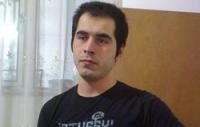
Jailed Iranian blogger Hossein Ronaghi Maleki has been transferred to hospital in critical condition.

Iran’s House of Human Rights website reports that Ronaghi Maleki was transferred to Hasheminejad hospital on Thursday.

In the past year, the jailed blogger has undergone four operations, including a kidney transplant. In the past, the authorities had refused to heed the advice of specialists to let him receive adequate treatment outside of prison facilities.

Ronaghi Maleki had begun a hunger strike to protest what he described as “the unfair 15-year prison term, the authorities’ refusal to grant sick leave and the psychological and physical pressures” he has been subjected throughout his imprisonment.

He began his hunger strike by protesting his condition in an open letter to Tehran Prosecutor Abbas Jafari Dowlatabadi.

Hossein Ronaghi Maleki, who ran a blog under the penname Babak Khoramdin, was arrested in 2009, during the wave of arrests triggered by widespread protests against the result of the presidential election, which the opposition claimed was rigged to re-elect Mahmoud Ahmadinejad.

After close to 300 days in solitary confinement, he was sentenced to 15 years in prison. Last February, he began experiencing kidney complications for which he was finally given a transplant, but the authorities immediately returned him to jail after the procedure.

Rights group denounces arrest of Iranian labour activists

0


The Observatory for the Protection of Human Rights Defenders has issued a call to action regarding the recent arrest of labour activists in Iran and called for their immediate and unconditional release.

The Observatory for the Protection of Human Rights Defenders writes that the Iranian League for the Defence of Human Rights (LDDHI) has called its attention to the persecution of the union activists.

The Observatory lists the names of 13 labour activists, most of whom were arrested within the past month, including: Sheys Amani, a founding member of the Free Union of Iranian Workers, on January 17; Sharif Sa’ed-Panah, a board member of the Free Union of Iranian Workers, on January 8, and Maysam Nejati-Aref, a unionist at Tehran’s SAIPA car manufacturing company, on January 3.

The announcement also expresses concern over the “ongoing detention and health status of Mr. Reza Shahabi, the board member and treasurer of Sherkat-e Vahed, who went on a hunger strike last November and had to be hospitalized on December 13.” Shahabi’s judicial case has been kept in limbo for more than 18 months while he is held in jail without bail.

The Observatory calls on the Iranian government to end its persecution of these activists and urges the judiciary to refrain from harassing any detainees.

It also reminds the Islamic Republic that it must remain faithful to its international commitments regarding human rights.

The Observatory for the Protection of Human Rights Defenders is a joint program of the International Federation of Human Rights (FIDH) and the World Organisation Against Torture (OMCT).

Green Movement Supports an Election Boycott

0


InsideIran – The Coordination Council of the Green Path of Hope, the political council close to Mir Hossein Mousavi and Mehdi Karroubi, the opposition leaders in Iran, released a new statement calling the upcoming Iranian parliamentary elections a political “show.”

This council was formed abroad following the disputed 2009 presidential elections. In its statement, the Coordination Council commended that reformists and other political opposition groups  boycott  the upcoming parliamentary election in March. The statement was first published  on  January 17 on Kalameh website, an online reformist publication close to Mir Hossein Mousavi.

As reported by BBC Persian this statement declared, “Different parts of the Green Movement… have demonstrated good capacity for transforming the ninth parliamentary election into a decisive civil struggle against tyranny.”  The statement did not offer any specific means to organize or combat the ruling regime in Iran.

The Coordinating Council believes the Iranian government will use the upcoming elections to bolster its declining legitimacy. The statement adds: “The government hopes to advertise the competition between its own inner circles among various social groups. In this theatrical manner, [the government] will implement a seemingly competitive elections.”

“The authorities are trying to use all their propaganda, political, security, and police forces to force the people into participating in the elections,” the statement adds.

The statement also accuses the Iranian regime of trying to stay in power by all means. “In order to stay in power, [the Iranian government] disregards the country’s national and security interests. Therefore, it should not be surprising if until the Election Day we witness the implementation of various scenarios, which will result in the escalation of tensions and foreign threats. They [Iranian government] will use such events for propaganda purposes in order to provoke the patriotic sentiments of the people during elections.”

The Coordination Council has asked the members of the Green Movement to “play an important part in exposing the “theatrical and forced” March elections.” The statement also asks supporters to expose the government’s common scenarios designed for “fooling the people.”

In its statement, the Coordination Council of the Green Path of Hope has declared the period between February 15 until the Election Day, March 3, as an appropriate time to revitalize the protest movement in Iran. They called on all supports, especially the youth and university students, to “pursue the prospects of this movement during this time.” They have not provided any additional details.

Chief of Iran’s Quds Force claims Iraq, south Lebanon under his control


Commander of Iran’s Quds Force, Brig. Gen. Qasem Soleimani has said that the Islamic Republic controls “one way or another” over Iraq and south Lebanon and that Tehran is capable of influencing the advent of Islamist governments in order to fight “arrogant” powers, ISNA student agency reported on Thursday.

“The enemies are trying to besiege the Islamic Republic of Iran, but this symposium is an opportunity for thousands of youth who play an influential role in the Islamic awareness to travel Iran and shed sensitivities of Iran-phobia by observing the an Islamic government founded on religious principles in Iran,” Gen. Soleimani, who reports directly to Supreme Leader Ali Khamenei, said.

Speaking about Iran and Lebanon, Gen. Soleimani said: “These regions are one way or another subject to the control of the Islamic Republic of Iran and its ideas.”

Gen. Soleimani was speaking during a student symposium titled “The Youth and Islamic Awareness.”

The Quds Force, established during the Iran-Iraq war, is in charge of external security operations aimed at exporting the Islamic Revolution.

In January 2012, UK’s The Guardian reported that the head of Iran’s Quds force had conveyed a message to U.S. CIA director David Petraeus telling him that he was in charge of Iran’s policy in the region.

“General Petraeus, you should know that Qassem Suleimani controls the policy for Iran with respect to Iraq, Lebanon, Gaza, and Afghanistan. And indeed, the ambassador in Baghdad is a Quds Force member. The individual who’s going to replace him is a Quds Force member,” The Guardian reported.

Petraeus had admitted that most of U.S. diplomatic efforts in Iraq and elsewhere in the Middle East were undermined by the work of Suleimani, according to the Guardian.

Mowaffak al-Rubaie, Iraq’s former national security minister, told the London-based asharq al-Awsat newspaper in July 2010, “He (Suleimani) is the most powerful man in Iraq without question,” “Nothing gets done without him.”


Source