Home Blog Page 502

Activist Yaser Yousefzadeh arrested in north Iran

0


GVF — A political activist from the northern city of Babolsar has been detained.

Accotding to opposition website Chamran news, Yaser Yousefzadeh was arrested after security forces raided his father’s home on Monday evening. After refusing to show any identification or arrest warrant, the agents attacked Yousefzadeh’s father and sister with pepper spray. They also violently beat the young activist as he rushed to the aid of his father.

Yousefzadeh was then transferred to his own residence where agents inspected the place and confiscated his personal belongings.

During the disputed 2009 presidential election Yousefzadeh campaigned for opposition candidate Mir Hossein Mousavi.

He also spent two months in solitary confinement after being arrested in early 2011.

Journalist Saeed Razavi Faghih detained at Tehran airport

0


GVF — An Iranian activist and journalist Saeed Razavi Faghih has been arrested after returning to Tehran’s Imam Khomeini airport from France.

Sources told the Green Voice of Freedom that former student activist Saeed Razavi Faghih was detained after returning from Paris where he had been studying for seven years.

Razavi Faghih is currently being held in Evin prison.

The activist is also a former member of the Office for Fostering Unity (Daftar-e Tahkim-e Vahdat), a leading student organisation in Iran.

Razavi Faghih was detained in January 2009 while on a brief visit to Iran. He spent sixteen days in prison after which he was released on bail. He was later barred from leaving the country and tried in absentia which resulted in a four-year jail-term and as well as 74 lashes for charges such as “propaganda against the state,” taking part in “illegal” gatherings and insulting the leader Ali Khamenei.

The journalist has worked with a number of reformist publications such as Sobhe Emruz, Bahar, Bonyan, Yase No, Vaghaye Etefaghiye and Dowrane Emruz


Source

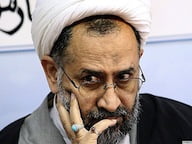
Iranian Intelligence Minister warns against election turmoil


Radio Zamaneh: Iran’s Intelligence Minister has warned the public that the country’s “enemies” are trying to disrupt the coming elections. With parliamentary elections slated for March, the Fars News Agency quoted Heydar Moslehi saying: “The enemy’s psychological warfare against Islamic Iran takes shape through various dimensions and roots.”

The Intelligence Minister previously had reported the arrest of several “election disruptors.” Moslehi accused the detainees of having links to foreign forces bent on disrupting the elections.

He listed the “enemy’s” methods for derailing the elections: stoking political differences, questioning the transparency of the elections process, trying to bring political debate into the streets, spreading mistrust of the system, creating instability and intensifying economic sanctions.

The parliamentary elections are the first national elections to be held since the controversial presidential elections of 2009, which triggered mass street demonstrations against Mahmoud Ahmadinejad’s victory, which protesters claimed was fraudulent.

The reformists, who have been isolated and severely persecuted since the 2009 elections, have announced that they will not run in the March elections. Reformist figures have spoken out against the government’s refusal to release political prisoners and their persistence in keeping opposition leaders MirHosein Mousavi and Mehdi Karroubi under house arrest.

Well-known literary translator detained in Iran

0


CNN – Family and friends of a well-known literary translator in Iran are concerned for his well-being after he was detained for unknown reasons nearly two weeks ago.

Mohammad Soleimani Nia, 39, has been held since January 10, according to a source close to his family.

The family doesn’t know where he’s being detained or why he’s being questioned, but they fear he is in solitary confinement at Tehran’s notorious Evin prison, according to the source. The prison is known for its harsh conditions.

Soleimani Nia’s family is “so worried about his health,” said the source, who did not want to be named for safety reasons. “He’s not a strong person physically.”

His ordeal began in late November when he was questioned by security and intelligence officers. Friends and family aren’t sure the motive behind that questioning as phones are monitored in Iran and Soleimani Nia was tight-lipped about the experience, which resulted in him being banned from leaving the country, according to the source.

On January 10, officials called him to the Revolutionary Court, where he reported that morning. The court hears cases of smuggling, blaspheming, inciting violence or trying to overthrow the Iranian government.

After arriving at court, he was accompanied by security guards to the home he shares with his parents in Karaj, outside Tehran. The guards searched the house, seizing electronic devices and documents, and prohibited Soleimani Nia from speaking to his parents, the source said.

His whereabouts have been unknown since the guards left the home with Soleimani Nia in their custody.

Firoozeh Dumas, an Iranian-American author whose best-selling book “Funny in Farsi” Soleimani Nia translated for the Iranian audience, described her friend as “a very gentle soul.”

“He’s a very innocent, very delicate man,” Dumas said, adding, “I don’t think he would physically survive” the harsh conditions of prison.

The source close to the family offered a similar description: “He’s a gentle, polite person,” comparing his manner of speaking to “how poets and writers talk.”

Both Dumas and the source were adamant in describing Soleimani Nia as someone who is not involved in Iran’s politics, making the reason for his detainment even more of a puzzle.

“He made a point of distancing himself from politics,” Dumas said.

Soleimani Nia’s mother has gone to court daily to arrange a supervised meeting with her son, the source said, but each day she is told that he is still being interrogated. The family has tried to obtain a lawyer for Soleimani Nia, but they’ve been advised that until he has been formally charged, they cannot take up his case, according to the source.

In addition to his translating work, Soleimani Nia also runs a social media network in Iran called U24, similar to LinkedIn. The site has 60,000 members.

“He’s basically somebody who likes to connect artists and he’s never made any money — he’s somebody who is in it for the higher good,” Dumas said. “He’s always pursued things that have really benefited the people of Iran.”

Soleimani Nia’s case is just one of thousands circulating through Iran’s justice system — many as a result of religious or political persecution. But unlike the recent high-profile cases of American hikers detained for more than two years or a former U.S. Marine sentenced to death for espionage, many of those detainees’ stories are never made public.

Iran’s notoriously secretive trials have been assailed by human rights groups and governments around the globe.

The U.S. State Department’s annual human rights report on Iran says the court system is, in practice, “corrupt and subject to political influence.” And while the country’s constitution provides a defendant the right to a public trial, presumption of innocence, and a lawyer of his or her choice, “These rights were not respected in practice.”

For his family and friends, the lack of information is gut-wrenching.

“A man is in jail for no reason whatsoever and no one has heard from him,” Dumas said, her voice breaking. “It’s a nightmare. This is this man’s life and I think about his parents and I got physically sick when I heard the news.”


Source

The Iranian oil embargo: does this mean war?

0


The EU has decided on sanctions that Tehran has long said would represent a declaration of war. What will follow?

The decision to impose an EU oil embargo on Iran, agreed on Monday by European foreign ministers, sets a potential bomb ticking, timed to detonate on 1 July.

On that day, according to the package of measures on the table in Brussels, Europe will stop importing oil from Iran, about a fifth of the country’s total exports. At about the same time, US sanctions targeted at the global financing of Iran’s oil trade will also kick in. Iran could still export some of its oil to Asia, but at big discounts.

Unlike previous sanctions on Iran, the oil embargo would hit almost all citizens and represent a threat to the regime. Tehran has long said such actions would represent a declaration of war, and there are legal experts in the west who agree.

The threat of an immediate clash in the Gulf appeared to recede over the weekend when the USS Lincoln aircraft carrier and its task force, including the British frigate HMS Argyll and a French warship, travelled through the strait of Hormuz without incident. This was despite warnings earlier this month from the Iranian Islamic Revolutionary Guard Corps (IRGC) that it would oppose the return of a US carrier to the region.

But tensions are almost certain to build again as the effective date of the oil sanctions approaches. The US has already begun beefing up its military presence in the region, and the IRGC is planning new naval war games next month. Rear Admiral Ali Fadavi told the Fars news agency earlier this month that the upcoming exercises, codenamed “the Great Messenger”, would be different from previous war games, without going into detail.


Iran’s oil supply

The strait of Hormuz is the kink in the hose of the Gulf’s oil supply to the world. A small amount of pressure can have a disproportionate effect, sending world crude prices soaring and starving the world’s oil-dependent economies.

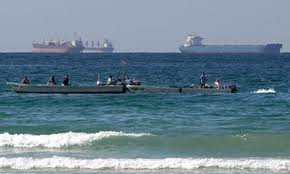
At its narrowest point, between the Oman peninsula and the Iranian islands off Bandar Abbas, the strait is 20 miles wide, but the channels down which more than a third of the world’s ocean-borne oil flows – 17m barrels – are even more tenuous. The tanker lanes going in each direction are just 2 miles wide in parts, through the deep water off Oman and then again, further west, inside Iranian territorial waters.

This is where oil tankers are most vulnerable to an Iranian attempt to turn off the global petrol pump. It was enough for an Iranian official to simply raise the prospect of closing the strait, in retaliation for the threat of sanctions, for the world price of crude to rise to $115 (£74) a barrel. Maintained over the long term, that is costly enough to strangle any hint of a global economic recovery.

That is what makes Iranian naval action in the Gulf such a potent weapon. But it is a decidedly double-edged one, potentially more lethal to Iran than its adversaries. For, while Saudi Arabia can bypass the strait by pipeline, all of Iran’s oil terminals are west of the choke point. Iran would cut off its own lifeblood, which accounts for more than 60% of its economy.

Furthermore, the US has made clear that interruption to sea traffic in the Gulf would be a “red line”, triggering an overwhelming military response in which Iran’s nuclear facilities would be on the target lists. Until now, the US military has ruled out strikes on the nuclear programme, as the costs of starting a war with Iran outweigh the gains of setting the programme back, in defence secretary Leon Panetta’s estimation, one or two years at most. But if the US was going to war anyway over oil, that cost-benefit analysis would change.

So closing the strait outright would be – if not suicidal – an exercise in extreme self-harm for Iran. But the choice facing Tehran is not a binary one.

There is a spectrum of options falling well short of total closure; forms of harassment of the oil trade that would drive the price of crude up and keep it up, very much to Iran’s benefit, but fall short of a casus belli for war. However, exercising such options requires subtlety and fine judgment on all sides and that is by no means a given.

In a period of sustained high tension, an over-zealous Iranian Revolutionary Guards commander could seize his moment to start a war, or a nervous American captain, his vessel just seconds from Iran’s anti-ship missiles, could just as easily miscalculate. The last time Iran and America played chicken in this particular stretch of water, in 1988, a missile cruiser called the USS Vincennes shot down an Iranian Airbus, killing 290 civilians including 66 children.

The shadow of Iran Air 655 hangs over the current standoff, as a reminder of how even the world’s mightiest and most advanced militaries cannot necessarily control a situation in which tensions have been allowed to escalate.


US military options

There is no doubting the overwhelming firepower at America’s disposal. The US Fifth Fleet, whose job it is to patrol the Gulf, is expected to be beefed up from one to two aircraft carriers. Meanwhile, as it has pulled its troops out of Iraq, the Pentagon has quietly boosted its army’s presence in Kuwait. The Los Angeles Times reported that it now has 15,000 troops there, including two army brigades and a helicopter unit. The US is also bolstered by the significant naval presence of its British and Gulf allies.

The Iranian military looks puny by comparison, but it is powerful enough to do serious damage to commercial shipping. It has three Kilo-class Russian diesel submarines which run virtually silently and are thought to have the capacity to lay mines. And it has a large fleet of mini-submarines and thousands of small boats armed with anti-ship missiles which can pass undetected by ship-borne radar until very close. It also has a “martyrdom” tradition that could provide willing suicide attackers.

The Fifth Fleet’s greatest concern is that such asymmetric warfare could be used to overpower the sophisticated defences of its ships, particularly in the narrow confines of the Hormuz strait, which is scattered with craggy cove-filled Iranian islands ideal for launching stealth attacks.

In 2002, the US military ran a $250m (£160m) exercise called Millennium Challenge, pitting the US against an unnamed rogue state with lots of small boats and willing martyr brigades. The rogue state won, or at least was winning when the Pentagon brass decided to shut the exercise down. At the time, it was presumed that the adversary was Iraq as war with Saddam Hussein was in the air. But the fighting style mirrored that of the Iranian Revolutionary Guard.

In the years since, much US naval planning has focused on how to counter “swarm tactics” – attacks on US ships by scores of boats, hundreds of missiles, suicide bombers and mines, all at once.

“Every couple of weeks in Washington you can go to a different conference on swarming,” said Sam Gardiner, a retired US air force colonel who has taught strategy and military operations at the National War College. “War games have shown that swarming, missiles and mines all together put a strain on the capacity of ships to defend themselves. Your challenge is how to protect your minesweepers from swarming techniques.”

One of the US naval responses has been to develop a new kind of fighting vessel, the littoral combat ship (LCS), tailor-made for countering Iran’s naval tactics. The LCS is sleek, small and agile with a shallow draft and high speeds, allowing it to operate along island-pocked coastlines.

At the low-tech end of the scale, the Fifth Fleet is reported to have deployed a significant number of dolphins trained to seek out mines.

Ultimately, the US response to swarming will be to use American dominance in the air and multitudes of precision-guided missiles to escalate rapidly and dramatically, wiping out every Iranian missile site, radar, military harbour and jetty on the coast. Almost certainly, the air strikes would also go after command posts and possibly nuclear sites too. There is little doubt of the effectiveness of such a strategy as a deterrent, but it also risks turning a naval skirmish into all-out war at short notice.


Iranian tactics

For that reason, most military analysts argue that if Iran does decide to exact reprisals for oil sanctions, it is likely to follow another route. Gardiner believes the most likely model will be the “tanker war” between Iran and Iraq from 1984 to 1987. The aim would be to raise insurance premiums and other shipping costs, and so boost oil prices as a way of inflicting pain on the west and replacing revenues lost through the embargo.

“They wouldn’t necessarily do anything immediately. If they do what they did in the tanker war, a mine would be hit and it wouldn’t be clear exactly how long it had been there. Things like that push up the price of oil. People talk about a spike in oil prices, but it might be more like a plateau,” Gardiner said.

“The answer is not to escalate. You start protecting tankers and searching for mines.”

Even if Iran decides on retaliation, there is no reason for it to be confined to an immediate response in the strait. It could target the oil price with acts of sabotage aimed at Arab state oil facilities along the southern shore of the Gulf, or western interests could be targeted anywhere around the world, months or years after the imposition of an embargo.

Adam Lowther, of the US air force’s Air University, pointed out recently on the Diplomat blog that Iran’s “ministry of intelligence and national security (MOIS), Iran’s espionage service, is among the most competent in the world”.

“Over the past 30 years, MOIS agents have successfully hunted down and assassinated dissidents, former officials of the shah’s government, and real or perceived threats to the regime. MOIS is still capable of carrying out assassinations, espionage, and other kinetic attacks against government and civilian targets. The spy service is also likely to have covert agents in the United States,” Lowther said.

Ehsan Mehrabi, an Iranian journalist specialising in military and strategic issues who recently left the country, wrote on the Inside Iran website: “I recall a famous Iranian idiom that was quite popular among the military officials: ‘If we drown, we’ll drown everyone with us’. They were pretty clear about their intention. If attacked by a western power, the war would not be contained within the Iranian borders. The entire world would become Iran’s battleground – at least this was their thinking.”

Obama administration officials believe that last year’s Washington bomb plot, in which Revolutionary Guard officials are alleged to have planned to kill the Saudi ambassador to the US by blowing up his favourite restaurant in the American capital, could have been an attempt to settle scores for some past incident.

Bruce Riedel, a former senior CIA official said recently at a seminar in Washington organised by the Atlantic Council: “One of the ways Iran can hurt us which is not often talked about is Iranians’ capacity to hurt us in Obama’s war, in Afghanistan. The Iranians are already superbly placed to make the war in the Afghanistan – which is already difficult – impossible.”

All these options however represent high-risk strategies, fraught with risks of miscalculation. In the tanker war scenario, maintaining the line between war and peace would, in effect, be delegated to relatively junior officers, forced to make high-stakes decisions in a matter of seconds, the exact set of circumstances that led to the 1988 Airbus disaster. Even if Washington and Tehran remain determined to avoid an all-out war, with every passing month there is a rising chance of one breaking out by accident.

Iran arrests prominent Ahwazi Arab singer and his brother

0


By MOUSA SHARIFIFARID
AL ARABIYA

Iranian authorities have arrested prominent Arab singer, Ghalib Manabi, and his brother, Hassan, from the Arab-majority city of Ahwaz, the capital of the Khuzestan Province.

Ghalib and several members of his family are known for their activism challenging various government programs designed to alter the demographic structure in the region and reduce ethnic Arabs to a minority group.

Members of Ghalib’s family were previously arrested in 2005 during an uprising by ethnic Arabs against a government program that called for requisitioning of land from Arabs in al-Ahwaz and a government-directed migration plan of non-Arabs into the region.

Local sources told Al Arabiya that about 60 Arab-speaking activists were arrested since November 2011.

Kazem Mojaddam, member of the Center against Anti-Arab Racism in Iran, told Al Arabiya, “The government of Iran does not allow the Ahwazi people to practice their cultural activities although the Iranian constitution gives this right to all the people of Iran.”

Mojaddam added that the Ahwazi people were being threatened by the Iranian government, “which tries to undermine the Arab identity and culture through imprisonment and killing of Arab artists and writers.”

“The government also does not allow Arab-speaking Iranians to name their children after non-Shiite Arab names,” Mojaddam added.

Khuzestan is the source of 90 percent of Iran’s oil production, but people in the province complain of marginalizatio, poverty and the lack of adequate social services.

Besides, the province often takes the lion’s share of executions in the country. In 2007, Iranian authorities executed 22 activists in Ahwaz after they were accused to supporting the secession of the region from Iran.


Source

Shahram Manouchehri, another Iranian journalist, arrested in Iran

0


Journalist and blogger Shahram Manouchehri was arrested this week by Iranian authorities, the latest casualty of a new crackdown on media activists.

The Human Rights Reporters of Iran reports that Manouchehri has been taken to an undetermined location, his home has been raided, and his books and documents have been confiscated.

Shahram Manouchehri, who worked for reformist publications and dailies, had been arrested in the post-election protests of 2009 and released on bail.

Shahrami is now the fifth journalist to be arrested in recent days in Iran.

Previously, Peymon Pakmehr, Sahameddin Bourghani, Parastoo Dokouhaki and Marzieh Rasouli, who are all journalists, were arrested by authorities.

Earlier this month, another three journalists — Ehsan Houshmand, Fatemeh Kheradmand and Hassan Fathi — were also arrested.

Reporters Without Borders has written to UN Human Rights Commissioner Navi Pillay urging action against the rise of journalist incarceration in Iran.

Detained journalists held at Evin Prison


Reports from Iran indicate that Parastoo Dokouhaki and Marzieh Rasouli, two journalists and bloggers who were recently arrested, are being held in the 2-aleph section of Evin Prison.

The two detainees are reportedly being held in solitary confinement in the section of the prison controlled by the Revolutionary Guards.

So far they have been slapped with the general charge of “propaganda against the regime and threatening national security.”

They have not yet been granted access to a lawyer or allowed a visit from their relatives. The families of the detainees, as is customary in similar situations in recent years, have been told to refrain from speaking with the media.

Dokouhaki, a women’s rights activist and one of the first bloggers in Iran, was arrested on January 15 at her home.

Rasouli, a journalist with a history of working with the Iranian Student News Agency (ISNA) and dailies such as Iran and Shargh, was arrested on January 17.

She had been previously arrested in September of 2010 and banned from travelling abroad. Rasouli had been told that her charge was espionage but, a few weeks before her second arrest this year, she was told that the charges against her had been dropped and she was allowed to acquire a passport.

Several journalists have been arrested in the past month as the Islamic Republic clamps down anew on media activists.

It is time to list Iran’s Revolutionary Guards as terrorists


Iran’s Supreme Court has now confirmed the death sentence of Iranian-born web programmer Saeed Malekpour, a Canadian permanent resident. Malekpour was convicted of “crimes against Islam” and “spreading corruption on Earth” – which have emerged as classic trumped-up charges in the Iranian pattern of the criminalization of innocence. For supposedly creating pornography websites in Iran, Malekpour is set to receive the death penalty.

Malekpour maintains his innocence, insisting that image-uploading software he developed as a web programmer was used by an illicit site without his knowledge or consent. The international community spoke out against his death sentence when it was first handed down, and Iran moved to suspend it; however, with the escalation of rhetoric between the West and Iran – and the case disappearing from the radar screen – Malekpour is back on death row.

When he was first arbitrarily arrested in 2008 – while visiting his ailing father in Iran – Malekpour was taken to the notorious Evin prison in Iran, where he spent a year in brutal solitary confinement without charge, without access to legal representation or visitation. He subsequently “confessed” to his “crimes” on state television, a not unknown form of show trial.

Writing from prison, Malekpour says his initial confession to the charge had been “extracted under pressure, physical and psychological torture” as well as threats. He recounted in particular an instance when “interrogators stripped me while I was blindfolded and threatened to rape me with a bottle of water.” He described his detention in similarly horrific terms: “While I remained blindfolded and handcuffed, several individuals armed with cables, batons, and their fists struck and punched me. At times, they would flog my head and neck.”

It should be known that Iran has been on an execution binge. This past December, Amnesty International reported on the escalation of Iranian executions, even by wonton Iranian standards. Six hundred people were put to death between the beginning of 2011 and November alone. While many of these executions were for alleged drug-related crimes, this category, too, recently has become a catch-all for the suppression of dissidents.

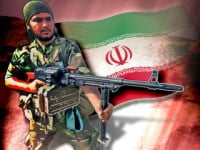
According to Malekpour’s family, the death sentence was reinstated under pressure from the Iranian Revolutionary Guard Corps (IRGC), which has emerged as the epicentre of Iran’s four-fold threat to human rights, peace and international security: The IRGC plays a central role in Iran’s domestic repression, international terrorism, incitement to genocide, and nuclear proliferation. Further, as the Iranian Human Rights Documentation Center at Yale University notes, the IRGC is responsible for the murder of political dissidents both inside and outside of Iran.

This case should serve as the wake-up call that the Canadian needs to sanction the IRGC and list it as a terrorist entity. The United States has already labelled it as a terrorist group, while the UN and EU have imposed various sanctions against the IRGC and its leaders. It is regrettable that Canada continues to dither with regard to listing it as a terrorist entity here in Canada.

I introduced legislation in this regard several years ago, and have called on the Canadian government to list the IRGC as a terrorist entity both in Question Period and during House debate. The Conservatives continue to respond that they need more time to study and consider the issue. Frankly, the IRGC’s well-documented international criminality should have been evidence enough of the need for the Can-adian government to act. But Malekpour’s case should prove the point beyond any doubt: The IRGC represents, and indeed embodies, the worst of the Iranian regime, including the targeting of Canadians.

The hope is that pressure from the international community may yet convince Iran to drop the false charges in this case and free Malekpour – allowing him to return to Canada. But however this case ends, the time has come to sanction the IRGC, and list it as a terrorist entity.

– Irwin Cotler is the Member of Parliament for Mount Royal and the former Minister of Justice and Attorney General of Canada. He is Chair of the Inter-Parliamentary Group for Human Rights in Iran, which has protested Malekpour’s conviction and death sentence.

Baha’i student Dorsa Allahverdi expelled from Gorgan University

0


The Association Against Educational Discrimination Web site reports that on 21 November 2011, Dorsa Allahverdi finds out over the phone that due to an “incomplete file”, she has to go to the Education Evaluation Organization. On 23 November, she is told at the Education Evaluation Organization that she has been expelled from the university because of her belief in the “Baha’i Faith”.

The report further added that in 2011 alone, over 20 Baha’i students were expelled from different universities such as the Isfahan University of Technology, Shiraz University and Sharif University. Among those expelled are Ruhollah Tashakor, Bashir Tashakkor, Alborz Nourani, Ava Tavakoli, Mona Momeni, Orkideh Aghai, Hannaneh Kanani, Hooman Rahmanian, Malika Vazirzadeh, Noura Sahrangi, Farnood Jahangiri, Pouya Mohammadi, Shideh Abadi, Delara Darabi, Sahba Mottahedin, Samira Gholami, Shima Ranjbar, Shadi Moeddi and Negar Salehi.

It is worth noting that dozens of other Baha’i students were also barred from entering university this year due to the same “incomplete file” reason.
Regarding this issue, Dorsa Allahverdi has written the following text:

On September 10, 1390, I woke up at 6 AM with anxiety. I had not seen the names of those admitted to universities on the web site of the Education Evaluation Organization. I was wondering whether or not I had been admitted. Perhaps I am among those with an “incomplete file”! Or else… It was a strange feeling…. Soon after that … God, what am I looking at?

Dorsa Allahverdi – Agricultural Machinery Engineering – Gorgan University of Agricultural Sciences and Natural Resources – Daytime

I have been admitted! A cry of joy … A moment that is familiar to many. I went over the future in my mind, and planned a beautiful future for myself because I thought I have now fulfilled my lifelong desire to get into college. I immediately checked the sites to find out about the registration process and the required documents.

September 14

Finally, registration day. I am so excited. Now is the time to start building a new future for myself and to give a vivid color to my life’s desire. But I also was worried that history would repeat itself. I remembered that day years ago. The day they announced the list of those admitted to the magnet high school and when, unbelievably, I didn’t see my name among those admitted! Since I was certain I had answered correctly to all the questions on the test. After much legwork, I found out about the existence of my report card. When I went to school and received the official report, the school official explained: “It is really unfortunate. Your ranking even without the quota system is way higher than the next highest ranking student admitted with the advantage of the quota system and I truly regret to lose a student such as yourself.”

I too regretted that I lived in a country that, despite its’ motto “Seek out knowledge from cradle to grave” and its tradition of “Seek knowledge even if it is in China”, I was being so unfairly deprived from studying at a school that I had every right to. But I was not very surprised. I was just one of hundreds of Baha’is who had been deprived of their inalienable rights. Anyway, I had now found my way into the university. I went through the registration process with some confusion, because in the registration form there were no “Baha’I” or “other religions” options in the box for religion. And since I didn’t want to lie about my religion, I was forced to check “other denominations” and specify the Baha’I Faith (which is not a sect but a religion) in the description field.

Finally came the first day of my first semester and I continued my education with enthusiasm. Higher education … higher education … the common wish of all young people and their families. The first two months passed in the blink of an eye and I went through each day thinking that after four years I would graduate as an engineer to serve society. Sometimes I would think back to the advice my high school principal (I was one of the few Baha’is who ,for middle school, went to a magnet public school) gave me: “you have taken a spot away from other kids who would be studying here instead of you! Because you are not going to get into any university anyway. This school is for those students who have a future in higher education, not you…. “And now, I wished he was here to see where I am.

But, on the other hand, I was worried. Is this going to be my last day in college? And finally, on November 21, in a telephone conversation, I was told that in order to fix my “incomplete file” problem, I would have to go to the Education Evaluation Organization in Tehran. It was interesting that, in order to make sure there is no “incomplete file” in my situation, I had asked the Education Evaluation Organization several times about it and every time I had been assured that there is nothing missing in my case. And now, after the telephone call, I found out that the only problem with my file was that I am a Baha’i.

Two days later, November 23, we went to the Education Evaluation Organization. Fortunately, or unfortunately, they frankly told us that I had been expelled from the university for being a Baha’i and that I don’t have the right to a higher education. I wrote a letter asking for my right to a college education and I requested that they look into my case. Although I knew that it would be no use. But, in my heart, I prayed: “Oh God … adorn the rulers with justice and the religious leaders with fairness …”.