Home Blog Page 505

Iranian Kurds get death sentences


Two Iranian Kurds have been sentenced to death by the Revolutionary Court in Mahabad.

The Mokerian News Agency reports that Ali and Habib Afshari, who were arrested last year and are currently being held in Oroumiyeh Prison, have received the death sentence for the charge of “enmity with God through propaganda activities and membership in a dissident group.”

Reports indicate that the prisoners have 20 days to appeal the court decision.

In the past three years, at least seven Kurdish political prisoners were hanged by Islamic Republic authorities, and another 17 Kurdish prisoners are currently on death row in Iran.

Meanwhile, Iran’s Supreme Court has approved the death sentence for Saeed Malekpour, who was charged with “propaganda against the regime through obscene websites and offending sanctities, insulting the leader and the president, links to dissident groups and corruption on the Earth.”

Malekpur is a resident of Canada and was arrested three years ago during a trip to Iran.

In the past two years, in the wake of the controversial 2009 and the allegations of vote fraud that led to mass demonstrations, the number of executions in Iran has made a substantial jump, which is persistently being challenged by human rights activists.

According to Amnesty International, at least 600 people were executed in Iran in 2011, and most of them were hanged for drug charges.

Security forces step up arrest of journalists, activists


GVF — Security forces have been rounding up activists and journalists in recent days.

The latest arrest came on Wednesday when security forces took journalist Sahamoddin (Saham) Bourghani to an unknown location after inspecting his place of residence.

Bourghani is the son of Ahmad Bourghani, a former reformist parliamentarian and Ministry of Islamic Culture and Guidance official, who died in February 2008. Saham has worked for important pro-reform publications such as Shargh and Etemad newspapers.

In recent days, authorities have stepped up the campaign of arrests against dissidents. Marziyeh Rasouli and Parastoo Dokouhaki were detained on Tuesday. Earlier, authorities arrested student activist Arash Sadeghi as well as journalists Saeid Madani, Fatemeh Kheradmand and Ehsan Houshmand.

In December 2011, a report by the Committee to Protect Journalists, a New York based organisation that promotes press freedom and journalist rights, named Iran as the world’s worst jailer of journalists. Eritrea, China, Burma, Vietnam, Syria, and Turkey trailed behind Iran as the world’s worst imprisoners of journalists.

“Iran was the world’s worst jailer, with 42 journalists behind bars, as authorities kept up a campaign of anti-press intimidation that began after the country’s disputed presidential election more than two years ago,” the CPJ study noted.

The review suggested that Iran had “maintained a revolving cell door” since its rigged 2009 presidential election, “freeing some detainees on furloughs even as they make new arrests. “Journalists freed on furloughs often post six-figure bonds and endure severe political pressure to keep silent or turn on their colleagues.”

Following the assassination of another Iranian nuclear scientist Mostafa Ahmadi Roshani last Wednesday, a group of more than 230 opposition activists issued a statement condemning the attack, while at the same time accusing the country’s security agencies of being preoccupied with cracking down on dissent rather than ensuring the safety of Iranian citizens.

“Iran’s intelligence forces, which have directed all their efforts at suppressing domestic adversaries and stifling the voice of protesters and the media, have proven incapable of dealing with these [security] threats,” the activists said. “Regime officials, especially the Intelligence Minister, must be held accountable for the slackness shown in protecting the lives of Iranian experts and researchers.”

Iran’s Al Qods cells for Saudi Arabia, Turkey, Kuwait to hit oil and US targets

0


In the past 48 hours, Saudi Arabia, Kuwait and Turkey have alerted Washington to intelligence reports of Iranian Al Qods Brigades operatives heading their way for attacks on oil installations and American targets. The alert was accompanied by a query about how the US intended to respond to the approaching menace.

Reporting this, DEBKAfile’s intelligence and counterterrorism sources say the information relayed to Washington was more detailed and specific than the customary tip-off.
Tuesday, Jan. 17, a US spokesman accused Tehran of deepening its involvement in the Syrian conflict. For the second time in a week, Washington disclosed that Al Qods commander Gen. Qassem Soleimani had visited Damascus recently, confirming Iranian arms shipments for ensuring President Bashar Assad’s victory over the uprising against him.

DEBKAfile’s intelligence sources report that another part of Soleimani’s Damascus mission was to synchronize the Al Qods cells’ strikes across the Middle East – in Turkey, Lebanon, Gaza and Sinai – with the tempo of Assad’s crackdown on protest. He also dealt with setting up terrorist attacks against Israeli targets.

A US spokesman said: “We are confident that he was received at the highest levels of the Syrian government, including by President Assad.”

Four months ago, in October 2011, the US accused Soleimani of a hatching a conspiracy to assassinate the Saudi ambassador in Washington.

Tuesday night, the Turkish Security General Directorate-EGM put all the country’s 81 districts on guard for the expected arrival of Al Qods operatives to stir up mass unrest against the Erdogan government and attack the US embassy and provincial consulates-general.
Their arrival, said the EGM notice, would be coordinated with the infiltration of Hizballah terrorist teams to Turkey.

DEBKAfile’s sources in Ankara believe Tehran is kicking off its first round of Middle East terrorist operations in Turkey as punishment for consenting to the installation of a US radar station on its soil for the NATO shield against incoming Iranian missile attacks, in defiance of Iran’s warnings. The Erdogan government is also being penalized for actively supporting Syrian resistance to the Assad regime, especially the Free Syrian Army-SFA.

When Iranian parliament speaker Ali Larijani visited Ankara Jan. 12, he delivered a last warning to the Turkish government to desist from both steps, although the visit was officially billed as focusing on the resumption of nuclear negotiations between Iran and the five powers plus Germany.  Larijani’s talks clearly ended in disagreement, judging by his parting shot: “We’ve got our ways of doing things.”

A senior counterterrorism source told DEBKAfile sources on Wednesday, Jan. 18 that the Iranians are setting Turkey up as an example to show the US and their Middle East antagonists what they can expect when Tehran lets the Al Qods Brigades loose against them.

According to the information relayed to Washington by Saudi Arabia and Kuwait, Al Qods has been placed on the ready for action, such as blowing up oil fields, oil pipelines and oil export terminals. Some of its cells are already present among the two countries’ Shiite populations in the guise of longtime Saudi and Kuwaiti nationals of Iranian descent; others to be dropped by sea on the Saudi and Kuwaiti coasts.

Yazd Judiciary official promises crackdown on religious minorities

0


The head of the Yazd Judiciary, Gholamhossein Heidari said in the meeting of the Ethnic and Religion Commission of the Yazd Security Council, “If ethnicities, groups and various religions that are known as ‘Zaleh’ [meaning worthless] and the government does not recognize carry out activities in an attempt to cause disruptions and problems for the Holy Islamic system, they have to be seriously stopped and dealt with”.

“Also according to these principles, ethnicities and various religious groups have to abide by Islamic principles and they should not in any way cause any disruptions in the country”, he added.

He then warned about the influence of some ‘Zaleh’ sects in the minds of young people and said, “If some of these sects such as Wahhabis and Baha’is try to cause problems for the country and people they will be seriously dealt with”…

The head of the Yazd Judiciary cited the allocation of a special branch in court, courts of first instance and courts of reviews in the province to deal with the cases of various groups and ethnicities and said, “Fortunately, Zaleh sects have had very little advertising operations in Yazd and the very little activities that they have carried out have been seriously dealt with”. (ISNA state-run News Agency – Jan. 16, 2011)


Source

Iranian Journalist Parastoo Dokouhaki Arrested

0


Parastoo Dokouhaki, a well-known Iranian journalist, blogger and researcher, has been reportedly jailed.

Security forces arrested Dokouhaki at her house in Tehran over the weekend and took away some of her belongings.

Reports say she has been charged with acting against Iran’s national security.

RFE/RL’s Radio Farda quotes one of Dokouhaki’s relatives as saying that she had not been involved in any journalistic or political activities in recent years.


Source

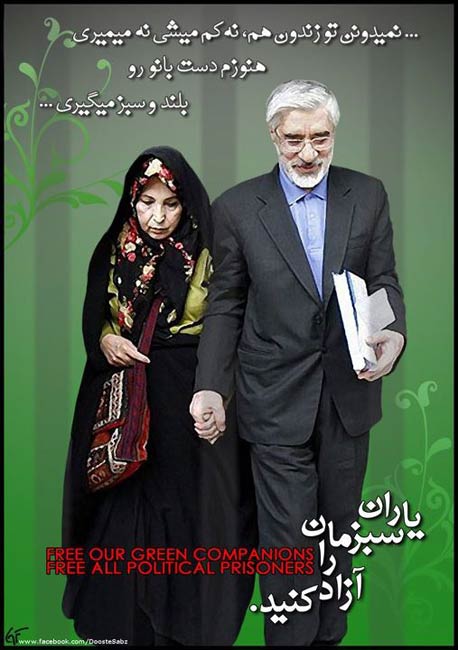
Iran: Concerns Mount Regarding Zahra Rahnavard’s Physical Well Being

0


Almost a year has past since the illegal house arrest of Mir Hossein Mousavi and his wife Zahra Rahnavard. During this time, Mousavi and Rahnavard have been deprived of their basic civil rights such as visitation and contact with their family members and loved ones. Moreover, family members and supporters who approach Akhtar street with the hope to find out any news of Mousavi and his wife are treated harshly by the agents stationed around [what is commonly referred to now as] “Akhtar Prison”.

Mousavi and Rahnavard’s communication with the outside world was completely cut off for a period of more than three months, with no communication whatsoever with their family after the first and last visit with their daughters on August 24th, 2011 when Mir Hossein reportedly stated “the future is bright” and “given the current environment participation [in the upcoming parliamentary elections] is meaningless.”

In recent weeks for reasons that remain highly ambiguous and disturbing, these restrictions have become even more stringent. Mousavi and Rahnavard have once again been rendered incommunicado and security agents have banned all communication including telephone contact or the ability to receive any news of their condition.

It is worth mentioning that contrary to the news recently published by a number of media outlets, to date, Mousavi and Rahnavard’s daughters have never visited their parents at their parents’ residence. It goes without saying that the far and few between visitations that have been allowed to date have been at locations other than Mousavi and Rahnavard’s residence and have unfortunately not led to any comfort or peace of mind for their daughters. If anything, witnessing the bitter circumstances of their parents and the behavior of the agents in charge of their security has only further increased their concerns.

According to reports received by Kalame, after a year of being deprived of seeing his brother, one of Mousavi’s older brothers who has recently not only lost his father but also seen his nephew tragically martyred, approached Akhtar street along with his wife with the hope to break the silence surrounding Mousavi and Rahnavard’s condition and find out any news of their health and well being. The agents reportedly stationed at Akhtar street not only refused to collaborate with a worried brother, but reportedly told him in a vile and contemptuous manner that he should return home and never again show his face at Akhtar street.

After stating that they have no information, the prison guards reportedly commented that no one lives at Akhtar street and when Mousavi’s brother insisted that it was not the case, the guards claimed that no one knows who Mousavi and Rahnavard are and individuals with such name do not live at this location! This claim that no one knows who Mousavi is and no one by this name lives at Akhtar street, has been made on numerous occasions in the past leading to extreme concern regarding the real whereabouts of Mir Hossein Mousavi and Zahra Rahnavard, two innocent and steadfast companions of the people’s Green Movement of Iran.

Given the utter lack of information regarding Mousavi and Rahnavard, Mousavi’s older brother only approached the prison at the dead-end alley way on Akhtar street because like other family members he too had been extremely worried about his brother and sister-in-law’s physical well being and sought to inquire about their condition. Mousavi’s brother was forced to leave Akhtar street, shocked and in dismay over the inhumane and unethical behavior of the security agents, without obtaining any news of his incarcerated loved ones.

The disrespectful and harsh conduct by the security agents towards Mir Hossein Mousavi’s brother took place while Mir Hossein Mousavi and Zahra Rahvard continue to be deprived of the basic rights afforded all prisoners in Iran such as telephone contact with their loved ones. Though Mousavi and Rahnavard has been allowed a hand full of short and restricted visitation with their family members over the past year, the security atmosphere surrounding their house arrest and the restrictions imposed upon them, has increased over the past several months. In recent months, authorities have refused to even provide the family with slightest news regarding their well being, whereabouts and condition.

The media outlets associated with the ruling government and their security apparatus continue to spread rumors and insults regarding Mir Hossein Mousavi and Zahra Rahnavard. This, coupled with Rahnavard’s significant weight loss and the fact that her hands were shaking and she seemed distressed during some of the visitation, has led to extreme concern by family members regarding the safety of the food and the risks associated with the drugs provided to Mousavi and Rahnavard and the possibility of a plot against them.

The Islamic Medical Association had expressed concern regarding the health of the leaders of the Green movement in early summer demanding that Mir Hossein Mousavi and Mehdi Karroubi be examined by independent physicians. This demand was however ignored by the authorities of the Islamic Republic of Iran.

Furthermore in a recent letter addressed to the authorities of the ruling government of Iran regarding the health of the leaders of the Green Movement, Saeed Hajarian one of Iran’s security experts warned the authorities , pointing to a “undesirable and bitter rumor”, noting that even imagining the validity of such a rumor would be beyond disturbing.

Death sentence for netizen confirmed, new arrests


Reporters Without Borders – Reporters Without Borders is shocked to learn that the supreme court has confirmed website designer Saeed Malekpour’s death sentence. His family said the court took the decision under pressure from the Revolutionary Guards. A Canadian resident who was arrested on 4 October 2008 while visiting his family, Malekpour, 35, was sentenced to death in January 2011 on charges of anti-government agitation and insulting Islam.

Arrests of netizens are meanwhile continuing. Simien Nematollahi, a contributer to the pro-Sufi website Majzooban (www.majzooban.org), was arrested at her Tehran home by intelligence ministry officials on 11 January on a charge of anti-government propaganda. Several members of the website’s staff were arrested on 7 and 8 September and were freed on bail on 4 October pending trial.

Mohammad Solimaninya, the head of u24, a social networking website for Iranian professionals, was arrested on 20 January after being summoned before a revolutionary tribunal in Karaj, a town 20 km north of Tehran, on 10 January. Plainclothes intelligence ministry officials searched his home the same day, confiscating his computer, hard disks and CDs.

His family still does not know why he was arrested or where he is being held. As well as running u24, Solimaninya has created and hosts the websites of many civil society organizations, NGOs and Iranian intellectuals.

Reporters Without Borders is also concerned about Mohammad Reza Pourshajari, a blogger who has been held since 12 September 2010. He was tried by a revolutionary court in Karaj on 21 December 2011 on a charge of insulting the Prophet in articles posted on his blog and in letters sent to government officials while he was in prison.

His daughter said the trial lasted a quarter of an hour and took place without his lawyer being present. The charge of insulting the Prophet is very vaguely defined but it carries a possible death sentence and is often used by the authorities to silence critics who try to defy the government.


                                         Simien Nematollahi, Mohammad Solimaninya, Mohammad Reza Pourshajari and Saeed MalekpourReporters Without Borders wrote to United Nations High Commissioner for Human Rights Navi Pillay on 10 January voicing concern about the situation in Iran and requesting her urgent intercession.

Human Rights Lawyer Seifzadeh Refused to Participate in Own Trial Due To Revolutionary Court’s Incompetence

0


Mohammad Seifzadeh, prominent lawyer and one of the founding members of the Defenders of Human Rights Center, did not participate in his court trial on 11 January 2012, his wife and lawyer Fatemeh Golzar told the International Campaign for Human Rights in Iran.

“Today (11 January), Mr. Seifzadeh’s trial was held in Branch 15 of the Revolutionary Court for the third case raised against him, related to statements and letters that he signed in prison. He did not want to participate in the trial, and he asked me as his lawyer to take only his defense bill to the court,” Golzar told the Campaign.

“Mr. Seifzadeh believes the Revolutionary Court is unqualified to handle his case. He forwent participation in the trial because of the court’s lack of competence and lack of a jury at his trial—which is one of the deficiencies that make this not a fair trial—and for other, similar reasons,” Golzar, who is currently the only lawyer representing Seifzadeh, told the Campaign about her client’s reason for not participating in the trial.

In November 2010, Mohammad Seifzadeh was sentenced to nine years in prison and a 10-year ban on practicing law on charges of acting against national security by participating in the establishment of the Defenders of Human Rights Center. In the latter part of April 2011, security officials of Orumiyeh detained him and charged him with “illegal exit” out of the country. After two months of interrogations, they transferred him to Evin Prison. In July 2011 an appeals court reduced his original sentence to two years’ imprisonment.

Seifzadeh has been held in Evin Prison since May 2011 and charged with “collusion and acting against national security” for his writings. These include a letter to Seyyed Mohammad Khatami, former President of Iran; two articles critical of the way amnesty is applied in the law and of the definition of political crimes; and signing onto collective statements in prison. He was summoned to Evin Prison Court a few days after his first letter to Khatami was published in news websites.

“If we had had a good Judiciary in the old [Shah’s] regime, the revolution would not have happened, as revolutions happen when the disenfranchised people cannot find an organization that would redeem their rights. But, as a judge and attorney with long experience, I have to be fair and say that the Judiciary [under the Shah] was not so bad.” Seifzadeh said in a part of his letter to Khatami.

“Mr. Seifzadeh only wished that I take his defense bill to court, but not participate in the court session. He only wanted his defense bill to be registered. I did just that because I could not do anything other than what my client wanted,” Golzar said.

“In that defense bill, he wrote about the instances of court’s lack of competence, and that fact that from the beginning of his detention his rights as a prisoner were lacking. So far he has been prohibited from having in-person visits with his family, phone calls, correspondence, and furlough, which is an inalienable right for any prisoner,” she continued.

Seifzadeh is currently awaiting sentencing for his new charge of illegally exiting the country.

Golzar expressed her hope that her husband and the rest of the prisoners who have been detained as political and security prisoners be freed soon. “I had a cabin visit with him on Monday, and, thank God, his health was good. With his strong spirit, he deals with his problems in prison,” she said.

Iran wants Syrian regime to stay, yet won’t be able to protect it: analysts

0


In the midst of the ongoing debate about the role of Iran in the violent repression of civilian protestors in Syria and how far it is willing to support president Bashar al-Assad, a Syrian opposition figure and a Kuwaiti political analyst agreed that Iran will do its best to keep the Syrian regime in power, yet will eventually fail to protect it.

Iran will not spare an effort to save its ally, Bashar al-Assad, owing to all the services he offers to the Iranian regime, said Walid al-Bunni, head of the Central Bureau for Foreign Relations in the Syrian National Council.

“There was not one regime in the region that offered this amount of free services to a foreign country like Assad did with Iran,” he said.

Bunni added that Iran’s efforts would be in vain since the Syrian people know what they want and are not going to give up on that.

“Let Iran focus on its internal problems, for it is not even able to overcome the threats it is facing,” he said. “The Syrian people do not want anything from it, neither good nor bad.”

Bunni refuted claims by pro-Assad officials that the regime is serious about implementing reforms and stressed that the situation has not changed.

“The Syrian people are still being killed and arrested. This regime is incapable of reforming anything or achieving any progress.”

Arab League attempts at resolving the crisis in Syria, Bunni explained, have failed because of limited resources and capabilities.

“But the United Nations will not stand still and the international community will definitely interfere to save the Syrian people who have been getting killed for the past 10 months.”

According to Fahd al-Shalimi, head of the Gulf Forum for Security and Peace, Iran is involved in the affairs of several countries in the region and is suffering from many problems, and that is why it cannot afford to lose its strategic ally Syria.

“Any interference by Iran in Syria will have nothing to do with the people and their interests, but will be all about keeping a regime that serves it in power,” Shalimi said.

Iran, Shalimi added, not only did not interfere to save the Syrian people, but did the same with Israel’s attack on Hezbollah.

“In both cases, Iran did not fire one single missile and just watched.”

As for supporting the Syrian regime, Shalimi argued that Iran will be quick to help Assad stay in power.

“The Revolutionary Guard in particular is likely to interfere. They are very powerful, even more powerful than the ruling elite in Irann and it is them and not politicians who always threaten and warn.”

Shalimi attributed Iran’s desperate attempts to save the Syrian regime to the increasing problems it is facing.

“Iran is frightened of the economic sanctions that might deprive it of oil revenues. This means a loss of more than $400 million daily.”


Source

Iran, the U.S. and the Strait of Hormuz

0


The United States reportedly sent a letter to Iran via multiple intermediaries last week warning Tehran that any attempt to close the Strait of Hormuz constituted a red line for Washington. The same week, a chemist associated with Iran’s nuclear program was killed in Tehran. In Ankara, Iranian parliamentary speaker Ali Larijani met with Turkish officials and has been floating hints of flexibility in negotiations over Iran’s nuclear program.

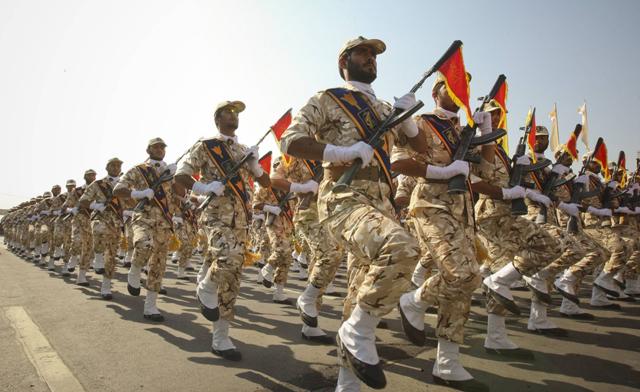
This week, a routine rotation of U.S. aircraft carriers is taking place in the Middle East, with the potential for three carrier strike groups to be on station in the U.S. Fifth Fleet’s area of operations and a fourth carrier strike group based in Japan about a week’s transit from the region. Next week, Gen. Michael Dempsey, chairman of the Joint Chiefs of Staff, will travel to Israel to meet with senior Israeli officials. And Iran is scheduling another set of war games in the Persian Gulf for February that will focus on the Islamic Revolutionary Guard Corps’ irregular tactics for closing the Strait of Hormuz.

While tensions are escalating in the Persian Gulf, the financial crisis in Europe has continued, with downgrades in France’s credit rating the latest blow. Meanwhile, China continued its struggle to maintain exports in the face of economic weakness among its major customers while inflation continued to increase the cost of Chinese exports.

Fundamental changes in how Europe and China work and their long-term consequences represent the major systemic shifts in the international system. In the more immediate future, however, the U.S.-Iranian dynamic has the most serious potential consequences for the world.

The U.S.-Iranian Dynamic

The increasing tensions in the region are not unexpected. As we have argued for some time, the U.S. invasion of Iraq and the subsequent decision to withdraw created a massive power vacuum in Iraq that Iran needed—and was able—to fill. Iran and Iraq fought a brutal war in the 1980s that caused about 1 million Iranian casualties, and Iran’s fundamental national interest is assuring that no Iraqi regime able to threaten Iranian national security re-emerges. The U.S. invasion and withdrawal from Iraq provided Iran an opportunity to secure its western frontier, one it could not pass on.

If Iran does come to have a dominant influence in Iraq—and I don’t mean Iran turning Iraq into a satellite—several things follow. Most important, the status of the Arabian Peninsula is subject to change. On paper, Iran has the most substantial conventional military force of any nation in the Persian Gulf. Absent outside players, power on paper is not insignificant. While technologically sophisticated, the military strength of the Arabian Peninsula nations on paper is much smaller, and they lack the Iranian military’s ideologically committed manpower.

But Iran’s direct military power is more the backdrop than the main engine of Iranian power. It is the strength of Tehran’s covert capabilities and influence that makes Iran significant. Iran’s covert intelligence capability is quite good. It has spent decades building political alliances by a range of means, and not only by nefarious methods. The Iranians have worked among the Shia, but not exclusively so; they have built a network of influence among a range of classes and religious and ethnic groups. And they have systematically built alliances and relationships with significant figures to counter overt U.S. power. With U.S. military power departing Iraq, Iran’s relationships become all the more valuable.

The withdrawal of U.S. forces has had a profound psychological impact on the political elites of the Persian Gulf. Since the decline of British power after World War II, the United States has been the guarantor of the Arabian Peninsula’s elites and therefore of the flow of oil from the region. The foundation of that guarantee has been military power, as seen in the response to Iraq’s invasion of Kuwait in 1990. The United States still has substantial military power in the Persian Gulf, and its air and naval forces could likely cope with any overt provocation by Iran.

But that’s not how the Iranians operate. For all their rhetoric, they are cautious in their policies. This does not mean they are passive. It simply means that they avoid high-risk moves. They will rely on their covert capabilities and relationships. Those relationships now exist in an environment in which many reasonable Arab leaders see a shift in the balance of power, with the United States growing weaker and less predictable in the region and Iran becoming stronger. This provides fertile soil for Iranian allies to pressure regional regimes into accommodations with Iran.

The Syrian Angle

Events in Syria compound this situation. The purported imminent collapse of Syrian President Bashar al Assad’s regime in Syria has proved less imminent than many in the West imagined. At the same time, the isolation of the al Assad regime by the West—and more important, by other Arab countries—has created a situation where the regime is more dependent than ever on Iran.

Should the al Assad regime—or the Syrian regime without al Assad—survive, Iran would therefore enjoy tremendous influence with Syria, as well as with Hezbollah in Lebanon. The current course in Iraq coupled with the survival of an Alawite regime in Syria would create an Iranian sphere of influence stretching from western Afghanistan to the Mediterranean. This would represent a fundamental shift in the regional balance of power and probably would redefine Iranian relations with the Arabian Peninsula. This is obviously in Iran’s interest. It is not in the interests of the United States, however.

The United States has sought to head this off via a twofold response. Clandestinely, it has engaged in an active campaign of sabotage and assassination targeting Iran’s nuclear efforts. Publicly, it has created a sanctions regime against Iran, most recently targeting Iran’s oil exports. However, the latter effort faces many challenges.

Japan, the No. 2 buyer of Iranian crude, has pledged its support but has not outlined concrete plans to reduce its purchases. The Chinese and Indians—Iran’s No. 1 and 3 buyers of crude, respectively—will continue to buy from Iran despite increased U.S. pressure. In spite of U.S. Treasury Secretary Timothy Geithner’s visit last week, the Chinese are not prepared to impose sanctions, and the Russians are not likely to enforce sanctions even if they agreed to them. Turkey is unwilling to create a confrontation with Iran and is trying to remain a vital trade conduit for the Iranians regardless of sanctions. At the same time, while the Europeans seem prepared to participate in harder-hitting sanctions on Iranian oil, they already have delayed action on these sanctions and certainly are in no position politically or otherwise to participate in military action. The European economic crisis is at root a political crisis, so even if the Europeans could add significant military weight, which they generally lack, concerted action of any sort is unlikely.

Neither, for that matter, does the United States have the ability to do much militarily. Invading Iran is out of the question. The mountainous geography of Iran, a nation of about 70 million people, makes direct occupation impossible given available American forces.

Air operations against Iran are an option, but they could not be confined to nuclear facilities. Iran still doesn’t have nuclear weapons, and while nuclear weapons would compound the strategic problem, the problem would still exist without them. The center of gravity of Iran’s power is the relative strength of its conventional forces in the region. Absent those, Iran would be less capable of wielding covert power, as the psychological matrix would shift.

An air campaign against Iran’s conventional forces would play to American military strengths, but it has two problems. First, it would be an extended campaign, one lasting months. Iran’s capabilities are large and dispersed, and as seen in Desert Storm and Kosovo against weaker opponents, such operations take a long time and are not guaranteed to be effective. Second, the Iranians have counters. One, of course, is the Strait of Hormuz. The second is the use of its special operations forces and allies in and out of the region to conduct terrorist attacks. An extended air campaign coupled with terrorist attacks could increase distrust of American power rather than increase it among U.S. allies, to say nothing of the question of whether Washington could sustain political support in a coalition or within the United States itself.

The Covert Option

The United States and Israel both have covert options as well. They have networks of influence in the region and highly capable covert forces, which they have said publicly that they would use to limit Iran’s acquisition of nuclear weapons without resorting to overt force. We assume, though we lack evidence, that the assassination of the Iranian chemist associated with the country’s nuclear program last week was either a U.S. or Israeli operation or some combination of the two. Not only did it eliminate a scientist, it also bred insecurity and morale problems among those working on the program. It also signaled the region that the United States and Israel have options inside Iran.

The U.S. desire to support an Iranian anti-government movement generally has failed. Tehran showed in 2009 that it could suppress demonstrations, and it was obvious that the demonstrators did not have the widespread support needed to overcome such repression. Though the United States has sought to support internal dissidents in Iran since 1979, it has not succeeded in producing a meaningful threat to the clerical regime. Therefore, covert operations are being aimed directly at the nuclear program with the hope that successes there might ripple through other, more immediately significant sectors.

As we have long argued, the Iranians already have a “nuclear option,” namely, the prospect of blockading the Strait of Hormuz, through which roughly 35 percent of seaborne crude and 20 percent of the world’s traded oil passes daily. Doing so would hurt them, too, of course. But failing to deter an air or covert campaign, they might choose to close off the strait. Temporarily disrupting the flow of oil, even intermittently, could rapidly create a global economic crisis given the fragility of the world economy.

The United States does not want to see that. Washington will be extremely cautious in its actions unless it can act with a high degree of assurance that it can prevent such a disruption, something difficult to guarantee. It also will restrain Israel, which might have the ability to strike at a few nuclear facilities but lacks the force to completely eliminate the program, much less target Iran’s conventional capability and manage the consequences of that strike in the Strait of Hormuz. Only the United States could do all that, and given the possible consequences, it will be loath to attempt it.

The United States continues, therefore, with sanctions and covert actions while Iran continues building its covert power in Iraq and in the region. Each will try to convince the region that its power will be supreme in a year. The region is skeptical of both, but will have to live with one of the two, or with an ongoing test of wills—an unnerving prospect. Each side is seeking to magnify its power for psychological effect without crossing a red line that prompts the other to take extreme measures. Iran signals its willingness to attempt to close Hormuz and its development of nuclear weapons, but it doesn’t cross the line to actually closing the strait or detonating a nuclear device. The United States pressures Iran and moves forces around, but it doesn’t cross the red line of commencing military actions. Thus, each avoids triggering unacceptable actions by the other.

The problem for the United States is that the status quo ultimately works against it. If al Assad survives and if the situation in Iraq proceeds as it has been proceeding, then Iran is creating a reality that will define the region. The United States does not have a broad and effective coalition, and certainly not one that would rally in the event of war. It has only Israel, and Israel is as uneasy with direct military action as the United States is. It does not want to see a failed attack and it does not want to see more instability in the Arab world. For all its rhetoric, Israel has a weak hand to play. The only virtue of the American hand is that it is stronger—but only relatively speaking.

For the United States, preventing the expansion of an Iranian sphere of influence is a primary concern. Iraq is going to be a difficult arena to stop Iran’s expansion. Syria therefore is key at present. Al Assad appears weak, and his replacement by a Sunni government would limit—but not destroy—any Iranian sphere of influence. It would be a reversal for Iran, and the United States badly needs to apply one. But the problem is that the United States cannot be seen as the direct agent of regime change in Syria, and al Assad is not as weak as has been claimed. Even so, Syria is where the United States can work to block Iran without crossing Iran’s red lines.

The normal outcome of a situation like this one, in which neither Iran nor the United States can afford to cross the other’s red lines since the consequences would be too great for each, would be some sort of negotiation toward a longer-term accommodation. Ideology aside—and the United States negotiating with the “Axis of Evil” or Iran with the “Great Satan” would be tough sells to their respective domestic audiences—the problem with this is that it is difficult to see what each has to offer the other. What Iran wants—a dominant position in the region and a redefinition of how oil revenues are allocated and distributed—would make the United States dependent on Iran. What the United States wants—an Iran that does not build a sphere of influence but instead remains within its borders—would cost Iran a historic opportunity to assert its longstanding claims.

Neither side wants to force the other into extreme steps and neither side is in a position to enter into broader accommodations—and that’s what makes the situation dangerous. When fundamental issues are at stake, each side is in a position to profoundly harm the other if pressed, and neither side is in a position to negotiate a broad settlement, a long game of chess ensues. And in that game of chess, the possibilities of miscalculation, of a bluff that the other side mistakes for an action, are very real.

Europe and China are redefining the way the world works. But kingdoms run on oil, as someone once said, and a lot of oil comes through Hormuz. Iran may or may not be able to close the strait, and that reshapes Europe and China. The New Year thus begins where expected: at the Strait of Hormuz.


Source