Home Blog Page 506

Labour activist arrested in Sanandaj

0


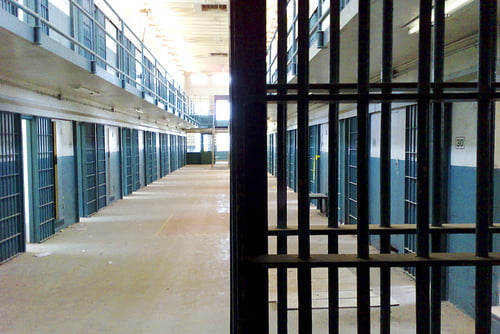
Sheys Amani, an executive member of the Union of Free Workers of Iran, has been arrested by Iranian authorities.

The union website reports that Amani was arrested on Monday at the Sanadaj courthouse, while he was following up on the cases of two detained workers, Sharif Saedpanah and Mozafar Salehnia.

The two detained workers, who belong to the Free Workers Union, were arrested two weeks ago.

On Monday, the families of the two detained workers and many other families gathered in front of the intelligence office to call for their release. Amani reportedly met with the authorities to clarify the charges against his colleagues and was subsequently arrested.

Amani, an employee at the textile mill in Kurdistan, has been the workers’ representative for several years and is a prominent labour activist in Sanandaj.

Four years ago, Amani, along with the whole executive committee of the Free Workers Union, was arrested for organizing a ceremony for International Workers Day and was sentenced to two and a half years in jail.

Sheys Amani’s sentence was overturned in the face of widespread protests during a visit to Sanandaj by the head of judiciary at the time, Ayatollah Shahroudi. Recently, the Sanandaj Justice Department revived those charges against Amani and informed him that the judiciary has decided to carry out the prison sentence.

Ailing Political Prisoners Deprived of Health Care

English translation of this report is exclusive to Iran Briefing

Iran Briefing : Qasem Sholeh-Sadi, imprisoned lawyer and former lawmaker, is about to be paralyzed due to lack of medical care. Mohsen Aminzadeh, Deputy Foreign Minister during Khatami’s presidency, was transferred to hospital while handcuffed. Lawyer and human rights activist Mohammad Seifzadeh also refused to appear in the court.

Qasem Shole-Sadi

University of Tehran International Law Professor Qasem Shole-Sadi needs operation due to severe injury to his spinal cord. He is reported to be at the verge of paralysis due to lack of medical care. On September 17, 2011 Shole-Sadi was taken to Branch 28 of the Revolutionary Court and sentenced to two years in prison by Judge Moghiseh on the charge of “insulting the Supreme Leader”. Qasem Shole-Sadi’s wife, Fakhrossadat Fahandaj-Sadi, had recently complained about officials’ neglectful behavior: “His spinal cord was severely damaged during his last term in prison. He currently suffers from that damage to the extent that the fingers of his left hand have gone numb. Doctors examined him in prison, and the doctors stated that he must be released from jail due to his poor physical condition. Forensic doctors also examined him and recommended that he be released from jail; they even sent a letter to the Prosecutor General urging him to release Mr. Shole-Sadi, but according to Mrs. Fahandaj-Sadi “They didn’t do anything and he still suffers from pain in his spinal cord.”

Qasem Shole-Sadi, also a former deputy in the Iranian Parliament, wrote an open letter to the Supreme Leader Ayatollah Ali Khamenei criticizing Iran’s foreign and domestic policies. Shole-Sadi was detained for 36 days after writing the letter. After being released on bail, he was sentenced to a year and half in prison, and barred from teaching at the university and practicing law on the charges of “insulting the Supreme Leader and disseminating propaganda against the regime”.


Latest Report about Mohsen Amin-Zadeh

According to the reformist news site Kalameh, despite the lack of necessary medical facilities and specialists in Neurology, Cardiology and Orthopedics at Evin Prison, the prison’s authorities refuse to send ailing political prisoners to hospitals outside the prison for treatment. The hospital at Evin prison lacks necessary medical facilities to help those in critical condition. The Chairman of Evin Prison’s hospital refuses to send the political prisoners to hospitals outside the prison for treatment.

Former Khatami-era Deputy Foreign Minister Mohammad Aminzadeh, who was recommended by forensic doctors to be hospitalized at the Modares hospital, refused to go to the hospital because he was handcuffed.

Mohammad Nourizad, a former regime’ loyalist who turned against it following the disputed 2009 presidential election, writes in his personal website, “When I paid more attention, I realized that this 50 plus year-old man besieged by the soldiers is former Khatami-era Deputy Foreign Minister Mohammad Aminzadeh. He was brought from the prison to hospital for some examination on his heart. A soldier holding a pair of handcuffs was standing next to Mr. Aminzadeh, and this soldier brandished the handcuffs to make people understand that the patient was a prisoner and no one could approach or sit next to him.”


Mohammad Seif-Zadeh Refused to  Appear before the Court

Lawyer and human rights activist Mohammad Seifzadeh refused to appear before the court which he called “illegitimate” because it had no jury. Mohammad Seifzadeh was supposed to stand trial at Branch 15 of the Revolutionary Court on the charge of “acting against national security”. Seifzadeh considers the legal procedure “unjust” due to interference by intelligence officials.

Mohammad Seifzadeh, 62, is also a founder of Defenders of Human Rights Center (DHRC). Judge Salavati recently sentenced him to nine years in prison and a ten-year ban from practicing law.

In a letter, Seifzadeh informed the judge presiding over the case his reasons for not appearing in the court.

According to the International Campaign for Human Rights, Fatemeh Golzar (Seifzadeh’s wife and his lawyer) said that the recent hearing in the court pertained to the letters written by and statements signed by Mr. Seif-Zadeh from inside Evin Prison. She said that she didn’t appear before the court and only submitted her client’s file to the court.

According to Fatemeh Golzar, her client considers the Revolutionary Court illegitimate, and because it has no jury he refused to appear before the court. Seifzadeh believes that a court without a jury makes the trial a flawed one.

39 political prisoners including Mr. Seifzadeh and Mr. Shole-Sadi recently signed a statement in which they called the upcoming Parliamentary election—scheduled to be held at the end of the current Iranian year—illegitimate.

In their statement, the 39 political prisoners argued that participating in the March election “in any way” goes against the “realization of democracy and human rights in Iran.”


Khamenei’s, IRGC’s and Rightwing Media: Retaliate with Assassinations!

0


Arash Bahmani

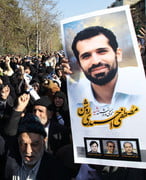
As the search for the perpetrators of the assassination of an Iranian nuclear scientist Mostafa Ahmadi Roshan and how the details of the operation continue, some authorities of the Islamic republic have suggested reprisals for such acts.

Roshan who Iran’s official media reports as a deputy manager of a Natanz nuclear site was assassinated by unknown individuals in Tehran last Wednesday. The manner of this attest attack on Iranian scientists was similar to those have been carried out earlier against the country’s nuclear scientists in Iran.

In what is described as the most official response of the Islamic republic, Masoud Jazaeri, the deputy chairman of Iran’s armed forces announced that the Islamic republic was looking into how to punish those responsible for the assassination and added that, “The manner of punishment of the US, the Zionist regime and their accomplices” will hurt them.

While he did not provide any details on the possible response, but stressed that the Islamic republic was in the process of reviewing “how to launch strategic assets of the Islamic republic” around the world. “Enemies of the Islamic republic and progress of the Iranian nation should not have any doubts. A timely and appropriate punitive response will be provided to the US, the Zionist regime and their accomplices,” he said.

Prior to this, Iran’s leader seyed Ali Khamenei had issued a statement declaring that the Islamic republic would never walk away from punishing the perpetrators of this crime and the perpetrators behind the scenes. He called the attack on Roshan “cowardly” and “a dirty crime” which had taken place with “the scheming of the CIA and MOSSAD” (Israel’s secret service) adding, “They will fail in this horrendous act as well, and they will not attain their dirty and wicked goal.”

Separately, ayatollah Khamenei’s representative at Kayhan group of newspapers, Hossein Shariatmadari, published an editorial in the daily in which he asks why the regime does not respond in kind to these terrorist acts. “The assassination of Israeli military men and officials is an easy task,” he wrote. “Today, the Islamic republic has plenty of brave and ready-to-act fedayeen (those willing to sacrifice their life) across the world who will wholeheartedly undertake to punish them,” he asserted.

Calls for reprisals against the West also made their way to the Basij militia organization that operates under the command of the Revolutionary Guards. In a statement that was issued after Roshan’s assassination, Basij wrote, “Enemies should know that they are digging their own grave with these actions and they should await a decisive response from the Hezbollah nation.”

Some Principlist (this is the group that claims allegiance to the initial goals of the 1979 revolution and today is split among those supporting ayatollah Khamenei and those supporting Mahmoud Ahmadinejad) media also towed the same line. One of them quoted a security official to have said, “Iran’s security community is well positioned to engage in reprisal activities as a response to the assassinations carried out by Western security agencies. Iran’s response shall be overseas and beyond the region. The planners of these projects should never be allowed to feel security anywhere in the world.”

Iran’s Revolutionary Guard says it is committed to defense treaty with Syria

0


Following reports alleging its involvement in the violent repression of Syrian protestors, Iran’s government said it has not yet interfered in the situation in Syria, but stressed its commitment to the joint defense treaty to which Iran and Syria are signatory.

Iran has viewed what is happening in Syria as a domestic affair, but it will definitely interfere in case a foreign attack in launched on Syria, a source from the Iranian Revolutionary Guard Corps (IRGC) told Al Arabiya on condition of anonymity.

The source added that, according to preliminary estimates, the situation in Syria is “good” till now.

“Our brethren in Syria see the same thing and expect the crisis to be resolved within two months or so,” the source said.

The source pointed out that Syria is different from other countries that witnessed protests in the sense that it is surrounded by supporters from all sides.

“We and our brethren in Iraq and Lebanon are protecting Syria,” the source explained in a clear reference to Nouri al-Malikil’s government and Hezbollah, both allies of Iran.

Despite reports stating that so far the situation in Syria is “stable,” the IRGC, the source pointed out, is still worried of a division or a coup in the Syrian army.

According to American officials who believe the IRGC is taking part in the fight against Syrian opposition, Maj. Gen. Qassem Suleimani, commander of IRGC al-Quds Force, which specializes in operations outside Iran was in Damascus this month.

This visit, they argued, is the best proof that Iran’s support for the Syrian regime includes the provision of arms and military equipment.

They added that they are sure Suleimani met with the most senior officials in the Syrian regime, including president Bashar al-Assad.

The joint defense treaty between Syria and Iran was signed in June 2006 by a former Syrian defense minister, Hassan Turkmani, and his Iranian counterpart, Mustafa Mohamed Najjar, in Tehran.

In addition to joint defense, the treaty also stipulates that both countries are to work together to maintain peace and stability in the region.

Suspicions of Iranian military aid to Syria also surfaced when an official at the Turkish Foreign Ministry announced that customs officers in his country confiscated four Iranian trucks suspected of transferring weapons to Syria. The trucks were stopped after the Turkish authorities received a report that they were transporting weapons.


Source

Iran makes arrests in scientist’s death

0


Iran has made arrests over last week’s assassination of a scientist, which it blamed on Israel and the United States. parliamentary speaker Ali Larijani on Monday vowed to avenge the death.

Iran has made arrests in connection with the assassination last week of a top nuclear scientist. Tehran has blamed Israel and the United States for the death of Ahmadi Roshan, a chemist and deputy director of Iran’s main Natanz uranium enrichment plant.

Parliamentary speaker Ali Larijani said on Monday that investigators had discovered clues and made an unspecified number of arrests. He also gave no details on the suspects’ identities or nationalities.

“We have discovered some clues and some arrests have been made. Investigations are ongoing,” Larijani told Iran’s Arabic-language broadcaster Al-Alam.

He said the suspects were being interrogated. He also vowed that Iran would avenge Roshan’s death. The killing was the fifth such attack targeting Iranian scientists in the last two years. Four of the victims died and one managed to escape.

Iran vows to ‘punish those responsible’

The United States has strongly denied any role in the murders and Israel has refused to comment in line with its policy on intelligence matters.

On Saturday, the deputy chief of Iran’s joint armed forces, Masoud Jazayeri, said Tehran would “punish those responsible” and was considering a response to hold the US, Israel and Britain “accountable” for their perceived involvement in the attacks.

Iran’s supreme leader, Ayatollah Ali Khamenei, on Thursday blamed the US and Israeli intelligence services for the latest killing. He said that Iran would “continue with determination” its nuclear activities, which Western countries suspect are aimed at developing nuclear weapons, despite Iranian denials.

Former Senior IRGC Commander Comes Under Attack

0


RFE/RL – Hossein Alaei, a former senior commander of Iran’s powerful Revolutionary Guards Corp (IRGC), has come under attack by his fellow guards and hard-liners over an article in which he appeared to draw an analogy between the rule of Iran’s Supreme Leader Ayatollah Ali Khamenei’s rule and the last days of the shah of Iran, Mohammad Reza Pahlavi, who was ousted from power in the 1979 revolution.

In an op-ed published last week in the “Ettelaat” daily, Alaei, a prominent wartime commander and the former chief of the IRGC navy, raised a number of hypothetical questions the shah could have pondered after being forced into exile.

“If I had given the people permission to demonstrate peacefully and not have accused them of staging a showdown with the government, would the issue have ended?”

“If I had not ordered the security forces to shoot at the people and taken measures to calm them down, wouldn’t I have reached a better outcome?”

“If, instead of placing some [prominent political figures] under house arrest, sending others to exile, and jailing political activists, I had opened a dialogue with them, would I have been forced to flee the country?”

He added that dictators who believe they have the right to rule over the people forever only think about these issues after they have been forced to flee, like Libya’s former leader Muammar Qaddafi.

Alaei ended his piece with a quote from the Koran: “Thus, learn your lesson, o men of vision.”

The issues raised by Alaei were widely interpreted as criticism of the very same moves by Khamenei, including his green light to the brutal 2009 postelection crackdown. The house arrests of opposition leaders Mir Hossein Musavi and Mehdi Karrubi are said to have been put in place with the blessing of Khamenei.

In an open letter to Alaei, 12 current and former commanders of the IRGC accused him of insulting the Iranian establishment and said he had made Iran’s enemies happy.

Meanwhile, on January 14, hard-liners staged a protest in front of Alaei’s house and chanted slogans against him. The semi-official Fars news agency, which is affiliated with the IRGC, said the protest was held in reaction to Alaei’s “insulting” note, in which Fars said he had compared the “sacred Islamic establishment of Iran” with the Pahlavi regime.

(To see photos of the protest, including slogans that hard-liners sprayed on Alaei’s house, click here.)

Some hard-line websites and blogs have also criticized Alaei over his article, with one site referring to him as a hyena. (In Persian, the word for hyena, “kaftan,” rhymes with “sardar,” which is the word for commander.)

In 2010, the head of the IRGC, Mohammad Ali Jafari, acknowledged that some IRGC members had been supportive of the opposition movement. The IRGC played a major role in the repression of Iranian citizens who took to the streets in 2009 to protest the reelection of President Mahmud Ahmadinejad.

Jafari said those guards had since been convinced that they had been wrong.

Alaei’s note could signal that some of the IRGC’s current and former members remain unconvinced.


Source

U.S. officials say Iran is supplying weapons to Syria; Obama, Erdogan affirm cooperation

0


The United States believes Iran is supplying munitions to aid Syria’s bloody protest crackdown in an initiative spearheaded by Tehran’s revolutionary guard supremo, senior U.S. officials told AFP Friday.

Qasem Soleimani, head of the Iranian Revolutionary Guards Corps elite Quds force, was in the Syrian capital this month, one official said, in what Washington sees as the most concrete sign yet that Iranian aid to Syria includes military hardware.

“We are confident that he was received at the highest levels of the Syrian government, including by President Assad,” the official said on condition of anonymity.

“We think this relates to Iranian support for the Syrian government’s attempts to suppress its people.”

The official said Washington has reason to believe that Iran is supplying security-related equipment “including munitions” to Syrian forces.

“The US government believes Iran has supplied Syria with munitions” for use in the military crackdown, he said.

The United States has long suspected that Iran has been aiding Syria’s purge against protesters as Assad tries to cling to power and avoid the fate of other Arab dictators felled by the Arab Spring uprisings.

Another official said Soleimani’s visit marks the strongest indication yet of direct cooperation between the allies amid a purge that the U.N. estimates has left more than 5,000 people dead since March.

The officials did not give further details of the information that has led them to conclude that Tehran has indeed provided security equipment and munitions to the Syrian armed forces.

The powerful Soleimani has been mentioned by some observers as a possible successor to Iran’s President Mahmoud Ahmadinejad and has repeatedly been the target of U.S. sanctions.

Washington last year accused him of links to an alleged plot by the Quds force to kill the Saudi ambassador to Washington by hiring assassins from a Mexican drug cartel for $1.5 million.

The latest revelations come with the United States locked in a tense standoff with Tehran over its nuclear program and as maritime tensions between the two states simmering in the Strait of Hormuz, a vital oil shipping route.

Washington has warned Iran it will not tolerate any attempt to close the Strait, as Tehran becomes increasingly infuriated by the growing impact of U.S. and international sanctions designed to deter its nuclear program.

The Revolutionary Guards maritime division, which handles military operations in the strait and the Gulf, is expected to hold maneuvers in the area soon.

Signs of direct cooperation between Iran’s Revolutionary Guards and Syria came a week after Mahmud Suleiman Haj Hamad, a former official in Assad’s regime, accused Iran and Iraq of financially aiding the Syrian crackdown.

Iran has also been standing firm with Syria after the Arab League suspended Damascus over the repression wracking the country and imposed fierce pressure on the Assad regime to accept a peace plan.

Tehran has been concerned about the possible collapse of Syria, its principal regional ally, a scenario that would leave it even more isolated in its own region as nuclear sanctions bite.

It has accused its traditional foes Israel and the United States of stirring up trouble in Syria.

In a televised speech lasting nearly two hours on Tuesday, Assad vowed to crush “terrorism” with an iron fist and accused outsiders of trying to destabilize his country.

That prompted opposition movements to accuse him of pushing Syria towards civil war and world powers to accuse him of trying to shift the blame for the 10 months of bloodletting in the protests against his regime.

Secretary of State Hillary Clinton described the speech as “chilling” and the United States says Assad has long since lost political legitimacy after oppressing the hopes of Syrians for freedom and democracy.

U.S., Turkey on democracy

The White House says President Barack Obama and Turkish Prime Minister Recep Tayyip Erdogan have spoken on the phone to discuss Syria, Iraq and Iran, and affirm their support for democracy and engagement at a fraught moment for the Middle East.

Turkey is a key U.S. ally in a region roiled by violence in Syria and Iran’s growing belligerence. A White House statement on the discussion between Obama and Erdogan on Friday said they agreed to continue to condemn the brutal actions of the Assad regime in Syria that have elicited cries for democracy from anti-government protesters there.

They also discussed Iran’s nuclear program and how Iran should engage with the international community.

On Iraq, they voiced support for an inclusive transition to democracy.

Tensions high, US warns Iran not to block shipping

0


AP – Tensions rising by the day, the Obama administration said Friday it is warning Iran through public and private channels against any action that threatens the flow of oil from the Persian Gulf. The Navy revealed that two U.S. ships in and near the Gulf were harassed by Iranian speedboats last week.

Spokesmen were vague on what the United States would do about Iran’s threat to block the strategic Strait of Hormuz, but military officials have been clear that the U.S. is readying for a possible naval clash.

That prospect is the latest flashpoint with Iran, and one of the most serious. Although it currently overshadows the threat of war over Iran’s disputed nuclear program, perhaps beginning with an Israeli military strike on Iran’s nuclear structure, both simmering crises raise the possibility of a shooting war this year.

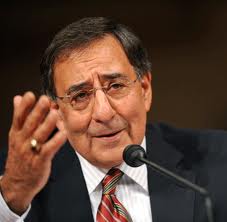
“We have to make sure we are ready for any situation and have all options on the table,” Defense Secretary Leon Panetta said, addressing a soldier’s question Thursday about the overall risk of war with Iran.

Navy officials said that in separate incidents Jan. 6, three Iranian speedboats — each armed with a mounted gun — briefly chased after a U.S. Navy ship just outside the Gulf near the Strait of Hormuz and a U.S. Coast Guard cutter in the northern Gulf. No shots were fired and the speedboats backed off.

For several reasons, the risk of open conflict with Tehran appears higher in this election year than at any point since President Barack Obama took office with a pledge to try to bridge 30 years of enmity. A clash would represent a failure of U.S. policy on several fronts and vault now-dormant national security concerns into the presidential election contest.

The U.S. still hopes that international pressure will persuade Iran to back down on its disputed nuclear program, but the Islamic regime shows no sign it would willingly give up a project has become a point of national pride. A nuclear bomb, or the ability to quickly make one, could also be worth much more to Iran as a bargaining chip down the road.

Time is short, with Iran making several leaps toward the ability to manufacture a nuclear weapon if it chooses to do so. Iran claims its nuclear development is intended for the peaceful production of energy. Meanwhile, several longstanding assumptions about U.S. influence and the value of a targeted strike to stymie Iran’s progress toward a nuclear weapon have changed. For one, the White House is no longer confident it could prevail on Israel not to launch such a strike.

An escalating covert campaign of sabotage and targeted assassinations highlighted by this week’s killing of an Iranian nuclear scientist may not be enough to head off a larger shooting war and could prod Iran to strike first.

The brazen killing of a young scientist by motorcycle-riding bombers is seen as almost surely the work of Israel, according to U.S. and other officials speaking on condition of anonymity to discuss intelligence matters. The killing on a Tehran street followed the deaths of several other Iranians involved in the nuclear program, a mysterious explosion at an Iranian nuclear site that may have been sabotage and the apparent targeting of the program with an efficient computer virus.

Iranian officials accuse both Israel and the U.S. of carrying out the assassination as part of a secret operation to stop Iran’s nuclear program. The killing came a day after Israeli military chief Lt. Gen. Benny Gantz was quoted as telling a parliamentary panel that 2012 would be a “critical year” for Iran — in part because of “things that happen to it unnaturally.”

Secretary of State Hillary Rodham Clinton and Panetta made a point of publicly denying any U.S. involvement, but the administration tied itself in knots this week over how far to go in condemning an action that could further the U.S. goal of stalling Iranian nuclear progress.

The U.S. position remains that a military strike on Iran’s known nuclear facilities is undesirable because it would have unintended consequences and would probably only stall, not end, the Iranian nuclear drive. That has been the consensus view among military leaders and policy makers for roughly five years, spanning a Republican and Democratic administration.

But during that time Iran has gotten ever closer to a potential bomb, Israel has gotten more brazen in its threats to stop an Iranian bomb by nearly any means, and the U.S. administration’s influence over Israel has declined.

Israel considers Iran its mortal enemy and takes seriously the Iranian threat to wipe the Jewish state from the map. The United States is Israel’s strongest ally and international defender, but the allies differ over how imminent the Iranian threat has become and how to stop it.

The strained relationship between Obama and Israeli Prime Minister Benjamin Netanyahu plays a role, as does the rise in influence of conservative political parties in Israel. U.S. officials have concluded that Israel will go its own way on Iran, despite U.S. objections, and may not give the U.S. much notice if it decides to launch a strike, U.S. and other officials said. The officials spoke on condition of anonymity to discuss sensitive diplomacy.

The Obama administration is concerned that Iran’s claim this week that it is expanding nuclear operations with more advanced equipment may push Israel closer to a strike.

Obama last month approved new sanctions against Iran that would target its central bank and its ability to sell petroleum abroad. The U.S. has delayed implementing the sanctions for at least six months, worried about sending the price of oil higher at a time when the global economy is struggling.

A senior commander of the Revolutionary Guard force was recently quoted as saying Tehran’s leadership has decided to order the closure of the Strait of Hormuz if the country’s petroleum exports are blocked due to sanctions.

Panetta linked the two crises Thursday, saying an Iranian nuclear weapon is one “red line” the U.S. will not allow Iran to cross and a closure of the strait is another.

“We must keep all capabilities ready in the event those lines are crossed,” Panetta told soldiers at Fort Bliss, Texas.

He did not elaborate, but the nation’s top military officer, Joint Chiefs of Staff Chairman Martin Dempsey, has said the U.S. would take action to reopen the strategic waterway. That could only mean military action, and there are U.S. warships stationed nearby.

“The United States and the international community have a strong interest in the free flow of commerce and freedom of navigation in all national waterways,” White House press secretary Jay Carney said Friday, adding that Iran is well aware of that position. “Our views are clear, we’re expressing them publicly and privately, and I’ll leave it at that.”

International talks to barter Iran out of building a nuclear weapon are nearly collapsed, the United States and several partners are on the verge of applying the toughest sanctions yet on Iran’s lifeblood oil sector, an increasingly cornered Iranian leadership is lashing out in unpredictable ways and faces additional internal pressures with a parliamentary election approaching.

All that adds up to a new equation, U.S. and Western diplomats said. A unilateral U.S. military strike on Iran’s nuclear infrastructure remains unlikely but no longer unthinkable, while the likelihood of an Israeli military strike has increased.

Immediate consequences would probably include an unpredictable spike in oil prices, ripple effects in troubled European economies and a setback for the fragile U.S. economic recovery. Longer term, a strike or a full-on war would almost surely ignite anti-American sentiment in the Middle East and beyond and empower hardline political movements in newly democratic Egypt and elsewhere.

Although the Obama administration wants to avoid conflict, it is locked in a cycle of provocation and reaction that feeds Iranian fears and may make war more likely, said Suzanne Maloney, a former State Department Iran expert now at the Brookings Institution.

“The tactics the administration has been taking means conflict becomes more likely because of the potential for miscalculation and the level of tensions and frustrations on both sides,” she said.


Source

Reporters’ group urges UN assistance for Iranian journalists

0


Reporters Without Borders is warning about the dire situation for Iranian journalists and bloggers and freedom of information.

In a letter to Navi Pillay, the UN High Commissioner for Human Rights, the media rights group expressed its deep concern about what it describes as “the escalation of the repression of journalists, netizens and civil society members and the increase in online censorship in Iran.”

The letter indicates that “a relentless war” has been declared on Iranian journalists and netizens since the aftermath of the controversial 2009 presidential elections, which were marred by allegations of fraud that sparked widespread protests.

Reporters Without Borders urges Pillay “to intercede with the utmost firmness with the Iranian authorities to prevent the execution of two Iranian netizens, Saeed Malekpour and Vahid Asghari, whose death sentences were recently confirmed by the Iranian courts.”

The letter also calls on PIllay to work toward the release of 29 journalists and 21 netizens currently held in Iranian prisons.

The Iranian Regime Has Once Again Summoned Student Activist “Peyman Aref” to Evin Prison

0


Peyman Aref, a student activist and member of the Iran National Front, has been once again summoned to branch 2 of the Shahid Moghaddas Prosecutor’s office in Evin prison. Peyman Aref had been released from prison in December 2011.

According to a written court summons that Peyman Aref received on Thursday, he must report to the Prosecutor’s office within the next three days. If the newest court summons leads to Peyman Aref’s arrest, this would be the fourth imprisonment for the student activist since the 2009 Iranian Presidential election. 

Peyman Aref is a distinguished University of Tehran student who was banned from his studies (he is a “starred” student). He was first arrested on June 17, 2009. He was arrested for the second time on February 10, 2010. His third arrest occurred on October 30, 2011.

According to a source close to Peyman Aref, the student activist had recently filed a formal complaint against two state-run media publications, Raja News and Bulletin News, which had written fabricated reports on Peyman Aref’s lashing sentence that was carried out  prior to his release from prison on October 2011. Iranian authorities threatened Peyman Aref to not follow up on his complaints or he would have to face serious consequences.