Home Blog Page 507

U.S. warns Iran’s Khamenei over Hormuz; Russia opposes military action against Tehran

0


The Obama administration is relying on a secret channel of communication to warn Iran’s supreme leader, Ayatollah Ali Khamenei, that closing the Strait of Hormuz is a “red line” that would provoke an American response, the New York Times reported on Friday citing United States government officials who declined to describe the unusual contact between the two governments, and whether there had been an Iranian reply.

Senior Obama administration officials have said publicly that Iran would cross a “red line” if it made good on recent threats to close the Strait of Hormuz.

As many as 16 million barrels of oil pass through the strategic waterway every day.

The New York Times report said that the secret communications channel was chosen to underscore privately to Iran the depth of American concern about rising tensions over the strait, where American naval officials say their biggest fear is that an overzealous Revolutionary Guards naval captain could do something provocative on his own, setting off a larger crisis.

Meanwhile, Russia would regard any military intervention linked to Iran’s nuclear program as a threat to its own security, Moscow’s departing ambassador to NATO warned on Friday.

“Iran is our neighbor,” Dmitry Rogozin told reporters in Brussels, according to Reuters. “And if Iran is involved in any military action, it’s a direct threat to our security.”

Rogozin was speaking two days after the killing of a nuclear scientist in Tehran by a hitman on a motorcycle.

Kremlin Security Council head Nikolai Patrushev, who is close to Russian Prime Minister Vladimir Putin, said Israel was pushing the United States towards war with Iran, according to the Interfax news agency.

Russia, however, opposes a boycott of Iranian oil.

“We are definitely interested in the non-proliferation of weapons of mass destruction,” Rogozin said on Friday. “But at the same time, we believe that any country has the right to have what it needs to feel comfortable, including Iran.”

Rogozin, often described as an anti-Western hawk, was appointed deputy prime minister in December, and will oversee Russia’s defense sector when he returns to Moscow.

The United States, the European Union and Japan are drawing up sanctions on Iran to try to force it to abandon its suspected nuclear weapons program. Tehran says its program does not have military aims.

The United States on Thursday took punitive action against three oil companies dealing with Iranian oil.

EU foreign ministers are expected to agree on a ban on imports of Iranian crude oil on Jan. 23 – though with a grace period to give European companies time to find alternative sources of crude.

Japan on Thursday pledged to take concrete action to cut its oil imports from Iran.

U.S. boycotts three companies for dealings with Iran

0


Hilary Clinton announced today that three oil-trading companies have been put under sanctions by U.S. authorities for selling refined oil products to Iran.

AFP reports that the U.S. State Department announced that China’s Zhuhai Zhenrong, Singapore’s Kuo Oil and UAE-based FAL Oil are affected. They will be barred from receiving U.S. export licenses, import-export funding and loans exceeding $1 million from U.S. financial institutions.

The U.S. State Department alleged that Zhuhai Zhenrong has sold over $500 million, and Kuo Oil over $25 million in petrol to Iran from January 2010 to January 2011.

The same report says FAL sold $70 million dollars in petrol to Iran in the second half of 2010.

The U.S. State Department added that the sanctions are against the companies and not their countries.The U.S. has been active in increasing unilateral sanctions against Iran and enlisting the support of its ally countries to follow suit.

U.S. sanctions against Iran’s Central Bank also prohibit dealing with any companies or institutions that have dealings with Iran’s Central Bank.

Saeed Jalalifar’s case file is still undecided in the Appeals Court

0


Committee of Human Rights Reporters – Case file of Human Righst activist Saeed Jalalifar that sentenced to 3 years in prison by court is still on considering in Appeals Court for his protest to issued sentence. Saeed Jalalifar who is cooperator in Committee of Human Rights Reporters, was arrested in his own house on November 29 and transferred to prison. After being imprisoned for almost 4 month, he was released on latest days of March 2010 on $100 thousand [USD] bail. Later, Jalalifar was trialed in branch 28 of Revolutionary Court presided by Judge Moghise, and sentenced to 3 years in prison with charges << Gathering, colluding and propaganda against the regime >>. On July 29 while he went to the court for prevention of not recording his bail, arrested and transferred to Evin Prison. Saeed Jalaifar, now has spent more than 9 month of his sentence in ward 350 of Evin Prison.

Further News Of Arrested Gonabadi Dervishes In Tehran

0


Majzooban Noor – Three Gonabadi dervishes who are reported to have been arrested inTehran yesterday , one of them  released and two others are still in detention. According to Majzooban Noor reporter , yesterday  on Jan 11 , 2012 ( Dey 21 , 1390 ) at 6 A.M , four plainclothes without any legal warrants raided to house of Messrs.Ali Mortezaee , Hesamoddin Batmani and Yousef MohammadRezaee three Gonabadi dervishes from Tehran , and took them to ward 209 of Evin prison.

Regarding to this report Mr.Hesam Batmani released yesterday evening but t wo others are still  in detention and  follow-up efforts their families to inform of their condition have been inconclusive and there is no news about them .

It is remarkable that ,  yesterday (Jan 11 ), Mr Kasra Nouri from Shiraz and Mrs Simin Nematollahi from Tehran were also  arrested by security forces and the total of arrested dervishes is  five .

The new wave of arrests and harassment of Gonabadi Dervishes has begun since middle of September  2011 ( Shahrivar 1390)  with an unprecedented intensity and has continued  till now …

Detention and harassment of dervishes have been  continued during  past four months so that the latest arrests of  Mr. Reza Pishkar (Poshtkar) by security forces in Kavar and Mr,Nasrollah Laleh director of Haghighat  publications  were happened on Dec 20 ( Azar 29 ) and Mr.Laleh transferred to  209  section of Evin prison in Tehran .

Reza Malek Sentenced to One Year in Prison and 50 Lashes

0

English translation of this report is exclusive to Iran Briefing

Iran Briefing: Harana- Reza Malek, former Intelligence Ministry agent who has been for several years held in prison for allegedly disclosing secret information of the Intelligence Ministry’s role in the so- called “Chain Murder,” was sentenced by the Tehran Revolutionary Court to one year in prison and 50 lashes.

According to Haran, a news agency run by Iranian human rights activists, Reza Malek, former Intelligence Ministry agent who has been held in prison for over 10 years for his alleged role in disclosing the secret role of the Intelligence Ministry’ s agents in so-called “Chain Murder,” was sentenced by the Tehran Revolutionary Court  to one year in prison and 50 lashes.

He is charged with “disseminating propaganda against the regime” by making a film from inside the Evin prison. The film, a copy of which was published by human rights activists in 2008, was made inside the Evin prison.

Reza Malek, ex-deputy of Research and Investigation in the Intelligence Ministry, had earlier told his lawyer, Shima Ghoushe, that he had been sentenced by the Tehran Military Court to 4 years in prison. His case must have been closed in 2004, since he was arrested on July 3rd, 2000. As a matter of fact, he has been kept under illegal arrest by the security forces for more than 7 years.

Legal Issues violated in this report:

Provision 1 of Article 19 of the International Covenant on Civil and Political Rights says, “Everyone shall have the right to hold opinions without interference.”

Provision 2 of Article 19 of the International Covenant on Civil and Political Rights says, “Everyone shall have the right to freedom of expression; this right shall include freedom to seek, receive and impart information and ideas of all kinds, regardless of frontiers, either orally, in writing or in print, in the form of art, or through any other media of his choice.”

Article 19 of the Human Rights Declaration says, “Everyone shall have the right to freedom of expression and opinion.”


Turkey halts Iranian arms corridor to Syria, balks at nuclear Iran

0


When IDF Military Intelligence chief Maj.-Gen. Aviv Kochavi accused Iran and Hizballah Wednesday, Jan. 11of directly helping Bashar Assad repress the uprising against him with arms, Turkey had just taken a stand against the Iranian corridor running weapons to Syria via its territory, DEBKAfile’s military sources report.
Earlier this week, Ankara reported halting five Iranian trucks loaded with weapons for Syria at the Killis Turkish-Syrian border crossing and impounding its freight. According to our intelligence sources, the Iranian convoy was not really stopped at Killis but at the eastern Turkish Dobubayazit border crossing with Iran, near Mount Ararat. This supply route for Syria had been going strong for months. Ankara’s decision to suspend it has reduced its volume by 60 percent.

The Turks kept very quiet about the Dogubayazit route because disclosure would have exposed them as working two sides of the Syrian conflict – letting Tehran set up a clandestine arms route for helping the Assad regime crack down on protest, while publicly posing as the leading champions of the Syrian protest movement – even to providing the Free Syria Army with bases and training facilities.

The influx of Iranian arms supplies via Turkey gave the Syrian army a major boost in quelling the uprising especially in the restive towns of Hama, Homs and Idlib, where demonstrations have dwindled. Now Ankara is worried about the consequences. Thursday, President Abdullah Gul raised fears of the Syrian uprising mutating into civil war. Our sources report that Ankara is concerned that sectarian conflict in Syria could spill over into Turkey.

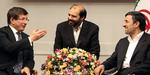
In fact, as DEBKAfile’s military and intelligence sources report exclusively, Ankara changed course against Iran after Turkish Foreign Minister Ahmet Davutoglu visited Tehran on Jan. 5. His mission was to warn Iranian leaders including President Mahmoud Ahmadinejad whom he met that Turkey will not stand for Iran acquiring a nuclear bomb and would act to disrupt its program.
Although his visit was officially presented as an effort to broker the resumption of long-stalled nuclear talks between Tehran and the five world powers plus Germany (P5+1), Davutoglu in fact informed Ahmadinejad in no-nonsense terms, “Turkey can’t live between two nuclear powers, one to the north (Russia) and one to the east (Iran).” The minister warned that if Tehran goes into production of a nuclear weapon, Ankara’s first step would be to open the door for NATO forces to deploy along its border with Iran.

According to DEBKAfile sources, Davutoglu gave Ahmadinejad a week to clarify the information reaching the West that Tehran had already begun assembling a nuclear weapon, so belying the persistent Iranian claim that its nuclear program is peaceful. After that, he said, Ankara would embark on progressively tougher counter-action.

And indeed, when clarifications from Tehran had not been received by Tuesday, Jan. 10, Turkey went into action to halt the Iranian weapons convoy to Syria.

Taking advantage of the new opportunities presented by the US military departure from Iraq last month, Iranian officials the next day, Wednesday, Jan. 11, ordered Iraqi Prime Minister Nouri al-Maliki to shut the Iraqi-Jordanian border to convoys carrying Turkish export goods to Persian Gulf destinations.
The following day, Thursday, Iran’s Speaker of Parliament, Ali Larijani, turned up in Ankara to try and sort things out between Iran and Turkey before they got out of hand.

Who is Mohsen Kazemeini, the New Commander of the Tehran-based Division of the Revolutionary Guard?

BY: Morad Veisi

English translation of this report is exclusive to Iran Briefing

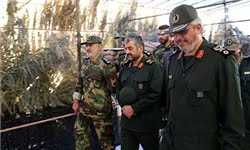
Iran Briefing : Major  General Mohammad Ali jafari, the commander-in-chief of the Revolutionary Guard,  has recently appointed Brigadier General Mohsen Kazemeini as the new commander of the Tehran-based division of the Revolutionary Guard. In his new post, Brigadier General Kazemeini has succeeded Brigadier General Hossein Hamedani. The question, however, is who is Mohsen Kazemeini, the new commander of the Tehran-based division of the Revolutionary Guard, and what is his previous record?

Single-Star General

Brigadier General Mohsen Kazemeini is a Single-star General who formerly served as the deputy commander of the Revolutionary Guard for operations. Since the summer of 2009, at the peak of unrest in Tehran, he was brought from Khuzestan to Tehran. As the commander of the Revolutionary Guard for operations, his main duty was to prepare operational plans for possible confrontations. He is fifty years old and originally from Kashan. In 1980 he became member of the Tehran-based  Mohammad Rasulallah Army of the Revolutionary Guard , and he has been currently appointed to lead it. He, along with other forces of the Mohammad Rasulallah division, was sent to Lebanon in 1982 on a mission to fight against Israel under the commandership of Ahmad Tavassolian.

He was not a high ranking commander of the Revolutionary Guard during the 8 year war between Iran and Iraq. However, he was appointed to lead  the Khuzestan-based  Vali- Asr division of the Revolutionary Guard following the war.

Who Kazemeini has seceded?

Brigadier General Mohsen Kazemeini has succeeded Hossein Hamedani, the former commander of the Tehran-based division of the Revolutionary Guard. Hossein Hamedani is a member of and indeed founder of the Hamedan-based division of the Revolutionary Guard. Hamedani is a war veteran and has been serving the Revolutionary Guard for more than 32 years. He was among the Revolutionary Guard’s  commanders who led  “Bazi Deraz,” an operational zone in western front, and has compiled his memoirs in a book entitled Brother, It Is a Duty. He later became the commander of Ansar-al-Hossein, Hamedan-based division of the Revolutionary Guard. He was a staunch foe of Mohammad Khatami during his presidency in the mid-90s, and was among the twenty-seven  commanders of the Revolutionary Guard who wrote threatening letter to Khatami. Till three years ago when Hossein Taeb was leading the Basij Militia , he was the deputy commander of the Basij militia.

He was appointed to lead the Tehran-based division of the Revolutionary Guard in the winter of 2009 when Tehran was engulfed with massive unrest following the 2009 disputed presidential election. He is on the sanction list imposed by the international community against Iran.

Responsibilities of the Tehran-based division of the Revolutionary Guard

The main duty of the Tehran-based division of the Revolutionary Guard is to protect the capital, the regime’s center of political power,  against any kind of uprising, coup, unrest, foreign and internal threats.

The Tehran-based division of the Revolutionary Guard operates within the geographical boundaries of Tehran, which includes Shemiranat, Ray and Tehran itself. The 27 Army of Mohammad Rasulallah is the most important military unit operating under the Tehran-based division of the Revolutionary Guard. Of course, all the military units of the Basij militia of Tehran are operating under  the Tehran-based division of the Revolutionary Guard. Operating alongside  the Tehran-based division of the Revolutionary Guard, Sayyed ol-Shohada division of the Revolutionary Guard  is tasked to enforce security in  cities like Bumehen, Rudehen, Varamin which are located on the outskirt of the capital, Tehran. City of Karaj, which has recently become the capital of Alborz state, has its own division of the Revolutionary Guard which is known as Imam Hasan Mojtaba division of the Revolutionary Guard.

Military-security Ramifications of Changing the Commander of the Tehran-based Division of the Revolutionary Guard

Changing the high ranking commanders  of the Revolutionary Guard, like the commander of Tehran-based division of the Revolutionary Guard, is not merely a military affair, but it is dependent on political, security and military circumstances. The reason for that lies in the politico-security significance of Tehran for the regime.

Moreover, changing the high ranking commanders of the Revolutionary Guard, contrary to the regular army, is not dependent on issues like retirement or periodical replacement. The Commanders of the Revolutionary Guard are being deposed or appointed as the regime adopts new military-security approach depending on the kind of foreign and domestic threats it is facing.


Top reformist sentenced to 6 years in prison

0


GVF — Iran’s Revolutionary Court has sentenced prominent reformist politician Mohsen Armin to six years in prison, as well as a five-year ban on political activity.

According Mashregh news, a hardline website affiliated with the Iranian Intelligence forces, Branch 15 of the Revolutionary Court sentenced Mohsen Armin, a former deputy of the Iranian parliament (Majlis), to five years in prison for “assembly and collusion” against the regime as well as “acting against national security.” The court, presided over by Judge Salavati, issued an additional one-year jail-term for alleged “propaganda” against the political establishment.

Armin is a senior member of the Mujahedin of the Islamic Revolution Organisation (MIRO) and was the former editor-in-chief of the banned pro-reform biweekly Asr-e Ma (or “Our Age” in Persian).

While serving as a reformist MP in the Parliament, Armin accused Tehran’s former Chief Prosecutor Saeed Mortazavi of being directly involved in the death of Zahra Kazemi, an Iranian-Canadian journalist who had been beaten into a coma while in the custody of the Iranian judiciary.

Based on the Revolutionary Court’s ruling, Armin will also be barred from membership in any political party or faction. The outspoken activist was initially arrested on 16 May 2010 after his interview with the reformist Etemad daily. He was finally released on a heavy bail of 2,000,000,000 Rials ($180,000) on 24 July that year.

A number of other MIRO members including Abolfazl Ghadyani, Behzad Nabavi, Javad Emam and Feizollah Arabsorkhi are still behind bars serving lengthy prison terms.

In a recent damning report on the human rights situation in Iran, the United Nations’ Special Rapporteur Ahmed Shaheed called on the Iranian Government to facilitate the activities of civil society actors and to “refrain from repressing dissent”. It also requested that Iran “launch full investigations” into cases of ill-treatment against political prisoners.

Jailed human rights activists taken to hospital


Iranian-Kurdish human rights activist Mohammad Seddigh Kaboodvand, has been transferred to hospital by Iranian prison authorities after spending nearly five years in Tehran’s Evin Prison.

Kaboodvand was arrested in 2007 and sentenced to 10 years in prison for “acting against national security” and running the Kurdistan Defence of Human Rights Organization. He was given another year for “propaganda against the Islamic Republic.”

His wife, Parinaz Hosseini, told Zamaneh that during more than 54 months in jail, Kaboodvand was not given a single day of furlough, and one-on-one visits have not been allowed for the past two years.

Hosseini had previously informed Zamaneh that her husband needed heart and prostate surgery.

Kaboodband published the weekly Payam-e Mardom and established the Kurdistan Defence of Human Rights Organization, which were considered two of his major offences. Payam-e Mardom, which covered political, social and cultural issues in both Persian and Kurdish, was banned in 2005.

Political Prisoner Issa Saharkhiz Hospitalized in Tehran

0


Journalist and political activist Issa Saharkhiz has been at Imam Khomeini Hospital in Tehran since 14 December 2011, a source close to his family told the International Campaign for Human Rights in Iran. The source added that the political prisoner’s family is under immense pressure not to give interviews to foreign media.

“Everyone tried to keep the news about his hospitalization a secret, lest he be transferred back to prison,” the source said. “All his kin are keeping silent, hoping that he receives his needed medical care before he is returned to prison.”

Issa Saharkhiz, a journalist and the former head of the Ministry of Culture and Guidance’s Domestic Press in the Khatami cabinet, was arrested in the aftermath of the 2009 presidential election. Security forces assaulted Saharkhiz during his arrest, breaking his ribs.

“Four months ago, a specialist ordered an MRI for my father, but the Prosecutor’s Office and the Intelligence Ministry did not agree to his leaving the prison,” Saharkhiz’s son Mehdi told the Campaign on 23 November 2011. “A while later my father developed internal bleeding and needed surgery, but even then they did not agree to his leave.” Saharkhiz’s family had repeatedly requested his transfer to a hospital, offering to foot his treatment bills, but the requests had not been approved.

Since his December hospitalization, Saharkhiz has been tied to his hospital bed with handcuffs and footcuffs, a source close to the family told the Campaign. Four security forces watch Saharkhiz day and night. The source added, however, that the family’s visits have been conducted in a more relaxed atmosphere in the last few days.

After the 2009 arrest, Judge Abolghassem Salavati, “The Judge of Death” of Branch 15 of the Tehran Revolutionary Court, sentenced Issa Saharkhiz to three years in prison on the charges of insulting the Supreme Leader and propaganda against the regime. According to a new court ruling from 5 August 2011, he was sentenced to two additional years of imprisonment for his prior press activities. Saharkhiz is now housed in Rajaee Shahr Prison in Karaj, and has not been granted furlough since his arrest.