Home Blog Page 516

Iran starts building a nuclear weapon: US and Israel tighten cooperation

0


Iran has embarked on “activities related to possible weaponization,” said American sources Thursday, Dec. 22, thereby accounting for the dramatic reversal of the Obama administration’s wait-and-see attitude on attacking Iran. The change  was articulated this week by US Defense Secretary Leon Panetta and Chairman of the Joint US Chiefs of Staff Gen. Martin Dempsey.
DEBKAfile’s Washington sources report that the Islamic Republic crossed the red line President Barack Obama had set for the United States, i.e., when Tehran begins using the technologies and fissile materials (enriched uranium) it has amassed for assembling a bomb or missile warheads.  This marks the moment that Iran goes nuclear and only a short time remains before it has an operational nuclear weapon.
Washington has always claimed that when the order to build a weapon was given in Tehran, the United States would know about it within a short time.
The US stealth drone RQ-170 was sent into Iranian airspace for the first time to find evidence to support this suspicion. On Dec. 4 the Iranians downed the unmanned reconnaissance craft by intelligence or cyber means not yet fully clarified. The US – and most probably Israel too – then turned to other intelligence resources to find out what Iran was up to. According toDEBKAfile’s military and intelligence sources, they found evidence that Iran has in fact begun putting together components of a nuclear bomb or warhead.

This discovery prompted the latest statements by Mr. Panetta and Gen. Dempsey.

The defense secretary put it into words when he said Tuesday, Dec.: “Despite the efforts to disrupt the Iranian nuclear program, the Iranians have reached a point where they can assemble a bomb in a year or potentially less.”

The next day, Gen. Dempsey said, “My biggest worry is they will miscalculate our resolve. Any miscalculation could mean that we are drawn into conflict, and that would be a tragedy for the region and the world.”

Dennis Ross, until last month President Obama’s senior Middle East adviser, and key architect of White House policies on the Iranian nuclear program and understandings with Israel on this issue, said  Israel has four causes for concern about uranium enrichment in the underground nuclear facility at Fordo near Qom and other developments:

1.  Iran’s accumulation of low-enriched uranium, its decision to enrich to nearly 20 percent “when there is no justification for it.”

2.  The “hardening” of Iranian nuclear sites, largely by moving facilities underground.

3.  Other activities related to possible weaponization.

4.  Israel suspects that Fordo is not Iran’s only buried facility and that nuclear “weaponization” is ongoing surreptitiously at additional underground locations. “I would not isolate Qom and say this alone is the Israeli red line to spur a military response.”

Our military sources report that all these developments were covered in the short and epic conversation between President Barack Obama and Israeli Defense Minister Ehud Barak at the Gaylord Hotel in Maryland on Dec. 16. It ended with accord on the US and Israeli responses to the new situation arising in Iran.

The White House has since accepted the Israeli assessment of Iran’s nuclear bomb time table and endorses the conviction that unless Iran retreats from its decision to build a nuclear bomb and steps back from the process it set in train this month, the only option remaining will be a military strike to disable its nuclear program.
Following the Maryland encounter, DEBKAfile’s sources report a procession of prominent US officials visiting Israel to tighten coordination between the US and Israel on their next moves. Lt. Gen. Frank Gorenc, commander of the US’s Third air Force, was one of those visitors. He came to organize the biggest joint military exercise ever held by the US and Israel, as part of the shared response to Iran’s steps.

Tuesday, Dec. 20, saw the arrival of Undersecretary of State Wendy Sherman, Secretary of State Hillary Clinton’s right-hand, together with Robert Einhorn, a State Department special adviser on nonproliferation. The two came to tie up the diplomatic ends of the decisions reached by President Obama and Defense Minister Barak at their Maryland meeting.
 

Source

Iranian Revolutionary Guard Confiscated Confidential Footage to Fabricate Film, Says Nourizad

0


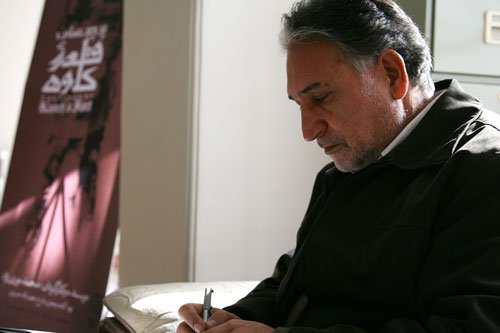
Following the release of a private and confidential film about his personal life, renowned filmmaker and journalist Mohammad Nourizad spoke with the International Campaign for Human Rights in Iran about the illegality of its release.

Nourizad told the Campaign that security and intelligence officials confiscated personal footage and films from his home during his arrest, and used it to create a video. This video appeared on YouTube on 10 December.

“This is stolen footage from a confidential film. They can use the materials of the film to build a case against me as a spy and a traitor but it is not permissible to take my personal computer and use my family photos and videos against me. I am not speaking from a religious point of view but from a societal and legal perspective. This is part of the most essential ethical and legal rights of human beings.”

Nourizad said he would file a complaint against the Intelligence Office of the Revolutionary Guard, whom he implicated in the theft and fabrication of the video.


“They [the Revolutionary Guards] were the ones who confiscated my filming equipment and used my private recordings. I was in the backyard shooting when ten people broke into my father’s house. They confiscated my camera and equipment while eight of them went inside the house and seized my belongings.”

The YouTube video showed Nourizad’s personal photos and videos, including previous footage of him praising the Supreme Leader, taken from when he was still working for the publication Kayhan.

Mohammad_Nourizad

Nourizad told the Campaign that his son, Abouzar Nourizad, was his assistant in the shooting of the film and left Iran upon its completion. By distorting the content of the film, Nourizad said, “they are trying to convey that my son, who had assisted me in the making of the film, is a fugitive and has escaped the country.”

Nourizad said he had been in the process of making a confidential film for the Supreme Leader, which was clearly mentioned in all of the recorded footage.

“What you have seen in [that] video was a movie set I built in my parent’s house. I stayed there for eighty days, which gave me enough time to make the set for the film. I undertook the making of this film without releasing any information about it. In other words this was a confidential project.”

During the past few years, security and intelligence forces have used home videos, personal photos, and falsely edited videos of detainees’ interrogations in order to ruin their reputation and image, even after their release from prison.

“In my film I talked about my anguish in solitary confinement. The Revolutionary Guards distorted the movie to destroy my image by claiming that because I used to write such articles [in support of the Supreme Leader] I have changed my position.,” added Nourizad.

“I would have accepted their accusations If they had arrested me while spying or recorded my video while communicating with their enemies; but I was making a film about my time in prison for the Supreme Leader in my father’s backyard.”

Nourizad_Khamenei

Nourizad told the Campaign that he will definitely go to court and complain. “Even though my complaints will be the subject of their laughter I will still do what I have to do.”

The video depicted Nourizad in a poor emotional and mental health. When asked about his condition at that time, Nourizad said:

“Prisoners always suffer from Illness and depression specially when they are kept in solitary confinement for a long period of time. I was in solitary confinement for more than sixty days and naturally this period caused extreme depression but I tried to keep my mental health by exercising.”

Nourizad believes that security officials will further edit and release inaccurate material from the large amount of footage that they had confiscated.

“In the film, there were scenes in which I talked directly to the camera. There was plenty of other material on my personal computer which were used and edited into a series of which the released video is probably the first part.”

In the past few months, Nourizad has written numerous letters about the horrible prison conditions to the Supreme Leader.

When was asked if he would continue to write letters to the Supreme Leader, he replied: “I certainly will continue writing my letters, I will write my weekly letters until the presidential elections.”


Source

Iranian prisoners held in appalling conditions

0


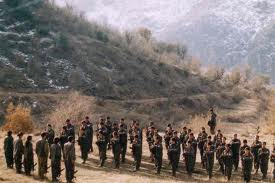
The transfer of political prisoner Saeed Saleki to Dezfool Prison has brought the attention of human rights activists to the prison’s dire conditions.

The International Campaign for Human Rights in Iran reports that an “informed resident of Ahvaz” has told them that Saleki, an Arab activist, was transferred to Dezfool Prison from Ahvaz two months ago, during which time he has been denied telephone calls and visits.

The report indicates that Dezfool Prison is used to house drug and robbery convicts and is kept in an appalling state.

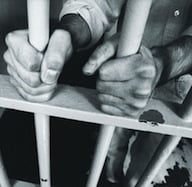
Overcrowding reportedly forces prisoners to sleep two to a bed, and the rest sleep on the floor of cells and corridors. They are said to sleep huddled together because there is no room to move. Some are even forced to sleep in the prison yard.

Hygiene is reportedly in a “disastrous” state, and the prisoners have to wait for days just to shower for a few minutes. The report indicates that the prison is “disease ridden, which makes the survival of prisoners in this facility highly unlikely.”

The report goes on to add that prisoners are regularly beaten by guards, and drugs are widely sold and used among the prisoners.

The International Campaign for Human Rights in Iran reports that Karoon Prison in Ahvaz suffers from similar problems.

In September, the head of Iran’s Prison Organization, Gholamhossein Esmaili, said in a meeting that the escalating number of prisoners is causing a crisis in the prison system. He added that the prison system regularly suffers a two-month budget shortfall each year.

In July, he also reported to Parliament that the level of hygiene in the prison system is rapidly deteriorating.

Esmaili confirmed the spread of disease in the prison system, explaining that the prison facilities are overburdened to three times their capacity in terms of both space and budget.


Source

Security forces shoot and kill Kurd man and severely wound another man

0


A local source said that on Thursday December 15, forces of the Revolutionary Guards Corps in the Bemo border region in the town of Tazeh Abad directly targeted two men identified as Farokh Faraji, who is married and has a child and Hamid Mohammad, who is married and has five children. They were followers of the Ayin Yari Faith [religious minority] and lived in the Mahdieh Township in Kermanshah.

This source said that Farokh Hamidi died on the spot because of the severity of his wounds. Hamid Mohammadi who sustained severe wounds in his two legs might have to receive amputation. A person close to them said that these two Kurd men were forced to work as border tradesmen due to unemployment and RGC forces targeted them despite the fact that they were not carrying any foreign goods.

Hamid Mohammadi is reportedly hospitalized in the Bistoon Hospital in Kermanshah under the watchful eye of the State Security Forces. (International Campaign for Human Rights in Iran – Dec. 19, 2011)


Source

The Persecution of Ayatollah Boroujerdi In Iran

0


VOA – Secretary of State Hillary Clinton has spoken out about the reprehensible religious persecution that takes place in Iran.

Secretary of State Hillary Clinton has spoken out about the reprehensible religious persecution that takes place in Iran:

“In Iran, authorities continue to repress Sufi Muslims, evangelical Christians, Jews, Baha’is, Sunnis, Ahmadis and others who do not share the government’s religious views.”

The regime’s oppression of some of these minority religious groups –- like the Baha’is who have been cruelly repressed for decades, and of Christians -– like Pastor Yucef Nadarkhani, who currently awaits word in prison as to whether or not he will be executed for apostasy — has received well-deserved international attention and condemnation.

But as the U.S. State Department’s report on the condition of religious freedom in Iran notes, Shi’a Muslims who do not share the regime-sanctioned religious views, including the necessity for rule by the clerical jurist, or Velayet-e-Faqih, are also subjected to intimidation, harassment and imprisonment.

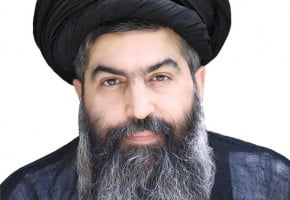
The most prominent Shi’a victim of such repression is Ayatollah Kazemeini Boroujerdi, a 53-year old Shi’a cleric renowned for his outspoken support for the separation of religion from politics and for his advocacy of the Universal Declaration of Human Rights.  In 2006, he was brutally arrested along with dozens of supporters and members of his family by the Iranian regime’s feared Law Enforcement Forces, the LEF.  Taken to Evin prison, he was tried in a special court whose procedures fell far short of international standards, and eventually sentenced to 11 years for crimes against national security.

Human Rights Watch and other rights monitors say that Ayatollah Boroujerdi’s health has badly deteriorated, and he has been denied adequate medical care in prison.  He is also reportedly held in detention with violent cell mates.

Human Rights Watch notes that a group of human rights activists signed and released a letter in October saying that Ayatollah Boroujerdi “has been subjected to the most inhuman forms of physical and psychological torture to force him into signing a statement renouncing his beliefs.”

The Iranian regime claims its legitimacy comes from God. Its treatment of Iran’s citizens and violation of their fundamental right to religious freedom belie that claim, as well as lay bare the regime’s disregard for international and Iranian law.  The Iranian government should release Ayatollah Boroujerdi and all Iranians who languish in prison because they courageously follow the dictates of their consciences.


Source

Continued detention of six Kurdish political prisoners in solitary confinement in Orumieh central prison in Iran

0


The families of six Kurdish political prisoners held in solitary confinement at Orumieh central prison still have no information about the condition of these prisoners more than two weeks after the transfer.

As reported by the Iran Human Rights Documentation Center (IHRDC) last week, six Kurdish political prisoners including Habibollah Golparipour – a Kurdish activist on death row – and Jahangir Baduzadeh, Ahmad Tamou’i, Yousef Kakmami, Ali Ahmad Soleiman, and Mostafa Ali Ahmad were transferred by prison guards from Ward 12 of Orumieh central prison to solitary confinement.

A credible source told IHRDC that after two weeks in solitary confinement these prisoners were informed that their detention would continue for another five days. They continue to be prohibited from visiting with or contacting their families.

The reason these prisoners were transferred to solitary confinement is not yet clear. However a family member of one of the six prisoners has reliably informed IHRDC that he received reports that an informant in Ward 12 falsely warned prison authorities that the six prisoners planned to start a prison riot, and this led to the transfer.

Prolonged solitary confinement potentially violates Article 7 of the International Covenant on Civil and Political Rights (ICCPR) – which Iran is a signatory to.  Article 7 prescribes that “[n]o one shall be subjected to torture or to cruel, inhuman or degrading treatment or punishment.” The Human Rights Committee – the body of independent experts that monitors implementation of the ICCPR by its State parties – has stated that prolonged solitary confinement of a detained or imprisoned person may amount to acts prohibited by Article 7.


Source

Iranian journalists denounce arrest of Hassan Fathi


One hundred Iranian journalists have issued a statement challenging the arrest of their colleague Hassan Fathi by Iranian authorities.

In a statement issued today, the signatories indicate that Fathi has been detained without any official statement about the charges against him. They maintain his arrest was merely “to teach others a lesson” about avoiding contact with the media.

Fathi was arrested in Tehran on November 12 after he was interviewed by Persian BBC about the controversial explosion at a Revolutionary Guards weapons depot that rocked the western part of the capital.

The signatories urge Parliament to demand justice for Fathi, adding that “it is not fitting for Iranians that their country be repeatedly labelled as the greatest prison for journalists.”

In recent years, the journalists’ advocacy group Reporters Without Borders has repeatedly referred to Iran as the “greatest jail for journalists” in the Middle East.

The Iranian judiciary has not yet made any announcement regarding Fathi’s arrest, but the Fars News Agency, the media outlet close to the Revolutionary Guards, has claimed that Fathi is a “collaborator with Persian BBC in Tehran” and accuses him of “disturbing public minds and publishing falsehoods.”

Persian BBC has announced that it has no collaborators or employees in Iran and that it had interviewed Fathi as an independent analyst, just as it has interviewed numerous other Iranian journalists, academics and personalities.

General Assembly voices concern over Iranian human rights record


UN News Centre – United Nations Member States today expressed deep concern at reports of human rights violations in Iran, including torture, the use of cruel punishments such as flogging and amputations and “pervasive gender inequality and violence against women,” and called on Tehran to strengthen its national human rights institutions.

In a resolution adopted in the General Assembly, Member States voiced deep concern at Iran’s “serious ongoing and recurring human rights violations,” including a dramatic increase in the use of the death penalty, particularly for crimes “lacking a precise and explicit definition,” and the “ongoing, systemic, and serious restrictions” of freedom of peaceful assembly and freedom of opinion and expression.

The resolution received 89 votes in favour and 30 votes against. Sixty-four countries abstained.

The death penalty drew particular concern, with the General Assembly noting “the absence of internationally recognized safeguards,” the continued practice of public executions, the carrying out of secret group executions and the imposition of capital punishment against minors.

Member States also voiced deep concern at the practice of suspension strangulation as a method of execution, and the fact that prisoners continue to face sentences of execution by stoning, even though there has been a national directive against it.

In the resolution, Member States also called on the Government to immediately and unconditionally release any prisoners who have been arbitrarily arrested and detained “for simply exercising their right to peaceful assembly and participating in peaceful protests.”

They also strongly encouraged Iran to discontinue the “systemic targeting” of human rights defenders and review the country’s “pervasive gender inequality.”

The text also noted Secretary-General Ban Ki-moon’s recent report highlighting the deteriorating rights situation in the country as well as the concern expressed by Ahmed Shaheed, Special Rapporteur on the situation of human rights in Iran, over the alleged targeting of minority groups by the Government.

Arabs, Azeris, Baluchis and Kurds and their defenders have all faced rights violations that at times amount to persecution, according to the resolution, with religious minorities such as Christians, Jews, Sufis, Sunni Muslims, Zoroastrians and Bahá’ís.

The resolution expressed particular concern at Tehran’s failure to launch an investigation into the suspected electoral violations after the 2009 presidential vote and strongly urged the Government “to ensure free, fair, transparent and inclusive parliamentary elections in 2012 that reflect the will of the people.”

Member States further called on Iran to consider ratifying or acceding to the international human rights treaties to which it is not already party while effectively implementing those human rights treaties which it has already ratified.


Source

Political prisoner beaten over medical prescription

0


According to reports, on Thursday December 16, political prisoner Mostafa Eskandari was beaten for wanting to give a medical prescription to his elderly mother in the Gohardasht Prison in Karaj. The prison infirmary had prescribed and approved the medication for him to provide from outside of prison.

One of the prison guards in the visiting hall prevented him from seeing and giving the prescription to his mother under the excuse that the prescription had to be approved by the head of the Intelligence Agency. This is while, according to normal prescription procedures, it only has to be approved by the head of the prison infirmary.

Mostafa Eskandari protested being banned from giving the prescription to his mother and from seeing her. The prison guard then started using profane language to insult him and his family while pushing and yelling at him. At the same time, the head of cellblock 4, Talivardi, attacked this political prisoner and started punching him threatening that he would be transferred to a solitary cell where he would be tortured…

Eskandari’s elderly mother who had come a long way to see her son from behind an dirty glass and metal bars was forced to go home without seeing her son after waiting for hours.  (Human Rights and Democracy Activists in Iran – Dec. 16, 2011)


Source

Reformist group calls for boycott of elections


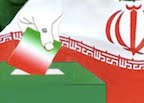
The Coordination Council for the Green Path of Hope, Iran’s major reformist organization, is urging Iranians to boycott the coming parliamentary elections.

The Coordination Council sprang into being after MirHosein Mousavi and Mehdi Karroubi, the two reformist candidates in the controversial presidential elections of 2009, were put under house arrest last February and denied access to the outside world.

Iranian reformists had been politically active on a platform of reforming the system based on the Iranian Constitution. However, after the 2009 presidential elections, the reformist candidates accused the state of rigging the ballot and they refused to accept the legitimacy of Mahmoud Ahmadinejad’s victory. The allegations translated into mass demonstrations with millions of people protesting the alleged vote fraud.

The establishment ignored demands for a recount and instead cracked down on protesters, finally resorting to putting the two opposition leaders under house arrest.

As the March parliamentary elections approach, the issue of participation has become more critical. Mohammad Khatami, the former reformist president, said today that running in the elections is “meaningless” for reformists because the political arena remains closed to open political activity.

However, he stopped short of inviting the people to boycott the elections. Now the Coordination Council for the Green Path of Hope has done just that, urging Iranians to boycott the elections, adding that rather than opening the political arena, the establishment has chosen to “intensify the atmosphere of repression.”

The council indicates that it decided to call for a widespread boycott after “extensive consultation” with various Green factions, reviewing the stances of independent parties and groups, and taking into account the opinions of Mehdi Karroubi and MirHosein Mousavi.