Home Blog Page 518

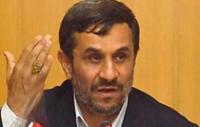
Ahmadinejad attacked by labour protester

0


Mahmoud Ahmadinejad was heckled and had to dodge a flying shoe during a public commemoration service for a former minister.

Iranian media report that the Iranian president attended a service today in Sari for Ali Kordan.

Khabar-on-line reports that Ahmadinejad’s speech was interrupted by a group of laid-off textile workers protesting unpaid wages.

Some websites report that one of the protesters managed to reach a seat near the front, where he suddenly rose and threw his shoe at the president, while protesting his unemployment and financial difficulties.

The Ghassed website reports that the president dodged the shoe, which hit the banner behind him. Ahmadinejad’s supporters reportedly beat up his assailant while chanting pro-presidential slogans.


Source

Student Maziar Yazdanpanah begins his 6-month prison sentence

0


Maziar Yazdanpanah, student at Mazandaran University, presented himself to the Babolsar Revolutionary Court to begin serving his 6-month prison sentence.

Maziar Yazdanpanah is a student at Mazandaran University who was arrested along with other students on June 16, 2009 after the disputed presidential elections. Security forces transferred Maziar to solitary confinement in the Sari Intelligence detention center where he was held for one month. He was also suspended from school for one term.

According to Human Rights House of Iran, Branch 101 of the Babolsar Revolutionary Court handed Maziar Yazdanpanah a 6-month suspended prison sentence and 14 lashes. But the appellate court has reversed the suspended verdict, requiring the student to serve the prison time.

Even though the verdict was issued 2 years ago, last week Maziar Yazdanpanah and several other students at Mazandaran University were informed that their suspended prison sentences were reversed, requiring them to serve their sentences. After a November gathering of students at the university, Maziar Yasdanpanah was barred from returning to his dormitory without being given any written warning.

In the past 2 years, despite scores of Mazandaran University students arrested or expelled from school, the students have continued to organize events and gatherings. The last event was held on November 17, 2011, when hundreds of students gathered to protest economic and labor conditions.


Iranian activist held incommunicado


Iranian political prisoner Mohammad Tavasoli is being held incommunicado at Evin Prison, his family reports.

The Kaleme website reports that Tavasoli’s family has written to the head of the judiciary, Ayatollah Larijani, to protest their complete lack of contact with the activist since his arrest more than a month ago.

Tavasoli was arrested on November 2 in connection with a letter to former president Mohammad Khatami signed by 143 Iranian social and political activists.

The letter, a response to Khatami’s statement regarding the coming parliamentary elections, said the signatories see no positive prospect that people’s votes would be safeguarded or that the elections would be open and transparent.

Tavasoli’s family reports that the detained activist has not yet been indicted, and the charges against him are not clear.

In their letter, the Tavasolis also touch on the persecution of their family over the past two years and the arrest of Leila Tavasoli, Mohammad Tavasoli’s daughter, along with their son-in-law. The two were arrested in December of 2009 during protests against the controversial re-election of Mahmoud Ahmadinejad, which was challenged by reformists and millions of protesters.

Mohammad Tavasoli was Tehran’s first mayor after the Iranian Revolution of 1979. He was previously arrested for two months, also in connection with the 2009 presidential elections.


Source

Iranian labour activist re-arrested

0


Iranian labour activist Ebrahim Madadi, who had been released from prison on a furlough 10 days ago, returned to prison today in Tehran.

The Sherkat-e Vahed Union website reports that Madadi, its vice-president, who had been given his first furlough on November 30 after three years in prison, returned to Evin Prison today, after his application for an extension was turned down.

Madadi was arrested in 2007 and sentenced to three and a half years on security charges. He is set for release next May.

International labour right groups, which had lauded his release, spoke out against his re-arrest. The head of the International Trade Unions Confederation (ITUC), Sharan Burrow, criticized the “shameful” method of toying with the lives of “people and their families, for no other reason than the exercise of their fundamental human and trade union right to represent the legitimate aspirations of other workers.”

Burrow added that “this can only be interpreted as yet another crass and cynical move by the authorities to distract attention from the serious violations of trade union rights in Iran immediately prior to the ILO Regional Asia Pacific Conference, which just concluded in Kyoto.”

David Cockroft, the head of the International Transport Workers Federation (ITF), also expressed dismay over Madadi’s return to Evin Prison, saying: “We don’t yet know if this arrest is a bureaucratic error or an attempt to punish Ebrahim, but either way it’s an unacceptable infringement on his rights and liberty. Like the continuing imprisonment of the increasingly ill Reza Shahabi, it is an injustice that is crying out to be righted.”

Shahabi, the treasurer of the Sherkat-e Vahed Union, has been under arrest since June of 2010. For more than two weeks he has been on a hunger strike to protest his undetermined judicial state. Shahabi has not been indicted or sentenced after more than 15 months in prison.


Source

Activists want satellite companies to boycott Iranian government


Iranian human rights activists are calling on the European Union and the United States to end all collaboration between satellite companies and the Iranian government.

Iranian Nobel Peace laureate Shirin Ebadi and the director of the International Campaign for Human Rights in Iran, Hadi Ghaemi, published a statement in The Wall Street Journal today, heavily criticizing how European satellite providers “continue to provide services to Tehran despite its comprehensive assault on free expression and free access to information.”

Ebadi and Ghaemi contend that “Iran leads the world in illegal jamming of international satellite broadcasts, but it is a prolific user of international broadcasting platforms for its own programming. European satellite companies like Eutelsat, Intelsat and Arqiva provide extensive services to the Iranian state-owned Islamic Republic of Iran Broadcasting (IRIB), including for domestic Iranian radio and television broadcasts, and for Iran’s growing list of foreign-language channels, like the English-language PressTV and the Arabic Al-Alam.”

The statement adds that the Islamic Republic government jams non-governmental Persian-language programs, and companies such as Eutelsat or Arqiva make no effort to hold them accountable for their actions and instead continue to broadcast IRIB channels.

Ghamei and Ebadi say that “the IRIB is not a simple broadcasting service” but rather “it is an integral part of the Iranian intelligence and security services, engaged in unprecedented domestic repression. The IRIB’s camera crew and staff act as interrogators, going inside prisons to obtain coerced confessions from prisoners of conscience, hand in hand with interrogators and torturers from the Iranian intelligence services.”

The rights activists also accuse the IRIB of broadcasting “libelous programs and spreading hate speech against a wide spectrum of Iranians: civil-society activists, religious minorities such as Bahais and Shia Sufis, dissident clerics — basically anyone who does not toe the official government line.”

Last month, the European Parliament called on Eutelsat to stop its services to Iran so long as the Iranian government continues to illegally jam satellite programs.

The Islamic Republic has described non-government satellite programs as tools of its enemies, and Iranians have been forbidden from working in any way with these channels without permission from the Ministry of Culture.

Meanwhile, Iranian police regularly enter people’s homes to damage or confiscate their satellite dishes so they can’t receive satellite programming.

Ebadi and Ghaemi call on the EU and the U.S. to “take immediate and decisive action requiring that these satellite companies end their cooperation with Iranian censors.”

The two rights activists argue that “without pressure on these companies from both sides of the Atlantic, the people of Iran will remain cut off from the outside world.”

Clinton Warns Against ‘Disastrous’ Curbs On Internet Freedom

0


RFE/RL – U.S. Secretary of State Hillary Clinton has warned governments against efforts to restrict the Internet within their national borders, saying such measures would be “disastrous” for human freedoms and the Internet as a whole.

Aides said the top U.S. diplomat was referring to proposals on governing the Internet introduced by Russia, China, Tajikistan, and Uzbekistan at the United Nations General Assembly in September.

Without naming those countries, Clinton said: “Some governments use Internet-governance issues as a cover for pushing an agenda that would justify restricting human rights online. We must be wary of such agendas and united in our shared conviction that human rights apply online.”

Clinton added that “Fragmenting the global Internet by erecting barriers around national Internets would change the landscape of cyberspace. In this scenario, the Internet would contain people in a series of digital bubbles rather than connecting them in a global network. Breaking the Internet into pieces would give you echo chambers rather than an innovative global marketplace of ideas.”

‘Dictator’s Dilemma’

Speaking at a conference on Internet freedom in The Hague, Netherlands, Clinton also warned that governments attempting to erect national firewalls would eventually face the “dictator’s dilemma.”

She said these governments “will eventually find themselves boxed in…. They will have to choose between letting the walls fall or paying the price for keeping them standing by resorting to greater oppression and to escalating the opportunity cost of missing out on the ideas that have been blocked and the people who have been disappeared.”

Speaking before representatives of more than 20 countries, Clinton called on the international community to ensure that “human rights are as respected online as offline” — a task she said three of the countries absent from the conference were not fulfilling.

“In both Syria and Iran, many other online activists — actually too many to name — have been detained, imprisoned, beaten, and even killed for expressing their views and organizing their fellow citizens,” Clinton said.

“And perhaps the most well-known blogger in Russia, Aleksei Navalny, was sentenced on Tuesday to 15 days in jail after he took part in protests over the Russian elections.”

Don’t Sell ‘Tools Of Repression’

Clinton was speaking two days after attending a meeting of the Organization for Security and Cooperation in Europe (OSCE) in Vilnius on December 6. There, the United States and two dozen other nations called for the adoption of a declaration of freedoms in cyberspace.

Progress on the draft resolution was quickly stalled, however, by Russia, Belarus, and other OSCE members who view the Internet as threatening their political order.

At the Dutch Internet-freedom conference, which was co-sponsored by Google, Clinton also urged the private sector to ensure it’s doing its part to maintain a free Internet.

She said that “smart companies” make the right decision before being asked by their governments, or being mandated by sanctions, not to sell technology to countries that repress free speech and dissent.

“Today’s news stories are about companies selling the hardware and software of repression to authoritarian governments,” Clinton said. “When companies sell surveillance equipment to the security agency of Syria or Iran or in past times, Qaddafi, there can be no doubt it will be used to violate rights.”

Activists have used Facebook, Twitter, and other Internet technology to organize protests against the rule of Syrian President Bashar al-Assad, Iranian President Mahmud Ahmadinejad, and former Libyan leader Muammar Qaddafi, whose regime was overthrown this summer.

Clinton said companies should consider how to limit the resale of products to authoritarian regimes and how their products might be used in unintended ways to curb freedoms online.


Source

EU leaders call for more sanctions on Iran by end of January

0


European Union leaders called on Friday for more sanctions against Iran by the end of January, in an effort to increase pressure on Tehran over its nuclear program.

The leaders did not make an explicit call for an embargo on Iranian crude oil, which EU diplomats have been discussing this month as a way to respond to mounting concerns that the OPEC producer has worked to design a nuclear weapon.

Instead, they called on their foreign ministers to broaden existing sanctions, which include asset freezes and travel bans on those involved in the nuclear work. EU leaders also called on them to study “additional measures against Iran as a matter of priority and to adopt these measures no later than by its next session,” which is scheduled for Jan. 30.

The International Atomic Energy Agency last month released new evidence confirming international concerns that Iran is seeking the atom bomb. Tehran says its nuclear program is for peaceful purposes only.

Last week, EU foreign ministers agreed to develop new sanctions on Iran’s energy, transport and banking sectors. Diplomats said a ban on imports of Iranian oil into Europe was under discussion.

The sanctions have had an impact on Iran’s economy, experts say, but they have not achieved their aim of stopping work that the West suspects is aimed at developing nuclear weapons.

Iran’s international isolation deepened after protesters stormed two British diplomatic compounds on Nov. 30, smashing windows, torching a car and burning the British flag in protest against new sanctions imposed by London.

Iran is OPEC’s number two oil producer and exports 2.6 million barrels a day, depending heavily on oil revenues.

France, backed by Germany and Britain, has led the push to ban its crude, but some states, notably Greece, have expressed reservations, because of their reliance on Iranian oil.

At a meeting of NATO foreign ministers on Thursday, French Foreign Minister Alain Juppe said EU governments were trying to resolve this dilemma. “We are working on these subjects to see how we can ensure that certain European countries are not penalized by an embargo on petroleum exports,” he said.


Source

CPJ Says Mideast Bad, Iran ‘Worst’ Journalist Jailer


The Committee To Protect Journalists (CPJ) says the number of journalists jailed around the world has increased to its highest level since the mid-1990s and Iran is “the world’s worst jailer.”

The independent U.S.-based group, which promotes press freedom and the rights of journalists, says in a new report that 42 of the 179 news gatherers that the group counted behind bars are in Iran.

The group says Iran’s situation worsened “as authorities kept up a campaign of anti-press intimidation that began after the country’s disputed presidential election more than two years ago.”

CPJ says that in Iran “authorities have maintained a revolving cell door since” the June 2009 presidential election, with furloughed journalists forced to post huge bonds, politically pressured, and encouraged to “turn on their colleagues.”

“The volume of arrests, interrogations, and people out on bail is enormous,” Omid Memarian, an exiled Iranian journalist, is quoted as saying. “The effect is that many journalists know they should not touch critical subjects. It really affects the way they cover the news because they are under constant fear and intimidation.”

Five international broadcasters — Voice Of America, the British Broadcasting Corporation, Deutsche Welle of Germany, France’s AEF, and Radio Netherlands Worldwide — issued a joint statement on December 7 accusing Iran of increasing its intimidation of foreign media and accelerating efforts to disrupt satellite broadcasts in Farsi from reaching Iranian audiences. The statement was issued after a meeting of senior executives of the broadcasters in London.

Most Jailed This Century

The group’s survey says Eritrea, China, Myanmar, Vietnam, Turkey, and Syria also rank among the world’s biggest jailers of journalists.

The survey found that at the beginning of this month, governments in the Middle East  and North Africa were holding 77 journalists behind bars — nearly 45 percent of the worldwide total.

The group said the global total of 179 news people imprisoned is the highest since 1996, when it counted 185 jailed journalists.


Source

Activist arrested on National Student Day

0


Iranian authorities arrested another student activist yesterday, as the country marked National Student Day.

The Human Rights Reporters Committee reports that security forces in Lahijan raided Mohammad Karimi’s home yesterday and arrested him.

His home was also raided 11 days ago, but they were unable to arrest him at that time and instead just confiscated some of his personal belongings.

Karimi, who recently graduated from Lorestan University, was active in the campaign headquarters of MirHosein Mousavi during the controversial elections of 2009. Those elections ended with allegations of vote fraud, mass demonstrations and a severe government crackdown on protesters.

Human rights activists in Iran report that close to 70 student activists are currently in Islamic Republic jails on security charges, and student organizations now face serious restrictions by university and security officials.


Source

Iran: Suppression of freedom, prison, torture, execution… A state policy of repression


An FIDH/LDDHI report at the occasion of the International Human Rights Day

The dimensions of gross human rights violations in Iran are expanding beyond imagination in every possible direction. The list is very long: torture and other cruel and inhuman punishments, arbitrary and often very long pre-trial detentions and extremely non-standard and unfair trials frequently based on vaguely worded charges often even used to issue and implement death sentences, execution of dissidents and juveniles and the use of death penalty for non-serious offences, growing discrimination against women and women’s rights defenders, as well as against all religious minorities and groups, and ethnic communities, suppression of all kinds of dissent and opposition, extremely heavy-handed crackdown on political activists and organisations of all hues and civil society institutions, increasing number of political prisoners and the massive pressures on them, denial of freedoms of assembly, association, expression and press, censorship of books and blocking of various websites and blogs…

Against this backdrop, FIDH and LDDHI submitted a preliminary joint report to the session of the UN Human Rights Committee (HRC) in New York in March 2011, including suggestions for questions to be asked to the Islamic Republic of Iran. The HRC, comprising 18 independent experts, asked 34 questions to the Islamic Republic of Iran and the Iranian Government replied to them. Subsequently, the report was complemented and submitted it to the HRC session at the end of September 2011 for consideration by its 103rd session (17 Oct – 4 Nov. 2011) in Geneva. Meanwhile, a joint report was presented to Special Rapporteur for Human Rights in Iran, Mr. Ahmed Shaheed, at the end of August 2011.

We have now revised our report to the HRC extensively and updated it to cover the events leading to the end of November 2011. In this report, we have examined parts of the third periodic report of the Islamic Republic of Iran (IRI) on the International Covenant for Civil and Political Rights (ICCPR) to the Human Rights Committee, the HRC’s questions to Iran as well as Iran’s replies to those questions. In its report that was submitted 18 years after its second report, as well as in its Replies, the Islamic Republic of Iran has beyond doubt failed to demonstrate its adherence to and compliance with the basic tenets of the ICCPR on every count, i.e. the rights of citizens to liberty and equality free from any kind of discrimination, the right to life, freedom of thought, conscience, religion, freedom of expression, freedom of assembly and association, electoral rights and rights to due process and fair trial, among others.

In our present report, not only have we tried to demonstrate the Islamic Republic of Iran’s deliberate refusal to comply with the ICCPR, but we have endeavoured to draw up a balance sheet of certain aspects of its gross human rights violations.

Rather than offering a set of recommendations, we urge the Islamic Republic of Iran to embark immediately on a plan of action to address the ‘Concerns’ of the Human Rights Committee and implement its ‘Recommendations.’ It should be emphasised that the vast expanse of human rights abuses in Iran makes it impossible for any single report to cover all the pertaining areas and instances and even all the instances related to a particular area, despite the constant endeavours of various credible international human rights organisations, and the relentless efforts of thousands of Iranian defenders of human rights, workers’ rights, women’s rights, defence lawyers, trade unionists, political prisoners, political and student activists and others.

On 10 December 2011, Human Rights Day and anniversary of the Universal Declaration of Human Rights, we dedicate this report to all those human rights defenders and activists.