Home Blog Page 519

The Covert Intelligence War Against Iran

0


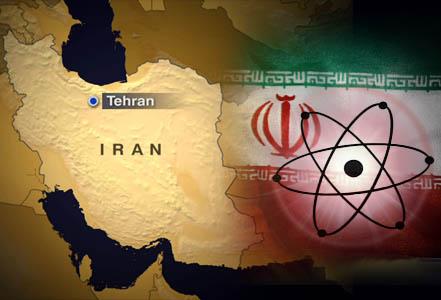
There has been a lot of talk in the press lately about a “cold war” being waged by the United States, Israel and other U.S. allies against Iran. Such a struggle is certainly taking place, but in order to place recent developments in perspective, it is important to recognize that the covert intelligence war against Iran (and the Iranian response to this war) is clearly not a new phenomenon.

While the covert intelligence war has been under way for many years, the tempo of events that can readily be identified as part of it has been increasing over the past few months. It is important to note that many of these events are the result of hidden processes begun months or even years previously, so while visible events may indeed be increasing, the efforts responsible for many of them began to increase much earlier. What the activities of recent months do tell us is that the covert war between Iran and its enemies will not be diminishing anytime soon. If anything, with the current withdrawal of U.S. troops from Iraq and Iranian nuclear efforts continuing, we likely will see the results of additional covert operations — and evidence of the clandestine activity required to support those operations.

All eyes were on this covert intelligence war after The New York Times published an article Jan. 15 reporting that the United States and Israel worked together to create and launch Stuxnet against the Iranian nuclear program. The visible events related to the intelligence war maintained a relatively steady pace until Oct. 11, when the U.S. Department of Justice announced that two men had been charged in New York with taking part in a plot by the Iranian Quds Force to kill Saudi Arabia’s ambassador to the United States, Adel al-Jubeir, on U.S. soil.

In early November, a  new International Atomic Energy Agency (IAEA) report was issued detailing Iranian efforts toward a nuclear weapons program. While this report did not contain any major revelations, it did contain new specifics and was more explicit than previous IAEA reports in its conclusion that Iran was actively pursuing a nuclear weapons program. The IAEA report resulted in an Israeli-led diplomatic and public relations campaign urging more effective action against Iran, ranging from more stringent sanctions to military operations.

Then, in the early afternoon of Nov. 12, explosions occurred at an Islamic Revolutionary Guard Corps (IRGC) ballistic missile base near Tehran, killing 17 people, including a high-ranking IRGC commander who was a critical figure in Iran’s ballistic missile program. Iran has insisted the blast was accidental, but speculation has since spread that the explosion could have been part of a sabotage operation carried out by Israeli intelligence. Israeli intelligence officials also have undertaken not-so-subtle efforts to ensure that outside observers believe they were responsible for the blasts.

Later on Nov. 12, the Bahraini government went public with the discovery of an alleged  plot involving at least five Bahrainis traveling through Syria and Qatar to carry out attacks against government and diplomatic targets in Bahrain. Iran vehemently denied it was involved and portrayed the plot as a fabrication, just as it responded to the alleged plot against the Saudi ambassador.

The next day, the Iranian press reported that Ahmad Rezai, the son of Mohsen Rezai — who is the secretary of Iran’s Expediency Council, a former IRGC commander and a presidential contender — was found dead at a hotel in Dubai. The deputy head of the Expediency Council told the Iranian press that the son’s death was suspicious and caused by electric shocks, while other reports portrayed the death as a suicide.

On Nov. 20, the Los Angeles Times reported that U.S. intelligence officials confirmed the CIA had suspended its operations in Lebanon following the arrest of several of its sources due to sloppy tradecraft on the part of CIA case officers assigned to Beirut. Following this report, the Iranian government announced that it had arrested 12 CIA sources due to tradecraft mistakes. We have been unable to determine if the reports regarding Lebanon are true, merely CIA disinformation or a little of both. Certainly, the CIA would like the Iranians to believe it is no longer active in Lebanon. Even if these reports are CIA spin, they are quite interesting in light of the Oct. 11 announcement of the thwarted assassination plot in the United States and the Nov. 12 announcement of the arrests in Bahrain.

On Nov. 21, the United States and the United Kingdom launched a new wave of sanctions against Iran based on the aforementioned IAEA report. The new sanctions were designed to impact Iran’s banking and energy sector. In fact, the United Kingdom took the unprecedented step of totally cutting off Iran’s Central Bank from the British financial sector. The Canadian government undertook similar action against the Central Bank of Iran.

On Nov. 28, there were unconfirmed press reports of  an explosion in Esfahan, one of Iran’s largest cities. These reports were later echoed by a STRATFOR source in Israel, and U.S. sources have advised that explosions did occur in Esfahan and that they caused a significant amount of damage. Esfahan is home to numerous military and research and development facilities, including some relevant to Iran’s nuclear efforts. We are unsure which facilities at Esfahan were damaged by the blasts and are trying to identify them.

Elsewhere on Nov. 28, Iran’s Guardians Council, a clerical organization that provides oversight of legislation passed by Iran’s parliament, approved a bill to expel the British ambassador and downgrade diplomatic relations between the two countries. The next day, Iranian protesters stormed the British Embassy in Tehran, along with the British Embassy’s residential compound in the city. The angry — and well-orchestrated — mob was protesting the sanctions announced Nov. 21.  Iranian authorities did not stop the mob from storming either facility.

On Dec. 1, the European Union approved new sanctions against some 180 Iranian individuals and companies over Iran’s support of terrorism and its continued nuclear weapons program. The European Union did not approve a French proposal to impose a full embargo on Iranian oil.

In the early hours of Dec. 4, a small improvised explosive device detonated under a van parked near the British Embassy building in Manama, Bahrain. The device, which was not very powerful, caused little structural damage to the vehicle and none to the building itself.

The next day, an unnamed U.S. official confirmed Dec. 4 reports from several Iranian news outlets that Iran had recovered an RQ-170 “Sentinel” unmanned aerial vehicle (UAV) in Iranian territory. The Iranian reports claimed that Iranian forces were responsible for bringing down the Sentinel — some even said the Iranians were able to hack into the UAV’s command link. U.S. officials have denied such reports, and it is highly unlikely that Iran was able to take control of a UAV and recover it intact.

Outlook

The United States is currently in the process of completing the withdrawal of its combat forces from Iraq. With the destruction of the Iraqi military in 2003, the U.S. military became the only force able to counter Iranian conventional military strength in the Persian Gulf region. Because of this, the U.S. withdrawal from Iraq will create a power vacuum that the Iranians are eager to exploit. The potential for Iran to control a sphere of influence from western Afghanistan to the Mediterranean is a prospect that not only frightens regional players such as Israel, Saudi Arabia and Turkey but also raises serious concerns in the United States.

Iran’s power comes from its ability to employ its conventional forces and not nuclear weapons. Therefore, strikes against its nuclear weapons program would not impact Iran’s conventional forces or its ability to interfere with the flow of oil through the Strait of Hormuz by using its conventional forces asymmetrically against U.S. naval power and commercial shipping. Indeed, any attack on Iran would have to be far broader than just a one-off attack like the June 1981 Israeli strike at Osirak, Iraq, that crippled Saddam Hussein’s nuclear weapons program.

Because of this difficulty, the Israelis, Americans and their allies have attacked Iran through other means. First of all, they are seeking to curb Iran’s sphere of influence by working to overthrow the Syrian regime, limit Syria’s influence in Iraq and control Hezbollah in Lebanon. They are also seeking to attack Iran’s nuclear program by coercing officials to defect, assassinating scientists and deploying cyberwarfare weapons such as the Stuxnet worm.

It is also necessary to recognize that covert action does not occur in a vacuum. Each covert activity requires a tremendous amount of clandestine intelligence-gathering in order to plan and execute it. With so much covert action happening, the clandestine activity undertaken by all sides to support it is obviously tremendous. But as the frequency of this activity increases, so can sloppy tradecraft.

Finally, it is remarkable to note that not only are Iran’s enemies using covert methods to stage attacks on Iran’s nuclear program and military capabilities, they are also developing new and previously unknown methods to do so. And they have shown a willingness to allow these new covert attack capabilities to be unveiled by using them — which could render them useless for future attacks. This willingness to use, rather than safeguard, revolutionary new capabilities strongly underscores the importance of this covert campaign to Iran’s adversaries. It also indicates that it is likely that other new forms of covert warfare will emerge in the coming months, along with revolutionary new tactical applications of older forms


Source

“If His Confessions Are Broadcast, It’s All Lies,” Says Imprisoned Journalist’s Sister

0


More than two months have passed since Iranian journalist Amir Ali Allamehzadeh was arrested. His family members, who have been permitted only limited contact with him since he was taken into custody on September 18th, say they remain bewildered by his arrest and are extremely concerned about the conditions he faces in prison.

Allamehzadeh’s sister, Zeinab Allamehzadeh, said that in recent communications with her brother, his speech has been abnormal and he has seemed extremely anxious.

“My brother doesn’t seem to have a good psychological state,” Allamehzadeh said in an interview with the International Campaign for Human Rights in Iran. “If Amir’s confessions are broadcast some day, it’s all lies and is not legally credible.”

Zeinab Allamehzadeh added that she and her family still doesn’t know why her brother was arrested or what he is being charged with. Though Allamehzadeh is a former International Desk Editor of ILNA News Agency, his sister said that medical issues have stopped him from practicing journalism in recent years.

“My brother suffers from back disc and heart problems,” she said. “All of these are now added to our worries.”

Amir Ali Allamehzadeh is currently detained inside IRGC’s Ward 2-A at Evin Prison.  Allamehzadeh  said she and her family are demanding that his case go through the proper legal channels, and are asking for his immediate release. Her brother, it seems, wants the same.

“In his recent phone calls, he has repeatedly asked us to get him a lawyer,” Zeinab Allamehzadeh said. “We don’t know what is happening to him and he does not know what we are doing on his behalf.”

Allamehzadeh’s visitations with his family have also been arranged under complete security supervision.

“Under very abnormal conditions, he was able to visit with my mother and father in the presence of a camera,” Zeinab Allamehzadeh said. “Prior to the meeting he and my parents were told not to say anything other than exchanging pleasantries.”

Though his arrest warrant was issued by Branch 14 of Government Employees, Culture, and Media Court, his case was transferred to Evin Prison Court two weeks ago. Allamehzadeh says that she and her family do not know why he brother was transferred.

“Since that day, my parents go to the court everyday to get an answer, but no one is accountable,” she said.

“We don’t even know now whom we are facing, with whom we must talk,” she said. “We really don’t know what to do.”


Source

An Open letter From the Family of Anvar Hussein Panahi to Dr. Shaheed

0


Your Excellency, Dr. Ahmad Shaheed,
The Special Rapporteur of the United Nation

Please accept the warm greetings of a Kurdish family who has endured much pain.

We are the family of the social activist Anvar Hussein Panahi who was sentenced to death four years ago for a crime he had not committed.Because of the pressure exerted and the support shown by the international human rights organizations and the European Union, the Appeals Court commuted Anvar’s death penalty and sentenced him to six years in prison.

Anvar Hussein Panahi is the oldest son in our family and has a wife and three children. His younger sister, Ashraf, was the second born child in our family. She had a job in Tehran and provided financial help to her elderly father. After Anvar was arrested and sentenced to death, Ashraf moved from Tehran to Sanandaj in order to help with her brother’s case and that of a cousin also condemned to death.

On September 27, 2008, while Ashraf was traveling towards Tehran and carrying documents that proved her older brother’s innocence, she was regrettably murdered by unknown individuals. Ashraf’s death was a heavy blow to two families since she was our only breadwinner. The effects of this blow increased many folds when Anvar was sentenced to death.

Meanwhile, intelligence agents of the Islamic Republic of Iran detained Anvar’s eighteen year old brother last year because he was following up on Anvar’s case. Anvar’s eighteen year old brother was tortured in order to extract a televised confession from him. The extent of this physical torture was such that it resulted in damage to and ultimately blinding one of his eyes.

All these events have been occurring while Anvar’s seventy year old father, mother and sisters have been summoned to the Intelligence Agency and threatened multiple times.

Your Excellency, we would like to ask you, “Where in the whole world is an individual arrested for the crimes committed by others?” Our entire family has been targeted by the regime because a few individuals including two family members living abroad are politically active against the Islamic Republic of Iran. Is it possible to prosecute and punish the rest of the family?

Our family especially Anvar Hussein Panahi is under very difficult conditions right now. Anvar is a well-known Kurdish political and social activist behind bars in Sanandaj Central Prison. He suffers from kidney infection and bleeding and has been transferred to the prison clinic multiple times. Although the physician in charge of this clinic has strongly advised to hospitalize Anvar outside the prison, the officials refuse to do so.

Anvar Hussein Panahi suffered from broken ribs when he was incarcerated in the Intelligence Agency’s detention center in the city of Qorveh, Kurdistan Province. Since then, he has been suffering for three years from kidney and intestinal infections that are continuously ignored by prison officials. Furthermore, the Intelligence Agency has recently begun new proceedings against Anvar and is about to frame and charge him with new crimes.

Under such circumstances, we reach out to you for justice with the hopes that you hear our innocent cries because we believe that you have the power to carry our message to the United Nations. Let the innocent cry of our family deprived of any momentarily peace and tranquility during the last few years be heard by the whole world.


Source

Nervous Gulf states look to one another amid mounting Iran tensions

0


The Washington Post – It was a remark designed to send chills through Washington and its allies: an influential member of the Saudi royal family suggesting the kingdom could someday consider making its own atomic weapons if stuck between nuclear arsenals in Iran and Israel.

The comment at a Gulf security forum in Riyadh by Prince Turki al-Faisal — who has served as intelligence chief and ambassador to the United States — simply echoed Western fears about a runway arms race in the Middle East if Iran ever moves toward a nuclear warhead.


But it also reflects the hardening views among the Gulf Arab states that they must rely on themselves — and not just Western protection — as the showdowns with the Islamic Republic deepen.


In Kuwait, authorities are pressing ahead with several cases against alleged Iranian spies. Bahrain’s rulers claim an Iran-linked cell sought to attack the Saudi Embassy and other key points.


The United Arab Emirates is close to finishing an oil pipeline that would connect directly to Indian Ocean shipping lanes and bypass the choke point of the Gulf’s Strait of Hormuz, where Iran shares controls with Oman. The U.S., meanwhile, is proposing selling 600 “bunker-buster” bombs and other munitions to the UAE to counter what the Pentagon described as “current and future regional threats.”


In meetings last week, Gulf envoys agreed to study proposals to pool their military forces into a region-wide command in an apparent reply to Iran’s expanding land and sea powers.


“Iran represents the sum total of the fears for the Gulf leaders and they have decided they need to act decisively,” said Theodore Karasik, a security expert at the Dubai-based Institute for Near East and Gulf Military Analysis.


Few have pushed this point further than Prince Turki on Monday. He said that Iran’s suspected quest for atomic weapons — a claim Iran denies — and Israel’s presumed nuclear arsenal could force Saudi Arabia to follow suit. Most defense analysts believe Israel has nuclear weapons, but it has refused to either confirm or deny their existence.


“Therefore, it is our duty toward our nation and people to consider all possible options, including the possession of these weapons,” Prince Turki was quoted as saying.


Gulf Arab states are desperate for Western help to derail Iran’s nuclear advances. Iran, however, says it will never give up its nuclear program — which it claims is only for power and research — as a point of national pride and regional sway. That stance has likely only hardened as the Arab Spring uprisings threaten the regime in key ally Syria and as sanctions chip away at Iran’s economy.


Gulf support, meanwhile, is considered critical for the West to help enforce stronger economic pressures on Iran following a report last month by the U.N.’s nuclear watchdog agency that the Islamic Republic conducted secret weapons-related tests and could be on the brink of developing an atomic weapon.


“(Gulf states) are terrified of Iran and they are determined to reinforce the notion in Washington and the West that Iran is the boogeyman,” said Christopher Davidson, an expert on Gulf affairs at Britain’s Durham University.


They need little help to sell that point these days.


Iran’s relations with Britain are on life support after protesters in Tehran last week stormed the British Embassy and a compound for diplomatic workers. Other European nations — including key Iranian trade partner Germany — recalled their ambassadors in solidarity.

Iran shows no signs of easing its defiance, though.

Iranian state media said the country’s powerful Revolutionary Guard has put itself on higher readiness. It’s an apparent bit of bluster after Iranian forces claimed to have shot down an advanced U.S. surveillance drone near its eastern border with Afghanistan. It’s unclear whether the wreckage of the RQ-170 craft — if it’s in Iranian hands — could yield important information about its stealth systems or reconnaissance equipment.

Last month, Iran also claimed it arrested 12 “agents” with links to the CIA and Israel’s Mossad spy agency. Officials have given no further details to back up the report. But it could signal stepped-up probes into suspected clandestine cells after a devastating Nov. 12 blast at a military site that killed at least 21 people, including Gen. Hasan Tehrani Moghaddam, who was in charge of the country’s missile program.

Iran has called the explosion an accident, but that hasn’t squelched widespread speculation of possible sabotage to set back Iran’s missile program. Iran has already pointed its finger at alleged Israel and U.S. involvement in the slayings last year of at least two scientists involved in nuclear research.

For Gulf states, there is a growing sense that Iran’s bravado masks some obvious worries about being an overall loser in the Arab Spring. Saudi Arabia and Qatar have led calls for Arab League pressure on Syrian President Bashar Assad — one of Tehran’s most important allies in the region — in response to his brutal crackdown on dissent.

“The situation in the region is not in Iran’s favor,” said Mustafa Alani, an analyst at the Gulf Research Center. “So, for Iran, it may be time to remind the Gulf countries that Tehran is still capable of destabilizing the region.”

Iran aimed one sharp warning at European-led proposals for trying to choke off Iran’s oil exports. A statement this week from Iran’s Foreign Ministry suggested crude oil prices could more than double to a record $250 a barrel if the flow was cut from OPEC’s third-largest producer — which supplies fast-growing China with about 10 percent of its current energy needs.

The Iranian threat did little to rattle markets. But the Gulf’s oil security was clearly on the minds of officials at a major petroleum gathering this week in Qatar.

Qatar’s emir, Sheik Hamad bin Khalifa Al Thani, opened the conference Monday by trying to calm any jitters over growing friction with Iran.

“I want to point to the numerous assurances by oil and gas exporting countries of their commitment to maintain the flow of these two resources to the consumers, and to exert every effort to fulfill this especially during crises,” he said.

Olivier Jakob, an oil analyst at Petromatrix in Switzerland, said even a substantial disruption of Iranian supplies — such as through an EU-wide ban — isn’t likely to cause a massive spike in global oil prices.

“The talk of $250 a barrel, that’s part of the usual noise created by Iran. It’s not the first time,” he said. “For that to happen, you need to have a worldwide ban,” which is still far from becoming a reality, he added.

He noted that existing non-EU Iranian customers such as Turkey are unlikely to ban Iranian oil. Other Iranian supplies could shift to the Far East, particularly if Tehran decided to cut its prices significantly to entice non-Western customers.

“Those other countries can still take it. Then it’s really a question of how much of a discount Iran is willing to take. … At $110 a barrel Iran can give a pretty hefty discount,” he said.

In Dubai, which has close trade ties with Iran, ruler Sheik Mohammed bin Rashid Al Maktoum broke ranks somewhat with his Gulf allies by suggesting the world listen closer to Iran’s claims about not seeking nuclear arms.

“I don’t believe that Iran will be under the nuclear weapon … I don’t think so myself,” he said in an interview with CNN broadcast Monday. What can Iran do with a nuclear weapon? For example, will they hit Israel? How many Palestinians will die? And you think … if Iran hit Israel, their cities will be safe? They will be gone (the) next day.”


Source

Reza Shahabi on 14th day of hunger strike

0


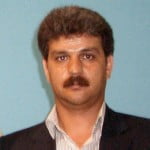
Incarcerated labor activist Reza Shahabi has been on hunger strike for over 2 weeks with no information about his condition.

Reza Shahabi is an employee and union member who has spent almost 19 months behind bars in Evin prison. He embarked on a hunger strike to protest being held with an unknown circumstance.

With the passing of 2 weeks since his hunger strike, his sister Zahra Shahabi expressed her worry for her brother’s physical condition in an interview with BBC Farsi. She said, “We were able to contact my brother by phone on December 4th, 2011 but he spoke with great difficulty and was in very poor health. The medical authorities have said that my brother is in need of surgery.”

Even though 5 months have gone by since her brother’s last court session, Mrs. Shahabi’s efforts to obtain any information about his situation form those in charge have been futile.

Labor activist Reza Shahabi was arrested on July 2010 and according to his sister the charge against him stems from “contacts with foreigners.”

Iran blocks U.S. virtual embassy

0


The U.S. Virtual Embassy in Tehran was blocked by Iranian authorities today, one day after its launch.

The website, presented in both Persian and English, was blocked today according to both international and Iranian media.

The virtual embassy launched by Washington included information on how to apply for U.S. travel visas and university admission.

The U.S. virtual mission went online yesterday with a message from Secretary of State Hilary Clinton, saying new technology was being harnessed to overcome the obstacles to dialogue that have developed over decades of diplomatic silence between the two countries.

The U.S. embassy in Tehran has been closed since the 1979 Revolution, when the embassy was overtaken by Iranian revolutionaries and all U.S. diplomats were taken hostage.

Clinton’s message described the online embassy as “an effort to promote greater understanding between the two nations.”

The head of Iranian Parliament’s National Security and Foreign Policy Commission, Alaeddin Boroujerdi, rejected U.S. claims about respect for the rights of Iranian citizens. He noted that “U.S. sanctions on the sale of passenger aircraft parts to Iran are in fact war against Iranian people and not the government, and they reveal that the U.S. has no regard for Iranian citizens.”

Another commission member declared that the virtual embassy was a official call for “recruiting U.S. spies.”

The effort has also been interpreted by the Iranian establishment as a U.S. tactic for creating divisions between the people and the Iranian government.


Source

Critical condition of four Gonabadi Dervishes in Pyrbanan prison, Shiraz


Majzooban Noor – Four Gonabadi  Dervishes are  confined in very bad conditions in Pyrbnan prison , Shiraz

According to Majzooban Noor reporter , Mssrs : Farzad Darvish , Mohammad Ali Sadee , Mohammad Jalal Nikbakht and Hojjatollah Saeedi , who  have been arrested in Sarvestan county on  Oct 08 , 2011 (Mehr 16 , 1390),, after their  transfer to Pyrbanan prison in Shiraz , are deprived of their most basic rights such as nutrition, health care and Sanitary .

Tracing  investigation by their families to these Gonabadi Dervishes ‘s condition and transfering them to the AdelAbad prison in Shiraz has remained inconclusive untill now .

Pyrbanan is a prison where is special for addicted prisoners , dangerous offenders and Smugglers …

It should be noted that , Mohammad Ali Sadee  is one of the wounded dervishes who have been shot  along with Martyr  Vahid Banani  and  other two Gonabadi Dervishes   in the entry of Kavar county by the security forces in the evening of Sep 04 , 2011 ( Shahrivar 13 1390).

It is remarkable that , this  four Gonabadi Dervishes had been sentenced to imprisonment and flogging by branch one of Sarvestan’s Public Court on Jul 12 , 2011 ( Tir 21 , 1390).


Source

Iran’s leader says reformists must admit they were wrong


Radio Zamaneh – Iran’s Supreme Leader says reformists can participate in the coming election if they “admit to being in error” in the last presidential election, the head of Iran’s Assembly of Experts has reported.

The Khabar-on-line website reports that in an interview, Ayatollah Mahdavi Kani said: “[Supreme Leader Ayatollah Khamenei] says anyone that comes and says I believe in these principles, the constitution, the Revolution, Islam and the leadership, even if they have different tastes, they should not be churned away from the Revolution.”

Kani added that he had inquired specifically about the reformists and the Supreme Leader had responded: “If they came and admitted that they were in error, then it is not a problem. They can come and say at a certain time, we made a mistake and now we understand and do not want to repeat those errors.”

The reformists challenged the outcome of the 2009 presidential elections, maintaining that Mahmoud Ahmadinejad’s victory had been rigged and, in fact, the true winner was MirHosein Mousavi, their top candidate.

The allegations threw Iran into one of its most serious crises since the 1979 Revolution, with mass demonstrations across the country.

The government cracked down severely on the demonstrators and arrested scores of top reformist figures, handing them stiff prison sentences. Mousavi and fellow reformist candidate Mehdi Karroubi have been under house arrest since last February.

The elections headquarters recently announced that two reformists parties, the Islamic Iran Participation Front and the Mojahedin of the Islamic Revolution, will not be allowed to participate in the elections as they have been banned from political activity.

Many senior reformists have announced that they will boycott the elections to protest the closed political atmosphere and the government’s refusal to release political prisoners. They have also questioned whether the elections could be “open and transparent” in the current political atmosphere.


Source

Heavy security deployment in Tehran amidst protest fears


GVF — Security is said to be “tight” in the Iranian capital, amidst fears of a fresh wave of opposition protests on Ashura and national Students Day.

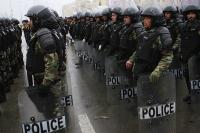
According to Green Voice of Freedom sources, on Tuesday anti-riot police in full armour gear and security forces on motorcycles were patrolling a number of neighbourhoods in central Tehran. In addition, helicopters circled in the central districts, keeping a close eye on developments on the ground.

A recently uploaded YouTube video shows a heavy security presence in Tehran on the holy day of Ashura. The clip appears to shows security forces positioned in important areas of city’s centre such asHaft-e-Tir SquareEnghelab Sq.Vali-Asr Sq., the intersection of Hafez and Enghelab Avenues as well as the intersection of Enghelab and Vali-Asr Avenues.

“The atmosphere [was] completely dominated by security [forces]. The non-stop hovering of helicopters, as well as patrols by the special guard and the police are reminiscent of the Ashura [protests in December 2009],” said another eyewitness who spoke on condition of anonymity.

The intersection of Shademan and Sattarkhan, [was] filled with anti-riot forces and there [were] many police vehicles with cages. It was the same situation in Towhid Square,” he continued.

In December 2009, a wave of anti-regime demonstrations known as the “Ashura” protests swept Iranian cities. Clashes between Green Movement supporters and security forces during the protests left at least eleven protesters dead in Tehran, three of whom were run over reputedly by police cars. Among the slain protesters was Seyed Ali Mousavi, nephew of opposition leader Mir Hossein Mousavi, who was killed by an assassin’s bullet to the heart.

At least four other protesters were killed by security forces in the north-western city of Tabriz.

At the time, Tehran’s Deputy Police Chief Ahmad Reza Radan acknowledged the arrest of 300 individuals on state television, but shamelessly claimed that those killed included one person who fell off a bridge and two others who were killed in a car accident. Radan went on to add that only one protester had been killed by bullet. However, “considering the fact that the police did not use firearms, this incident is extremely suspicious, and is being investigated,” he said.

No one has been brought to justice for any of the crimes committed on that day.

Instead, many of those arrested during the Ashura protests, among them 65-year-old Malek Mohammadi, received lengthy jail terms while others are still awaiting trial. Three of the detainees were sentenced to death, however, in the end only Zahra Bahrami, an Iranian-Dutch national, was hanged in January 2011.

The Ashura protests were the last in a series of large-scale public demonstrations by Green Movement supporters in the 200 days that followed the rigged June 2009 presidential election. It wasn’t until 14 February 2011 that the movement’s leaders, Mir Hossein Mousavi and Mahdi Karrobi, called for new rallies in support of the Arab Spring. Shortly after the protests, the men were illegally placed under house arrest along with their wives.

In his recent scathing report on Iran’s human rights abuses, UN special rapporteur Ahmad Shaheed expressed concern over the absence of any formal charges against Mousavi and Karroubi as well as their loss of “control over their health care, access to publications, privacy and the ability to live a normal life.”

In an interview with the Nasim Online website, Saeid Saeidifar, head of public relations at Tehran Police, confirmed reports that security forces had been recently been deployed in the capital, but claimed that the forces had been there to “provide security” for Ashura mourners and not in anticipation of demonstrations on Ashura and Nation Student Day, 6 and 7 December respectively.

The massive police deployment is despite the fact that Iran’s major opposition groups, in particular the Coordination Council of the Green Path of Hope (an important Green Movement body), had not called for specific actions ahead of the two occasions.

Analysts say the large-scale presence of security personnel on the streets of the capital is yet another indicator that Iran’s ruling hardliners are still uneasy about the prospect of opposition protests erupting in the country, despite the regime’s numerous claims of having successfully quelled the pro-democracy Green Movement.

In anticipation of Student Day, in late November the Coordination Council for the Green Path of Hope called on students to take the “initiative” to express “dissatisfaction” over the current state of affairs in the country. In their statement, council members predicted that the upcoming parliamentary elections in March 2012 “will not be held freely.”

On 7 December (16 Azar in the Iranian calendar), Iran marks Student Day, an annual commemoration of the killing of three students at a protest on 7 December 1953, in the aftermath of an CIA-backed coup to restore the Shah to power and topple the country’s democratically elected Prime Minister Mohammad Mossadegh.

In a damning 21-page report submitted in September, the United Nations’ special rapporteur on the situation of human rights in Iran, Ahmed Shaheed, said that students in Iran “faced arrest and intimidation and were sometimes subjected to beatings and torture for their ties to legally registered student activist organisations.”

The UN report documented “physical and psychological abuse” against student activists who were regularly “coerced into making … televised confessions,” and were at times even “denied proper medical care” and the right to continue their higher education as a result of their political leanings.


Source


Iran’s Revolutionary Guards prepare for war

0


Iran’s Revolutionary Guards have been put on a war footing amid increasing signs that the West is taking direct action to cripple Iran’s nuclear programme.

An order from Gen Mohammed Ali Jaafari, the commander of the guards, raised the operational readiness status of the country’s forces, initiating preparations for potential external strikes and covert attacks.

Western intelligence officials said the Islamic Republic had initiated plans to disperse long-range missiles, high explosives, artillery and guards units to key defensive positions.

The order was given in response to the mounting international pressure over Iran’s nuclear programme. Preparation for a confrontation has gathered pace following last month’s report by the International Atomic Energy Agency (IAEA) in Vienna that produced evidence that Iran was actively working to produce nuclear weapons.

The Iranian leadership fears the country is being subjected to a carefully co-ordinated attack by Western intelligence and security agencies to destroy key elements of its nuclear infrastructure.

Recent explosions have added to the growing sense of paranoia within Iran, with the regime fearing it will be the target of a surprise military strike by Israel or the US.

Its ballistic missile programme suffered a major setback on Nov 12 after an explosion at the regime’s main missile testing facility at Bidganeh, about 30 miles west of Tehran.

At least 17 people died, including Gen Hassan Tehrani Moghaddam, the head of Iran’s missile research programme.

The IAEA report said Iranian scientists had worked to develop a missile capable of carrying nuclear warheads. Security analysts described Iran’s missile advances as “a turning point” that had “profound strategic implications”.

Last week another mysterious explosion caused significant damage to Iran’s uranium conversion facility at Isfahan.

“It looks like the 21st century form of war,” said Patrick Clawson of the Washington Institute for Near East Policy, a Washington think tank, told the Los Angeles Times. “It does appear that there is a campaign of assassinations and cyber war, as well as the semi-acknowledged campaign of sabotage.”

Ayatollah Ali Khamenei, Iran’s spiritual leader, issued a directive to the heads of all the country’s military, intelligence and security organisations to take all necessary measures to protect the regime.

Gen Jaafari responded to this directive by ordering Revolutionary Guards units to redistribute Iran’s arsenal of long-range Shahab missiles to secret sites around the country where they would be safe from enemy attack and could be used to launch retaliatory attacks.

In addition, the Iranian air force has formed a number of “rapid reaction units”, which have been carrying out extensive exercises to practice a response to an enemy air attack.

At the weekend, Iran claimed it had succeeded in shooting down an advanced American RQ-170 drone in the east of the country. If true, this would represent a major coup for the ayatollahs, as this type of drone contains sensitive stealth technology that allows it to operate for hours without being detected.

A spokesman for Nato’s International Security Assistance Force in Afghanistan would only confirm that US operators had “lost control” of a drone, without specifying the model.

Intelligence officials believe the dangerous game of cat and mouse between Iran and the West was responsible for last week’s attack on the British Embassy in Tehran. William Hague, the Foreign Secretary, closed the embassy and expelled Iranian diplomats in response.

But with Iran showing no sign of backing down over its nuclear programme, there is growing concern that Israel will launch unilateral military action.

At the weekend, Benjamin Netanyahu, Israel’s prime minister, warned that he would take “the right decision at the right moment” if Iran continued with its uranium enrichment programme.

Israel’s uncompromising approach is viewed with alarm in Washington.

Leon Panetta, the US defence secretary, has warned that a unilateral strike by Israel risked “an escalation” that could “consume the Middle East in confrontation and conflict that we would regret”.

A senior Western intelligence official said: “There is deep concern within the senior leadership of the Iranian regime that they will be the target of a surprise military strike by either Israel or the US.

“For that reason they are taking all necessary precautions to ensure they can defend themselves properly if an attack happens.”