Home Blog Page 520

Iranian journalist arrested at his home

0


Iranian journalist Farshad Ghorbanpour was arrested after a raid on his home in Tehran, the Human Rights House of Iran reports.

Ghorbanpour previously had been sentenced to one year in prison and $5,000 in fines for the charge of “acting against national security through propaganda against the regime” as well as “collaboration with the Rooz-on-line website.”

The appellate court has reportedly upheld the sentence, and Ghorbanpour has been transferred to Evin Prison.

He was first arrested in 2007 and released on bail after a month.

Ghorbanpour has collaborated with several Iranian publications and dailies such as Ham-Mihan, Kargozaran, Farhikhtegan and Shahrvand-e Emrooz.

Iranian journalists have become the target of repeated arrest and stiff prison sentences since the controversial re-election of Mahmoud Ahmadinejad in 2009.


Source

Two Political Prisoners in Evin Transferred to Hospital

0


HRANA News Agency – Political prisoners Kobra Amirkhizi and Hussein Ronaghi Maleki were transferred to hospital for urgent medical care.

According to a report by Human Rights Activists News Agency (HRANA), Hussein Ronaghi Maleki has suffered internal bleeding of kidneys and taken to Hasheminejad Hospital in Tehran.Although this political prisoner has several times been transferred to a hospital outside the prison for infection of and bleeding from kidneys, the authorities refuse to grant him furlough for medical care.

Moreover, Kobra Amirkhizi has undergone an eye operation in Labafinejad Hospital. She was then returned to Evin prison following this surgery. Because of the insanitary condition in prison, this political prisoner is in danger of acquiring an eye infection. However, prison officials refuse to acknowledge such a possibility.


Source

Blogger Rojin Mohammadi Suffering in Ward 2A, Evin Prison


HRANA News Agency – Imprisoned blogger and medical student, Rojin Mohammadi, has been locked up in Ward 2A of Evin Prison under appalling conditions. This ward is under the control of Army of the Guardians of the Islamic Revolution (IRGC).

According to a report by Human Rights Activists News Agency (HRANA), Rojin Mohammadi contacted her family briefly by phone and informed them of her nervous convulsions and migraine headaches in prison. Rojin Mohammadi’s current condition is the direct result of her incarceration and pressures exerted by the interrogators in order to force her to confess and accept charges filed against her.

Iranian authorities have charged Rojin Mohammadi with the crimes of propaganda against the regime and inciting public opinion by the means of human rights activism. Meanwhile, intelligence agents have been pressuring Rojin Mohammadi’s family not to broadcast the news of her condition. Rojin Mohammadi’s brother was also summoned to Shahid Moghadasi Court in Evin Prison and threatened.

Rojin Mohammadi was initially arrested on November 14, 2011 upon her arrival at Imam Khomeini Airport but and subsequently released after posting bail. She was finally arrested again on November 23, 2011 and locked up behind bars in Evin Prison.


Source

Iranian regime security forces kill young Kurd men and severely wound his uncle

0


On Thursday November 25, two Kurd men were directly targeted by Revolutionary Guards Corps forces and were killed and injured.

According to reports, Sassan Faroki was killed by RGC forces while Khaled Farokhi was severely wounded.

Sassan Farokhi who was from the Saka Village in Salmas was targeted in his car by RGC forces and was killed. His uncle Khaled Farokhi was also severely wounded and is now in critical condition in the hospital.

Notably, they were only carrying three horses in their car and did not have any illegal goods but security forces shot them without warning and without telling them to stop. (Human Rights Activists in Iran – Nov. 30, 2011)


Source

Leader Orders to Vacate Embassy

0


Arash Bahmani

With the passage of five days since the attack on the British embassy compounds in Tehran, which has so far met with silence from the leader and the president of the Islamic Republic, a senior cleric condemned the attack, amid the strong condemnations that have been made by the British and other governments, newspapers in Iran too are now commenting on the event as have some of the attackers on the embassy.

Among the most astounding responses were the remarks of Majlis member Ahmad Khatami who at Tehran’s weekly Friday prayer sermon initially strongly attacked Britain and called last week’s attack on the British embassy in Tehran as a “necessary slap” on Britain while in a subsequent interview criticized the attackers and pretended that he had always been against this type of activity!

On his return to the UK, the British ambassador to Tehran said that Iran’s Majlis speaker Ali Larijani and Alaeddin Borujerdi wanted tension in the air for their own personal ambitions. He also said that Iran was not the sort of country “where spontaneous demonstrations congregate and then attack a foreign embassy. That sort of activity, he wont to say, takes place only with the acquiescence and the support of the state.”

We Were Used

The web blog of a student association, the Hizbullah University Association of Iran, posted a meaningful comment on the attack on the British embassy, which also included the commentary and writings of two participants in the attack.

The site claims that the attackers were brought into the situation “without any analysis” and their “zeal” took over their minds. It writes that students and members of groups supporting the Islamic republic in universities were “used for the purposes and interests of political groups.” “Student organizations have to a large extent lost their student characteristic and nature and we notice that among the current student bodies, the level of analysis and ideas are so low that they play no role in decision making and instead it is political factions and groups outside, and even personal ambitions outside the student groups that have filled this void,” the article reads.

While the commentary approves of the attack on the embassy, the pulling down of the British flag and generally showing power to the British government but questions the actions resulting in the destruction of property. “The group was controlled from outside and the whole episode gets out of the hands of the law enforcement forces, some enter the embassy who engage in nothing but the destruction of the embassy because there were no plans for this part of the event,” it reads.

Two individuals inside the embassy who were among the attackers describe their observations in these terms: “There were about 30 to 40 soldiers at the gate of the embassy outside it. But we easily went through them and I, who am rather light, easily climbed the embassy wall and jumped over it into the compound. On the other side too there were some 30 soldiers who also did not say anything to us as if this was a normal event and that anybody could jump over the wall into the embassy. They stood there like statues from world war II who occasionally glanced at us.”

Another person who was inside the embassy is quoted to have said, “The dream of the student movement to take over the British den of espionage after years has been fulfilled but orders came from above, from the leader, that we had to vacate the embassy as soon as possible and leave.” He continued to describe the attack on the embassy in these words: “We wondered how could it be so easy to enter the embassy and undertake such actions and then leave it that way. Let me simply say we were used.” Another person who was present at the scene wrote, “a plainclothes person who was most likely a Basij person held his hands for me to climb on, and I used it to climb the embassy wall and enter the compound.” He too said that the attackers were used and said that the attack on the embassy was a “dirty and stupid game,” whose result was nothing other than billions of Toman of damage to public property and an excuse for another year of destruction against the regime. He also made reference to middle level Revolutionary Guards elements involved in the vacation of the embassy.

It is significant that the statement by Hizbullah student group and the writings of the two witnesses and participants was removed from the web blog soon after it appeared.

Principlists Protest the Embassy Destruction

In a related development, Naser Makarem Shirazi, a senior cleric close to the regime issued a statement criticizing the attack on the British embassy. In his statement he labeled the attackers as “dear young enthusiasts” whose “supra-legal” activities has provided enemies the opportunity to engage in adventurism for which we will now have to pay a high price.” Ayatollah Shirazi attributed the destruction of property inside the embassy to “infiltrators” and wrote, “In such situations, (they) should not engage in supra-legal activities and not take any measures without the permission of the great leader of the revolution and responsible authorities.”

Ahmad Khatami who is also a member of the Assembly of Experts on Leadership, and a temporary Friday prayer leader, told IRNA official news agency after his comments on Friday, “We are for law and legal action and this is where were see the interests of the country. I have said in the past that attacking foreign embassies and invading them is like invading a foreign country. This is illegal. For foreign embassies to feel insecure is not revolutionary zeal, and this is not in the best interest of Iran. I categorically say that I am against attacking embassies and invading them in the Islamic Republic.”

Prior to this, Hossein Mir Mohammad Sadeghi, the former spokesperson for the Judiciary had published a commentary in which he said that attacking foreign embassies was in the interest of foreigners. He even criticized the Majlis resolution last week that called for a lowering of Iran’s relations with Britain and said this was interference in the executive branch of government. He specifically wrote that it was not clear whether breaking diplomatic ties or reducing them with a foreign state was in the interests of the country or the nation. He even criticized the language that the Majlis and MPS had used, including calls of “death” to a country or of a person.

At the same time, a Principlist media activist published a commentary in which he accused those who had advocated and or encouraged this act of acting against the national security of the state. Asre Iran, a website belonging to the Principlists (groups and individuals who claim to advance the original principles of the 1979 revolution and its founder of the Islamic Republic ayatollah Khomeini) also criticized the attack on the British embassy and wrote that if attacks on diplomatic missions and the British embassy were good acts, the foreign ministry would not express its regrets over them. It should be noted that the Iran’s ministry of foreign affairs did express its regrets over the attack on the British embassy compounds. He also said that if such acts were ok, the police would not intervene and arrest those who had perpetrated them.

Government Supporters: Attack on the Embassy Was to Hurt Ahmadinejad

With the passage of a few days since the attack on the British embassy in Tehran, Ahmadinejad’s supports labeled the attack as “suspicious” and interpreted the act as a way to pressure Ahmadinejad’s administration. They also wrote that the resolution in the Majlis to reduce the level of diplomatic relations with Britain that was passed last week just prior to the embassy attack, was in fact done for election purposes and a distraction against the embezzlement charges that some prominent officials currently face. It should be noted that critical parliamentary elections are scheduled to be held in Iran on March 2012.

An Ahmadinejad supporter also pointed out that the leader of the Majlis resolution to lower the diplomatic ties with Britain was Alaeddin Borujerdi, who faces some serious embezzlement charges. He also said that the attack on the embassy was carried out on the instigation of some specific individuals inside the regime. It should be noted that Borujerdi is the head of the national security committee of the Majlis.

So just a few days after the attack on the British embassy compounds in Tehran, which some Principlists had originally hailed as the third revolution (the attack on the US embassy in 1979 which resulted in the hostage taking of the American embassy staff was hailed as the second revolution by ayatollah Khomeini), is now questioned and is used by the different power factions inside the regime to attack each other. And all of this is taking place while neither the supreme leader ayatollah Khamenei nor president Ahmadinejad has expressly commented on the issue in public. It is international pressure that has forced them to distant themselves from the attack?


Source

Cleric Ahmad Reza Ahmadpour’s 3-year prison sentence increased to 5 years

0


Ahmad Reza Ahmadpour who was transferred to Ahvaz prison last week, was verbally notified of the increase in his prison sentence.

Seyed Ahmadpour who is a dissident cleric, blogger for Pezhak-e Khamoush and member of the Qom Hezbeh Mosharkat (Participation Front) was arrested on July 19, 1010 after which he spent almost a year behind bars in temporary detention. Last week when he was transferred to Ahvaz prison he was told his prison sentence has been increased from 3 years to 5 years.

According to Human Rights House of Iran the appellate court had previously upheld a 3-year prison sentence for this cleric; 2 years for the charge of “publishing lies with the intent of disturbing public opinion” and one year for “propaganda against the regime.” A request was given to the court to give credit for the time served while the cleric was held in temporary detention, with consideration to the fact that he had already spent 20 months behind bars and was eligible for parole.

Ahmadpour is a war veteran [of the Iran-Iraq war] who suffers from physical disabilities from exposure to chemical weapons during the war and per doctor’s orders it is imperative that Seyed Ahmadpour have access to around the clock medical supervision.

Per a document from the Qom special court for the clergy, it was verbally announced to Ahamdpour that not only was his request for release denied, 2 years were added to his prison sentence for the additional charge against him of “acting against national security” and he must now spend 5 years behind bars.

Ahmadpour who was summoned to court on Tuesday objected to the sentencing and asked that the added charge of acting against national security be dropped considering it was not part of the verdict that the appellate court had previously handed down. But he was told that even though they understood his point, the court’s hands were tied and there was nothing they could do.

The new verdict that was announced verbally is in all likelihood due to the publication of a critical letter Ahmadpour wrote to the leadership of the country. This cleric who strongly denies all previous and present charges against him and is suffering from war related ailments, is now behind bars serving his second prison term.


Source

U.S. Senate approves boycott of Iran’s Central Bank

0


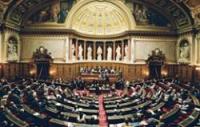
The U.S. Senate has approved a bill that targets Iran’s Central Bank with sanctions, while also allowing the U.S. government to take punitive action against foreign companies that engage in transactions with Iranian banks.

The bill was passed unanimously, giving the president the power to impose the sanctions beginning July 1. The measures would make it much harder for foreign companies to pay for oil imports from Iran.

The Obama administration opposed the Senate sanctions against Iran on the grounds that such measures could jeopardize the international coalition that the U.S. has worked hard to create in order to put coordinated pressure on Iran over its nuclear activities. Furthermore, the administration said the measures could have an adverse effect on oil prices in the current economic situation.

The latest International Atomic Energy Agency report on Iran has triggered a raft of new unilateral sanctions, with Britain boycotting Iran’s banking sector, France boycotting its oil and gas sector and the EU imposing sanctions on a series of individuals and companies connected to its nuclear program.

Countries such a Greece and Italy, which depend on Iranian oil imports, have opposed EU sanctions that target Iranian crude oil.

Russia has spoken out against unilateral sanctions, warning that such measures only help aggravate the situation, making it harder to resolve nuclear disputes through diplomatic negotiations.


Source

Several trade unionists sentenced to long prison terms while one unionist is released on leave


The Observatory for the Protection of Human Rights Defenders, a joint programme of the World Organisation Against Torture (OMCT) and the International Federation for Human Rights (FIDH), expresses its deepest concern about the ongoing arbitrary detention of several trade unionists and human rights defenders in Iran, while it notes with appreciation the release of Mr. Ebrahim Madadi, Vice-President of the Syndicate of Workers of Tehran and Suburbs Bus Company (Sherkat-e Vahed).
Several trade unionists and human rights defenders have recently been sentenced to unjust terms of prison and others remain in arbitrary detention in Iran, often in horrendous conditions, with the only aim to sanction the legitimate exercise of their human right activities, amid the continuing repression of the Iranian civil society.

In particular, the situation of Mr. Reza Shahabi, the Treasurer and board member of the Syndicate of Sherkat-e Vahed Workers, who has been in pre-trial detention for 18 months since his arrest on June 12, 2010, has deteriorated in the past few days, after beginning a hunger strike on November 22, in protest of the Evin prison authorities’ lack of medical treatment and attention to his illness. According to the information received, the authorities are intent on keeping him in pre-trial detention and denying him medical treatment to break him. Shortly before, Mr. Shahabi had been transferred to the hospital due to having pain in his back and neck, and doctors told him after an MRI that some of the vertebra in his neck have deteriorated and are in need of surgery followed by six months of complete rest, and that without hospitalisation his left side might become paralysed. However, the prison authorities have not taken any action for him yet. In addition, his family has reportedly been refused access to him since November 20, and has received no news about his state of health.

Moreover, several other trade unionists have recently been sentenced, notably Messrs. Ali NejatiShahrokh ZamaniMohammad JarrahiNima Pouryaghoub, Sassan Vahebivash andBehnam Ebrahimzadeh.

Mr. Ali Nejati, former President of the Independent Syndicate of Workers of Haft Tappeh Cane Sugar Company, started serving a one-year imprisonment sentence in Dezful prison for his trade union activities on November 12, 2011 following his sentencing in March 2011 by Branch 13 of the Islamic Revolution Court in the southern city of Ahvaz. He had previously served six months for the same charges and was subsequently expelled from work after 25 years of working. It was reported that doctors consider him unfit for detention due to a recent heart surgery.

On November 21, 2011, the sentences of Mr. Shahrokh Zamani, a member of the provisional board for reopening the Building Painting Workers Syndicate who was arrested on June 7, 2011, Mr. Mohammad Jarrahi, a unionist member of “the Committee to Pursue Establishment of Labour Unions” who was arrested on June 20, 2011, Mr. Nima Pouryaghoub and Mr. Sassan Vahebivash, student activists, to respectively eleven years, five years, six years and six months of imprisonment were upheld by the Appeal Court on charges of “propaganda against the system” and “establishment or membership of a group opposed to the system”[1].

Finally, Mr. Behnam Ebrahimzadeh, a unionist member of “the Committee to Pursue Establishment of Labour Unions,” and a child rights activist, who was arrested on June 12, 2010 and later sentenced to 20 years of imprisonment, was reportedly sentenced in appeal to a reduced sentence of five years in late October 2011 for “assembly” and “collusion against the system”.

On a positive note, the Observatory welcomes the release on November 30, 2011 of Mr.Ebrahim Madadi from Evin prison as part of a furlough. He had been detained on the basis of a three and a half-year imprisonment sentence, which was issued against him in December 2008 on false charges of “endangering national security”.

Accordingly, the Observatory urges the Iranian authorities to put an end to these acts of harassment against human rights defenders, to immediately and unconditionally release those presently detained in the country, to take all necessary measures to guarantee, in all circumstances, their physical and psychological integrity, and more generally to conform to the United Nations Declaration on Human Rights Defenders, the Universal Declaration of Human Rights and international human rights instruments ratified by Iran.

Source

Reports on health of opposition leaders ‘worrying’ says top reformist

0


GVF — A renowned figure in Iran’s reform movement has expressed concerns over the safety and well-being of opposition leaders Mir Hossein Mousavi and Mahdi Karroubi.

In a note published on Kaleme, a website affiliated with Green Movement leader Mir Hossein Mousavi, veteran reformer Saeed Hajjarian praised the resistance of political activist Mostafa Tajzadeh in jail, ahead of his 55th birthday.

Tajzadeh is a member of the Central Council of the Islamic Iran Participation Front (Mosharekat) and of the Islamic Revolution Mujahedin Organisation of Iran (MIRO), two of the country’s largest pro-reform groups. During Khatami’s presidency, he was Deputy Minister of the Interior. He was arrested one day after the fraudulent June 2009 presidential election and paraded in the televised show-trials of reformist figures in August of the same year.

Despite his release after nine months in prison, four months of which he spent in solitude, Tajzadeh was arrested along with six other prominent reformists for writing a grievance letter to Revolutionary Guards (IRGC) Commander Moshfeq and other regime officials for their role in facilitating fraud in the 2009 election.

In addition to being taken back to prison after the publication of the letter, Tajzadeh was transferred to the Quarantine Ward of the notorious Evin Prison where he is still being detained. Thus far, the outspoken critic of Iran’s hardliners has had to endure more than a year and a half of solitary confinement. He is reportedly barred from receiving any visitors.

Hajjarian, who was disabled after an assassination attempt in 2000, described Tajzadeh’s continued incarceration as “illegal” and expressed hope for his eventual release. “For more than two years, he has been away from us, and is serving an illegal sentence. Nevertheless, we are kept up-to-date about his analyses and viewpoints,” the statement went on to add.

“Unfortunately, in recent weeks, shocking and disturbing news reports have been published by certain websites close to the ruling factions, suggesting that Mr Mousavi has been diagnosed with an incurable illness and that doctors have lost [all] hope of treating him. I have to express my serious concern over [the publication of] such reports, which are not only unprincipled, but also alarming,” warned Hajjarian, once a political advisor to Former President Khatami and a member of Tehran’s City Council.

Mir Hossein Mousavi and Mahdi Karroubi, who have spearheaded the pro-democracy Green Movement since its conception in 2009, were placed under house after calling for demonstrations in support of the Arab Sptring in mid-February.

In his recent scathing report on Iran’s human rights abuses, UN special rapporteur Ahmad Shaheed expressed concern over the absence of any formal charges against Mousavi and Karroubi as well as their loss of “control over their health care, access to publications, privacy and the ability to live a normal life.”


Source

Iran: Quds Force leader is developing a cult status

0


Some see Qassem Suleimani as an icon as he is taking on ‘the enemy’ directly.

Diplomats and Iran analysts said that the storming of the British embassy in Tehran revealed the role of a growing, radical actor in Iranian foreign policy: the Quds Force.

There is certainly plenty of debate about how far up the chain of command the orders for Tuesday’s embassy invasion went.

The force is the external operations wing of Iran’s Revolutionary Guard corps (IRGC), one of the regime’s most powerful institutions, with extensive economic and financial interests across the country.

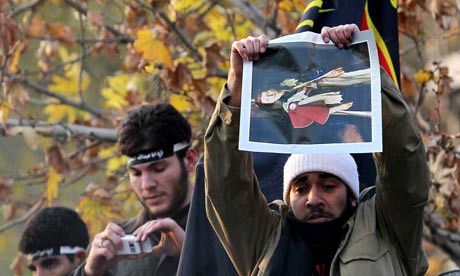
Some of the rioters at the embassy on Tuesday held aloft pictures of the Quds Force commander, Qassem Suleimani, around whom a personality cult is developing. There are claims that a known Quds commander was in the crowd.

In his statement to parliament, William Hague said that the damage done to the embassy and the residential compound was done by 200 “student Basij militia”, but diplomats note that according to a recent restructuring by the Supreme Leader, Ali Khamenei, the Basij serve as a youth arm of the Revolutionary Guard.

Meir Javedanfar, an Israeli-Iranian analyst, said: “The Basij falls under the command of the IRGC who answer to Khamenei. Basij members don’t turn up in front of embassies, unless they have permission from the IRGC as well as operational procedures, which would certainly include whether to launch a physical attack or not.”

Conspicuous in their dark, ascetic clothing, the Basij crushed the opposition street protests of 2009 by driving into crowds of demonstrators on motorcycles wielding batons and knives.

Some diplomats believe that as the target on Tuesday was foreign, the Quds Force was “in the driving seat”.

Another western official believes that the Quds Force’s leading role is restricted to operations overseas, “but the mob see Suleimani as an icon as he is taking on the enemy directly”.

Suleimani has made clear he has big ambitions. In 2008, he had a phone text sent to General David Petraeus when the CIA director-to-be was running the war in Iraq, informing him that he, Suleimani, was the man he should be dealing with on Iranian foreign policy.

The text read: “General Petraeus, you should know that I, Qassem Suleimani, control the policy for Iran with respect to Iraq, Lebanon, Gaza, and Afghanistan.

“And indeed, the ambassador in Baghdad is a Quds Force member. The individual who’s going to replace him is a Quds Force member.”

Western diplomats in Kabul say that the Iranian ambassador there is also a Quds Force officer. The force has a particularly heavy presence in Afghanistan’s western Herat province, where its primary focus appears to be to prevent Shindand air base, near the Iranian border, staying in US hands after the 2014 transition.

Turkish officials meanwhile have confirmed western allegations that the Quds Force is active in Syria, and is a powerful player in Iraq.

In October, the US accused Suleimani and the Quds Force of being behind a plot to blow up the Saudi ambassador in Washington when he was dining in his favourite restaurant.

If true, and many observers cannot believe that a commander as senior as Suleimani could be so reckless, it would be a sign that the Quds Force is seeking to expand its operations to confront Iran’s two greatest enemies, the US and Britain, directly.


Source