Home Blog Page 535

U.S. defense secretary warns Iran against meddling in Iraq after troops leave

0


U.S. Defense Secretary Leon Panetta said that even after the last of the 39,000 combat troops are out of Iraq the U.S. will maintain a significant presence in the Middle East. (Reuters)

U.S. Defense Secretary Leon Panetta on Wednesday warned Iran that it should not meddle in Iraq when American forces leave the country at the end of this year.

The Pentagon chief said that even after the last of the 39,000 combat troops are out of Iraq, the U.S. will maintain a significant presence in the Middle East.

“As the president announced, we are going to wind down our combat forces in Iraq by the end of this year,” he told U.S. service personnel during a visit to Tokyo.

“The mission there was to develop an Iraq that could govern and secure itself and we will maintain a long-term relationship with Iraq.”

“The message to Iran and everybody else that might have any ideas there is that the U.S. is going to have a presence in the region for a long time to come.”

Panetta’s comments come at the end of a three-day visit to Japan, part of a tour of Asian allies where he has emphasized Washington’s commitment to the Pacific theatre, despite deep cuts to the U.S. military budget.

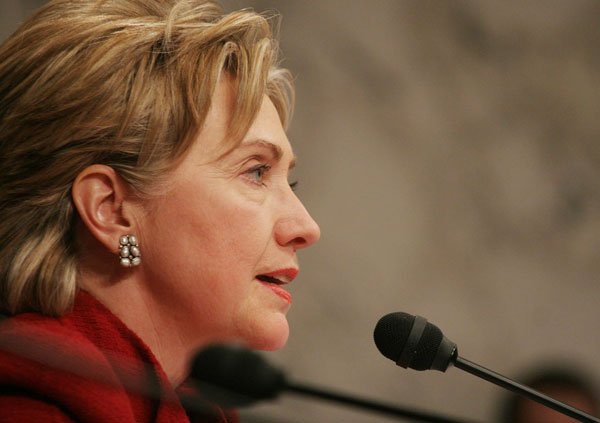
They also come days after U.S. Secretary of State Hillary Clinton aired similar views after Iranian President Mahmoud Ahmadinejad said Tehran had “special relations” with Baghdad.

“No one, most particularly Iran, should miscalculate about our continuing commitment to and with the Iraqis going forward,” Clinton said in an interview with CNN.

President Barack Obama announced on Friday that all remaining American troops would leave Iraq by the end of 2011, keeping a campaign promise, after Washington and Baghdad failed to reach agreement on maintaining perhaps thousands of troops as trainers.

Earlier this week, the speaker of Iraq’s parliament accused neighboring nations of meddling in Iraqi affairs and signaled it will only get worse if the country is seen as vulnerable after U.S. troops leave at the end of the year.

Speaker Osama al-Nujaifi, a Sunni Muslim, did not name the Mideast nations and did not offer specifics. Iraq’s Sunnis long have worried about Iran’s burgeoning influence in Baghdad, where the Shiite-dominated government has built ties with Tehran since the 2003 fall of Saddam Hussein.

“Iraq now suffers from points of weakness,” al-Nujaifi told a news conference in Baghdad. “If neighboring countries see that Iraq is weak and incapable of protecting its borders and internal security, then definitely there will be interference. This interference does exist now.”

Limiting Iran’s influence in Baghdad was a top U.S. pitch to keep American troops in Iraq past the December 31 withdrawal deadline set in a 2008 security agreement. Washington has feared that meddling by Iran, a Shiite Muslim theocracy, could inflame tensions between Iraq’s majority Shiites and minority Sunnis, setting off a chain reaction of violence and disputes across the Mideast.

About 39,000 U.S. troops remain in Iraq, down from 166,000 in October 2007, the peak of the American military surge to curb sectarian killings that brought the country to the brink of civil war.

Speaking to reporters in Bali, Indonesia on Monday, Panetta noted that an estimated 40,000 U.S. troops will be stationed across the Mideast even after the Iraq withdrawal, including about 23,000 in neighboring Kuwait.
Iran displays divisions after charge of U.S. plot

0


The Wall Street Journal

By FARNAZ FASSIHI


Iranian officials have delivered conflicting responses to U.S. allegations that Tehran plotted to assassinate Saudi Arabia’s ambassador in Washington, in a new sign of a split among Iran’s decision makers.

Washington has said all options are on the table to retaliate for the alleged plot, including military action and tougher sanctions on Iran’s Central Bank—the only remaining conduit for the oil revenue that is the backbone of the Iranian regime’s finances.

On Monday, a dual U.S.-Iranian citizen, Manssor Arbabsiar, pleaded not guilty in a U.S. District Court in Manhattan to criminal charges of hiring a U.S. undercover agent posing as a member of a Mexican drug cartel to murder the Saudi ambassador.

While senior Iranian officials have defiantly denied and ridiculed the U.S. allegations, Iranian diplomats have offered to help investigate, in a sign of concern that the fallout from the alleged plot could be worse for Tehran than longstanding accusations over its nuclear program.

How Iran weathers the allegations will depend in part on whether the faction advocating a confrontational tone wins over those supporting diplomacy.

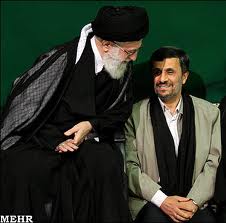
Iran’s conservatives, who now control the government, are divided between loyalists of Supreme Leader Ayatollah Ali Khamenei and supporters of President Mahmoud Ahmadinejad who favor less clerical control.

In the past, Iranian political factions have been able to unify against outside pressure, whereas internal cracks now make it difficult to present a consolidated front.

The first sign that Iran was struggling to devise an effective strategy to limit the damage from the accusation by U.S. officials on Oct. 11 came in the slow response by top officials.

It took six days for Iran’s top two officials to comment on the alleged plot, an unusual lapse.

When they did respond, the two leaders ridiculed the charges with traditional revolutionary bombast.

Mr. Khamenei warned that Iran would respond harshly to any “illicit” actions by the U.S. Mr. Ahmadinejad, giggling and shrugging in an interview with al-Jazeera, refused any cooperation with U.S. investigators.

State-influenced Iranian news sources then followed the defensive effort by publishing accusations that the plot was cooked up by an opposition group.

But supporters of Mr. Ahmadinejad soon showed a more conciliatory tone. Foreign Minister Ali Akbar Salehi said Iran was prepared to carefully examine the U.S.’s evidence and would conduct a “serious and patient” investigation, even if the charges were fabricated.

The statement by Mr. Salehi, an Ahmadinejad ally, reflected a leaning by the president to show some willingness to negotiate—at odds with Mr. Khamenei.

Iran’s judiciary chief, Ayatollah Sadeq Larijani, a critic of Mr. Ahmadinejad, said last week that he was appointing a special envoy to investigate alleged crimes against Muslims by the U.S.

This rupture is on display almost on a daily basis, in domestic and foreign policy. The conservative-dominated parliament voted on Sunday to impeach the finance minister, a close ally of Mr. Ahmadinejad, over a $2.6 billion bank fraud that has roiled Iranian politics. The president has denied any wrongdoing by himself or his administration.

That split has also been seen with regard to international pressure over Iran’s nuclear program. Mr. Ahmadinejad offered publicly, while in New York for the United Nations General Assembly in September, to start talks with the U.S.

Mr. Khamenei immediately shot down the idea, according to Iranian news reports.

The contradiction in responses stems from disagreements over how to deal with the West, analysts said.

Now, the prospect that the U.S. could pursue sanctions at the U.N. Security Council against Iran’s central bank is a particular concern, though China and Russia have opposed such action.

“Iran’s response [to the plot allegations] shows that they are very worried,” said Hossein Bastani, a political analyst based in France who worked for the administration of President Mohammad Khatami. “Many officials are secretly wondering, ‘What if this true?’ And even if it isn’t, the damage is already done.”


Source

‘End illegal house arrest of green leaders,’ says conservative MP


GVF — An Iranian lawmaker has called for an end to what he called “the illegal and illegitimate house arrest” of Mir Hossein Mousavi and Mahdi Karroubi, the leaders of Iran’s opposition Green Movement.

Shakour Akbarnejad, an Iranian Member of Parliament representing the people of Tabziz, called for an end to the house arrest of Mahdi Karroubi, Mir Hossein Mousavi and his wife Zahra Rahnavard.

The two, along with their spouses, were placed under house arrest after calling for opposition protests in support of the Arab Spring in mid-February. In his most recent report, Ahmed Shaheed, the UN’s Special Rapporteur on the situation of human rights in Iran, expressed concern over the absence of any formal charges against Mousavi and Karroubi as well as their loss of “control over their health care, access to publications, privacy and the ability to live a normal life.”

Delivering a pre-session speech before fellow parliamentarians, Akbarnejad called the men’s ongoing house arrest an “illegal heresy” that went against religious law.

“Out of respect for those strata of society who think differently from us, put an end to imprisonment and house arrest and replace it with brotherhood and compassion,” the conservative MP pleaded.

Since the rigged 2009 presidential election, which sparked massive protests throughout the country, opposition candidates Mousavi and Karroubi have been spearheading what’s become known as the pro-democracy Green Movement.


Source

Iran’s supreme leader floats proposal to abolish presidency

0


The Washington Post – A proposal by Iran’s supreme leader to radically alter the country’s constitution and abolish the presidency is drawing praise from his supporters but criticism from influential politicians.

Ayatollah Ali Khamenei, who was appointed supreme leader for life in 1989 by Shiite Muslim clerics, said in a speech last week that, if deemed appropriate, Iran could do without a president. The post is currently held by Mahmoud Ahmadinejad, whose 2009 reelection was disputed by opponents and led to months of street protests.

Former president Ali Akbar Hashemi Rafsanjani said publicly Tuesday that the proposal strongly undermines the ideal of an Islamic republic, in which the people elect their leaders.

Ahmadinejad, for his part, said in a speech Tuesday in the eastern city of Birjand, “We will not respond but know that the nation is awake.” He was vague on whether he was specifically addressing the proposal to eliminate his position.

Ahmadinejad stressed that no one should have problems with “the people” and said that “if the time comes that anyone wants to block them from progressing, they will remove him in two seconds,” the Fararu Web site wrote.

Under the proposal, Iran would be ruled by Khamenei working in tandem with parliament, which would continue to be directly elected and would appoint one of its members to serve as prime minister.

Such a change could happen in the “near or distant future,” Khamenei said. The last time Iran’s constitution was altered was in 1989 after the death of Ayatollah Ruhollah Khomeini, the founder of the Islamic republic and its first supreme leader. The position of prime minister was abolished at that time.

If implemented, the change would widen Khamenei’s powers. Supporters said it would allow him manage the nation without the current debilitating political squabbles and that nothing would really change, since voters would still elect the parliament.

“Our [supreme] leadership is the only unchangeable part of our system,” Mohammad Dehgan, an influential lawmaker, told the semiofficial Mehr News Agency on Monday. “Our presidential system in its current form is not effective,” he added, citing the political infighting.

While the supreme leader in theory has the final say over all state and religious matters in Iran, in practice he has ruled by consensus. However, he increasingly has stepped into political feuds recently and no longer actively supports Ahmadinejad.

The two men had a public falling out in April, when Ahmadinejad forced then-Intelligence Minister Heidar Moslehi to resign. That prompted Khamenei to reinstate Moslehi — a Shiite cleric and Khamenei protege — and effectively ended the supreme leader’s support for Ahmadinejad.

Under Iran’s system, the supreme leader is more powerful than the president and appoints the commanders of the armed forces, the chief judge and prosecutor and a number of other key officials. He is elected — and can be removed — by the Assembly of Experts, an 86-member council of Islamic scholars. The supreme leader also has the power to dismiss the president if the holder of that office is impeached by parliament or convicted by the supreme court of violating constitutional duties.

But any effort to remove Ahmadinejad would be politically costly, analysts said. Instead, supporters of Khamenei, 72, are trying to hamstring Ahmadinejad until his term ends in 2013. Among other things, they are reluctant to allow the president to speak live on state television.

The strongest criticism of Khamenei’s proposal came from Rafsanjani, 77, a cleric who served as president from 1989 to 1997 and was long considered the No. 2 figure in Iran’s political system. In an interview published Tuesday in the Shargh newspaper, which is critical of the government, he warned that the plan would limit “people’s influence.” He said he was sure that this was “not what the leader intends.”

Rafsanjani, who was purged after he supported political reformists following the 2009 election protests, rarely speaks out directly against the supreme leader.

“I do not admire the bad management of the country,” he told young journalists in the Shargh interview.


Source

Arbabsiar pleads not guilty in plot to kill Saudi ambassador

0

Manssor Arbabsiar, the naturalized U.S. citizen accused of plotting to assassinate the Saudi ambassador to the U.S., pleaded not guilty in Manhattan federal court on Monday, Reuters reports.

Earlier this month, U.S. officials announced charges against Arbabsiar and Gholam Shakuri, a member of Iran’s Qods Force, which is a special operations unit of the Iranian Islamic Revolutionary Guard Corps. Both men were charged with conspiracy to murder a foreign official, along with a number of other charges, related to an alleged plot to kill the Saudi ambassador. Arbabsiar, 56, holds both Iranian and U.S. passports, and was arrested in New York in late September. Shakuri remains at large.


After the charges were brought, President Barack Obama said Arbabsiar “had direct links, was paid by, and directed by individuals in the Iranian government.” But Iranian officials have pushed back on the allegations. According to Reuters, Iranian President Mahmoud Ahmadinejad has said that the U.S. fabricated the plot to cause a rift between Iran and Saudi Arabia.

The New York Post reports that Arbabsiar’s plea hearing lasted just five minutes, and that the defendant had grown out his beard since his first appearance in court earlier this month. According to the Post, at least one Saudi diplomat was at the hearing, but declined to comment.

Arbabsiar’s next court appearance will come December 21

source

Islamic Revolutionary Guards Corps

The Islamic Revolutionary Guards Corps, Iran’s most powerful economic, social and political institution, was created as an elite military force at the founding of the Islamic republic, but its broad mandate — to protect the revolution — has allowed it to reach far beyond its military capacity.

The Guards moved aggressively after the contested 2009 presidential election to tighten its grip on society, and senior Guards officials have been moved into many important government positions. The Guards’ leadership is considering transforming the Basij militia, a volunteer force under its command, into a professional, full-time force. Another tool for extending the Guards’ reach at home has been privatization, initially intended as a means to improve the economy but criticized more recently as a shell game.

The Guards takeover of a majority share in the nation’s telecommunications monopoly has amplified concerns in Iran over what some call the rise of a pseudogovernment, prompting members of Parliament to begin an investigation into the deal. A private firm was excluded from the bidding one day before shares went on sale, and a company affiliated with the elite force won the bidding.

The Guards ability to enhance its status since the 2009 election has important implications for the future of Iran’s domestic politics, decisions on its nuclear program and prospects for long-term relations with the West, said Iranian analysts. Increasingly, it is the interests of the Guards and its allies that are driving the nation’s policies, and those interests have often been defined by isolation from the West.

In October 2011 Attorney General Eric H. Holder Jr. announced that federal authorities had foiled a plot by men linked to the Iranian government and the Revolutionary Guards to kill the Saudi ambassador to the United States and to bomb Saudi Arabia’s embassy in Washington.

Read More…

The corps is not large. It has as many as 130,000 members and runs five armed branches that are independent from the much bigger national military. It commands its own ground force, navy, air force and intelligence service.

But as its role expands deep into society, the Guards also finds itself forced to balance its ideological inclinations with the practical aspects of protecting its own interests, analysts said.

The Guards oversees the nuclear and missile program, and the recently revealed enrichment plant near Qum is built into a mountain on a Guards base. With inflation over 20 percent and manufacturing in serious decline, the Guards and its allies have appeared ready to take steps to head off new sanctions over the nation’s nuclear program.

The corps’s two best-known subsidiaries are the secretive Quds Force, which has carried out operations in other countries, including the training and arming of the Hezbollah militia in Lebanon; and the Basij militia. The Basiji includes millions of volunteer vigilantes used to crack down on election protests and dissidents.

The corps has become a vast military-based conglomerate, with control of Iran’s missile batteries, oversight of its nuclear program and a multibillion-dollar business empire reaching into nearly every sector of the economy. It runs laser eye-surgery clinics, manufactures cars, builds roads and bridges, develops gas and oil fields and controls black-market smuggling. Members of the Revolutionary Guards and their families receive privileged status at every level, which benefits them in university admissions and in the distribution of subsidized commodities, experts say.

Its fortune and its sense of entitlement have reportedly grown under President Mahmoud Ahmadinejad, a former member. Since 2005, when he took office, companies affiliated with the Revolutionary Guards have been awarded more than 750 government contracts in construction and oil and gas projects, Iranian press reports document. And all of its finances stay off the budget, free from any state oversight or need to provide an accounting to Parliament. The corps’s alumni hold dozens of seats in Parliament and top government posts.

In 2007 the administration of George W. Bush accused the Revolutionary Guard, and the Quds Force in particular, of supplying weapons and training to anti-American fighters in Iraq. In a press conference, President Bush stated flatly that the Quds force was the source of so-called shaped charges used by Iraqi insurgents to attack American troops, far more sophisticated than standard improvised explosive devices. The administration announced sanctions against the Quds force, calling it a terrorist group, and accused the entire Revolutionary Guard Corps of proliferating weapons of mass destruction. It was the first time that the United States has taken such steps against the armed forces of any sovereign government.

In the aftermath of Iran’s 2009 election crisis, the corps remains a public front of unity.  The crisis, the gravest since the Islamic Revolution in 1979, erupted after Iran’s Interior Ministry declared that the moderate Mir Hussein Moussavi was defeated by Mr. Ahmadinejad by 63 percent to 34 percent. Tens of thousands of demonstrators representing a cross section of society and part of the clerical establishment called the official results a fraud, demanding a full recount if not a new election.

With the nation’s ruling class apparently divided by the electoral results, the hard-liners in charge sought to portray the unrest as the work of outsiders. The Guards said it had taken action against “deviant news sites” financed by American and Canadian companies. Its aggressive drive to silence dissenting views led many political analysts to describe the events surrounding the June 12 presidential election as a military coup.

On June 22 the Guards issued an ominous warning on their Web site saying that protesters would face “revolutionary confrontation.” “The Guards will firmly confront in a revolutionary manner rioters and all those who violate the law,” the notice said. Shortly afterward a group of as many as a thousand demonstrators at Haft-e-tir Square in central Tehran was quickly overwhelmed by baton-wielding riot police and tear gas. During the ongoing crackdown some protestors, notably 26-year-old Neda Agha-Soltan, were shot and killed.

Nonetheless, there are glimmers of fractures under the corps’s opaque and disciplined surface. Political analysts said that behind the scenes there were internal disagreements about the handling of the election and the demonstrations. One political analyst said that many of the rank and file were known to have voted for Mohammad Khatami, an outspoken reformer, when he was first elected president in 1997.

In his will, Ayatollah Khomeini asked that the military stay out of politics, and senior Revolutionary Guards officials have been careful to defend themselves against accusations of political meddling after the June 12 election. But Gen. Javani warned the public that there was no room for dissent.

“Today, no one is impartial,” he said, according to the official news agency IRNA. “There are two currents: those who defend and support the revolution and the establishment, and those who are trying to topple it.”

A Bizarre Plot

On Oct. 11, 2011, Attorney General Eric H. Holder Jr. said the plot to kill the Saudi ambassador began with a meeting in Mexico in May, “the first of a series that would result in an international conspiracy by elements of the Iranian government” to pay $1.5 million to murder the ambassador on United States soil.

The men accused of plotting the attacks were Manssor Arbabsiar and Gholam Shakuri. Mr. Holder said the two men were connected to the secretive Quds Force, and the Justice Department said in a statement that Mr. Shakuri, a member of the Quds force, remained at large. Mr. Arbabsiar, a naturalized American citizen, was arrested on Sept. 29. 

A senior administration official said that the Treasury Department planned to announce new sanctions against the Revolutionary Guard, already the target of heavy sanctions for its role in overseeing Iran’s nuclear program.

source

Role Of Iran’s Revolutionary Guards


VOA – For decades, Iran’s Islamic Revolutionary Guard Corps, the IRGC, has been extending its power and reach.

For decades, Iran’s Islamic Revolutionary Guard Corps, the IRGC, has been extending its power and reach. Founded in 1979 to defend Iran’s Islamic revolutionary principles at home and export them abroad, the IRGC now controls Iran’s nuclear and ballistic missile programs, its foreign terror operations, the repression of the Iranian populace, and broad swaths of the Iranian economy.

U.S. State Department Deputy Spokesman Gordon Duguid commented on the IRGC’s expanding role, including its current control of 9 out of 21 cabinet ministries:

“This is an unprecedented level since the Islamic Republic was established.  Also, you’ve had disputed elections that have taken place since last year, and the unprecedented repression of opposition to those election results. You have a regime in Tehran that is more and more resembling a police state in which force is used to suppress discussion, to suppress demonstrations, and to control the activities of its people.”

On her recent trip to the Middle East, Secretary of State Hillary Clinton said that the increasing role of the Revolutionary Guard is moving Iran “toward a military dictatorship.”

Secretary of State Clinton says that as the IRGC expands its power, repression of the people of Iran increases and the regime’s “belligerence and negativity [are] even more prevalent


Source

Iran arrests nine more in country’s biggest financial scam

0


Iranian authorities arrested nine more suspects in a $2.6 billion bank fraud case, the biggest financial scam in the history of the country, reportedly linked to President Mahmoud Ahmadinejad.

State television broadcast late Monday an interview with state prosecutor Gholam Hossein Mohseni Ejehei in which he said that a total of 67 people have been questioned in the $2.6 billion case, details of which first broke in September.

Ejehei said some government officials were among those summoned, and that the judiciary had come under pressure as a result. He did not elaborate.

The accusations focus on the defendants’ alleged use of forged documents to obtain credit at one of Iran’s top financial institutions. Conservative opponents of Ahmadinejad have used the case to attack his allies.

Hard-line politicians said the scam was linked to “deviant current” with ties to Esfandiar Rahim Mashaie, Ahmadinejad’s chief of staff and in-law.

Rahim Mashaie was accused of trying to undermine the religious character of the country by seeking to give prominence to the Iranian nationalism and culture.

“Now Ahmadinejad’s hands are filled with the scam … Weakened in the eye of the nation, Ahmadinejad has been rendered impotent to initiate any political action ahead of the (March 2012) parliament vote,” a former senior official, who asked not to be named, was quoted by Reuters as saying.

The fraud was made public with Supreme Leader Ayatollah Ali Khamenei’s approval, said some hardline politicians.

“Ahmadinejad’s allies are determined to win the next elections and Khamenei’s allies want to block their way … That is the main reason behind the revelation of this scam,,” said an economist, who identified himself as Saber Lavasani.

“People will not vote for those linked to the scam.”

Some analysts speculated that Ahmadinejad was grooming Mashaei to succeed him in the 2013 presidential elections.

“The state of the economy is the underlying cause of the nation’s discontent and is considered a crucial factor for political factions’ electoral win,” said an analyst, who asked not to be named. “Who will vote for those involved in a $2.6 billion scam that is equal to one percent of Iran’s gross domestic product?”

Khamenei’s unprecedented public intervention in April to reinstate the intelligence minister sacked by the president displayed “his disapproval of Ahmadinejad’s policies.”


Source

U.S. charges Singaporeans for selling bomb parts to Iran

0


U.S. justice officials on Tuesday charged four Singaporeans and one Iranian with fraudulently exporting radio equipment to Iran that subsequently ended up in roadside bombs in Iraq.

At least 16 radio antennas were found in unexploded improvised explosive devices (IEDs) in Iraq, the U.S. Justice Department said in a statement, noting that the Iranian suspect in the case is still at large.

The indictment said thousands of antennas were meant to be exported from the United States to Iran, and in addition to the four Singaporeans, four companies from the Asian city state had been charged in the alleged plot.

Admiral Mike Mullen, then the top U.S. military officer, said in July that Iran was stepping up its support for Shiite militants in Iraq, supplying them with more sophisticated weapons that were being used against American forces.

“Yesterday, authorities in Singapore arrested Wong Yuh Lan (Wong), Lim Yong Nam (Nam), Lim Kow Seng (Seng), and Hia Soo Gan Benson (Hia), all citizens of Singapore, in connection with a U.S. request for extradition,” the justice department statement said.

“The United States is seeking their extradition to stand trial in the District of Columbia,” where the U.S. capital Washington is located.

“The remaining individual defendant, Hossein Larijani, is a citizen and resident of Iran who remains at large,” it added.

Assistant Attorney General for National Security Lisa Monaco said the defendants had attempted to subvert export controls by sending U.S.-origin components to Iran rather than their stated destination of Singapore.

“Ultimately, several of these components were found in unexploded improvised explosive devices in Iraq,” she said.

“This case underscores the continuing threat posed by Iranian procurement networks seeking to obtain U.S. technology through fraud and the importance of safeguarding that technology.”

U.S. Attorney Ronald Machen said the defendants misled US companies in buying parts that ended up in IEDs on the battlefield in Iraq. “We hope for a swift response from Singapore to our request for extradition,” he added.

U.S. officials regularly accuse Iran of meddling in the politics of Baghdad’s Shiite-led government, and training and backing militant groups that target U.S. troops in the south of Iraq.

Analysts have voiced concern that Tehran’s ability to interfere could increase as a result of President Barack Obama’s announcement last week that all U.S. troops will be pulled out of Iraq by the end of this year.


Source

Three-year prison sentence for Fereydoon Seidi-Rad upheld at appeals court


Fereydoon Seidi-Rad was among many citizens arrested on Februry 14, 2010. Judge Moghiseh presiding over branch 28 of Tehran’s Revolutionary Court handed this activist a 3-year prison sentence. The appellate court has now upheld this verdict.

During his interrogation Fereydoon Seidi-Rad was held in Evin prison’s ward 2A, which is controlled by the IRG (Revolutionary Guards). Eventually he was transferred to the public ward 350.

Mahsa Amrabadi, Fakhrolsadat Mohtashamipour (wife of Mostafa Taajzadeh) and Shahin Jahadi were also arrested with him. They have since been released but Fereydoon Seidi-Rad has been held behind bars without any furlough. Seidi-Rad was an activist working for Karroubi’s presidential campaign in the city of Arak.


Source