Home Blog Page 570

Iran arrests members of religious minorities in Rasht

0


The head of the Public Security Police of the Gilan State Security Forces Command Center said that 14 people were arrested on charges of being active in the diverted mystic sect of ‘Sho’our Keihani’ in Rasht.

“There were reports from people that ‘Sho’our Keihani’ classes were being held under the guise of sewing classes and the police looked into the issue”, Colonel Mehregan said…

“Police agents arrested 14 men and women who were in the class and discovered and confiscated a number of illegal books and software”, he added.

He said that further investigations were ongoing. (ISNA state-run News Agency – Aug. 20, 2011)


Source


Popular Young Poet Sentenced To Prison

0


The International Campaign for Human Rights in Iran – On Tuesday, 16 August, Branch 26 of the Revolutionary Court, presided by Judge Pirabbasi, sentenced Hila Sedighi, a young poet whose critical and political poems are admired by many, to 4 months in prison, to be postponed for five years. A day before her court appearance, she wrote on her Facebook page: “Revolutionary Court, I, [my] heart’s belief, the Judge, accusations, the onlooking God, and your well-wishing prayers…”

The young poet who was active in Mir Hossein Mousavi’s 2009 presidential election campaign was summoned to the Intelligence Ministry after the elections unrest in December 2010, and was questioned 10 to 12 hours daily. After her interrogations, she wrote on her Facebook page that she would prefer to remain silent and wait for her court to convene.

On 16 August, after her trial session, Hilla Sadighi wrote on her Facebook page that she will not object to the court ruling. She wrote: “The court session was well conducted today. I said what needed to be said, and it was heard. Judge Pirabbassi’s ruling was for 4 months of imprisonment, suspended for five years, and I won’t raise any objections to this ruling.” In another written piece, she reported that the travel ban order on her has been lifted and from now on she can easily travel abroad. She wrote: “But, I shall still remain… in this place, in my homeland, for my homeland… I am rooted here in this soil…”


Source

Iran Tries To Exit Information Superhighway

0


VOA – The Iranian government has been working hard to deny the Iranian people access to the internet. It has blocked websites, slowed internet speed, upgraded and expanded its filtering capabilities, established a cyber police force targeting antigovernment websites and political dissidents; it has also jailed prodemocracy bloggers, sentencing several to long prison terms.

Now the government is proceeding with its most ambitious plan to thwart the Iranian people’s access to the free flow of information and ideas. According to Iran’s communication and information technology minister Reza Taqipour Anvari, the first phase of the government’s plan for a national internet, also referred to as a “clean” or “halal” internet,  will get under way at the end of August.  The new national internet will have its own search engine in 2012 called Ya Haqh, meaning, “Oh Justice.” Mr. Anvari said the national internet will “better manage national emails and information gathering with the country and. . . .improve security.”

Of course, what it is really designed to do is increase Iranian government control and surveillance of the Iranian people.

The Iranian people are among the most sophisticated internet users in the world. They deserve to be connected, as all people do, to a single internet with equal access to knowledge and ideas.  As Deputy Assistant Secretary of State for Democracy, Human Rights and Labor Daniel Baer says, the U.S. champions internet freedom because it derives from universal and cherished rights:

“The freedoms of speech, assembly, and association. An open Internet gives people a neutral platform from which to express their legitimate aspirations and shape their own destinies.”

It is no coincidence, said Deputy Assistant Secretary Baer, that authorities who try to restrict the exercise of fundamental freedoms by their people, tend to be the same authorities who try to restrict, impede, control and obstruct their citizens’ peaceful use of the internet. But, as Secretary of State Hillary Clinton has said about such authorities, which include Iranian officials working to create a parallel national internet, “Those who clamp down on internet freedom may be able to hold back the full expression of their people’s yearnings for a while, but not forever.”


Source

Female political prisoner denied medical treatment despite critical condition

0


Political prisoner Farah Vazehan is in poor physical condition. She was taken to the hospital last Sunday after her condition deteriorated but was reportedly returned to prison because the head of the hospital refused to admit her due to a lack of beds.

Farah Vazehan who is suffering from various ailments was arrested during the Ashura protests in December 2009 and was sentenced to death by the Revolutionary Court. Her sentence was annulled after an appeal and her case was referred to the 28th branch of the Revolutionary Court headed by Judge Moqiseh where she was sentenced to 15 years of prison on charges of ‘enmity with God’.

This political prisoner who is suffering from heart ailments needs special treatment in [hospitals] outside of prison. Despite promises made to her family, she has been denied a medical leave. Farah Vazehan has to receive injected painkillers every other day in the prison infirmary but sometimes even these injections are not enough to ease her pain. (Human Rights Activists in Iran – Aug. 24, 2001)


Source

Captured Taliban Commander: ‘I Received Iranian Training’

0


REF/RL  — A Taliban commander captured in southwestern Afghanistan claims to have received military training in Iran to target a major dam in the region.

The claim was made by Mullah Dadullah, who was captured recently in the Lash-e Zoveyn region of Farah Province, close to the Iranian border.

“I was trained in Iran for three months. Our trainers were a mix of Pakistanis, Iranians, and Arabs,” Dadullah, the head of a group of some 150 Taliban fighters, told journalists under police supervision on August 23 in the provincial capital, Farah.

“Ali Talibi and Hussein Rezai were two of my Iranian instructors. They taught me to fire rockets and to plant mines,” he added. “I was trained in setting up remote-controlled mines and planting antitank mines. Even developed countries would have been unable to discover the mines I planted.”

Senior U.S. and Afghan officials have long accused Iran of supporting Afghan insurgents. But Tehran has consistently denied such accusations.

Dadullah claimed to have been involved in insurgent attacks in the southwestern provinces of Farah, Helmand, and Nimroz during the past three years.

He said that recently Iranian officials offered him $50,000 in return for destroying the Kamal Khan Dam in Nimroz Province, east of Farah.

Farah’s provincial police chief, Gahussudin Samunwal, said that Dadullah was tasked with sabotaging major infrastructure projects in the region.

“He was trained for blowing up the Kamal Khan Dam. He was also tasked to attack other major infrastructure projects in the provinces bordering Iran,” Samunwal said. “Fortunately, he was arrested by the police” before he could act on his plans.

The Kamal Khan Dam is located in the Char Borjak district of Nimroz Province. After completion it will significantly reduce water flow to the neighboring regions of southeastern Iran, which already face severe water shortages.

Afghans also accuse Tehran of attempting to slow down the construction of Salma Dam in western Herat province which borders northeastern Iran.


Source

Hikers face hard time in Iran’s tough Evin prison


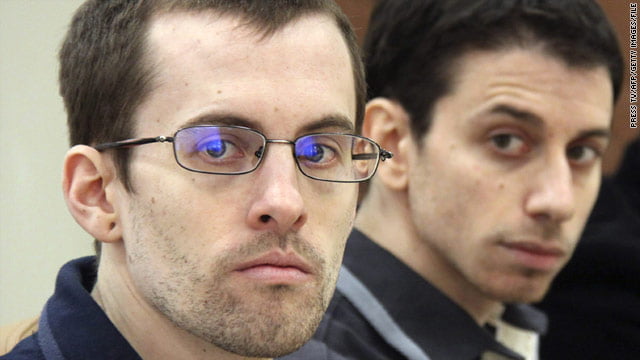
CNN – The grim stories of two women who endured long-stretches of solitary confinement in Iran’s most notorious prison are chilling omens for the two jailed U.S. hikers who each reportedly received an eight-year prison sentence on Saturday.

Josh Fattal and Shane Bauer have been abused and assaulted in Evin Prison, their friend Sarah Shourd said in a BBC interview in June. Evin is noted for its harsh conditions and its wing for political prisoners.

“My worst fear is that they’re not safe,” said Shourd, who was arrested with Fattal and Bauer in July 2009 but was freed for medical reasons in September after 410 days of solitary confinement.

The two men were sentenced on charges of spying and illegal entry.

Shourd said a guard at Evin was furious that Fattal took extra food and pushed him down the stairs. The guard repeatedly threw Bauer — Shourd’s fiance — against a wall of his cell until his head began bleeding.

She said the three had feared that they would be executed soon after they were arrested, when a guard began cocking his gun.

In July 2009, Shourd, Fattal, and Bauer were hiking in Iraq’s autonomous Kurdish area along the border with Iran when they were arrested by Iranian police. Shourd said they accidentally strayed across the border. Iranian authorities say the three crossed into Iran illegally.

Twice, they feared for their lives as guards loaded them into a vehicle to a mysterious location and cocked their weapons, Shourd said. Terrified, they held hands, cried out and begged for their lives.

In September, Shourd spoke to CNN’s “American Morning” about her stint at Evin, where she was in solitary confinement.

She said she got through the ordeal of imprisonment by thinking of her mother and loved ones and “just knowing I had to come back to them, you know, bruised but unbroken.”

As she wept while prison guards slammed the door of her cell and walked away, Shourd understood what Fattal and Bauer were coping with.

“I can see them in their cramped little cell with very little sunlight and they only get out an hour a day and, you know, they exercise side by side on a space like the size of a towel.”

Asked whether she was physically abused, she said no.

“It is all psychological. And it’s just the hardest thing, of course, is being so alienated from your family.”

She remembers how she begged to make a phone call, a request that was finally granted seven months into her captivity.

“By the time I got a phone call, I lost hope that it was going to happen,” she told CNN.

“There’s just so many ups and downs. You think it will be over and then it goes on and on and on.”

American journalist Roxana Saberi also spent time in solitary confinement at Evin and spent hours thinking: Is it going to ever end?

“I felt anger toward God, as well. I said, ‘Why are you punishing me? Why don’t you save me?'” Saberi told CNN’s “American Morning” in September.

She was sentenced to eight years in prison but was released after 100 days in May 2009. She said the ordeal was a hard one.

“When you’re alone, you feel helpless. You might feel hopeless. At first you might be in a state of denial. You ask or tell yourself: ‘I can’t accept this. It is just a nightmare. It is going to end.'”

Saberi never knew whether she would be able to speak with her lawyer or when she might see her parents again.

She spent her 32nd birthday in jail, in the midst of a hunger strike. She chose to stop eating because her body was the only thing she could control. It was her only weapon against the regime. The Iranians promised her freedom if she would admit she was a spy. They threatened her to keep her silent about her time in Evin.

Saberi said she was threatened by her captors if she spoke about “certain things.” One guard told her he would sign her death warrant.

She said they told her: “I think you’ve seen how capable we are. We have agents all over the world and we can find you anywhere. You might be reporting in Afghanistan and we can kill you and make it look like you died in a car accident.”


Source

The Approaching Human Disaster

0


During the last month the Kurdish border regions of Iran and Iraq have been witness to artillery shelling from Iran’s Revolutionary Guards (IRGC) and Turkey’s warplanes. In addition to inflicting tragic civilian casualties, these attacks have also raised the concerns of analysts from a political perspective.

In late July human rights organizations including the Red Cross announced that more than 200 Kurdish families had been displaced because of the shelling of Iraqi Kurdish areas. Iraqi Kurdish authorities and media however state that as a result of these attacks, the inhabitants of 35 villages which includes 400 families have been forced to their homes. After the events of August 21st which resulted in the death of seven non-military civilians form a family it was reported that 3 civilians were killed and another 11 wounded.

Haman Seidi, a political Kurdish commentator and specialist on Kurdish affairs spoke with Rooz and warned about the human catastrophe in the border regions, also commenting on the various political events of the last month.

Read on for the details.

Rooz: After a few-day lull in the shelling of the border areas with Iraq by the Iranian forces, the bombardment resumed along with Turkish aerial bombardment. What in your opinion is the reason for this coordinated attack?

Haman Seidi: Turkey’s joining-in strengthens this suspicion that this round of attacks is fully coordinated. I would like to point out that even the attack by the IRGC was almost completely without any warning or excuses. An un-named person who government media claim is a senior official appears in the media out of nowhere and proclaims that the Kurdistan Provincial Government in Iraq has handed over 300 hectares of land to PJAK, an armed Kurdish group. And even though this claim was rejected by Iraqi Kurdish authorities and was never substantiated it was an easy excuse for a new round of attacks on the joint border areas by the Islamic republic. Turkey, on the other which just emerged from its elections crises and was no longer concerned about the votes in the region, also looked for an excuse to join the Islamic republic. Another point to note is that there was nothing new in the recent PKK attack that left 9 Turkish soldiers dead. This was a fight between two armed groups. It was not a terrorist act in the middle of Ankara or Istanbul. But the response as we see is a Turkish reprisal on civilians. So these actions were not accidental but took place through systematic coordination. Iran and Turkey have been at loggerheads on some issues, particularly over issues related to Egypt, Gaza and Syria, but the only issue that could keep the two countries on the same strategy and cooperation in the region is this suppression of Kurdish fighters.

Rooz: But this is not the first time that Turkey and Iran join hands against their common enemies. It is even said that the countries have a strategic alliance on this. What is the difference between this latest round of assaults and the previous ones?

Haman Seidi: The differences stem from the fluctuating relations between Turkey and Iran. When relations between the two countries are bad, the issue that is used by one against the other is this Kurdish issue. Note that the two countries have a differing view of Syria. So this is like a glue issue where it can bind the two sides together. More importantly, both are concerned that Syrian Kurds may push to have the same status that Iraqi Kurds have. Turkey has taken a more pragmatic attitude towards Syria. Erdogan’s administration wants to unite Syrian opposition without a strong Kurdish presence.

Rooz: Regarding Iran, do these actions have any relations with the country’s domestic issues?

Haman Seidi: Definitely. IRGC’s unilateralism and aggressiveness is a key issue. This military-political organization wants to show to all sides that are battling the regime that it is present in all events and actions, and that it is the first to get engaged in everything. In other words, if in the past it was the decisive force on economic and domestic policy issues, this event demonstrates that it desires to take control of the foreign policy, protect the territorial integrity of the country and confront the opposition as well. Note that the armed forces have not played any role in these attacks, even though these operations were conducted outside the borders, which according to the laws of the country are the prerogative of the armed forces. This of course can also indicate the differences that exist inside the regime. But just like in Turkey, these policies cannot last for a long time and they would in the future confound the actors and create more problems.

Rooz: It does not appear that the central governments in the region, the Kurdistan Provincial Government and even American forces in Iraq are not taking this very seriously, even though Iraqi politicians and representatives regularly talk of violations of the Iraqi air space by Iran and Turkey.

Haman Seidi: Yes, it appears that not only the US but also the Iraqi central government and even the Kurdistan Provincial Government are all tolerating these attacks. I would like to say that if the same events had taken place in Turkey, then there would have been a huge outcry and a rapid American reaction. Just a few days ago, the Iranian consul in Iraq had said that the Iraqi government was cooperating with Iran in cracking down on the terrorist groups. Or look at Mr. Barzani’s latest statement on this, which at the end takes a pleading attitude. The head of the Kurdistan Provincial Government requests from the Turkish government not to repeat such actions.

Rooz: But why?

Haman Seidi: There are different reasons. Having an ally in Turkey which is also a NATO member is far more important to the US, particularly as this country is playing a more decisive role in the events of the region. At the same time, the US has been worried for a few years now about Turkey moving towards Islamicism. The government in Baghdad too has been more interested in political machinations and deals with Ankara, Baghdad and Tehran rather than cooperate with the Kurds.

Rooz: So where is all this going?

Haman Seidi: Turkey has been doing this for the past 20 years. The result has been the death of some 40,000 people on both sides. Perhaps because of these actions, the Kurds are perhaps more united today. I think Turkey is on the wrong path. Iraqi Kurdistan too must feel responsible for every inch of its land, whether it is over the presence of PJAK or PKK or in its relations with Turkey. The Iraqi regime must realize that it cannot go on the same path that Saddam Hussein did. This would increase its rift with the Kurdish government and eventually turn to separation. If the central government wants Iraq to remain united and have territorial integrity, then it must realize that its relations with Arbil (the capital of Iraqi Kurdistan) are more important than those with Tehran or Ankara.


Source

Children’s Rights Activist Afshin Hyratian Arrested

0


HRANA News Agency – Afshin Hyratian, a Baha’i citizen and children’s rights activist, was arrested on Saturday, August 20, 2011.

According to a report by Human Rights Activists News Agency (HRANA), Afshin Hyratian was detained while he was leaving his house.Following his family’s inquires, it has been reported that Afshin Hyratian is currently locked up in Evin Prison, Ward 350.

Afshin Hyratian was arrested on June 3, 2010 in a park in front of the Iranian Artists’ Forum in Tehran and spent two months in temporary custody. He was then freed on bail. Afshin Hyratian has been sentenced to 4 years in prison, but his case is being reviewed by the Appeals Court.

While he was behind bars in Evin Prison, Ward 209, this Baha’i citizen was severely tortured in order to obtain televised confessions from him.


Source

New reports of human rights violations highlight situation of Iran’s Baha’is


Iran’s treatment of its Baha’i citizens has been identified as a major area of concern in three important new surveys carried out by international human rights organizations. The reports have recently been issued by the International Federation for Human Rights (FIDH), Minority Rights Group International (MRG) and Amnesty International.

The highlighting of the situation of Iranian Baha’is within the broader framework of international human rights violations has been welcomed by the Baha’i International Community.

“Each of these reports surveys a major issue area – minorities, women prisoners, or the Middle East in general – and each accordingly places the ongoing persecution of Baha’is in that context, demonstrating the interconnected and interrelated nature of rights violations,” said Diane Ala’i, the representative of the Baha’i International Community to the United Nations in Geneva.

“We likewise express our grave concern about human rights violations directed at other groups in Iran, such as women, journalists, and human rights defenders, as well as ordinary citizens seeking the right to freedom of expression,” said Ms. Ala’i.


“Release all women prisoners of conscience”

In its report on women prisoners, Paris-based FIDH called on Iran to “release all women prisoners of conscience unconditionally and immediately.”

Iran is currently unjustly holding at least 47 such women prisoners, wrote FIDH on 13 August.

Six Baha’i women are listed by FIDH, including Mahvash Sabet and Fariba Kamalabadi, both serving 20 year sentences for their membership of a national-level ad hoc group that helped attend to the needs of Iran’s 300,000-strong Baha’i community. Last year, they were unjustly convicted of espionage and other trumped-up charges that were wholly related to their practice of the Baha’i Faith.

Also included in the report is Nasrin Sotoudeh, a lawyer who has represented numerous victims of human rights abuses including Baha’is and prisoners sentenced to death for crimes committed when they were minors. In January this year, authorities sentenced Ms. Sotoudeh to 11 years in prison for charges that include “activities against national security” and “propaganda against the regime.” Additionally, she has been barred from practicing law and from leaving Iran for 20 years.

Other cases highlighted by FIDH include those of women’s rights supporter Mahboubeh Karami, serving a three-year prison term; journalist Hengameh Shahidi, jailed for six years; student activist Bahareh Hedayat, sentenced to nine and a half years; and film actress Marzieh Vafammehr, who is being arbitrarily detained.

“The international community should express full support for the Iranian women’s movement and its fight for the establishment of basic freedoms, equal rights and respect for human rights in Iran,” said Karim Lahidji, vice-president of FIDH and President of the Iranian League for the Defence of Human Rights in Iran (LDDHI).

Situation for Baha’is “remained dire”

In MRG’s annual survey of minority populations around the world, published in London last month, the spotlight falls upon problems facing women from minority and indigenous communities.

They are often targeted for rape and other forms of sexual violence, torture and killings – specifically because of their ethnic, religious or indigenous identity.

“The situation for Baha’is in Iran remained dire in 2010,” said the report’s section on Iran, highlighting that the trial and sentencing of Iran’s seven Baha’i leaders took place without “independent observers.”

It also reported that Iranian Baha’is face restrictions on access to education and employment and the “arbitrary destruction of their homes, arrests, and confiscation and destruction of property.”

Amnesty International – in a special supplement to its Wire magazine on the theme “50 Years of Defending Rights in the Middle East and North Africa” – observed that Baha’is are among the many religious minorities that populate the Middle East “sometimes regarded with deep-seated suspicion and hostility that make them vulnerable to abuses of their human rights.”

The three reports can be read in full at the following URLs:

Baha’i World News Service coverage of the persecution of the Baha’is in Iran

The Baha’i World News Service has published a Special Report which includes articles and background information about the seven Iranian Baha’i leaders – their lives, their imprisonment, trial and sentencing – and the allegations made against them. It also offers further resources about the persecution of Iran’s Baha’i community.

Another Special Section includes articles and background information about Iran’s campaign to deny higher education to Baha’is. It contains news of the latest developments, a summary of the situation, feature articles, case studies and testimonials from students, resources and links.

The International Reaction page of the Baha’i World News service is regularly updated with responses from governments, nongovernmental organizations, and prominent individuals, to actions taken against the Baha’is of Iran.


Source

Iran arrests Christian man in Rasht

0


Christian convert Abdolreza Ali Haq Nejad was arrested by security forces in Rasht.

According to reports, Abdolreza Ali Haq Nejad known as Mathew was arrested on Wednesday August 18 in Rasht.

This 39 year old Christian was arrested for the first time in 2006 for 12 days and was then arrested in 2010 for one month while in Shiraz. His case was referred to a court in his place of birth in the Anzali Port. He was reportedly arrested because of his evangelical activities in the church. (Human Rights Activists in Iran – Aug. 22, 2011)


Source