Home Blog Page 577

One-year imprisonment for photographer who took photos during Ashura ‘88


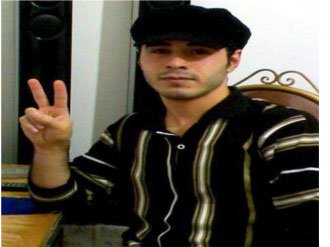
Human Rights House in Iran – Security agents had arrested Arash Azarheimi, a photographer from the province of Mazandaran and city of Babolsar, for taking pictures during the Ashura demonstrations in 2009. After almost a year, he has been sentenced.

The Revolutionary Court of Babol issued the sentence where in accordance to Article 500 of the penal code, Arash was convicted of “propaganda against the regime” along with taking pictures of illegal gatherings during the Ashura protests.

According to Jaras News, he has received a one-year suspended prison term stemming from this sentencing.

Arash is a photographic artist who is a member of the Mamtir Photography Forum. His photographs have been displayed in dozens of local exhibitions and also at international exhibitions.


Source


Rights Abuses In Iran and Syria


VOA – The two regimes “share shameful records on abusing their own citizens:”

In testimony before Congress on the violations of human rights in Iran and Syria, Jeffrey Feltman, U.S. Assistant Secretary of State for Near Eastern Affairs, said the two regimes “share shameful records on abusing their own citizens:”

“The actions that these countries are practicing are depraved.  It is no accident that Iran is [Syrian President] Bashar al-Assad’s best friend, and that Syria is Iran’s best friend, and that neither has any other true allies in the region.”

Mr. Feltman spoke of Iran’s hypocrisy in claiming to support Arab demonstrators in some countries, while wielding a merciless iron fist against its own citizens who attempt to exercise their fundamental rights.

That hypocrisy also shows itself in Iran’s sending advisors and material support to Syria to aid the Syrian government’s vicious five-month crackdown on peaceful protesters – – protesters who first took to the streets after authorities arrested and terrorized children for writing political statements on walls.

Michael Posner, Assistant Secretary of State for Democracy, Human Rights and Labor, noted that the Syrian government’s attacks against children have continued, extending even beyond the infamous torture and mutilation by Syrian security forces of 13-year-old Hamza al Khateeb:

“A 10-year-old boy, a 4-year-old girl were killed during raids on several towns around Homs; and on July 15th, a 12-year-old, Talha Dalal, was shot in the head by police officers in Damascus. Horrific images of these bodies and those of other children have been smuggled out.”

The European and other nations have joined the United States in enacting sanctions on key regime figures in both countries to hold their leaders accountable for the violence.  The U.S. continues, moreover, to urge more nations to join in its efforts, in bilateral and multilateral settings, to shine a spotlight on Iran and Syria’s gross violations of their citizens’ human rights.

In a joint statement, Assistant Secretaries Feltman and Posner said, “It is essential that these brave people know that the international community supports them, just as it is essential that human rights abusers in Damascus and Tehran know that we are watching them.”


Source

Prison authorities deny use of torture


The head of the Iranian Prisons Organization has dismissed recent statements about the use of torture in prisons as “absurd lies.”

Gholamhossein Esmaili told the semiofficial Mehr News Agency: “Torture is practiced in prisons that are run by the police and where prisoners are continuously being interrogated. But Iranian prisons are not run by the police or the judge. They are instead run independently as subsidiaries of the Prisons Organization, under the supervision of the judiciary.”

Esmaili went on to deny the existence of unofficial prisons in Iran saying: “There are no secret prisons or detention centres under the administration of the Prisons Organization.”

He also denied the veracity of reports of hunger strikes among prisoners, dismissing such news as “mere propaganda.”

“In most cases, the prisoners are not on a hunger strike and have no intention of going on strike either,” Esmaili said. “However, they fabricate reports of hunger strikes, and foreign media pick up on it with great hoopla.”

He did acknowledge, however, that some prisoners occasionally refuse food, but it is not always because they are on strike but rather that they may be fasting or have bought food for themselves from the prison store.

Over the past two years, scores of Iranian prisoners and their families have spoken out against torture and abuse in Iranian prisons.

Most recently, families of post-election political prisoners wrote a letter to Ahmad Shaheed, the UN Special Investigator for Iran, urging him to travel to Iran to observe the “harsh conditions” in prisons and the “pressures” to which their families are subjected.

On May 26, political prisoners filed a suit against Iran’s Revolutionary Guards Corps and the Ministry of Intelligence for “torture and violating their citizens rights.”

In the past two years, those prisoners have gone on hunger strikes several times, either alone or in groups, to protest their situation and the government policies against prisoners.

In June, 12 prisoners went on a hunger strike to protest the deaths of two other political prisoners: Hoda Saber, who died 10 days into a hunger strike, which in turn was to protest the death of Haleh Sahabi, yet another political prisoner, who died on furlough when her father’s funeral was overrun by security forces.

Doctors announced that Saber had died due to the side effects of his hunger strike, but scores of prisoners testified that he had been beaten by prison authorities on the eighth day of his strike.

Jailed lawyer Nasrin Sotoudeh and imprisoned student activists Bahareh Hedayat and Mehdieh Golrou are other prominent activists that have gone on hunger strike to protest “harsh prison conditions in Iran.”


Source

Jailed journalists sound ‘tyranny’ alarm bell


Fourteen jailed journalists are warning the Iranian public of grave societal danger, saying the house arrest of the opposition leaders and their wives is an frightful indication of what’s to come.

In a statement published yesterday, the journalists called attention to “the oppressive force hanging heavily over Iranian society and pushing it toward all-out tyranny.” They were referring to the detention of opposition leaders MirHosein Mousavi and Mehdi Karroubi and their wives Zahra Rahnavard and Fatemeh Karroubi, and the forced closure of prominent Green Movement newspapers Etemad-e Melli (National Trust) and Kaleme Sabz (Green Word).

The statement, published yesterday to coincide with Reporter’s Day in Iran, is signed by journalists jailed in Evin and Rejaishahr Prisons: Alireza Beheshti Shirazi, Ali Malihi, Siamak Ghaderi, Alirez Rejai, Nahmad Ahmadi Amouyi, Massoud Bastani, Massoud Lavasani, Nader Karimi Joni, Saeed Matinpour, Mohammad Sedigh Kaboodvand, Mohammd Davari, Saam Mahmouudi Sarabi, Keyvan Samimi and Issa Saharkhiz.

MirHosein Mousavi and Mehdi Karroubi were the directors of Kaleme Sabz and Etemad-e Melli, and the jailed journalists expressed grave concern for their health and demanded their immediate release.

The statement emphasizes that, by all measures, Mousavi and Karroubi are facing far harsher conditions than what’s found in regular prisons.

Mousavi and Karroubi and their wives were put under house arrest and completely cut off from the outside world in February, after they rallied people to demonstrate in support of the recent Arab uprisings in the region. Since then, they have been prohibited from any outside communication, except for very limited visits from their children.

The statement by the jailed journalists continues: “Currently, 40 journalists and media activists are behind bars in Iran, and many of then have been given illegal sentences, barring them from doing any journalism for life or for decades. Others have had to flee the country because it’s so dangerous to do their jobs in Iran. In the past two years, Islamic Republic courts have handed out several decades of imprisonment for Iranian journalists and media activists.”

The announcement also condemns the forced shutdown of the Iranian Journalists Association and the arrest of several of its organizers.


Source

Hossein Ronaghi From Hospital Back to Prison


HRANA News Agency – Political prisoner Hossein Ronaghi Maleki was hospitalized last night at 11:00pm for urethra bleeding but then taken back to Evin Prison from Hasheminejad Hospital immediately.

According to a report by Human Rights Activists News Agency (HRANA), on August 8, 2011, Hossein Ronaghi Maleki experienced bleeding due to a kidney infection and had to be hospitalized. However, IRGC interrogators transferred him back to Evin Prison on the same night despite his critical condition and the attending physician’s advice.

IRGC interrogators have demanded a repentance letter from Hossein Ronaghi Maleki accepting the charges against him and have announced that only under such circumstances, he will be given sick leave from prison.

While the prosecutor’s office in Tehran has accepted the request for sick leave, IRGC interrogators continue to prevent Hossein Ronaghi Maleki from leaving the prison and insist on receiving his repentance letter first.

Hossein Ronaghi Maleki has been sentenced to 15 years in prison.  He continues to deny all the charges against him.

Judge Peerabasi who presided over Hossein Ronaghi Maleki’s trial has also interfered with the process evaluating the request for sick leave and has played an important role to delay the order granting him time away from prison for medical care.


Source

Four Kurdish Prisoners on Hunger Strike in Bijar Prison

0


HRANA News Agency – Four Kurdish prisoners who have been on hunger strike for nearly two weeks are in critical condition. Following a protest in Marivan Prison on July 25, 2011, four Kurdish activists were transferred to Bijar Prison.They began their hunger strike upon arrival.

According to a report by Human Rights Activists News Agency (HRANA), on July 25, 2011, a number of ordinary and political prisoners in Marivan Prison staged a protest, and clashes broke out between intelligence officers and protestors on prison grounds. During these clashes, eight prisoners were beaten by Prison Special Forces. Following this protest, four prisoners were transferred to Bijar Prison, and a number of other prisoners were sent to Ghorveh Prison.

Although two weeks have passed since Hassan Akhtar-Samand, Zakria Khoda-Karam-Zadeh, Sivan Batoneh and Farshad Kamangar began their hunger strike, prison officials have blocked their access to phone and denied them the right to have visitors.

While the families of these political prisoners have no news of their loved ones, the officials have announced that the prisoners will be cut off from the rest of the world as long as they continue their hunger strike.


Source

Trailblazing HIV doctors jailed in Iran


(CNN) – Dr. Kamiar Alaei and his brother, Dr. Arash Alaei, have been called pioneers for their community-based approach to HIV and AIDS in Iran.

Since opening a hometown clinic in 1999, the men have been raising awareness about HIV, dispelling myths about the virus and treating people who are shunned because of it. They have also reached out to their neighbors in Afghanistan and Tajikistan and worked with medical universities in Europe and the United States.

But in 2008, the Alaeis were arrested by the Iranian government. According to Kamiar, they were charged with “communication with an enemy government” and for trying to “overthrow the government.” Kamiar says the charges had no merit, but he and his brother were found guilty and thrown into Iran’s notorious Evin prison.

Kamiar served most of a three-year sentence and was released in October 2010. His brother is still behind bars.

CNN’s Asieh Namdar recently caught up with Kamiar to talk about his work, his prison sentence and his relentless campaign for his brother’s freedom.

Asieh Namdar: What it is like to be an HIV doctor in Iran today?

Dr. Kamiar Alaei: I can’t answer for every doctor. But for my brother and I, it was about helping people and making a contribution to the public. We wanted to do it regardless of the country’s political situation or whether or not our efforts were recognized.

In Iran, there’s also a stigma (against people with HIV and the condition it causes, AIDS). We wanted to make sure patients are not isolated and are not discriminated (against).

Namdar: How do you reduce the social and cultural taboos associated with it?

Alaei: It is not easy. The “a-ha” moment for me came in 1997 when I met a 19-year-old patient from Azerbaijan seeking treatment in Iran. He was isolated in a small unit, and when I asked the nurses why he was isolated, they said, “He has AIDS, he’s scary.” For me, that was the turning point.

I started to talk to my brother about how we can change perceptions. We set up our first clinic in my hometown of Kermanshah, where people knew and trusted us, and we had a lot of contacts. Our goal was to create a clinic where everyone can come. … We didn’t want our patients to get labeled by others for coming to “an AIDS clinic,” so we provided our services in a known reproductive and family planning center. Only we knew the reasons people came in.

Namdar: How much freedom and support did you have from the government to be able to do what you wanted to do?

Alaei: We had the support of the president of a medical university because in Iran, the system of public health care is part of the medical university system. We also had the support of his deputy, who was the commissioner of health for the province. That was a great start.

We engaged not just the patients, but their families. We talked to them about how HIV can be transmitted, what was true and what was a myth. We involved the local policymakers, clergies and religious leaders. Once we gained people’s trust, our cases increased from one to two a week to 60 to 80 per day in six months.

Namdar: What about financial help?

Alaei: In the beginning, we struggled. We ran the clinic mostly on contributions from the local community, the university and volunteers. But later on, we got funding from The Global Fund. They support the fight against HIV/AIDS, tuberculosis and malaria.

Namdar: You’ve been called pioneers, and your work has been called revolutionary — a model for the rest of the Middle East. Can you explain your approach?

Alaei: Our approach was community-based. We wanted to inform, involve and engage different parts of community. We wanted to provide everything in just a one-stop shop of sorts: prevention, treatment and social support, all in one place.

In the U.S. and Western countries, patients usually seek medical treatment in one place and counseling in another place. But in Iran, we only had one chance to make a difference. Because these patients come for the first time, it may be the only time they come. So you have a one-time opportunity to keep them motivated so they can continue their treatments.

Namdar: How did the 2005 election of President Mahmoud Ahmadinejad change things for you?

Alaei: When we began our work in AIDS in 1997, there was a positive atmosphere to implement our ideas. When the new administration came, there was less focus on HIV/AIDS and the high-risk groups. It didn’t seem to be a priority.

Namdar: Let’s talk about your trip to Iran that landed you and your brother in jail. Why would they arrest two doctors who were doing so much good?

Alaei: I still haven’t figured that one out. We were doing a lot of work outside Iran. We started helping our neighbors, Afghanistan and Tajikistan. We also started to collaborate with universities in Europe and the United States. We got involved with Johns Hopkins, Yale, Harvard.

I have to be clear. All our work was focused on health and science. It was never about politics. When we were arrested, I was shocked and I thought they must have the wrong people.

Namdar: What were the charges?

Alaei: For the first seven months, there were no formal charges. Later we were charged with “communication with an enemy government” and for trying to “overthrow the government.” None of it was true. We had done nothing wrong.

Namdar: How do you feel about the fact your brother is still in jail and you’re out?

Alaei: It’s the worst feeling. I wish sometimes I was in prison and he was out. But if we were both in prison, we couldn’t help each other. Now that I’m out, I can campaign to raise awareness about his case.

We’ve been lucky and privileged to have so much support from the international community. We were recently honored by the Global Health Council with the prestigious (Jonathan Mann) Award for Global Health and Human Rights. I also got the opportunity to talk about my brother and his contributions at an international AIDS conference in Italy last month.

Namdar: Do you think talking about your brother’s case could hurt his case instead of helping it?

Alaei: This is a very difficult question, and something I struggled with. It’s one of the reasons I decided to say nothing for months after my release.

My brother is halfway through serving his sentence, and we’ve heard nothing. So I feel I have a responsibility to raise awareness about his case.

Namdar: What are your plans for the future? Do you want to go back to Iran?

Alaei: My immediate concern is my brother. I wake up wondering what’s he’s doing and how he’s holding up. My heart is with him. I try to focus on my work as a scientist and finishing my doctorate at the University at Albany.

As far as going back to Iran, I have nightmares of being back in prison. It depends if I can be useful in helping HIV patients.

Predicting government reactions in Iran is difficult. I would love to go, but at this time I would think that I cannot go. But it does not stop me working on this issue.

Namdar: What is the biggest lesson you’ve learned from this process?

Alaei: If you believe in what you are doing and love it, never give up, never get discouraged. Even in my darkest hours in solitary confinement, knowing we had helped so many patients gave me hope and the will to continue.


Source

Jailed Iranian journalist returns to prison

0


Jailed Iranian journalist, Ahmad Zeidabadi has been returned to prison after being granted a 48-hour furlough.

Zeidabadi’s furlough was extended for an additional 24 hours on Saturday, and last night he was returned to Rejaishahr Prison.

Zeidabadi was arrested in June 2009 in connection with the widespread protests that followed Mahmoud Ahmadinejad’s contested re-election.

The journalist has been sentenced to six years in prison, exile to Gonabad and a lifetime prohibition from social and political activity.

The opposition reports that over the past two years, 108 journalists have been arrested, and while some have been released, many still remain behind bars. Journalists are held under severe hardship and are often denied family visits and the temporary leave commonly granted to many prisoners.


Source

Temporary arrest of Nasrin Sotoudeh’s family members


Human Rights House of Iran – Prison officials detained Sotoudeh’s visiting family members and held her sister, husband and children for several hours.

Reza Khandan announced that today, Sunday August 7, 2011, when he and his family went to prison to visit his wife, Nasrin Sotoudeh, not only did the prison authorities bar them from seeing her, they were all detained and held for several hours. Nasrin’s husband, sister, and two young children were held in prison until the afternoon.

According to Kalame, Khandan stated, “the excuse for our arrest was that they demanded to search our personal belongings which we refused and demanded a search warrant from a judge.”

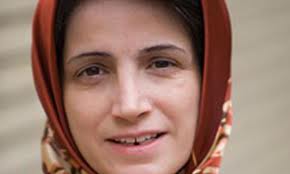
Nasrin Sotoudeh, human rights activist and lawyer, is the mother of 4-year-old Nima and 11-year-old Mahvareh. She has been held behind bars since her arrest on September 4th, 2010.


Source

Treasury Sanctions Syrian, Iranian Security Forces for Involvement in Syrian Crackdown

WASHINGTON – The U.S. Department of the Treasury today announced the designation of one of the four major branches of Syria’s security forces, the Syrian Political Security Directorate, for engaging in the commission of human rights abuses in Syria, as well as Iran’s national police for providing support to the Syrian regime. The chief and deputy chief of Iran’s national police and the head of the Syrian Air Force Intelligence were also sanctioned today.

Today’s actions were taken pursuant to Executive Order (E.O.) 13572, signed by President Obama on April 29, 2011 targeting Syrian officials and others responsible for human rights abuses, and pursuant to E.O. 13573, signed by the President on May 18, 2011, targeting senior officials of the Government of Syria. As a result of today’s action, U.S. persons are generally prohibited from engaging in transactions with the designees and any assets they may have subject to U.S. jurisdiction are frozen.
“Today’s action builds on the Administration’s efforts to pressure Assad and his regime to end the use of wanton violence and begin transitioning to a system that ensures the universal rights of the Syrian people,” said Acting Under Secretary for Terrorism and Financial Intelligence David S. Cohen. “Also today we are exposing further Iran’s provision of its military and security forces to support the Syrian government’s ongoing violence and repression of the Syrian people.”
The Syrian Political Security Directorate is subordinate to the Ministry of Interior and one of four major branches of Syria’s security forces and was designated today pursuant to E.O. 13572. In mid-March 2011, armed members of the Dar’a Political Security Directorate opened fire on protestors who marched on the house of Dar’a Governor Faisal Kalthoum after Friday prayers.
In late April, protesters in Nawa, Syria, marched toward the Political Security Directorate office waving olive branches, and a tribal leader pleaded for the release of two detainees who had been taken by security forces from the hospital. Fifteen Political Security Directorate agents opened fire on the crowd, killing at least four and wounding eight.
Also designated today were Ismail Ahmadi Moghadam, the chief of Iran’s Law Enforcement Forces (LEF), and Ahmad-Reza Radan, the deputy chief of Iran’s LEF. LEF, Moghadam and Radan were all designated pursuant to E.O. 13572. In April 2011, Radan traveled to Damascus, where he met with Syrian security services and provided expertise to aid in the Syrian government’s crackdown on the Syrian people.
Commonly referred to as Iran’s national police, the LEF has provided material support to the Syrian General Intelligence Directorate and dispatched personnel to Damascus in April to assist the Syrian government in suppressing the Syrian people.
The United States listed Radan in September 2010 in the annex to E.O. 13553 – which targets those responsible for or complicit in serious human rights abuses in Iran since the June 2009 disputed presidential election – and designated Iran’s LEF and Moghadam in June 2011 pursuant to E.O. 13553.
The United States first exposed Iran’s material support to the Syrian government related to cracking down on unrest in Syria in April 2011, by adding Iran´s Islamic Revolutionary Guard Corps – Qods Force (IRGC-QF) to the Annex to E.O. 13572 for providing support to the Syrian General Intelligence Directorate (GID), the overarching civilian intelligence service in Syria, which was also added to the Annex to E.O. 13572.
Treasury subsequently designated two senior IRGC-QF commanders pursuant to E.O. 13572 for their roles in the violent suppression of the Syrian people.
Also designated today, pursuant to E.O. 13573, was Major General Jamil Hassan, the head of Syrian Air Force Intelligence, one of Syria’s four main intelligence agencies.  Syrian Air Force Intelligence was designated by Treasury in May 2011, pursuant to E.O. 13572.
In the context of today’s announcement, Treasury is also calling attention to the involvement of three senior Syrian regime figures, previously designated by Treasury pursuant to E.O. 13338, in the recent crackdown:
  • During the recent unrest in Syria, Syrian Armed Forces Deputy Chief of Staff for Security and Reconaissance Assef Shawkat played a key role in dealing with demonstrations.
  • Hisham Ikhtiyar heads the Syrian National Security Bureau, which was designated by Treasury in May 2011 pursuant to E.O. 13572, for directing Syrian security forces to use extreme force against demonstrators.
  • Rustum Ghazali is a high ranking member of Syrian Military Intelligence, which was also designated by Treasury pursuant to E.O. 13572 in May 2011, for using force against and arresting demonstrators participating in the recent civil unrest in Syria.
Although not designated today, all three were previously designated by Treasury pursuant to E.O. 13338, signed by the President in May 2004 in response to the Syrian government’s continued support of international terrorism, sustained occupation of Lebanon, pursuit of weapons of mass destruction and missile programs and undermining of U.S. and international efforts in Iraq.
Identifying Information:
Entity:                        Political Security Directorate
AKA:                          Political Security Division
Alt AKA:                    Idarat al-`Amn al-Siyyasi
Location:                    Damascus, Syria
Entity:                        Law Enforcement Forces of the Islamic Republic of Iran
AKA:                          Iran’s Law Enforcement Forces
AKA:                          Iranian Police
AKA:                          Niruyih Intizamiyeh Jumhuriyih Islamiyih Iran
AKA:                          NAJA
Individual:                  Ismail Ahmadi Moghadam
AKA:                          Ismail Ahmadi Moghaddam
AKA:                          Esma’il Ahmadi-Moghaddam
AKA:                          Esameel Ahmadi Moghaddam
AKA:                          Esma’il Ahmadi-Moqaddam
POB:                           Tehran, Iran
DOB:                           1961
Individual:                  Ahmad-Reza Radan
POB:                           Isfahan, Iran
DOB:                           1963
Alt DOB:                    1964
Individual:                  Jamil Hassan
AKA:                          Jamil Hasan
POB:                           Syria
DOB:                           1953

Source