Home Blog Page 592

Iran rejects appointment of UN human rights investigator

0

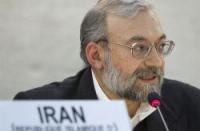
Head of Iranian judiciary’s Human Rights Council says any international body that appoints a special human rights rapporteur for Iran is acting illegally.

Mohammad-Javad Larijani told the Islamic Republic News Agency (IRNA): “The Islamic Republic has no issues with the individual who was appointed human rights rapporteur; however, choosing a rapporteur for the state of human rights in Iran is unacceptable and we will not have it.”

The United Nation’s Human Rights Council in Geneva appointed a human rights investigator for Iran last March. Ahmad Shaheed, the former foreign minister of Maldives, was chosen by the council to review recent reports of human rights violations in Iran.

Larijani said the appointment of a special rapporteur is a “one-sided and baseless move that has no logical meaning.” He added that Iran will only accept the UN rapporteur if the UN sends special rapporteurs to the U.S.-controlled Guantanamo and Abu Ghraib Prisons as well as Israeli prisons.

He went on to say that Iran’s human rights report card raises no special concerns and added that all reports to the contrary are the result of “political aggression and destructive propaganda” perpetuated by the West against Iran.

Larijani contended: “All the legal and formal charges brought against Iran at the Human Rights Council have been countered accurately and openly by the Islamic Republic.”

In recent weeks, six political prisoners at Iran’s Rejaishahr Prison sent a letter addressed to Ahmad Shaheed, urging him to visit Iranian prisons and meet with the families of prisoners in order to verify their dismal situation.

Iranian Parliament as well as the head of the judiciary, Ayatollah Larijani, had announced previously that Iran would not accept the UN investigator.


Source

Authorities confirm arrest of Iranian actress, blogger

Iranian authorities finally confirmed yesterday the arrest of Pegah Ahangarani, the Iranian actress and blogger who had been missing for days.

Ahangarani, the daughter of Iranian filmmakers Manijeh Hekmat and Jamsheed Ahangarani, was supposed to cover the Women’s World Cup of Soccer championship in Germany on a blog set up by Deutsche Welle’s Persian service.

Last year she covered the Berlinale film festival on a similar blog.

Deutsche Welle quotes Ahangarani’s family to report that the actress was summoned by the Iranian Intelligence Ministry before her trip to Germany early this month and disappeared after she went into hiding at a friend’s home.

Ahangarani was active at the MirHosein Mousavi campaign headquarters during the controversial election of 2009, which led to the arrest of thousands of protesters who challenged the victory of Mahmoud Ahmadinejad with allegations of vote fraud. Ahangarani was summoned and interrogated in the early days of the 2009 protests.

The authorities have not yet announced the reasons for Ahangarani’s arrest.

Last month Maryam Majd, Iranian photojournalist was also arrested by Islamic Republic authorities before travelling to Germany to cover the Women’s World Cup championship.


Source

‘Another kidney infection and my son will die,’ says imprisoned blogger’s father

Following a deterioration in the condition of Hossein Ronaghi Maleki’s health in prison, his father, Ahmad Ronaghi Maleki, shared his concern with the International Campaign for Human Rights in Iran. “My son’s interrogators told us that they would kill Hossein and now they are delivering on that promise. When I reached Tehran from Malekan on 15 June, as I was getting off the bus to go pursue furlough for Hossein, my wife called to say that she was contacted from Evin Prison and told that Hossein is in poor condition and in Evin’s infirmary. I went to prison immediately and told them that I was his father and to let me see him but they did not agree. I said I hear Hossein has had seizures, let me take him to hospital and I will pay all his expenses like the last time, but they didn’t accept this. First, they said he is inside the ward, then they said he was in the shower. I waited a long time. Then I said to them that I didn’t want to see him or talk to him, and that they should only let him call his mother, so she could hear his voice and find peace. They said O.K., but nothing happened,” Maleki said.

“I went to the Tehran Prosecutor’s Office right away and informed them. They contacted the prison, but prison authorities told them that Hossein is in the shower and he is well. I wrote two letters that same day, and delivered one to the Islamic Human Rights Office and the other to the Tehran Prosecutor’s Office. I wrote in the letters that Hossein’s life is in danger and if his kidneys are infected one more time, he would die. I am shouting this, announcing it, so the world can hear me,” he continued.

According to Ahmad Ronaghi Maleki, his 26-year-old son has undergone kidney surgery twice in the past few months. His left kidney has lost 80% functionality and his right kidney has lost 20%, and yet he received no treatment at the hospial. “He had two surgeries at Hasheminejad Hospital. We were not permitted to visit him. Even the nurses were not allowed to do their work freely. They told the nurses ‘you help him plan an escape.’ His hands and feet were tied to the bed and there were three guards next to him. The first time the doctors ordered one month’s house rest under the care of physicians, and the second time [they ordered] two months [of house rest]. But unfortunately he was not allowed furlough and he was returned to prison immediately following his operations. I took all the doctor’s prescriptions and his lawyer’s letter in which he had requested furlough according to law to Branch 26 of Tehran’s Revolutionary Court but they didn’t accept the letter and  they wouldn’t even let me go upstairs,” added Maleki.

“When Hossein was in solitary, his interrogators contacted us every day and said ‘we will kill Hossein. We won’t let him live.’ They would say that ‘even judicial authorities couldn’t do anything else.’ When Hossein’s case went to trial, they said he would be tried in the presence of myself and his lawyer, but unfortunately, neither of us were present. They forced him through pressure and torture to sign his verdict even though he didn’t accept his charges,” said Maleki.

“Hossein was in a solitary cell, under the worst conditions for 13 months. He lost his kidneys. There is a 17 mg stone in his gallbladder, and he has developed psychological problems.  He is under pressure in prison right now and his life is not safe. When we talk to the media or when I write letters to authorities, he is put under pressure in prison. Right now as you called us, we are under pressure and threats because we are not supposed to talk to you; we should let them kill Hossein!” said Hossein Ronaghi Maleki’s father, fearing for his son’s life.

“When I wrote letters to the authorities about my son’s conditions, my home was stormed one night and they wanted to beat me, and I took my witnesses to the regional hall of justice, but they didn’t pay any attention to it. And one night I was on my way home when they were going to attack me with an axe, and because I was carrying a shovel, they were unable to harm me and ran away on a motorbike. I reported all of this at the regional hall of justice,” he added.

“Hear my voice, please. I ask the Supreme Leader, the human rights activists in Iran and in the world, Iranian judicial authorities, and the Tehran Prosecutor to please grant Hossein leave. He is a scholar, not a criminal. He was kept in solitary confinement for 13 months under the worst conditions. And when we want to talk about this, they put him under pressure. I ask for help to save Hossein’s life. If there is no attention, Hossein will die,” said Ahmad Ronaghi Maleki.

“We are allowed a 15-minute visit through a booth every week. We have to travel all night to get there from Malekan in Eastern Azerbaijan. We arrive in the morning and go visit him, then we go back to our town. They wouldn’t let him call us. I won’t be able to find out where he is until next Monday. The doctors said that if he remains in prison, he won’t be able to have kidney transplants. There is only a 5% chance that a kidney transplant operation for him would be successful,” Ronaghi Maleki concluded.

International Campaign for Human Rights in Iran


Jailed Iranian student demands fair trial

Iranian post-graduate student Omid Kokabi has written to the head of Iran’s judiciary to protest his five-month imprisonment and coerced interrogations, and to demand a fair chance to defend himself, Kaleme reports.

Kokabi is soon to be brought to trial; however, his attorney has also written to the head of the judiciary to declare that he has had no access to his client and, therefore, has no idea how the trial will be carried out.

Kokabi is a post-graduate student of nuclear physics at Texas University. He was arrested last February when he was about to return to the U.S. and has been held in Evin Prison ever since.

Parleman News reports that Saeed Khalili, the jailed student’s attorney, commented on the head of the judiciary’s dissatisfaction with defence attorneys who give media interviews, saying: “Against all this lawlessness and trampling of the prisoner’s basic rights and official indifference and unaccountability, lawyers have no other choice but to give interviews and inform the public, and they should not be reproached for doing so.”

Kokabi writes that he was arrested “for the astounding charge of assembly and collusion against national security and was held in solitary confinement for 36 days.”

He stresses that he challenges the legality of the arrest and the interrogations and insists that he was coerced into signing false confessions.

He writes that his interrogators, for example, would make him write down details of individuals he had seen in embassies or at conferences, telling him that some of these people were CIA operatives.

He concludes that since neither he nor his family is involved in politics, he does not understand why he has been arrested and urges the head of the judiciary to allow him a fair trial.


Source

Iranian Intelligence Minister reports infiltration of opposition abroad

0

Iran’s Minister of Intelligence says his ministry has succeeded in spreading doubt and division among opposition groups.

Iranian media report that Heydar Moslehi told worshippers at today’s Friday Mass prayers in Tehran: “Today we have managed to create rifts and suspicion among the anti-Revolutionary groups abroad.”

He explained that certain “former members of Parliament and ministers…who had fled the country and joined forces with the anti-Revolutionaries are now hearing things like: ‘How can we be certain that you are not infiltrators sent by Iran’s intelligence agencies?’”

Moslehi also touched on the post-election protests of 2009, which the Islamic Republic establishment refers to as “sedition.” He emphasized that some Iranian officials are labouring under the mistaken belief that the “sedition” is over.

As the head of the country’s intelligence forces, he said he could confirm that “the sedition is still active in trying to harm the system.” He warned that the country’s “elite” should take care not to step into their trap.

The 2009 protests against the disputed victory of Mahmoud Ahmadinejad created deep rifts in the Islamic Republic establishment, with many of the regime’s top figures opposing the crackdown on protesters.

The Intelligence Minister warned: “Anyone who leans away from the regime to the slightest degree will now be considered to belong to the enemy’s camp.”


Source

Khanjani: plainclothes agents stationed outside my home

Committee of Human Rights Reporters – In a suspicious move, plainclothes agents have stationed themselves outside Navid Khanjani’s home in Isfahan since July 9th. Navid Khanjani is a human rights activist with membership in the Committee of Human Rights Reporters and the Association Against Educational Discrimination. Plainclothes agents, who are reportedly armed, have exerted tremendous pressure on the Khanjani family in recent years.

Navid Khanjani was fined and sentenced to 12 years in prison by Judge Pir-Abassi in branch 26 of the Revolutionary Court. The order came at a time when the Judiciary was issuing heavy sentences to other human rights activists as well. Navid Khanjani is one of many students denied access to post-secondary education due to his activism in the field of civil rights.

Danial Owji, a Baha’i student also denied access to post-secondary education was kidnapped by plainclothes agents and was beaten to confess to having affiliations with Navid Khanjani. This inhumane move by plainclothes agents has caused serious concern regarding Navid Khanjani’s condition.

The presence of anonymous, armed plainclothes forces is against the Iranian law and endangers the security of citizens. In past incidents Navid Khanjani had raised the question: “Which individual or organization is responsible for the armed plainclothes agents?”


Source

Germany urges Iran to free opposition leaders

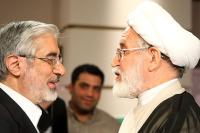
Germany’s top human rights official is urging Iran to release the country’s detained opposition leaders Mir Hossein Mousavi and Mahdi Karroubi.

Human rights commissioner Markus Loening said Thursday the pair “held without any legal basis at an unknown location with no contact to the outside world” must be freed, “along with all other political prisoners.”

Loening’s statement comes exactly five months after the opposition leaders vanished after calling for rallies in solidarity with the Egyptian uprising. Their supporters say they are being detained along with their wives, a charge the government denies.

They ran against President Mahmoud Ahmadinejad in 2009 and lost in an election widely seen as fraudulent and followed by a ruthless crackdown on protest rallies.


Source

Iranian dervishes get jail, flogging

Ultra-conservative cleric Ayatollah Mesbah Yazdi announced that he still supports Mahmoud Ahmadinejad, despite the president’s recent disputes with the Islamic Republic’s conservative elite.

In a sign of reconciliation between Ahmadinejad and Iran’s conservative elite, Mehr news agency reported that Ayatollah Mohammadtaghi Mesbah Yazdi, a powerful cleric in Qom’s seminary and one of the principle theorists of the Principalists, announced that he still stands behind the president.

Referring to his endorsement of Ahmadinejad in the 2009 presidential election, Yazdi said: “At that time, Ahmadinejad had to be supported against his opponents, and my support of him was an affirmation of the slogans and principles of the Islamic Revolution.”

Ahmadinejad’s victory in the 2009 presidential election was challenged by MirHosein Mousavi and Mehdi Karroubi, his reformist opponents.

Ayatollah Yazdi added: “I still believe in Ahmadinejad and support him.”

These statements come after the senior cleric harshly criticized Ahmadinejad in May, suggesting that the president’s actions were “illogical and erratic” and bore the signs of “someone who was under a spell and not in control of his faculties.”

The criticisms came after Ahmadinejad shunned public duties for more than 10 days because Iran’s Supreme Leader overturned the president’s decision to change his Minister of Intelligence.

Following that episode, members of the president’s office became the target of repeated attacks by the Principalists. His chief of staff, Esfandiar Rahim Mashai, was deemed to be the leader of a “deviant current” trying to derail the Islamic Republic.

Several of Ahmadinejad’s allies have been arrested in recent months, which he finally protested, calling the arrests political and warning that the judiciary should not cross a red line and arrest members of his cabinet, or else he would reveal secrets that would be harmful to all.

However, the spokesman for the judiciary, Gholamhossein Mohseni Ejei has said that the course of justice will not be stopped by any red lines.


Source


US shows evidence in Iraq rocket attacks it says leads to Iran

0

BAGHDAD // As they dissect rockets which Shiite insurgents have fired at their troops, US weapons analysts in Baghdad say they have no doubt of Iran’s signature.

For the Task Force Troy doing the forensic science work at the US military’s Camp Victory near Baghdad airport, the evidence should trace the device back to the bomb-maker and locate where he acquired the skills.

Those involved in the project remain anonymous for security reasons but exhibit the weaponry that is behind the spike in US casualties in Iraq, and point the finger of blame at Tehran.

A cylindrical device, about 60 centimetres long and 40 centimetres in diameter, sits on a table, draped in white. A narrower cylinder is fitted in the rear.

“What they do is take a 107mm rocket and take off its warhead,” said a non-commissioned officer, his eyes hidden by sunglasses. “They have a specifically-made warhead with a rocket motor on it.”

The warhead is sometimes a household water heater, filled with dozens of kilograms of military grade explosives, and the rockets are often launched from the back of a truck to deliver a lethal punch.

“It doesn’t have a big sign that says ‘made in Iran’, but (it is possible to identify the source) from the original marks and from the shapes,” another officer in the team said.

“Attacks of this type appeared in 2007 to 2008,” said Major Gen Jeffrey Buchanan, the spokesman for US forces in Iraq. “But now, they have become more efficient.”

Attacks in Iraq are down from an average of 49 a day in 2008 to 14 now, of which an average of six a day target US forces, he said.

With 14 troops killed in June, the US military suffered its heaviest monthly losses since 2008. Six of those losses were sustained in a single improvised rocket attack on June 6.

General Lloyd Austin, who commands US forces in Iraq, said: “We’re seeing more powerful EFPs [explosively formed projectiles], but most importantly they seem to have matured the ability to aim these things,” said.

It “indicates that there are folks with significant experience involved in trying to help develop the techniques and procedures for employing these weapons”, according to the general.

After an attack, the teams go out and collect whatever evidence they can to bring back for analysis, another officer explained.

Fingerprints and DNA traces are taken, the components analysed and the chemical composition of the explosives examined, he said, pointing to some 50 small vials, each filled with different explosives.

“There are certain markings that help us to distinguish from one place to another but I can’t really get into specifics,” a team member said.

The US military spokesman has no doubts the forensics trail leads to Iran.

“Many of the attacks we’ve seen lately have been attributed by forensics evidence to Ketaeb Hizbollah and frequently claimed by KH,” General Buchanan said, referring to one of three Shiite militias blamed by the military.

“It’s probably the smallest organisation, [but] it has the most discipline with respect to how they conduct operations.

“It also has connections to the IRGC [Iran’s Islamic Revolutionary Guards Corps] Qods Force,” he said, referring to the alleged covert operations wing of the Guards.

“KH is a creation by the IRGC Qods Force. They get intelligence support from the Qods Force.”

Iran has never acknowledged the existence of the force and has repeatedly denied US accusations that it arms insurgents in Iraq and Afghanistan, despite its open opposition to the American deployments.


Source

Ayatollah Mesbah Yazdi: ‘I still have faith in Ahmadinejad and back him’

0

Payvand – Ayatollah Mesbah Yazdi says he still has faith in President Mahmoud Ahmadinejad and backs him.

The remarks by Ayatollah Mesbah Yazdi is significant as he had severely criticized certain persons close to president who are accused of running a suspicious movement known as “deviant current”
When asked he was a strong supporter of Ahmadinejad but what is his current position, he said, “At that time Ahmadinejad had to be backed in the face of his rivals and my support for Ahmadinejad was a confirmation of his slogans and (his commitment to revive) the principles of the Islamic Revolution.”
He added, “I still have faith in Ahmadinejad and support him.”
The ayatollah told reporters in Mashad, “I believe their actions (deviationists’ actions) would finally weaken Islam, the Islamic system and this is the wish of freemasons and the enemies of Islam.”
However, Ayatollah Mesbah Yazdi, who is a member of the Assembly of Experts and a leading scholar at Qom Seminary, said people will not allow deviationists to hurt the Islamic system.


Source