(16 May 2011) The International Campaign for Human Rights in Iranendorsed the call, by prominent prisoners of conscience, for an investigation into torture and mass due process violations and infringements on protections in Iran’s Citizen’s Bill of Rights following the 2009 presidential election. The Campaign called on the Central Committee charged with implementing the Citizen’s Bill of Rights to conduct a full and independent investigation into all allegations of abuse, and overturn convictions of political prisoners based on tainted evidence.
On 11 May 2011, twenty-six prominent Iranian prisoners of conscience, including journalist Bahman Ahmadi Amouee, student activist Zia Nabavi, and human rights defender Hassan Asadi Zeidabadi, wrote a letter to the head of the Central Committee charged with implementing the Citizen’s Bill of Rights.
The law, which came into effect in 2005, sets due process standards for the treatment of suspects in Iran. The letter, which appeared in the opposition online website Kalame, outlined the systematic violation of Bill of Rights protections by Iran’s Judiciary and Intelligence Ministry since the 2009 presidential election, and called on the Central Committee to launch an independent investigation into these violations.
“These prisoners can speak from experience; all have had their rights violated by interrogators and judicial officials,” said Aaron Rhodes, a spokesperson for the Campaign. “Signing this letter is a courageous act,” Rhodes continued. “Given these prisoners are still in detention, they could be subjected to more mistreatment by the same authorities whose actions have been questioned in the letter.”
In the 11 May letter, the prisoners alleged that authorities routinely violated all rights protected by articles 1 through 14 of the Citizen’s Bill of Rights. The prisoners reported that judicial and intelligences authorities arrested suspects without proper warrants and subjected them to torture and degrading treatment. Authorities allegedly used illegal forms of interrogation, including torture, and violated the suspects’ familial privacy by releasing personal photos, documents and other effects. The prisoners also wrote that judicial officials denied them adequate legal representation and an impartial trial.
Article 15 of the Citizen’s Bill of Rights specifically requires that the Central Committee investigate any violation of the law.
“Whether it is arrests without proper warrants, torture, or trials without legal representation, the Iranian Judiciary has a responsibility to investigate and punish violations of the rights enshrined in Iranian and international law,” Rhodes added.
Despite ongoing accusations of abuse, Iranian officials, such as Mohammad Javad-Larijani, head of Iran’s High Council on Human Rights, continue to deny that the government engages in torture, and have not made credible investigations into allegations.
Moreover, authorities continue to assert that all prosecutions are conducted according to the law and due process standards. Since 2005, however, Iran has obstructed international human rights monitoring and investigation into these violations by refusing to cooperate with Special Rapporteurs under the auspices of the United Nations Office of the High Commissioner of Human Rights. Specifically, the government has failed to allow visits from the Special Rapporteur on torture; Special Rapporteur on the independence of judges and lawyers; Special Rapporteur on extrajudicial, summary, and arbitrary executions; and the Working Group on enforced and involuntary disappearances.
In March 2011, partly reacting to Iran’s continuing non-cooperation with the UN’s human rights mechanisms, the Human Rights Council voted to establish a new Special Rapporteur focusing on human rights in Iran.
Amongst the abuses alleged by the twenty-six prisoners in the letter is the routine violation of article 3 of the Citizen’s Bill of Rights, which guarantees defendants the right to a lawyer and legal defense. They said that “almost all of the signatories to this grievance were completely deprived of the right to choose and access a lawyer during their arrests and interrogations … and were not even allowed to have access to the country’s law books or … paper and pencil for preparing [a defense].”
“[A]ccess to their lawyers primarily happened a few minutes before their trial … and was usually in the presence of the judge or a third party. … [Some did not have] the presence of their lawyers even inside the courtroom. In some cases, the interrogators pressured and forced the suspects to release their lawyers from their representation.”
The prisoners also alleged that they faced physical and psychological torture in violation of article 4 of the Citizen’s Bill of Rights, which requires detention and interrogation practices meet Islamic and ethical standards, and article 8, which prohibits torture and coercion and makes evidence based on coercion inadmissible in court.
The prisoners wrote:
“One of the most common forms of torture was keeping us in very small solitary cells (2.2 x 1.6 meters or 6.6 x 4.8 ft). This method is considered torture by all high-ranking officials of the country and interrogators and wardens also confirm that, after several weeks of detention in a solitary cell, the suspect will suffer severe physical and psychological disorders.”
“[S]evere beatings … shoving detainee’s heads into toilet bowls for prolonged periods…repeated threats against the suspects… including threatening them with sexual violation … threatening arrest of their family members, and sometimes actually arresting the suspect’s family members as a means to put pressure on the suspect … preventing the suspect from sleep … were some of the prevalent methods of torture … carried out in various ways against the signatories.”
The letters signatories are: Mohsen Aminzadeh, Mohsen Mirdamadi, Bahman Ahmadi Amouee, Abdollah Momeni, Milad Asadi, Abdollah Ramezanzadeh, Emad Behavar, Mostafa Tajzadeh, Mojtaba Tehrani, Ali Jamali, Mohammad Hossein Khourbak, Mohammad Davari, Amir Khosro Dalirsani, Kayvan Samimi, Esmaeel Sahabeh, Mohammad Farid Taheri Ghazvini, Feizollah Arabsorkhi, Behzad Nabavi, Abolfazl Ghadiani, Majid Dorri, Zia Nabavi, Mehdi Karimian Eghbal, Mohammad Reza Moghisseh, Ali Malihi, Mohammad Javad Mozaffar, and Hassan Asadi Zeidabadi.
“These allegations should be taken seriously, their perpetrators brought to justice, and unfairly imprisoned prisoners of conscience released,” said Rhodes.
Calling for an investigation, the prisoners wrote, “we demand the assertive, transparent, and fair pursuit of these grievances. [We add] that if, as prescribed by the law, a special investigatory commission is assigned to examine [these grievances]… they can collect a wider range of information about the systematic crimes and violations that have taken place after the election.”
A source close to imprisoned journalist Hengameh Shahidi told the International Campaign for Human Rights in Iran that Shahidi spent her 36th birthday inside Evin Prison’s Methadone Ward. After several female political prisoners were transferred to Varamin Prison, Shahidi was transferred from the General Ward to the Methadone Ward along with several other female political prisoners.
According to the source, Shahidi met with her family last Tuesday and her family described her psychological and physical conditions as “relatively good.” The journalist was called in to start serving her six-year prison term on 23 February 2010. Shahidi is the only female journalist currently serving her sentence. Hengameh Shahidi was granted medical leave in November 2010, but she was returned to prison only 10 days later without a chance to complete her medical treatment.
This is the second birthday Shahidi has spent behind bars. Shahidi, who was studying abroad, returned to Iran in 2009 and was arrested after the election. Several other female journalists such as Farzaneh Roustaee and Badrolsaddat Mofidi were also arrested after the elections.
Shahidi, a winner of the 2004 Iranian Press Festival, has covered national policies, as well as reporting from Iraq and Afghanistan.
In May 2010 Branch 54 of the Tehran Appeals Court upheld her lower court ruling. Her charges included “propagating against the regime,” “acting against national security” and “insulting the president.”
HRANA News Agency – On Sunday, May 15, 2011, Mahboubeh Karami was summoned to prison to begin serving her sentence.
According to a report by Human Rights Activists News Agency (HRANA), following a summon issued last week, Mahboubeh Karami must report to Evin prison within three days to begin serving her jail term.
Mahboubeh Karami has been charged with membership in the organization known as Human Rights Activists in Iran, propaganda against the regime, and “involvement and conspiracy with the intent to commit crimes against national security.” Judge Movahed presiding over the appeals court, Branch 45, sentenced her to three years in prison. In the lower court, Mahboubeh Karami was initially sentenced to four years in prison by Judge Peerabasi.
On March 2, 2010, Mahboubeh Karami was arrested in her house during a raid by the IRGC Intelligence Unit following an orchestrated conspiracy by Iran’s Intelligence Agency to build cases against human rights activists and particularly current and former members of the organization known as Human Rights Activists in Iran.
Mahboubeh Karami suffered physically and mentally during her incarceration but was eventually released on August 14, 2010, after posting a bail approximately equivalent to $500,000.
Currently, amongst other victims of this conspiracy still locked up in Evin prison are Abolfazel Abedini (sentenced to 12 years in prison), Mehdi Khodahi (sentenced to a total of 7 years in prison) and Laleh Hassanpour (sentenced to one year in prison and 4 years of suspended term).
Additionally, a number of other human rights activists including Nasour Naghipour who has been sentenced to 7 years in prison are waiting for the Appeals Courts to hear and review their cases.
HRANA News Agency – The Islamic Republic’s judicial officials have reached a decision to hang two brothers, Mohammad and Abdullah Fathi, in Esfahan prison in a few hours at dawn on Tuesday, May 16, 2011. These two brothers have been charged with the crime known as Moharebeh [Waging War Against God] through armed robbery and organizing an illegal group against the Islamic Republic regime.
Beijan Fathi, the father of two brothers on death row, in an interview with a HRANA reporter said, “Moharebeh means fighting against God and the Islamic regime. My sons have nothing to fight over with God or the Islamic regime.”
On March 28, 2010, seven individuals were arrested by law enforcement officers in Chalus (Mazandaran Province) and were subsequently transferred to Esfahan. These seven individuals have been identified to be Mohammad and Abdullah Fathi (son of Bijan), Davood Jamshidian (son of Mohammad Reza), Saied Javanmardi (son of Yadollah), Mohsen Goudarzi (son of Lotfollah), Daniel Amiryavary (son of Mohammad Reza), and Ibrahim Javanmardi (son of Reza).
Judge Moghazi presided over Esfahan’s Revolutionary Court, Branch 24, in a trial which lasted two hours and sentenced the aforementioned individuals to death. After the cases were referred to the higher court, the Supreme Court judges announced that the maximum penalty for each individual should have been seven to fifteen years in prison. Accordingly, the death sentences for five of these individuals were repealed. However, Mohammad and Abdullah Fathi’s punishment was not reversed and their family was notified by the officials who said, “The order has come from the above that these two must be executed.”
Mentioning that he was politically active and his sons’ uncle was sentenced to die in the 80’s, Bijan Fathi called his sons’ death sentences settling a personal account and told HRANA, “My sons’ fate is similar to that of those individuals who were executed because they visited Camp Ashraf in Iraq.”
Bijan Fathi pointed out that their home was near the front lines during the Iran-Iraq war in the 80’s and mentioned, “My sons suffered from neurological disorders because of bombings and explosions. Mohammed developed stuttering, and Abdullah didn’t begin talking until he was three years old. From 1986, they were receiving psychological counseling and treatment, and four years ago, their treatment began again. The records are still kept by their doctor. Consequently, they either aren’t capable of committing such crimes or are not in control of their actions. My sons’ medical records have been sent to the court, but unfortunately, no one has bothered to conduct an investigation by referring the records to the medical examiner. They have just said that they want to execute these two individuals.”
Bijan Fathi in reply to the question asked by HRANA reporter to find out why his sons’ arrests and execution sentences were not publicized said, “Since the officials and the attorney had promised my wife that the sentences would be reversed, my wife didn’t agree to let everyone know. My hands were tied. As a matter of face, after the Supreme Court’s ruling which was issued a month ago, we were going to do just that, but this morning, we were notified that the sentence will be carried out tomorrow.”
Bijan Fathi at the end added that similar to all other young people, his sons were politically active in election campaigns and participated in observing traditional Persian holidays and celebrations including Chaharshanbe Suri [ancient Iranian festival of fire]. Bijan Fathi again explained that regardless of all of such things, the sentences were issued to settle an old, personal account.
In an interview with Human Rights Activists News Agency (HRANA), Mohammad and Abdullah Fathi’s mother answered our questions despite her mental distress and anguish. The complete text of the interview appears below:
HRANA: Ms. Fathi, the media has reported that your sons will be executed. Is this news accurate?
Ms. Fathi: Yes, this morning, the prison officials from ward A-T in Esfahan prison contacted us and asked whether anyone had spoken with us last night. I replied no, and then they informed me that my sons’ death sentence would be carried out tomorrow. At the end of the call, they asked me to go to the prison to see my sons for the last time. Thirty minutes later, they contacted me again and changed the time set for my visit. They called again for the third time to tell me that there would be no visits today, and I must go to prison tomorrow morning at 6:00am. I asked, “Why 6:00am?” They answered, “Please come. No problem.” Being worry and upset, I went to the prison, but no matter how much I begged, no one answered my pleas. No matter how much I cried and said, “These are my children,” no one paid any attention. Prison officials told me that they were ordered not to allow these two prisoners to have any visitors.
HRANA: Have your children been presented by an attorney during this trial? If yes, has he been notified that the death sentence will be carried out tomorrow?
Ms. Fathi: No one including the attorney, my sons and I were told that the sentence will be carried out. The written notice for the execution has not been given to the attorney either. Their excuse for not notifying us has been that because of security considerations, there is no need for us or the attorney to be notified about the content and details of each case.
HRANA: What efforts have been made to stop this execution?
Ms. Fathi: We have gone everywhere including to the Sentence Enforcement Unit and the Pardon and Amnesty Commission. No matter where we’ve gone, the answer has been negative, and no one has showed us the verdict. I said, “Do I have the right or not to know for what crime my sons are being executed?” This is where I stand…
My sons’ attorney is Mr. Ahad Dehnavi who was the counsel of record superficially for a year. However, in the past year, not only the court hasn’t recognized him as my sons’ counsel, the authorities haven’t allowed him to do anything even after the ruling by the Supreme Court. He was also present in court but wasn’t permitted to defend his clients. No one read my sons’ medical record. The judge even didn’t know that one of my sons was married. The existing records from the lower court show this fact. To make a long story short, the verdict was predetermined…
HRANA: Have you visited your sons in the last few days?
Ms. Fathi: Before they were transferred to ward A-T of Dastgerd prison in January 2011, we weren’t allowed any visits for six months. Afterwards, they allowed booth visits once a month, but since my sons are taken to solitary confinement once in a while, prison visits are cancelled. For example, they were in solitary confinement all of the month of Ramadan. Under such circumstances, I still went to prison to see them. Once the warden interfered, and brought them out of the solitary confinement so that I can see them.
The majority of prison officials were in shock when notified about the sentence. They couldn’t believe that such a verdict was issued and helped us to write pardon and clemency requests.
Iran Briefing exclusive report of Karoon Prison in Ahwaz
By : Muhammad Loweymi
For see the report in other language click the Arabic or Farsi.
Human Rights violations in Iran have increased recently with the number of executed people, political prisoners and those who applied for asylum increasing rapidly. These numbers show that the freedom of Iranian citizens has been repeatedly violated by Iranian Security and Intelligence forces. This situation is much worse when we look at Iranian ethnic groups and the regions where they are the majority. It is in these regions that the absence of free media and Human Rights activists leads to other kinds of Human Rights violations that the ethnic peoples, and especially prisoners, are suffering from.
The Iran Briefing Institute has provided this documentary report to describe the situation at the Karoon Prison in Ahwaz where most of the inmates are from an Arabic-Iranian ethnic group. Although Iran Briefing’s report relies on trustworthy and exclusive sources, due to security reasons, we cannot mention these sources by name, nor the names of those who collected the information.
However, in order to assess report authenticity, Iran Briefing can provide any Human Rights or official legal institutes or organizations with the list of sources, should the organization keep the information as secret and confidential from all other parties.
Karoon Prison:
The Karoon prison is the biggest prison in the Khuzestan province, hosting the largest numbers of province’s prisoners population. It is located in Ahwaz near another prison called Sepidar Prison. Other prisons of Ahwaz are called “security detention centres” and they are secret.
In accordance with the prisoners’ situation and their crimes, the Karoon prison is divided into 10 sections:
1. Larceny: This section contains all those who were found guilty of larceny.
2. Drug: Inmates that committed crimes related to drug trade, cultivating or producing drugs, and using drugs are kept at this section.
3. Murderers: Murderers are kept in this section.
4. Sick Prisoners: This section contains prisoners who are suffering from transmittable diseases and need special care.
5. Drug Addicted: The section contains drug addicted prisoners or those who use drugs regularly.
6. Security and Political Section: this section is divided into 3 halls:
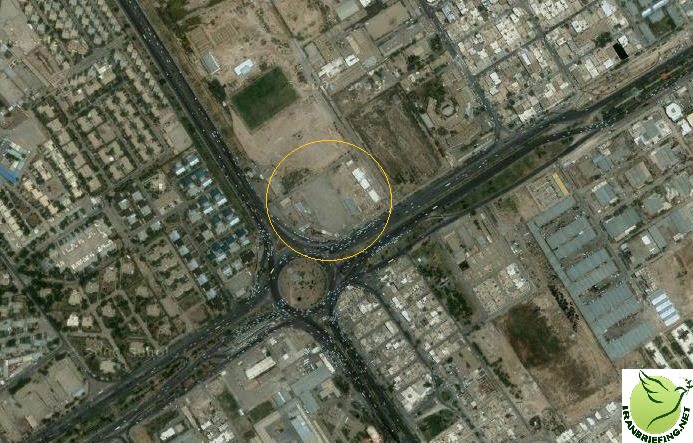
Satellite image of Kroon Prison - Circle indicate the 6.Section
(i) The first one is for convicts who committed armed robberies.
(ii) The second is the temporary detention hall.
(iii) The third is for political and security prisoners (the details provided below).
7. Seven: This section is under construction
8. Non-smoking Section: This section is for non-smoking prisoners. The prison’s official pays special attention to this section because it is showed to the public when it is visited by any prison investigators or authorities.
9. Temporary Detention: This section contains those whose trials are still in process, and they are waiting for their verdicts.
10. Services Section: Skilled inmates are kept at this section. Prisoners with skills such as building construction, electrical jobs, welding and carpentry are paid lower allowances compared to the allowances outside prison.
Political section of Karoon prison:
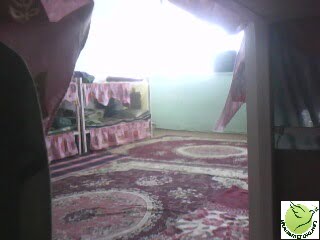
The sixth section at the Karoon prison is known as the political prisoners section, containing the largest number of Arab-Iranian political prisoners in Iran. In contrast to other sections at Karoon prison, it is divided into three halls or subsections where political prisoners are held beside prisoners convicted of armed robbery or drug related charges. This situation is considered as a violation of prisoners’ rights because most prisoners do not prefer to be with such convicts.
The third is for political and security prisoners
Some political prisoners have stated that keeping them with such criminals is solely an effort to put more pressure and stress on them. Furthermore, the prison officials ignore the tensions that have built up because of events between political prisoners and other convicts. Although there are many problems that are common to all sections of the prisons, the political section has to share all its amenities with the every section and has the following additional issues:
– The section contains only 4 bathrooms and 5 toilets, not enough for the more than 100 political prisoners and other prisoners in section 6.
– The number of inmates held in section 6 regularly increases beyond capacity, and many inmates have to live and sleep in the toilet areas and corridors.
– In order to terrorise and put pressure on political prisoners, prison officials actively provoke non-political convicts held in section 6 to attack political prisoners.
The Living conditions of political prisoners and their treatment by the prison officials:
Drinking water:
Inmates at the Karoon prison suffer from shortages of healthy drinking water, which causes outbreaks of disease due to unhealthy water. Prison officials ignored demands to provide healthy drinking water. Consequently, the prisoners themselves are forced to buy healthy drinking water whenever possible.
Malnutrition:
Inmates suffer from the poor quality and quantity of the prison food as well as unhygienic kitchen areas. Frequently, prison food does not contain enough calories or nutrition, and it is regularly decayed. Vegetables and fruits are not included in prison food. Consequently, most of the time prisoners have to buy food for themselves wherever possible.
Medical care:
Prisoners have lodged complaints of bad medical care as well as shortages of medicine. Furthermore, medical staff of the prison do not pay enough attention to the sick inmates.
Sudden and Tough Inspections:
Prison officials carry out irregular and sudden inspections. They enter the section without any warning, usually in the middle of the night. They do not take off their shoes and step on the places where prison inmates pray. They do not respect the privacy of the prisoners and look at their private property. Incidents of beating and stealing prisoner property have been reported to occur during these inspections.
Solitary Confinement:
Solitary confinement is regularly used to punish prisoners, elicit confession, or put more pressure on them. There are specials cells at the Karoon prison where political prisoners are psychologically and physically tortured; they are hung upside down and beaten with batons while blindfolded and restrained.
Prison Shop:
The prison’s shop is under control of the prison officials though staffed by workers from prison population. The quality and the quantity of the goods available are poor while the prices are exorbitant, sometimes more than three times than prices outside prison.
Harsh Treatments During Family Visits:
Prison officials regularly conduct various abusive and harsh treatments during family visits to the prisoners. They deprive prisoners from family visits as punishment. Family members of prisoners are treated badly without any human dignity before, during, and after the visit. In some cases family members of the prisoners are deprived from visiting because they are wearing Arabic or traditional garments.
Telephone Calls:
The duration of telephone calls for all prisoners at the Karoon prison is no more than 2 minutes, and the prisoners have to wait for days due to a shortage of telephone sets at the prison. Depriving prison inmates of telephone calls is a common method at this prison.
Prison’s Amenities & Facilities:
Prison officials do not provide any amenities in the rooms of the political prisoners. Therefore, the prisoners have had to purchase their own amenities such as: air-conditioners, carpets, TV, vacuum cleaners, water cleaning filters. The cleaning of the rooms, toilets and bathrooms is done by the prisoners.
Prison Administration:
The prison administration is composed of officers, special guards and employees. Both staff and officers violate prisoners’ rights. The special guard unit that protects the prison is an armed unit composed of soldiers and officers garrisoned at the prison. This unit routinely disrupts prisoners’ lives by inspecting their rooms, as well as participating in beating them. Some incidents of the members of special guard robbing inmates’ property have also been reported.
In order to put the whole prison under the control of Iran’s Islamic Revolutionary Guard, the prison administrator and all high ranking officials are selected from Revolutionary Guard members. The transition of prisoners to the secret detention centre is carried out by and under the supervision of the Revolutionary Guard only. There is a close relationship between the prison officials and the secret detention of Shahid Bandar or Chahar-shir of the Ministry of Intelligence.
Below the names of people who are known to have violated prisoners rights at the Karoon Prison in Ahwaz:
Salman Rostami:
Rostami is a colonel of Revolutionary Guard and former administrator of Karoon Prison as well as Abadan, Mahshahr and Dezeful. He has been Karoon Prison administrator for 26 years. In 2010 he was arrested for committing adultery, receiving bribes and illegally possessing arms. He was also involved in financial corruption working with “Sayyedha,” a known fraud network In Ahvaz. He is currently under arrest at the Sepidar prison, awaiting a court verdict.
Mohammad Kiyani:
Kiayni is a colonel of Revolutionary Guard. He is the current administrator of the Karoon prison. He is notorious for his hostility toward prisoners. He has ordered the torture of prisoners who dare to complain about prison conditions to governmental delegations that visit the prison.
Haj Amin Sobhani:
Sobhani is the chief of the cultural and educational department of the prison. He does not allow any book, magazine or newspaper that opposes the government in section 6 of the prison. He banned Iranian-Arab prisoners from practicing their cultural ceremonies. He also prohibits prisoners’ families to wear Arabic clothes during the visit of the prisoners.
Jafari, the chief of prison intelligence, is actively hostile against political prisoners.
Zolfaghari:
Zolfaghari is the assistant administrator of the prison and a member of Basij. He practices mental torture against political prisoners. He frequently orders night inspections without any reason.
Bahram Hatami:Hatami is an employee at the visitor’s section at the prison. He is a member of Basij who is known to be involved in smuggling drugs into the prison. He has forced prisoners’ families to wait for more than 4 hours before allowing them to visit their family member held at the prison.
Sayed Ziyaei:
Ziyaei is an employee at the prisoners families visit section at the prison. He is member of Basij, is also involved in smuggling drugs into the prison. He is hostile towards political prisoners and provokes other prisoners to act against them.
Abaspoor:
Abbaspoor is an employee in the visitor’s section at the prison and a member of the Basij. He cooperates with Syed Zayaei in smuggling drugs into the prison. He has provoked addicted prisoners to act against political prisoners in order to terrorise them.
In addition, there are some employees who violate prisoners’ rights and commit brutal acts such as physical and mental abuse, unwarranted inspections, and deprivation of lawful family visits and telephone calls. Their names are: Shejerat, Khalili, Ghalandai, Khedri, Barmazyar, Gharacheh, Karami.
The Ahwaz Secret Detention Centre of Intelligence Ministry of Iran
The official name of this place is “Sepah Yekkom” which is a Secret Detention Center discovered recently as shown in the satellite photo. Different kinds of tortures are practised against prisoners at the Ahwaz Secret Detention Centre to elicit confession. Prisoners are kept in solitary confinement where each cell is 2 meters by 2 meters, except for some cells that are used for holding prisoners while the capacity of the prison is completed. At the Detention Centre, they take all of the prisoner’s property and personal effects except for underclothes. Prisoners have no way of telling the time at the Detention Centre except from the daylight that comes into the cell from a small window at the top of the wall.
In order to put more pressure on the prisoners, during the arrest, investigation and torture, the prisoners are kept blindfolded. The prisoners cannot see the investigator during the investigation or torture. The prisoner is put on a chair; his hands are locked to the chair, and the investigators sit behind him. Only during the confession do they untie their hands and order them to write down and sign the confessions or sign what the investigators tell them to write. Most of the time prisoners are forced to talk about their activities and confess the names of those who are involved in political activities. The prisoners are also forced to accept all allegations, otherwise they face torture. Beatings, physical and mental abuse, and derogatory verbal abuse are commonly used during the investigation. Also, at the Secret Detention Centre, it is common for the prisoner to be restrained on an iron bed and beaten all over his body especially the legs with a thick cable.
Almost all political prisoners spend several months at the secret detention centre before being transferred to the Karoon prison or other prisons.
Chahar shir - Circle indicates The Ahwaz Secret Detention
Political prisoners in the 6th section of the Karoon prison:
The Karoon prison contains the largest number of Iranian-Arab political prisoners in Iran and is rated the second prison, behind only the notorious Evin prison in Tehran, and having 175-195 political prisoners.
The processing of political prisoners starts at the Secret Detention Centre where they are tortured and forced to confess their social and political activities, explaining them in detail. Then the political prisoners’ files are sent to the Revolutionary Court which holds trial and issues the verdict on the political prisoners in coordination with the Intelligence Ministry.
In some rare occasions when a political prisoner is found not guilty by the Revolutionary Court, such people are released after considerable delay, sometimes spending several months or even some years at the Secret Detention Centre.
Most of the allegations against the political prisoners are the following:
1. Accusation of reviving the Arab-Iranian ethnic and cultural root and traditions
2. Accusation of converting Shia Arab-Iranians to Sunni sect.
Our investigation of the Secret Detention Centre is focused on these two issues.
Although the Iranian Constitution states that all ethnic and religious activities are free to be practised, the Iranian authorities do not allow Iranian Arabs in Ahwaz to practice any ethnic cultural activities because the Islamic Government is afraid of the indigenous Iranian-Arab ethnic groups in Iran due to their geographical location near Persian Gulf. Therefore, the Iranian authorities consider any cultural activities of the Iranian-Arabs as illegal activities. They violate the Iranian-Arab ethnic groups’ freedoms by arresting, torturing and imprisoning them.
Furthermore, in the absence of fair and open coverage by the media, the Iranian government tries to show Iranian-Arab political and cultural activists as being terrorist in nature. Revolutionary Courts sentence most political prisoners according to Articles 498, 499 and 500 of the Iranian Constitution which are related to breach of security code. These articles are about those who are members in any group or organization that publishes propaganda against the Iranian government. Nevertheless, the Revolutionary Court sentences some prisoners to death for allegations such as spying for an enemy, fighting against the Islamic Republic and Mofsed Fil Ardh that means “…non-believer on the earth”.
Below is the list of the political prisoners at the Karoon prison:
Names Followed by Verdict:
Abbas Cheldawi , Father’s Name; Farhood, 2 years, released after sentence time, Iranian-Arab political activist
Abbas Moslemi Zergani, released on bail, waiting for court order, Iranian-Arab political activist
Abbed Baghlani, 2 years, released after sentence time, Iranian-Arab political activist
Abdulamir Cheldawi , Father’s Name; Battoosh, 10 years, Iranian-Arab political activist
Abdulamir Mojaddam, Father’s Name; Hooshang, under arrest, waiting for court verdict, Iranian-Arab political activist
Abdulimam Zaeri , Father’s Name; Mahmood, life prison, Iranian-Arab political activist
Abdullah Chaab , Father’s Name; Abdulreza, 6 years, released on bail after his health get worse in order to be treated outside the prison, Iranian-Arab political activist
Abdullah Koleini Farhani, under arrest, waiting for court verdict, Iranian-Arab political activist
Abdulmotaleb Soleimani , Father’s Name; Abdulhossein, he was found innocent and released after spending 3 years in the prison, Iranian-Arab political activist
Abdulreza Kheneifer , Father’s Name; Youness, 2 years, released after spending sentence time, Iranian-Arab political activist
Abdulzahra Heleychi , Father’s Name; Khazal, life prison, Iranian-Arab political activist
Abulfazel Abedini, 11 years, Iranian political activist.
Adel Feisali poor , Father’s Name; Ali, released on bail, waiting for court, Iranian-Arab political activist
Adel Megtaei Zergani, released on bail, waiting for court verdict, Iranian-Arab political activist
Adnan Bayanat, 1 year, Iranian-Arab political activist
Ahmad Bawi, released on bail, waiting for verdict, Iranian-Arab political activist
Ahmad Sawaedi , Father’s Name; Hasan, 4 years, Iranian-Arab political activist
Ali Alboughobesh, released by bail, waiting for court order, Iranian-Arab political activist
Ali Alboukhanfar, released by bail, waiting for court verdict, Iranian-Arab political activist
Ali Ameri , Father’s Name; Jasem, 12 years, Iranian-Arab political activist
Ali Chnani, 1 year, released after sentence time, Iranian-Arab political activist
Ali Mazraeh , Father’s Name; Dawood, 1 year, released after spending sentence time, Iranian-Arab political activist
Ali Megtaei , Father’s Name; Hamid, released by bail, waiting for court verdict, Iranian-Arab political activist
Ali Saedi , Father’s Name; Ghasem, 10 years, Iranian-Arab political activist
Ali Sawari , Father’s Name; Hasan, 4 years, he was sent to the prison of the city of exile after 1 year, Iranian-Arab political activist
Alireza Nabawi, 10 years, Iranian activist
Amir Heidari , Father’s Name; Fazel, 16 years, Iranian-Arab political activist
Amir Matori, 4 years, Iranian-Arab political activist
Asad Bawi , Father’s Name; Habib, 10 years, Iranian-Arab political activist.
Aslan Doodkanlo, 5 years, Kurdish activist
Aziz Elhaei , Father’s Name; Shanan, 19 years, released after sentence time, Iranian-Arab political activist
Bagher Gholami,released by bail he is waiting for verdict , Iranian-Arab political activist
Behnam(Jawad) Daram,under arrest, waiting for court verdict , Iranian-Arab political activist
Dayyer Mahawi , Father’s Name; Karim, 4 years, Iranian-Arab political activist
Ebrahim Atshani, 2 years, released after spending 2 years at the Karoon prison , Iranian-Arab political activist
Esmaeil Wafaei, 25 years, Baloch activist
Faeiz Soleimani , Father’s Name; Rahim, released by bail, waiting for court verdict, Iranian-Arab political activist
Firooz Zaeri, 2 years, released after sentence time, Iranian-Arab political activist
Foad Cheldawi, 2 years, Iranian-Arab political activist
Ghasem Alboughobesh, released on bail, waiting for court verdict, Iranian-Arab political activist
Ghasem Dinarvand, released on bail, waiting for court verdict, Iranian-Arab political activist
Ghasem Khosroo Kiyani , Father’s Name; Karim , released on bail, waiting for court verdict, member of People’s Mojahedin Organization of Iran
Ghazi Abbasi , Father’s Name; Ahmad Khanfari, under arrest, waitng for court verdict, Iranian-Arab political activist
Ghazi Heidari , Father’s Name; Abdulzahra, 10 years, Iranian-Arab political activist
Gholam Hossein Kalbi, life prison, member of Mojahedin Khalgh Organization, Iranian-Arab political activist
Gholamabbas Saki, known as Saeid Saki, Father’s Name; Aodeh, 5 years prison in exile, Iranian-Arab political activist
Hadi Albokhanfar, under arrest, waiting for court verdict, Iranian-Arab political activist
Hakem Moslemi Zergani , Father’s Name; Abed, released on bail, waiting for court verdict, Iranian-Arab political activist
Hamid Ghadjori Zergani , Father’s Name; Ghate, realeased on bail, waiting for court verdict, Iranian-Arab political activist
Hamid Saedi, 1 year, Iranian-Arab political activist
Hamzah Sawari , Father’s Name; Lafteh, life prison, Iranian-Arab political activist
Hasan Baghlani,2 years, released after spending sentence, Iranian-Arab political activist
Hasan Hashemi, 15 years, Iranian-Arab political activist
Hasan Neisi, 4 years, released after spending the sentenced time, Iranian-Arab political activist
Hojjat Kalachi, released on bail, waiting for court verdict, member of Iranian nationalist movement
Hossein Helfi, 3 years, released after spending sentence time , Iranian-Arab political activist
Isa Karmollachaab, Father’s Name; Kazem, 30 years, he was sent on bail to be treated outside the prison after his health get worse, Iranian-Arab political activist
Isa Zaeri , Father’s Name; Ibrahim, 2 years, Iranian-Arab political activist
Jamal Saedi, 2 years, released after spending 2 years in the prison it was approved he was innocent, Iranian-Arab political activist
Jasem Khalaf Dokhtzergani , Father’s Name; Hatam, released on bail, waiting for court verdict, Iranian-Arab political activist
Jasem Khederawi, executed, Iranian-Arab political activist
Jasem Mojadam, 2 years, under arrest, waiting for court verdict, Iranian-Arab political activist
Karim Zergani Bawi, under arrest, waiting for court verdict, Iranian-Arab political activist
Kazem Faza, released by bail, waiting for court verdict
Kazem Khoshnamak, 10 years, Iranian-Arab political activist
Khalil Kabi Haghighi, Father’s Name; Ghate, executed, Iranian-Arab political activist
Khalil Yarali, waiting for court verdict , under arrest for allegation of making propaganda for Christianity
Loghman Megtaei , Father’s Name; Hamid, released by bail, waiting for court verdict, Iranian-Arab political activist
Majed Faradipour , Father’s Name; Hamid, 4 years, Iranian-Arab political activist
Mehdi Gharbawi, 2 years, Iranian-Arab political activist
Mehdi Kuti, he was found innocent after spending 2 years in prison, Iranian-Arab political activist
Mezban Salemi, under arrst,waiting for court verdict, Iranian-Arab political activist
Milad Dehghani, released on bail, waiting for court verdict, member of a Iranian nationalist movement
Mohammad Boezar, under arrest, waiting for court verdict, Iranian-Arab political activist
Mohammad Megtaei , Father’s Name; Hamid, released by bail, Iranian-Arab political activist
Mojtaba Kuti, 2 years, released after sentence time, Iranian-Arab political activist
Mostafa Shokroallahi , Father’s Name; Yadallah, released by bail, waiting for court verdict, accused of Christianity missionary
Naji Makhyori, 5 years, Iranian-Arab political activist
Naji Salmani, 4 years, Iranian-Arab political activist
Nasser Hazabi , Father’s Name; Zaeil, 5 years, released after spending sentence time, Iranian-Arab political activist
Nazem Berehi, life prison, Iranian-Arab political activist
Nematallah Abeyat, 10 years, Iranian-Arab political activist
Norouz Sebhani , Father’s Name; Heidar, 2 years, released after spending sentence time, Iranian-Arab political activist
Payman Roshanzamir , Father’s Name; Hassan, realeased on bail, he is waiting for court verdict, member of Green Movement
Rasool Daheimi , Father’s Name; Khalaf, 5 years, Iranian-Arab political activist
Rasool Heleychi, released by bail, waiting for court verdict, Iranian-Arab political activist
Razzagh Farhani , 4 years, Iranian-Arab political activist,
Saad Silawi, released by bail, waiting for court verdict, Iranian-Arab political activist
Sabah Moslemi Zergani, released on bail, waiting for court verdict, Iranian-Arab political activist
Saeid Ghadjori Zergani , Father’s Name; Karim , released by bail, waiting for court verdict, Iranian-Arab political activist
Saeid Hammadi, 5 years, Iranian-Arab political activist
Saeid Neisi , Father’s Name; Aziz, 5 years, Iranian-Arab political activist
HRANA News Agency – At dawn this morning, Saturday, May 14, 2011, two individuals who were previously sentenced to death by the Revolutionary Court were hanged in Qazvin’s central prison.
According to a report by the Islamic Republic news Agency (IRNA), in regards to today’s executions, Qazvin’s Prosecutor Ismail Sadeghi Niarki said, “Two individuals, ‘H. M.’ 40 years old and ‘R. H.’ 38 years old were hanged for drug trafficking. ‘H. M.’ was a resident of Tabriz living in the city of Maynavard.”
Ismail Sadeghi Niarki added, “According to the new judicial policies of Qazvin Province to effectively deal with drug offenders, in 2010, we have seen an increase of 128% in drug related arrests compared to 2009. With the implementation of these policies and stricter drug laws, we have arrested 50 offenders connected to drug networks buying, selling and distrusting illegal substances in Qazvin Province. Amongst them, there are 40 individuals who have committed serious crimes and received harsher punishments.”
TEHRAN (AFP) — Thousands of Islamic militiamen loyal to Iran’s rulers have staged exercises for deployment against protesters in the event of any anti-regime demonstrations, a reformist daily reported on Saturday.
Around 3,000 members of the Basij militia on Friday held mock “street battles using the experience of events” that followed Iran’s contested 2009 presidential election, Arman newspaper said, quoting a Revolutionary Guards commander.
Some of them were “injured” during the exercises which pitted militiamen “playing the role of seditionists (reformist opposition protesters)” against special units.
The commander of the Revolutionary Guards in Tehran, Brigadier General Hossein Hamedani, told the units taking part in the exercises that the Islamic republic remained “vulnerable” to domestic “sedition.”
The term “sedition” is used by the regime to refer to an opposition movement, led by Mir Hossein Mousavi and Mehdi Karroubi, that was shaped after the disputed re-election of President Mahmoud Ahmadinejad in June 2009.
Mousavi and Karroubi, once among the ranking elites of the regime, lost to Ahmadinejad in the poll, which they said was rigged heavily to assure him a second term.
Their opposition to Ahmadinejad sparked a large wave of unrest in the Islamic republic, plunging the regime into one of its worst political crises, and dividing the nation’s elite Shiite clergy.
The protests left dozens dead while thousands, including many close to the opposition as well as journalists, were arrested and sometimes sentenced to heavy prison terms.
“They are still conspiring (this year) and the sedition will continue,” General Hamedani warned.
“The danger remains, and we must be careful about the Satan inside. On the front of domestic sedition, we are vulnerable,” he said, according to Arman.
The Basij forces, dependent on the Revolutionary Guards, is estimated to have several million members, although the number of its active members are unknown.
Western experts believe nearly 100,000 of Basij forces, in cooperation with Revolutionary Guards, are trained to intervene on anti-regime riots.
Saturday May 14th, 2011 – Despite being very concerned for her old, ailing mother, Nasrin Sotoudeh, lawyer and human rights activist recently transferred to the Methadone Ward at Evin prison reserved for criminals and drug addicts, is unable to visit with her mother or contact her by phone.
Reza Khandan, Sotoudeh’s husband told Kaleme: “Nasrin lost her father when she was first incarcerated. At the time, the authorities did not even allow her to participate in her father’s funeral service. Lately we have been very concerned with my mother-in-law’s health. We are fearful that God forbid, something similar would happen to her mother and Nasrin would be deprived of the right to see her. As a result of her old age and various ailments, Nasrin’s mother is unable to visit with her daughter in prison and unfortunately, the female prisoners at Evin continue to be deprived of all telephone privileges.”
Since Sotoudeh’s transfer from the Intelligence Ministry’s Ward 209 to the Methadone Quarantine Ward at Evin, she has had not had the opportunity to see her 10 year old daughter and 3 year old son. When at ward 209, Sotoudeh was reportedly allowed to informally meet with her children for a few minutes in the corridor.
Currently, Bahareh Hedayat, Nasrin Sotoudeh, Leyla Tavasoli, Atefeh Nabavi, Mahdieh Golroo, Nazanin Hassan Nia Hengameh Shahidi, Fatemeh Darvish, Parvin Javad Zadeh, Aalieh Eghdam Doost, Hanieh Farshi Shotorban, Ladan Mostoufi, Sholeh Taaeb, Saha Rezvani, Sousan Tabyanian, Nazila Dashti, Farah Vazehan, Kefayat Malek Mohammadi, Zahra Jabari, Fatemeh Khoramjou are all being kept in the Methadone Quarantine Ward at Evin.
Nasrin Sotoudeh remains behind bars, despite her numerous hunger strikes protesting the illegal charges against her and international pressure for her release. Sotoudeh was arrested on September 3rd and sentenced to 11 years prison and banned from practicing law and leaving the country for a period of 20 years by the 26th branch of the Revolutionary Court, presided over by Judge Pir Abbasi.
In a letter addressed to the nation of Iran, the Grand Ayatollahs, the authorities of the Islamic Republic of Iran and Human Rights Organizations across the globe, the female political prisoners transferred a week ago from Rajai Shahr prison in the city of Karaj, to Gharchak prison in Varamin [industrial city in the outskirts of Tehran], provide a harrowing account of the dire conditions at Gharchak, vowing to launch a hunger strike, protesting the violation of their rights.
It is worth mentioning that the families of these female political prisoners, also recently wrote a letter addressed to Dr. Mohammad Hassan Ziaeefar, the Head of the Iranian Islamic Human Rights Commission entitled: “Gharchak Prison in Varamin a Humanitarian Disaster Waiting to Unfold”demanding immediate attention to the dire condition of their loved ones behind bars.
The full content of the letter written by the female political prisoners in Gharchak Prison in Varamin is as follows:
To the honorable nation of Iran, those whose conscience is awake, the Honorable Grand Ayatollahs, the authorities of the Islamic Republic of Iran and Human Rights Organizations across the globe,
Approximately one week has passed since we a number of female political prisoner, were transferred from Rajai Shahr prison in Karaj to “Gharchak” prison” in Varamin [industrial city in the outskirts of Tehran]. We have been forced to write this letter because it is the only way for us to paint an accurate picture of the life altering events that have occurred. We are shocked at what is happening to those around us, in what can only be described as a “penitentiary” and are filled with disbelief and at a loss for words that the Islamic Republic of Iran would send prisoners to such a place with the intention to “discipline” for so many years. Those of us who have experienced the burden of captivity at Rajai Shahr prison, never fathomed the idea that after leaving a place like Rajai Shahr, we would witness something so much more horrendous.
While at the female ward at Rajai Shahr prison we witnessed all types of violence, illegal behavior and a variety of prisoner rights abuses on a daily basis. On occasion we even witnessed the killing of inmates by dangerous criminals.
As a result of our numerous complaints, two of the rooms at Rajai Shahr were eventually allocated to those charged with political/security crimes. When we began hearing murmurs of the potential transfer of female political prisoners to Kachooie prison in Karaj, we told ourselves that anything would be better than Rajai Shahr. Upon the transfer of a large number of prisoners to Kachooie prison, we began hearing of the dire conditions and how prisoners had been sent there to be “educated” and “disciplined”. This transfer led to the start of various rumors vis-a-vis political prisoners; rumors that culminated last Tuesday when we were shackled, heading towards Varamin, under tight security and extremely difficult conditions, even worse than the memories of our days under interrogation. After 3 1/2 hours on rough roads which resulted in some prisoners getting sick, we were finally transferred to Gharchak prison in Varamin a barren, desert like area outside Tehran. Suffice to say that the geographic location of the prison left us speechless and unable to imagine how our families could ever traverse such a terrain in order to visit with us in such a forsaken place.Although an entire week has passed since our arrival, nothing has been said regarding our visitation rights and we have yet to meet with our families. We will bypass what is referred to as prisoner rights and will speak only of the violation of the most fundamental of human rights of those who have been behind bars for so many years in this prison, for now we have joined their ranks and are experiencing the same unbearable conditions.
Gharchak prison in Varamin consists of 7 cells. Although each cell consists of beds that accommodate approximately a few dozen inmates, more than 200 prisoners are currently forced to share a cell. The complete lack of ventilation has led to disastrous hygienic conditions, including the stench of sewage and the existence of gases that have caused serious respiratory conditions in many prisoners. There are 2 bathrooms and 2 showers for every 200 prisoners. The lack of adequate bathrooms has forced prisoners to literally use the area inside the cells and in between the beds as “lavatories”. It is worth mentioning that because there is not even a single water tap available outside this area, prisoners also use the same bathrooms and showers to wash their clothes.
Gharchak prison offers what is referred to as three “self service meals” per day. Apart from the hygiene standards and the quality of food, last week as a result of the food rations many prisoners did not receive the much promised food that often consists of two pieces of dry bread, a potato or a small portion of macaroni. Given that many of the inmates are young, and some are even under 18, there is clearly a serious malnutrition problem amongst prisoners. Add to that the fact that self service personnel and prison guards repeatedly address prisoners in the most offensive manner possible and the risk to your life while waiting in line with other prisoners who are fighting over food, and you will understand why prisoners refer to the self service area as where you go to get “beaten up”.
Garchak prison, unlike other prisons does not have an in-house store, providing prisoners with an essential supply of food and hygienic products. The court yard area where prisoners have access to fresh air ideally accommodates a dozen inmates, however, more than 400 people use this area at all times for fresh air. This court yard with its long cement walls resembles nothing like those at Evin, Rajai Shahr and other prisons. The most gracious gesture on the part of prison officials is allowing inmates access to hot water twice a day in order to make tea; that too was unfortunately taken away when the boiling water container was thrown towards one of the prisoners, resulting in many prisoners suffering serious injuries.
The severe punishment of prisoners and the conflicts between inmates is far from what we refer to as human dignity. We ask ourselves, where in the world does a conflict over hot water and the subsequent punishment result in pulling the nails on the fingers of a prisoner? In what part of the world do they send male thugs with batons to severely beat female prisoners? Where on earth do they incarcerate 14 and 15 year old children in such unbearable conditions? Alas, we are ashamed of what we have witnessed around us and we are even more ashamed that such inhumane atrocities are taking place in our beloved country; a country that is renowned for its history, culture, art, strong traditions of Islam and philanthropy.
We the female political prisoners at Gharchak prison in Varamin, having witnessed the existing conditions, have tried repeatedly to bring the lawlessness and extreme lack of injustice at this prison to the attention of the prison authorities. To date, there has only been talk of our possible transfer to the ward allocated to “financial” prisoners and that only under the pretext to “control the overcrowding” of prison cells. The area assigned to prisoners with financial crimes is very similar to what we are currently experiencing and will as such not provide an improvement to our current condition. Our goal here is not to bring your attention to the lack of prisoner rights at Gharchak prison, a right we believe every prisoner should be afforded, but given what we have just described, what we face here is the violation of the most basic of human rights of a number of prisoners who have been sent to the worse place on earth in order to be “educated” and “punished”. Unless the judicial authorities in Iran have decided to toss aside all religious and moral laws in our country and instead base their judicial system on the principle that all criminals, regardless of the severity of their crime, deserve to die. Isn’t the Islamic principle that commands believers to do right and avoid sin considered as one of the most fundamental principles of Islamic Sharia Law? What then is the purpose of our Constitution, criminal procedures and criminal law? This letter was addressed to “those whose conscience is awake” and we once again request that the authorities of the Islamic Republic of Iran, the honorable Grand Ayatollahs and Human Rights Organizations, live up to their religious, moral and humanitarian principles and address the circumstances facing the female prisoners incarcerated at Gharchak prison in Varamin.
In conclusion we hereby announce that having witnessed the illegal and inhumane treatment of the prisoners at Gharchak, we have decided to launch a hunger strike. We will remain true to our values and stand up for our rights, knowing very well that if the current conditions continue we have no fear of losing our lives for if fear had been our driving force, none of us would find ourselves in a place like this today.Our experience have nevertheless proven that the life of a human being is considered worthless in prison, particularly in a prison such as Gharchak whose very existence leads one to question not only the law, the government of the Islamic Republic, judicial authorities, but also the basic fundamental principles of humanity itself. We turn to all those with a conscience, for those of us who are left with a shred of humanity,cannot stand by idly and remain silent when facing such an affront to human dignity.
Signed by: The Female Political Prisoners at Gharchak Prison
In defiance of current sanctions, Iran and North Korea are exchanging missile technology. This news released by Reuters is backed by a UN classified report. It is also indicated that such technological exchanges are conducted through “a neighboring third country”. According to some diplomats who have spoken with Reuters, this country is China. Recent missile and satellite tests conducted by Iran and North Korea have alarmed the West. According to experts, this means that Tehran and Pyongyang want to build long-range missiles. The International Community is worried that these countries intend to build nuclear weapons under the cover of a peaceful nuclear energy program.