Home Blog Page 635

Death row political prisoner thrown in solitary for unknown reason

0

May 07, 2011

Death row political prisoner Eunice Aqayan was transferred to the quarantine section of Orumieh Prison yesterday.
This prisoner’s father confirmed this report and said, “Prison agents in Orumieh Prison transferred Eunice Aqayan, who has been sentenced to death and has been jailed for the past seven years, to the quarantine section of Orumieh Prison”.
There are no reports as to why he was transferred to quarantine.
Eunice Aqayan is a Ahle Haq prisoner from Miandoab and lived in the Och Tapeh Village. He was arrested during the clashes in this village in 2004 along with a number of other people and was sentenced to death after being tried. (Human Rights Activists in Iran – May 4, 2011)


Source


Political prisoner denied visitation rights and phone calls for past 6 months

May 07, 2011

According to reports, political prisoner Arjang Davoudi has been in a solitary cell in cellblock 1 which is used to torture prisoners for the last10 days.
He was transferred from Hall 4 to a solitary cell in Cellblock 1 in the Gohardasht Prison in Karaj on April 24. His transfer to solitary under unsubstantial reasons is only to put pressure on him and to place him under medieval conditions. Davoudi has been denied all methods of contact with his family including visits from behind a glass partition and phone calls since December 2, 2010…
His family has had no news on his condition for close to six months and is extremely worried about his condition. They have gone to various government institutions asking about their loved one but intelligence agents summoned his wife to the Intelligence Agency and interrogated her instead of answering their concerns.
She was threatened that if she talks to the media about her husband’s condition, she will have to face the hard consequences. (Human Rights and Democracy Activists in Iran – May 4, 2011)


Source

Kurdish activist Sherko Moarefi facing execution in Iran

May 07, 2011

Saeed Kamali Dehghan
Fears are growing for the fate of a political activist in Iran who is facing imminent execution after being convicted of acting against national security.
Sherko Moarefi, a 31-year-old ethnic Kurd from Baneh in north-west Iran, was arrested in October 2008 on suspicion of being a member of a Kurdish OPPOSITION political party, Komala. The leftwing separatist group has been branded a terrorist organisation by Iran.
Moarefi was sentenced to death after being convicted of ‘acting against the national security’ and moharebeh (waging war against God) – vague charges that Iran has used against many political activists in recent years.
According to Khalil Bahramian, one of his lawyers in Iran, Moarefi’s conviction has been upheld by the Supreme Court and he was scheduled to be hanged on Sunday morning but his execution was delayed for a possible judicial review.
‘I have genuine fear that he might be executed at any time. This delay does not mean that his sentence has been halted,’ Bahramian told the Guardian in a phone interview from Iran.
‘Sherko is innocent. Enmity with God is a charge for those who have taken up arms against the regime but Moarefi has been a peaceful activist,’ he added.
Human Rights Watch and Amnesty International have called on Iran to change Moarefi’s death sentence.
Both human rights organisations have expressed alarm over the increase in capital punishment in Iran, which last year executed more people than any other country, apart from China.
Since the beginning of this year, Iran has executed at least 135 people, according to official sources, although Amnesty says dozens more unacknowledged executions have taken place.
Activists see it as a tactic to intimidate people at a time when pro-democracy movements are sweeping across the Middle East. Thirteen men have been hanged in public this year.
Speaking to the Guardian, Kaveh Ghasemi-Kermanshahi, a Kurdish Iranian activist who recently fled to Iraq after being sentenced to four years in jail, said: ‘This coming week is the death anniversary of five Kurdish prisoners, including Farzad Kamangar, a teacher, who were executed in May last year … even a year later Iran refuses to hand over their dead bodies to their families’.
IRAN has launched a campaign against its Kurdish minority’s political activists. At least 15 other imprisoned Kurdish activists are on death row.
In Tehran, Siamak Pourzand, an 80-year-old journalist who spent much of the past 10 years in jail, has killed himself. Pourzand was barred from leaving the country and was separated from other members of his family, who were forced to live outside Iran.
His daughter, Leili, told the BBC Persian network that ‘separation from his family’ led to his suicide.
IRAN is the leading jailer of journalists, along with China, according to the New York-based Committee to Protect Journalists. At least 34 journalists are in prison in Iran. (The Guardian – May 1, 2011)


Source


Tehran University Student Mojtaba Hashemi Convicted

SATURDAY, 07 MAY 2011

HRANA News Agency – Mojtaba Hashemi, a student activist in Tehran University School of Law, has been suspended from school for 3 years and sentenced to one year imprisonment and 74 lashes.

According to a report by the Center to Defend Families of Those Slain and Detained in Iran, Mojtaba Hashemi, a key member of student council during the protests on December 7, 2009, was convicted by Tehran Revolutionary Court.

This report also indicates that Mojtaba Hashemi was preparing a program to commemorate Student’s Day and during a gathering for this occasion, his efforts were hindered by the university’s Basij militia and Herasat, [Iran’s semi-secret police tasked to monitor all educational institutes]. At the end, Mojtaba Hashemi was expelled from the university because of pressures from these security forces.

Mojtaba Hashemi is waiting to serve his one year prison term. In addition to imposing suspension and imprisonment, security forces are preventing him from journalistic and civic activities. Mojtaba Hashemi is also under pressure and has been threatened.


Source

Iranian student from Texas in Evin prison

05/07/2011

GVF — An Iranian student from the University of Texas at Austin is being held in Iran’s notorious Evin prison, according to reports.

Green Movement website Kaleme has reported that 29-year-old Omid Kokabee, a physicist at the University of Texas at Austin, has been held in Iran’s Evin prison for close to three months.

According to the report, almost three months ago, the post doctorate student was apprehended at Iran’s Imam Khomeini airport upon arrival from the US for a regular family visit. He was detained on charges of having “links with a hostile state” and “receiving illegitimate income.” Kokabee was then taken to Evin prison’s ward 209 and held in solitary confinement for a month before being transferred to ward 350. Since his arrest, interrogators at Evin prison have threatened Kokabee with the arrest of his family to force him into cooperate.

Kokabee, an Iranian Turkmen, is a laser physicist and among the country’s brightest minds. He was ranked 29th in Iran’s nationwide Konkoor examination, a highly competitive hurdle for students wishing to enter university. He was also once invited to a meeting between Iran’s Supreme Leader Ali Khamenei and students with outstanding academic achievements.

The young student, who is from a Iran’s Sunni minority, is being charged with having “links with a hostile state” simply because his university had been taking care of his travel expenses.

The report adds that Kokabee is to be tried in a revolutionary court headed by Judge Salavati who is known for the harsh and merciless sentences he has handed down to dissidents in the past.


Source

Security Forces Attack Behzad Nabavi’s Home at Night

May 6,2011

(JARAS): Last night 15 security officers attacked the home of Behzad Nabavi, head of the Islamic Revolution Mujahidin Organization, confiscating all his books, computer cases, writings, and personal documents.

Nabavi, 70, suffers from physical pain due to years of torture before and after the revolution. He was called to Evin and transferred to Section 2A.

This Green Movement activist was arrested on 22 Khordad 1388, a day after the presidential elections.

At the Badavi court, Nabavi was sentenced to six years in prison. His sentence was reduced to five years at the appeals court.

He complained about the case of an IRGC leader who interfered with the election. Recently he was prepared to take medical leave from the Evin Prison.


Male Officers Enter Female Prisoners’ Cells at Varamin

May 6, 2011

(Association for Protecting the Families of the Lost and Arrested): Based on reports received on Tuesday, 13 Ordibehest (May 3), 300 female political and ordinary prisoners at Gowhardasht have been transferred to a cell at Varamin. Reports indicate that these prisoners are living in very bad conditions where there are little basic and hygienic facilities.

These prisoners lack drinking water, food, and hygienic facilities. Because of such problems, the prisoners have consulted with prison authorities who only replied with the worst expletives.

Reports also indicate that officers have many times entered the female prisoners’ cells, beating and abusing the helpless women.

Yesterday the families of these political prisoners approached the public prosecutor, but there was no one to answer their questions. Reports indicate that the place where the female prisoners were transferred to from Gowhardasht used to be an animal shed.


Iranian president said to be considering resignation after intelligence chief he fired was reinstated by supreme leader.

0

May 06, 2011

Iranian president said to be considering resignation after intelligence chief he fired was reinstated by supreme leader.

A political dispute between Mahmoud Ahmadinejad, the Iranian president, and Ayatollah Ali Khamenei, the country’s supreme leader is reported to have intensified.

Ahmadinejad is said to be contemplating resigning after Heidar Moslehi, the intelligence minister he had sacked, was reinstated by Khamenei.

The president is understood to have shirked some of his duties and skipped cabinet meetings for the past ten days in anger over the decision.

Mehrdad Khonsari, an analyst with the Centre for Arab and Iranian Studies in London, told Al Jazeera on Friday that the dispute, which began last month, had become “serious”.

“It shows the level of disunity at the very top of the Iranian [political] hierachy [with] Ahmadinejad having already polarised the internal political scene as a result of fraudulent election results that were announced more than 20 months ago,” Khonsari said .

“He is now beginning to encroach on the powers and privileges vested in the supreme leader, and he and his constituency – mainly among the Revolutionary Guards – have tried to do this.

“And, of course, the supreme leader has tried to make a stand and in this stand he has been joined by many people from the ruling establishment who have been cast aside by Ahmadinejad”.

Khonsari said that since the president came to power “powerful people like [Akbar Hashemi] Rasfanjani and … [Mohammed] Khatami and many of the key reformers as well as the president of the current Council of Experts” have been sidelined.

“This is quite a standoff,” he said. “Ahmadinejad, I think, at this particular time, has bitten more than he can chew and has been forced to essentially step back, but the fact [remains] that both he and the supreme leader are damaged as a result of this conflict”.

Although speculation continues that Ahmadinejad may resign, Khonsari stopped short of hinting at the possibility of him quitting and instead said the dispute would lead to “further polarisation; further disunity [and] rivalry … within a state structure that’s already fractured”.

‘Grave economic issues’

Al Jazeera’s Dorsa Jabari in Tehran quoted an MP as saying that Ahmadinejad had asked the supreme leader to step down as he insists he cannot work with the intelligence minister.

Khonsari said upheavals in some Middle Eastern countries could spread to Iran if the rift continued.

“You have to bear in mind that what we’re witnessing in the Middle East it all started with events in Iran some 20 months ago and Iran is not immune from the global cts from what we’re witnessing as a result of this Arab awakening,” he said.

“People in Iran are conscious there are grave economic issues; grave foreign policy issues confronting the Ahmadinejad government and the last thing he needs is to be in disarray with the supreme leader in a fight over a situation that’s totally impervious to the wishes and aspirations of the general majority.

“There’s no question in the minds of Iranians that this is going to be a very hot summer coming up”

The supreme leader wields more power than the president and appoints military leaders and the council that passes laws.

The dispute has led to the arrest of several close allies of the president, including Esfandiar Rahim Mashaei, the chief of staff.

Mashaei and others arrested have been accused of invoking djinns spirits]].

Ahmadinejad’s administration has been dogged by allegations of a fraudulent election, which handed him a second four-year term in office in 2009.

The conduct of the vote led to protests which ended in a deadly crackdown and the detention of key opposition figures, including Mir Hossein Mousavi and Mehdi Karroubi.

Iran has also been hit by a wave of sanctions by the US and the European Union over its nuclear programme, which many Western states suspect is intended to make an atomic bomb.

Tehran says the program seeks to develop nuclear energy for solely civilian use.



Islamic Republic authorities raid home of jailed reformist

Fri, 05/06/2011

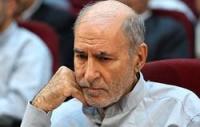
After senior reformist figure Behzad Nabavi was returned to prison following medical treatment, Islamic Republic security forces raided his home and confiscated a series of documents, writings and his computer.

Jaras opposition website reports that the raid took place after the executive member of the reformist party Mojahedin of the Islamic Revolution returned to Evin Prison on Wednesday and was once again transferred to the notorious 2A section.

Nabavi, who had served in top positions in several governments following the Iranian Revolution, was arrested just days after the controversial re-election of Mahmoud Ahmadinejad in 2009.

He is serving a five-year prison term for alleged activities against national security and propaganda against the regime.

The Islamic Republic establishment claims reform figures were involved in a “seditious” movement to overthrow the regime.

The 70-year-old veteran of Islamic Republic politics is said to be suffering from several ailments.


Source


Jailed labour activist taken to hospital

Fri, 05/06/2011

Jailed Iranian labour activist, Mansour Osanlou has been moved to hospital following a critical decline in his health in prison.

Human rights media report that the head of Vahed Transit Drivers Union was taken to a hospital outside the prison for treatment of his heart condition.

In March, Osanlou’s sister, Fereshteh Osanlou reported that her brother had three blocked arteries in his heart and required immediate medical treatment.

She added that her family had repeatedly urged authorities to allow Osanlou to leave prison for the necessary medical treatment but they were turned down every time.

Osnalou had recently participated in the collective hunger strike at Rejai Shahr Prison in Karaj to protest poor prison conditions.

Osanlou was arrested in 2007 and sentenced to five years in prison on charges of endangering national security and propaganda against the regime.

Osanlou is nearing the final months of his sentence, and the prison physicians have agreed on several occasions that his health complications should exempt him from completing his imprisonment, but the prosecutor has rejected calls for his early release.


Source