Home Blog Page 646

Nasrin Sotoudeh’s 3 year old son in anguish: ‘mommy is never coming back…’

04/14/2011

In an interview with the Center to Defend Families of those Slain and Detained in Iran, Reza Khandan, Nasrin Sotoudeh’s husband, points to the psychological pressure exerted on his family by Iran’s judiciary. Khandan also describes how he has been deprived of basic rights afforded all prisoners, such as visitation with his incarcerated wife, and the painful circumstances of their two young children who have been brutally denied of their mother’s presence at such a tender age.

The content of the interview with Mr. Khandan is as follows:

* Mr. Khandan, if at all possible, can you please describe Nasrin Sotoudeh’s condition and the pressure exerted on and your family and her?

I visited the prosecutor’s office prior to the Persian New Year, requesting a face-to-face meeting with my wife. They asked that I provide them with a written request and I complied. In response to my written request, and in the presence of 30 to 40 individuals, they stated that they would grant us a face-to-face visitation which they later reneged. On Thursday March 24th, we planned to visit with Nasrin, as Thursdays are visitation days, but we were told that the prison was closed [for the New Year holiday]. The next week, on Thursday March 31st, we once again headed for Evin with the hope to visit with my wife. Many others from across the country and other provinces were also waiting to meet with their incarcerated loved ones on that day, but the prison gates were once again closed. Unfortunately when the prison gates are closed, no one is available to answer any questions. We waited for 4 or 5 hours, losing almost an entire work day and still no one showed up. To date, we have had only three ten-minute phone conversations with Nasrin. I no longer attempt to contact the prosecutor’s office, as it is fruitless. The last time I approached the prosecutor’s office, I was arrested for approximately 10 minutes under the pretext that I had raised my voice. The prosecutor does not feel obligated to answer any of my questions. As a result, I have stopped contacting his office or making any demands.

* How are your children holding up? Do they miss their mother?

We some how manage, but it’s very difficult on the kids, particularly during Persian New Year when people visit each others homes. While [the regime officials] were busy with their hustle and bustle during New Year and visiting their loved ones to their heart’s content, they deprived us of all visitation. We were not allowed a minute of face-to-face visitation nor even a visitation from behind a cabin.

My son is unable to cope. He has lost all hope. Last night during a short telephone conversation with his mother he broke down and told her that she was never going to come back. The reality is slowly sinking in and things are deteriorating with the passing of each day. His mind is filled with strange notions. He is convinced that his mother is never coming back. He argues with me and insists that she is not coming back home. My daughter has her own problems. Her aunt is worried even more about her, because she has a tendency to internalize everything. She is also at a challenging age. I’m at a loss. I don’t know what to do….

I think we may just go outside the prison as a family, set up a tent and remain there in protest. No one answers us. No one pays any attention to the myriad of letters we have written [to the prosecutor and the judicial authorities]. It is because of my letters that I was summoned and a case was filed against me. In the past eight months, our children have not met with their mother for even an hour. Based on Iran’s laws, it is intolerable that a child (a three year old toddler) be deprived of seeing his/her mother. Even though we visited others during Norooz, I wish we hadn’t, as the children really missed their mother; her absence was very apparent. What could I do? In the end I was forced to take them away from Tehran.

Source

EU names 32 Iranian officials sanctioned for human rights abuses

04/14/2011

GVF — The European Union has released the names of 32 Iranian officials sanctioned for their role in human rights abuses in the country. The 27-nation bloc has imposed visa bans and asset freezes on the 32 individuals ranging from judiciary judges to military, intelligence and police officials.

The list of the sanctioned officials includes Iran’s Chief Police, the Commander of the IRGC, the Commander of the Basij forces and Iran’s Chief Prosecutor. Also on the list are a number of judges responsible for handing down harsh and unjust sentences against political dissidents such as the death penalty.

“These European sanctions are an important step in holding individual human rights violators accountable in Iran,” said Marietje Schaake, a Dutch member of the European Parliament, and an outspoken advocate for human rights in Iran. She said the step demonstrates that the bloc insists on “differentiating between the population of Iran and those in power who oppress them.”

The names of the 32 individuals on the sanctions list as well as their detail as provided by the European Union:

1. AHMADI-MOQADDAM Esmail, Chief of Iran’s National Police. Forces under his command led brutal attacks on peaceful protests, and a violent night time attack on the dormitories of Tehran University on June 15, 2009.

2. ALLAHKARAM Hossein, Ansar-e Hezbollah Chief and Colonel in the IRGC. He co-founded Ansar-e Hezbollah. This paramilitary force was responsible for extreme violence during crackdown against students and universities in 1999, 2002 and 2009.

3. ARAGHI (ERAGHI) Abdollah, Deputy Head of IRGC’s Ground Forces. He had a direct and personal responsibility in the crackdown of protests all through the Summer of 2009.

4. FAZLI Ali Deputy Commander of the Basij, former Head of the IRGC’s Seyyed al-Shohada Corps, Tehran Province (until February 2010). The Seyyed al-Shohada Corps is in charge of security in Tehran province and played a key role in brutal repression of protesters in 2009.

5. HAMEDANI Hossein, Head of the IRGC’s Rassoulollah Corps in charge of Greater Tehran since November 2009. The Rassoulollah Corps is in charge of security in greater Tehran, and played a key role in violent suppression of protesters in 2009. Responsible for the crackdown of protests through Ashura events (December 2009) and since.

6. JAFARI Mohammad-Ali, (a.k.a. “Aziz Jafari”), General Commander of the IRGC. IRGC and the Sarollah Base commanded by General Aziz Jafari has played a key role in illegally interfering with the 2009 Presidential Elections, arresting and detaining political activists, as well as clashing with protestors in the streets.

7. KHALILI Ali IRGC General, Head of the Medical Unit of Sarollah Base. He signed a letter sent to the Ministry of Health June 26 2009 forbidding the submission of documents or medical records to anyone injured or hospitalized during post-elections events.

8. MOTLAGH Bahram Hosseini, Head of the IRGC’s Seyyed al-Shohada Corps, Tehran Province. The Seyyed al-Shohada Corps played a key role in organising the repression of protests.

9. NAQDI Mohammad-Reza, Commander of the Basij. As commander of the IRGC’s Basij Forces, Naqdi was responsible for or complicit in Basij abuses occurring in late 2009, including the violent response to the December 2009 Ashura Day protests, which resulted in up to 15 deaths and the arrests of hundreds of protesters. Prior to his appointment as commander of the Basij in October 2009, Naqdi was the head of the intelligence unit of the Basij responsible for interrogating those arrested during the post-election crackdown.

10. RADAN Ahmad-Reza, Deputy Chief of Iran’s National Police. As Deputy Chief of National Police since 2008, Radan was responsible for beatings, murder, and arbitrary arrests and detentions against protestors that were committed by the police forces.

11. RAJABZADEH Azizollah Former Head of Tehran Police (until January 2010). As Commander of the Law Enforcement Forces in the Greater Tehran, Azizollah Rajabzadeh is the highest ranking accused in the case of abuses in Kahrizak Detention Center.

12. SAJEDI-NIA Hossein Head of Tehran Police, former Deputy Chief of Iran’s National Police responsible for Police Operations. He is in charge of coordinating, for the Ministry of Interior, repression operations in the Iranian capital.

13. TAEB Hossein, Former Commander of the Basij (until October 2009). Currently deputy IRGC commander for intelligence. Forces under his command participated in mass beatings, murders, detentions and tortures of peaceful protestors.

14. SHARIATI Seyeed Hassan, Head of Mashhad Judiciary. Trials under his supervision have been conducted summarily and inside closed sessions, without adherence to basic rights of the accused, and with reliance on confessions extracted under pressure and torture. As execution rulings were issued en masse, death sentences were issued without proper observance of fair hearing procedures.

15. DORRI-NADJAFABADI Ghorban-Ali, Former Prosecutor General of Iran until September 2009 (former Intelligence minister under Khatami presidency). As Prosecutor General of Iran, he ordered and supervised the show trials following the first post-election protests, where the accused were denied their rights, an attorney. He also carries responsibility for the Kahrizak abuses..

16. HADDAD Hassan (alias Hassan ZAREH DEHNAVI), Judge, Tehran Revolutionary Court, branch 26. He was charge of the detainee cases related to the post election crises and regularly threatened families of detainees in order to silence them. He has been instrumental in issuing detention orders to the Kahrizak Detention Centre.

17. Hodjatoleslam Seyed Mohammad SOLTANI, Judge, Mashhad Revolutionary Court. Trials under his jurisdiction have been conducted summarily and inside closed session, without adherence to basic rights of the accused. As execution rulings were issued en masse, death sentences were issued without proper observance of fair hearing procedures.

18. HEYDARIFAR Ali-Akbar Judge, Tehran Revolutionary Court. He participated in protesters trial. He was questioned by the Judiciary about Kahrizak exactions. He was instrumental in issuing detention orders to consign detainees to Kahrizak Detention Centre

19. JAFARI-DOLATABADI Abbas, Prosecutor general of Tehran since August 2009. Dolatabadi’s office indicted a large number of protesters, including individuals who took part in the December 2009 Ashura Day protests. He ordered the closure of Karroubi’s office in September 2009 and the arrest of several reformist politicians, and he banned two reformist political parties in June 2010. His office charged protesters with the charge of Muharebeh, or enmity against God, which carries a death sentence, and denied due process to those facing the death sentence. His office has also targeted and arrested reformists, human rights activists, and members of the media, as part of a broad crackdown on the political opposition.

20. MOGHISSEH Mohammad (a.k.a. NASSERIAN), Judge, Head of Tehran Revolutionary Court, branch 28. He is in charge of post-election cases. He issued long prison sentences during unfair trials for social, political activists and journalists and several death sentences for protesters and social and political activists.

21. MOHSENI-EJEI Gholam-Hossein, Prosecutor General of Iran since September 2009 and spokesman of the Judiciary (former Intelligence minister during the 2009 elections). While he was Intelligence minister during the election, intelligence agents under his command were responsible for detention, torture and extraction of false confessions under pressure from hundreds of activists, journalists, dissidents, and reformist politicians. In addition, political figures were coerced into making false confessions under unbearable interrogations, which included torture, abuse, blackmail, and the threatening of family members.

22. MORTAZAVI Said, Head of Iran’s Anti-smuggling Task Force, former Prosecutor general of Tehran until August 2009. As Tehran Prosecutor General, he issued a blanket order used for detention of hundreds of activists, journalists and students. He was suspended from office in August 2010 after an investigation by the Iranian judiciary of his role in the deaths of three men detained on his orders following the election.

23. PIR-ABASSI Abbas Tehran Revolutionary Court, branches 26 and 28. He is in charge of post-election cases, he issued long prison sentences during unfair trials against human rights activists and has issued several death sentences for protesters.

24. MORTAZAVI Amir, Deputy Prosecutor of Mashhad. Trials under his prosecution have been conducted summarily and inside closed session, without adherence to basic rights of the accused. As execution rulings were issued en masse, death sentences were issued without proper observance of fair hearing procedures.

25. SALAVATI Abdolghassem, Judge, Head of Tehran Revolutionary Court, branch 15. In charge of the post-election cases, he was the Judge presiding the “show trials” in summer 2009, he condemned to death two monarchists that appeared in the show trials. He has sentenced more than a hundred political prisoners, human rights activists and demonstrators to lengthy prison sentences.

26. SHARIFI Malek Adjar, Head of East Azerbaidjan Judiciary. He was responsible for Sakineh Mohammadi-Ashtiani’s trial.

27. ZARGAR Ahmad, Judge, Tehran Appeals Court, branch 36. He confirmed long-term jail warrants and death warrants against protesters.

28. YASAGHI Ali-Akbar, Judge, Mashhad Revolutionary Court. Trials under his jurisdiction have been conducted summarily and inside closed session, without adherence to basic rights of the accused. As execution rulings were issued en masse, death sentences were issued without proper observance of fair hearing procedures.

29. BOZORGNIA Mostafa, Head of ward 350 of Evin Prison. He unleashed on a number of occasions disproportionate violence upon prisoners.

30. ESMAILI Gholam-Hossein, Head of Iran’s Prisons Organisation. In this capacity, he was complicit to the massive detention of political protesters and covering up abuses performed in the jailing system.

31. SEDAQAT Farajollah, Assistant Secretary of the General Prison Administration in Tehran – Former Head of Evin’s prison, Tehran until October 2010 during which time torture took place. He was warden and threatened and exerted pressure on prisoners numerous times.

32. ZANJIREI Mohammad-Ali, As Deputy Head of Iran’s Prisons Organisation, responsible for abuses and deprivation of rights in detention center. He ordered the transfer of many inmates into solitary confinement.

Source

Day 5 of hunger strike at Rajaei-Shahr prison

04/14/2011

GVF — A group of political prisoners held at Rajaei-Shahr prison have gone on hunger strike.

On Sunday 10 April, a group of political prisoners at Rajaei-Shahr prison in Karaj city began a collective hunger strike to protest the continued denial of the right to visits, phone calls and furlough.

The dissidents on strike include veteran journalist and activist Keyvan Samimi, labour activist, Mansour Osanlou, Rasoul Bedaghi, of the Iranian Teacher’s Association, journalists Issa Saharkhiz and Reza Rafiei, political activists Heshmatollah Tabarzadi and Behrouz Javid Tehrani, and student activists, Ali Ajami and Majid Tavakoli, Mehdi Mahmoudian and Jafar Eghdami.

In a statement released by the inmates, the signatories stated their strike was “in protest against the summons, arrests, threats and the pressures on the families of imprisoned” activists including union leaders, human rights activists and political dissidents.

The Rajaei-Shahr prisoners had also expressed solidarity with Fakhrossadat Mohtashamipour, wife of jailed reformist politician Mostafa Tajzadeh. However five days into the strike, Mohtashamipour was released from prison on Thursday after enduring 45 days of solitary confinement. She had been arrested while attending pro-opposition protests in Tehran on 1 March. The vocal activist and member of the Islamic Iran Participation Front had been on hunger strike in Evin prison to demand a personal visit with her husband, a wish that came true shortly before her release from Evin prison today.

According to opposition website Tahavolesabz, Mohtashamipour’s furlough will be three days long.

The inmates on strike have vowed to continue with their protest until “a change in the behaviour of the security and judiciary executives towards prisoners and their families.”

Parvaneh Osanlou wife of Mansour Osanlou, the head of the independent Syndicate of Workers of Tehran and Suburbs Bus Company has expressed her concerns about the well-being of her husband on hunger strike. “Mansour Osanlou suffers from a heart condition and a hunger strike can further deteriorate his already poor health condition. Tehran’s Prosecutor General Jafari Dolat-Abadi has objected to a medical leave every single time.”

The leading trade-union activist who has been imprisoned several times during the past seven years, has been in prison since in July 2007.

Abdolkarim Lahiji, the Paris-based vice president of the International Federation of Human Rights Leagues, told Radio Farda on April 13 that the prisoners want to express their protest against unjust sentences as well as poor prison conditions.

“Even though these prisoners had done nothing against the law — even the Islamic Republic law — they were given harsh sentences,” Lahiji said.

The mother of Mahdi Mahmoudian, the journalist who exposed the post-election abuses and killings at Kahrizak Prison is also extremely troubled by her son’s worsening health condition. Since his arrest close to two years ago, Mahmoudian has not been granted a single day of leave despite having reportedly suffered a heart attack at Rajaei-Shahr prison in early 2011.

Source

U.S. Says Iran Helps Crackdown in Syria

0

APRIL 14, 2011

The U.S. has accused Iran of funneling to support to Syria to put down pro-democracy demonstrators. Iran is also accused of supporting Shiite hardline groups in Bahrain and Yemen. Also, looking ahead to upcoming Washington budget battles.

Iran is secretly helping Syrian President Bashar al-Assad put down pro-democracy demonstrations, according to U.S. officials, who say Tehran is providing gear to suppress crowds and assistance blocking and monitoring protesters’ use of the Internet, cellphones and text-messaging.

At the same time, communications intercepted by U.S. spy agencies show Tehran is actively exploring ways to aid some Shiite hardliners in Bahrain and Yemen and destabilize longstanding U.S. allies there, say U.S. officials familiar with the intelligence. Such moves could challenge interests of the U.S. and Saudi Arabia and inflame sectarian tensions across the Middle East, they say.

“We believe that Iran is materially assisting the Syrian government in its efforts to suppress their own people,” said an Obama administration official.

U.S. officials say they don’t see Iran as the driving force behind popular revolts against longtime U.S. allies in the Mideast, and caution they have no concrete evidence that Iran is providing or preparing large-scale financial or military support to opposition elements in Bahrain or Yemen.

Rather, the White House has worried that protracted political turmoil could provide an opening for additional influence by Tehran, whose nuclear ambitions are a concern to the U.S. and its allies in Europe and the Middle East.

So far, an administration official said, Iranian “aspirations far outpace their ability to project their influence into these places.”

By disclosing intelligence about Iranian involvement, the U.S. appears to be trying to put Tehran on notice that it is under close surveillance in Washington. “We’re keeping an eye on these activities,” another Obama administration official said.

The U.S. disclosures also appear designed to help soothe anxious Arab and Israeli allies, who have privately complained that President Barack Obama, in his enthusiasm to embrace popular uprisings, is paying scant attention to how the revolts could play into the hands of their regional nemesis, Iran. By voicing concerns about Iran’s activities, the U.S. appears to be trying to close ranks, at least in part, with Saudi and Bahraini leaders whose warnings about Tehran’s influence in their internal affairs have long been played down in Washington.

Iranian diplomats didn’t immediately respond to requests for comment.

Some U.S. officials have expressed surprise that Shiite-dominated Iran hasn’t intervened more aggressively to support Mr. Assad and Shiites in Bahrain. Officials said they believed Iran has secretly promised more help to Mr. Assad if the protests intensify.

U.S. officials believe Iran’s recent support for Mr. Assad reflects Tehran’s concerns about losing a critical regional ally and military partner against Israel.

So far, officials said, Iran has begun transferring to Damascus equipment to help security forces put down protests. This includes providing Syrian authorities with equipment, advice and technical know-how to help curtail and monitor internal communications, including the email and online postings that opposition groups commonly use to organize their protests and report security excesses, officials said. Some deliveries have been made and others are believed to be in the works, they said.

Iran is also sharing “lessons learned” from its 2009 crackdown on protesters who demanded the removal of Iranian President Mahmoud Ahmadinejad, the officials said. “These guys know the best practice in this kind of situation—they’ve had lots of experience in this sphere,” a U.S. defense official said of the Iranians.

“The Syrians don’t want to see a Green Revolution in their country,” the defense official added, referring to the protest movement in Iran. “The Iranians are ready to help.”

Any aid to Mr. Assad could signal an escalation of sectarian proxy battles in the region, one the U.S. has sought to avert.

The Obama administration repeatedly pressed Sunni-ruled Saudi Arabia and Bahrain not to use force against largely Shiite protesters, according to U.S. officials, fearing that would provide Iran with an excuse to start meddling in Bahrain and elsewhere in the Middle East. Under Tehran’s religious code, Supreme Leader Ayatollah Ali Khamenei has an obligation to protect the rights of Shiites world-wide. “We told them not to use force because it would provide Iran with an excuse,” a senior U.S. official said. “They didn’t listen.”

Last month, Saudi Arabia sent troops into neighboring Bahrain to support the island kingdom’s ruling al-Khalifa family against protesters.

The U.S. is concerned large-scale solidarity protests could break out in Iraq, whose Shiite majority has close religious ties to Bahrain’s Shiites. That could complicate U.S. plans for withdrawing troops this year. The U.S. has long accused Iran of providing weapons, funding and training to anti-American militants in Iraq and to the Taliban in Afghanistan, as well as to Hezbollah in Lebanon.

The latest U.S. assessment is based on intelligence that includes intercepted communications among Iranian officials as well as between Iranian officials and Bahraini and Yemeni opposition figures. Military officials describe intercepted “chatter” in which Iranian officials have talked of the possibility of shipping cash, weapons or both to opposition elements in both countries.

A U.S. defense official said Iranian policy makers are seriously debating how much aid, if any, to provide to Bahrain’s opposition. Another U.S. official said some intelligence indicated that Iran has made small-scale transfers of money and light weapons—”a few dozen guns, maybe less, definitely not more”—into Bahrain. Much of the intelligence suggests Iran and Hezbollah were focused now on using propaganda to assert influence among restive Shiites.

Other Iranian officials appear content to let Bahrain’s leaders become more repressive, which the defense official said is “probably more effective at getting people riled up against the king” than anything Tehran could do.

The Bahraini and Yemeni governments have long claimed Iran is meddling in their internal affairs, an issue they know could alarm their U.S. counterparts.

U.S. intelligence agencies have long been skeptical of such claims. But last week, after talks in Riyadh, Defense Secretary Robert Gates said the U.S. has unspecified “evidence” of Iranian interference in Bahrain and elsewhere.

Shiite political leaders in Bahrain say that while they have cultural and religious connections to Iran, they aren’t seeking help or guidance from abroad. They say accusations of Iranian involvement are designed to deflect their demands for democratic reforms and to justify Bahrain’s widescale detention of suspected protest organizers, which the government has said it suspects of ties to Iran or its ally, Hezbollah.

“Bahraini Shia are very aware of how they’re paying the price for Iran’s growing power in the region,” said Nabeel Rajab, president of the Bahrain Centre for Human Rights. “They know to keep their distance.”

To keep a lid on tensions in Bahrain, which is home to the U.S. Navy’s Fifth Fleet, the White House has encouraged protesters to negotiate with the king, rather than seek his ouster.

In Yemen, the U.S. has shifted from supporting President Ali Abdullah Saleh to backing talks aimed at easing him from power.

Last year, the U.S. picked up intelligence showing Iran had provided a small amount of support to Yemen’s Houthi rebels, which have fought against Saudi and Yemeni forces, although officials say their knowledge is limited because of a lack of U.S. intelligence sources in the area.

The Houthis, who aren’t part of the political opposition demanding Mr. Saleh’s removal, have stayed quiet in their home region during the past two months of upheaval. The Houthis follow a minor offshoot of Shiism that isn’t the same as the version practiced in Iran.

—Jay Solomon, Nathan Hodge, Margaret Coker and Bill Spindle contributed to this article.

Source

Hezbollah, Iran planning attack

0

April 14, 2011


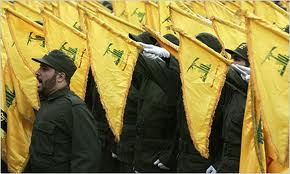
BEIRUT, Lebanon, April 13 (UPI) — Hezbollah and Iranian Revolutionary Guard operatives are planning attacks on western targets in the coming days, a Lebanese report said.

HezbollahThe report was based on information gathered by western intelligence agencies monitoring the “recent abnormal movements of cadres suspected of belonging to Hezbollah or the Iranian Revolutionary Guard,” the Beirut Observer Web site said Tuesday.

The report said the attacks are meant to divert global attention from indictments the international United Nations tribunal is expected to serve in the investigation of the assassination of former Lebanese Prime Minister Rafik Hariri.

The indictments will most likely name “leadership cadres in the party [Hezbollah],” the site said.

The report comes on the eve of the country’s 36th anniversary of the 1975-90 Civil War, and amid deep divisions in the country’s political leadership, a paralysed cabinet and mounting concern about events in the Arab world that threaten Lebanon’s security and stability, The Lebanese newspaper The Daily Star said Wednesday.

Lebanon is under threat of new sectarian strife over the pending tribunal indictments and a “more explosive issue that threatens to destabilize the country is Hezbollah’s arsenal,” the newspaper said noting the issue is currently the target of a fierce verbal campaign by caretaker Prime Minister Saad Hariri and his allies in the March 14 coalition.

The tribunal and Hezbollah’s weapons have sharply divided the country into two rival camps — the March 8 camp led by Hezbollah and the March 14 camp led by Hariri, the paper said

Source

Hezbollah, Iran planning attack

0

April 14, 2011


BEIRUT, Lebanon, April 13 (UPI) — Hezbollah and Iranian Revolutionary Guard operatives are planning attacks on western targets in the coming days, a Lebanese report said.

HezbollahThe report was based on information gathered by western intelligence agencies monitoring the “recent abnormal movements of cadres suspected of belonging to Hezbollah or the Iranian Revolutionary Guard,” the Beirut Observer Web site said Tuesday.

The report said the attacks are meant to divert global attention from indictments the international United Nations tribunal is expected to serve in the investigation of the assassination of former Lebanese Prime Minister Rafik Hariri.

The indictments will most likely name “leadership cadres in the party [Hezbollah],” the site said.

The report comes on the eve of the country’s 36th anniversary of the 1975-90 Civil War, and amid deep divisions in the country’s political leadership, a paralysed cabinet and mounting concern about events in the Arab world that threaten Lebanon’s security and stability, The Lebanese newspaper The Daily Star said Wednesday.

Lebanon is under threat of new sectarian strife over the pending tribunal indictments and a “more explosive issue that threatens to destabilize the country is Hezbollah’s arsenal,” the newspaper said noting the issue is currently the target of a fierce verbal campaign by caretaker Prime Minister Saad Hariri and his allies in the March 14 coalition.

The tribunal and Hezbollah’s weapons have sharply divided the country into two rival camps — the March 8 camp led by Hezbollah and the March 14 camp led by Hariri, the paper said

Source

Student Activist Homayoun Panahi Detained

April 14, 2011

RAHANA: Homayoun Panahi, a Zanjan University philosophy student, has been arrested after the raid of the authorities on his house and has been transferred to Arak prison. According to the Human Rights House of Iran, he was first detained after the Ashura protests and sentenced to 6 months and 1 day in prison for disturbing public opinion and acting against national security. The verdict has been carried out.

Source

Student Activist Homayoun Panahi Detained

April 14, 2011

RAHANA: Homayoun Panahi, a Zanjan University philosophy student, has been arrested after the raid of the authorities on his house and has been transferred to Arak prison. According to the Human Rights House of Iran, he was first detained after the Ashura protests and sentenced to 6 months and 1 day in prison for disturbing public opinion and acting against national security. The verdict has been carried out.

Source

EU slaps sanctions on 32 Iranians over rights abuses

April 13, 2011

LUXEMBOURG (AFP) — The European Union imposed assets freezes and travel bans on 32 Iranian officials on Tuesday, saying they had been involved in human rights violations.

British Foreign Secretary William Hague said on the sidelines of a meeting of European Union foreign ministers that the 27-nation bloc wanted to hit back at the “appalling human rights record of Iran.”

He denounced the jailing of Iranian opposition leaders, the detention of more journalists “than any other country in the world,” and an “excessive use of the death penalty, often on vague charges.”

The EU “is agreeing today restrictive measures on 32 individuals in Iran we believe are responsible and instrumental in these policies,” he said.

The measures were decided at a meeting of EU foreign ministers in Luxembourg, following in the footsteps of the United States, which imposed similar sanctions in September 2010.

The list of names will soon be made public in the EU Official Journal.

The EU ministers had already agreed in principle to the sanctions in March, when they voiced concern about the “deterioration” of human rights in Iran.

They also voiced alarm over the “dramatic increase in executions in recent months and the systematic repression of Iranian citizens.”

Iran has already been hit by a raft of sanctions imposed by the United Nations over its refusal to halt its controversial nuclear programme.

The United States and the European Union added their own unilateral sanctions on top of the UN measures last year.

Western powers accuse Iran of seeking to build a nuclear bomb. Tehran denies the charge, insisting its programme is a peaceful effort to produce civilian energy.

The United States hit eight Iranian official with sanctions last year, including current and former ministers, accusing them of committing serious human rights violations during the disputed presidential elections of 2009.

Source

EU slaps sanctions on 32 Iranians over rights abuses

April 13, 2011

LUXEMBOURG (AFP) — The European Union imposed assets freezes and travel bans on 32 Iranian officials on Tuesday, saying they had been involved in human rights violations.

British Foreign Secretary William Hague said on the sidelines of a meeting of European Union foreign ministers that the 27-nation bloc wanted to hit back at the “appalling human rights record of Iran.”

He denounced the jailing of Iranian opposition leaders, the detention of more journalists “than any other country in the world,” and an “excessive use of the death penalty, often on vague charges.”

The EU “is agreeing today restrictive measures on 32 individuals in Iran we believe are responsible and instrumental in these policies,” he said.

The measures were decided at a meeting of EU foreign ministers in Luxembourg, following in the footsteps of the United States, which imposed similar sanctions in September 2010.

The list of names will soon be made public in the EU Official Journal.

The EU ministers had already agreed in principle to the sanctions in March, when they voiced concern about the “deterioration” of human rights in Iran.

They also voiced alarm over the “dramatic increase in executions in recent months and the systematic repression of Iranian citizens.”

Iran has already been hit by a raft of sanctions imposed by the United Nations over its refusal to halt its controversial nuclear programme.

The United States and the European Union added their own unilateral sanctions on top of the UN measures last year.

Western powers accuse Iran of seeking to build a nuclear bomb. Tehran denies the charge, insisting its programme is a peaceful effort to produce civilian energy.

The United States hit eight Iranian official with sanctions last year, including current and former ministers, accusing them of committing serious human rights violations during the disputed presidential elections of 2009.

Source