Home Blog Page 649

U.S. Report Highlights Iran’s Amputations, State Killings

April 9, 2011


ExecutionIran pursued a campaign of violence and intimidation against its own people in 2010, committing extrajudicial killings and using amputation and flogging as punishments, according to a State Department report released today.

The 35th annual human rights report, which covers 194 countries, documents in a detailed 69-page chapter the torture, beatings, rape and group executions carried out by Iran’s security forces.

“We have multiple reports that the government summarily executed more than 300 people in 2010,” Secretary of State Hillary Clinton said today. She cited the case of four Kurdish men who were arrested for human rights advocacy and hung in May. “They were reported to have confessed to terrorism under torture,” Clinton said.

The U.S. has no embassy in Iran and relied heavily on non- U.S. government sources, according to a footnote. Switzerland represents U.S. interests in Iran.

In 2010, Iranian officials cracked down on women’s rights activists, ethnic minorities such as the Kurdish men, student activists, religious minorities and homosexuals.

In Iran, even a call to prayer is considered a call to dissent. One female student, Saeedeh Pouraghai, was arrested in September 2009 for chanting “Allahu Akbar” or “God is Great” from the rooftop of her Tehran home. Two days later, authorities summoned Pouraghai’s mother to identify and claim her body, which reportedly had been partially burned to hide evidence of rape and torture.

Confiscations

The government confiscated property of religious minorities, especially members of the Baha’i faith, and used Iran’s national security law to try others in court.

Clinton mentioned, in particular, discrimination against homosexuals. “I believe, and our government believes, that gay rights are human rights,” she said. “We remain extremely concerned about state-sanctioned homophobia.”

In 2008, Iranian President Mahmoud Ahmadinejad called homosexual activity an “unlikable and foreign act” that “shakes the foundations of society.” Under Iranian law, consensual sex between men is a capital crime.

Source: Bloomberg
Source

Lawyer dismissed from faculty position for human rights work

0

04/08/2011

Mohammad Sharif, a lawyer and professor of law at Allameh Tabatabaee University, was dismissed from his faculty position this week. He spoke with the International Campaign for Human Rights in Iran about the potential reasons for his dismissal. “I think working on human rights cases was the reason for my dismissal, because there was no other incident to cause this. Though I’ve represented numerous individual rights and public freedom cases, I have always tried to remain within the framework of laws I did not believe in, and I never left that framework. I have been a law-abiding lawyer. I seldom gave interviews, and to the extent possible, I avoided talking to foreign media so that I could continue my services,” he told he Campaign.

After the disputed 2009 presidential election, Sharif represented many political and civil activists who were arrested. “It’s interesting. My dismissal letter is signed by Hojjatollah Mansouri, Head of University Administration. He was my student at some point and took two courses with me. He failed both courses. Now he signs my letter of dismissal,” Sharif said.

“The only solution left to me now is to take my problem to the Administrative Justice Court. Though in the past I represented many dismissed professors, such as my Allameh University colleague Professor [Morteza] Mardiha, I was unable to achieve positive results and all of them were banned from teaching on the pretext of ‘general disqualification.’ Even so, I will have to take the same route for myself. I have no choice. Other than this, I don’t know what else to do, and I don’t want to be pessimistic, so we shall see,” he told the Campaign.

“My livelihood came from my university salary. I exclusively worked on human rights cases which don’t generate income. My only income was this salary, which is now cut off. I will face severe problems for my livelihood now,” Sharif said. He added that his 25 years of teaching could have qualified him for retirement, but his dismissal disqualifies him.

Mohammad Sharif’s courses at Allameh Tabatabaee University were cancelled on 21 January, without any explanation. Sharif has represented many political prisoners including Ahmad Zeidabadi, Shiva Nazar Ahari, and Massoud Bastani. A large number of experienced faculty members at various universities in Iran have been dismissed or forced to retire since last year. Among them are Morteza Mardiha, Seyed Ali Asghar Beheshti Shirazi, Mohammad Shahri, Amir Nasser Katouzian, Karim Mojtahedi, Ali Sheikholeslam, Hassan Bashirieh, Mohammad Erfani, Abolghassem Gorji, Jamshid Momtaz, Mohammad Reza Shafiee Kadkani, and Reza Davari.

International Campaign for Human Rights in Iran

Source

Hossein Ronaghi Maleki’ health is deteriorating rapidly

April 7, 2011

RAHANA- The family of Hossein Ronaghi Maleki visited him in prison today and discussed his deteriorating health in an interview with Kalame. “As we have in the past few months, we again visited judiciary and prison officials pleading with them to allow Hossein a medical leave from prison. But again, nobody will answer our pleas. They will not allow Hossein to receive necessary medical care. We don’t know what else to do.”

This blogger’s father added, ”We travel to Tehran every week in hopes of visiting him. We are so worried about his grave physical condition. His Kidneys are infected and doctors have said that he needs immediate surgery. But authorities will not allow the surgery to take place. We will stay in Tehran hoping that maybe there is something we can do for our child.”

As a reminder, in the beginning of January of this year Hossein was taken to Modares Hospital in Tehran due to his declining health. At that time the doctors at Modares Hospital said that his ailment is very serious and he needs to get urgent surgery.

This imprisoned blogger’s health continued to deteriorate and in February he was transferred to a hospital again. This time he was taken to Baghyallah Hospital located on Mollasadra Street. The doctors in this hospital also recommended immediate surgery but Hossein was taken back to prison because the cost of the operation was too high.

Prison officials said that they could not pay for this prisoner’s surgery. This is despite the fact that Hossein Ronaghi Maleki’s family had already come up with the necessary funds and they told prison officials that they would pay for the operation. Despite this, medical care was denied to Hossein.

Hossein Ronaghi Maleki was arrested on December 13, 2009 at his father’s house and transferred to Evin prison. He spent about 10 months in solitary confinement in Evin’s Ward 2A which is under the jurisdiction of the Revolutionary Guards. He was put under severe psychological and physical duress. With an ambiguous judicial process Hossein’s trial took place in October 2010 and the Revolutionary Court sentenced him to 15 years in prison. The Court of Appeals later upheld his sentencing.  Hossein is now serving his sentence in Ward 350 of Evin prison.

Source

Three People Executed at Urumiyeh’s Central Prison

Thursday, April 7, 2011

(HRNA News): On the morning of Thursday, April 7, 2011, three prisoners were ordered to be hanged in the yard of Urumiyeh’s Central Prison.

Masoud Shamsnejad, a lawyer for one of the executed inmates, confirmed this news in an interview with the Movakarian News Agency saying, “Towhid Masoumi Dijin, Khalid Esmaili, and Masoud Qavipanjeh are the people whom judicial authorities have ordered to be executed today.”

He added, “It is said that these executed individuals were accused of drug-related crimes.”

It is worthy to mention that on the afternoon of the day before, judicial authorities in Urumiyeh ordered four people condemned to death to be quarantined in this prison.


Amnesty International: Iran leads world in executions

April 6, 2011

While China is believed to have executed thousands of people in 2010 – more than all other countries combined – authorities there have not acknowledged carrying out any executions. On the other hand, the Iranian government admitted to executing 252 people, including five women and a juvenile, last year.

Amnesty International stated it received reports of over 300 additional executions carried out in Vakilabad Prison in Mashhad, Iran. Fourteen people were publicly executed in Iran last year, and most of those executed had been convicted of drug-related offenses.

“Detainees in Iran are often held for lengthy periods of time prior to trial, where they are at grave risk of being subjected to torture and other ill treatment; political prisoners are often held incommunicado,” Amnesty stated in the report. “Trials are generally unfair and detainees are systematically denied – by law – access to a lawyer until investigations have been completed, which can take many months. Proceedings, particularly those held outside the capital Teheran, are often summary, lasting only a few minutes.”

Amnesty noted that in January 2010, two Iranian men involved in the June 2009 post-election protests were hanged. They had been convicted of “enmity against God,” and of belonging to an illegal group which supports the exiled Iranian monarchy. Their lawyers were not told of the executions.

In December 2010, Ali Akbar Siadat was hanged after he was convicted of spying for Israel. Four Kurds were hanged on May 9, 2010, and at least 17 more were on death row at the end of the year.

Amnesty also reported that at least 10 women and four men were at risk of being stoned as punishment for alleged adultery, and at least one woman might be hanged for the same offense.

The 252 figure puts Iran in the lead globally for acknowledged executions in 2010.

According to Amnesty, at least 527 executions were carried out in 23 nations. In addition, at least 2,024 new death sentences were handed down in 67 countries.

In the Middle East and North Africa, Iran accounted for most of the 378 known executions carried out in 2010.

Yemen executed at least 53 people, followed by Saudi Arabia with at least 27, Libya with at least 18, Syria with at least 17 and Egypt with four.

In 16 countries in the region, 748 death sentences were imposed, with Iraq (at least 279), Egypt (185) and Algeria (at least 130) in the lead, followed by Saudi Arabia (at least 34), the United Arab Emirates (at least 28), Yemen (at least 27), Tunisia (at least 22), Lebanon (at least 12), Syria (at least 10) and Jordan (at least nine).

Source

Regime armed forces attacked the demonstrators in Iranian city Urmia and savagely beat them

April 6, 2011

Thousands of Iranians in Tabriz and Urmia(Northwest Iran) demonstrated to save Lake Urmia and protested against the government’s inaction and indifference towards the irreversible subsequences of gradual drying of the lake. The demonstrators confronted the suppressive regime forces.

On the day of sizda-be-dar, commemorating the end of Persian New Year’s celebrations, huge numbers of people in Tabriz and Urmia gathered together and called for immediate action by the government to prevent the gradual drying of Lake Urmia including proper management of many dams built on rivers leading to the lake.

Lake Urmia is one of the largest saltwater lakes in the world and is a registered UNESCO reserve.

Fearing that the demonstrations would lead to large-scale anti-government, anti-dictatorial uprising, government’s uniformed and plain-clothed armed forces attacked the demonstrators and savagely beat them.

The demonstrators stood up against the government forces. A number of demonstrators were severely wounded; four are in critical conditions. At least 70 people, including some of the wounded, were arrested and transferred to unknown prisons.

Source

Regime armed forces attacked the demonstrators in Iranian city Urmia and savagely beat them

April 6, 2011

Thousands of Iranians in Tabriz and Urmia(Northwest Iran) demonstrated to save Lake Urmia and protested against the government’s inaction and indifference towards the irreversible subsequences of gradual drying of the lake. The demonstrators confronted the suppressive regime forces.

On the day of sizda-be-dar, commemorating the end of Persian New Year’s celebrations, huge numbers of people in Tabriz and Urmia gathered together and called for immediate action by the government to prevent the gradual drying of Lake Urmia including proper management of many dams built on rivers leading to the lake.

Lake Urmia is one of the largest saltwater lakes in the world and is a registered UNESCO reserve.

Fearing that the demonstrations would lead to large-scale anti-government, anti-dictatorial uprising, government’s uniformed and plain-clothed armed forces attacked the demonstrators and savagely beat them.

The demonstrators stood up against the government forces. A number of demonstrators were severely wounded; four are in critical conditions. At least 70 people, including some of the wounded, were arrested and transferred to unknown prisons.

Source

Image shows Mousavi son-in-law beaten up during funeral

04/05/2011

GVF — The image below shows Javad Salimi, the son-in-law of opposition leader Mir Hossein Mousavi after he was beaten up by security forces last Thursday during a funeral for Mousavi’s father Mir Esmail Mousavi.

On Thursday, security forces arrested at least seven people attending the funeral including Mousavi’s son-in-law and brother-in-law whose son Ali Mousavi was killed by state-hired assassins during opposition protests on 27 December 2009.

Mousavi’s website said Mir Esmaeil’s body was taken by officials in plainclothes to an ambulance as mourners had gathered in front of his house.

In addition, Mohammad Reza Nourollahian, a cleric and advisor to Mousavi, was also beaten up after he protested against the security forces’ interference in the procession and their violent mistreatment of mourners. He was detained but released days later on a heavy bail.

Source

Regular prisoner in Rajai Shahr prison beaten up for befriending political prisoners.

April 5, 2011


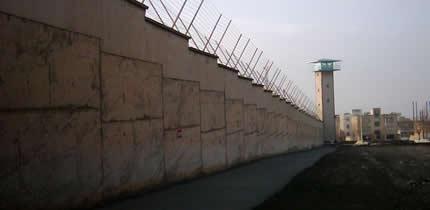
Rahai-Shahr_PrisonRAHANA- Ali Tabarzadi said that one of his incarcerated father’s ward mates who is a non-political prisoner was accused of befriending political prisoners and being in possession of their phone numbers. Prison officials beat him up using electric batons and banned him from leaving prison on furlough for the new year celebrations.

According to Kalame, the son of Heshmatollah Tabarzadi who is the imprisoned leader of the Iran Democratic Party, said to the International Human Rights Campaign in Iran, “One of my father’s former ward mates who is not a political prisoner was accused of having telephone numbers for my father’s home and that of (political prisoner) Isa Saharkhiz’s home in his pocket. He was subsequently barred from prison furlough and severely beaten up. Camyar Dahpahlavan spent time with my father in the same prison ward. Very often friendships are forged between political and non-political prisoners in the same ward. My father and Mr. Dah Pahlavan became friends then my father was transferred to another ward in the prison. Now I hear that when Mr. Dah Pahlavan was about to leave prison on furlough to celebrate the (Persian) New Year with his family, he was subjected to a body search. He was accused of being in possession of my father’s, and Isa Saharkhiz’s phone numbers. Then the prison officials tortured him using electrical batons and denied him prison leave.”

Ali Tabarzadi, the son of Heshmatollah Tabarzadi continued, “Mr. Dahpahlavan is not doing well. He is having great trouble sleeping at nights because they beat his head with the electric batons.”

Source

Regular prisoner in Rajai Shahr prison beaten up for befriending political prisoners.

April 5, 2011


201311132249177272057951861RAHANA- Ali Tabarzadi said that one of his incarcerated father’s ward mates who is a non-political prisoner was accused of befriending political prisoners and being in possession of their phone numbers. Prison officials beat him up using electric batons and banned him from leaving prison on furlough for the new year celebrations.

According to Kalame, the son of Heshmatollah Tabarzadi who is the imprisoned leader of the Iran Democratic Party, said to the International Human Rights Campaign in Iran, “One of my father’s former ward mates who is not a political prisoner was accused of having telephone numbers for my father’s home and that of (political prisoner) Isa Saharkhiz’s home in his pocket. He was subsequently barred from prison furlough and severely beaten up. Camyar Dahpahlavan spent time with my father in the same prison ward. Very often friendships are forged between political and non-political prisoners in the same ward. My father and Mr. Dah Pahlavan became friends then my father was transferred to another ward in the prison. Now I hear that when Mr. Dah Pahlavan was about to leave prison on furlough to celebrate the (Persian) New Year with his family, he was subjected to a body search. He was accused of being in possession of my father’s, and Isa Saharkhiz’s phone numbers. Then the prison officials tortured him using electrical batons and denied him prison leave.”

Ali Tabarzadi, the son of Heshmatollah Tabarzadi continued, “Mr. Dahpahlavan is not doing well. He is having great trouble sleeping at nights because they beat his head with the electric batons.”

Source