Home Blog Page 667

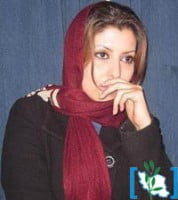
Azad University Student Farnaz Kamali Arrested

February 21, 2011

The security forces have arrested Farnaz Kamali at today’s march.

Farnaz Kamali is a political science major at Azad University whom was arrested by the security forces. According to the Human Rights House of Iran, hundreds of people were detained today. Her arrest has taken place while the authorities had announced that no gathering has been held. Security forces had a heavy presence in different cities in Iran today.  There is no information as to her whereabouts.

Source

Five Khajeh Nasir University Students Arrested

0

February 21, 2011

The arrests have taken place while the authorities have reported that the streets were calm today.

The security forces have raided the Khajeh Nasir University School of Sciences at 12 pm and have arrested 5 students. Behnam Momeni, Ali Mohebbi, Saeid Abrishami and Sina Jamouli and a physics student whose identity is unknown were the 5 detainees whom were arrested after being beaten by the IRGC forces. There is no information as to their whereabouts.

Source

43 executions in the past month in Iran

0

February 21, 2011

Executions have severely increased in the month of December. Also, Iran has witnessed 23 executions only in the first decade of the current month, 10 executions in the middle, and 10 executions in the third decade of the month.

According to “RAHANA”, Human Rights House of Iran, in the month of February 30 individuals were executed for drug related charges. Six others, executed for “Rape”, two executed for “murder” and one person was executed under charges of “Enemy of god (Moharebeh)”

Also, four political prisoners by the names of Jafar Kazemi, Mohammad Haj Ali Aghaei, Zahra Bahrami, and Farhad Taram are among the executed. Kazemi, Aghei, and Bahrami were arrested during the post election riots that were executed under charges of “Creating terror and horror”. Amongst them Zahra Bahrami is an Iranian-Dutch citizen whom although was arrested during the unrest and was interrogated, was unexpectedly executed under drug related charges and neither her lawyer nor family were informed of this matter.

Since the beginnings of the current year 231 individuals have been executed under “drug” related charges, 27 individuals under “rape” charges, 23 under charges of “Enemy of God”, 14 under “murder” charges, 7 under “kidnapping” charges and 11 have been executed under “political” charges.

Tehran province and its surrounding cities have witnessed most executions in the current month as 15 individuals have been executed in our capital. Khuzestan province (northern, southern and Razavi), with 12 executions is second in ranking. Although in the recent months we have seen many reports of executions at Vakilabad prison in Mashad, but in the recent month following an increase in this number prison officials finally confirmed the reports. In the recent month at least 10 executions took place at this prison, 5 of which were of Afghan citizens living in Iran.

Tehran, Khuzestan and Isfahan have in order had 66, 48, and 37 executions since the beginning of the Iranian year to the end of February that have caused them to have the highest execution rates.

In the month of February one female was amongst the executed by the name of Zahra Kazemi and three executions took place in public. Therefore in the past 11 months of the year according to reports declared by “official sources and judicial system” Iran has had a total of 313 executions.

Must add in the month of March 26 individuals, in April 18 individuals, in May 40 individuals, in June 19 individuals, in July 21 individuals, In August 24 individuals, in October 11 individuals, in October 24 individuals, in November 12 individuals, in December 19 individuals and in January 80 individuals were executed in Iran.

Below tables including the exact information’s on place, date and charges of every individuals can be downloaded as a PDF below.

Human Rights House of Iran

US must be removed from Islamic world: Khamenei

0

February 21, 2011

TEHRAN, February 20, 2011 (AFP) – Iran’s supreme leader Ayatollah Ali Khamenei on Sunday called on Muslims to “remove” the United States from the Islamic world.

“The main problem in the Muslim world is the presence of the United States. It is the biggest problem. We need to address that,” he told a gathering of Shiite and Sunni scholars in Tehran for an international conference on Islam.

“It is necessary to remove the United States from the Islamic world,” the all-powerful cleric and Islamic republic’s commander-in-chief said, adding that the country’s arch-foe was currently weak.

Khamenei urged Muslims worldwide to preserve the “people’s movement in Egypt,” saying it was the duty of both the people and dignitaries of Arab nations and the entire Islamic community.

He reiterated that the Arab revolts were “Islamic” and must be consolidated.

“The enemies try to say that the popular movements in Egypt, Tunisia and other nations are un-Islamic, but certainly these popular movements are Islamic and must be consolidated,” he said.

Khamenei also urged that “the conspiracy of enemies to create differences between Sunnis and Shiites” be confronted.

On February 4, in his Friday prayer sermon, Khamenei called for an Islamic regime to be installed in Egypt, a week before that country’s strongman Hosni Mubarak was ousted.

Iranian officials expressed support for the uprising in the Arab world’s most populous nation.

Source

Huge police presence blocks large demos in Tehran

0

February 21, 2011

TEHRAN (AFP) – A massive police deployment in Tehran prevented large-scale protests from erupting although Iranian opposition websites reported stray clashes and officials said the capital remained calm.

Fars news agency, meanwhile, said Faezeh Hashemi, daughter of former president Akbar Hashemi Rafsanjani, was briefly arrested after “leading anti-revolutionaries and rioters” in Tehran.

Witnesses said a heavy deployment of riot police and Basij militiamen in key Tehran squares including Haft-e Tir ensured that anti-government demonstrators were unable to stage significant protests.

Tehran was the epicentre of deadly anti-government protests in 2009 after President Mahmoud Ahmadinejad’s disputed re-election, and also saw clashes on Monday during a demonstration in which two people were killed.

On Sunday, supporters of opposition leaders Mir Hossein Mousavi and Mehdi Karroubi had called for fresh demonstrations and tried to stage them, their websites said. The two men refuse to acknowledge Ahmadinejad’s presidency.

Police maintained that Tehran had stayed calm.

“The situation in Tehran is normal and police have been deployed in Tehran… There were no special problems security-wise,” said Ahmad Reza Radan, Iran’s deputy police chief, quoted by ISNA news agency.

In a separate report on Fars he was quoted as blaming the United States and Britain for “sporadic gatherings of monafeghins (hypocrites),” a term officials use to refer to members of the outlawed People’s Mujahedeen of Iran.

Radan also said that police discovered a package of explosives with an electronic detonator and a small firearm with a silencer near a Tehran university.

Tehran traffic police chief Hossein Rahimi told state news agency IRNA that traffic was “heavy… but flowing” in the city.

Several opposition websites and witnesses reported scattered demonstrations in Tehran and some clashes between police and protesters.

“Police fired tear gas as a cat-and-mouse game (between police and demonstrators) began in Vali Asr Square” of Tehran, said the website Rahesabz.net, citing witnesses.

Crowds of demonstrators were also seen in other Tehran squares and some streets, shouting “Allahu Akbar” (God is Greatest), according to Karroubi’s Sahamnews.org website.

Fars reported Rafsanjani’s daughter was detained in the capital but later released.

“Faezeh Hashemi, who was arrested as she led a number of anti-revolutionaries and rioters while claiming to purchase clothes in Vali Asr Street, has been released,” the report said.

Earlier, IRNA reported she was “identified and arrested by police in Vali Asr street while intending to make harsh comments and chant provocative slogans and create a disturbance.”

Rafsanjani himself has come under harsh criticism from conservatives who demand that he publicly condemn opposition leaders. The cleric and former two-time president reportedly supported Mousavi in the 2009 election.

Witnesses and opposition website Kaleme.com said men on motorbikes were riding around parts of Tehran “in a show of strength… to intimidate people and prevent them from holding large gatherings.”

According to Rahesabz.net, mobile phone networks in central Tehran were cut and Internet speed was “noticeably slow.”

Sahamnews.org said anti-government gatherings were staged in the central city of Isfahan and Shiraz, southern Iran, while Fars said the situation was calm in Iran’s second largest city, Mashhad in the northeast.

Foreign media have been banned from covering any opposition gatherings.

Sunday’s gatherings took place after a call on Thursday by the Council for Coordination of Green Movement Hope — a group owing allegiance to opposition leaders — to commemorate the killings of two people in Tehran last week.

Those protests, which saw demonstrators clash with security forces, were the first since February 2010 when the authorities marked the 31st anniversary of the Islamic revolution.

Nine security personnel were injured in Monday’s clashes, officials and websites said.

Anti-government protests erupted in Iran after a June 2009 presidential poll in which Mousavi and Karroubi, both candidates, charged that the incumbent, hardliner Ahmadinejad, was re-elected through massive fraud.

CNN exclusive: Plotter of foiled ‘hit’ was allowed to return to Iran

0

February 21, 2011

Glendora, California (CNN) — It’s the kind of Southern California town made for daydreaming: Quiet streets and sunny skies, a place where tranquility seems rarely to be disturbed.

But according to police, as well as classified U.S. diplomatic cables published by WikiLeaks, the Los Angeles suburb of Glendora was the scene of an international assassination plot. The scheme involved would-be killers hiding out in a low-budget motel and an elaborate plan that, at first, involved shooting the victim, but later centered on running him over with a van, police documents disclose.

“I’ve been a police officer here for more than 20 years, and I’ve never investigated anything like this,” said Glendora police Lt. Tim Staab.

It all unraveled on a late summer day in 2009, when a would-be hit man hired by an Iranian national named Reza Sadeghnia got cold feet and called police from a local gas station.

“This person went on to tell us that for the past four days, they together had been scheming how to assassinate, how to kill another Glendora resident,” Staab said.

Police said the target in Glendora was Jamshid Sharmahd, an Iranian-American dissident who is the radio voice of a small group called Tondar, devoted to the overthrow of the Iranian government. The Iranian government calls Tondar a terrorist group, but the U.S. State Department says it is only a propaganda outlet.

According to police reports, the informant offered proof: the purchase of a cheap van from a used-car dealer that would be used to run down and kill the target. He told detectives he had been paid $5,000 to kill Sharmahd, with another $27,000 delivered to his mother back in Iran.

The plotters decided to use a van after deciding that buying a gun would be too risky, the reports state.

The informant told police that Sadeghnia, the mastermind, had fled Glendora and was about to leave Los Angeles on a plane. Staab said Glendora detectives found him in an airport hotel under his own name and arrested him in his room.

Along with his laptop computer, police seized $2,100 in cash.

“They were crisp $100 bills. There was a stack of them. And around it was a bank wrapping, and they were all written in Farsi,” he said.

According to those leaked American diplomatic cables, this wasn’t the first time Sadeghnia had been implicated in an assassination attempt.

A prominent Iranian dissident in London, Ali Reza Nourizadeh, “had been targeted by Iranian intelligence,” according to one cable. Nourizadeh is a prominent Voice of America commentator based in London, and Sadeghnia had contacted him several months before his California arrest, claiming to be a “big fan,” the January 2010 account states.

But Nourizadeh became suspicious of Sadeghnia after he took large numbers of pictures — photos that later turned up in the office of a deputy intelligence minister in Tehran, the cable states. He stopped taking Sadeghnia’s calls “and heard nothing more about the matter until he was visited by UK anti-terror police January 14,” according to the cable.

According to the cable, Sadeghnia had tracked the London dissident at the same time he was making plans to assassinate the California dissident. The arrest by Glendora police brought a halt to both plans.

“Nourizadeh is a well-known figure both inside and outside Iran, and is an outspoken critic of the Iranian regime, so it is unsurprising that the regime would want to keep a close eye on him,” the document states. “If, however, the regime has targeted Nourizadeh for assassination, as it appears to have done with Sharmahd, it marks a clear escalation in the regime’s attempts to intimidate critics outside its borders, and could have a chilling effect on journalists, academics and others in the West who until recently felt little physical threat from the regime.”

Sharmahd said there was “no doubt” that the plot against him involved the Iranian government. He said the motive was not only to kill him, but also to replace both Tondar’s website and its radio broadcasts with fakes in an attempt to hijack the movement.

Sadeghnia ultimately pleaded guilty to a charge of solicitation of murder and was jailed for eight months. But the story doesn’t end there.

After he was released from prison in 2010, Sadeghnia applied for permission to leave the United States while he was on five years’ probation and visit Iran for one month “to visit his dying father,” according to probation reports. His first application was denied, but a second request was granted a few weeks later on the condition that he return no later than October 27.

He has not been seen in the United States since. Probation officials would not comment on the decision.

Meanwhile, another Iranian-American — a 71-year-old California businessman named Reza Taghavi — was being held in an Iranian prison. He had been jailed for more than two years after Iranian authorities said he had given $200 to an Iranian dissident group: Tondar, the same group based in Glendora.

Taghavi denied any association with Tondar. The money, he said, was to be given to a friend of a friend.

Within weeks of Sadeghnia’s arrival in Iran, Taghavi walked out of Evin Prison.

Taghavi said he believes there was “no connection” between his release and Sadeghnia’s arrival. His attorney, a former Bush administration ambassador, Pierre Prosper, said he doesn’t think there’s a link, either.

“But it’s an interesting coincidence, isn’t it?” Prosper said in a telephone interview.

The State Department told CNN that there was no link between Sadeghnia’s return to Iran and Taghavi’s release. But back in Glendora, Sharmahd said there’s no doubt in his mind that there was a swap in which the United States traded the man who orchestrated his attempted murder to Iran in exchange for the jailed businessman.

“You give my man back. I give you your man back,” he said.

Source

More Than 200 Arrested In Mashad; Fate Of Five Student Activists Unknown

19th February 2011

An informed source told the International Campaign for Human Rights in Iran that in addition to arrests of hundreds of people during the 14 February demonstrations in Tehran, more than 200 people were arrested at Mashad public protests, many of whom have been released since. The local source told the Campaign that 2-300 people were arrested in two locations in Mashad. According to the source, the arrests were accompanied with unprecedented violence, to the point where several detainees were bleeding at the time of arrest.

According to the source, all those arrested were transferred to the Police Intelligence Detention Center, located inside Mashad’s Rezashahr Police Station. Later, however, dozens of detainees were moved to security detention centers blindfolded. Five student activists by the names of Hossein Ahmadnejad, Farzaneh Najarnejad, Ali Razaghi, Morteza Bagherzadeh, and Amir Sheibani were among those arrested, and so far there is no information about their detention location. These student activists were not among the protesters, however. They were arrested at their homes or work places.

Different statistics for the number of detainees of the 14 February demonstrations have been presented. Gholamhossein Mohseni Ejei, Iran’s Prosecutor General, said yesterday that most of the people arrested on 14 February have been released. Tehran’s statistics range from 150 announced by authorities, to 1,400 which a reliable source told the International Campaign for Human Rights in Iran. The Committee of Human Rights Reporters reported the number as 1,500. Due to the widespread arrests and a lack of transparency about them, it is not exactly clear whether arrests are limited to the said statistics or the numbers are higher.
Ferdowsi University Security Unit forces and plainclothes forces attacked students gathered on campus and in front of Ferdowsi Univeristy’s College of Engineering on 14 February. The forces beat and injured the students and videotaped them, preventing the protests from taking shape. Several other student activists were arrested for several hours on 14 February.

Source

Violence and Brutality by Government Forces at Saneh Jaleh’s Funeral

February 19, 2011

The funeral of Saneh Jaleh, the Kurdish student who was killed from a gunshot wound by government agents during February 14 protests, ended up in violence at the hands of regime agents.

After his killing, government supporters and state run media claimed Saneh Jaleh was a “basij” member and blamed his death on “hypocrites.” They announced that his funeral would take place adjacent to University of Art in Tehran, at ValiAsr Square at 9:30am Wednesday morning.

According to RAHANA, the news publication of Human Rights House of Iran, Tehran University of Art students had announced that they would be at the university for the funeral of their friend, but when they arrived they were fiercely attacked by government affiliated groups. Government agents forcefully confined the students to the school’s amphitheater. They confronted the students with brutality and did not let them join the funeral procession.

Starting early in the morning hundreds of buses were seen with logos from the Army Corps, Defense Ministry, Imam Hossein University, Disciplinary Ministry, plainclothes agents and basij units. The agents were dropped off at Valiasr Square in Tehran and they took over the surrounding blocks enclosing the entire Honar University area.

According to reports, these forces arrived in order to prevent the students and teachers of  the University of Art from attending the funeral of their martyred friend. Military agents and basij members violently confronted a large number of students then confined them to the school halls. The basij units lined up and barricaded the students, blocking their movement while singing slogans and antagonizing them in an attempt to cause a violent outbreak.

Gooya news reported the following; “starting at 8am a number of buses arrived. Some of the buses moving towards the university had military plaques and were escorted by private cars that had the writing ‘Special Forces of the Revolutionary Guards’ on them. Traffic units had completely closed down Valiasr Square with the placement of a large crane. They did not allow any cars, taxis or public buses to enter Vali Asr Square in the northern direction. A large number of Special Forces were stationed with full military gear and equipment covering the sidewalks and areas surrounding all four corners of Vali Asr square. The whole area was completely deserted and there was no movement except for government agents on motorcycles. They were carrying pictures of the head and leader of the Islamic Republic while chanting government slogans to an empty street.”

A number of students were arrested after today’s conflict. So far, Daneshjoo News has reported Kourosh Khan Mohammadi, Hassan Fatahizadeh, Vahid Nosrati, Abbas Salehi, Abdollah Ranjir, Faraz Sarabi, Amir Binazir, and 4 others are among those arrested.

Source

Identified: Hadi Asgarzadeh, member of security forces, beating people with batons on 25 Bahman

February 19, 2011

http://www.youtube.com/watch?v=goeuaarOQHw

In the video posted above, several scenes depict a member of the Iranian security forces indiscriminately and repeatedly beating people in the streets, sometimes even attacking bystanders who were merely walking past the scene.

Information has since come out as to who this person is, and why he would engage in such insane behavior.

The assailant has since been identified as Hadi Asgarzadeh, a member of the Iranian revolutionary guard, with a history of violent and unstable behavior.

More details will be published when they are available.

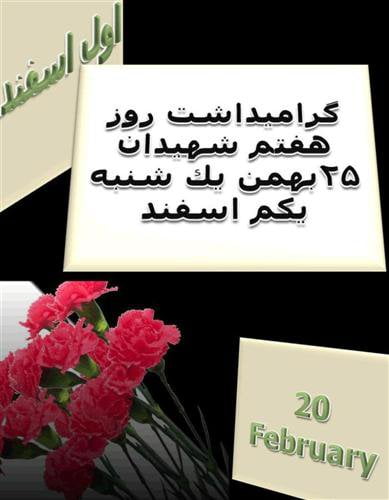
Iranian people: We will take the streets back on 1 Esfand!

0

February 19, 2011

The Iranian people’s uprising continues.

The following are a series of posters and pictures that call for demonstrations against the despotic clerical regime Iran on 1 Esfand.

The Iranian people are set to take to the streets to express their disgust and rage against the facist government of the Iran.

The posters call for demonstrations in various cities, and depict the fallen martyrs Sane Jaleh, and Mohammad Mokhtari.