Home Blog Page 206

US releases new images from suspected attacks on Gulf tankers

US releases new images from suspected attacks on Gulf tankers

Pentagon says pictures show Iran’s IRGC removing an unexploded mine from a Japanese-owned tanker.

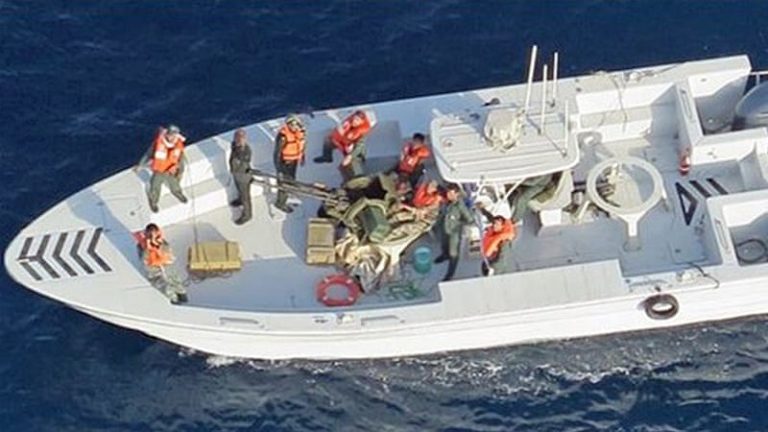
The US military has released new images it said showed Iran’s Islamic Revolutionary Guard Corps (IRGC) removing an unexploded mine from a Japanese-owned tanker following suspected attacks on two vessels in the Gulf of Oman on June 13.

The images, released on Monday, also showed a hole on the side of the Japanese-owned Kokuka Courageous that officials say appeared to have been caused by another mine.

The new photos follow the earlier release last Thursday of a grainy video, which the US said showed the IRGC removing a suspected limpet mine from the Kokuka Courageous.

Washington blames Tehran for the reported attacks in which two vessels near the strategically important Strait of Hormuz were damaged, leaving one ablaze and both adrift, forcing scores of crew to abandon their ships

“Iran is responsible for the attack based on video evidence and the resources and proficiency needed to quickly remove the unexploded limpet mine,” the US military’s Central Command said in a statement accompanying the still images.

Washington has blamed Iran for a similar attack on May 12 off the coast of the United Arab Emirates.

Iran has vehemently denied any involvement, hinting that the US may have carried out the latest suspected attack in order to apply extra pressure on Tehran on top of the crippling sanctions it re-imposed over the past year.

Washington has tightened sanctions on Tehran and moved to cut its oil production to zero in the year since it exited a landmark multi-lateral accord between Iran and world powers. The deal offered Iran relief from global sanctions in exchange for curbs on its nuclear programme.

Allies urge restraint

It is still not clear what caused the damage last Thursday, with the Japanese owner of the Kokuka Courageous saying crew members saw “flying objects” before a second blast on the ship.

Speaking to Al Jazeera a day after the incident, Justin Bronk, a combat technology specialist at the Royal United Services Institute, said the patrol boat shown in the US military’s video was known to be the kind used by the IRGC.

However, Bronk added that if Iran had been responsible for the attack, removing the mine would “be a very, very brazen thing to do,” while under high scrutiny from the US.


“On the other hand, you could argue that they [the Iranians] were keen to pick up an exploded mine to avoid it linking back to them. Although, realistically, if this was the Iranians, there will be enough evidence to link back to them even without the unexploded mine,” he said.

Regardless of the cause, the incident has added to sky-high tensions between the US and Iran, and in the Gulf region.

Shortly after the new images were released, the US also announced it was sending 1,000 additional troops to the Middle East for “defensive purposes”.

Also on Monday, Iran said it was on track to breach the internationally agreed limit of its stockpile of low-enriched uranium within 10 days.

The move “will be reversed” once the remaining signatories to the pact fulfilled promises to deliver on the deal’s economic benefits, an Iranian official said.

The United Nations, European Union and several allies of the US and Iran have urged both sides to show restraint, with the UN warning that the world cannot afford a “major confrontation in the Gulf”.

Both US and Iran have said they do not seek war with each other.

A U.S. military image released by the Pentagon in Washington on June 17, which is says was taken from a U.S. Navy MH-60R helicopter in the Gulf of Oman in waters between Gulf Arab states and Iran on June 13, shows personnel that the Pentagon says are members of the Islamic Revolutionary Guard Corps Navy removing an unexploded limpet mine from the M/T Kokuka Courageous, a Japanese owned commercial motor tanker. Picture taken June 13, 2019. U.S. Navy/Handout via REUTERS ATTENTION EDITORS-THIS IMAGE HAS BEEN SUPPLIED BY A THIRD PARTY. – RC1678DE4040

https://www.aljazeera.com/news/2019/06/pentagon-releases-images-gulf-oman-attack-190618055528966.html

Iran claims it dealt ‘heavy blow’ to US ‘spy network’

Iran claims it dealt ‘heavy blow’ to US ‘spy network’

Iran claims it dealt ‘heavy blow’ to US ‘spy network’

Iran claims it dealt 'heavy blow' to US 'spy network'
Iran claims it dealt ‘heavy blow’ to US ‘spy network’

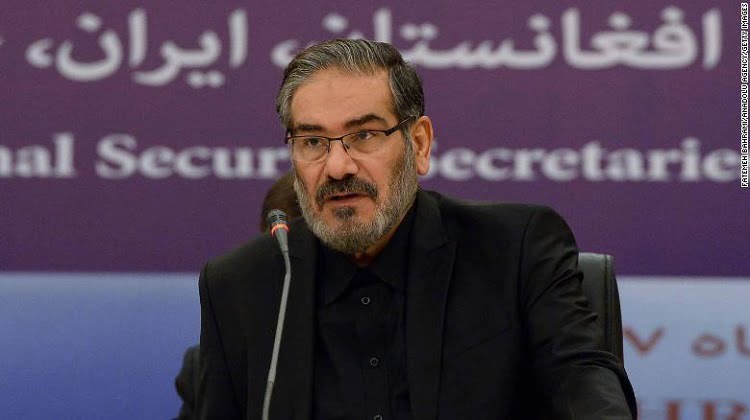
Iran’s Ministry of Intelligence said on Tuesday that the country has managed to “deal a heavy blow against America’s international spy network.”

In a statement, the ministry said it recently targeted the network, along with its international allies, and succeeded in “preventing American plans from succeeding.”

“We have intelligence allies and we exchange information with them. Currently we are engaged in the battle of intelligence with the United States. In this battle we should use ours and our allies capabilities,” the statement said.

A US official disputed the ministry’s claim that it had recently successfully targeted “a so-called spy network,” and dismissed Iran’s claim that they dealt a “heavy blow” to it.

Iran made a similar claim in April 2019, according to the semi-official outlet Mehr News Agency.

Read More …

Pentagon readies ‘contingency plans’ for Iran amid heightened tensions

0

Pentagon readies ‘contingency plans’ for Iran amid heightened tensions
 Pentagon readies ‘contingency plans’ for Iran amid heightened tensions
Pentagon officials are drafting a slew of “contingency plans” for the U.S. and its Middle East allies, should growing tensions between Washington and Iran escalate in the region, says acting Defense Secretary Patrick Shanahan.


Why would Iran attack two tankers near the Strait of Hormuz?

0

Why would Iran attack two tankers near the Strait of Hormuz?
 Why would Iran attack two tankers near the Strait of Hormuz?
In a brief press conference Thursday, Secretary of State Mike Pompeo expressed no doubt about who attacked two tankers in the Gulf of Oman, saying Iran was “responsible for the attacks.”

Israel urges snapback sanctions on Iran if it breaches uranium limit

Israel urges snapback sanctions on Iran if it breaches uranium limit

Israel urges snapback sanctions on Iran if it breaches uranium limit

Israel urges snapback sanctions on Iran if it breaches uranium limit

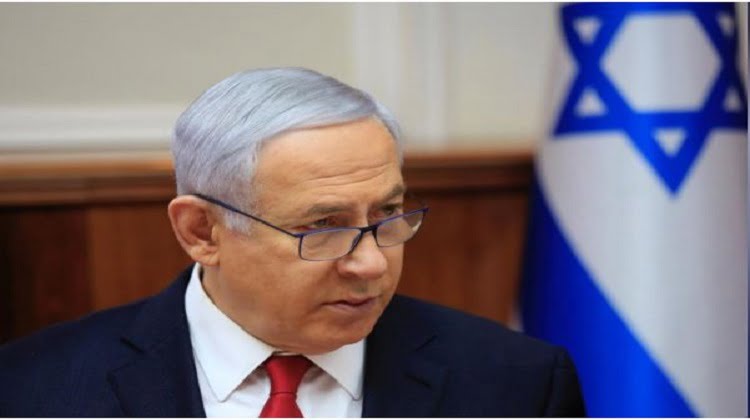
Israeli Prime Minister Benjamin Netanyahu urged world powers on Monday to step up sanctions against Iran swiftly should it go through with a plan to exceed an enriched uranium limit set by a 2015 nuclear deal.

Locked in a stand-off with Washington after the Trump administration withdrew from the nuclear agreement, Tehran said earlier on Monday it would breach internationally agreed curbs on its low-enriched uranium stock in 10 days.

“Should Iran deliver on its current threats, and violate the nuclear deal, the international community will have to implement, immediately, the pre-set sanctions mechanism, what is called ‘snapback sanctions’,” Netanyahu said in a speech.

“In any event, Israel will not allow Iran to get nuclear weaponry,” Netanyahu added, reiterating a long-standing, if veiled, threat to take pre-emptive military action.

Read More …

Pentagon accuses Iran of shooting missiles at U.S. drones

0

Pentagon accuses Iran of shooting missiles at U.S. drones

Pentagon accuses Iran of shooting missiles at U.S. drones

Pentagon accuses Iran of shooting missiles at U.S. drones

The Pentagon on Sunday accused Iran of attempting to shoot down a U.S. Reaper drone on June 13 as the unmanned surveillance aircraft was flying over one of two crippled tankers in the Gulf of Oman.

U.S. military officials for the first time also linked Iran to a separate missile attack in Yemen on June 6 that hit another Reaper drone and forced it to crash.

But the decision to publicly blame Iran for them increased chances that President Trump will boost U.S. forces in the Middle East or take other steps to intensify what the White House calls a “maximum pressure” campaign against Tehran.

Lt. Col. Earl Brown, a spokesman for U.S. Central Command, said a U.S. intelligence assessment had concluded that “a modified Iranian SA-7 surface-to-air missile attempted to shoot down a U.S. MQ-9 [drone] over the Gulf of Oman to disrupt surveillance” of the crippled tanker.

Read More …

Why is Iran targeting tankers in the Middle East?

Why is Iran targeting tankers in the Middle East?

Why is Iran targeting tankers in the Middle East?

It has calculated the only way to secure some kind of negotiating position is blackmail

Suspicion is now hardening that Iran was behind the attack on the two tankers in the Gulf of Oman on Thursday morning. US Secretary of State Mike Pompeo has pointed the finger at the Islamic Republic, and American officials have released footage of what purports to be an Islamic Revolutionary Guard Corps (IRGC) speedboat alongside one of the ships. The video shows men apparently removing an unexploded limpet mine (type of naval mine attached to a target by magnets. So named because of its similarity to limpet, a type of sea snail) from the hull of the vessel. The implication is that the perpetrators were removing evidence of their guilt.

The US also blamed Iran for attacks on vessels in the port of Fujairah last month. An investigation by the UAE, Saudi Arabia and Norway pinned them, on a state actor, without feeling the need to name the Islamic Republic. Iran denied responsibility, with Iranian Foreign Minister Javad Zarif descending to bazaar-level conspiracy theories involving a false-flag operation by Israel’s Mossad.

If you’re not inclined to believe the Trump administration, most detectives would still tell you that the most obvious culprit is usually responsible for the crime.

To those seeking logic behind the attacks, though, it may be hard to see why Iran would do this but that assumes that the regime in Tehran is a rational actor.

The Gulf of Oman attacks are especially hard to explain: targeting Japanese shipping on the very day that Prime Minister Shinzo Abe was meeting Supreme Leader Ali Khamenei on a well-publicised peace mission would seem extraordinarily counterproductive, even for a regime with an almost fanatical commitment to self-harm.

https://gulfnews.com/opinion/op-eds/why-is-iran-targeting-tankers-in-the-middle-east-1.64620882

Lawmaker Says Iran Law Empowering Guards Intelligence Adopted Without Vote

Lawmaker Says Iran Law Empowering Guards Intelligence Adopted Without Vote

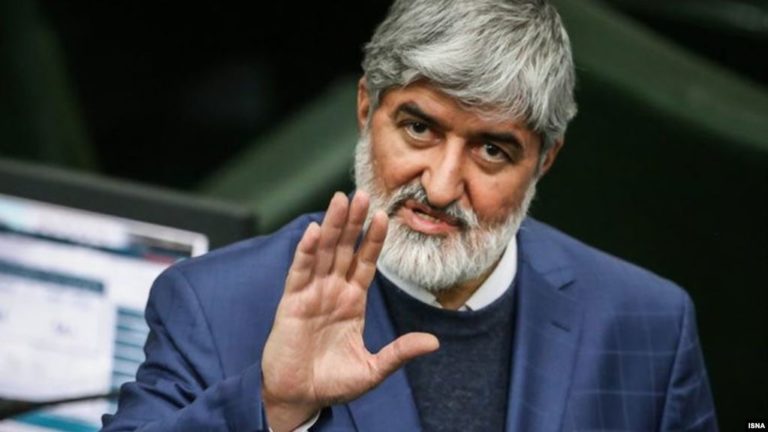
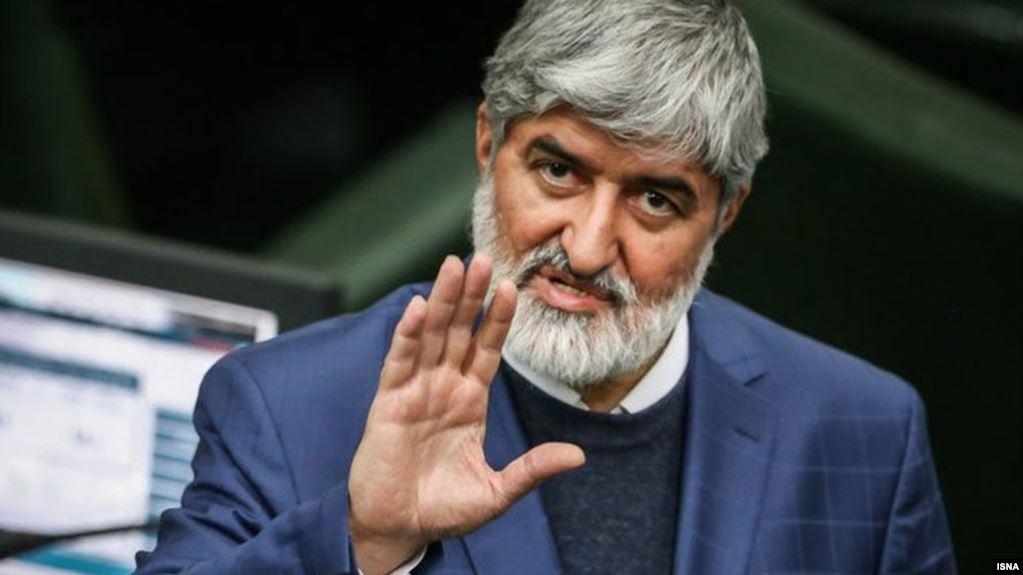
At least three laws have been enacted and implemented in recent years in Iran without parliamentary approval, an outspoken member of the legislative body disclosed on June 16.

Ali Motahari referred to one of these laws that tasks the fearsome Intelligence Organization of the Islamic Revolution Guards Corps (IRGC) the role of bailiff for the hardliner Judiciary.

“The decision has been implemented as law without being debated on the floor of Majles,” Motahari asserted, adding, “Therefore, it’s illegal and should be canceled.”

Motahari’s disclosed the issue in a recent interview with the monopolized state-run Radio&TV’s conservative daily, Jam-e Jam, which censored some of his remarks.

Criticizing the omissions, Motahari published the comments on social media.

The IRGC and judiciary officials had repeatedly declared that the Intelligence Organization acts as judicial bailiff. However, they never explained who had approved the arrangement without a parliamentary vote.

In the experimental implementation of the “Criminal Procedure Act” in 2013, the IRGC Intelligence Organization (IRGCIO) was not mentioned, but two years later, some articles of the Code were amended, adding the name IRGCIO as one of the entities serving the judiciary as bailiff.

Nevertheless, Motahari insists that this is illegal since it was never debated in parliament.

Judiciary bailiffs in Iran enjoy extensive powers including cooperation with the judicial authorities in uncovering crimes, initial interrogations, preventing the suspects from hiding or fleeing, and preserving crime evidence.

The IRGCIO’s involvement and meddling in the legal cases in recent years has triggered a heated security debate in Iran.

Although the Intelligence Ministry has on many occasions noted that its counterespionage department is the sole authority to decide on the fate of people suspected of spying for foreign governments, the IRGCIO has been active in arresting and interrogating suspects targeted for such accusations.

In a controversial case, in August 2016 a member of President Hassan Rouhani’s nuclear negotiations team, Abdol Rasoul Dorri Esfahani was accused by the IRGCIO of spying for Britain and the U.S.

The Intelligence Ministry stepped in and declared Dorri Esfahani innocent. Nevertheless, the judiciary disregarded the announcement and recognizing the IRGCIO as its bailiff, followed the allegations against Dorri Esfahani.

Working under Hamid Baeidinejad (currently Tehran’s ambassador to London), since late 2014, Dorri Esfahani was a member of the Iranian team in the negotiations leading to the Joint Comprehensive Plan of Action (JCPOA) in 2015.

In October 2017, Dorri-Esfahani was sentenced to five years of imprisonment for espionage.

Motahari, who is known for not mincing his words, has blasted the Islamic Republic judiciary over other issues as well.

“Restricting the political detainees to pick an attorney from the limited list of lawyers approved by the head of the judiciary is blatant discrimination” against suspects, Motahari has affirmed.

Meanwhile, lawyers and legal experts have complained that the primary courts, even the courts of appeals, have implemented the restriction for all suspects in security-related cases.

However, Article 3 of the “Citizenship Rights Law” (2004) required courts and prosecution offices to respect the right of the accused to legal counsel and to provide the accused with the services of a defense attorney. Article 35 of the Islamic Constitution also recognizes the “right to elect an attorney” in all courts and requires the courts to provide opportunities for the realization of this right.

Furthermore, Motahari has protested the elimination of Article 190 of the Criminal Procedure Act that banned initial interrogations in the absence of legal counsel.

In the meantime, Motahari has urged the country’s newly appointed head of the judiciary, Ebrahim Raeisi and other officials to cooperate in reforming the whole judicial system in Iran while taking the legal experts opinion into account.

Ebrahim Raisol-Sadati, commonly known as Raeisi or Raisi, was directly appointed by the Islamic Republic Supreme Leader, Ayatollah Ali Khamenei, as the head of judiciary last March.

Raeisi, 59, is one of the members of a notorious quartet responsible for the 1988 executions of thousands of Iranian political prisoners who were doing their terms behind bars.

https://en.radiofarda.com/a/lawmaker-says-iran-law-empowering-guards-intelligence-adopted-without-vote/30003974.html

lawmaker says Iran law empowering guards intelligence adopted without vote

Iranian FM Reaffirms Islamic Republic’s Right to Execute Homosexuals

Iranian FM Reaffirms Islamic Republic’s Right to Execute Homosexuals

As Tel Aviv Pride, the largest LGBTQ event in the Middle East and Asia, kicked off in Israel last week, Iran’s foreign minister, Mohammad Javad Zarif, reiterated the Islamic Republic’s right to execute homosexuals.

Paul Ronzheimer, a reporter for the German daily newspaper Bild, said on Twitter that he had asked Zarif two questions: “Where do you stand regarding Israel’s right to exist?” and “How do you deal with the executions of gays?”

Responding to the second question, Zarif said: “Our society has moral principles, and according to these principles we live.” He added that, “These are moral principles regarding the behavior of people in general. And that’s because the law is upheld and you abide by laws.”

Gay sex has been illegal in Iran since the 1979 Islamic Revolution. According to a 2008 British WikiLeaks dispatch, Iran’s regime executed between 4,000 and 6,000 gays and lesbians since the mullah’s rise to power.

In January, the Islamic Republic publicly hanged a 31-year-old man in the southwestern city of Kazeroon after finding him guilty of violating the country’s draconian anti-gay laws. A court said he had engaged in “lavat-e be onf,” sexual intercourse between two men, which carries the death penalty.

Responding to Rozenheimer’s first question about Israel’s right to exist, Zarif charged that, “The problem is the aggressive policies of Israel and the USA.” Threats to destroy Israel by Iranian leadership are not uncommon.

In February 2019, at a celebration of the 40th anniversary of Iran’s Islamic Revolution, a general in the elite Islamic Revolutionary Guard Corps (IRGC) threatened the Israeli cities of Tel Aviv and Haifa with destruction.

In April of last year, Ayatollah Ahmad Khatami said that Hezbollah, the terrorist organization that exercises complete political and military control over Lebanon, had a rocket arsenal that will “turn Haifa and Tel Aviv into ghost-towns.”

A few days later, Ali Shirazi, the liaison between Supreme Leader Ayatollah Ali Khamenei and the IRGC, said: “Iran has the capability to destroy Israel and given the excuse, Tel Aviv and Haifa will be razed to the ground.”

http://www.thetower.org/7415-iranian-fm-reaffirms-islamic-republics-right-to-execute-homosexuals/

Is Iran’s Islamic Revolutionary Guard Corps Responsible For Tanker Attacks?

Is Iran’s Islamic Revolutionary Guard Corps Responsible For Tanker Attacks?

Is Iran’s Islamic Revolutionary Guard Corps Responsible For Tanker Attacks?

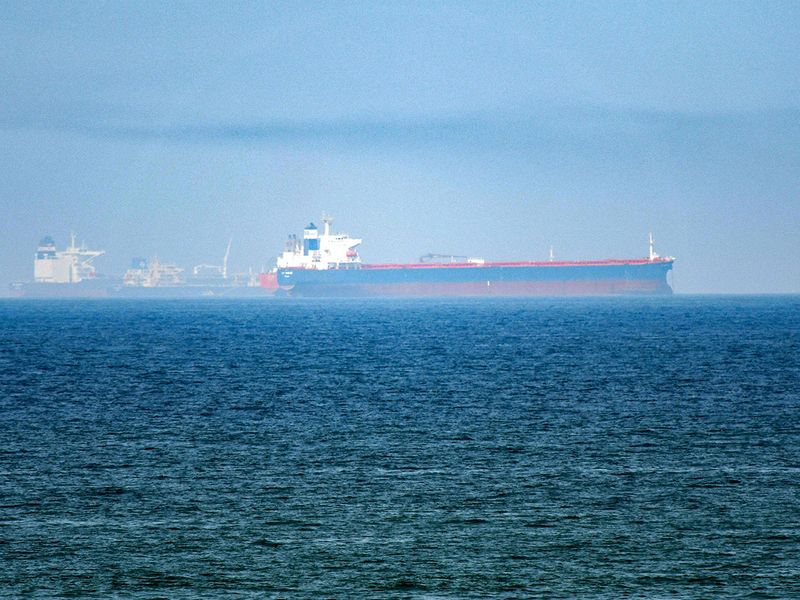
Thursday, in the Gulf of Oman, explosions rocked a pair of oil tankers, leaving both adrift. This, only one month after four tankers were sabotaged in a port in the United Arab Emirates.