Home Blog Page 26

Canadian lawmakers highlight Iranian IRGC human rights abuses

0

Canada’s international human rights parliamentary subcommittee has criticized the government’s “passive” approach towards the Iranian IRGC and their widespread human rights abuses.

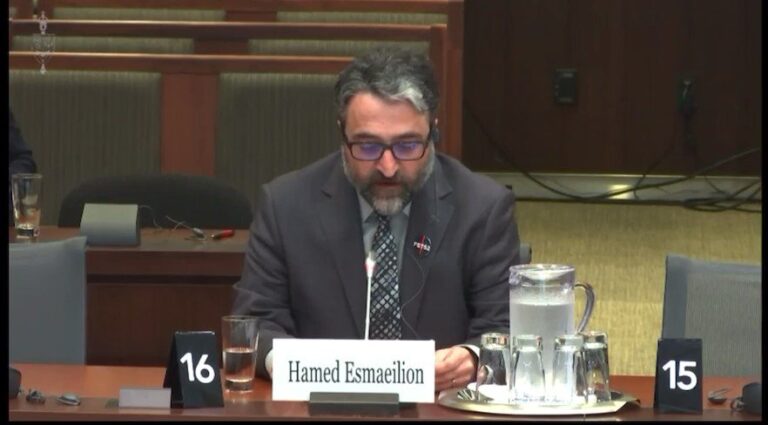
The meeting of the House of Commons subcommittee was held on Tuesday and attended by several political and human rights activists – including the spokesman of the Association of Families of Flight PS752 Victims, Hamed Esmaeilion.

Kasra Aarabi, a senior analyst in the Extremism Policy Unit at the Tony Blair Institute for Global Change, who specializes in Iran and Shiite Islamist Extremism, said that currently, Revolutionary Guard officers have key administerial roles in the government of President Ebrahim Raisi, which seeks to consolidate the Islamic Republic’s grip across the Middle East. “Raisi is mandated to purify the regime,” he said, adding that the IRGC is the force behind this change.

He mentioned Interior Minister Ahmad Vahidi – an IRGC general wanted by Interpol for his suspected role in the 1994 AMIA Jewish center bombing in Argentina that killed 85 people and injured over 300 – and Foreign Minister Hossein Amir-Abdollahian – for his alleged affiliation with IRGC’s Quds Force – as examples of such appointments.

“Domestically, the IRGC is preparing to unleash a new wave of Islamization on the Iranian people to eradicate Western and Persian aspects of the Iranian society,” he said, noting that the majority of Iranians want a secular government, manifested on the streets with protests “growing in size and scale.”

“The 1999 unrest took place in three cities and seven people were killed. In 2009, protests were in 10 cities and around 100 people were killed. Iran’s protests in November 2019, however, saw protests in over 100 towns and cities, and as many as 1,500 civilians were killed in just a few days,” he added. “Canada can and should support the Iranian people,” he concluded.

Another member of the House, Arnold Viersen, also criticized the government for not designating the Revolutionary Guards as a terrorist organization and not taking any specific action to hold it accountable for its crimes, including the intentional downing of the Ukraine Airlines Flight PS752.
Iran’s Baghdad embassy funneled millions to IRGC: reports

0

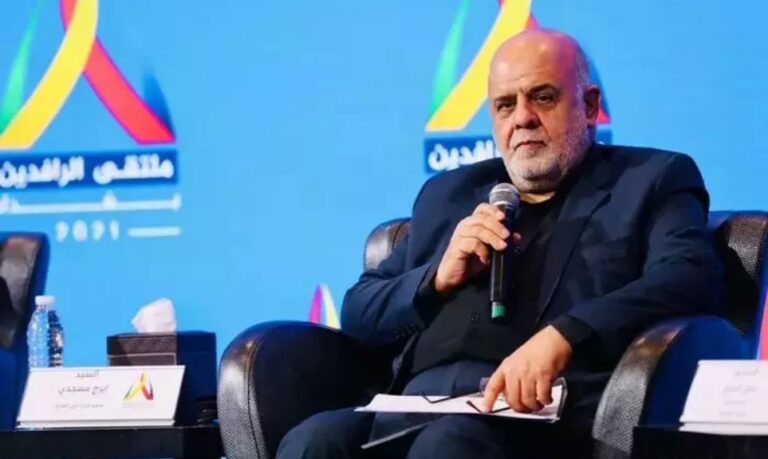
Millions of dollars were transferred from Iran’s embassy in Baghdad to accounts belonging to the Islamic Revolutionary Guard Corps (IRGC) in transactions that violate diplomatic norms, according to various media reports.

Some 60 billion IQD ($40 million) was channeled to the IRGC’s Quds Force (IRGC-QF), which is responsible for the IRGC’s extraterritorial activity, Saudi daily Okaz said in a May 27 report.

The money was transferred through accounts in Iraqi banks held by the Iranian embassy in Baghdad and two Iranian energy companies: Tavanir (Iran’s Power Generation, Distribution and Transmission Company) and MAFNA (Iranian Power Plant Processes Management Co.).

Over the past two years, Okaz reported, Iranian ambassador to Iraq Iraj Masjedi, who was replaced in April, withdrew large sums of money from the accounts of the two Iranian companies.

He then placed these funds in the Iranian embassy’s account in the Commercial Bank of Iraq, the report said.

The transfers were done under the guise of financing normal embassy activities but were actually intended to support the IRGC-QF, according to Okaz.

Earlier this year, on February 17, the Saudi al-Hadath TV channel quoted unnamed sources as saying that the IRGC-QF had obtained $10 billion from Iran’s embassy in Baghdad.

The available funds are part of Iraq’s payment of its accumulated debt to Iran for purchasing electricity and gas from Iranian energy companies.

Baghdad largely relies on Iranian gas to operate its power plants, with Iran responsible for a minimum of 30% of Iraq’s energy.

Breach of diplomatic norms

Rather than directing funds from Iraq’s debt repayment to help Iranians overcome the colossal economic challenges they face, the Iranian regime is using the sums to pursue its expansionist regional policies, observers said.

They accuse Tehran of manipulating the Iraqi banking system to circumvent international efforts to track the IRGC’s interests and assets using front companies.

They also accuse Tehran of evading responsibility for its direct involvement in the financing of regional militias.

Iranian IRGC speedboat escalates tensions with US Navy

0

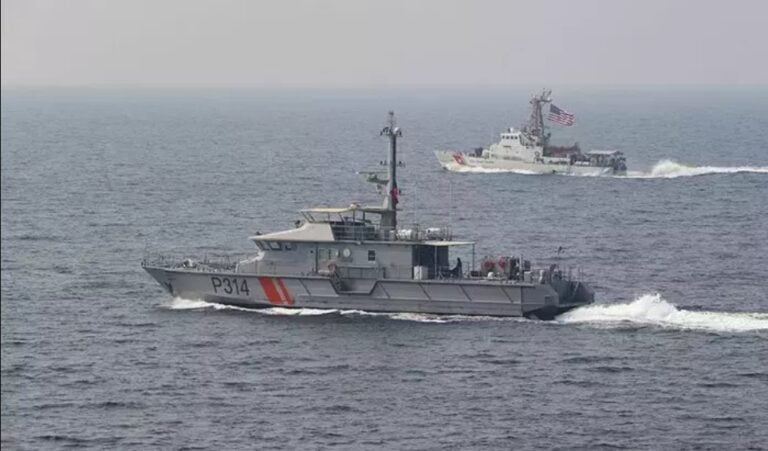
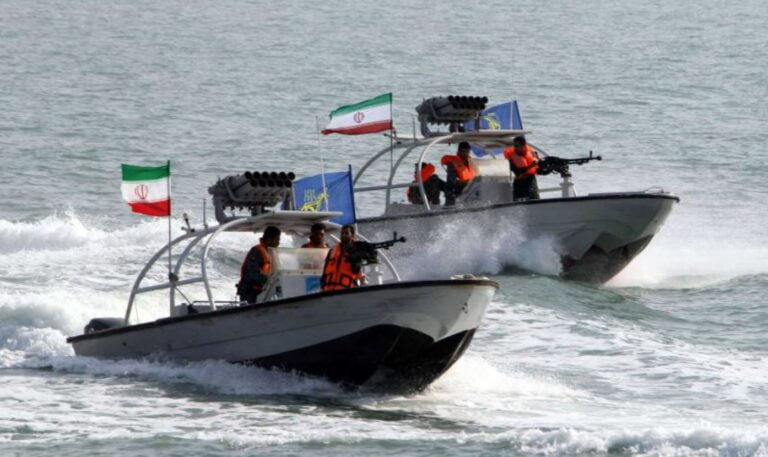
A US Navy warship fired a warning flare to wave off an Iranian IRGC speedboat coming straight at it during a tense encounter in the strategic Strait of Hormuz, officials said Tuesday.

The incident on Monday involving the Guard and the US navy comes as tensions remain high over stalled negotiations over Iran’s tattered nuclear deal with world powers and as Tehran enriches uranium closer than ever to weapons-grade levels under decreasing international oversight.

The Cyclone-class patrol ship USS Sirocco and Spearhead-class expeditionary fast transport USNS Choctaw County found themselves in a close encounter with three Iranian fast boats while coming through the Strait of Hormuz to enter the Arabian Gulf, the US navy said.

In a video released by its Bahrain-based 5th Fleet, the IRGC speedboat, a high-speed Guard Boghammar is seen turning head-on toward the Sirocco. The Sirocco repeatedly blows its horn at the Boghammar, which turns away as it closes in. The flare shot can be heard, but not seen, as the Boghammar passes the Sirocco with the Iranian flag flying above it.

The US navy said the IRGC speedboat came within45 metres of the Sirocco, raising the risk of the vessels running into each other. The overall encounter lasted about an hour, the navy said.

The Guard’s “actions did not meet international standards of professional or safe maritime behaviour, increasing the risk of miscalculation and collision,” the Navy said.

Iran did not immediately acknowledge the incident in the strategic waterway, a fifth of all traded oil passes through the strait.

The US navy separately said that this marked the second so-called “unsafe and unprofessional” incident it had with Iran in recent months.

On March 4, three Guard ships had a tense encounter for over two hours with US Navy and US Coast Guard vessels as they travelled out of the Arabian Gulf through the strait, the navy said. In that incident, the Guard’s catamaran Shahid Nazeri came within 22 metres of the USCGC Robert Goldman, the navy said. It added: “The two US Coast Guard cutters issued multiple warnings via bridge-to-bridge radio and deployed warning flares.”

The US navy did not elaborate on why it did not announce the previous incident, particularly since a larger vessel came even closer to an American warship. However, that was just as a deal in Vienna between Iran and world powers on restoring the nuclear deal looked possible before the talks broke down.

Iranian IRGC pilot of the seized Boeing-747 in Argentina

0

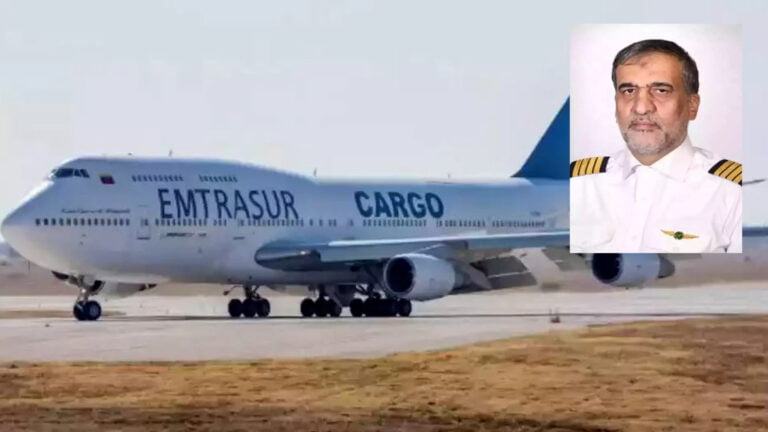
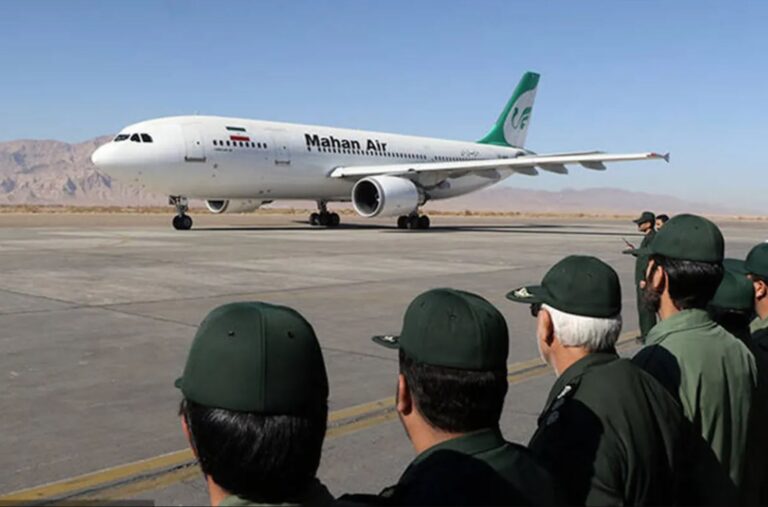
On June 6, 2022, Argentinean Authorities ordered the confiscation of a Boeing 747-3B3M heavy cargo aircraft of Emtrasur Cargo due to suspected ties to the terrorist designated Iranian IRGC, the cargo branch of Venezuelan flag carrier Conviasa once it landed at Buenos Aires’ Ezeiza Airport. The aircraft in question was a Boeing 747-3B3M of Mahan Air. It was in use by the Venezuelan cargo airline since February 2022 and had already airlifted tens of tons of cargo across Latin America.

What brought the YV3531’s confiscation to the attention of the media was the rumors about possible ties of its five Iranian crew members to the Quds Force branch of Islamic Revolutionary Guard of Corps (IRGC).

The Boeing 747-3B3M in question was previously operated for passenger flights between various cities of Iran by Mahan Air with EP-MND Iranian civil registration code until it was converted into a cargo aircraft by Fars Co (also known as Fajr Ashian) aircraft maintenance, repair and overhaul center during its D-Check or heavy maintenance in 2021.

After the end of its D-Check, EP-MND was painted in the colors of Emtrasur Cargo in Tehran, the capital city of Iran, and received the YV3531 Venezuelan civil registration code in January 2022 before being officially delivered to the new operator in February of this year. Conviasa and Mahan Air jointly used this aircraft to carry a variety of cargo across the world mainly from Iran to Venezuela and also from Mexico and other countries to Venezuela.

An investigation conducted by the author of this report shows that the pilot of the aircraft, Gholamreza Qasemi is a former General of the Aerospace Force of Islamic Revolutionary Guard of Corps who has had direct involvement in cargo flights of Fars Air Qeshm, a cargo branch of Mahan Air to Syria. During these flights, weapons and ammunition were also airlifted to Syria by the two Boeing 747-281Bs. In this report, we review the past of Gholamreza Ghasemi.

Mehran Jannatseresht, a former flight engineer of Tu-154M passenger aircraft who was the head of Aeroflot (Russia’s flag carrier) in Iran in the early 2000s when he met Gholamreza Qasemi for the first time told the author about the ties of Gholamreza Qasemi, pilot of the impounded Boeing 747, to the Islamic Revolutionary Guard of Corps:

“In was in 2005 or 2006, I was chief of station and representative of Aeroflot in Iran, I was also a Tu-154M flight engineer, but I wanted to fly with Il-76 heavy cargo aircraft as flight engineer as well. I was introduced to a Cargo airline named Fotros which was operating the aircraft type. During my visit to the office of the airline, I met Gholamreza Qasemi, who at the time with the rank of Brigadier from IRGC was head of its operations.  Just a few days later, the airline became defunct. Later I found out that Fotros was a front company of the IRGC Air Force and it carried weapons and ammunition to African and Middle Eastern countries!”

Qasemi was quickly promoted and was assigned to the external and commercial operations of the IRGC Air Force starting from Fotros Airlines. After his retirement from the IRGC with rank of Brigadier General in 2009 he joined Mahan Air where he supervised its cargo flight operations.


Iranian IRGC missile base possibly hit by drones in Tehran

0

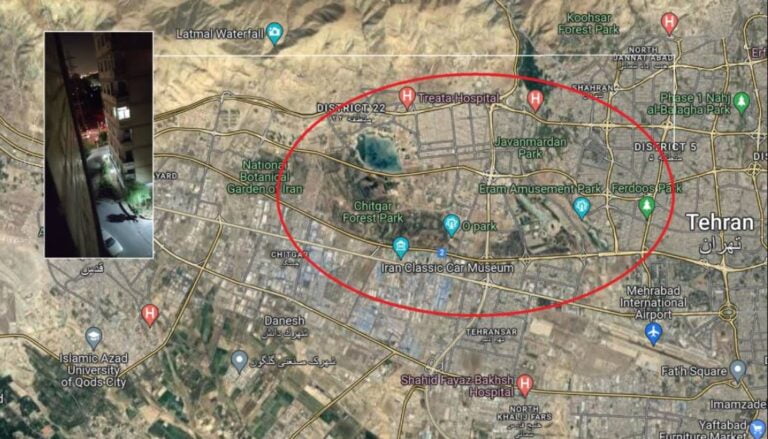
An explosion was heard in western Tehran early on Saturday morning, with initial reports and satellite imagery indicating that a missile base belonging to the Iranian IRGC was attacked.

Early Saturday morning, social media users in Iran reported hearing a large explosion in western Tehran near the Islamic Revolutionary Guard Corps’ (IRGC) base with some reporting that they had seen a flash from a blast. Some other users reported seeing a fighter jet flying low over the city, raising speculation that the “explosion” heard was just a sonic boom.

Amir Farshad Ebrahimi, a researcher at the Global Institute for Democracy and Strategic Studies think tank and a former member of an Iranian militia called Ansar-e Hezbollah, shared a photo reportedly from the area where he said the light of an explosion was seen.

On Sunday, the Intelli Times intelligence blog shared satellite imagery showing what appeared to be damage to the roof of a structure in the Shahid Hemmat base which had been struck in the September incident.

Iranian state media and Iranian officials had not referred to, confirmed, or denied the reports as of Monday afternoon.

On Monday, IRGC commander Hassani Ahangar told Iranian media that the death of an Iranian Defense Ministry engineer at a site in Parchin in May 2021 was caused by “industrial sabotage.”

The alleged attack on the Shahid Hemmat base comes just days after Iran announced that it was preparing to conduct a test launch of its Zuljanah solid-fuel satellite carrier rocket.

Just days before that, the Iranian Defense Ministry announced the “martyrdom” of Iranian aerospace scientist Mohammad Abdous during an unspecified “mission” in the Semnan province. The Saudi-backed television station Iran International claimed that Abdous had been working on “building and developing weapons for Hezbollah in Lebanon.”

While Iran does not currently have ballistic missiles that can reach much of Europe, the solid propellant stages used by the Zuljanah could be used in a future ICBM to deliver payloads of about 500 kg to ranges of at least 4,000 km – far enough to reach all of Europe – if Iranian officials decide to move forward with the development of such a weapon, according to the Jerusalem Institute for Strategy and Security (JISS).

Nuclear talks: Iran offers concession on IRGC terror designation for sanctions relief

0

Tehran has dropped its condition that the Iranian Revolutionary Guard Corps (IRGC) be dropped from Washington’s list of terror groups in return for sanctions relief in order to conclude the stalled efforts to revive the nuclear deal, sources told Middle East Eye.

The 2015 nuclear deal, known as the Joint Comprehensive Plan of Action (JCPOA), was signed between Iran and the United States during the administration of Barack Obama to limit Iran’s nuclear programme in return for US sanctions relief.

But in 2018, then-US President Donald Trump unilaterally exited the deal and reimposed the sanctions.

After Joe Biden came to power last year, talks to revive the deal restarted, but have been stalled since March as Iran demanded the White House reverse Donald Trump’s April 2019 decision to designate the IRGC as a foreign terror organisation (FTO).

The US administration has so far rejected this Iranian demand, describing it as “beyond” the deal.

Now, the IRGC listing is understood to be the final remaining impediment to a negotiated return to the deal, which many say is the only path towards keeping Iran away from obtaining an atomic bomb.

While chances for the revival of the JCPOA seem to be slim, a source told Middle East Eye that Iran, in a new proposal, has dropped its IRGC demand, but has called for lifting of sanctions imposed by the US against Khatam-al Anbiya Central Headquarters, an economic arm of the IRGC, and a few other entities.

Another source told MEE that the US has yet to respond to the offer, which is a “middle way” solution.

However, statements by US officials suggest the US is not in favour of the new proposal. On Wednesday, State Department spokesperson Ned Price stated: “Tehran needs to decide to drop issues that are extraneous to the JCPOA.

“We believe that if Iran makes this political decision, we’ll be in a position to conclude and to pursue a mutual return to compliance with the JCPOA very swiftly,” he said.

Kuwaiti diesel bust exposes Iran’s widening smuggling efforts

0

A recent seizure by the Kuwaiti coast guard of more than 200 tonnes of diesel fuel from an Iranian ship is evidence of Tehran’s expanding efforts to profit from illegal smuggling in the region.

The Kuwaiti coast guard on May 21 interdicted a ship inside Kuwaiti territorial waters that had on board an estimated 240 tonnes of smuggled diesel.

The eight Iranian nationals onboard the ship were arrested, security sources told Kuwaiti daily Al-Qabas.

The sources said the Iranian sailors confessed to buying smuggled diesel from Kuwait to sell it in one of the neighbouring Gulf countries, noting that their confessions were documented, ahead of referring them to the Public Prosecution.

One of the Iranian regime’s tactics is to use unwitting civilians, such as poverty-stricken fishermen, to do their bidding without having to be directly involved and thus avoid responsibility if things go bad.

Network of duped seafarers

Iran’s Islamic Revolutionary Guard Corps (IRGC) relies on a network of pirates and duped seafarers in the Gulf region to smuggle wepons, fuel and drugs, media reports and experts say.

A large number of Indian seafarers have been tricked by Iranian shipping companies into working in dangerous conditions involving transporting drugs and cargo that is under international sanctions — often with little or no pay.

Thousands are lured to Iran each year by recruiters guaranteeing salaries and experience aboard reputable ships and often promising assignments in other Middle Eastern countries, The Washington Post reported in January.

Instead, they are sent to Iran and put to sea, where they are overworked, denied enough food and at times forced to transport drugs and sanctioned cargo, according to more than two dozen men interviewed for the report.

A 28-year-old Indian seafarer, who said he worked for two companies involved in smuggling Iranian diesel between 2016 and 2020, said tankers carrying fuel always anchor in the international waters that separate Iran and the United Arab Emirates (UAE).

IRGC Arrests Pro-State Telegram Channel Operators in ‘Warning to Others’

0

On Thursday media outlets close to the IRGC reported that Ali Gholhaki, a hardline journalist and operator of a number of pro-deep state, pro-IRGC  Telegram channel, had abruptly been arrested by the IRGC itself along with several of his colleagues.

The MP for Tehran, Malik Shariati, later confirmed the news, including who conducted the arrests: “It [the story] was disseminated, especially among officials, so it will be transparent for the people and serve as a lesson to others.”

The arrest by the IRGC of one of its well-known cheerleaders is being read by some as an internal settling of accounts, and a bid to put a stop to the chronic leaking of information from the Guards that has blighted their image over the past year.

An audio file of a 2018 conversation between IRGC commanders about how best to manage a newly-outed corrupt relationship between the Guards and Tehran Municipality caused a minor scandal in February.

To make it worse, in April, the former IRGC commander, notorious grifter and ex-Mayor of Tehran Mohamed Bagher Ghalibaf was pictured returning from a blowout shopping trip in Turkey.

In May, another audio file featuring top cleric Mehdi Taeb, head of the pro-IRGC Ammar Headquarters, came to light that alleged Ghalibaf had also been on trips to Turkey directly on behalf of the IRGC.

The individual breaches might not have come from the same source, but together they told a story, and created an atmosphere of deep unease within the IRGC.

What Were Gholhaki et al Doing?

IRGC-aligned media outlets report that the arrested parties were running “semi-secret”, “secret” and “shadow” Telegram channels.

They were all detained on the charges of “disturbing the public mind” and, more tellingly, of “publishing classified documents”.

Many of these Telegram channel were associated with Mohammed Bagher Ghalibaf, the managing directors of Fars News Agency (whose ultimate owner and controller is the IRGC itself), Nizamuddin Mousavi, head of the Presidium of the Iranian Parliament, and scattered individuals including the conservative politician Mehrdad Bazarpash.

Israel warns of Iranian IRGC terror cells active in Turkey

Israeli security officials are concerned that Iranian IRGC cells with local Turkish operatives would carry out an immediate attack.

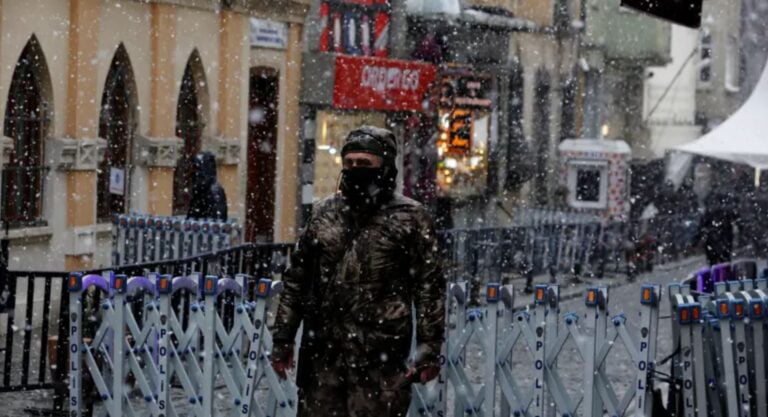
Iranian Islamic Revolutionary Guard Corps (IRGC) terror cells are “looking for Israelis” on the streets of Istanbul after being given an order to carry out attacks in Turkey, a senior Israeli defense establishment official told Ynet on Friday.

“Not everything can be thwarted,” the official said, reiterating requests for Israelis to return home from vacations in Turkey.

Israelis were also warned to lock their hotel rooms and not allow any stranger into their room, even hotel housekeeping.

The threat to the lives of Israelis visiting Turkey is now an “ongoing incident.”

According to security officials quoted by various Hebrew media new channels, there were concerns that Iranian IRGC cells with local Turkish operatives would carry out an immediate attack.

Foreign Minister Yair Lapid called on Israelis to avoid Istanbul earlier in the week as the National Security Council raised the threat level for Turkey trips following the publication of reports that Israel and Turkey thwarted an Iranian IRGC terrorist attack in the city last month.

The attempted attack on Israeli tourists was one of several by the Iranian IRGC in recent weeks, Lapid said.

The Islamic Republic has vowed to exact revenge on Israel, which is reportedly responsible for the assassination of Islamic Revolutionary Guard Corps Col. Hassan Sayad Khodayari in Tehran last month. The Quds Force officer is one of several high-ranking IRGC officials killed or kidnapped in recent weeks.

IRGC-linked Iranian plane crew apprehended in Argentina

Argentinian authorities have temporarily seized the passports of five Iranian plane crew members of a cargo plane, pending a probe into possible links to Iran’s Islamic Revolutionary Guard Corps (IRGC), officials said Monday (June 13).

The Iranian plane has been grounded since last week.

A judge on Monday ordered the crew members’ travel documents held for an additional 72 hours after Security Minister Anibal Fernandez said information from “foreign organizations” showed some may be linked to companies with ties to the IRGC.

According to numerous reports, Mahan Air has been used to transport ammunition, weapons, and Iran-backed militia members across conflict zones in the Middle East.

Monday’s court ruling to hold the crew’s passports came after a successful bid by DAIA, the organization that represents Argentina’s Jewish community, to be listed as a plaintiff in the investigation.

Interpol has issued arrest warrants for former Iranian leaders suspected of involvement in an attack on a Jewish center in Buenos Aires in 1994 that killed 85 people and injured hundreds.

It remains the deadliest terror attack in the country.

The grounding of the cargo Iranian plane came days before Venezuelan President Nicolas Maduro visited Tehran, where the allies, both subject to US sanctions, signed a 20-year cooperation pact.

A routine check found “things that were not logical”, Fernandez told Perfil radio.

The crew included 14 Venezuelans, who were released.

Iranian Foreign Ministry spokesman Saeed Khatibzadeh said Iran’s Mahan Air sold the Iranian plane to a Venezuelan company last year.

The United States accuses Mahan Air of links to the IRGC, which it has blacklisted as a terrorist organization.

According to numerous reports, Mahan Air has been used to transport ammunition, weapons, and Iran-backed militia members across conflict zones in the Middle East.

Monday’s court ruling to hold the crew’s passports came after a successful bid by DAIA, the organization that represents Argentina’s Jewish community, to be listed as a plaintiff in the investigation.

Interpol has issued arrest warrants for former Iranian leaders suspected of involvement in an attack on a Jewish center in Buenos Aires in 1994 that killed 85 people and injured hundreds.

It remains the deadliest terror attack in the country.

On the anniversary of the attack in 2019, Argentina’s government also designated the Lebanese Hizbullah as a terrorist organization for its role in the attack, as well as in several other terrorist acts on its soil, and froze Hizbullah’s assets.