Home Blog Page 27

Iran’s IRGC must stay on terror list – opinion

0

Delisting the IRGC from the FTO terror list and would not dissuade the IRGC from conducting terror attacks against Americans, Europeans and others around the globe.
When I first joined the World Jewish Congress, our Talmudic motto “Kol Yisrael arevim zeh la’zeh” (All Jews are responsible one to another) struck me as not only a motto but a mission.

It is, therefore, our responsibility to call out any and all dangers to our people and our values.

At the top of the list of threats is the Islamic Revolutionary Guard Corps (IRGC), which represents a clear and present danger not only to the Jewish people, but to the entire world.

The World Jewish Congress (WJC), the representative body of Jewish communities in over 100 countries, understands the direct consequences of the actions of the IRGC, whose pernicious actions make all our affiliate communities vulnerable. Indeed, Iran has never made a secret of its hegemonic goals.

Last month, Defense Minister Benny Gantz, who met with American defense officials in Washington, said the United States sought a nuclear deal with Iran but would stand firm against any request to remove the IRGC from the State Department’s foreign terrorist organizations (FTO) list, a message that was repeated in a statement by Prime Minister Naftali Bennett the following day.

The US is one of the staunchest upholders of the universal values of justice and morality. A nuclear agreement cannot be made at the expense of these values.

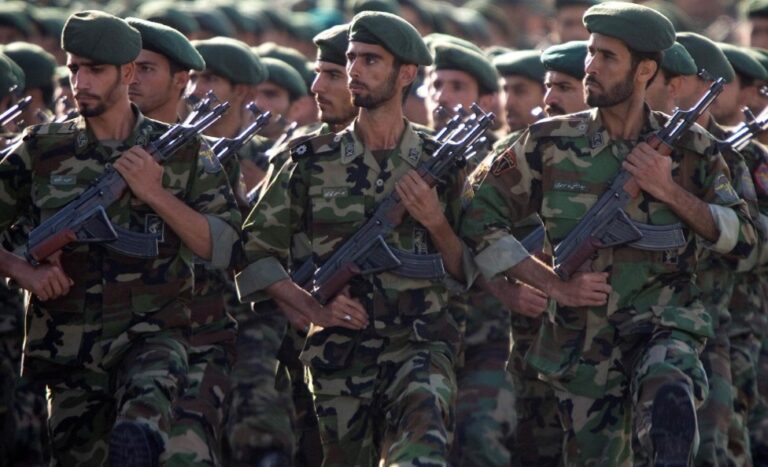
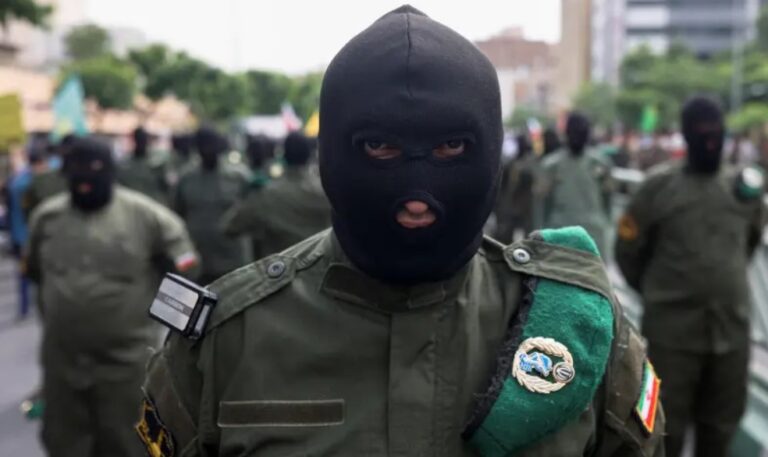
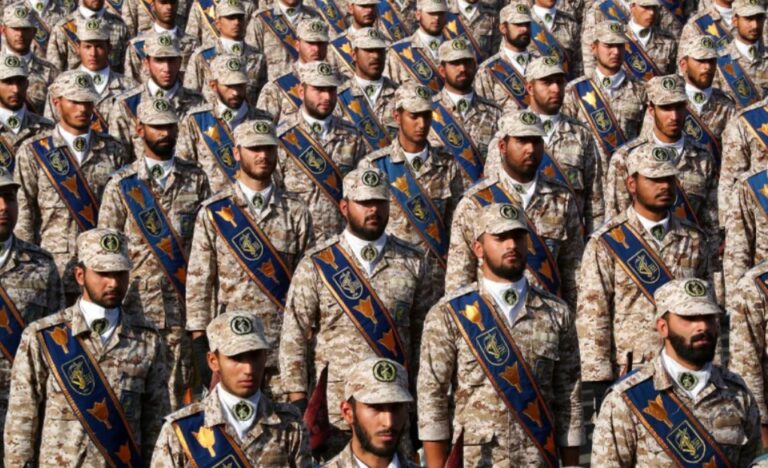
Members of a special IRGC force attend a rally marking the annual Quds Day, or Jerusalem Day, on the last Friday of the holy month of Ramadan in Tehran, Iran April 29, 2022.

Further, delisting the IRGC from the FTO list would be seen as rewarding terror and would not dissuade the IRGC from conducting terror attacks against Americans, Europeans and others around the globe.
Instagram censoring Iranian protests and prominent dissidents

For some time now, along with the imposition of restrictions on opposition groups of the Islamic Republic of Iran by Instagram, we have been witnessing the removal of videos related to the Iranian anti-government protests on Instagram. Restrictions on dissidents and Instagram censoring videos of popular Iranian protests have sparked speculation about the Islamic Republic’s influence on Instagram.

Instagram is a necessity for Iranian users since it is the only social media that is not blocked by the government in the country. Other platforms such as Telegram, YouTube, Facebook, and Twitter are all blocked for Iranian users, making Instagram the second most used and a crucial app after WhatsApp in Iran.

In response to the recent rise in these presumably targeted censorships, three human rights groups called on Meta, the owner of the social networks Instagram and Facebook, to review its Persian-language content review procedures for Iran.

Digital civil rights group Access Now, London-based rights organization Article 19, and New York-based Center for Human Rights in Iran met with a senior official from Meta on Thursday to convey their concerns over Instagram censoring content by Iranian dissidents and democracy advocates.

The question that has recently arisen is whether the Islamic Republic of Iran has really infiltrated Instagram? BBC’s sources alleged that pro-regime employees of the German branch of Telus International, a Canadian contractor, which provides content moderation to Instagram with over 400 Iranian employees for reviewing Persian-language content, are responsible for restricting anti-government content of Iranian users.

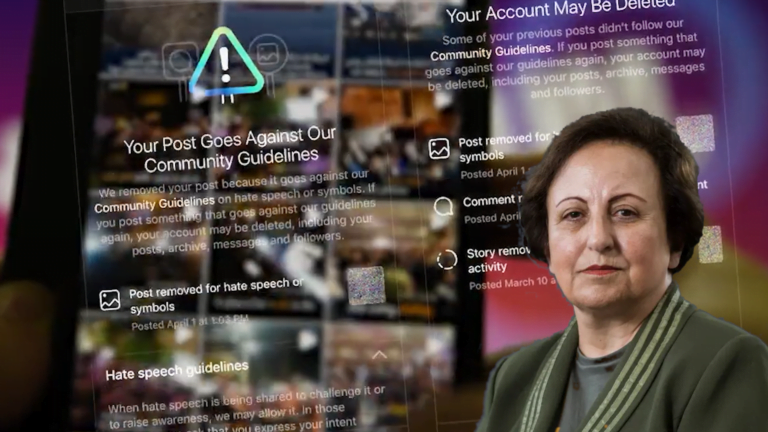
The imposed restrictions on figures from the Islamic Republic’s opposition groups have become so widespread that Shirin Ebadi, one of the leading figures of the opposition and winner of the Nobel Peace Prize, recently wrote: “Instagram has deleted content published on my page several times. I have been warned recently that I might lose access to my account altogether. I have requested support but got no response and I regularly face restrictions on Instagram.”

The issue of Iran’s influence over Instagram content was covered by some media outlets, including Deutsche Welle Farsi and BBC Persian. In an investigative report, Deutsche Welle Farsi revealed that Mehdi Norouzi, the son of a former Islamic Republic envoy to Bulgaria — Abdollah Norouzi, works at the Telus International branch in Sofia. This raises the question, is the occurrence of this problem limited to the presence of only one individual linked to the Islamic Republic of Iran, or does it go beyond that?

One former and a current employee of the company told BBC Persian, that some content control officials delete users’ content “to their liking”. A claim that is consistent with complaints of Instagram and Facebook users about the removal of their content. In response to these allegations, Meta said that the company’s rules are very strict, and it carefully monitors the performance of its employees so that no mistakes are made. But Mehdi, an employee of Telus International, said he had witnessed people in the company acting “in favor” of the government. According to Mehdi: “What I have witnessed myself is that people, both at the lower level and in higher positions, are pro-government in their own words, and it can be understood that they receive tips and orders from the government. Another former employee of the company explained that most of the Iranian employees who work there are students who frequently visit Iran.


Report: IRGC officers who died developed arms for Hezbollah

0

Two officers from Iran’s Revolutionary Guard Corps’ Aerospace Force whose deaths were announced Sunday were engaged in “developing arms for Lebanon’s Hezbollah,” Iran International reported on Monday.

Ali Kamani and Mohammad Abdus, both Revolutionary Guard’s aerospace engineers, “were not killed in accidents” as the Islamic Republic claimed, a source told the London-based news channel, which is affiliated with the Iranian opposition.

The two died in separate incidents in two different areas, but the source did not provide further details about the circumstances of their deaths.

What was clear from the information received is that the two officers did not die as a result of a car or work place accident, according to Iran International.

It is noteworthy that the source emphasized their role in developing weapons for the Hezbollah terrorist organization.

Iranian media first announced that Kamani, a relatively junior officer, died in a “car accident in line of duty” in Khomein, in central Iran.

A few hours later, news came that another aerospace Force officer had also died in the province of Semnan “on lime of duty”.

Iran’s space launch center is located in Semnan. In the reports by the Iranian media, he was said to be working for the Defense Ministry.

The IRGC aerospace force is tasked with Iran’s missile development and space program.

Iran’s defense ministry emphasized that both officers died on line of duty and called them “martyrs” without any explanations.

Last month, Colonel Hassan Sayyad Khodaei, a member of the IRGC’s Quds Force in Syria, was shot dead outside of his Tehran home.

A second officer, Colonel Ali Esmailzadeh, was found dead days later at his home.

Meanwhile on Monday, The New York Times reported that Iran believes Israel killed two Iranian scientists who died within days of each other by poisoning their food.

A spokeswoman for the Israeli Prime Minister’s Office declined to comment on the two recent deaths inside Iran.

Iran’s Guards Announce Two Aerospace Officers ‘Martyred’ On Duty

0

In a mysterious turn of events, the death of two IRGC’s Aerospace Force officers was *announced in Iran on Sunday, with hardliner media calling them “martyrs.”

First came the announcement that a relatively junior officer, Ali Kamani, died in a “car accident in line of duty” in Khomein, central Iran.

From the text of the announcement, it seemed the Revolutionary Guard officer was more important than what his rank would suggest.

In expressing condolences to various military officials, the text even mentioned Supreme Leader Ali Khamenei.

Then within hours news came that another officer of the Aerospace Force, Mohammad Abdus, had also died, in Semnan, central Iran where a space launch center is located.

Abdus was also tagged as a “martyr” although no explanation was offered by media affiliated with the IRGC about how he had died.

So far, the IRGC or their media have not offered any further details about the death of the two officers from the same force in one day, although the deaths could have occurred earlier and only announced on Sunday.

It is possible that the two officers were killed in Israeli air and missile strikes in Syria recently, but a series of other killings and deaths among IRGC ranks in Iran leads to suspicion that they might have been targets of a secret series of operations.

The IRGC aerospace force is tasked with Iran’s missile development and space program.

The country has made considerable progress in developing long-range ballistic missiles that can threaten the far fringes of the Middle East, including Israel.

Regional countries have been concerned about the potential threat from a large number of these missiles.

Considering recent killings of other Revolutionary Guard officers in Iran, some Iranians on social media drew the conclusion that the deaths most likely are part of a highly professional anti-IRGC operation carried out with precision.

U.S. Treasury Department sanctions IRGC-QF agents alongside ISIS individuals

0

On Monday, June 6, the Terrorist Financing Targeting Center (TFTC), affiliated with the U.S. Treasury Department, sanctioned 16 individuals, entities, and groups affiliated with several terrorist individuals and entities in the Middle East.

The TFTC is a U.S. government body tasked with enhancing multilateral efforts among the U.S. and the Gulf countries, including Bahrain, Kuwait, Oman, Qatar, Saudi Arabia, and the United Arab Emirates (UAE), to counter regional money laundering and terrorist financing networks.

The Iranian regime rejected to join the Financial Action Task Force (FATF) in 2021, which indicated the mullahs’ desire to spread terror and instability across the region.

The theocracy’s 43 years of corruption and plundering policies was another deadlock for Iranian authorities’ avoidance of transparency.

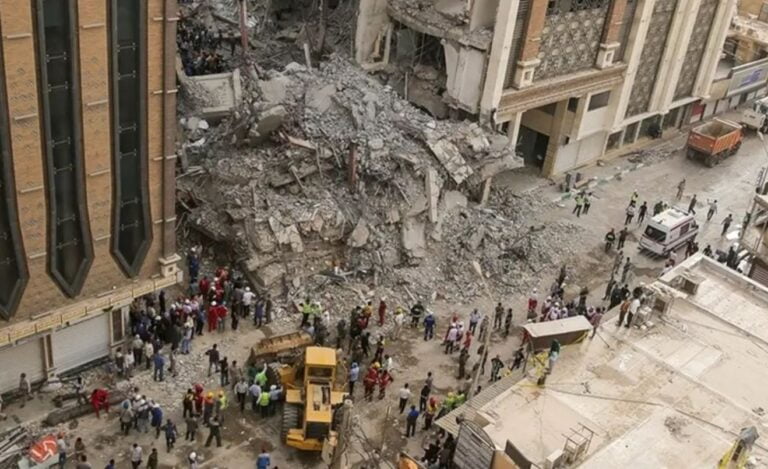
In the regime’s latest incident, their longstanding and systematic corruption has resulted in human catastrophes like the collapse of the Metropol twin towers in Abadan on May 23, killing more than 40 victims and leaving many more citizens injured or trapped under the rubble. Treasury Department

According to the TFTC statement, all of the latest targets had been previously designated by the U.S., including individuals associated with Iran’s Islamic Revolutionary Guard Corps-Quds Force (IRGC-QF), the Iran-backed Saraya al-Ashtar and Saraya al-Mukhtar in Bahrain, the Islamic State of Iraq and Syria (ISIS), and the Nigerian Boko Haram.

Who Has Been Sanctioned?

“Ali Qasir, Meghdad Amini, and Morteza Hashemi are part of two networks directed by, and providing financial support to, the IRGC-QF and its terrorist proxy Hezbollah,” the TFTC statement read.

“These complex networks of intermediaries allow the IRGC-QF to obfuscate its involvement in selling Iranian oil.

The IRGC-QF also relies on these individuals to launder money for Hezbollah officials and front companies and to broker associated contracts.”

Who Is Ali Qasir?

Ali Qasir is a Lebanese businessman affiliated with the IRGC-QF. He is Hezbollah’s key element for circumventing sanctions and facilitating the IRGC-QF’s banking transactions.

Iranian IRGC claim of Mossad presence in Kurdistan rejected by officials

0

The Kurdistan Region Security Council has blamed Iranian IRGC militia Kataib Hezbollah for last night’s attack in Erbil and denied the presence of Israeli operatives in the Region.

Some Iranian websites have said that an Israeli Mossad operative was killed in the attack, while others said the US consulate in Erbil was targeted.

The council’s statement said that “such lies”, that Israeli agents are present in the Kurdistan Region might work well for the Iranian public opinion, “however, for people in Erbil and the Kurdistan Region who have seen the attack and its consequences, it has become a joke.”

It added that the Kurdistan Region would never pose a threat to countries in the wider region and called on other countries to respect the sovereignty of Iraq and the Kurdistan Region.

The security council issued a statement on its Facebook page on Thursday (June 9), saying the latest attack is aimed at pressuring the Kurdistan Region.

It said that the attack was launched from the Pirde district (also Altun Kopri) of Kirkuk province by Kataib Hezbollah.

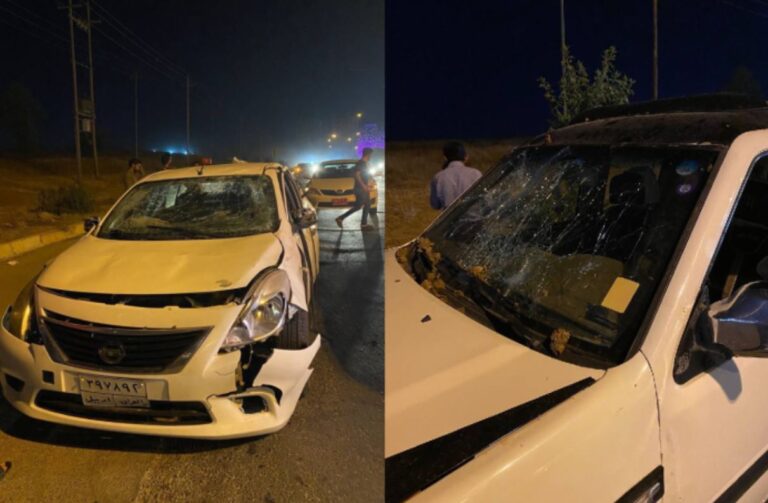
At least three people were injured in a drone attack that struck the Erbil-Pirmam Road on Wednesday night (June 8).

On March 13, Iran’s Islamic Revolutionary Guard (IRGC) Quds Force struck Erbil with six missiles claiming to target a Zionist “strategic center,” while the Kurdistan Regional Government (KRG) has denied the existence of any Israeli sites in the Region.

The attack on Sunday, March 13 saw the Iranian IRGC fire a dozen ballistic missiles at an area of the capital of Iraqi Kurdistan, including a US consulate complex.

Several of them hit the villa of Karim Barzanji, a Kurdish businessman active in the Iraqi Kurdish energy sector.

The Iraqi government had submitted an official request to Tehran, via the Iranian ambassador to Baghdad, to provide proof that any part of the site was being used by Mossad as alleged. More than 20 days later, the sources told Al-Arabi al-Jadeed, they had received no response.

Iraqi officials: Erbil drone strike is the work of Iranian IRGC militia

Following a drone strike in the city of Erbil in Iraq on the evening of Wednesday, June 9, the Iraqi Kurdistan Regional Security Council issued a statement attributing the attack to Kataib Hezbollah, an Iranian IRGC militia group.

Last night, the Iraqi Kurdistan Counter-Terrorism Organization reported a drone strike on Pirmam Road on the outskirts of Erbil.

Fars News Agency, affiliated with the Iranian Islamic Revolutionary Guard Corps (IRGC), quoted Intel Sky’s Twitter account as saying that three vehicles were attacked on the main highway in Erbil, carrying “an Israeli spy team” and one of them was killed.

This is not the first attack by IRGC militia and forces in northern Iraq. In March of last year, Iran claimed that “two Mossad training centers” in Erbil had been targeted by missiles. Kataib Hezbollah said in a statement at the time that the Israeli attack on the Mossad headquarters was “from Iraqi territory.”

The statement said that the operation by Iranian forces, in which several Israeli officers were killed or wounded, is an event that predicts a different phase of the conflict in Iraq.

The IRGC said that it targeted a “strategic center for conspiracy and mischiefs of the Zionists was targeted by powerful precision missiles fired by the Islamic Revolutionary Guard Corps.”

The Kurdistan Regional Council of Ministers condemned the attack, which, it said was launched “under the pretext of striking an Israeli base near the U.S. consulate in Erbil, but the target site was a civilian site, and this justification is aimed at concealing the motives of this heinous crime”.

Erbil’s governor denied the presence of Israeli units, calling such allegations “baseless”, local news agency Rudaw reported.

“We condemn this terrorist attack launched against several sectors of Erbil, we call on the inhabitants to remain calm,” Kurdistan Prime Minister Masrour Barzani said.

Involvement of corrupt IRGC officials in deadly Iranian building collapse

0

A high-ranking Iranian official has admitted that “corruption” was the underlying reason for the collapse of a high-rise building that led to days of protests, as more details revealed the involvement of IRGC officials in the construction of the building.

Earlier, Iranian media and social media activists had pointed out that the owner of Metropol maintained illicit links to individuals, as high-ranking as Ali Shamkhani, the Secretary of Iran’s Supreme Council of National Security. They accused the bigwig of helping the owner Hossein Abdolbaghi by using his influence through local officials including his nephew Mo’ud Shamkhani.

Mr. Shamkhani, an IRGC official, categorically denied using his influence, but subsequently, other reports mentioned further details about the link including family bonds between the Shamkhanis and Abdolbaghis, which could not be denied.

Raja News website which speaks for the ultraconservative Paydari party quoted the governor-general of Khuzestan Province Sadegh Khalilian as saying that the Metropol Towers were built during Iran’s previous government, adding that “the building was erected on the foundations of corruption and unhealthy relations.”

Unlike most of Iran’s local governors who are high-ranking IRGC officials, Khalilian was previously an academic at the University of Ahvaz and the Teachers Training University in Tehran although he had started his career as a petty officer of the Islamic Revolutionary Guard Corps (IRGC).

Khalilian said that the local authorities at the time were aware of the building’s instability in with at least two series of reports given to them by the engineering supervisory body in 2017 and 2019, but they simply ignored it because of those “unhealthy relations”, which means bribery in the Iranian administrative jargon.

Khalilian had earlier said that 13 local officials including the city’s last three mayors are under arrest. Earlier this week, the former governor-general of Khuzestan Gholamreza Shariati who has been implicated in corruption cases, left Iran for the United Arab Emirates and reports about his “escape” were published on social media. Later, the Iranian Judiciary said that he was not implicated in the case.

US Treasury Sanctions 3 Individuals, 2 Terror Outfits Over IRGC Links

0

The US Treasury Department has sanctioned 16 individuals and groups affiliated with terrorist organizations, including three associated with Iran’s Revolutionary Guards’ Quds Force.

The Terrorist Financing Targeting Center of the Office of Foreign Assets Control at the Department of the Treasury on Monday targeted a broad range of financiers of terrorism from a variety of regional terrorist designated organizations, including two groups affiliated the IRGC, whose “goal is to pave the way for Iran to exert greater influence in Bahrain and beyond.”

“The targets included three individuals associated with Iran’s Islamic Revolutionary Guard Corps Qods (Quds) Force, four ISIS-associated individuals and one company, six Boko Haram financiers, and terrorist groups Saraya al-Ashtar and Saraya al-Mukhtar,” read the treasury’s statement.

According to the treasury, Ali Qasir, Meghdad Amini, and Morteza Hashemi are part of two networks directed by and providing financial support to the Quds force and its Lebanese proxy group Hezbollah.

The complex networks of intermediaries allow the Quds Force to obfuscate its involvement in selling Iranian oil.

Amini and Qasir are financial facilitators who direct a network of nearly 20 individuals and front companies, located in multiple countries, that has facilitated the movement and sale of tens of millions of dollars’ worth of gold, electronics, and foreign currency.

Hashemi controls multiple companies based out of Hong Kong and mainland China and has used his access to the international financial system to broker contracts aimed at laundering vast sums of money.

The US Treasury Department has sanctioned 16 individuals and groups affiliated with terrorist organizations, including three associated with Iran’s Revolutionary Guards’ Quds Force.

The Terrorist Financing Targeting Center of the Office of Foreign Assets Control at the Department of the Treasury on Monday targeted a broad range of financiers of terrorism from a variety of regional terrorist designated organizations, including two groups affiliated the IRGC, whose “goal is to pave the way for Iran to exert greater influence in Bahrain and beyond.”

Interception of Illicit narcotics from Iran to Iraq highlights IRGC’s role

0

There have been numerous previous reports regarding the role of the Iranian terrorist designated Islamic Revolutionary Guard Corps (IRGC) and key allies of the Islamic Republic of Iran, including its affiliated militias, such as Hezbollah in Lebanon and the Houthis in Yemen, as well as the regime of Syrian President Bashar al-Assad, in the production, distribution, and trafficking of Illicit narcotics in the Middle East and beyond. Formerly focused on Illicit narcotics such as opium, heroin, and cannabis, this highly lucrative business later introduced some stimulants such as crack, cocaine, amphetamine, and now, Captagon pills have become its flagship substance in the Middle East.

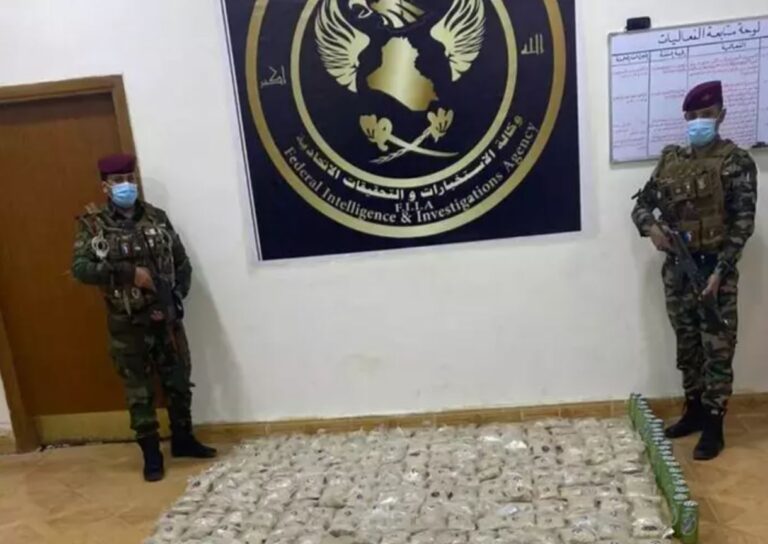
Iraqi security forces on Friday (June 4) forced down a microlight aircraft “from Iran” that was headed towards Kuwait with one million pills of the amphetamine-type stimulant Captagon.

Iraq’s Federal Intelligence and Investigation Agency said the aircraft entered Iraqi airspace from neighboring Iran.

Agents were alerted to the flight by a tip-off about a “homemade glider” and opened fire on the aircraft as it flew in Basra province in an area near the border with Kuwait, the agency said.

Since routing the “Islamic State of Iraq and Syria” (ISIS), Iraq has focused its attention on a new battleground — drug trafficking and smuggling networks facilitated by the Iranian Islamic Revolutionary Guard Corps (IRGC) and allied militias.

The IRGC and its proxies play a pivotal role in smuggling Illicit narcotics, political analyst Abdul Qader al-Nayel said.

“Drug trafficking is financially beneficial for the Iranians, as they reap huge profits from it, which they use to buy weapons and finance their proxies’ activities,” he said.

“The Iranian IRGC, with the help of Iraqi militias, Lebanese Hezbollah and the Iran-backed Houthis in Yemen, manages specialized mafia-like groups that handle the production, smuggling and marketing of drugs at regional and international levels,” he said.