Home Blog Page 28

Protests in Ohio against Oberlin College professor with links to IRGC

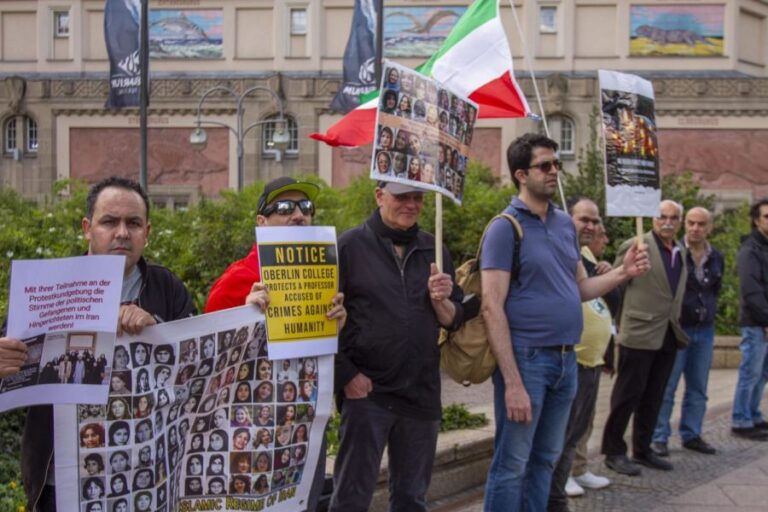
Iranian Americans and Jewish Americans gathered in Oberlin, Ohio over the weekend to protest the continued employment of Oberlin College and Conservatory professor with ties to Iran.

Mohammad Jafar Mahallati, who teaches Islamic studies at the college, served as Iran’s ambassador to the United Nations from 1987 to 1989 where he is alleged to have covered up the mass murder of political prisoners in the Islamic Republic.

The protest against Mahallati electrified the Iranian diaspora, as a direct action against a former top official of the Islamic Republic who has been leading a largely insulated life on the rustic Oberlin campus.

Lawdan Bazargan, an Iranian American human rights activist, has spearheaded the campaign to oust Mahallati. She told JNS, “Our campaign started with a simple request: Fire Mahallati, who denied the mass killings of our loved ones and shielded those responsible from accountability.”

Hamid Charkhkar, a member of AAIRIA, revealed that Mahallati is on the editorial board of Sepehr-e-Siasat, an academic journal tied to Iran’s regime. Charkhkar told JNS that Mohammad Bagher Khorramshad, Iran’s deputy interior minister for political affairs and a member of the U.S.-sanctioned Islamic Revolutionary Guard Corps, is also on the editorial board.

Susannah Johnston, an investigative reporter for Focus on Western Islamism, reported last week on Mahallati’s affiliation with Sepehr-e-Siasat. After the publication of her article, Mahallati’s name was scrubbed from the journal. Sepehr-e-Siasat promoted an article praising Hezbollah, wrote Johnston. The United States, Israel, and scores of other countries have classified Hezbollah as a terrorist organization.

Oberlin College investigated Mahallat last year. “The inquiry did not find proof to corroborate the allegations that professor Mahallati knew of the atrocities at the time he was asked about them during his tenure at the United Nations,” wrote the college on its website.

AAIRIA said the college’s inquiry was rigged because it was not independent and transparent. The college has refused to publish its full report on Mahallati.
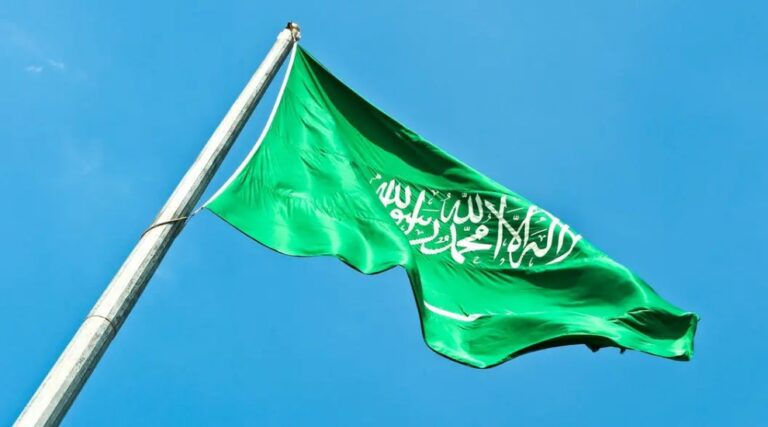
Saudi Arabia adds three individuals and two groups affiliated with IRGC and Quds Force to its terror list

0

Member countries of the Terrorist Financing Targeting Center (TFTC), which include Saudi Arabia, designated 16 individuals, entities and groups as terrorists, the official Saudi Press Agency (SPA) reported on Monday.

Established in 2017, the TFTC includes the US, Bahrain, Kuwait, Oman, Qatar, Saudi Arabia, the UAE, and aims to strengthen efforts to confront regional money laundering and terrorist financing networks.

The individuals and entities, which have all been previously designated by the US, include three individuals and two groups affiliated with Iran’s Revolutionary Guard Corps-Quds Force (IRGC-QF), four individuals and one company associated with ISIS, and six financiers affiliated with Boko Haram.

Affiliated with the IRGC

A Lebanese identified as Ali Qasir and two Iranians, Meghdad Amini and Morteza Hashemi, have been designated for being associated with the IRGC-QF and Lebanon’s “terrorist” Hezbollah party.

According to the US Treasury, Amini and Qasir supervise a network of around 20 people and front companies in several countries for the purpose of financing Hezbollah and the IRGC-QF by facilitating “the sale of tens of millions of dollars’ worth of gold, electronics and foreign currency.”

Hashemi directs multiple companies based out of Hong Kong and mainland China and has exploited his “access to the international financial system to launder vast sums of money for the IRGC-QF and Hezbollah.”

The two groups designated for their affiliation with the IRGC are Saraya al-Mukhtar and Saraya al-Ashtar which targeted Bahrain and received financial, military, and logistical support from the IRGC.

According to the US Treasury, Saraya al-Mukhtar planned attacks targeting US personnel in Bahrain while Saraya al-Ashtar targeted security forces in Bahrain and also encouraged violence against the government of Britain, Saudi Arabia and the US via social media.

Affiliated with ISIS and its branches

A company as well four individuals were designated over their ties with ISIS and its branches.

They were identified as Ismatullah Khalozai, an Afghan citizen linked to ISIS-Khorsan Province, and Alaa Khanfurah, Baraa al-Qatirji and Hussam al-Qatirji, Syrian citizens affiliated with ISIS.

Islamic Republic of Iran top army general directly threatens Israeli civilians

The commander of the ground forces of the Islamic Republic of Iran’s Army threatened Israel with a military attack by announcing that “all ground forces units of the Iranian army are being equipped with smart, long-range and precise weapons and facilities.”

Claiming that Israel would return to Islam “in less than 25 years”, Kioumars Heydari said on Tuesday that “the range of UAVs and surface-to-air missiles have reached Tel Aviv and Haifa”, in the event of an “enemy mistake, by the order of the Supreme Leader”, these two cities will be “razed to the ground”.

The direct threat by one of Iran’s top military officials to Israel comes as the United States, Britain, Germany, and France have submitted a draft resolution against Iran to the IAEA Board of Governors. The resolution criticizes Iran for not fully responding to the organization’s questions about the discovery of uranium particles on unannounced sites.

Iranian officials have warned that they will react if the council condemns Iran.

Also on Tuesday, Israeli Prime Minister Naftali Bennett said he expects the now-meeting Board of Governors to issue a clear warning to Iran about its nuclear program.

Bennett said in a televised speech to a parliamentary session that Israel expects the Board of Governors to issue a “clear warning signal” to “the Tehran regime and make it clear that they will pay a heavy price if they continue their policy of nuclear disobedience.”

The Iranian general’s threats come as multiple high-ranking IRGC officials are being assassinated inside Iran with Israel being the number one suspect, but the Iranian government has not yet made any moves other than threats on television shows or through social media.

The Islamic Republic of Iran has reportedly been trying to retaliate for several high-profile assassinations and mysterious deaths in the Islamic Republic in recent months, including of an Islamic Revolutionary Guard Corps colonel and a top scientist.

Iranian IRGC and other terrorist affiliates added to Saudi Arabia’s terror list

Member countries of the Terrorist Financing Targeting Center (TFTC), which include Saudi Arabia, designated 16 individuals, entities and groups, such as the Iranian IRGC, as terrorists, the official Saudi Press Agency (SPA) reported on Monday.

Established in 2017, the TFTC includes the US, Bahrain, Kuwait, Oman, Qatar, Saudi Arabia, the UAE, and aims to strengthen efforts to confront regional money laundering and terrorist financing networks.

The individuals and entities, which have all been previously designated by the US, include three individuals and two groups affiliated with the Revolutionary Guard Corps-Quds Force, the Iranian IRGC, four individuals and one company associated with ISIS, and six financiers affiliated with Boko Haram.

A Lebanese identified as Ali Qasir and two Iranians, Meghdad Amini and Morteza Hashemi, have been designated for being associated with the Iranian IRGC-QF and Lebanon’s “terrorist” Hezbollah party.

According to the US Treasury, Amini and Qasir supervise a network of around 20 people and front companies in several countries for the purpose of financing Hezbollah and the IRGC-QF by facilitating “the sale of tens of millions of dollars’ worth of gold, electronics and foreign currency.”

Hashemi directs multiple companies based out of Hong Kong and mainland China and has exploited his “access to the international financial system to launder vast sums of money for the IRGC-QF and Hezbollah.”

The two groups designated for their affiliation with the IRGC are Saraya al-Mukhtar and Saraya al-Ashtar which targeted Bahrain and received financial, military, and logistical support from the IRGC.

According to the US Treasury, Saraya al-Mukhtar planned attacks targeting US personnel in Bahrain while Saraya al-Ashtar targeted security forces in Bahrain and also encouraged violence against the government of Britain, Saudi Arabia and the US via social media.

A company as well four individuals were designated over their ties with ISIS and its branches.

They were identified as Ismatullah Khalozai, an Afghan citizen linked to ISIS-Khorsan Province, and Alaa Khanfurah, Baraa al-Qatirji and Hussam al-Qatirji, Syrian citizens affiliated with ISIS.

Baraa al-Qatirji and Hussam al-Qatirji are the founders of al-Qatirji Company which was also designated for facilitating the sale of oil to ISIS and for cooperating with the Iranian IRGC.

Gulf states sanction Iranian IRGC, Hezbollah financiers, proxies

The Terrorist Financing Targeting Center (TFTC), consisting of six Gulf states, issued sanctions against several individuals, entities and groups affiliated with the Iranian IRGC’s (Islamic Revolutionary Guard Corps) Quds Force, Hezbollah and the Saraya al-Ashtar and Saraya al-Mukhtar groups.

The TFTC includes Bahrain, Kuwait, Oman, Qatar, Saudi Arabia, and the United Arab Emirates (UAE).

The sanctions targeted Ali Qasir, Meghdad Amini and Morteza Hashemi, members of two networks directed by and supporting the Iranian IRGC Quds Force and Hezbollah. The networks allow the Quds Force to cover up its involvement in selling Iranian oil, according to a statement by the US Treasury Department.

Qasir, Amini and Hashemi also launder money for Hezbollah officials and front companies. Amini and Qasir are in charge of a network of nearly 20 people and front companies in multiple countries that works to move and sell tens of millions of dollars’ worth of gold, electronics and foreign currency for the IRGC and its proxies.

Hashemi, meanwhile, runs several companies based out of Hong Kong and mainland China and uses his access to the international financial system to launder large sums of money for the Quds Force and Hezbollah. Citizens of the People’s Republic of China established bank accounts and served as straw owners for Hashemi’s companies. They also purchased dual-use products from the US for Iran on Hashemi’s behalf.

Saraya al-Mukhtar and Saraya al-Ashtar, two IRGC-affiliated groups based in Bahrain, were also designated by the TFTC on Monday.

Saraya al-Mukhtar reportedly receives financial and logistic support from the IRGC. According to the US Treasury, the group’s self-described goal is to “pave the way for Iran to exert greater influence in Bahrain and beyond.” The group has also plotted attacks against US personnel in Bahrain and offered cash for the assassination of Bahraini officials.

Saraya al-Ashtar is an “Iran-directed terrorist organization aimed at destabilizing the region,” according to the US Treasury. It has claimed responsibility for numerous terrorist attacks against police and security targets in Bahrain and calls for violence against the Bahraini, British, Saudi Arabian and US governments on social media. The group receives equipment and training from the Iranian IRGC.

Death Of Another IRGC Colonel Inside Iran Raises Eyebrows – Analysis

0

The killing and Death of a senior officer in Iran’s powerful Revolutionary Guards Corps (IRGC) in broad daylight in the capital, Tehran, is rare.

But the deaths of two senior members of the IRGC, the elite branch of Iran’s armed forces, inside the Islamic republic in the space of two weeks is unprecedented and has raised eyebrows.

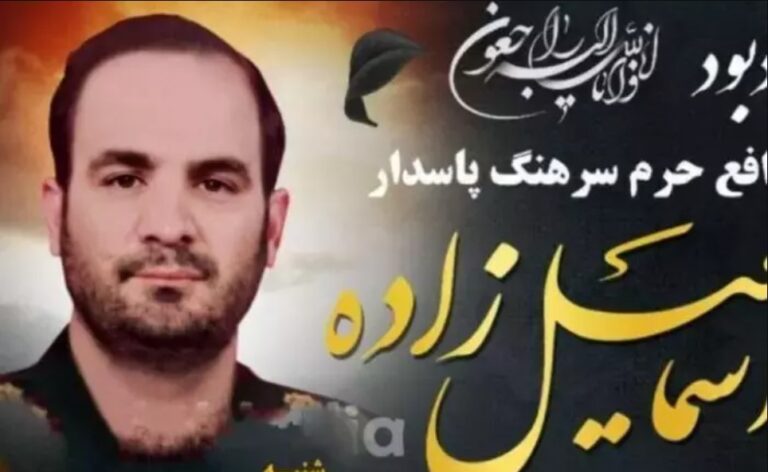
Iran’s official government news agency, IRNA, reported the death of Ali Esmailzadeh on June 3. IRNA said the IRGC colonel died in an accident and authorities had launched an investigation.

The IRGC-affiliated Tasnim news agency said Esmailzadeh “died after falling from a terrace in his house” in the city of Karaj, near Tehran, around a week ago.

The reports by Iran’s state-controlled media came hours after the London-based Iran International television station reported that Esmailzadeh had been assassinated by Iranian intelligence over suspicions that he was involved in the May 22 killing of another IRGC colonel.

Colonel Hassan Sayad Khodaei was killed by gunmen outside his home in Tehran. Iranian authorities blamed regional foe Israel for the killing and vowed revenge.

Tehran offered little information about Khodaei. Israeli media reported that he headed a unit of the IRGC’s overseas arm, the Quds Force, that planned attacks on Israelis abroad.

Iran International reported that Esmailzadeh was a “close colleague” of Khodaei. Following Khodaei’s killing, Iranian intelligence investigated possible security leaks inside the IRGC and “became suspicious of Esmailzadeh and decided to eliminate him,” it added, citing unnamed sources.

Iran International added that Iranian intelligence made his alleged assassination look like a suicide.

IRGC officials told Esmailzadeh’s family that he took his own life “due to psychological problems caused by his separation from his wife” and that he had left a suicide note, it added.

IRNA, quoting an unnamed source, dismissed Iran International’s report, and described it as “false news.”

Iran International is funded by a firm with close ties to the Saudi Arabian government, another of Tehran’s regional rivals, according to Britain’s Guardian newspaper.

Khamenei says two tankers were seized by IRGC after Greece ‘stole’ Iranian oil

0

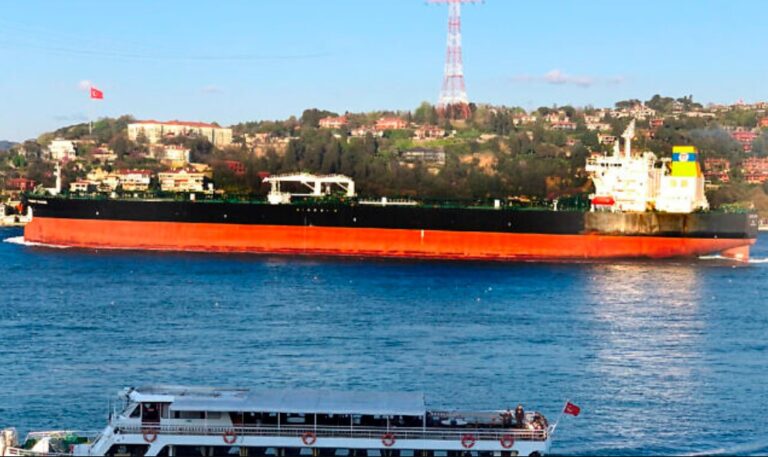
Iran’s supreme leader on Saturday said that the country’s seizure of two Greek oil tankers late last month was retaliation against Greece because it “stole” Iranian oil.

The Revolutionary Guards boarded and took control of the two vessels in the Gulf on May 27, citing “violations,” which Greece condemned as “tantamount to acts of piracy.”

The seizure came two days after Greece confirmed it would send 115,000 tons of Iranian oil from a Russian-flagged tanker, seized in April, to the United States at the request of the US Treasury and in line with the latter’s sanctions regime.

“The Iranian fuel was stolen off Greece, then the brave [forces] of the Islamic republic made up for that by seizing an enemy ship,” Ayatollah Ali Khamenei said in a televised speech marking the 1989 death of Ayatollah Ali Ruhollah Khomenei, who founded the Islamic republic.

“It’s you who stole our oil,” Khamenei said, addressing the country’s “enemies.”

Athens said Iranian navy helicopters had landed gunmen on the two tankers to carry out the seizures.

Greek authorities had earlier seized the Russian-flagged ship, they said, to comply with sanctions introduced after Russia invaded Ukraine in February. The Iranian maritime authority had described that move as “R.”

Iran’s supreme leader on Saturday said that the country’s seizure of two Greek oil tankers late last month was retaliation against Greece because it “stole” Iranian oil.

The Revolutionary Guards boarded and took control of the two vessels in the Gulf on May 27, citing “violations,” which Greece condemned as “tantamount to acts of piracy.”

The seizure came two days after Greece confirmed it would send 115,000 tons of Iranian oil from a Russian-flagged tanker, seized in April, to the United States at the request of the US Treasury and in line with the latter’s sanctions regime.

Suspicious death of 2nd IRGC colonel highlights ‘mafia-like’ Quds Force

0

Less than 10 days after an Islamic Revolutionary Guard Corps Quds Force (IRGC-QF) officer was assassinated outside his home in Tehran, another IRGC-QF colonel died Monday (May 30) under mysterious circumstances.

Col. Ali Esmailzadeh died “in an accident in his residence” in Karaj, some 35km west of Tehran, according to a Friday report by state-run IRNA, which quoted an unnamed official.

Investigations into Esmailzadeh’s death are under way, the news site said, without giving further details.

Iran International, an Iran-focused expatriate media outlet, first reported the colonel’s suspicious death on Thursday.

The report said the colonel, who was a commander of the IRGC-QF’s shadowy Unit 840 — which is active in Syria — was possibly assassinated by the Iranian regime for “espionage”.

Other reports linked Esmailzadeh’s death to that of slain IRGC officer Hassan Sayyad-Khodai, who also served as a Unit 840 commander and was a close colleague of Esmailzadeh’s.

Iran on Monday vowed to avenge the death of Khodai, 50, who was gunned down by assailants on motorcycles outside his home in east Tehran on May 22.

Khodai’s assassination was the highest-profile killing inside Iran since the November 2020 murder of top nuclear scientist Mohsen Fakhrizadeh.

According to an unnamed source, Esmailzadeh was directly involved in Khodai’s assassination, Iran International reported.

This appears to be the reason for Esmailzadeh’s liquidation, it said, in a report that was republished by multiple expatriate media outlets.

IRGC-aligned media claim ‘suicide’

A few IRGC-affiliated media outlets reported the death as a “suicide”, while other IRGC-aligned and state-owned outlets said Esmailzadeh had fallen to his death from his home’s balcony.

IRGC-affiliated Tasnim News published a short report in which it attributed Esmailzadeh’s death to falling from his “unsecured balcony”, although it deleted the report shortly thereafter.

Within a few hours, all reports about the colonel’s suspicious death had been wiped from IRGC-aligned media.

Meanwhile, IRNA denied reports of assassination or espionage published by foreign-based Persian media outlets.

Iranian IRGC engineering arm involvement in high-riser collapse clean-up

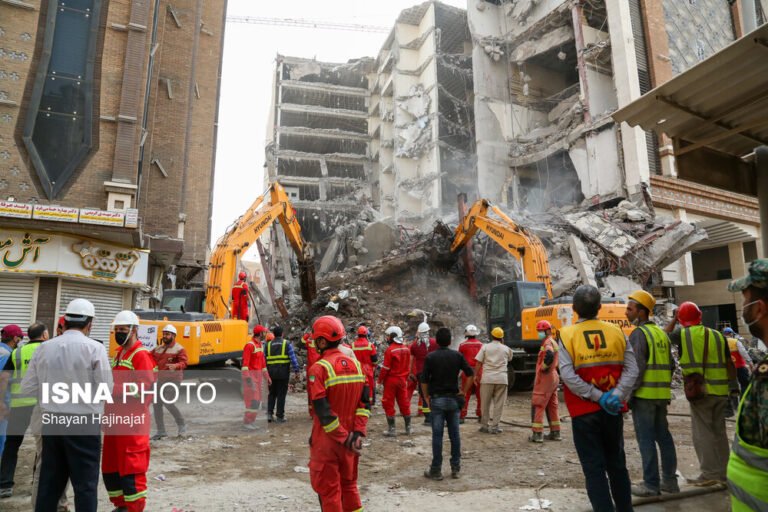
Ten days after the May 23 collapse of the Metropol, a four-year-old 10-story building in Abadan, southern Iran, the death toll has risen, the building’s owner is nowhere to be found, and public protests have turned into vigils.

Dozens are dead or unaccounted for under the rubble of the building as the toll continues to rise, with the Khuzestan governor’s office on June 2 announcing that 38 people were dead and a further 38 injured in the collapse.

A few days ago, the Director-General of Crisis Management of Khuzestan Governorate announced: The Khatam Al-Anbiya Construction Headquarters, the engineering arm of Iran’s Islamic Revolutionary Guard Corps (IRGC) terrorist organization, has been tasked with the destruction of the remaining unsafe parts of the 11-story building.

The question is why the IRGC? Why should the responsibility for the destruction of an urban structure be given to the engineering arm of a terrorist-designated military organization? What secret needs to be protected to bring in the IRGC? What are the security threats to this project that prompt IRGC’s immediate involvement?

The uprising and protests in Abadan and other cities in connection with this tragedy are indubitably a major contributing factor behind the Iranian IRGC involvement.

The building was part of a colossal residential and leisure complex built and owned by Abdolbaghi Holding, a major holding company active in Abadan with ties to the Iranian IRGC terrorist organization.

Abdolbaghi Holding, like many holdings and companies in the ruling oligarchy of Iran, owes its life to institutions of power and plunder. Therefore, covering up the violations and corruption in the construction of Metropol Tower is part of the vital task of Khatam Camp after taking over this project.

Hossein Abdolbaghi had said in a meeting with Saeed Mohammad, the commander of Khatam base: “The biggest issue we have in the Arvand Free Zone is when obtaining each license, the municipality, the free zone organization, and the tax office each have a separate claim for payment. Do us a favor! Assign whose duties and who receives the money in what area?”

Iranian terrorist IRGC kills own colonel over espionage suspicions

The Iranian terrorist IRGC (Revolutionary Guards) has killed one of its own high-ranking officers for suspected espionage, according to a Thursday report.

Col. Ali Esmailzadeh was killed on Monday over suspicions he leaked information related to the assassination of the IRGC’s Col. Hassan Sayyad Khodaei late last month, Iran International reported.

Esmailzadeh died in a fall from his roof in Karaj, Iran, in an incident the IRGC falsely framed as a suicide, the report said.

He was close to Khodaei, who was gunned down in Tehran on May 22. Both he and Esmailzadeh were members of the IRGC’s so-called Unit 840, a shadowy division within the IRGC’s expeditionary Quds Force that carries out kidnappings and assassinations outside of Iran, the report said.

After Khodaei’s killing, the terrorist IRGC began hunting for security leaks and became suspicious of Esmailzadeh. He was then thrown from his roof, but the IRGC told his family he died by suicide because he was distraught over his separation from his wife, Iran International said, citing “sources in Iran.”

The Persian-language outlet is identified with Iran’s political opposition. It was launched in 2017, is based in London and reaches millions of Iranians in Iran and around the world. It is reportedly funded by Saudi Arabia, Iran’s regional foe.

Khodaei was shot five times in his car by two unidentified gunmen on motorbikes in the middle of Tehran. He reportedly was involved in killings and abductions outside of Iran, including attempts to target Israelis.

Iranian authorities have yet to pin down the suspects in Khodaei’s killing, even though the incident took place in the heart of one of the most secure areas in Tehran — Mohahedin-e Eslam Street, home to other senior officials in the IRGC and its elite Quds Force.

The head of the IRGC blamed “the Zionists” for the assassination and vowed revenge.