Home Blog Page 29

Assassination of Revolutionary Guards Officer Is New Phase in Iran-Israel Shadow War

0

Israel updated the travel warning for its citizens visiting Turkey after the threat of retaliatory attacks from Iran in the wake of the killing of a top colonel, in what some analysts say is an escalation of the simmering conflict between the two countries.

The Prime Minister’s Office released a statement on Monday saying that the Israeli security establishment possesses intelligence of a “tangible threat to Israelis in Turkey. There is also a higher threat level in additional countries bordering Iran.”

This announcement came a week after the execution of Col. Hassan Sayad Khodayari, an officer in the Islamic Revolutionary Guard Corps (IRGC), who was shot five times by unidentified gunmen on a residential street in Tehran.

The head of the IRGC, Maj. Gen. Hossein Salami, accused Israel of being responsible for the assassination.

“The martyrs who are murdered by the Zionists are of a much higher status. God willing, we will take revenge against the enemies,” Salami said Monday while eulogizing Khodayari during a visit to the killed man’s family.

Accusations of Israel’s responsibility were corroborated by a New York Times report in the wake of the assassination, which leaked information from an unnamed American official, claiming that Israel had informed the US that it carried out the killing.

Now it appears that Israel fears reprisals by Iran. However, according to Dr. Tugba Bayar, instructor in International Relations at Bilkent University in Turkey, Iranian retaliatory measures rarely measure up to its strong rhetoric.

“Iran’s rhetoric is always quite offensive. It calls ‘Death to America,’ ‘Death to Israel’ and swears for revenge, as it did after the assassination of General Qasem Soleimani, and several nuclear scientists,” she explained.

“Yet, the only time we saw Iran in action was when it attacked some targets in Iraq calling them Israeli spy centers,” she added. “I do not believe that Iran would target civilians, neither in Turkey nor somewhere else.

Russia reinforces presence in Syria as Iranian IRGC increase activity

0

As the Iranian IRGC (Revolutionary Guard) forces have increased their activity in Syria, Russian forces are trying to send a message to the Syrian people and the international community that Moscow is still the dominant force in the southern part of the country, local activists said.

Their most recent display comes as Iran-aligned militias attempt to penetrate Russian-dominated areas via recruitment campaigns and forge deals with local drug traffickers to carry out money-generating smuggling operations, they said.

Regional and international understandings have been reached over the past years under which Russia pledged to control and prevent the advance of Islamic Revolutionary Guard Corps (IRGC) allied militias.

But when Russia became distracted by the Ukraine war, Iranian IRGC allied factions tried to expand in the south, especially along the Jordan border.

An “unusual” Russian patrol of more than 10 military vehicles — with Russian and Syrian officers led by Daraa military security branch chief Luay al-Ali — recently toured the Jordan border area.

The patrol also stopped in Busra al-Sham, prompting the Iranian IRGC-backed militias to disappear during the Russian patrol tour.

Iran-allied militias, especially Hezbollah and the Syrian regime’s 4th Division, led by Bashar al-Assad’s brother, Maher, “have opened the door of recruitment for locals in a noticeable way”, said Daraa-based activist Jumaa al-Masalmeh.

“The pace of Iranian deployments recently has been stepped up, in the wake of airstrikes that target Iranian forces and allied militias,” he said.

In addition to their recruitment campaigns, Iran-allied militias are entering into deals with drug traffickers, dealers, and distributors, he said.

They also have built more than one plant for the production of narcotic pills, which they smuggle across the Jordan border, Bou Ali said.

“The local population opposes these activities which have led to tensions as tribal chiefs and dignitaries refuse to see their areas turned into a source of those drugs for any destination,” he said.


Iran’s Revolutionary Guard should be branded a terror group at once, LFI says

0

Britain must immediately declare Iran’s paramilitary Revolutionary Guard Corps is a terrorist organisation and place sanctions on known human rights abusers, a Labour Party group has said.

A report published by Labour Friends of Israel says there is an urgent need to confront Iran for destabilising its neighbours and for its actions against its own population.

It calls on the UK government to adopt a package of new measures — including sanctions and a tougher stance on British nationals detained in Iran — regardless of whether talks on a new nuclear deal succeed.

The negotiations in Vienna aimed at reviving the Iran nuclear deal scrapped by Donald Trump have been in stasis since last month, while tensions have continued to rise.

Last week the Revolutionary Guard seized two Greek oil tankers in the Persian Gulf, apparently in retaliation for an earlier incident involving an Iranian ship in the Mediterranean.

Labour Friends of Israel said the Revolutionary Guard needed to immediately be proscribed by the Home Office.

“The threats posed by Tehran – ranging from the Islamic Republic’s ballistic missile programme to its destabilising regional agenda – have been downplayed for too long thanks to the west’s understandable desire to restrain Iran’s nuclear ambitions,” said LFI chair Steve McCabe MP.

“We also need to abandon the fallacy that it is possible to detach our national security interests from the plight of the Iranian people themselves. Iran has refused to talk about these issues in Vienna.

“That does not mean we should now ignore them. Instead, we urgently need a new, comprehensive and multi-faceted strategy to address these challenges.”

The LFI report, which includes contributions from several Iran experts, argues that the UK should stop refusing to describe British nationals detained by the Iranian regime as hostages.

The government has never used the term in cases such as that of Nazanin Zaghari-Ratcliffe, who was released in March after nearly six years in detention.

Iranian IRGC kills Iraqi Kurd tradesman on Qandil highlands

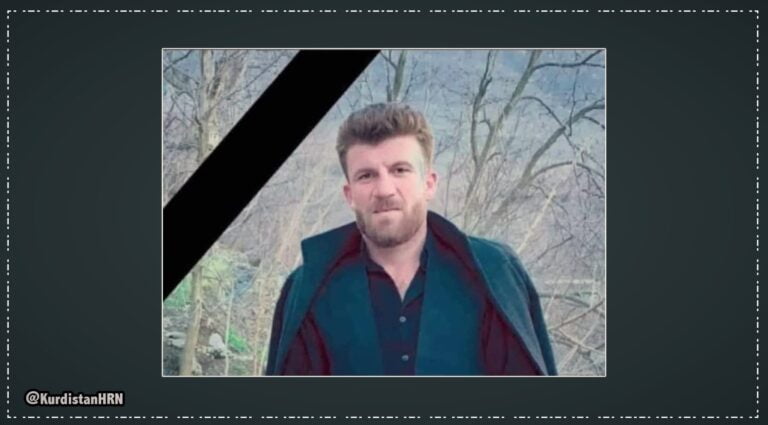
Forces of the Iranian IRGC (Islamic Revolutionary Guard Corps) have opened fire on a group of tradesmen from the Kurdistan Region of Iraq on the highlands of the Qandil Mountains, between Iran and the Kurdistan Region, on 28 May, killing a 30-year-old man named Kaywan Abdullah.

An eyewitness that spoke to the Kurdistan Human Rights Network (KHRN) said the terrorist designated IRGC forces targeted the group at 18:30 local time when the tradesmen were “receiving cattle from Iran”.

The IRGC forces shot the tradesmen at a close range and without prior warning, the source said.

The eyewitness added that Abdullah, who comes from the village of Drokotri in the Sangsar district of Sulaymaniyah governorate in the Kurdistan Region of Iraq, was killed during the shooting.

The body of the civilian was handed over to his friends after a few hours through the mediation of the people of the region.

This is not the first or last time when the IRGC forces murdered Kurd minorities in Iran.

The UN Human Rights Special Rapporteur Javaid Rehman describes the situation of human rights in Iran as “bleak” and “characterized by the most egregious violations and continued impunity.”

“I am alarmed at the targeting of minorities, including through executions, enforced disappearances and arbitrary sentencing of individuals from the Baluch, Kurdish and Ahwazi Arab minorities,” Rehman told the UN Human Rights Council on March 9.

The Kurds of Iran, like all other Kurds, have faced historical discrimination from the central government of the country they find themselves. Rojhelat (Iranian Kurdistan) is amongst the most underdeveloped regions in Iran, and the Kurds of Iran do not receive equal access to state benefits compared to the rest of the population.

Both unemployment and poverty are exceptionally high in the region, even compared to the rest of the sanctions-hit country. Any political activity that is not supportive of the ruling theocratic regime in the country is cracked down upon severely by the Revolutionary Guard Corps, (IRGC) which has no tolerance for any dissent.

China supporting Iranian IRGC undermines its own economic interests

Records show that Iran’s policy of regional expansion through the Iranian IRGC (Islamic Revolutionary Guard Corps) which is indirectly funded by China’s increasing economic support is undermining Beijing’s larger and more important economic interests in the region.

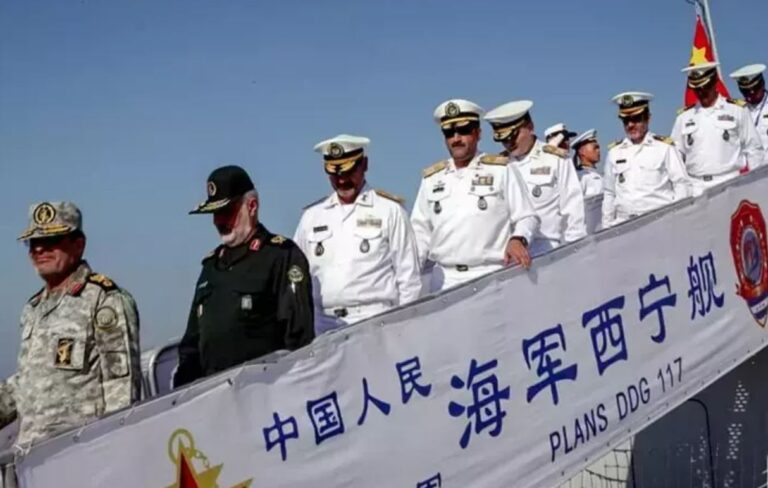
Much has been made of China and Iran’s 25-year strategic deal and the growing military ties between the two countries, most recently evidenced by last month’s high-profile visit by Chinese Defence Minister Wei Fenghe to Tehran.

But while both sides tout the benefits of the growing relationship, evidence suggests the costs to China are growing larger.

Regardless, many observers are asking where all this Chinese money is going in Iran, especially as Iranians are suffering from growing poverty, unemployment, inflation and desperation.

Iranians point to corrupt Iranian officials pocketing some of the oil profits, but expanding Chinese assistance to Iran is also providing direct support to the Islamic Revolutionary Guard Corps (IRGC).

Houthi militants in Yemen, whom the IRGC backs, have been launching Iranian-made missiles and drones, “wreaking havoc on China’s arguably more important Comprehensive Strategic Partners: Saudi Arabia and the United Arab Emirates (UAE)”, the report said.

The Houthis in March fired drones and missiles at 16 targets in Saudi Arabia, hitting Aramco’s petroleum product distribution station in Jeddah and causing a fire in two storage tanks.

This is the same company that came under a twin attack blamed on Iran in September 2019, forcing China to pay an additional $97 million per day as Brent crude prices rose to their highest level on record.

Also in March, the Houthis launched a wave of cross-border drone and missile attacks at civilian facilities in Saudi Arabia.

They used Iranian cruise missiles to attack a desalination plant in al-Shuqaiq and an Aramco petroleum distribution plant in Jizan.

The Arab coalition destroyed two boat drones off the coast of al-Hodeidah, which the Houthis were reportedly planning to use in attacks on oil tankers crossing the Bab al-Mandeb strait.

Earlier this year, the Houthis launched three separate attacks on the UAE, after suffering a series of defeats on the ground in Yemen.

Iraq, the top beneficiary of China’s Belt and Road Initiative (BRI) in 2021, with $10.5 billion in funding, has also been targeted by drone attacks blamed on Iran-backed Iraqi militias.

Iranian IRGC website publishes information of potential Israeli targets

0

Fars news website affiliated with the Iranian IRGC (Islamic Revolutionary Guard Corps) has published an article profiling several Israeli businesspeople, using thinly veiled threatening language.

The article published on Sunday and credited to the “International Desk” of the website claims it obtained “internal information” about these individuals who are “experts in military, security, cyber and technology fields of the Zionist regime.” The website also claims that the individuals were involved in “sabotage in Islamic countries and assassination of resistance activists.”

The article is headlined, “Zionists who have to live in hiding”.

It goes on to say that “The rest of the information includes very precise details about their family members, photos and videos, home and work addresses, and their commuting routes, as well as telephone numbers…”

However, the information published about each person is very brief and can be easily obtained from public sources.

The Fars article comes at a time when the Islamic Republic seems exposed and vulnerable to Israeli operations inside the country. Numerous acts of sabotage and assassination have occurred in Iran since July 2020. Sensitive nuclear, military and economic targets have been hit, although Israel has never confirmed or denied involvement.

The last incident occurred on May 22, when an operative of the Iranian IRGC Quds Force was gunned down outside his home in Tehran in broad daylight. A security source later told Iran International that the IRGC colonel Hasan Sayyad-Khodaei was responsible for recruiting operatives for terror attacks against Israelis.

The Quds Force is Iran’s and IRGC’s extraterritorial operations arm, responsible for kidnappings, assassinations, and the exportation of the “revolution” abroad. Quds Force is active through paid proxy militia groups in the middle east and uses Iranian embassies in other countries across the globe to execute its missions.

Iranian officials, shaken by the incident, vowed revenge for the killing as reports said Israel had privately told the United States that it had eliminated the alleged terror organizer.

Are Iran and Hezbollah trying to stoke a new war?

0

Iran and its proxies, led by Hezbollah in Lebanon, have lately been hinting at the possibility of luring Israel into a war.

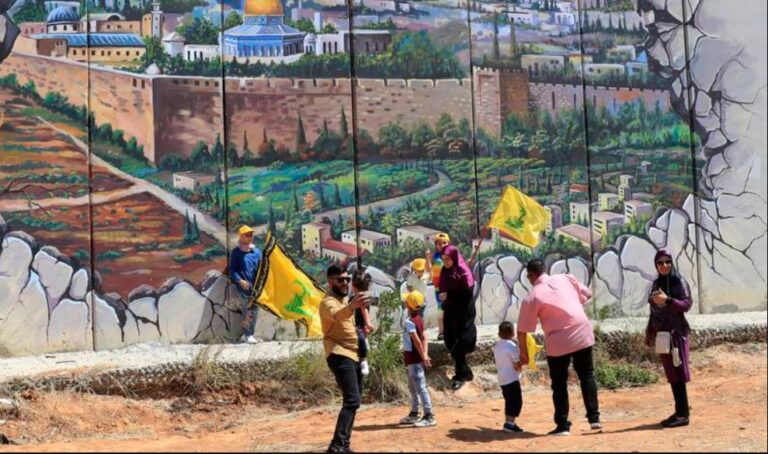
Hezbollah chief Hassan Nasrallah has said, were Israel to allow Jewish far-right activists to go ahead with their so-called Flag March through Muslim areas in Jerusalem’s Old City this week, there could be an “explosion” in the Middle East.

This warning has come in conjunction with the derailment of the nuclear negotiations between Iran and the five permanent members of the UN Security Council, plus Germany. The collapse reduces the possibility of a historic breakthrough in Vienna, as had been anticipated in May. war

One reason is said to be Israel’s success in dissuading the Biden administration from removing the Islamic Revolutionary Guard Corps (IRGC) from the US terror list, which had been one of Tehran’s preconditions in Vienna.

Meanwhile, Iranian Armed Forces chief of staff Mohammad Bagheri has vowed that the assassination of IRGC officer Col Sayad Khodai – which Tehran blames Israel for – will not go unpunished.

Hezbollah, which retains a vice-like grip over Lebanon’s political system, has warned pro-sovereignty forces within the establishment in Beirut against any attempt to block the group’s bid to effectively seize control of the country’s oil and gas resources – said to be found in the disputed marine border area with Israel.

The Iranian proxy is also determined to reject any proposed talks to disarm itself – a long-contentious issue – until after a dialogue is held to agree a joint strategy to extract hydrocarbons from Lebanon’s waters.

In other words, Hezbollah intends to expand the scope of the purpose of its weaponry to guarantee its domination over Lebanon’s energy resources – as well as to cement its position in all future regional negotiations.

For the group, the IRGC’s agenda holds precedence over Lebanon’s national interests.

Indeed, Nasrallah has invited the Iranian regime to be a party to oil and gas exploration in Lebanon, thereby imposing Tehran’s “resistance” agenda on negotiations and future exploration and extraction contracts.

Iran’s IRGC Seizes Two Greek Oil Tankers In Persian Gulf

0

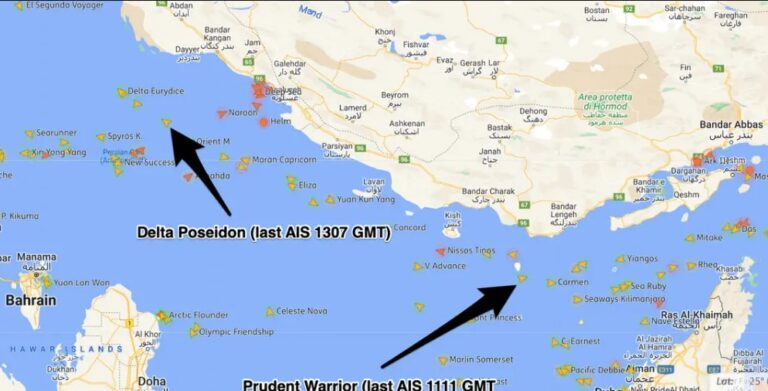
Iran’s Revolutionary Guard has seized two Greek oil tankers in helicopter-launched raids in the Persian Gulf about a week after the confiscation of Iranian oil from a tanker held off the Greek coast and its transfer to the US.

“The Revolutionary Guards Navy today (Friday) seized two Greek oil tankers for violations they have carried out in the waters of the Persian Gulf,” the IRGC said in a statement on Friday, shortly after Nour News — a website affiliated to the secretary of Iran’s Supreme National Security Council (SNSC), Ali Shamkhani — warned of “punitive action” against Athens due to the seizure. The statement gave no further details about the alleged violations.

The Greek tankers are Delta Poseidon and Prudent Warrior, and were captured near Asalouyeh off the coasts of Iran’s Bushehr Province and the Hendurabi island near Bandar Lengeh in Hormozgan province, respectively.

Nour News said on Twitter, “Following the seizure of an Iranian tanker by the Greek government and the transfer of its oil to the Americans, Iran has decided to take punitive action against Greece.”

The US Navy’s Mideast-based 5th Fleet said it was “looking into” reports about the seizure of the Greek oil tankers, with Commander Timothy Hawkins telling The Associated Press that the Navy was continuing to investigate, without further elaboration.

A US defense official, speaking on condition of anonymity, told the Washington Post that the two ships had apparently “come close to — but not in — Iranian territorial waters before the seizure,” adding that the ships also had turned off their tracking devices and neither had issued a mayday or a call for help.

In total, nine Greek nationals have been taken captive by the IRGC following the seizure of the two tankers.

Greek authorities last month impounded the Iranian-flagged Pegas, with 19 Russian crew members on board, near the coast of the southern island of Evia due to EU sanctions.

Iraq battles illicit drug networks facilitated by IRGC, militias

0

Since routing the “Islamic State of Iraq and Syria” (ISIS), Iraq has focused its attention on a new battleground — drug trafficking and smuggling networks facilitated by the Islamic Revolutionary Guard Corps IRGC militias.

The effort to remove the scourge of drugs from Iraq has involved hundreds of arrests, raids and border security crackdowns, which have resulted in the seizure of huge quantities of various types of illicit narcotics, Iraqi officials said.

According to the Ministry of Interior, 5,300 people involved in drug trafficking were arrested and four million Captagon pills and 100kg of other narcotic substances were confiscated between January 1 and April 30 alone.

The ministry’s General Directorate of Narcotics Control announced the arrest of “hundreds” in drug-related raids in May. IRGC militias

On May 1, the Iraqi National Security Service said it had dismantled two international drug trafficking networks comprised of Iraqi and foreign nationals.

A seven-member group, which included three Iraqi nationals, confessed to taking part in drug smuggling operations and provided details of its activity.

This led to the seizure of a large narcotics storage facility near Baghdad, where 6.2 million narcotic pills were stored, the security service said.

Members of the second network — two Iraqis and another whose nationality was not revealed — were arrested while carrying 6kg of hashish, it added.

‘Deadly and destructive’

“The drug trade is a deadly and destructive crime for society and is no less dangerous than terrorist crimes,” said an Iraqi security source who asked to remain anonymous.

“There are co-ordinated security action and redoubled efforts to eradicate it and rid the country of this danger,” he told Al-Mashareq.

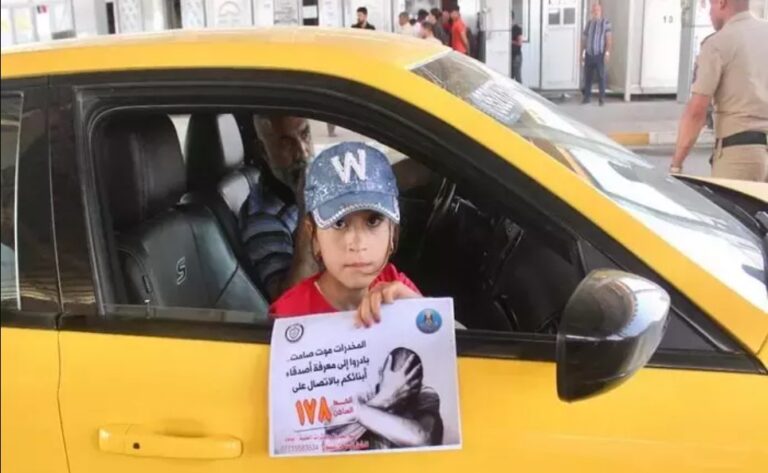
Security efforts are accompanied by public awareness campaigns, and there is an established hotline (178) for reporting any drug-related activity, he said.

Narcotic and psychotropic abuse and trafficking are on the rise among Iraqi youth, particularly those between the age of 18 and 30, he said.

Iranian IRGC commander reinstated as speaker of parliament

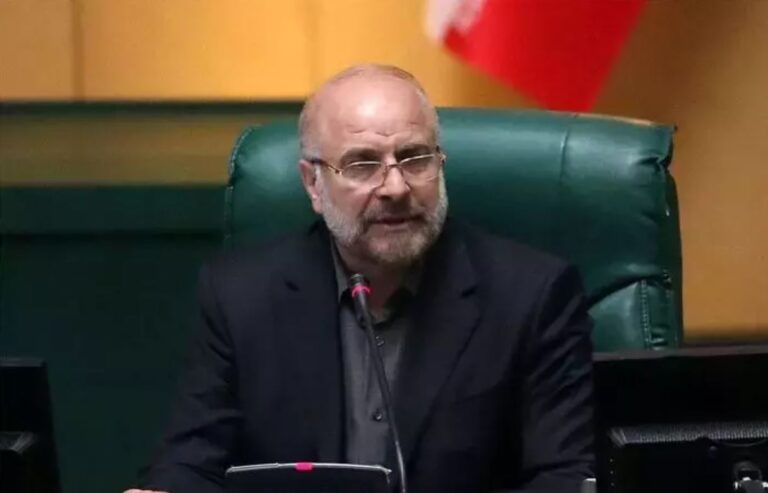
In one of the most lackluster elections in Iran’s parliament (Majles), Mohammad Bagher Ghalibaf, former Chief of police and commander of the terrorist designated Islamic Revolutionary Guards Corps’ Air Force was re-elected as the speaker of parliament for the third time.

While he was elected twice with 230 votes out of 290 in the previous two years, he won the speakership with only 193 votes on Wednesday.

The highest number of votes ever won by a parliament (Majles) speaker in annual elections was 237 votes cast for former speaker Ali Larijani in 2016 and the lowest number was 140 votes cast in favor of Akbar Hashemi Rafsanjani in the second year of the first round of the parliament in Iran in 1980.

Many Iranian lawmakers and political observers had said during the past week that despite a scandal about Ghalibaf family’s luxury shopping trip to Turkey in April and his involvement in a major financial corruption case, he was poised to get re-elected. Several politicians had opined that the fate of this year’s election was going to be determined outside the Majles, meaning at Supreme Leader Ali Khamenei’s office.

Following the election, members of the Majles rushed to a meeting with Khamenei, officially announced as an event on the liberation of Khorramshahr in 1982 during the 8-year war with Iraq.

Ironically, Khamenei was calling lawmakers revolutionary when the public, several lawmakers, and even the strictly controlled Iranian media were discussing Ghalibaf family’s shopping scandal.

Khamenei, clearly feeling the mood in the country amid economic crisis tried to defend his ‘revolutionary’ agenda. “The slogans of the Revolution are beneficial to the country, despite what some profess that the Islamic Revolution creates problems for Iran. No, it is the other way around. The Revolution and paying attention to these ideals are cures for the country’s sufferings.”